
Sections
The matter of Kreyas HaTorah — Laws of Public Torah Reading — Halacha 3:
ליקוטי הלכות - Likutay Halachos
Matched source edition · Volume 5 · Bracketed references are separate from the traditional items.
ענין קריאת התורה ג:The matter of Kreyas HaTorah — Laws of Public Torah Reading — Halacha 3:
עִנְיַן קְרִיאַת הַתּוֹרָה בִּשְׁעַת הַתְּפִלָּה בְּשֵׁנִי וַחֲמִישִׁי וְכוּ':
The matter of Kreyas HaTorah at the time of prayer on Monday and Thursday, etc.:
עַל-פִּי מַה שֶּׁכָּתַב רַבֵּנוּ זִכְרוֹנוֹ לִבְרָכָה בְּלִקּוּטֵי תִּנְיָנָא ( סִימָן פז) שֶׁכַּוָּנוֹת אֱלוּל הֵם תִּקּוּן הַבְּרִית, כִּי כַּוָּנוֹת אֱלוּל הֵם בְּחִינַת הַנּוֹתֵן בַּיָּם דָּרֶךְ, שֶׁצָּרִיךְ לְהָאִיר הַדֶּרֶךְ בַּיָּם וְכוּ' וְעַל -יְדֵי זֶה הוּא מוֹצֵא זִוּוּגוֹ וְהִיא אֵינָהּ כְּנֶגְדּוֹ וְכוּ' וְסוֹד זֶה מָסַר אַבְרָהָם לֶאֱלִיעֶזֶר בְּעֵת שֶׁשָּׁלַח אוֹתוֹ לִמְצֹא הַזִּוּוּג שֶׁל יִצְחָק בְּנוֹ וְזֶה שֶׁאָמַר לוֹ, וְ'אִם לֹ'א תֹאבֶה הָאִשָּׁה לָ'לֶכֶת אַ'חֲרֶיךָ", רָאשֵׁי תֵּבוֹת אֱלוּל וּבָאֶמְצַע הֵם תֵּבוֹת 'תֹּאבֶה הָאִשָּׁה', כִּי עַל-יְדֵי כַּוָּנוֹת אֱלוּל, שֶׁעַל-יְדֵי זֶה נַעֲשֶׂה תִּקּוּן הַבְּרִית, עַל-יְדֵי זֶה נַעֲשֶׂה בָּהּ רָצוֹן אֵלָיו, וַאֲזַי תֹּאבֶה הָאִשָּׁה, כִּי עַל-יְדֵי פְּגַם הַבְּרִית הִיא נוֹטָה מֵרְצוֹנוֹ וְכוּ' וְעַל-יְדֵי תִּקּוּן הַבְּרִית, עַל -יְדֵי כַּוָּנוֹת אֱלוּל, שֶׁהֵם בְּחִינַת הַנּוֹתֵן בַּיָּם דָּרֶךְ, עַל-יְדֵי זֶה תֹּאבֶה הָאִשָּׁה וְכוּ', עַיֵּן שָׁם עִנְיָן זֶה הֵיטֵב, כִּי הוּא סוֹד עָמֹק וְנִסְתָּר מְאֹד מְאֹד:
Based on what Rabbainu of blessed memory wrote in Likutay Tinyana (section 87): the intentions of Elul are the rectification of the covenant (see Sha'ar Roo'ach HaKoadesh, yeechood 16). For the intentions of Elul are the aspect of “He Who gives a path in the sea”: one must illuminate the path in the sea, etc. Through this he finds his mate, and she is not opposed to him, etc. Avruhum transmitted this secret to Eliezer when he sent him to find the mate of his son Yeetzchuk. This is what he said to him: “And if the woman does not wish to go after you”—the initial letters are Elul, and in the middle are the words “the woman will wish.” For through the intentions of Elul, through which the rectification of the covenant is accomplished, through this a desire toward him is created in her, and then “the woman will wish,” for through damage to the covenant she turns away from his desire, etc. Through the rectification of the covenant, through the intentions of Elul, which are the aspect of “He Who gives a path in the sea,” through this “the woman will wish,” etc. Study this matter well there, for it is a very, very deep and hidden secret.
א1
וְזֶה בְּחִינַת 'וְאִם לֹא תֹאבֶה הָאִשָּׁה לָלֶכֶת אַחֲרֶיךָ', 'לָלֶכֶת' דַּיְקָא, כִּי עַל-יְדֵי כַּוָּנַת אֱלוּל הַמְרֻמָּז בְּרָאשֵׁי תֵּבוֹת, מְתַקֵּן בְּחִינַת הַדֶּרֶךְ, בְּחִינַת הַנּוֹתֵן בַּיָּם דָּרֶךְ וַאֲזַי תֹּאבֶה הָאִשָּׁה לָלֶכֶת אַחֲרֶיךָ, 'לָלֶכֶת' דַּיְקָא, כִּי הִיא מְרֻצָּה לֵילֵךְ בַּדֶּרֶךְ אַחֲרָיו מֵאַחַר שֶׁכְּבָר תִּקֵּן וְהֵאִיר בָּהּ בְּחִינַת הַדֶּרֶךְ, שֶׁהוּא בְּחִינַת כַּוָּנוֹת אֱלוּל הַמְרֻמָּז בְּרָאשֵׁי תֵּבוֹת שֶׁל זֶה הַפָּסוּק, שֶׁהֵם בְּחִינַת הַנּוֹתֵן בַּיָּם דָּרֶךְ כַּנַּ"ל וְעַל-כֵּן עַל-יְדֵי זֶה תֹּאבֶה הָאִשָּׁה לָלֶכֶת וְכוּ', 'לָלֶכֶת' דַּיְקָא, שֶׁהוּא בְּחִינַת דֶּרֶךְ כַּנַּ"ל:
This is the aspect of “And if the woman does not wish to go after you”—“to go” specifically. For through the intention of Elul alluded to in the initial letters, he rectifies the aspect of the path, the aspect of “He Who gives a path in the sea.” Then “the woman will wish to go after you”—“to go” specifically, for she is willing to go on the path after him, since he has already rectified and illuminated within her the aspect of the path. This is the aspect of the intentions of Elul alluded to in the initial letters of this verse, which are the aspect of “He Who gives a path in the sea,” as above. Therefore, through this, “the woman will wish to go,” etc.—“to go” specifically, which is the aspect of the path, as above.
ב2
וְזֶה בְּחִינַת תְּפִלָּה, כִּי תִּקּוּן הַתְּפִלָּה הוּא בְּחִינַת זִוּוּג דִּקְדֻשָּׁה כַּיָּדוּעַ , כְּמוֹ שֶׁאָמַר רַבֵּנוּ זִכְרוֹנוֹ לִבְרָכָה בְּמָקוֹם אַחֵר שֶׁאֵצֶל הַצַּדִּיקִים הַגְּדוֹלִים אֵין הֶפְרֵשׁ בֵּין תְּפִלָּה לְזִוּוּג, כְּמוֹ שֶׁכָּתַב רַבֵּנוּ זִכְרוֹנוֹ לִבְרָכָה עַל מַאֲמַר רַבּוֹתֵינוּ זִכְרוֹנָם לִבְרָכָה, שֶׁתְּהֵא תְּפִלָּתִי סְמוּכָה לְמִטָּתִי וְכוּ', עַיֵּן שָׁם כִּי הַתְּפִלָּה הִיא בְּחִינַת אִשָּׁה יִרְאַת ה', וְעִקַּר תִּקּוּן הַתְּפִלָּה הוּא עַל -יְדֵי בְּחִינַת כַּוָּנוֹת אֱלוּל, שֶׁהוּא בְּחִינַת הַנּוֹתֵן בַּיָּם דָּרֶךְ, שֶׁעַל -יְדֵי זֶה תֹּאבֶה הָאִשָּׁה לָלֶכֶת וְכוּ' וְזֶהוּ בְּחִינַת תִּקּוּן הַתְּפִלָּה, שֶׁהוּא בְּחִינַת אִשָּׁה יִרְאַת ה', כִּי עִקַּר תִּקּוּן הַתְּפִלָּה הוּא בִּבְחִינַת אִם שְׁגוּרָה תְּפִלָּתִי בְּפִי יוֹדֵעַ אֲנִי שֶׁהוּא מְקֻבָּל, שֶׁהוּא בְּחִינַת ( בְּרֵאשִׁית כד) וַיְהִי הוּא טֶרֶם כִּלָּה לְדַבֵּר וְהִנֵּה רִבְקָה יוֹצֵאת וְכוּ' הַהוּא דִּכְתִיב ( תְּהִלִּים פה), "צֶדֶק לְפָנָיו יְהַלֵּךְ וְיָשֶׂם לַדֶּרֶךְ פְּעָמָיו" כְּמוֹ שֶׁכָּתוּב בַּתִּקּוּנִים ( תִּקּוּן תְּמָנֵי סְרִי, עַיֵּן שָׁם) וַיְהִי הוּא טֶרֶם כִּלָּה לְדַבֵּר וְהִנֵּה רִבְקָה יוֹצֵאת, שֶׁהוּא בְּחִינַת תִּקּוּן הַתְּפִלָּה, בְּחִינַת שְׁגוּרָה תְּפִלָּתִי בְּפִי כַּנַּ"ל, הוּא בְּחִינַת תֹּאבֶה הָאִשָּׁה לָלֶכֶת אַחֲרֶיךָ שֶׁהָאִשָּׁה יִרְאַת ה', שֶׁהִיא רִבְקָה אֵשֶׁת יִצְחָק, נִמְשָׁךְ בָּהּ רָצוֹן עַל-יְדֵי כַּוָּנוֹת אֱלוּל, שֶׁעַל -יְדֵי זֶה "וַיְהִי הוּא טֶרֶם כִּלָּה לְדַבֵּר וְהִנֵּה רִבְקָה יוֹצֵאת". וְזֶה בְּעַצְמוֹ תִּקּוּן הַתְּפִלָּה בְּחִינַת שְׁגוּרָה תְּפִלָּתִי בְּפִי, כַּמְבֹאָר בַּתִּקּוּנִים כַּנַּ"ל שֶׁהָאִשָּׁה יִרְאַת ה', שֶׁהִיא בְּחִינַת הַתְּפִלָּה, הוֹלֶכֶת וְנִמְשֶׁכֶת אַחַר הָאָדָם בְּחִינַת אִם שְׁגוּרָה תְּפִלָּתִי בְּפִי יוֹדֵעַ אֲנִי שֶׁהוּא מְקֻבָּל וְכָל זֶה עַל-יְדֵי כַּוָּנוֹת אֱלוּל, שֶׁהוּא בְּחִינַת הַנּוֹתֵן בַּיָּם דָּרֶךְ וּכְמוֹ שֶׁסִּיֵּם שָׁם בַּתִּקּוּנִים, הַהוּא דִּכְתִיב, "צֶדֶק לְפָנָיו יְהַלֵּךְ וְיָשֶׂם לַדֶּרֶךְ פְּעָמָיו" כִּי צָרִיךְ לְהָאִיר בִּבְחִינַת הַתְּפִלָּה, בְּחִינַת הַדֶּרֶךְ, שֶׁהוּא בְּחִינַת כַּוָּנוֹת אֱלוּל כְּדֵי שֶׁתִּהְיֶה הַתְּפִלָּה כָּרָאוּי בִּבְחִינַת שְׁגוּרָה תְּפִלָּתִי בְּפִי וְכוּ' בִּבְחִינַת וַיְהִי הוּא טֶרֶם כִּלָּה לְדַבֵּר וְהִנֵּה רִבְקָה יוֹצֵאת וְכוּ' כַּנַּ"ל וְעַל -כֵּן עִקַּר תִּקּוּן הַתְּפִלָּה הוּא בְּחֹדֶשׁ אֱלוּל שֶׁאָז מַרְבִּים יִשְׂרָאֵל בִּתְפִלּוֹת וְתַחֲנוּנִים, כִּי עִקַּר הַתִּקּוּן הַתְּפִלָּה עַל-יְדֵי כַּוָּנוֹת אֱלוּל, שֶׁהֵם בְּחִינַת הַנּוֹתֵן בַּיָּם דָּרֶךְ, שֶׁעַל-יְדֵי זֶה תֹּאבֶה הָאִשָּׁה לָלֶכֶת אַחֲרֶיךָ, שֶׁזֶּה בְּחִינַת וַיְהִי הוּא טֶרֶם כִּלָּה לְדַבֵּר וְהִנֵּה רִבְקָה יוֹצֵאת, שֶׁזֶּה בְּחִינַת תִּקּוּן הַתְּפִלָּה כַּנַּ"ל:
This is the aspect of prayer, for the rectification of prayer is the aspect of holy union, as is known. As Rabbainu of blessed memory said elsewhere, for the great tzaddeekim there is no difference between prayer and union, as Rabbainu of blessed memory wrote concerning the saying of our Rabbis of blessed memory (Brachos 5b), “May my prayer be adjacent to my bed,” etc. (Likutay Moharan I, teaching 46). For prayer is the aspect of a woman who fears G-d. The principal rectification of prayer is through the aspect of the intentions of Elul, which is the aspect of “He Who gives a path in the sea,” through which “the woman will wish to go,” etc. This is the aspect of the rectification of prayer, which is the aspect of a woman who fears G-d, for the principal rectification of prayer is in the aspect of (Brachos 34b) “If my prayer is fluent in my mouth, I know that he is accepted.” This is the aspect of (Biraishis 24) “And it was, before he had finished speaking, behold Rivka was coming out,” etc. This is what is written (Tehillim 85): “Righteousness goes before him and sets his footsteps on the path,” as it is written in the Teekoonim (Teekoon 18; see there). “And it was, before he had finished speaking, behold Rivka was coming out,” which is the aspect of the rectification of prayer, the aspect of “my prayer is fluent in my mouth,” as above, is the aspect of “the woman will wish to go after you”: into the woman who fears G-d, who is Rivka, the wife of Yeetzchuk, desire is drawn through the intentions of Elul, so that through this, “And it was, before he had finished speaking, behold Rivka was coming out.” This itself is the rectification of prayer, the aspect of “my prayer is fluent in my mouth,” as explained in the Teekoonim, as above: the woman who fears G-d, who is the aspect of prayer, goes and is drawn after the person, the aspect of “If my prayer is fluent in my mouth, I know that he is accepted.” All this is through the intentions of Elul, which is the aspect of “He Who gives a path in the sea.” As it concludes there in the Teekoonim: This is what is written, “Righteousness goes before him and sets his footsteps on the path.” For one must illuminate within the aspect of prayer the aspect of the path, which is the aspect of the intentions of Elul, so that the prayer will be fitting, in the aspect of “my prayer is fluent in my mouth,” etc., in the aspect of “And it was, before he had finished speaking, behold Rivka was coming out,” etc., as above. Therefore the principal rectification of prayer is in the month of Elul, when Yisroel increase prayers and supplications. For the principal rectification of prayer is through the intentions of Elul, which are the aspect of “He Who gives a path in the sea,” through which “the woman will wish to go after you.” This is the aspect of “And it was, before he had finished speaking, behold Rivka was coming out,” which is the aspect of the rectification of prayer, as above.
ג3
כִּי צָרִיךְ לְהָאִיר בְּחִינַת הַדֶּרֶךְ בְּהַתְּפִלָּה כְּדֵי שֶׁתּוּכַל הַתְּפִלָּה לָלֶכֶת בְּדֶרֶךְ הַיָּשָׁר מִחוּץ לָאָרֶץ לְאֶרֶץ יִשְׂרָאֵל, וּמִשָּׁם לִירוּשָׁלַיִם וּלְבֵית הַמִּקְדָּשׁ וּלְקָדְשֵׁי קֳדָשִׁים בִּבְחִינַת ( מְלָכִים -א ח) וְהִתְפַּלְּלוּ אֵלֶיךָ דֶּרֶךְ אַרְצָם 'דֶּרֶךְ' דַּיְקָא, כִּי הַתְּפִלָּה צְרִיכָה לֵילֵךְ לְאֶרֶץ יִשְׂרָאֵל וְכוּ' וּלְקֹדֶשׁ קֳדָשִׁים, וּמִשָּׁם לַשָּׁמַיִם, וְאַחַר כָּךְ מֵרָקִיעַ לְרָקִיעַ וּמֵעוֹלָם לְעוֹלָם עַד שֶׁתֵּלֵךְ וְתַעֲלֶה לִמְקוֹמָהּ וְעַל-כֵּן צְרִיכִין לְהָאִיר בָּהּ בְּחִינַת הַדֶּרֶךְ, עַל-יְדֵי כַּוָּנוֹת אֱלוּל, שֶׁהוּא בְּחִינַת הַנּוֹתֵן בַּיָּם דָּרֶךְ כַּנַּ"ל:
For one must illuminate the aspect of the path within prayer, so that the prayer can go on the straight path from outside the Land to Eretz Yisroel, and from there to Yirushalayim, to the Bais HaMikdush, and to the Holy of Holies, in the aspect of (I Kings 8) “They shall pray to You by way of their land”—“by way” specifically. For prayer must go to Eretz Yisroel, etc., and to the Holy of Holies, and from there to heaven, and afterward from firmament to firmament and from world to world, until it goes and ascends to its place. Therefore one must illuminate within it the aspect of the path, through the intentions of Elul, which is the aspect of “He Who gives a path in the sea,” as above.
ד4
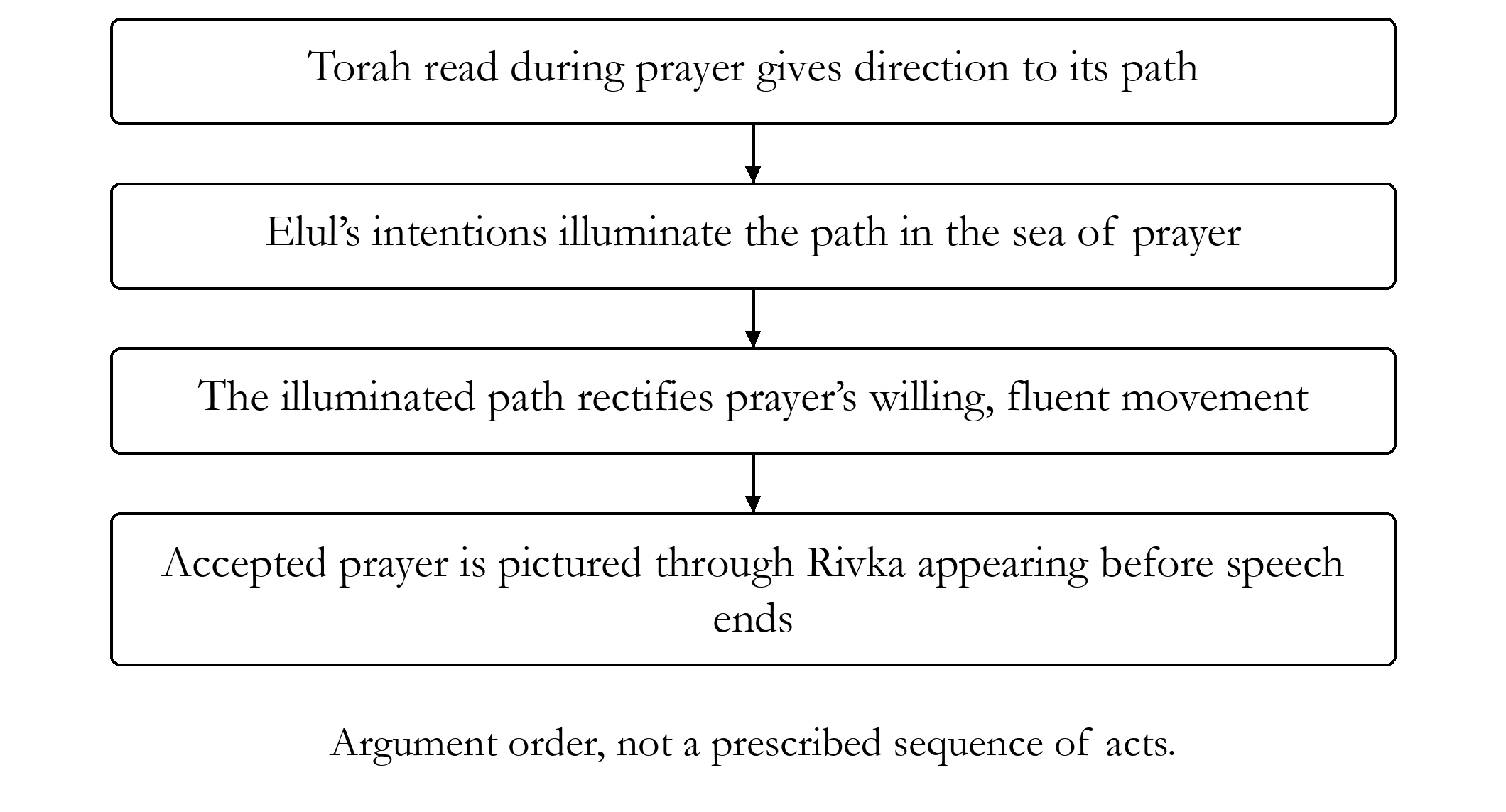
וְזֶה בְּחִינַת קְרִיאַת הַתּוֹרָה בִּשְׁעַת הַתְּפִלָּה, כִּי עִקַּר הַדֶּרֶךְ מֵאִיר עַל-יְדֵי הַתּוֹרָה, כִּי הַתּוֹרָה מְאִירָה אֶת הַדֶּרֶךְ, כִּי עַל שֵׁם זֶה נִקְרֵאת תּוֹרָה, עַל שֵׁם שֶׁהִיא מוֹרָה לָנוּ אֶת הַדֶּרֶךְ, כְּמוֹ שֶׁכָּתוּב ( שְׁמוֹת יח), "לְהוֹרוֹת לָהֶם אֶת הַדֶּרֶךְ אֲשֶׁר יֵלְכוּ וְכוּ'" וּכְמוֹ שֶׁכָּתוּב ( תְּהִלִּים קיט), "דֶּרֶךְ מִצְוֹתֶיךָ אָרוּץ וְכוּ' דֶּרֶךְ פִּקּוּדֶךָ בָּחָרְתִּי וְכוּ'" וּכְתִיב ( מִשְׁלֵי ג), "דְּרָכֶיהָ דַרְכֵי נֹעַם" וְעַל-כֵּן עַל -יְדֵי הַתּוֹרָה שֶׁקּוֹרִין בִּשְׁעַת הַתְּפִלָּה, עַל-יְדֵי זֶה מְאִירִין אֶת הַדֶּרֶךְ בַּיָּם, דְּהַיְנוּ בִּבְחִינַת הַתְּפִלָּה, וַאֲזַי הַתְּפִלָּה מְקֻבֶּלֶת בִּבְחִינַת אִם שְׁגוּרָה תְּפִלָּתִי בְּפִי יוֹדֵעַ אֲנִי שֶׁהוּא מְקֻבָּל, שֶׁזֶּה בְּחִינַת וַיְהִי הוּא טֶרֶם כִּלָּה לְדַבֵּר וְהִנֵּה רִבְקָה יוֹצֵאת, שֶׁהוּא בְּחִינַת וְהָיָה טֶרֶם יִקְרָאוּ וַאֲנִי אֶעֱנֶה וְכוּ' כִּי הַתּוֹרָה מְאִירָה בְּחִינַת דֶּרֶךְ, שֶׁהוּא בְּחִינַת כַּוָּנוֹת אֱלוּל בִּבְחִינַת הַתְּפִלָּה וְעַל-כֵּן נִתְקַן קְרִיאַת הַתּוֹרָה בִּשְׁעַת הַתְּפִלָּה בְּשֵׁנִי וּבַחֲמִישִׁי שֶׁהֵם הַיָּמִים שֶׁעָלָה וְיָרַד משֶׁה בְּאַרְבָּעִים יָמִים הָאַחֲרוֹנִים, שֶׁהֵם יְמֵי אֱלוּל לְקַבֵּל לוּחוֹת אַחֲרוֹנוֹת, כְּמוֹ שֶׁאָמְרוּ רַבּוֹתֵינוּ זִכְרוֹנָם לִבְרָכָה ( תּוֹסָפוֹת בָּבָא קַמָּא דַּף פב בְּשֵׁם הַמִּדְרָשׁ) כִּי בְּאֵלּוּ הַיָּמִים שֶׁקִּבֵּל לוּחוֹת אַחֲרוֹנוֹת, שֶׁהֵם יְמֵי אֱלוּל, עָשָׂה משֶׁה דֶּרֶךְ כְּבוּשָׁה, שֶׁהוּא כַּוָּנוֹת אֱלוּל, כְּמוֹ שֶׁכָּתַב רַבֵּנוּ זִכְרוֹנוֹ לִבְרָכָה בְּמָקוֹם אַחֵר ( לִקּוּטֵי תִּנְיָנָא סִימָן פב) וְעַל-כֵּן קוֹרִין בְּאֵלּוּ הַיָּמִים שֶׁעָלָה משֶׁה וְיָרַד, כִּי עִקַּר קְרִיאַת הַתּוֹרָה בִּשְׁעַת הַתְּפִלָּה הוּא כְּדֵי לְהָאִיר הַדֶּרֶךְ בַּיָּם כַּנַּ"ל:
This is the aspect of Kreyas HaTorah at the time of prayer, for the path is principally illuminated through the Torah, for the Torah illuminates the path. Indeed, it is called Torah on this account, because it instructs us in the path, as it is written (Shimos 18), “To instruct them in the path on which they shall go,” etc. As it is written (Tehillim 119), “I shall run on the path of Your commandments,” etc.; “I have chosen the path of Your precept,” etc. And it is written (Mishlay 3), “Her ways are ways of pleasantness.” Therefore, through the Torah that is read at the time of prayer, through this one illuminates the path in the sea, namely within the aspect of prayer. Then prayer is accepted, in the aspect of (Brachos 34b) “If my prayer is fluent in my mouth, I know that he is accepted,” which is the aspect of “And it was, before he had finished speaking, behold Rivka was coming out,” which is the aspect of “And it shall be, before they call, I shall answer,” etc. For the Torah illuminates the aspect of the path, which is the aspect of the intentions of Elul, within the aspect of prayer. Therefore Kreyas HaTorah was instituted at the time of prayer on Monday and Thursday, which are the days on which Moshe ascended and descended during the last forty days, which are the days of Elul, to receive the latter Tablets, as our Rabbis of blessed memory said (Toasufoas, Bava Kama 82a, s.v. כדי שלא ילינו ג' ימים בלא תורה, in the name of the Medrush). For in these days when he received the latter Tablets, which are the days of Elul, Moshe made a well-trodden path, which is the intentions of Elul, as Rabbainu of blessed memory wrote elsewhere (Likutay Tinyana, section 82). Therefore the Torah is read on these days when Moshe ascended and descended, for the principal purpose of Kreyas HaTorah at the time of prayer is to illuminate the path in the sea, as above.
ה5
וְעַל-כֵּן עִקַּר קְרִיאַת הַתּוֹרָה בְּשֵׁנִי וַחֲמִישִׁי נִתְתַּקֵּן בְּעֵת שֶׁהָלְכוּ יִשְׂרָאֵל בַּדֶּרֶךְ בְּלֹא תּוֹרָה שְׁלשָׁה יָמִים וְנִתְיַגְּעוּ וְכוּ', עָמְדוּ נְבִיאִים שֶׁבֵּינֵיהֶם וְתִקְּנוּ שֶׁיִּהְיוּ קוֹרִין בַּתּוֹרָה בְּשֵׁנִי וַחֲמִישִׁי, כְּמוֹ שֶׁאָמְרוּ רַבּוֹתֵינוּ זִכְרוֹנָם לִבְרָכָה ( בָּבָא קַמָּא פב). כִּי עִקַּר תִּקּוּן קְרִיאַת הַתּוֹרָה בְּשֵׁנִי וַחֲמִישִׁי הוּא בִּשְׁבִיל תִּקּוּן בְּחִינַת דֶּרֶךְ כַּנַּ"ל כִּי עִקַּר תִּקּוּן הַדֶּרֶךְ הוּא עַל-יְדֵי הַתּוֹרָה שֶׁהִיא מוֹרָה דֶּרֶךְ כַּנַּ"ל וְזֶה בְּחִינַת ( מִשְׁלֵי ו) בְּהִתְהַלֶּכְךָ תַּנְחֶה אֹתָךָ וְכוּ' וְעַל-כֵּן כְּשֶׁהָלְכוּ יִשְׂרָאֵל בַּדֶּרֶךְ בְּלֹא תּוֹרָה נִתְיַגְּעוּ וְעַל-כֵּן תִּקְּנוּ אָז דַּיְקָא קְרִיאַת הַתּוֹרָה, כִּי עַל -יְדֵי הַתּוֹרָה מְתַקְּנִים בְּחִינַת דֶּרֶךְ כַּנַּ"ל, וְעַל-כֵּן תִּקְּנוּ קְרִיאַת הַתּוֹרָה בִּשְׁעַת הַתְּפִלָּה בַּיָּמִים שֶׁעָלָה משֶׁה בִּימֵי אֱלוּל לְקַבֵּל אֶת הַתּוֹרָה וְעָשָׂה דֶּרֶךְ כְּבוּשָׁה כַּנַּ"ל, כְּדֵי לְהַמְשִׁיךְ בְּחִינַת כַּוָּנוֹת אֱלוּל לְהָאִיר הַדֶּרֶךְ בַּיָּם, כְּדֵי שֶׁתִּהְיֶה הַתְּפִלָּה בִּבְחִינַת אִם שְׁגוּרָה הַתְּפִלָּה בְּפִי יוֹדֵעַ אֲנִי שֶׁהוּא מְקֻבָּל, שֶׁהוּא בְּחִינַת וַיְהִי הוּא טֶרֶם כִּלָּה לְדַבֵּר וְהִנֵּה רִבְקָה יוֹצֵאת בְּחִינַת טֶרֶם יִקְרָאוּ וַאֲנִי אֶעֱנֶה, שֶׁזֶּהוּ בְּחִינַת תֹּאבֶה הָאִשָּׁה, שֶׁהִיא רִבְקָה, לָלֶכֶת וְכוּ', שֶׁזֶּה נַעֲשֶׂה עַל-יְדֵי כַּוָּנוֹת אֱלוּל שֶׁנִּמְשָׁךְ עַל-יְדֵי קְרִיאַת הַתּוֹרָה בְּשֵׁנִי וַחֲמִישִׁי וְכוּ' כַּנַּ"ל:
Therefore the principal institution of Kreyas HaTorah on Monday and Thursday took place when Yisroel went on the way for three days without Torah and became weary, etc. The prophets among them arose and instituted that they should read the Torah on Monday and Thursday, as our Rabbis of blessed memory said (Bava Kama 82a). For the principal institution of Kreyas HaTorah on Monday and Thursday is for the rectification of the aspect of the path, as above; for the principal rectification of the path is through the Torah, which instructs in the path, as above. This is the aspect of (Mishlay 6) “When you walk, it will guide you,” etc. Therefore, when Yisroel went on the way without Torah, they became weary. Therefore they instituted Kreyas HaTorah precisely then, for through the Torah one rectifies the aspect of the path, as above, and therefore they instituted Kreyas HaTorah at the time of prayer on the days when Moshe ascended during the days of Elul to receive the Torah and made a well-trodden path, as above, in order to draw the aspect of the intentions of Elul to illuminate the path in the sea, so that prayer would be in the aspect of (Brachos 34b) “If the prayer is fluent in my mouth, I know that he is accepted.” This is the aspect of “And it was, before he had finished speaking, behold Rivka was coming out,” the aspect of “Before they call, I shall answer.” This is the aspect of “the woman,” who is Rivka, “will wish to go,” etc., which is accomplished through the intentions of Elul drawn through Kreyas HaTorah on Monday and Thursday, etc., as above.
ו6
כִּי שֵׁנִי וַחֲמִישִׁי הֵם בִּבְחִינַת כַּוָּנוֹת אֱלוּל, בְּחִינַת הַנּוֹתֵן בַּיָּם דָּרֶךְ הַנַּ"ל כִּי בַּשֵּׁנִי נֶאֱמַר, "יְהִי רָקִיעַ בְּתוֹךְ הַמַּיִם וִיהִי מַבְדִּיל בֵּין מַיִם לָמָיִם", בֵּין מַיִם עֶלְיוֹנִים לְמַיִם תַּחְתּוֹנִים וְזֶה בְּחִינַת סוֹד כַּוָּנוֹת אֱלוּל, בְּחִינַת דֶּרֶךְ הַנַּ"ל שֶׁנַּעֲשֶׂה עַל-יְדֵי בְּחִינַת אִם אֶסַּק שָׁמַיִם שָׁם אָתָּה וְאַצִּיעָה שְׁאוֹל הִנֶּךָּ 'אִם אֶסַּק שָׁמַיִם וְאַצִּיעָה שְׁאוֹל' הֵם בְּחִינַת יוּ"ד עֶלְיוֹנָה שֶׁעַל הָאָלֶף וְיוּ"ד תַּחְתּוֹנָה שֶׁתַּחַת הָאָלֶף, שֶׁהֵם בְּחִינַת סֶגוֹל דקס"א וְחִירִיק דס"ג, שֶׁמֵּהֶם נַעֲשֶׂה בְּחִינַת הַדֶּרֶךְ, כַּמְבֹאָר בַּכַּוָּנוֹת וְכַמְבֹאָר בַּמַּאֲמָר "וַיֹאמֶר ה' אֶל משֶׁה קְרָא אֶת יְהוֹשֻׁעַ" ( בְּסִימָן ו לִקּוּטֵי חֵלֶק א) וּבְמַאֲמַר "כִּי תֵצֵא" ( לִקּוּטֵי תִּנְיָנָא סִימָן פב), עַיֵּן שָׁם הֵיטֵב וְזֶה בְּחִינַת יְהִי רָקִיעַ בְּתוֹךְ הַמַּיִם וִיהִי מַבְדִּיל בֵּין מַיִם לָמָיִם, שֶׁזֶּה בְּחִינַת סוֹד תְּמוּנַת אָלֶף, כַּמּוּבָא בַּתִּקּוּנִים, כִּי מַיִם עֶלְיוֹנִים הֵם בְּחִינַת יוּ"ד עֶלְיוֹנָה שֶׁעַל גַּג הָאָלֶף, וּמַיִם תַּחְתּוֹנִים הֵם בְּחִינַת יוּ"ד תַּחְתּוֹנָה שֶׁתַּחַת גַּג הָאָלֶף, וְרָקִיעַ הַמַּבְדִּיל בֵּין מַיִם לָמָיִם הוּא בְּחִינַת הַוָּא"ו שֶׁבְּתוֹךְ הָאָלֶף כַּיָּדוּעַ, וְזֶה בְּחִינַת הַנּוֹתֵן בַּיָּם דָּרֶךְ שֶׁהוּא בִּבְחִינַת הַבְדָּלָה בֵּין מַיִם לָמָיִם, שֶׁעַל-יְדֵי זֶה נַעֲשָׂה דֶּרֶךְ בַּיָּם, שֶׁזֶּה עִקַּר בְּרִיאַת הָעוֹלָם, כִּי עַל-יְדֵי זֶה נַעֲשׂוּ שָׁמַיִם וָאָרֶץ, כִּי בְּחִינַת הַדֶּרֶךְ הַנַּ"ל, שֶׁהוּא בְּחִינַת דֶּרֶךְ הַתְּשׁוּבָה, בְּחִינַת אִם אֶסַּק שָׁמַיִם שָׁם אָתָּה וְאַצִּיעָה שְׁאוֹל הִנֶּךָּ, זֶה עִקַּר בְּרִיאַת הָעוֹלָם וְקִיּוּמוֹ כִּי תְּשׁוּבָה קָדַם לָעוֹלָם, וּבְלֹא זֶה אֵין הָעוֹלָם מִתְקַיֵּם, כִּי עִקַּר בְּרִיאַת הָעוֹלָם בְּגִין דְּיִשְׁתְּמוֹדְעִין לֵהּ, דְּהַיְנוּ לְהַכִּיר אוֹתוֹ יִתְבָּרַךְ בְּכָל מָקוֹם, בִּבְחִינַת אִם אֶסַּק שָׁמַיִם שָׁם אָתָּה וְאַצִּיעָה שְׁאוֹל הִנֶּךָּ נִמְצָא, שֶׁיּוֹם שֵׁנִי הוּא בִּבְחִינַת הַנּוֹתֵן בַּיָּם דָּרֶךְ, שֶׁהוּא בְּחִינַת כַּוָּנוֹת אֱלוּל, בְּחִינַת אָלֶף כַּנַּ"ל, שֶׁהוּא בְּחִינַת יְהִי רָקִיעַ בְּתוֹךְ הַמַּיִם וִיהִי מַבְדִּיל וְכוּ':
For Monday and Thursday are in the aspect of the intentions of Elul, the aforementioned aspect of “He Who gives a path in the sea.” For on the second day it was said, “Let there be a firmament within the waters, and let it divide between waters and waters”—between the upper waters and the lower waters. This is the aspect of the secret of the intentions of Elul, the aforementioned aspect of the path, which is made through the aspect of “If I ascend to heaven, You are there; and if I make my bed in the underworld, behold You.” “If I ascend to heaven” and “if I make my bed in the underworld” are the aspect of the upper yood above the alef and the lower yood below the alef, which are the aspect of the segol of the Name 161 and the cheereek of the Name 63, from which the aspect of the path is made, as explained in the meditative intentions and as explained in the teaching “And G-d said to Moshe: Call Yihoashoo'a” (in section 6 of Likutay, part 1), and in the teaching “When you go out” (Likutay Tinyana, section 82); study these well there. This is the aspect of “Let there be a firmament within the waters, and let it divide between waters and waters,” which is the aspect of the secret of the shape of the alef, as is brought in the Teekoonim. For the upper waters are the aspect of the upper yood above the top of the alef, and the lower waters are the aspect of the lower yood below the top of the alef. The firmament that divides between waters and waters is the aspect of the vav within the alef, as is known. This is the aspect of “He Who gives a path in the sea,” which is in the aspect of the division between waters and waters, whereby a path is made in the sea. This is the essence of the creation of the world, for through this heaven and earth were made. For the aforementioned aspect of the path, which is the aspect of the path of repentance, the aspect of “If I ascend to heaven, You are there; and if I make my bed in the underworld, behold You,” is the essence of the creation of the world and its existence. For repentance preceded the world (Pesachim 54a), and without it the world cannot endure (Pirkay diRabbi Eliezer, chapter 43). For the principal purpose of the creation of the world is “so that they may recognize Him,” (cf. Zohar II, 42b) namely, to recognize Him, blessed be He, in every place, in the aspect of “If I ascend to heaven, You are there; and if I make my bed in the underworld, behold You.” Thus Monday is in the aspect of “He Who gives a path in the sea,” which is the aspect of the intentions of Elul, the aspect of the alef, as above, which is the aspect of “Let there be a firmament within the waters, and let it divide,” etc.
ז7
וְזֶה בְּחִינַת יוֹם חֲמִישִׁי, כִּי בַּחֲמִישִׁי נֶאֶמְרָה בְּרָכָה לְדָגִים, וְדָגִים הֵם בִּבְחִינַת זַרְעוֹ שֶׁל יוֹסֵף שֶׁנִּתְבָּרְכוּ 'וְיִדְגוּ לָרֹב' וְכוּ' כִּי עִקַּר הַדֶּרֶךְ הַמֵּאִיר בַּיָּם הַנַּ"ל הוּא בִּבְחִינַת יוֹסֵף שֶׁהוּא בְּחִינַת שְׁמִירַת הַבְּרִית שֶׁעַל-יְדֵי זֶה מֵאִיר הַדֶּרֶךְ בַּיָּם כַּנַּ"ל וְעַל-כֵּן עִקַּר קְרִיעַת יַם סוּף שֶׁעָלָיו נֶאֱמַר 'הַנּוֹתֵן בַּיָּם דָּרֶךְ', הָיָה עַל-יְדֵי יוֹסֵף, כְּמוֹ שֶׁכָּתוּב ( תְּהִלִּים קיד), "הַיָּם רָאָה וַיָּנֹס"-וַיֵּצֵא הַחוּצָה, כְּמוֹ שֶׁדָּרְשׁוּ רַבּוֹתֵינוּ זִכְרוֹנָם לִבְרָכָה. כִּי יוֹסֵף הוּא בְּחִינַת שְׁמִירַת הַבְּרִית, שֶׁעַל-יְדֵי זֶה הוּא בְּחִינַת הַנּוֹתֵן בַּיָּם דָּרֶךְ כַּנַּ"ל, שֶׁזֶּה הוּא בְּחִינַת קְרִיעַת יַם סוּף שֶׁנַּעֲשָׂה דֶּרֶךְ בַּיָּם, בְּחִינַת ( תְּהִלִּים עז) בַּיָּם דַּרְכְּךָ, עַל-יְדֵי גָּאַלְתָּ בִּזְרוֹעַ עַמְּךָ בְּנֵי יַעֲקֹב וְיוֹסֵף סֶלָה ( שָׁם) כִּי הַדֶּרֶךְ נַעֲשֶׂה עַל -יְדֵי בְּחִינַת יַעֲקֹב וְיוֹסֵף שֶׁהֵם בְּחִינַת שְׁמִירַת הַבְּרִית כַּנַּ"ל, וְעַל-כֵּן נִתְבָּרְכוּ זַרְעוֹ שֶׁל יוֹסֵף בְּבִרְכַּת דָּגִים, כִּי הַדָּגִים יֵשׁ לָהֶם דֶּרֶךְ בַּיָּם יוֹתֵר מִכָּל מִין חַי, כִּי עִקַּר חִיּוּתָם בַּמַּיִם וְכָל מִין חַי אֵין לוֹ דֶּרֶךְ בַּיָּם, כִּי יִהְיֶה נִטְבָּע שָׁם, וְהַדָּגִים עִקַּר חִיּוּתָם שָׁם נִמְצָא, שֶׁיֵּשׁ לָהֶם דֶּרֶךְ בַּיָּם שֶׁחַיִּים וְהוֹלְכִים שָׁם, וְעַל-כֵּן הֵם בִּבְחִינַת זַרְעָא דְּיוֹסֵף, שֶׁהֵם בִּבְחִינַת הַנּוֹתֵן בַּיָּם דָּרֶךְ כַּנַּ"ל, וְעַל-כֵּן בַּחֲמִישִׁי שֶׁנֶּאֶמְרָה בּוֹ בְּרָכָה לְדָגִים תִּקְּנוּ חֲכָמֵינוּ זִכְרוֹנָם לִבְרָכָה בּוֹ נִשּוּאִין, כְּמוֹ שֶׁאָמְרוּ רַבּוֹתֵינוּ זִכְרוֹנָם לִבְרָכָה בִּכְתֻבּוֹת ( דַּף ה) כִּי הַנִּשּוּאִין דִּקְדֻשָּׁה, דְּהַיְנוּ נִשּוּאִין שֶׁל יִשְׂרָאֵל הֵם בִּבְחִינַת הַנּוֹתֵן בַּיָּם דָּרֶךְ, כַּמּוּבָן בְּדִבְרֵי רַבֵּנוּ הַנַּ"ל, עַל-כֵּן תִּקְּנוּ נִשּוּאִין בַּחֲמִישִׁי הוֹאִיל וְנֶאֶמְרָה בּוֹ בְּרָכָה לְדָגִים, כִּי בִּרְכַּת דָּגִים הֵם בִּבְחִינַת זַרְעָא דְּיוֹסֵף, שֶׁהוּא בְּחִינַת הַנּוֹתֵן בַּיָּם דָּרֶךְ, שֶׁהוּא בְּחִינַת תִּקּוּן הַבְּרִית, בְּחִינַת נִשּוּאִין דִּקְדֻשָּׁה כַּנַּ"ל:
This is the aspect of Thursday. For on the fifth day a blessing was said over the fish, and the fish are in the aspect of the offspring of Yosef, who were blessed, “May they multiply like fish abundantly,” etc. For the principal path that shines in the sea, mentioned above, is in the aspect of Yosef, who is the aspect of guarding the covenant, through which the path shines in the sea, as above. Therefore the principal splitting of the Sea of Reeds, concerning which “He Who gives a path in the sea” was said, was through Yosef, as it is written (Tehillim 114), “The sea saw and fled”—“and he went outside,” as our Rabbis of blessed memory expounded (Biraishis Rabbuh 87:8). For Yosef is the aspect of guarding the covenant, through which there is the aspect of “He Who gives a path in the sea,” as above, which is the aspect of the splitting of the Sea of Reeds, when a path was made in the sea, in the aspect of (Tehillim 77) “Your path is in the sea,” through “You redeemed Your people with Your arm, the children of Yaakov and Yosef, seluh” (ibid.). For the path is made through the aspect of Yaakov and Yosef, who are the aspect of guarding the covenant, as above. Therefore the offspring of Yosef were blessed with the blessing of fish, for fish have a path in the sea more than every kind of living creature, for their principal life is in the water, and every kind of living creature has no path in the sea, for it would drown there, whereas the principal life of the fish is there. Thus they have a path in the sea, for they live and go there. Therefore they are in the aspect of the offspring of Yosef, who are in the aspect of “He Who gives a path in the sea,” as above, and therefore on Thursday, on which a blessing was said over the fish, our Sages of blessed memory instituted marriages, as our Rabbis of blessed memory said in Kisoovoas 5a. For holy marriages, namely the marriages of Yisroel, are in the aspect of “He Who gives a path in the sea,” as can be understood from Rabbainu’s aforementioned words. Therefore they instituted marriages on Thursday, since a blessing was said over the fish on that day. For the blessing of fish is in the aspect of the offspring of Yosef, which is the aspect of “He Who gives a path in the sea,” which is the aspect of the rectification of the covenant, the aspect of holy marriages, as above.
נִמְצָא, שֶׁשֵּׁנִי וַחֲמִישִׁי הֵם בִּבְחִינַת הַנּוֹתֵן בַּיָּם דָּרֶךְ, שֶׁהוּא בְּחִינַת כַּוָּנוֹת אֱלוּל, וְעַל-כֵּן בָּהֶם עָלָה משֶׁה וְיָרַד בְּמֵ"ם יָמִים הָאַחֲרוֹנִים, שֶׁהֵם יְמֵי אֱלוּל, לְקַבֵּל לוּחוֹת הָאַחֲרוֹנוֹת, שֶׁאָז עָשָׂה משֶׁה בִּשְׁעַת קַבָּלַת הַלּוּחוֹת דֶּרֶךְ כְּבוּשָׁה הַנַּ"ל, כַּמְבֹאָר בְּדִבְרֵי רַבֵּנוּ זִכְרוֹנוֹ לִבְרָכָה, וְעַל-כֵּן בְּיָמִים אֵלּוּ, דְּהַיְנוּ בְּשֵׁנִי וַחֲמִישִׁי קוֹרִין בַּתּוֹרָה בִּשְׁעַת הַתְּפִלָּה כְּדֵי לְהַמְשִׁיךְ כַּוָּנוֹת אֱלוּל, כְּדֵי לְהָאִיר הַדֶּרֶךְ בַּיָּם, שֶׁזֶּה עִקַּר תִּקּוּן הַתְּפִלָּה כַּנַּ"ל:
Thus Monday and Thursday are in the aspect of “He Who gives a path in the sea,” which is the aspect of the intentions of Elul. Therefore on them Moshe ascended and descended during the last forty days, which are the days of Elul, to receive the latter Tablets. At the time of receiving the Tablets, Moshe then made the aforementioned well-trodden path, as explained in the words of Rabbainu of blessed memory. Therefore on these days, namely Monday and Thursday, the Torah is read at the time of prayer in order to draw the intentions of Elul, in order to illuminate the path in the sea, which is the principal rectification of prayer, as above.
ח8
וְזֶה בְּחִינַת מַה שֶּׁאָמְרוּ רַבּוֹתֵינוּ זִכְרוֹנָם לִבְרָכָה ( בָּבָא קַמָּא פב), כְּשֶׁהָלְכוּ יִשְׂרָאֵל בַּמִּדְבָּר שְׁלשָׁה יָמִים בְּלֹא תּוֹרָה הָיוּ יְגֵעִים וּבִשְׁבִיל זֶה תִּקְּנוּ קְרִיאַת הַתּוֹרָה בְּשֵׁנִי וַחֲמִישִׁי כַּמּוּבָא לְעֵיל וְעִקַּר הַקְּפֵידָא שֶׁלֹּא יֵלְכוּ שְׁלשָׁה יָמִים בְּלֹא תּוֹרָה, כִּי עִקַּר קְרִיאַת הַתּוֹרָה הוּא בִּשְׁבִיל בְּחִינַת תִּקּוּן הַדֶּרֶךְ, כִּי עַל -יְדֵי הַתּוֹרָה מֵאִיר הַדֶּרֶךְ כַּנַּ"ל, וְעִקַּר תִּקּוּן בְּחִינַת הַדֶּרֶךְ הוּא בִּבְחִינַת מְשֻׁלָּשׁ, שֶׁהוּא בְּחִינַת שְׁלשָׁה יָמִים, כִּי שְׁלשָׁה יָמִים הֵם בְּחִינַת יָמִין וּשְׂמֹאל וְאֶמְצַע, וְעִקַּר תִּקּוּן הַדֶּרֶךְ הוּא בִּבְחִינַת הַמַּכְרִיעַ, שֶׁהוּא בְּחִינַת מְמֻצָּע בֵּין יָמִין וּשְׂמֹאל, בִּבְחִינַת בְּכָל הַדֶּרֶךְ אֲשֶׁר צִוִּיתִי אֶתְכֶם תֵּלֵכוּ לֹא תָסוּרוּ יָמִין וּשְׂמֹאל , כִּי זֶה עִקַּר תִּקּוּן הַדֶּרֶךְ שֶׁלֹּא לִנְטוֹת לְיָמִין וּשְׂמֹאל וְזֶה בְּחִינַת אָלֶף הַנַּ"ל, שֶׁהוּא בְּחִינַת אִם אֶסַּק שָׁמַיִם שָׁם אָתָּה וְאַצִּיעָה שְׁאוֹל הִנֶּךָּ וְהַוָּא"ו שֶׁבְּתוֹךְ הָאָלֶף הוּא בְּחִינַת הַדֶּרֶךְ שֶׁמַּכְרִיעַ בֵּין יוּד עֶלְיוֹנָה לְיוּ"ד תַּחְתּוֹנָה וְכָלוּל מִשְּׁנֵיהֶם וְזֶה עִקַּר בְּחִינַת הַדֶּרֶךְ שֶׁעָשָׂה משֶׁה בְּחֹדֶשׁ אֱלוּל שֶׁנּוּכַל לִמְצוֹא אֶת הַשֵּׁם יִתְבָּרַךְ תָּמִיד הֵן בִּבְחִינַת אִם אֶסַּק שָׁמַיִם שָׁם אָתָּה הֵן בִּבְחִינַת וְאַצִּיעָה שְׁאוֹל חַס וְשָׁלוֹם, כִּי יֵשׁ מִי שֶׁנּוֹטֶה מֵהַשֵּׁם יִתְבָּרַךְ חַס וְשָׁלוֹם, עַל-יְדֵי עֲלִיָּתוֹ, שֶׁהוּא בְּחִינַת אֶסַּק שָׁמַיִם וְשָׁם דַּיְקָא הוּא תּוֹעֶה מִן הַדֶּרֶךְ וְשׁוֹכֵחַ בְּהַשֵּׁם יִתְבָּרַךְ וְיֵשׁ לְהֵפֶךְ, שֶׁעַל -יְדֵי נְפִילָתוֹ הוּא תּוֹעֶה וְשׁוֹכֵחַ בְּהַשֵּׁם יִתְבָּרַךְ וּמשֶׁה רַבֵּנוּ, עָלָיו הַשָּׁלוֹם, עָשָׂה דֶּרֶךְ כְּבוּשָׁה לִבְלִי לִנְטוֹת יָמִין וּשְׂמֹאל רַק לְהָשִׁיב הַכֹּל אֶל הַדֶּרֶךְ הַיָּשָׁר, אֶל הַדֶּרֶךְ הַמְמֻצָּע, כִּי משֶׁה רַבֵּנוּ מֵאִיר לִשְׁנֵיהֶם וּמוֹרֶה אוֹתָם דֶּרֶךְ יְשָׁרָה לְבַל יִתְעוּ מִן הַדֶּרֶךְ, הֵן הָעוֹלִים לְמַעְלָה בְּחִינַת אִם אֶסַּק שָׁמַיִם, לְבַל יִתְעוּ מִן הַדֶּרֶךְ חַס וְשָׁלוֹם, עַל-יְדֵי עֲלִיָּתָם, רַק בְּכָל עֲלִיָּה וַעֲלִיָּה יִמְצְאוּ אֶת הַשֵּׁם יִתְבָּרַךְ בִּבְחִינַת אִם אֶסַּק שָׁמַיִם שָׁם אָתָּה וְכֵן משֶׁה רַבֵּנוּ מֵאִיר גַּם לְהַיּוֹרְדִים חַס וְשָׁלוֹם, אֲפִלּוּ לְאוֹתָן שֶׁנָּפְלוּ מְאֹד מִקְּדֻשָּׁתָם וְהֵם בִּשְׁאוֹל תַּחְתִּיּוֹת חַס וְשָׁלוֹם, גַּם לָהֶם מֵאִיר משֶׁה רַבֵּנוּ, עָלָיו הַשָּׁלוֹם, וּמוֹרֶה לָהֶם אֶת הַדֶּרֶךְ לְבַל יִשְׁכְּחוּ בְּהַשֵּׁם יִתְבָּרַךְ, כִּי גַּם שָׁם נִמְצָא הוּא יִתְבָּרַךְ בִּבְחִינַת וְאַצִּיעָה שְׁאוֹל הִנֶּךָּ וְכַמְבֹאָר בַּמַּאֲמָר "כִּי תֵצֵא" הַנַּ"ל וְזֶה עִקַּר בְּחִינַת הַדֶּרֶךְ, שֶׁהוּא בְּחִינַת מַכְרִיעַ בֵּין יָמִין לִשְׂמֹאל, בֵּין עֶלְיוֹנִים וְתַחְתּוֹנִים וּמַשְׁלִים לִשְׁנֵיהֶם לַהֲשִׁיבָם כֻּלָּם לְהַדֶּרֶךְ הַיָּשָׁר. וְעַל-כֵּן בְּחִינַת הַדֶּרֶךְ כָּלוּל מִשְּׁלשָׁה, שֶׁהוּא בְּחִינַת אָלֶף שֶׁכָּלוּל מִתְּלַת, נְקֻדָּה עֶלְיוֹנָה וּנְקֻדָּה הַתַּחְתּוֹנָה וּוָאו שֶׁבָּאֶמְצַע וְכַנַּ"ל וְעַל-כֵּן הַתּוֹרָה שֶׁהוּא בְּחִינַת דֶּרֶךְ כַּנַּ"ל, כָּל בְּחִינוֹתֶיהָ הוּא שָׁלשׁ שָׁלשׁ כְּמוֹ שֶׁאָמְרוּ רַבּוֹתֵינוּ זִכְרוֹנָם לִבְרָכָה ( שַׁבָּת פח), בְּרִיךְ רַחֲמָנָא דְּיָהִיב לָן אוֹרְיָאן תְּלִיתָאָה בְּיוֹם תְּלִיתָאָה עַל-יְדֵי תְּלִיתָאָה וְכוּ' וְעַל-כֵּן דַּיְקָא כְּשֶׁהָלְכוּ יִשְׂרָאֵל שְׁלשָׁה יָמִים בְּלֹא תּוֹרָה נִתְיַגְּעוּ, כִּי שְׁלשָׁה יָמִים אִי אֶפְשָׁר לֵילֵךְ בְּלֹא תּוֹרָה, כִּי שְׁלשָׁה יָמִים הֵם בְּחִינַת יָמִין וּשְׂמֹאל וְאֶמְצַע, שֶׁהוּא בְּחִינַת כְּלָלִיּוּת הַדֶּרֶךְ וְעִקָּר הוּא בְּחִינַת יוֹם הַשְּׁלִישִׁי, הוּא בְּחִינַת מְמֻצָּע, שֶׁזֶּה עִקַּר בְּחִינַת דֶּרֶךְ הַיָּשָׁר שֶׁלֹּא לִנְטוֹת לְיָמִין וְלִשְׂמֹאל כַּנַּ"ל וְעַל-כֵּן אִי אֶפְשָׁר לִהְיוֹת שְׁלשָׁה יָמִים בְּלֹא תּוֹרָה, שֶׁהוּא בְּחִינַת הַדֶּרֶךְ שֶׁעִקָּרוֹ בִּבְחִינַת שְׁלשָׁה יָמִים וְכוּ' כַּנַּ"ל וְעַל-כֵּן תִּקְּנוּ קְרִיאַת הַתּוֹרָה וְכַנַּ"ל:
This is the aspect of what our Rabbis of blessed memory said (Bava Kama 82a): when Yisroel went in the wilderness for three days without Torah, they were weary, and because of this they instituted Kreyas HaTorah on Monday and Thursday, as brought above. The principal insistence is that they should not go three days without Torah, for the principal purpose of Kreyas HaTorah is the aspect of the rectification of the path; for through the Torah the path is illuminated, as above. The principal rectification of the aspect of the path is in the aspect of a threefold arrangement, which is the aspect of three days. For three days are the aspect of right, left, and middle, and the principal rectification of the path is in the aspect of the deciding element, which is the aspect of the middle between right and left, in the aspect of “You shall walk in all the path that I commanded you; you shall not turn right or left.” For this is the principal rectification of the path: not to incline to the right or left. This is the aforementioned aspect of the alef, which is the aspect of “If I ascend to heaven, You are there; and if I make my bed in the underworld, behold You.” The vav within the alef is the aspect of the path that decides between the upper yood and the lower yood and comprises both. This is the principal aspect of the path that Moshe made in the month of Elul, so that we can always find G-d, blessed be He, both in the aspect of “If I ascend to heaven, You are there,” and in the aspect of “if I make my bed in the underworld,” G-d forbid. For there is one who turns away from G-d, blessed be He, G-d forbid, through his ascent, which is the aspect of “I ascend to heaven,” and precisely there he strays from the path and forgets G-d, blessed be He. Conversely, there is one who, through his fall, strays and forgets G-d, blessed be He. Moshe Rabbainu, peace be upon him, made a well-trodden path, not to incline right or left, but only to return everyone to the straight path, to the middle path. For Moshe Rabbainu illuminates both and shows them a straight path so that they will not stray from the path: both those who ascend upward, the aspect of “If I ascend to heaven,” so that they will not stray from the path, G-d forbid, through their ascent, but in each and every ascent will find G-d, blessed be He, in the aspect of “If I ascend to heaven, You are there.” Likewise, Moshe Rabbainu also illuminates those who descend, G-d forbid, even those who have fallen greatly from their holiness and are in the lowest underworld, G-d forbid. Moshe Rabbainu, peace be upon him, also illuminates them and shows them the path so that they will not forget G-d, blessed be He, for He, blessed be He, is found there too, in the aspect of “If I make my bed in the underworld, behold You,” as explained in the aforementioned teaching “When you go out.” This is the principal aspect of the path, which is the aspect of the deciding element between right and left, between upper and lower, bringing both to completeness, to return them all to the straight path. Therefore the aspect of the path comprises three, which is the aspect of the alef that comprises three: the upper point, the lower point, and the vav in the middle, as above. Therefore the Torah, which is the aspect of the path, as above, has all its aspects in threes, as our Rabbis of blessed memory said (Shabbos 88a): “Blessed is the Merciful One Who gave us a threefold Torah, on the third day, through a third,” etc. Therefore it was precisely when Yisroel went three days without Torah that they became weary, for it is impossible to go three days without Torah. For three days are the aspect of right, left, and middle, which is the aspect of the entirety of the path. The principal aspect is the third day, which is the aspect of the middle, which is the principal aspect of the straight path: not to incline to the right or left, as above. Therefore it is impossible to be three days without Torah, which is the aspect of the path whose essence is in the aspect of three days, etc., as above. Therefore they instituted Kreyas HaTorah, as above.
וְעַל-כֵּן אֵין קוֹרִין בַּתּוֹרָה בְּפָחוֹת מִשְּׁלשָׁה אֲנָשִׁים שֶׁהֵם, כֹּהֵן, לֵוִי, יִשְׂרָאֵל וְכֵן כָּל אֶחָד אֵינוֹ קוֹרֵא פָּחוֹת מִשְּׁלשָׁה פְּסוּקִים, כִּי עִקַּר קְרִיאַת הַתּוֹרָה הוּא בִּשְׁבִיל לְהָאִיר בְּחִינַת הַדֶּרֶךְ, שֶׁהוּא כָּלוּל מִשְּׁלשָׁה, שֶׁהוּא בְּחִינַת אָלֶף, שֶׁהוּא בְּחִינַת כֹּהֵן, לֵוִי, יִשְׂרָאֵל, כַּמּוּבָא וְכַנַּ"ל:
Therefore one does not read the Torah with fewer than three people, who are Koahain, Laivee, and Yisroel. Likewise, each one does not read fewer than three verses, for the principal purpose of Kreyas HaTorah is to illuminate the aspect of the path, which comprises three, which is the aspect of the alef, which is the aspect of Koahain, Laivee, and Yisroel, as is brought and as above.
Summary & study aids — The matter of Kreyas HaTorah — Laws of Public Torah Reading — Halacha 3:
Translator's editorial learning aids; separate from the original teaching
Translator's Summary — Kreyas HaTorah — Laws of Public Torah Reading — Halacha 3
Overview and study aid from the translator; not part of the original text of Likutay Halachos.
Core Message
Reb Noson explains Torah reading during prayer as illuminating a path in the sea. Rabbainu’s Elul teaching links covenant rectification with finding one’s match and her willingness to walk; Reb Noson applies this image to fluent, accepted prayer. Torah guides prayer’s ascent through the Land of Israel, Yirushalayim, the Temple, the Holy of Holies, and higher worlds. Monday and Thursday recall Moshe’s receiving the second tablets and making a path of return. Alef’s threefold guidance embraces ascent and descent, explaining the reading’s days, readers, and verses.
Main Pillars
• Avruhum's words to Eliezer conceal Elul’s initials, linking covenant rectification with the woman’s willingness “to go.”
• Prayer is described as holy union; its complete identification with union is limited to the great righteous.
• Torah gives direction, illuminating prayer’s route through holy places and worlds; Rivka’s appearance expresses accepted prayer.
• Monday–Thursday reading recalls Moshe’s Elul path; the desert’s three-day weariness explains the need for recurring Torah guidance.
• Monday’s waters correspond to Alef’s two points; its middle Vav is the firmament. Return precedes and sustains Creation, whose purpose is recognizing Hashem everywhere.
• Thursday links fish, Yosef’s guarded covenant, the opened sea, and holy marriage through the path image.
• Moshe’s middle path guides both the ascending and the deeply fallen to remember Hashem, without sanctioning a fall.
• The threefold path explains avoiding three days without Torah, three readers—Koahain, Laivee, Yisroel—and at least three verses each.
Practical Takeaways
• Listen to Torah reading as direction for prayer, carrying its guidance into your approach to Hashem.
• Increase prayer and supplication in Elul; do not turn fluent speech into a personal guarantee of fulfilled requests.
• Guard your own covenant; this teaching is not a means of compelling a spouse’s wishes.
• Remember Hashem in ascent and after falling; seek return rather than a fall.
— Translator's summary. Not part of the original text of Likutay Halachos. —
Expanded Study Aid — Kreyas HaTorah — Laws of Public Torah Reading — Halacha 3
Key Terms and Concept Notes
• Path in the sea — The guiding image joining covenant rectification, prayer, and return.
• Intentions of Elul — Contemplative intentions that illuminate this path; not instructions supplied here.
• Rectifying and guarding the covenant — Sexual purity, exemplified by Yosef’s faithfulness.
• Alef’s three elements — Upper Yood, lower Yood, and middle Vav: waters and dividing firmament.
• Moshe’s well-trodden path — Guidance for finding Hashem in ascent and descent.
Series Continuity Note
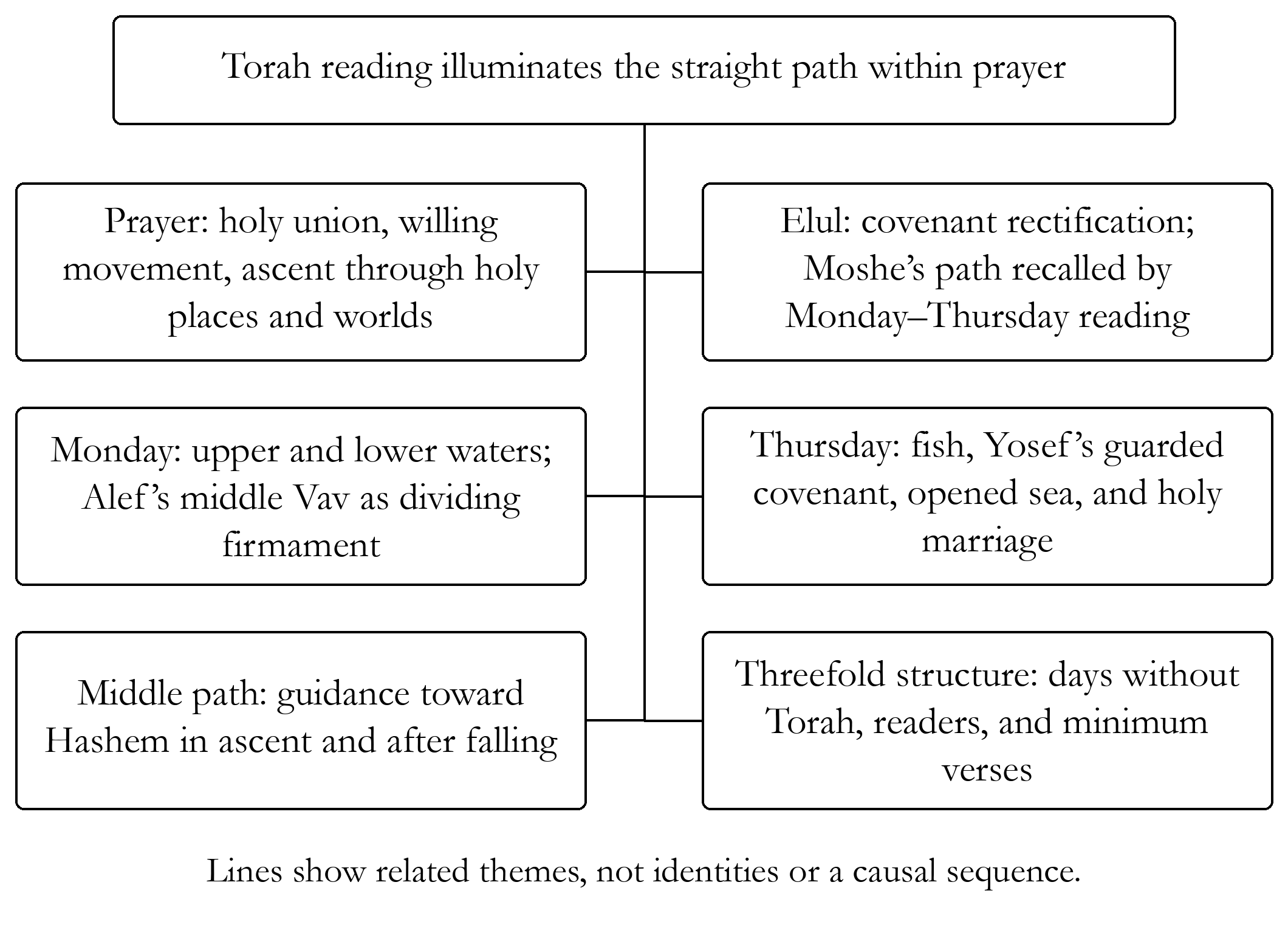
Halacha 3 applies Rabbainu’s Elul teachings in Likutay Moharan II:87 and II:82 to weekday Torah reading within prayer. Covenant rectification and prayer meet guidance in ascent and descent, culminating in the reading’s threefold structure.
Diagram 1 — Torah’s Light Within Prayer
Diagram 2 — Relations Around the Illuminated Path
— End of translator study aid and diagrams. Not part of the original text of Likutay Halachos. —
Kreyas HaTorah (Public Torah Reading) — Halacha 4
Earlier annotations and link context
Earlier Reader contexts are retained separately. Their links identify current source references; they do not assert that an earlier English selection has the same meaning in the corrected edition.
Earlier paragraph 3
Earlier Reader annotation context; not the corrected source edition
הלכה ג אות א ענין קריאת התורה בשעת התפלה בשני וחמיני וכו':
Earlier pointed Hebrew field
עִנְיַן קְרִיאַת הַתּוֹרָה בִּשְׁעַת הַתְּפִלָּה בְּשֵׁנִי וַחֲמִישִׁי וְכוּ':
Therefore it is forbidden to form partnerships with idolaters — lest one transgress "the name of other gods you shall not mention." Although one must engage in business, it is a great danger — a great battle — for through business one makes the path to Eretz Yisrael via Chesed Chinam (which sustains business). Therefore one must be very careful to do business with emunah: "Nasasa v'nasata b'emunah" — "Did you conduct business faithfully?" The essential thing in business = emunah — believing that He created everything: "B'Raishis bara Elokim" — and by His will etc. Therefore one must bind himself to true Tzaddikim who sustain all businesspeople through the Chesed Chinam (= emunah in the Asarah Ma'amaros through which Hashem created the world).
Earlier paragraph 4
Earlier Reader annotation context; not the corrected source edition
Current source references: [165]
על פי מה שכתב רבינו ז"ל בליקוטי תנינא (סימן פ"ז) שכוונות אלול הם תקון הברית. כי כוונות אלול הם בחינת הנותם בים דרך שצריך להאיר הדרך בים וכו'. ועל ידי זה הוא מוצא זווגו והיא אינה כנגדו וכו'. וסוד זה מסר אברהם לאליעזר בעת שלח ~ אותו למצוא הזווג של יצחק בנו. וזה שאמר לו ואם לא תאבה האשה ללכת אחריך ראשי תיבות אלול. ובאמצע הם תיבות תאבה האשה. כי על ידי כוונות אלול שעל ידי זה נעשה תיקון הברית. על ידי זה נעשה בה רצון אליו, ואזי תאבה האשה. כי על ידי פגם הברית היא נוטה מרצונו וכו'. ועל ידי תיקון הברית על ידי כוונות אלול שהם בחינת הנותן בים דרך, על ידי זה תאבהה האשר וכו'. עיין שם ענין זה היטב, כי הוא סוד עמוק ונסתר מאד מאד:
Based on LM I:215 — The Twenty-Four Types of Pidyonos (continued)
Earlier paragraph 5
Earlier Reader annotation context; not the corrected source edition
Current source references: [166]
וזה בחינת ואם לא תאבה האשכ ללכת אחריך, ללכת דיקא. כי עלידי כוונת אלול המרומז בראשי תיבות, מתקן בחינת הדרך בחינת הנותן בים דרך. ואזי תאבה האשר ללכת אחריך ללכת דייקא. כי היא מרוצה לילך בדרך אחריו מאחר שכבר תיקן והאיר בה בחינת הדרך שהוא בחינת כוונות אלול המרומז בראשית תיבות של זה הפסוק שהם בחינת הנותן בים דרך כנ"ל. ועל כן על ידי זה תאבה האשה ללכת וכו', ללכת דייקא שהוא בחינת דרך כנ"ל:
Earlier pointed Hebrew field
וְזֶה בְּחִינַת 'וְאִם לֹא תֹאבֶה הָאִשָּׁה לָלֶכֶת אַחֲרֶיךָ', 'לָלֶכֶת' דַּיְקָא, כִּי עַל-יְדֵי כַּוָּנַת אֱלוּל הַמְרֻמָּז בְּרָאשֵׁי תֵּבוֹת, מְתַקֵּן בְּחִינַת הַדֶּרֶךְ, בְּחִינַת הַנּוֹתֵן בַּיָּם דָּרֶךְ וַאֲזַי תֹּאבֶה הָאִשָּׁה לָלֶכֶת אַחֲרֶיךָ, 'לָלֶכֶת' דַּיְקָא, כִּי הִיא מְרֻצָּה לֵילֵךְ בַּדֶּרֶךְ אַחֲרָיו מֵאַחַר שֶׁכְּבָר תִּקֵּן וְהֵאִיר בָּהּ בְּחִינַת הַדֶּרֶךְ, שֶׁהוּא בְּחִינַת כַּוָּנוֹת אֱלוּל הַמְרֻמָּז בְּרָאשֵׁי תֵּבוֹת שֶׁל זֶה הַפָּסוּק, שֶׁהֵם בְּחִינַת הַנּוֹתֵן בַּיָּם דָּרֶךְ כַּנַּ"ל וְעַל-כֵּן עַל-יְדֵי זֶה תֹּאבֶה הָאִשָּׁה לָלֶכֶת וְכוּ', 'לָלֶכֶת' דַּיְקָא, שֶׁהוּא בְּחִינַת דֶּרֶךְ כַּנַּ"ל: ~ אות ב וְזֶה בְּחִי
This is the aspect of (Pesachim 2a): "Or l'arba'ah asar bodkin es hachametz l'or haner" — "On the night preceding the fourteenth, one searches for chametz by the light of a candle." This is also the aspect of the Siman for the Seder of Pesach: it begins with "Kadesh" and ends with "Nirtzah."
Earlier paragraph 7
Earlier Reader annotation context; not the corrected source edition
Current source references: [167]
אות ב וזה בחינת תפלה. כי תקון התפלה הוא בחינת זווג דקדושה כידוע כמו שאמר רבינו ז"ל במקום אחר שאצל הצדיקים הגדולים אין הפרש בין תפלה לזווג כמו שכתב רבינו ז"ל על מאמר רז"ל שתהא תפלתי סמוכה למטתי וכו' עיין שם. כי התפלה היא בחינת אשה יראת ה', ועיקר תיקון התפלה הוא על ידי בחינת כוונות אלול שהוא בחינת הנותן בים דרך שעל ידי זה תאבה האשר ללכת וכו'. וזהו בחינת תקון התפלה שהוא בחינת אשה יראת ה'. כי עיקר תיקון התל הוא בבחינת אם שגורה תפלתי בפי ידוע אני שהוא מקובל, שהוא בחינת (בראשית כ"ד) ויהי הוא טרם כלה לדבר והנה רבקה יוצאת וכו'. הה"ד (תהלים פ"ה) צדק לפניך יהלך וישם לדרך פעמיו כמו שכתוב בתיקונים (תי' תמני סרי עיין שם+(. ויהי הוא טרם כלה לדבר והנה רבקה יוצאת שהוא בחינת תיקון התפלה בחינת שגורה תפלתי בפי כנ"ל, והא בחינת תאבה האשה ללכת אחריך שהאשה יראת ה' היא רבקה אשת יצחק נמשך בה רצון על ידי כוונות אלו שעל ידי זה ויהי הוא טרם כלה לדבר והנה רבקה יוצאת. וזה בעצמו תיקון התפלה בחינת שקורה תפלתי בפי כמבואר בתיקונם כנ"ל שהאשה יראת ה' שהיא בחינת התפלה הולכת ונמשכת אחר האדם בחינת אם שגורה תפלתי בפי יודע אני שהוא מקובל. וכל זה על ידי כוונות אלול שהוא בחינת הנותן בים דר וכמו שסיים שם בתיקונים הנה"ד צדק לפניו יהלך וישם לדרך פעמיו. כי צ ריך להאיר בבחינת התפלה בחינת הדרך שהוא בחינת כוונות אלול כדי שתהיה התפלה כראוי בבחינת שגורה תפלתי בפי וכו'. בבחינת ויהי הוא טרם כלה לדבר והנה רבקה יוצאת וכו' כנ"ל. ועל כן עיקר תיקון התפלה הוא בחדש אלול שאז מרבים ישראל בתפלות ותחנונים. כי עיקר התיקון התפלה על ידי כוונות אלול שהם בחינת הנותן בים דרך שעל ידי זה תאבה האשכ ללכת אחריך שזה בחינת ויהי הוא טרם כלה לדבר והנה רבקה יוצאת שזה בחינת תיקון התפלה כנ"ל:
Earlier pointed Hebrew field
וְזֶה בְּחִינַת תְּפִלָּה, כִּי תִּקּוּן הַתְּפִלָּה הוּא בְּחִינַת זִוּוּג דִּקְדֻשָּׁה כַּיָּדוּעַ , כְּמוֹ שֶׁאָמַר רַבֵּנוּ זִכְרוֹנוֹ לִבְרָכָה בְּמָקוֹם אַחֵר שֶׁאֵצֶל הַצַּדִּיקִים הַגְּדוֹלִים אֵין הֶפְרֵשׁ בֵּין תְּפִלָּה לְזִוּוּג, כְּמוֹ שֶׁכָּתַב רַבֵּנוּ זִכְרוֹנוֹ לִבְרָכָה עַל מַאֲמַר רַבּוֹתֵינוּ זִכְרוֹנָם לִבְרָכָה, שֶׁתְּהֵא תְּפִלָּתִי סְמוּכָה לְמִטָּתִי וְכוּ', עַיֵּן שָׁם כִּי הַתְּפִלָּה הִיא בְּחִינַת אִשָּׁה יִרְאַת ה', וְעִקַּר תִּקּוּן הַתְּפִלָּה הוּא עַל -יְדֵי בְּחִינַת כַּוָּנוֹת אֱלוּל, שֶׁהוּא בְּחִינַת הַנּוֹתֵן בַּיָּם דָּרֶךְ, שֶׁעַל -יְדֵי זֶה תֹּאבֶה הָאִשָּׁה לָלֶכֶת וְכוּ' וְזֶהוּ בְּחִינַת תִּקּוּן הַתְּפִלָּה, שֶׁהוּא בְּחִינַת אִשָּׁה יִרְאַת ה', כִּי עִקַּר תִּקּוּן הַתְּפִלָּה הוּא בִּבְחִינַת אִם שְׁגוּרָה תְּפִלָּתִי בְּפִי יוֹדֵעַ אֲנִי שֶׁהוּא מְקֻבָּל, שֶׁהוּא בְּחִינַת ( בְּרֵאשִׁית כד) וַיְהִי הוּא טֶרֶם כִּלָּה לְדַבֵּר וְהִנֵּה רִבְקָה יוֹצֵאת וְכוּ' הַהוּא דִּכְתִיב ( תְּהִלִּים פה), "צֶדֶק לְפָנָיו יְהַלֵּךְ וְיָשֶׂם לַדֶּרֶךְ פְּעָמָיו" כְּמוֹ שֶׁכָּתוּב בַּתִּקּוּנִים ( תִּקּוּן תְּמָנֵי סְרִי, עַיֵּן שָׁם) וַיְהִי הוּא טֶרֶם כִּלָּה לְדַבֵּר וְהִנֵּה רִבְקָה יוֹצֵאת, שֶׁהוּא בְּחִינַת תִּקּוּן הַתְּפִלָּה, בְּחִינַת שְׁגוּרָה תְּפִלָּתִי בְּפִי כַּנַּ"ל, הוּא בְּחִינַת תֹּאבֶה הָאִשָּׁה לָלֶכֶת אַחֲרֶיךָ שֶׁהָאִשָּׁה יִרְאַת ה', שֶׁהִיא רִבְקָה אֵשֶׁת יִצְחָק, נִמְשָׁךְ בָּהּ רָצוֹן עַל-יְדֵי כַּוָּנוֹת אֱלוּל, שֶׁעַל -יְדֵי זֶה "וַיְהִי הוּא טֶרֶם כִּלָּה לְדַבֵּר וְהִנֵּה רִבְקָה יוֹצֵאת". וְזֶה בְּעַצְמוֹ תִּקּוּן הַתְּפִלָּה בְּחִינַת שְׁגוּרָה תְּפִלָּתִי בְּפִי, כַּמְבֹאָר בַּתִּקּוּנִים כַּנַּ"ל שֶׁהָאִשָּׁה יִרְאַת ה', שֶׁהִיא בְּחִינַת הַתְּפִלָּה, הוֹלֶכֶת וְנִמְשֶׁכֶת אַחַר הָאָדָם בְּחִינַת אִם שְׁגוּרָה תְּפִלָּתִי בְּפִי יוֹדֵעַ אֲנִי שֶׁהוּא מְקֻבָּל וְכָל זֶה עַל-יְדֵי כַּוָּנוֹת אֱלוּל, שֶׁהוּא בְּחִינַת הַנּוֹתֵן בַּיָּם דָּרֶךְ וּכְמוֹ שֶׁסִּיֵּם שָׁם בַּתִּקּוּנִים, הַהוּא דִּכְתִיב, "צֶדֶק לְפָנָיו יְהַלֵּךְ וְיָשֶׂם לַדֶּרֶךְ פְּעָמָיו" כִּי צָרִיךְ לְהָאִיר בִּבְחִינַת הַתְּפִלָּה, בְּחִינַת הַדֶּרֶךְ, שֶׁהוּא בְּחִינַת כַּוָּנוֹת אֱלוּל כְּדֵי שֶׁתִּהְיֶה הַתְּפִלָּה כָּרָאוּי בִּבְחִינַת שְׁגוּרָה תְּפִלָּתִי בְּפִי וְכוּ' בִּבְחִינַת וַיְהִי הוּא טֶרֶם כִּלָּה לְדַבֵּר וְהִנֵּה רִבְקָה יוֹצֵאת וְכוּ' כַּנַּ"ל וְעַל -כֵּן עִקַּר תִּקּוּן הַתְּפִלָּה הוּא בְּחֹדֶשׁ אֱלוּל שֶׁאָז מַרְבִּים יִשְׂרָאֵל בִּתְפִלּוֹת וְתַחֲנוּנִים, כִּי עִקַּר הַתִּקּוּן הַתְּפִלָּה עַל-יְדֵי כַּוָּנוֹת אֱלוּל, שֶׁהֵם בְּחִינַת הַנּוֹתֵן בַּיָּם דָּרֶךְ, שֶׁעַל-יְדֵי זֶה תֹּאבֶה הָאִשָּׁה לָלֶכֶת אַחֲרֶיךָ, שֶׁזֶּה בְּחִינַת וַיְהִי הוּא טֶרֶם כִּלָּה לְדַבֵּר וְהִנֵּה רִבְקָה יוֹ
.bold-concept{font-weight:bold;color:#1a3c5e}
Earlier paragraph 9
Earlier Reader annotation context; not the corrected source edition
Current source references: [168]
אות ג כי צריך להאיר בחינת הדרך בהתפלה כדי שתוכל התפלה ללכת בדרך הישר מחוץ לארץ ישראל, ומשם לירושלים ולבית המקדש ולקדשי קדשים בבחינת (מלכים א' ח') והתפללו אליך דרך ארצם. דרך דייקא. כי התפלה צריכה לילך לארץ ישראל וכו' ולקדש קדשים, ומשם לשמים, ואחר כך מרקיע לרקיע ומעולם לעולם עד שתלך ותעלה למקומה. ועל כן צריכין להאיר בה בחינת הדרך על ידי כוונות אלול שהוא בחינת הנותן בים דרך כנ"ל:
Earlier pointed Hebrew field
כִּי צָרִיךְ לְהָאִיר בְּחִינַת הַדֶּרֶךְ בְּהַתְּפִלָּה כְּדֵי שֶׁתּוּכַל הַתְּפִלָּה לָלֶכֶת בְּדֶרֶךְ הַיָּשָׁר מִחוּץ לָאָרֶץ לְאֶרֶץ יִשְׂרָאֵל, וּמִשָּׁם לִירוּשָׁלַיִם וּלְבֵית הַמִּקְדָּשׁ וּלְקָדְשֵׁי קֳדָשִׁים בִּבְחִינַת ( מְלָכִים -א ח) וְהִתְפַּלְּלוּ אֵלֶיךָ דֶּרֶךְ אַרְצָם 'דֶּרֶךְ' דַּיְקָא, כִּי הַתְּפִלָּה צְרִיכָה לֵילֵךְ לְאֶרֶץ יִשְׂרָאֵל וְכוּ' וּלְקֹדֶשׁ קֳדָשִׁים, וּמִשָּׁם לַשָּׁמַיִם, וְאַחַר כָּךְ מֵרָקִיעַ לְרָקִיעַ וּמֵעוֹלָם לְעוֹלָם עַד שֶׁתֵּלֵךְ וְתַעֲלֶה לִמְקוֹמָהּ וְעַל-כֵּן צְרִיכִין לְהָאִיר בָּהּ בְּחִינַת הַדֶּרֶךְ, עַל-יְדֵי כַּוָּנוֹת אֱלוּל, שֶׁהוּא בְּחִינַת הַנּוֹתֵן בַּיָּם דָּרֶךְ כַּנַּ"ל:
.transliteration{font-style:italic;color:#555}
Earlier paragraph 11
Earlier Reader annotation context; not the corrected source edition
Current source references: [169]
אות ד וזה בחינת קריאת התורה בשעת התפלה. כי עיקר הדרך מאיר על ידי התורה. כי התורה מאירה את הדרך. כי על שם זה נקראת תורה, על שם שהיא מורה לנו את הדרך. כמו שכתוב (שמות יח). להורות להם את הדרך אשר ילכו וכו'. וכמו שכתוב (תהלים קי"ט) דרך מצותיך ארוץ וכו' דרך פקודך בחרתי וכו'. וכתיב (משלי ג') דרכיה דרכי נועם. ועל כן על ידי התורה שקורין בשעת התפלה על ידי זה מאירין את הדרך בים. דהיינו בבחינת התפלה, ואזי התפלה מקובלת בבחינת אם שגורה תפלתי בפי יודע אני שהוא מקובל שזה בחינת ויהי הוא טרם כלה לדבר והנה רבקה יוצאת שהוא בחינת והיה טרם יקראו ואני אענה וכו'. כי התורה מאירה בחינת הרך שהוא בחינת כוונות אלול בבחינת התפלה. ועל כן נתקן קריאת התורה בשעת התפלה בשני ובחמיי שהם הימים שעלה וירד משה בארבעים ימים האחרונים שהם ימי אלול לקבל לוחות אחרונות כמו שאמרו רז"ל (תוספות ב"ק דף פ"ב בשם במדרש) כי באלו הימים שקבל לוחות אחרונות שהם ימי אלול עשה משה דרך כבושה שהוא כוונות אלול כמו שכתב רבינו זל במקום אחר (לקוטי תנינא סימן פ"ב). ועל כן קורין באלו הימים שעלה משה וירד. כי עיקר קריאת התורה בשעת התפלה הוא כדי להאיר הדרך בים כנ"ל:
Earlier pointed Hebrew field
וְזֶה בְּחִינַת קְרִיאַת הַתּוֹרָה בִּשְׁעַת הַתְּפִלָּה, כִּי עִקַּר הַדֶּרֶךְ מֵאִיר עַל-יְדֵי הַתּוֹרָה, כִּי הַתּוֹרָה מְאִירָה אֶת הַדֶּרֶךְ, כִּי עַל שֵׁם זֶה נִקְרֵאת תּוֹרָה, עַל שֵׁם שֶׁהִיא מוֹרָה לָנוּ אֶת הַדֶּרֶךְ, כְּמוֹ שֶׁכָּתוּב ( שְׁמוֹת יח), "לְהוֹרוֹת לָהֶם אֶת הַדֶּרֶךְ אֲשֶׁר יֵלְכוּ וְכוּ'" וּכְמוֹ שֶׁכָּתוּב ( תְּהִלִּים קיט), "דֶּרֶךְ מִצְוֹתֶיךָ אָרוּץ וְכוּ' דֶּרֶךְ פִּקּוּדֶךָ בָּחָרְתִּי וְכוּ'" וּכְתִיב ( מִשְׁלֵי ג), "דְּרָכֶיהָ דַרְכֵי נֹעַם" וְעַל-כֵּן עַל -יְדֵי הַתּוֹרָה שֶׁקּוֹרִין בִּשְׁעַת הַתְּפִלָּה, עַל-יְדֵי זֶה מְאִירִין אֶת הַדֶּרֶךְ בַּיָּם, דְּהַיְנוּ בִּבְחִינַת הַתְּפִלָּה, וַאֲזַי הַתְּפִלָּה מְקֻבֶּלֶת בִּבְחִינַת אִם שְׁגוּרָה תְּפִלָּתִי בְּפִי יוֹדֵעַ אֲנִי שֶׁהוּא מְקֻבָּל, שֶׁזֶּה בְּחִינַת וַיְהִי הוּא טֶרֶם כִּלָּה לְדַבֵּר וְהִנֵּה רִבְקָה יוֹצֵאת, שֶׁהוּא בְּחִינַת וְהָיָה טֶרֶם יִקְרָאוּ וַאֲנִי אֶעֱנֶה וְכוּ' כִּי הַתּוֹרָה מְאִירָה בְּחִינַת דֶּרֶךְ, שֶׁהוּא בְּחִינַת כַּוָּנוֹת אֱלוּל בִּבְחִינַת הַתְּפִלָּה וְעַל-כֵּן נִתְקַן קְרִיאַת הַתּוֹרָה בִּשְׁעַת הַתְּפִלָּה בְּשֵׁנִי וּבַחֲמִישִׁי שֶׁהֵם הַיָּמִים שֶׁעָלָה וְיָרַד משֶׁה בְּאַרְבָּעִים יָמִים הָאַחֲרוֹנִים, שֶׁהֵם יְמֵי אֱלוּל לְקַבֵּל לוּחוֹת אַחֲרוֹנוֹת, כְּמוֹ שֶׁאָמְרוּ רַבּוֹתֵינוּ זִכְרוֹנָם לִבְרָכָה ( תּוֹסָפוֹת בָּבָא קַמָּא דַּף פב בְּשֵׁם הַמִּדְרָשׁ) כִּי בְּאֵלּוּ הַיָּמִים שֶׁקִּבֵּל לוּחוֹת אַחֲרוֹנוֹת, שֶׁהֵם יְמֵי אֱלוּל, עָשָׂה משֶׁה דֶּרֶךְ כְּבוּשָׁה, שֶׁהוּא כַּוָּנוֹת אֱלוּל, כְּמוֹ שֶׁכָּתַב רַבֵּנוּ זִכְרוֹנוֹ לִבְרָכָה בְּמָקוֹם אַחֵר ( לִקּוּטֵי תִּנְיָנָא סִימָן פב) וְעַל-כֵּן קוֹרִין בְּאֵלּוּ הַיָּמִים שֶׁעָלָה משֶׁה וְיָרַד, כִּי עִקַּר קְרִיאַת הַתּוֹרָה בִּשְׁעַת הַתְּפִלָּה הוּא כְּדֵי לְהָאִיר הַדֶּרֶךְ בַּיָּם כַּנַּ"ל:
.source{font-size:.88em;color:#888}
Earlier paragraph 13
Earlier Reader annotation context; not the corrected source edition
Current source references: [170]
אות ה ועל כן עיקר קריאת התורה בשני וחמישי נתתקן בעת שהלכו ישראל בדרך בלא תורה ג' ימים ונתייגעו וכו', עמדו נביאים שביניהם ותקנו שיהיו קורין בתורה בשני וחמישי כמו שאמרו רז"ל (ב"ק פ"ב). כי עיקר תיקון קריאת התורה בשני וחמישי הוא בשביל תיקון הדרך הוא על ידי התורה שהיא מורה דרך כנ"ל. וזה בחינת (משלי ו') בהתהלכך תנחה ~ אותך וכו'. ועל כן כשהלכו ישראל בדרך בלא תורה נתייגעו ועל כן תקנו אז דיקיא קריאת התורה. כי על ידי התורה מתקנים בחינת דרך כנ"ל, ועל כן תקנו קריאת התרוה בשעת התפלה בימים שעלה משה בימי אלול לקבל את התורה ועשה דרך כבושה כנ"ל, כדי להמשיך בחינת כוונות אלול להאיר הדרך בים כדי שתהיה התפלה בבחינת אם שגורה התפלה בפי יודע אני שהוא מקובל שהוא בחינת ויהי הוא טרם כלה לדבר והנה רבקה יוצאת בחינתטרם יקראו ואני אענה שזהו בחינ תאבה האשה שהיא רבקה ללכת וכו' שזה נעשה כל ידי כוונות אלול שנמשך על ידי קריאת התורה בשני וחמישי וכו' כנ"ל:
.bracket-def{font-size:.92em;color:#666}
Earlier paragraph 15
Earlier Reader annotation context; not the corrected source edition
Current source references: [171]
אות ו כי שני וחמישי הם בבחינת כוונות אלול בחינת הנותן בים דרך הנ"ל. כי בשני נאמר יהי רקיע בתוך המים ויהי מבדיל בין מים למים, בין מים עליונים למים תחתונים. וזה בחינת סוד כוונות אלול בחינת דרך הנ"ל שנעשה על ידי בחינת אם אסק שמים שם אתה ואציעה שאול הנך. אם אסק שמים ואציעה שאול הם בחינת יו"ד עליונה שעל האלף ויו"ד תחתונה שתחת האלף שהם בחינת סגול דקס"א וחיריק דס"ג שמהם נעשה בחינת הדרך כמבואר בכוונות וכמבואר במאמר ויאמר ה' אל משה קרא את יהושע (בסימןו ו' ליקוטי חלק א') ובמאמר כי תצא (לקוטי תנינא סימן פ"ב) עיין שם היטב. וזה בחינת יהי רקיע בתוך המים ויהי מבדיל בין מים למים שזה בחינת סוד תמונת אלף כמובא בתיקונים כי מים עליונים הם בחינת יו"ד עליונה שעל גג האל, ומים תחתונים הם בחינת יו"ד תחתונ שתחת גג האלף, ורקיע המבדיל בין מים למים הוא בחינת הוא"ו שבתוך האלף כידוע, וזזה בחינת הנותן בים דרך שוא בבחינת הבדלה בין מים למים שעל ידי זה נעשה דרך בים שזה עיקר בריאת העולם, כי על ידי זה עשו שמים וארץ. כי בחינת הדרך הנ"ל שהוא בחינת דרך התשובה בחינת אם אסק שמים שם אתה ואציעה שאול הנך, זה עיקר בריאת העולם וקיומו. כי תשובה קדם לעולם, ובלא זה אין העולם מתקיים. כי עיקר בריאת העולם בגין דישתמודעין לי' דהיינו להכיר ~ אותו יתברך בכל מקום, בבחינת אם אסק שמים שם אתה ואציעה שאול הנך. נמצא שיום שני הוא בבחינת הנותן בים דרך שהוא בחינת כוונות אלול בחינת אלף כנ"ל, שהוא בחינת יהי רקיע בתוך המים ויהי מבדיל וכו':
Earlier pointed Hebrew field
כִּי שֵׁנִי וַחֲמִישִׁי הֵם בִּבְחִינַת כַּוָּנוֹת אֱלוּל, בְּחִינַת הַנּוֹתֵן בַּיָּם דָּרֶךְ הַנַּ"ל כִּי בַּשֵּׁנִי נֶאֱמַר, "יְהִי רָקִיעַ בְּתוֹךְ הַמַּיִם וִיהִי מַבְדִּיל בֵּין מַיִם לָמָיִם", בֵּין מַיִם עֶלְיוֹנִים לְמַיִם תַּחְתּוֹנִים וְזֶה בְּחִינַת סוֹד כַּוָּנוֹת אֱלוּל, בְּחִינַת דֶּרֶךְ הַנַּ"ל שֶׁנַּעֲשֶׂה עַל-יְדֵי בְּחִינַת אִם אֶסַּק שָׁמַיִם שָׁם אָתָּה וְאַצִּיעָה שְׁאוֹל הִנֶּךָּ 'אִם אֶסַּק שָׁמַיִם וְאַצִּיעָה שְׁאוֹל' הֵם בְּחִינַת יוּ"ד עֶלְיוֹנָה שֶׁעַל הָאָלֶף וְיוּ"ד תַּחְתּוֹנָה שֶׁתַּחַת הָאָלֶף, שֶׁהֵם בְּחִינַת סֶגוֹל דקס"א וְחִירִיק דס"ג, שֶׁמֵּהֶם נַעֲשֶׂה בְּחִינַת הַדֶּרֶךְ, כַּמְבֹאָר בַּכַּוָּנוֹת וְכַמְבֹאָר בַּמַּאֲמָר "וַיֹאמֶר ה' אֶל משֶׁה קְרָא אֶת יְהוֹשֻׁעַ" ( בְּסִימָן ו לִקּוּטֵי חֵלֶק א) וּבְמַאֲמַר "כִּי תֵצֵא" ( לִקּוּטֵי תִּנְיָנָא סִימָן פב), עַיֵּן שָׁם הֵיטֵב וְזֶה בְּחִינַת יְהִי רָקִיעַ בְּתוֹךְ הַמַּיִם וִיהִי מַבְדִּיל בֵּין מַיִם לָמָיִם, שֶׁזֶּה בְּחִינַת סוֹד תְּמוּנַת אָלֶף, כַּמּוּבָא בַּתִּקּוּנִים, כִּי מַיִם עֶלְיוֹנִים הֵם בְּחִינַת יוּ"ד עֶלְיוֹנָה שֶׁעַל גַּג הָאָלֶף, וּמַיִם תַּחְתּוֹנִים הֵם בְּחִינַת יוּ"ד תַּחְתּוֹנָה שֶׁתַּחַת גַּג הָאָלֶף, וְרָקִיעַ הַמַּבְדִּיל בֵּין מַיִם לָמָיִם הוּא בְּחִינַת הַוָּא"ו שֶׁבְּתוֹךְ הָאָלֶף כַּיָּדוּעַ, וְזֶה בְּחִינַת הַנּוֹתֵן בַּיָּם דָּרֶךְ שֶׁהוּא בִּבְחִינַת הַבְדָּלָה בֵּין מַיִם לָמָיִם, שֶׁעַל-יְדֵי זֶה נַעֲשָׂה דֶּרֶךְ בַּיָּם, שֶׁזֶּה עִקַּר בְּרִיאַת הָעוֹלָם, כִּי עַל-יְדֵי זֶה נַעֲשׂוּ שָׁמַיִם וָאָרֶץ, כִּי בְּחִינַת הַדֶּרֶךְ הַנַּ"ל, שֶׁהוּא בְּחִינַת דֶּרֶךְ הַתְּשׁוּבָה, בְּחִינַת אִם אֶסַּק שָׁמַיִם שָׁם אָתָּה וְאַצִּיעָה שְׁאוֹל הִנֶּךָּ, זֶה עִקַּר בְּרִיאַת הָעוֹלָם וְקִיּוּמוֹ כִּי תְּשׁוּבָה קָדַם לָעוֹלָם, וּבְלֹא זֶה אֵין הָעוֹלָם מִתְקַיֵּם, כִּי עִקַּר בְּרִיאַת הָעוֹלָם בְּגִין דְּיִשְׁתְּמוֹדְעִין לֵהּ, דְּהַיְנוּ לְהַכִּיר אוֹתוֹ יִתְבָּרַךְ בְּכָל מָקוֹם, בִּבְחִינַת אִם אֶסַּק שָׁמַיִם שָׁם אָתָּה וְאַצִּיעָה שְׁאוֹל הִנֶּךָּ נִמְצָא, שֶׁיּוֹם שֵׁנִי הוּא בִּבְחִינַת הַנּוֹתֵן בַּיָּם דָּרֶךְ, שֶׁהוּא בְּחִינַת כַּוָּנוֹת אֱלוּל, בְּחִינַת אָלֶף כַּנַּ"ל, שֶׁהוּא בְּחִינַת יְהִי רָקִיעַ בְּתוֹךְ הַמַּיִם וִיהִי מַבְדִּיל וְכוּ':
Likutay Halachos — Hilchos Kri'as Shma
Earlier paragraph 17
Earlier Reader annotation context; not the corrected source edition
Current source references: [172]
אות ז וזה בחינת יום חמישי. כי בחמישי נאמרה ברכה לדגים, ודגים הם בבחינת זרעו של יוסף שנתברכו וידגו לרוב וכו'. כי עיקר הדרך המאיר בים הנ"ל הוא בבחינת יוסף הוא בחינת שמירת הברית שעל ידי זה מאיר הדרך בים כנ"ל. ועל כן עיקר קריעת ים סוף שעליו נאמר הנותן סים דרך היה על ידי יוסף כמו שכתוב (תהלים קי"ד) הים ראה וינס ויצא החוצה כמו שדרשו רז"ל. כי יוסף הוא בחינת שמירת הברית שעל ידי זה הוא בחינת הנותן בים דרך כנ"ל שזה הוא בחינת קריעת ים סוף שנעשה דרך בים, בחינת (תהלים ע"ז) בים דרכך על ידי (שם) גאלת בזרוע עמך בני יעקב ויוסף סלב. כי הדרך נעשה על ידי בחינת יעקב ויוסף שהם בחינת שמירת הברית כנ"ל, ועל כן נתברכו זרעו של יוסף ברכת דגים. כי הדגים יש להם דרך בים יותר מכל מין חי. כי עיקר חיותם במים. וכל מין חי אין לו דרך בים כי יהיה נטבע שם, והדגים עיקר חיותם שם. נמצא שיש להם דרך בים שחיים והולכים שם, ועל כן הם בבחינת זרעא דיוסף שהם בבחינת הנותן בים דרך כנ"ל, ועל כן בחמישי שנאמרה בו ברכה לדגים תקנו חז"ל בו נישואין כמו שאמרו רז"ל בכתובות (שף ה'). כי הנשואין דקדושה דהיינו נשואין של ישראל הם בבחינת הנותן בים דרך כמובן בדברי רבינו הנ"ל, על כן תקנו נשואין בחמישי הואיל ונאמרה בו ברכה לדגים. כי ברכת דגים הם בבחינת זרעא דיוסף שהוא בחינת הנותן בים דרך שהוא בחינת תיקון הברית בחינת נשואין דקדושה כנ"ל:
Earlier pointed Hebrew field
וְזֶה בְּחִינַת יוֹם חֲמִישִׁי, כִּי בַּחֲמִישִׁי נֶאֶמְרָה בְּרָכָה לְדָגִים, וְדָגִים הֵם בִּבְחִינַת זַרְעוֹ שֶׁל יוֹסֵף שֶׁנִּתְבָּרְכוּ 'וְיִדְגוּ לָרֹב' וְכוּ' כִּי עִקַּר הַדֶּרֶךְ הַמֵּאִיר בַּיָּם הַנַּ"ל הוּא בִּבְחִינַת יוֹסֵף שֶׁהוּא בְּחִינַת שְׁמִירַת הַבְּרִית שֶׁעַל-יְדֵי זֶה מֵאִיר הַדֶּרֶךְ בַּיָּם כַּנַּ"ל וְעַל-כֵּן עִקַּר קְרִיעַת יַם סוּף שֶׁעָלָיו נֶאֱמַר 'הַנּוֹתֵן בַּיָּם דָּרֶךְ', הָיָה עַל-יְדֵי יוֹסֵף, כְּמוֹ שֶׁכָּתוּב ( תְּהִלִּים קיד), "הַיָּם רָאָה וַיָּנֹס"-וַיֵּצֵא הַחוּצָה, כְּמוֹ שֶׁדָּרְשׁוּ רַבּוֹתֵינוּ זִכְרוֹנָם לִבְרָכָה. כִּי יוֹסֵף הוּא בְּחִינַת שְׁמִירַת הַבְּרִית, שֶׁעַל-יְדֵי זֶה הוּא בְּחִינַת הַנּוֹתֵן בַּיָּם דָּרֶךְ כַּנַּ"ל, שֶׁזֶּה הוּא בְּחִינַת קְרִיעַת יַם סוּף שֶׁנַּעֲשָׂה דֶּרֶךְ בַּיָּם, בְּחִינַת ( תְּהִלִּים עז) בַּיָּם דַּרְכְּךָ, עַל-יְדֵי גָּאַלְתָּ בִּזְרוֹעַ עַמְּךָ בְּנֵי יַעֲקֹב וְיוֹסֵף סֶלָה ( שָׁם) כִּי הַדֶּרֶךְ נַעֲשֶׂה עַל -יְדֵי בְּחִינַת יַעֲקֹב וְיוֹסֵף שֶׁהֵם בְּחִינַת שְׁמִירַת הַבְּרִית כַּנַּ"ל, וְעַל-כֵּן נִתְבָּרְכוּ זַרְעוֹ שֶׁל יוֹסֵף בְּבִרְכַּת דָּגִים, כִּי הַדָּגִים יֵשׁ לָהֶם דֶּרֶךְ בַּיָּם יוֹתֵר מִכָּל מִין חַי, כִּי עִקַּר חִיּוּתָם בַּמַּיִם וְכָל מִין חַי אֵין לוֹ דֶּרֶךְ בַּיָּם, כִּי יִהְיֶה נִטְבָּע שָׁם, וְהַדָּגִים עִקַּר חִיּוּתָם שָׁם נִמְצָא, שֶׁיֵּשׁ לָהֶם דֶּרֶךְ בַּיָּם שֶׁחַיִּים וְהוֹלְכִים שָׁם, וְעַל-כֵּן הֵם בִּבְחִינַת זַרְעָא דְּיוֹסֵף, שֶׁהֵם בִּבְחִינַת הַנּוֹתֵן בַּיָּם דָּרֶךְ כַּנַּ"ל, וְעַל-כֵּן בַּחֲמִישִׁי שֶׁנֶּאֶמְרָה בּוֹ בְּרָכָה לְדָגִים תִּקְּנוּ חֲכָמֵינוּ זִכְרוֹנָם לִבְרָכָה בּוֹ נִשּוּאִין, כְּמוֹ שֶׁאָמְרוּ רַבּוֹתֵינוּ זִכְרוֹנָם לִבְרָכָה בִּכְתֻבּוֹת ( דַּף ה) כִּי הַנִּשּוּאִין דִּקְדֻשָּׁה, דְּהַיְנוּ נִשּוּאִין שֶׁל יִשְׂרָאֵל הֵם בִּבְחִינַת הַנּוֹתֵן בַּיָּם דָּרֶךְ, כַּמּוּבָן בְּדִבְרֵי רַבֵּנוּ הַנַּ"ל, עַל-כֵּן תִּקְּנוּ נִשּוּאִין בַּחֲמִישִׁי הוֹאִיל וְנֶאֶמְרָה בּוֹ בְּרָכָה לְדָגִים, כִּי בִּרְכַּת דָּגִים הֵם בִּבְחִינַת זַרְעָא דְּיוֹסֵף, שֶׁהוּא בְּחִינַת הַנּוֹתֵן בַּיָּם דָּרֶךְ, שֶׁהוּ
Halacha 3 (§1–10)
Earlier paragraph 18
Earlier Reader annotation context; not the corrected source edition
Current source references: [173]
נמצא ששני וחמישי הם בבחינת הנותן בים דרך שהוא בחינת כוונות אלול, ועל כן בהם עלה משה וירד במ"ם ימים האחרונים שהם ימי אלול לקבל לוחות האחרונות שאז עשה משה בשעת קבלת הלוחות דרך כבושה הנ"ל כמבואר בדברי רבינו ז"ל, ועל כן בימים אלו דהיינו שבשני וחמישי קורין בתורה בשעת התפלה כדי להמשיך כוונות אלול כדי להאיר הדרך בים שזה עיקר תיקון התפלה כנ"ל:
Earlier pointed Hebrew field
נִמְצָא, שֶׁשֵּׁנִי וַחֲמִישִׁי הֵם בִּבְחִינַת הַנּוֹתֵן בַּיָּם דָּרֶךְ, שֶׁהוּא בְּחִינַת כַּוָּנוֹת אֱלוּל, וְעַל-כֵּן בָּהֶם עָלָה משֶׁה וְיָרַד בְּמֵ"ם יָמִים הָאַחֲרוֹנִים, שֶׁהֵם יְמֵי אֱלוּל, לְקַבֵּל לוּחוֹת הָאַחֲרוֹנוֹת, שֶׁאָז עָשָׂה משֶׁה בִּשְׁעַת קַבָּלַת הַלּוּחוֹת דֶּרֶךְ כְּבוּשָׁה הַנַּ"ל, כַּמְבֹאָר בְּדִבְרֵי רַבֵּנוּ זִכְרוֹנוֹ לִבְרָכָה, וְעַל-כֵּן בְּיָמִים אֵלּוּ, דְּהַיְנוּ בְּשֵׁנִי וַחֲמִישִׁי קוֹרִין בַּתּוֹרָה בִּשְׁעַת הַתְּפִלָּה כְּדֵי לְהַמְשִׁיךְ כַּוָּנוֹת אֱלוּל, כְּדֵי לְהָאִיר הַדֶּרֶךְ בַּיָּם, שֶׁזֶּה עִקַּר תִּקּוּן הַתְּפִלָּה כַּנַּ"
The general principle is this: although it is explained in the Torah [LM I:215] that there is an individual pidyon that sweetens the din from some particular beis din among the twenty-four batei dinim, and there is an all-encompassing pidyon that sweetens all the dinim in all twenty-four batei dinim — through the aspect of eis ratzon, the Metzach HaRatzon — nevertheless, one must know that all the pidyonos and sweetenings of dinim in the world — which is the essential avodah of every Yid collectively and individually, as is known and understood in the true sefarim — all have their essential root in the Metzach HaRatzon, which is Ra'ava d'Ra'avin. For if this aspect did not illuminate at every moment, the world could not endure from the force of the dinim in the lower metzach — as brought in the Idra Rabba and other places.
Earlier paragraph 20
Earlier Reader annotation context; not the corrected source edition
Current source references: [174]
אות ח וזה בחינת מה שאמרו רז"ל (ב"ק פ"ב) כשהלכו ישראל במדבר שלשה ימים בלא תורה היו יגיעים. ובשביל זה תקנו קריאת התורה בשני וחמישי כמובא לעיל. ועיקר הקפידא שלא ילכו ג' ימים בלא תורה. כי עיקר קריאת התורה הוא בשביל בחינת תיקון הדרך. כי על ידי התורה מאיר הדרך כנ"ל, ועיקר תיקון בחינת הדרך הוא בבחינת משולש שהוא בחינת שלשה ימים. כי ג' ימים הם בחינת ימין ושמאל ואמצע, ועיקר תיקון הרך הוא בבחינת המכריע שהוא בחינת ממוצא בין ימין ושמאל בבחינת בכל הדרך אשר צויתי אתכם תלכו לא תסורו ימין ושמאל. כי זה עיקר תיקון הדרך שלא לנטות לימין ושמאל. וזה בחינת אלף הנ"ל, שהוא בחינת אם אסק שמים שם אתה ואציעה שאול הנך. והוא"ו שבתוך האלף הוא בחינתה דרך שמכריע בין יוד עליונה ליוד תחתונה וכלול משניהם. וזה עיקר בחינת הדרך שעשה משה בחדש אלול שנוכל למצוא את השם יתברך תמיד הן בבחינת אם אסק שמים שם אתה ואציעה שאול ח"ו. כי יש מי שנוטה מהשם יתברך ח"ו על ידי עלייתו שהוא בחינת אסק שמים. ושם דייקא הוא תועה מן הדרך ושוכח בהשם יתברך. ויש להיפך שעל ידי נפילתו הוא תועה ושוכח בהשם יתברך. ומשה רבינו עליו השלום עשה דרך כבושה לבלי לנטות ימין ושמאל רק להשיב הכל אל הדרך הישר אל הדרך הממוצע. כי משה רבינו מאיר לשניהם ומורה ~ אותם דרך ישרה לבל יתעו מן הדרך, הן העולים למעלה בחינת אם אסק שמים, לבל יתעו מן הדרך ח"ו על ידי עלייתם רק בכל עליה ועליה ימצאו את השם יתברך בבחינת אם אסק שמים שם אתה. וכן משה רבינו מאיר גם להיורדים ח"ו אפילו ל~ אותן שנפלו מאד מקדושתם והם בשאול תחתיות ח"ו, גם להם מאיר משה רבינו עליו השלום ומורה להם את הדרך לבל ישכחו בהשם יתברך כי גם שם נמצא הוא יתברך בבחינת ואציעה שאול הנך וכמבואר במאמר כי תצא הנ"ל. וזה עיקר בחינת הדרך שהוא בחינת מכריע בין ימין לשמאל בין עליונים ותחתונים ומשלים לשניהם להשיבם כולם להדרך הישר. ועל כן בחינת הדרך כלול משלשה שהוא בחינת אלף שכלול מתלת, נקודה עליונה ונקודה התחתונה וואו שבאמצע וכנ"ל. ועל כן התורה שהוא בחינת דרך כנ"ל, כל בחינותיה הוא שלש שלש כמו שאמרו רז"ל (שבת פ"ח) בריך רחמנא דיהיב לן אוריאן תליתאה ביום תליתאה על ידי תליתאה וכו'. ועל כן דיקיא כשהלכו ישראל שלשה ימים בלא תורה נתייגעו. כי שלשה ימים אי אפשר לילך בלא תורה. כי ג' ימים הם בחינת ימין ושמאל ואמצע שהוא בחינת כלליות הדרך. ועיקר הוא בחינת יום השלישי הוא בחינת ממוצע שזה עיקר בחינת דרך הישר שלא לנטות לימין ולשמאל כנ"ל. ועל כן אי אפשר להיות ג' ימים בלא תורה שהוא בחינת הדרך שעיקרו בבחינת שלשה ימים וכו' כנ"ל. ועל כן תקנו קריאת התורה וכנ"ל:
Based on LM II:7
Earlier paragraph 21
Earlier Reader annotation context; not the corrected source edition
Current source references: [175]
ועל כן אין קורין בתורה בפחות משלשה אנשים שהם כהןלוי ישראל וכן כל אחד אינו קורא פחות מג' פסוקים. כי עיקר קריאת התורה הוא בשביל להאיר בחינת הדרך שהוא כלול משלשה שהוא בחינת אלף שהוא בחינת כהן לוי ישראל כמובא. וכנ"ל:
Earlier pointed Hebrew field
וְעַל-כֵּן אֵין קוֹרִין בַּתּוֹרָה בְּפָחוֹת מִשְּׁלשָׁה אֲנָשִׁים שֶׁהֵם, כֹּהֵן, לֵוִי, יִשְׂרָאֵל וְכֵן כָּל אֶחָד אֵינוֹ קוֹרֵא פָּחוֹת מִשְּׁלשָׁה פְּסוּקִים, כִּי עִקַּר קְרִיאַת הַתּוֹרָה הוּא בִּשְׁבִיל לְהָאִיר בְּחִינַת הַדֶּרֶךְ, שֶׁהוּא כָּלוּל מִשְּׁלשָׁה, שֶׁהוּא בְּחִינַת אָלֶף, שֶׁהוּא בְּחִינַת כֹּהֵן, לֵוִי, יִשְׂרָאֵל, כַּמּוּבָא וְכַנַּ"ל:
The distinction is only this: the Metzach HaRatzon always illuminates into the lower metzach in a state of great concealment and immense contraction. One who knows how to make a pidyon properly draws an illumination from there downward in greater revelation — nullifying a din from a particular beis din among the twenty-four. If he has greater power, he can nullify din from multiple batei dinim — according to the strength of his pidyon, according to the illumination he draws from the Metzach HaRatzon downward, etc. — through the Names, unifications, and kavanos pertaining to this; according to his power in good deeds (which is the essential); and according to his intensification in tefillah and supplications (which surpasses everything). There is also a distinction between times. For even on weekdays, through the tefillah of Yisrael, some illumination is drawn from the Metzach HaRatzon to the lower metzach, etc. — all according to the power of the tefillah. But on Shabbosos and Yamim Tovim — and primarily on Shabbos at Minchah — then "Atika Kadisha reveals His ratzon," and the Metzach HaRatzon is revealed in wondrous revelation. Then all the worlds and all the neshamos of Yisrael ascend there, etc. And then "Ra'ava d'Ra'avin is found, in which Moshe, Yosef, and Dovid departed." All this is impossible to explain fully; a little of it the wise person will understand on his own. Therefore you must know that all the geulos and yeshuos — both for Klal Yisrael collectively and for each individual — are all through the sweetening of the dinim through the pidyonos of the tzaddikim, who toil and labor on our behalf to sweeten all the dinim from upon us and to redeem us from all the troubles and sufferings at all times — collectively and individually. But certainly there is a great distinction between those who draw close to the tzaddik and those who do not — all the more so, one who opposes him, chas v'shalom. Even though the true tzaddik in his great goodness prays for them as well and sweetens dinim from upon them to redeem them — as Dovid HaMelech said (Tehillim 35): "Va'ani b'chalosam l'vushi sak... u'sfilasi al chaiki sashuv" — "When they were ill, my garment was sackcloth... and my prayer returned upon my own bosom" — nevertheless, the distinction between those who draw close and those who oppose, etc. — everyone can understand on their own. Regarding this the navi cried out (Hoshea 7): "Va'ani efdaim v'haimah dib'ru alai k'zavim" — "I redeem them, yet they speak lies about Me" — meaning: I am constantly engaged in redeeming them through the aspect of the pidyon, yet they, etc. Through this they delay the geulah, for the essential obstruction is through machlokes and accusation among the talmidei chachamim and throughout the world — as our Sages said. Let us return to our subject. On Pesach — at the beginning of the geulah of Yisrael from Mitzrayim, whose essential power was through an illumination from the pidyon, from Ra'ava d'Ra'avin, etc. — but this could not be drawn in completeness until Shavuos, as above. And the contamination of Mitzrayim clung to them greatly. Therefore the essential geulah was through drawing upon them the illumination of all the mochin simultaneously in an immensely powerful illumination, not in the usual order, etc. — which does not occur at any other time, not even on Shabbos or Shavuos. Nevertheless, on Shabbos and Shavuos they ascend to an even higher level — for then they ascend to the Dikna, the aspect of Ra'ava d'Ra'avin, from which comes the essential upper all-encompassing pidyon — as understood and explained in the Kavanos of the Arizal; see there well. Because on Pesach the aspect of Ra'ava d'Ra'avin was not yet revealed as it is on Shabbos and Shavuos — therefore chametz is prohibited, as above: it must be destroyed and nullified completely through the force of the illumination of the great mochin drawn on Pesach. But all the power of the mochin is drawn from Ra'ava d'Ra'avin — for all the sweetenings in the world, which are through drawing some mochin and chochmah according to the person and time, etc. — all are drawn from the Metzach HaRatzon. Therefore, the essential power to destroy the chametz and the se'or on the fourteenth of Nisan is through the illumination drawn in concealment from the Metzach HaRatzon. The essential Metzach HaRatzon will be revealed in wondrous completeness in the future, when Mashiach Tzidkeinu comes — of whom it is said: "V'ad Atik Yomin meta..." — for Mashiach will encompass all three tzaddikim who departed in Ra'ava d'Ra'avin — Yosef, Moshe, and Dovid. In the geulah of Mitzrayim — the aspect of Dovid had not yet been revealed, for he was not yet born. The entire geulah was essentially through Moshe and Yosef — in the aspect of: "Vayikach Moshe es atzmos Yosef imo." Therefore the illumination of Dovid was not yet revealed — and therefore the Metzach HaRatzon did not yet shine properly, as above. Therefore, one must destroy the chametz — the letters of "metzach" — so that the dinim of the lower metzach of Ze'ir Anpin do not prevail, etc. On Shavuos, the aspect of Dovid illuminates more greatly — for Dovid died on Atzeres [Shavuos]. Therefore they read Rus then — from whom Dovid came forth. And she was a giyores [female convert] — for from there is the essential power of geirim, as above: ascending from sh'mad to ratzon through the Metzach HaRatzon, which illuminates more greatly when all three tzaddikim — Moshe, Yosef, and Dovid — are included together. The essential completion of the geulah will be through the aspect of Dovid — the aspect of Mashiach ben Dovid. This is: "Or l'arba'ah asar bodkin es hachametz" — and it is brought in all the holy sefarim that fourteen [arba'ah asar] alludes to the aspect of Dovid, whose name has the numerical value of fourteen [daled=4, vav=6, daled=4], etc. See there where they elaborate on this, though they did not explain well how far the matter reaches. According to our approach, it is easily understood by the wise — for the essential power to destroy chametz before Pesach is through the concealed illumination of Dovid Mashiach. Through him, the illumination of the Metzach HaRatzon is completed, as above. Through this we draw upon ourselves the force of the great and mighty illumination of the mochin drawn on Pesach — through which chametz is destroyed on the fourteenth of Nisan, "kad ismalyah sihara" — when the moon is full — which is the aspect of Dovid. Understand this well. This is why the Siman for the Seder of Pesach begins with "Kadesh" and ends with "Nirtzah." "Kadesh" is the aspect of the force of the abundant mochin drawn on Pesach — all of which are called kodesh, as is known. Then "U'r'chatz," "Karpas," etc. — all the awesome tikkunim accomplished through the entire Seder of Pesach. The essential tachlis and kavanah is to merit Shavuos — when the Metzach HaRatzon illuminates in completeness. And even now, the power to destroy chametz and to receive all the holy mochin is drawn from there. This is why it concludes with "Nirtzah" — Nirtzah specifically — the aspect of the upper Ratzon, through which Moshe grants us merit to ascend there, elevating everything from sh'mad to ratzon. This is the essence of the geulah of Mitzrayim, as above — for the entire geulah from beginning to end is all from the aspect of the Ratzon, until we merit through the tikkunim of Pesach, etc., to ascend there on Shavuos in completeness, when the Metzach HaRatzon is revealed as on Shabbos at Minchah. It follows that the totality of the Seder of Pesach is the aspect of Nirtzah — the aspect of the upper Ratzon. Therefore "Nirtzah" has the numerical value of "Moshe" — for everything is through Moshe, etc., as above. Similarly, it is understood and explained in the words of our Sages in the Midrash: all geulos are drawn from the illumination of the final geulah that will be through Dovid Mashiach. As they said in Midrash Rabbah on Parashas Vayeishev, on the verse (Bereishis 38): "Vayhi ba'ais hahi vayaired Yehudah..." — "It was at that time, and Yehudah went down..." — "Magid mairaishis acharis..." — "He tells from the beginning what the end will be..." Before the first exile even began, the final Redeemer was already created, etc. This means as above: the essential power of all geulos is through Dovid, who is the essential aspect of Mashiach. Similarly it is understood and explained in the words of our Master and Teacher z"l, on the verse (Yechezkel 7): "Kaitz ba hakaitz" (Siman 250) [LM I:250] — that the essential geulos and yeshuos are drawn through an illumination drawn from the final keitz; see there. This means as above. This is the aspect of what was explained above (§15): the essential geulas Mitzrayim was through the power of Shabbos — therefore the Shabbos before Pesach is called Shabbos HaGadol. This is as above: for the essential geulah is through the Metzach HaRatzon that illuminates on Shabbos. This is what is brought in the holy sefarim: the second letters of "se'or" spell "Shabbos" [shin-alef-vav-reish → the second letters being beis-tav-shin = Shabbos]. Through this, the se'or in the dough is nullified — the aspect of "v'lo yaira'eh l'cha se'or." For the essential nullification of chametz and se'or is through the aspect of Shabbos, when Ra'ava d'Ra'avin is revealed — and primarily on Shabbos at Minchah, when Moshe, Yosef, and Dovid departed. Through them are all the geulos. Only, in specifics: the first geulah was essentially through the aspect of Yosef and Moshe, as above — while the aspect of Dovid and Mashiach illuminated in concealment, through which was the essential power to sweeten the din and redeem them, as above. But the final geulah — the keitz is still sealed and hidden — until we merit through Mashiach Tzidkeinu, who will be the aspect of Dovid, who is Mashiach himself, and will encompass Moshe and Yosef and all three Avos and all true tzaddikim. Then will be fulfilled: "V'ad Atik Yomin meta..." — and the illumination of the Metzach HaRatzon will be revealed in a wondrous illumination the likes of which has never existed. Through this He will redeem us with an eternal geulah, a complete geulah with no exile after it — speedily in our days, Amein. This is what the Tanna wrote (Berachos 17a): "Galui v'yadu'a l'fanecha she'r'tzoni la'asos r'tzoncha, u'mi m'akaiv — s'or she'ba'isah..." — "It is revealed and known before You that my will is to do Your will, and what prevents me? The se'or in the dough..." For the se'or in the dough is the opposite of the upper Ratzon, and it cannot be sweetened and nullified except through the illumination of the Metzach HaRatzon, as above. Therefore, in truth, our Master and Teacher z"l warned very, very strongly that a person should strive greatly to always have good retzonos [good desires/yearnings] and strong kisufin [longings] for Hashem — for the essential thing is the ratzon, etc. — as explained in his words in places without number. And even more than this, he spoke with us extensively: as long as a person does not despair of himself — even whatever he may be — and strengthens himself with good retzonos for Hashem and His Torah, etc. — through this he adds more power to the true tzaddikim who are constantly engaged in drawing the Metzach HaRatzon, through which they elevate from sh'mad to ratzon, etc. Understand this well. This itself is what the Tanna engaged in — speaking before Hashem: "It is revealed and known that my ratzon is..." For through this very act of pleading before Hashem, he drew strong retzonos for Hashem upon himself. Through this very act, he illuminated upon himself the illumination of the Ratzon — to nullify the se'or in the dough that prevents him from doing His will. All of this is the matter of hisbodedus — conversation between oneself and one's Creator — regarding which our Master and Teacher z"l warned us immeasurably. For the entire matter of this conversation is the aspect of strengthening the ratzon — through which the illumination of the upper pidyon is drawn upon him. One must be exceedingly, immeasurably strong in this — and then, in the end, he will certainly merit that everything will be sweetened through the power of the tzaddik who is engaged in the all-encompassing pidyon. Then everything will be transformed to good — for there, everything is rectified.
💬 Comments
…Comments are currently read-only.
Loading comments…