
Sections
- 5000399
- 5000400
- 5000403
- 5000404
- 5000405
- 5000408
- 5000409
- 5000410
- 5000413
- 5000414
- 5000417
- 5000418
- 5000421
- 5000422
- 5000425
- 5000426
- 5000429
- 5000430
- 5000433
- 5000434
- 5000437
- 5000438
- 5000441
- 5000442
- 5000445
- 5000446
- 5000449
- 5000450
- 5000453
- 5000454
- 5000457
- 5000458
- 5000461
- 5000462
- 5000465
- 5000466
- 5000469
- 5000470
- 5000473
- 5000474
- 5000477
- 5000478
- 5000479
- 5000480
- 5000481
- 5000484
- 5000485
- 5000486
- 5000489
- 5000490
- 5000493
- 5000494
- 5000497
- 5000498
- 5000501
- 5000502
- 5000505
- 5000506
- 5000507
- 5000510
- 5000511
- 5000514
- 5000515
- 5000516
- 5000517
- 5000520
- 5000521
- 5000522
- 5000523
- 5000526
- 5000527
- 5000530
- 5000531
- 5000534
- 5000535
- 5000536
- 5000539
- 5000540
- 5000543
- 5000544
- 5000547
- 5000548
- 5000551
- 5000552
- 5000555
- 5000556
- 5000557
- 5000558
- 5000561
- 5000562
- 5000565
- 5000566
- 5000567
- 5000570
- 5000571
- 5000574
- 5000575
- 5000578
- 5000579
- 5000582
- 5000583
The matter of Kreyas HaTorah — Laws of Public Torah Reading — Halacha 6:
ליקוטי הלכות - Likutay Halachos
Matched source edition · Volume 5 · Bracketed references are separate from the traditional items.
ענין קריאת התורה ו:The matter of Kreyas HaTorah — Laws of Public Torah Reading — Halacha 6:
עַל-פִּי הַתּוֹרָה "תִּקְעוּ-תּוֹכָחָה" בְּלִקּוּטֵי תִּנְיָנָא סִימָן ח:
Based on the Torah teaching “Sound—Reproof,” in Likutay Tinyana, section 8:
א1
וְזֶה בְּחִינַת קְרִיאַת הַתּוֹרָה בַּצִּבּוּר בְּסֵפֶר תּוֹרָה כְּשֵׁרָה בְּנִגּוּן וּבִטְעָמִים וְעִקַּר הַקְּרִיאָה הוּא בְּשַׁבָּת וְיוֹם טוֹב שֶׁאָז תִּקֵּן משֶׁה לִקְרוֹת בַּתּוֹרָה, אַךְ כְּשֶׁהָלְכוּ יִשְׂרָאֵל בְּלֹא מַיִם שְׁלשָׁה יָמִים, עָמְדוּ הַנְּבִיאִים שֶׁבֵּינֵיהֶם וְתִקְּנוּ הַקְּרִיאָה בְּשֵׁנִי וַחֲמִישִׁי כְּדֵי שֶׁלֹּא יַעַבְרוּ שְׁלשָׁה יָמִים בְּלֹא תּוֹרָה וְעֶזְרָא תִּקֵּן בְּשַׁבָּת בְּמִנְחָה, כַּמְבֹאָר בְּדִבְרֵי רַבּוֹתֵינוּ זִכְרוֹנָם לִבְרָכָה בַּגְּמָרָא וּפוֹסְקִים:
This is the aspect of Kreyas HaTorah in the congregation, from a valid Torah scroll, with melody and cantillation. The principal reading is on Shabbos and Yoam Toav, when Moshe instituted reading the Torah. But when Yisroel went without water for three days, the prophets among them arose and instituted the reading on Monday and Thursday, so that three days would not pass without Torah. Ezra instituted it at Mincha on Shabbos, as explained in the words of our Rabbis of blessed memory in the Gimuruh and the halachic authorities.
כִּי עִקַּר הַקְּרִיאָה בַּתּוֹרָה הוּא בְּשַׁבָּת שֶׁאָז נִתְּנָה תּוֹרָה, כְּמוֹ שֶׁאָמְרוּ רַבּוֹתֵינוּ זִכְרוֹנָם לִבְרָכָה כִּי מְבֹאָר בְּהַתּוֹרָה "תִּקְעוּ" הַנַּ"ל, שֶׁעִקַּר בֵּרוּר הָאֱמוּנָה הַקְּדוֹשָׁה, שֶׁהוּא אֱמוּנַת חִדּוּשׁ הָעוֹלָם, הוּא עַל-יְדֵי רוּחַ נְבוּאָה שֶׁמְּבָרֵר הַמְדַמֶּה שֶׁבָּזֶה תְּלוּיָה הָאֱמוּנָה הַקְּדוֹשָׁה וְזֶה בְּחִינַת מַתַּן תּוֹרָה שֶׁאָז זָכוּ כֻּלָּם עַל-יְדֵי משֶׁה, לְרוּחַ נְבוּאָה, וְאָז נִתְבַּסֵּס וְנִתְקַיֵּם הָעוֹלָם וְכוּ', דְּהַיְנוּ שֶׁנִּתְגַּלָּה אָז אֱמוּנַת חִדּוּשׁ הָעוֹלָם וְכוּ', דְּהַיְנוּ שֶׁנִּתְגַּלָּה אָז אֱמוּנַת חִדּוּשׁ הָעוֹלָם וְכוּ' וְכֵן בְּכָל דּוֹר וָדוֹר בְּהֶכְרֵחַ שֶׁיִּהְיוּ צַדִּיקִים שֶׁיֵּשׁ לָהֶם בְּחִינַת רוּחַ נְבוּאָה, בְּחִינַת רוּחַ הַבָּא מִן הַקֹּדֶשׁ וְכוּ', שֶׁעַל-יְדֵי זֶה עִקַּר הַמְשָׁכַת אֱמוּנַת חִדּוּשׁ הָעוֹלָם וְכוּ', עַיֵּן שָׁם וּמְבֹאָר שָׁם שֶׁעַל-יְדֵי אֱמוּנַת חִדּוּשׁ הָעוֹלָם זוֹכִין לְחִדּוּשׁ הָעוֹלָם שֶׁל לֶעָתִיד וְכוּ' וְעַל-יְדֵי זֶה נִתְעוֹרֵר שִׁיר שֶׁל נִפְלָאוֹת, שֶׁהוּא שִׁיר פָּשׁוּט, כָּפוּל, מְשֻׁלָּשׁ, מְרֻבָּע שֶׁיִּתְעַר לֶעָתִיד שֶׁיִּתְנַגֵּן עַל שִׁבְעִים וּשְׁנַיִם נִימִין וְכוּ' שֶׁעַל-יְדֵי קוֹל הַשִּׁיר הַזֶּה דַּיְקָא יְכוֹלִין לְהוֹכִיחַ בִּבְחִינַת נִרְדִּי נָתַן רֵיחוֹ וְכוּ', עַיֵּן שָׁם כָּל זֶה הֵיטֵב וְעַל-כֵּן עִקַּר קְרִיאַת הַתּוֹרָה בְּשַׁבָּת, כִּי שַׁבָּת מוֹרָה עַל חִדּוּשׁ הָעוֹלָם, כִּי זֶה עִקַּר מִצְוַת קְדֻשַּׁת שַׁבָּת לְהוֹדִיעַ כִּי שֵׁשֶׁת יָמִים עָשָׂה ה' אֶת הַשָּׁמַיִם וְאֶת הָאָרֶץ וּבַיּוֹם הַשְּׁבִיעִי שַׁבָּת וְכוּ', כְּמוֹ שֶׁכָּתוּב, "בְּרִית עוֹלָם בֵּינִי וּבֵין בְּנֵי יִשְׂרָאֵל וְכוּ' כִּי שֵׁשֶׁת יָמִים עָשָׂה ה' וְכוּ'" וְכֵן חִדּוּשׁ הָעוֹלָם שֶׁל לֶעָתִיד הוּא גַּם כֵּן בְּחִינַת שַׁבָּת, כִּי אָז יִהְיֶה יוֹם שֶׁכֻּלּוֹ שַׁבָּת וְכוּ' וְזֶה בְּחִינַת כָּל הַשִּׁירוֹת וְהַזְּמִירוֹת וְהַנִּגּוּנִים שֶׁמִּתְעוֹרְרִין בְּשַׁבָּת שֶׁאָז נוֹהֲגִין כָּל יִשְׂרָאֵל לְהַרְבּוֹת בְּנִגּוּנִים וּבִזְמִירוֹת וְשִׁירוֹת שֶׁהַכֹּל נִמְשָׁךְ מִקּוֹל הַשִּׁיר וְהַנִּגּוּן הַנַּ"ל שֶׁיִּתְּעַר לֶעָתִיד בְּעֵת חִדּוּשׁ הָעוֹלָם, שֶׁהוּא יוֹם שֶׁכֻּלּוֹ שַׁבָּת וְעַל -כֵּן עִקַּר קְרִיאַת הַתּוֹרָה בְּשַׁבָּת, כִּי כָּל הַנַּ"ל הוּא בְּחִינַת קְרִיאַת הַתּוֹרָה, כִּי עַל-יְדֵי הַתּוֹרָה זוֹכִין לְכָל זֶה לְבָרֵר אֱמוּנַת חִדּוּשׁ הָעוֹלָם שֶׁל תְּחִלַּת הַבְּרִיאָה וְלִזְכּוֹת לְחִדּוּשׁ הָעוֹלָם שֶׁל לֶעָתִיד וְכוּ' וְכַנַּ"ל, שֶׁכָּל זֶה הוּא בְּחִינַת שַׁבָּת כַּנַּ"ל:
For the principal reading of the Torah is on Shabbos, when the Torah was given, as our Rabbis of blessed memory said. For it is explained in the aforementioned Torah teaching “Sound” that the principal clarification of holy faith, which is faith in the creation of the world anew, is through a spirit of prophecy, which clarifies the imaginative faculty, upon which holy faith depends. This is the aspect of the giving of the Torah: then they all merited, through Moshe, a spirit of prophecy, and then the world was established and sustained, etc., namely, that faith in the creation of the world anew was then revealed, etc., namely, that faith in the creation of the world anew was then revealed, etc. Likewise, in each and every generation there must necessarily be tzaddeekim who possess the aspect of a spirit of prophecy, the aspect of a spirit that comes from holiness, etc., for through this comes the principal drawing of faith in the creation of the world anew, etc.; see there. It is explained there that through faith in the creation of the world anew one merits the future renewal of the world, etc. Through this a song of wonders is aroused, which is a simple, doubled, threefold, fourfold song that will awaken in the future, that will be played on seventy-two strings, etc. Precisely through the voice of this song one can offer reproof in the aspect of “My nard gave its fragrance,” etc.; study all this well there. Therefore the principal Kreyas HaTorah is on Shabbos, for Shabbos indicates the creation of the world anew. For this is the principal mitzvah of the holiness of Shabbos: to make known that in six days G-d made heaven and earth, and on the seventh day He rested, etc., as it is written, “An eternal covenant between Me and the children of Yisroel,” etc.; “For in six days G-d made,” etc. Likewise, the future renewal of the world is also the aspect of Shabbos, for then there will be a day that is entirely Shabbos, etc. This is the aspect of all the songs, hymns, and melodies that are aroused on Shabbos, when all Yisroel customarily increase melodies, hymns, and songs. All of this is drawn from the voice of the aforementioned song and melody that will awaken in the future, at the time of the renewal of the world, which is a day that is entirely Shabbos. Therefore the principal Kreyas HaTorah is on Shabbos, for all of the above is the aspect of Kreyas HaTorah, for through the Torah one merits all of this: to clarify faith in the creation of the world anew at the beginning of Creation and to merit the future renewal of the world, etc., as above. All of this is the aspect of Shabbos, as above.
ב2
אֲבָל כְּשֶׁהָלְכוּ יִשְׂרָאֵל שְׁלשָׁה יָמִים בְּלֹא תּוֹרָה, עָמְדוּ הַנְּבִיאִים שֶׁבֵּינֵיהֶם וְתִקְּנוּ שֶׁיִּהְיוּ קוֹרִין בְּשֵׁנִי וַחֲמִישִׁי. הַנְּבִיאִים דַּיְקָא כִּי מְבֹאָר בְּהַתּוֹרָה הַנַּ"ל שֶׁכְּשֶׁהַסִּטְרָא אָחֳרָא יוֹנֶקֶת מֵהָרַחֲמָנוּת וְכוּ', אֲזַי צְרִיכִין בַּעַל כֹּחַ גָּדוֹל שֶׁיִּתְפַּלֵּל תְּפִלָּה בִּבְחִינַת דִּין וְכוּ' שֶׁעַל-יְדֵי זֶה נַעֲשִׂין כָּל הַתִּקּוּנִים הַמְבֹאָרִין שָׁם עַד שֶׁזּוֹכִין לִבְחִינַת רוּחַ נְבוּאָה שֶׁעַל-יְדֵי זֶה עִקַּר בֵּרוּר הָאֱמוּנָה, שֶׁהוּא אֱמוּנַת חִדּוּשׁ הָעוֹלָם וְכוּ', עַיֵּן שָׁם כָּל זֶה הֵיטֵב הֵיטֵב וְזֶהוּ בְּחִינַת כָּל הַנְּבִיאִים וּבַעֲלֵי רוּחַ הַקֹּדֶשׁ שֶׁעָמְדוּ לְיִשְׂרָאֵל בְּכָל דּוֹר וָדוֹר אַחַר מַתַּן תּוֹרָה עַל-יְדֵי משֶׁה רַבֵּנוּ, שֶׁהוּא רַבָּן שֶׁל כָּל הַנְּבִיאִים, כִּי עִקַּר בֵּרוּר הָאֱמוּנָה הוּא עַל -יְדֵי משֶׁה שֶׁנָּתַן לָנוּ אֶת הַתּוֹרָה, שֶׁהִיא עִקַּר הַנְּבוּאָה שֶׁהִיא קַיֶּמֶת לְדוֹרוֹת לָנֶצַח וְעָלֶיהָ אֵין לְהוֹסִיף וְלֹא לִגְרֹעַ, כְּמוֹ שֶׁאָמְרוּ רַבּוֹתֵינוּ זִכְרוֹנָם לִבְרָכָה ( מְגִלָּה ב) שֶׁאֵין נָבִיא רַשַּׁאי לְחַדֵּשׁ דָּבָר מֵעַתָּה אַךְ כָּל הַנְּבִיאִים וְהַצַּדִּיקִים בַּעֲלֵי רוּחַ הַקֹּדֶשׁ שֶׁעָמְדוּ אַחַר משֶׁה עַד הַיּוֹם הַזֶּה, כֻּלָּם לֹא בָּאוּ רַק לְהוֹכִיחַ אֶת יִשְׂרָאֵל עַל עֲוֹנוֹתֵיהֶם בִּבְחִינַת קוֹלוֹ שֶׁל משֶׁה שֶׁנִּמְשָׁךְ עַל -יְדֵי רוּחַ נְבוּאָה וְכוּ', כְּמוֹ שֶׁמְּבֹאָר שָׁם, עַיֵּן שָׁם שֶׁזֶּהוּ בְּחִינַת כַּשּׁוֹפָר הָרֵם קוֹלֶךָ הַנֶּאֱמַר לְעִנְיַן נְבוּאָה וְכָל זֶה הוּא מֵחֲמַת בְּחִינַת הַנַּ"ל הַמְבֹאָר בַּתּוֹרָה הַנַּ"ל, שֶׁהוּא מַה שֶּׁלִּפְעָמִים הַסִּטְרָא אָחֳרָא יוֹנֶקֶת מֵהָרַחֲמָנוּת, וְאָז נִתְמַעֵט הָרַחֲמָנוּת אֶצְלֵנוּ וְכוּ', עַד שֶׁבָּאִין כָּל הַקִּלְקוּלִים הַמְבֹאָרִין שָׁם וְהַתִּקּוּן הוּא עַל-יְדֵי הַבַּעַל כֹּחַ שֶׁמִּתְפַּלֵּל תְּפִלָּה בִּבְחִינַת דִּין, שֶׁעַל-יְדֵי זֶה נִתְתַּקֵּן הַכֹּל, עַד שֶׁזּוֹכִין לְרוּחַ נְבוּאָה, שֶׁהוּא בְּחִינַת קַבָּלַת הַתּוֹרָה וְכוּ' וְכָל זֶה נַעֲשֶׂה בְּכָל דּוֹר וּבְכָל עֵת בְּכַמָּה בְּחִינוֹת, כִּי אַף-עַל-פִּי שֶׁכְּבָר קִבַּלְנוּ אֶת הַתּוֹרָה עַל-יְדֵי משֶׁה רַבֵּנוּ הוּא עִקַּר הַתִּקּוּן לְכָל הַנַּ"ל, אַף-עַל-פִּי-כֵן הַסִּטְרָא אָחֳרָא וְחֵילוֹתֶיהָ הֵם אוֹרְבִים וְחוֹתְרִים בְּכָל עֵת לְקַלְקֵל, חַס וְשָׁלוֹם, כָּל הַתִּקּוּנִים הַנִּמְשָׁכִין עַל-יְדֵי הַתּוֹרָה, שֶׁכָּל זֶה הוּא בְּחִינַת מַה שֶּׁמְּבֹאָר שָׁם בִּתְחִלַּת הַתּוֹרָה ( בְּאוֹת ב) שֶׁלִּפְעָמִים הַסִּטְרָא אָחֳרָא יוֹנֶקֶת מֵהָרַחֲמָנוּת, שֶׁעַל-יְדֵי זֶה כָּל הַקִּלְקוּלִים חַס וְשָׁלוֹם, כִּי נִתְמַעֵט הָרַחֲמָנוּת אֶצְלֵנוּ וְנַעֲשֶׂה אַכְזָרִיּוּת וְכוּ', עַד שֶׁנִּקְטָן הַדַּעַת וְנִתְקַלְקְלִין הַמֹּחִין, שֶׁהֵם מְחִצּוֹת פְּרוּסוֹת בִּפְנֵי תַּאֲוַת נִאוּף, כִּי הַשְּׁלשָׁה מֹחִין הֵם מְחִצּוֹת פְּרוּסוֹת בִּפְנֵי זֹאת הַתַּאֲוָה וְכוּ', הַיְנוּ כִּי עִקַּר הַדַּעַת, שֶׁהוּא עִקַּר הָרַחֲמָנוּת, הִיא הַתּוֹרָה הַקְּדוֹשָׁה שֶׁנָּתַן לָנוּ בְּאַהֲבָתוֹ וּבְחֶמְלָתוֹ עָלֵינוּ בִּבְחִינַת חֶמְלָה גְּדוֹלָה וִיתֵרָה חָמַלְתָּ עָלֵינוּ, הַנֶּאֱמַר לְעִנְיַן הַתּוֹרָה וְזֶהוּ בְּחִינַת ( מִשְׁלֵי לא) וְתוֹרַת חֶסֶד עַל לְשׁוֹנָהּ וְהוּא עִקַּר הַדַּעַת וְהַמֹּחִין, שֶׁהֵם מְחִצּוֹת פְּרוּסוֹת בִּפְנֵי זֹאת הַתַּאֲוָה בִּבְחִינַת אוֹרָיְתָא מְגִנָּה וּמַצְלֵי, וּכְמוֹ שֶׁכָּתוּב, "מְזִמָּה תִּשְׁמֹר עָלֶיךָ" וּכְמוֹ שֶׁאָמְרוּ רַבּוֹתֵינוּ זִכְרוֹנָם לִבְרָכָה ( קִדּוּשִׁין ל), בָּרָאתִי יֵצֶר הָרָע בָּרָאתִי תּוֹרָה תַּבְלִין אַךְ כְּשֶׁהַסִּטְרָא אָחֳרָא יוֹנֶקֶת מֵהָרַחֲמָנוּת הַזֶּה, אָז נִתְקַלְקֵל הָרַחֲמָנוּת וְכוּ', הַיְנוּ שֶׁבְּכָל פְּגָם מִתְגַּבֶּרֶת הַסִּטְרָא אָחֳרָא וְחֵילוֹתֶיהָ לִינֹק מֵהָרַחֲמָנוּת וְהַדַּעַת שֶׁהִיא הַתּוֹרָה הַקְּדוֹשָׁה, שֶׁהוּא עִקַּר הַדַּעַת וְהַמֹּחַ, כִּי אֵין חָכְמָה כְּחָכְמַת הַתּוֹרָה וְכָל הַחָכְמוֹת חִיצוֹנִיּוֹת אַף-עַל-פִּי שֶׁנִּרְאִים כְּחָכְמוֹת, בֶּאֱמֶת הֵם כְּסִילוּת כְּנֶגֶד חָכְמַת הַתּוֹרָה, כְּמוֹ שֶׁמְּבֹאָר בְּהַתּוֹרָה "דִּרְשׁוּ ה' וְכוּ'" ( סִימָן לז חֵלֶק א) וּכְמוֹ שֶׁכָּתוּב ( יִרְמְיָה ט), "אַל יִתְהַלֵּל חָכָם בְּחָכְמָתוֹ וְכוּ'":
But when Yisroel went three days without Torah, the prophets among them arose and established reading on Monday and Thursday — the prophets specifically. For it is explained in the above Torah teaching that when the Sitruh Achruh [Other Side] sucks from compassion, etc., a person of great power is then needed to pray a prayer in the aspect of judgment, etc. Through this all the rectifications explained there are accomplished, until one merits the aspect of the spirit of prophecy, through which the essential clarification of faith takes place — faith in the creation of the world, etc. Study all this there very, very carefully. This is the aspect of all the prophets and possessors of roo'ach haKoadesh [holy inspiration] who arose for Yisroel in every generation after the giving of the Torah through Moshe Rabbainu, who is the master of all the prophets, for the essential clarification of faith is through Moshe, who gave us the Torah. It is the essential prophecy, enduring throughout the generations forever; nothing may be added to it or subtracted from it, as our Sages of blessed memory said (Megillah 2b), that no prophet is permitted to innovate anything henceforth. Rather, all the prophets and the Tzaddeekim possessing holy inspiration who arose after Moshe until this day came only to rebuke Yisroel regarding their sins, in the aspect of Moshe's voice, which is drawn through the spirit of prophecy, etc., as explained there. See there that this is the aspect of “Raise your voice like a shofar,” said regarding prophecy. All this is because of the above aspect explained in the above Torah teaching: sometimes the Sitruh Achruh sucks from compassion, and then compassion diminishes among us, etc., until all the corruptions explained there come about. The rectification is through the person of power who prays a prayer in the aspect of judgment; through this everything is rectified, until one merits the spirit of prophecy, which is the aspect of receiving the Torah, etc. All this takes place in every generation and at every time, in various aspects. For although we have already received the Torah through Moshe Rabbainu, which is the essential rectification for all the above, nevertheless the Sitruh Achruh and its forces lie in wait and strive at every time to corrupt, G-d forbid, all the rectifications drawn through the Torah. All this is the aspect of what is explained there at the beginning of the Torah teaching (in item 2): sometimes the Sitruh Achruh sucks from compassion, through which all the corruptions come about, G-d forbid; for compassion diminishes among us and becomes cruelty, etc., until da'as [knowledge] is diminished and the moacheen [mental faculties] are damaged. These are partitions spread before the desire for sexual immorality, for the three moacheen are partitions spread before this desire, etc. That is, the essential da'as, which is the essential compassion, is the holy Torah that He gave us in His love and compassion for us, in the aspect of “With great and exceeding compassion You have had compassion on us,” said regarding the Torah. This is the aspect of “The Torah of kindness is on her tongue” (Mishlay 31). It is the essential da'as and moacheen, which are partitions spread before this desire, in the aspect of “Torah protects and saves,” and as it is written, “Discretion shall guard you.” As our Sages of blessed memory said (Kidushin 30b), “I created the evil inclination; I created Torah as its antidote.” But when the Sitruh Achruh sucks from this compassion, compassion is then corrupted, etc. That is, through every blemish the Sitruh Achruh and its forces grow strong in sucking from compassion and da'as, which is the holy Torah, the essential da'as and mental faculty. For there is no wisdom like the wisdom of the Torah; all external wisdoms, although they appear to be wisdoms, are in truth foolishness compared with the wisdom of the Torah, as explained in the Torah teaching “Seek G-d, etc.” (item 37, Part I), and as it is written (Yirmeya 9), “Let not the wise man glory in his wisdom, etc.”
אֲבָל הַסִּטְרָא אָחֳרָא מִתְגַּבֶּרֶת לִינֹק מֵהָרַחֲמָנוּת הָאֲמִתִּי, שֶׁהִיא הַתּוֹרָה, וְרוֹצִים לְהַמְשִׁיךְ לְעַצְמָם הָרַחֲמָנוּת, שֶׁזֶּהוּ מַה שֶּׁאָנוּ רוֹאִים שֶׁהֵם חוֹתְרִים לְהַכְנִיס עֲבוֹדָה זָרָה בְּבֵית ה', לְהַכְנִיס חָכְמוֹת חִיצוֹנִיּוֹת בְּתוֹךְ הַתּוֹרָה הַקְּדוֹשָׁה וּלְפָרֵשׁ הַתּוֹרָה עַל-פִּי דַּרְכֵיהֶם הָרָעִים שֶׁמְּגַלִּים פָּנִים בַּתּוֹרָה שֶׁלֹּא כַּהֲלָכָה וּמְהַפְּכִים דִּבְרֵי אֱלֹהִים חַיִּים לְדַרְכֵיהֶם וּמַחֲצִיפִים פְּנֵיהֶם וְאוֹמְרִים שֶׁכָּל כַּוָּנָתָם לְטוֹבַת יִשְׂרָאֵל, שֶׁיֵּשׁ לָהֶם רַחֲמָנוּת גָּדוֹל עַל יִשְׂרָאֵל עַל שֶׁהֵם נְבוֹכִים כָּל כָּךְ לְפִי דַּעְתָּם הָרָעָה, דְּהַיְנוּ מַה שֶּׁמְּדַקְדְּקִים רַק בְּמִצְוֹת וְכָל לִמּוּדָם הוּא רַק גְּמָרָא וּפוֹסְקִים וְסִפְרֵי מוּסָר וְכוּ', וְהֵם שׁוֹקְדִים לְתַקָּנַת יִשְׂרָאֵל בָּרַחֲמָנוּת הַמַּר וְהַמָּרוֹר שֶׁלָּהֶם, וְרוֹצִים לְפַתּוֹת וּלְהָסִית וּלְהַכְרִיחַ אֶת יִשְׂרָאֵל שֶׁיֵּלְכוּ חַס וְשָׁלוֹם, בְּדַרְכֵיהֶם אֲשֶׁר כְּבָר רָאִינוּ מַה שֶּׁנִּמְשָׁךְ עַל-יְדֵי הָרַחֲמָנוּת שֶׁלָּהֶם שֶׁכָּל מִי שֶׁנִּמְשָׁךְ אַחֲרֵיהֶם פּוֹרֵק עֹל לְגַמְרֵי, כַּמְבֹאָר בְּכָל הַסְּפָרִים הַקְּדוֹשִׁים שֶׁצּוֹעֲקִים עַל זֶה בְּקוֹל מַר וְנִמְהָר, וְכַמְבֹאָר בִּדְבָרֵינוּ כַּמָּה פְּעָמִים וְכָל זֶה כָּלוּל בַּדִּבּוּר הַקָּדוֹשׁ הַזֶּה שֶׁכָּתַב אֲדוֹנֵנוּ מוֹרֵנוּ זִכְרוֹנוֹ לִבְרָכָה שֶׁלִּפְעָמִים הֵם יוֹנְקִים מֵהָרַחֲמָנוּת, כִּי כָּךְ מֻרְגָּל בִּלְשׁוֹנָם הַטָּמֵא וּמוּבָא בְּסִפְרֵיהֶם הָרָעִים שֶׁהֵם רוֹצִים רַק בָּאֱמֶת, כִּי יֵשׁ לָהֶם רַחֲמָנוּת עַל נַעֲרֵי בְּנֵי יִשְׂרָאֵל וְרוֹצִים לְהַדְרִיכָם בְּדֶרֶךְ יְשָׁרָה עַל-פִּי פֵּרוּשֵׁי הַתּוֹרָה שֶׁלָּהֶם לִשְׁאוֹל וְלַאֲבַדּוֹן וְכוּ', רַחֲמָנָא לִצְלַן, וְזֶה הַקִּלְקוּל מָצוּי בְּכָל דּוֹר בְּכַמָּה בְּחִינוֹת שׁוֹנוֹת, כִּי תֵּכֶף אַחַר מַתַּן תּוֹרָה קֹדֶם שֶׁיָּרַד משֶׁה מִן הָהָר נִתְקַבְּצוּ עַל אַהֲרֹן לַעֲשׂוֹת לָהֶם אֶת הָעֵגֶל שֶׁאָמְרוּ גַּם כֵּן שֶׁהוּא מִצַּד הָרַחֲמָנוּת שֶׁלָּהֶם, כַּמּוּבָן בַּפָּרָשָׁה שָׁם שֶׁאָמְרוּ, "קוּם עֲשֵׂה לָנוּ אֱלֹהִים כִּי זֶה משֶׁה הָאִישׁ לֹא יָדַעְנוּ מֶה הָיָה לוֹ" שֶׁדִּבְרֵיהֶם אֵלּוּ בּוֹטִים כְּמַדְקְרוֹת חֶרֶב, שֶׁמִּתְקַבְּצִים בְּקִבּוּץ גָּדוֹל לְפַקֵּחַ עַל תַּקָּנַת הֶהָמוֹן וּמְרַחֲמִים עֲלֵיהֶם וּמְבַקְּשִׁים לָהֶם מִי שֶׁיֵּלֵךְ לִפְנֵיהֶם לְהַדְרִיכָם בַּדֶּרֶךְ שֶׁהֵם רוֹצִים, כְּמוֹ שֶׁכָּתוּב שָׁם, "אֲשֶׁר יֵלְכוּ לְפָנֵינוּ" וְכֵן הוּא בְּכָל דּוֹר וָדוֹר, בִּפְרָט בַּדּוֹר הַזֶּה, כַּמּוּבָן לְמִי שֶׁבָּקִי קְצָת דִּבְרֵיהֶם וְדַרְכֵיהֶם הָרָעִים שֶׁאוֹמְרִים בְּפִיהֶם וּמְמַלְּאִים בִּידֵיהֶם לְהַדְפִּיס סְפָרִים עַל זֶה, וְכָל זֶה הוּא בְּחִינַת הַנַּ"ל מַה שֶּׁכָּתוּב לְעֵיל שֶׁלִּפְעָמִים הֵם יוֹנְקִים מֵהָרַחֲמָנוּת וְכוּ' וְעַל-יְדֵי זֶה בָּא תַּאֲוַת נִאוּף וְנִתְקַלְקֵל הַתְּפִלָּה, חַס וְשָׁלוֹם, וְהַתִּקּוּן הוּא עַל-יְדֵי הַבַּעַל כֹּחַ הַנַּ"ל וְכוּ' שֶׁמִּתְפַּלֵּל תְּפִלָּה בִּבְחִינַת דִּין וְכוּ' עַד שֶׁנִּמְשָׁךְ רוּחַ נְבוּאָה וְכוּ' וְזֶהוּ בְּחִינַת כָּל הַנְּבִיאִים שֶׁעָמְדוּ אַחַר משֶׁה שֶׁבָּאִים רַק לְהוֹכִיחַ אֶת יִשְׂרָאֵל לְקַיֵּם אֶת הַתּוֹרָה בֶּאֱמֶת, כִּי עִקַּר הַתִּקּוּן עַל יָדָם, כִּי כָּל נְבוּאָתָם נִמְשָׁךְ מֵהַבַּעַל כֹּחַ הַנַּ"ל שֶׁעַל יָדוֹ עִקַּר הַתִּקּוּן וְכֵן בְּכָל דּוֹר וָדוֹר כָּל הַצַּדִּיקֵי אֱמֶת יֵשׁ לָהֶם בְּחִינַת רוּחַ נְבוּאָה גַּם עַתָּה וְכוּ', כַּמְבֹאָר שָׁם הֵיטֵב וְכָל שֶׁכֵּן הַנְּבִיאִים כְּשֶׁרָאוּ שֶׁהָלְכוּ יִשְׂרָאֵל בַּמִּדְבָּר שְׁלשָׁה יָמִים בְּלֹא מַיִם, שֶׁהוּא מֵחֲמַת שֶׁנִּתְמַעֲטוּ מֵימֵי הַדַּעַת, שֶׁהֵם בְּחִינַת כַּמַּיִם לַיָּם מְכַסִּים, שֶׁהוּא בְּחִינַת הַתּוֹרָה, שֶׁזֶּה נִמְשָׁךְ רַק מֵהָרַחֲמָנוּת דְּסִטְרָא אָחֳרָא הַנַּ"ל עַל-כֵּן עָמְדוּ וְתִקְּנוּ שֶׁיִּהְיוּ יִשְׂרָאֵל קוֹרִין גַּם בְּשֵׁנִי וַחֲמִישִׁי, כְּדֵי שֶׁלֹּא יַעַבְרוּ שְׁלשָׁה יָמִים בְּלֹא תּוֹרָה וְעַל-כֵּן תִּקְּנוּ בְּשֵׁנִי וַחֲמִישִׁי דַּיְקָא, כִּי בְּשֵׁנִי וַחֲמִישִׁי אָז הוּא בְּחִינַת דִּינִים, כַּמּוּבָן בַּכַּוָּנוֹת שֶׁיּוֹם שֵׁנִי הוּא בְּחִינַת גְּבוּרָה, וְיוֹם חֲמִישִׁי הוּא בְּחִינַת הוֹד, שֶׁהוּא גַּם כֵּן עֲנַף הַגְּבוּרָה כַּיָּדוּעַ וְעַל כֵּן בָּהֶם בָּתֵּי דִּינִין יוֹשְׁבִין וְעַל-כֵּן צְרִיכִין אָז בְּיוֹתֵר לְהַמְשִׁיךְ עַל עַצְמוֹ כֹּחַ הַתְּפִלָּה בִּבְחִינַת דִּין שֶׁל הַבַּעַל כֹּחַ כְּדֵי שֶׁלֹּא תִּינֹק הַסִּטְרָא אָחֳרָא מֵהַדִּינִים וְכוּ', כְּמוֹ שֶׁמְּבֹאָר שָׁם וְעַל-כֵּן נוֹהֲגִים לְהַרְבּוֹת בְּתַחֲנוּנִים וּתְפִלּוֹת הַרְבֵּה בְּשֵׁנִי וַחֲמִישִׁי כְּדֵי לְהַמְשִׁיךְ עָלֵינוּ כֹּחַ שֶׁל הַבַּעַל כֹּחַ הַנַּ"ל שֶׁיָּכוֹל בְּכֹחוֹ הַגָּדוֹל לְהִתְפַּלֵּל תְּפִלָּה בִּבְחִינַת דִּין וְכוּ', כִּי אָז צְרִיכִים תְּפִלּוֹת וְתַחֲנוּנִים הַרְבֵּה מְאֹד שֶׁלֹּא תִּתְגַּבֵּר הַסִּטְרָא אָחֳרָא לִינֹק מֵהַתְּפִלָּה עַל-יְדֵי הַדִּינִים, רַק נִזְכֶּה עַל-יְדֵי רִבּוּי הַתְּפִלּוֹת וְהַתְּחִנּוֹת לְעוֹרֵר רַחֲמָיו עָלֵינוּ שֶׁיַּמְשִׁיךְ עָלֵינוּ כֹּחַ הַבַּעַל כֹּחַ הַנַּ"ל שֶׁיּוֹדֵעַ לְהִתְפַּלֵּל תְּפִלָּה בִּבְחִינַת דִּין שֶׁעַל יָדוֹ נִתְתַּקֵּן כָּל הַתִּקּוּנִים הַנַּ"ל עַד שֶׁזּוֹכִין לִבְחִינַת רוּחַ נְבוּאָה, שֶׁהוּא קִיּוּם הַתּוֹרָה, שֶׁעַל יְדֵי זֶה נִתְתַּקֵּן הַכֹּל, עַל-כֵּן עָמְדוּ הַנְּבִיאִים דַּיְקָא וְתִקְּנוּ לְיִשְׂרָאֵל שֶׁיִּהְיוּ קוֹרִין בַּתּוֹרָה בְּשֵׁנִי וַחֲמִישִׁי דַּיְקָא שֶׁהֵם יְמֵי דִּין וְכוּ' כְּדֵי שֶׁכָּל יִשְׂרָאֵל יַמְשִׁיכוּ עֲלֵיהֶם עַל-יְדֵי קְרִיאַת הַתּוֹרָה בְּצִבּוּר כֹּחַ הַבַּעַל כֹּחַ הַנַּ"ל שֶׁמִּשָּׁם נִמְשָׁךְ הָרוּחַ נְבוּאָה, שֶׁהוּא בְּחִינַת הַתּוֹרָה כְּדֵי לִזְכּוֹת גַּם בִּימֵי הַחֹל לְהַמְשִׁיךְ קְדֻשַּׁת שַׁבָּת, לִזְכּוֹת לְבָרֵר אֱמוּנַת חִדּוּשׁ הָעוֹלָם עַד שֶׁיִּהְיֶה נִמְשָׁךְ בְּחִינַת חִדּוּשׁ הָעוֹלָם שֶׁלֶּעָתִיד, עַד שֶׁיִּהְיֶה נִמְשָׁךְ בְּחִינַת הַקּוֹל הַמַּשְׁקֶה אֶת הַגָּן, שֶׁהוּא בְּחִינַת קוֹל הַנִּגּוּן שֶׁיִּתְּעַר לֶעָתִיד, שֶׁהוּא שִׁיר פָּשׁוּט כָּפוּל וְכוּ' שֶׁעוֹלֶה ע"ב וְכוּ' שֶׁעַל-יְדֵי זֶה יְכוֹלִין לְהוֹכִיחַ אֶת יִשְׂרָאֵל וְנִתְתַּקֵּן הַכֹּל, כְּמוֹ שֶׁמְּבֹאָר שָׁם וּבִשְׁבִיל זֶה צְרִיכִין לִקְרוֹת בַּתּוֹרָה בְּנִגּוּן וּבִטְעָמִים כְּדֵי לְהַמְשִׁיךְ עַל עַצְמוֹ קוֹל הַנִּגּוּן הַנַּ"ל שֶׁנִּמְשָׁךְ עַל-יְדֵי הַתּוֹרָה כַּנַּ"ל שֶׁהוּא גָּבוֹהַּ מִן הַכֹּל, כִּי יֵשׁ בְּהַתּוֹרָה טנת"א ]טְעָמִים, נְקֻדּוֹת, תֵּבוֹת, אוֹתִיּוֹת[, וְהַטְּעָמִים, שֶׁהֵם בְּחִינַת נִגּוּן, גְּבוֹהִים מִן הַכֹּל, כַּמּוּבָא, כִּי הַטְּעָמִים, שֶׁהֵם בְּחִינַת נִגּוּן הַנַּ"ל, הֵם בִּבְחִינַת שֵׁם ע"ב, כַּמּוּבָא, שֶׁזֶּהוּ בְּחִינַת הַשִּׁיר וְהַנִּגּוּן הַנַּ"ל שֶׁעוֹלָה ע"ב כְּמִנְיַן חֶסֶד, כְּמוֹ שֶׁמְּבֹאָר שָׁם:
But the Sitruh Achruh strives to suck from true compassion, which is the Torah, and they want to draw the compassion to themselves. This is what we see: they strive to bring idolatry into the house of G-d, to inject external wisdoms into the holy Torah and interpret the Torah according to their evil ways. They offer interpretations of the Torah contrary to halacha and overturn the words of the Living G-d to their own purposes. They brazenly claim that their entire intention is for Yisroel's benefit: that they have great compassion on Yisroel because, in their evil opinion, Yisroel are so confused — namely, that they are meticulous only about mitzvoas, and all their study is only Gimuruh, the halachic authorities, and books of moral instruction, etc. They labor for Yisroel's improvement with their bitter, bitter-herb compassion, and want to persuade, entice, and coerce Yisroel to follow their ways, G-d forbid. We have already seen what results from their compassion: everyone drawn after them completely casts off the yoke, as explained in all the holy books, which cry out about this with a bitter, urgent voice, and as explained in our words many times. All this is contained in this holy statement written by our master and teacher of blessed memory: that sometimes they suck from compassion. For this is customary in their impure language and is found in their evil books: that they want only the truth, for they have compassion on Jewish youth and want to guide them on a proper path according to their interpretations of Torah — to the netherworld and destruction, etc., may the Merciful One save us. This corruption exists in every generation in various different forms. For immediately after the giving of the Torah, before Moshe descended from the mountain, they gathered around Aharoan to make them the calf. They also said this was out of their compassion, as understood from the passage there, where they said, “Arise, make us gods, for this man Moshe — we do not know what became of him.” These words of theirs stab like thrusts of a sword: they gather in a great assembly to look after the public welfare, have compassion on the people, and seek someone to go before them and guide them on the path they desire, as written there, “Who will go before us.” So it is in each and every generation, especially in this generation, as understood by anyone somewhat familiar with their words and evil ways, which they express with their mouths and carry out with their hands by printing books about this. All this is the above aspect, what was written above: that sometimes they suck from compassion, etc. Through this the desire for sexual immorality comes about, and prayer is damaged, G-d forbid. The rectification is through the above person of power, etc., who prays a prayer in the aspect of judgment, etc., until the spirit of prophecy is drawn, etc. This is the aspect of all the prophets who arose after Moshe, who come only to rebuke Yisroel to fulfill the Torah in truth, for the essential rectification is through them, since all their prophecy is drawn from the above person of power, through whom the essential rectification takes place. Likewise, in each and every generation all the true Tzaddeekim possess the aspect of the spirit of prophecy even now, etc., as well explained there. All the more so the prophets: when they saw that Yisroel walked in the desert three days without water — because the waters of da'as had diminished, which are the aspect of “As waters cover the sea,” the aspect of the Torah, and this diminution results only from the above compassion of the Sitruh Achruh — they therefore arose and established that Yisroel should read also on Monday and Thursday, so that three days would not pass without Torah. They therefore established it specifically on Monday and Thursday, for Monday and Thursday are then the aspect of judgments, as understood from the mystical intentions (Sidur HuAri Koal Yaakov): Monday is the aspect of Givooruh [Might], and Thursday is the aspect of Hoad [Splendor], which is also a branch of Givooruh, as is known. Therefore the courts sit on these days. Therefore one especially needs then to draw upon oneself the power of the prayer in the aspect of judgment of the person of power, so that the Sitruh Achruh will not suck from the judgments, etc., as explained there. Therefore the custom is to greatly increase supplications and many prayers on Monday and Thursday, to draw upon us the power of the above person of power, who through his great power can pray a prayer in the aspect of judgment, etc. For then very many prayers and supplications are needed, so that the Sitruh Achruh will not grow strong in sucking from prayer through the judgments, but rather that through the abundance of prayers and supplications we merit arousing His mercy upon us, so that He draw upon us the power of the above person of power, who knows how to pray a prayer in the aspect of judgment. Through him all the above rectifications are accomplished, until one merits the aspect of the spirit of prophecy, which is the fulfillment of the Torah; through this everything is rectified. Therefore the prophets specifically arose and established for Yisroel that they should read the Torah specifically on Monday and Thursday, which are days of judgment, etc., so that all Yisroel, through public Torah reading, draw upon themselves the power of the above person of power, from whom the spirit of prophecy is drawn, which is the aspect of the Torah, in order to merit drawing the holiness of Shabbos even on weekdays, to merit clarifying faith in the creation of the world, until the aspect of the future renewal of the world is drawn, until the aspect of the voice that waters the garden is drawn. This is the aspect of the voice of the melody that will be aroused in the future: a simple, double song, etc., whose numerical value is 72, etc. Through this one can rebuke Yisroel and everything is rectified, as explained there. For this reason one must read the Torah with melody and cantillation notes, to draw upon oneself the voice of the above melody drawn through the Torah, as above, which is higher than everything. For in the Torah there are TANTA [cantillation notes, vowel points, words, letters], and the cantillation notes, which are the aspect of melody, are higher than everything, as brought down. For the cantillation notes, which are the aspect of the above melody, are in the aspect of the Name of 72, as brought down. This is the aspect of the above song and melody, whose numerical value is 72, the numerical value of chesed [kindness], as explained there.
ג3
וּבִשְׁבִיל זֶה קוֹרִין בְּשֵׁנִי וַחֲמִישִׁי שְׁלשָׁה, כֹּהֵן, לֵוִי, יִשְׂרָאֵל, שֶׁהֵם בְּחִינַת חָכְמָה, בִּינָה, דַּעַת, לְתַקֵּן בְּחִינַת הַשְּׁלשָׁה מֹחִין הַנַּ"ל שֶׁיִּהְיוּ מְחִצּוֹת פְּרוּסוֹת וְכוּ', שֶׁהֵם בְּחִינַת שְׁלשָׁה מִינֵי רַחֲמָנוּת, בְּחִינַת שָׁלשׁ תְּפִלּוֹת בְּיוֹם, כְּמוֹ שֶׁמְּבֹאָר שָׁם:
For this reason, on Monday and Thursday three are called to read — Koahain, Laivee, Yisroel — who are the aspect of wisdom, understanding, and da'as [knowledge], to rectify the above three moacheen [mental faculties], so that they should be partitions spread, etc. These are the aspect of three types of compassion, the aspect of three prayers a day, as explained there.
ד4
וְזֶה בְּחִינַת קְרִיאַת הַתּוֹרָה בְּשַׁבָּת בְּמִנְחָה, כִּי אָז בְּמִנְחָה הוּא סָמוּךְ לְאַפּוּקֵי שַׁבְּתָא סָמוּךְ לִימֵי הַחֹל, עַל-כֵּן קוֹרִין אָז בַּתּוֹרָה לְהַמְשִׁיךְ קְדֻשַּׁת שַׁבָּת שֶׁאָז עִקַּר קַבָּלַת הַתּוֹרָה, עִקַּר בֵּרוּר אֱמוּנַת חִדּוּשׁ הָעוֹלָם וְכוּ', לְהַמְשִׁיךְ כָּל הַקְּדֻשּׁוֹת הָאֵלּוּ לִימֵי הַחֹל שֶׁיִּהְיֶה לָנוּ כֹּחַ גַּם בִּימֵי הַחֹל לְבָרֵר הָאֱמוּנָה הַקְּדוֹשָׁה, שֶׁעַל -יְדֵי זֶה כָּל הַתִּקּוּנִים הַנַּ"ל, כִּי בְּמִנְחָה בַּחֹל דִּינָא תַּקִּיפָה שָׁלְטָא, אֲבָל בְּכֹחַ מִנְחָה שֶׁל שַׁבָּת, שֶׁהוּא עֵת רָצוֹן, עַל-יְדֵי זֶה זוֹכִין שֶׁיִּתְהַפֵּךְ הַדִּין לְרַחֲמִים גְּדוֹלִים, וְהַכֹּל בְּכֹחַ הַבַּעַל כֹּחַ הַנַּ"ל, שֶׁהוּא בְּחִינַת שְׁלשָׁה צַדִּיקִים שֶׁנִּסְתַּלְּקוּ אָז בְּשַׁבָּת בְּמִנְחָה שֶׁעַל-יְדֵי זֶה זוֹכִים לְתַקֵּן הַכֹּל כַּנַּ"ל, שֶׁזֶּהוּ בְּחִינַת קְרִיאַת הַתּוֹרָה כַּנַּ"ל וְעַל-כֵּן נוֹהֲגִים כָּל הַצַּדִּיקִים וְהַיְרֵאִים לוֹמַר תּוֹרָה וּמוּסָר בִּסְעֻדָּה שְׁלִישִׁית שֶׁל שַׁבָּת בְּיוֹתֵר, כִּי אָז נִתְעוֹרֵר קוֹל הַנִּגּוּן הַנַּ"ל שֶׁעַל-יְדֵי זֶה דַּיְקָא יְכוֹלִין לְהוֹכִיחַ אֶת יִשְׂרָאֵל בִּבְחִינַת קוֹלוֹ שֶׁל משֶׁה שֶׁנִּסְתַּלֵּק אָז דַּיְקָא וְכַנַּ"ל:
This is the aspect of Torah reading on Shabbos at Mincha. For then, at Mincha, it is close to the departure of Shabbos, close to the weekdays. Therefore we read the Torah then to draw the holiness of Shabbos — when the essential receiving of the Torah and the essential clarification of faith in the creation of the world take place, etc. — to draw all these sanctities into the weekdays, so that we should have strength even on weekdays to clarify the holy faith, through which all the above rectifications come about. For at Mincha on a weekday, harsh judgment rules; but through the power of Shabbos Mincha, which is a time of favor, one merits through this that judgment be transformed into great mercy. All this is through the power of the above person of power, who is the aspect of the three Tzaddeekim who departed then, on Shabbos at Mincha. Through this one merits rectifying everything, as above, which is the aspect of Torah reading, as above. Therefore all the Tzaddeekim and G-d-fearing people customarily say Torah and moral instruction especially at the third Shabbos meal, for then the voice of the above melody is aroused. Through this specifically one can rebuke Yisroel, in the aspect of Moshe's voice, who departed specifically then, as above.
ה5
וְזֶה בְּחִינַת מַה שֶּׁאָמְרוּ רַבּוֹתֵינוּ זִכְרוֹנוֹ לִבְרָכָה לְעִנְיַן מִנְיַן גַּבְרֵי הָעוֹלִים לַתּוֹרָה בְּשֵׁנִי וַחֲמִישִׁי וְכוּ' שְׁלשָׁה בְּרֹאשׁ חֹדֶשׁ וְכוּ' אַרְבָּעָה, בְּיוֹם טוֹב חֲמִשָּׁה, בְּיוֹם כִּפּוּר שִׁשָּׁה, בְּשַׁבָּת שִׁבְעָה וְהִקְשׁוּ ( בִּגְמָרָא מְגִלָּה פֶּרֶק הַקּוֹרֵא דַּף כג) הָנֵי שְׁלשָׁה, חֲמִשָּׁה, שִׁבְעָה, כְּנֶגֶד מִי? חַד אָמַר, כְּנֶגֶד בִּרְכַּת כֹּהֲנִים, וְחַד אָמַר, כְּנֶגֶד שְׁלשָׁה שׁוֹמְרֵי הַסַּף וַחֲמִשָּׁה רוֹאֵי פְּנֵי הַמֶּלֶךְ, וְשִׁבְעָה רוֹאֵי פְּנֵי הַמֶּלֶךְ וְאַחַר כָּךְ הִקְשׁוּ עַל שִׁשָּׁה שֶׁל יוֹם כִּפּוּר כְּנֶגֶד מִי וְכוּ'? וְהוּא תֵּכֶף בִּתְחִלַּת הָעִיּוּן מִפְּנֵי מָה לֹא הִקְשׁוּ עַל ד' שֶׁל רֹאשׁ חֹדֶשׁ וְחֹל הַמּוֹעֵד וְכֵן הִקְשׁוּ הַתּוֹסָפוֹת שָׁם וְיִשְּׁבוּ בְּדֹחַק, שֶׁבְּרֹאשׁ חֹדֶשׁ הַסְּבָרָא נוֹתֶנֶת לְהוֹסִיף אֶחָד, עַיֵּן שָׁם, וְאַף אָנוּ נֹאמַר עַל-פִּי הַנַּ"ל, שֶׁבְּוַדַּאי עַל-פִּי טַעַם הַנַּ"ל עַל קְרִיאַת הַתּוֹרָה בְּצִבּוּר אֵין צְרִיכִין לִשְׁאֹל עַל מִנְיַן אַרְבַּע שֶׁל רֹאשׁ חֹדֶשׁ וְכוּ', כִּי עִקַּר קְרִיאַת הַתּוֹרָה הוּא לְהַמְשִׁיךְ עָלֵינוּ קְדֻשַּׁת מַתַּן תּוֹרָה שֶׁצְּרִיכִין לְהַמְשִׁיךְ עָלֵינוּ בְּכָל דּוֹר בְּכָל עֵת, וְהָעִקָּר בְּיָמִים קְדוֹשִׁים שֶׁעִקָּרָם הוּא שַׁבַּת קֹדֶשׁ שֶׁבּוֹ נִתְּנָה תּוֹרָה וְכֵן יוֹם טוֹב וְחֹל הַמּוֹעֵד שֶׁמְּקַבְּלִים כָּל קְדֻשָּׁתָם מִשַּׁבָּת שֶׁהוּא תְּחִלָּה לְמִקְרָאֵי קֹדֶשׁ וְכוּ' וְכֵן רֹאשׁ חֹדֶשׁ, שֶׁהוּא גַּם כָּל בְּחִינַת קְדֻשַּׁת יוֹם טוֹב, בִּבְחִינַת ( תְּהִלִּים קד) עָשָׂה יָרֵחַ לַמּוֹעֲדִים כִּי מֵרֹאשׁ חֹדֶשׁ מוֹנִין הַמּוֹעֲדִים וּבָהֶם עִקַּר תִּקּוּן קְרִיאַת הַתּוֹרָה, כְּמוֹ שֶׁאָמְרוּ רַבּוֹתֵינוּ זִכְרוֹנָם לִבְרָכָה שָׁם, משֶׁה תִּקֵּן לָהֶם לְיִשְׂרָאֵל שֶׁיִּהְיוּ קוֹרִים בְּשַׁבָּת וּבְמוֹעֲדִים וְכוּ' וְעִקַּר קְדֻשַּׁת מַתַּן תּוֹרָה שֶׁאָנוּ מַמְשִׁיכִין עָלֵינוּ עַל-יְדֵי קְרִיאַת הַתּוֹרָה הוּא בִּשְׁבִיל לְהַמְשִׁיךְ עָלֵינוּ בֵּרוּר הַמְדַמֶּה וְכוּ', שֶׁעַל-יְדֵי זֶה נִתְבָּרֵר אֱמוּנַת חִדּוּשׁ הָעוֹלָם שֶׁכָּל הָעוֹלָם תָּלוּי וְאֵינוֹ מִתְקַיֵּם בְּכָל דּוֹר וּבְכָל עֵת כִּי אִם עַל-יְדֵי אֱמוּנַת חִדּוּשׁ הָעוֹלָם שֶׁיִּשְׂרָאֵל מַמְשִׁיכִין עֲלֵיהֶם עַל-יְדֵי קְרִיאַת הַתּוֹרָה כַּנַּ"ל וְעַל-יְדֵי זֶה זוֹכִין לְחִדּוּשׁ הָעוֹלָם שֶׁלֶּעָתִיד שֶׁאָז יִתְּעַר הַשִּׁיר חָדָשׁ, שֶׁהוּא שִׁיר פָּשׁוּט, כָּפוּל, מְשֻׁלָּשׁ, מְרֻבָּע וְכוּ' וְעַל-כֵּן צְרִיכִין לִקְרוֹת בַּתּוֹרָה בִּטְעָמִים וּבְנִגּוּן וְכַנַּ"ל וְעַל-כֵּן לֹא הִקְשׁוּ רַבּוֹתֵינוּ זִכְרוֹנָם לִבְרָכָה עַל מִנְיַן אַרְבָּעָה גַּבְרֵי שֶׁל רֹאשׁ חֹדֶשׁ וְכוּ', כִּי בְּוַדַּאי עִקַּר הַקְּרִיאָה שֶׁל כָּל הַיָּמִים הַקְּדוֹשִׁים רָאוּי לִהְיוֹת מִנְיַן אַרְבָּעָה, כִּי עִקַּר הַקְּרִיאָה בִּשְׁבִיל לְעוֹרֵר הַשִּׁיר חֹדֶשׁ הַנַּ"ל, שֶׁהוּא בִּבְחִינַת אַרְבָּעָה, כִּי הוּא שִׁיר פָּשׁוּט, כָּפוּל, מְשֻׁלָּשׁ, מְרֻבָּע שֶׁנִּמְשָׁךְ מֵאַרְבַּע אוֹתִיּוֹת הַשֵּׁם, שֶׁעִקַּר שְׁלֵמוּת הַשִּׁיר הוּא כְּשֶׁהוּא מְרֻבָּע וְעַל-כֵּן בְּוַדַּאי הָיָה רָאוּי לִקְרוֹת תָּמִיד בְּכָל הַיָּמִים הַקְּדוֹשִׁים מִנְיַן אַרְבָּעָה, כִּי עִקַּר הַקְּרִיאָה בִּשְׁבִיל רִבּוּעַ הַנַּ"ל וְעַל-כֵּן לֹא הִקְשׁוּ כְּלָל עַל מִנְיַן אַרְבָּעָה שֶׁל רֹאשׁ חֹדֶשׁ וְכוּ', כִּי עִקַּר הַקְּרִיאָה צְרִיכָה לִהְיוֹת מִנְיַן אַרְבָּעָה. וְעַל-כֵּן בֶּאֱמֶת בְּרֹאשׁ חֹדֶשׁ, שֶׁהוּא תִּקּוּן הַמּוֹעֲדוֹת אָז מַזְכִּירִין בִּתְפִלַּת מוּסָף וּמִתְפַּלְּלִין לִזְכּוֹת לְשִׁירֵי דָּוִד, כְּמוֹ שֶׁאוֹמְרִים, "וּבְשִׁירֵי דָּוִד עַבְדֶּךָ וְכוּ'" כִּי עִקַּר הַשִּׁיר הַנַּ"ל נִזְכֶּה עַל -יְדֵי בְּחִינַת דָּוִד מֶלֶךְ יִשְׂרָאֵל שֶׁהוּא, בְּחִינַת מָשִׁיחַ, שֶׁהוּא בְּחִינַת הַשִּׁיר הַנַּ"ל, כִּי עָסַק כָּל יָמָיו בִּזְמִירוֹת שִׁירוֹת וְתִשְׁבָּחוֹת וְכוּ', כִּי הוּא נְעִים זְמִירוֹת יִשְׂרָאֵל, שֶׁהוּא בִּבְחִינַת שְׁלֵמוּת הַמֶּרְכָּבָה שֶׁשְּׁלֵמוּתָהּ עַל-יְדֵי רִבּוּעַ דַּיְיקָא, דְּהַיְנוּ אַרְבָּעָה רַגְלֵי הַכִּסֵּא וְכוּ', כִּי דָּוִד בְּרֶגֶל רְבִיעִי, כְּמוֹ שֶׁאָמְרוּ רַבּוֹתֵינוּ זִכְרוֹנָם לִבְרָכָה וְכָל עִקַּר קְדֻשַּׁת רֹאשׁ חֹדֶשׁ שֶׁהוּא בִּשְׁבִיל הַמּוֹעֲדִים, הוּא בִּבְחִינַת דָּוִד, כַּמְבֹאָר בְּדִבְרֵי רַבּוֹתֵינוּ זִכְרוֹנָם לִבְרָכָה, וְעַל-כֵּן אוֹמְרִים בִּשְׁעַת קִדּוּשׁ לְבָנָה, "דָּוִד מֶלֶךְ יִשְׂרָאֵל חַי וְקַיָּם" כִּי בְּיוֹמֵי דְּדָוִד וּשְׁלֹמֹה קַיְימָא סִיהֲרָא בְּאַשְׁלְמוּתָא, כִּי עִקַּר הַשִּׁיר הַנַּ"ל, שֶׁהוּא בְּחִינַת אֱמוּנַת חִדּוּשׁ הָעוֹלָם שֶׁל תְּחִלַּת הַבְּרִיאָה, שֶׁעַל-יְדֵי זֶה נִזְכֶּה לְחִדּוּשׁ הָעוֹלָם שֶׁלֶּעָתִיד, עִקָּרוֹ נִזְכֶּה עַל-יְדֵי דָּוִד, שֶׁהוּא מָשִׁיחַ, שֶׁיְּהֵא תִּקּוּן הָעוֹלָם בְּיָמָיו, וְהוּא עָתִיד לָבֹא וּלְתַקֵּן הָעוֹלָם עַד שֶׁיִּזְכֶּה לַשִּׁיר הַזֶּה בִּשְׁלֵמוּת, כְּמוֹ שֶׁאָמְרוּ רַבּוֹתֵינוּ זִכְרוֹנָם לִבְרָכָה, לִי נָאֶה לְבָרֵךְ וְכוּ', שֶׁזֶּה יִהְיֶה כָּל הַקִּבּוּל שָׂכָר שֶׁל הַצַּדִּיקִים וְהַשָּרִים וְכוּ' וְדָוִד הוּא בִּבְחִינַת רֹאשׁ חֹדֶשׁ שֶׁהוּא תִּקּוּן הַמּוֹעֲדוֹת כַּנַּ"ל שֶׁאָז הוּא בְּחִינַת, חֲדָתוּתֵי דְסִיהֲרָא, שֶׁאָז בְּעֵת חֲדָתוּתֵי דְסִיהֲרָא כָּל נוֹשְׂאֵי הַכִּסֵּא מְתַקְּנִים שִׁיר חֹדֶשׁ כְּשֶׁמְּבִיאִים הָאָרוֹן לְבֵית שֶׁמֶשׁ, שֶׁהוּא שִׁיר שֶׁשָּׁרוּ פָּרוֹת הַבָּשָׁן אָז כְּשֶׁנָּשְׂאוּ הָאָרוֹן לְבֵית שֶׁמֶשׁ הוּא מִזְמוֹר שִׁירוּ לַה' שִׁיר חָדָשׁ כִּי נִפְלָאוֹת עָשָׂה וְכוּ' ( שֶׁכָּל זֶה מְבֹאָר בִּרְמָזִים נִפְלָאִים בְּסוֹף הַמַּעֲשֶׂה שֶׁל שְׁנֵי הַבָּנִים שֶׁנֶּחֶלְפוּ, עַיֵּן שָׁם הֵיטֵב וְהָבֵן) וְזֶה הַשִּׁיר הוּא בְּעַצְמוֹ הַשִּׁיר הַקָּדוֹשׁ וְהַנּוֹרָא הַנַּ"ל, שֶׁהוּא שִׁיר פָּשׁוּט, כָּפוּל וּמְשֻׁלָּשׁ וּמְרֻבָּע שֶׁבִּשְׁבִיל זֶה קוֹרִין בַּתּוֹרָה כַּנַּ"ל, וּכְמוֹ שֶׁמְּבֹאָר שָׁם בְּסוֹף הַתּוֹרָה "תִּקְעוּ תּוֹכָחָה", שֶׁשִׁיר הַנַּ"ל הוּא בְּחִינַת שִׁירוּ לַה' שִׁיר חָדָשׁ כִּי נִפְלָאוֹת עָשָׂה וְכוּ', עַיֵּן שָׁם כִּי רֹאשׁ חֹדֶשׁ, שֶׁהוּא חֲדָתוּתֵי דְסִיהֲרָא, הוּא בְּחִינַת חִדּוּשׁ הָעוֹלָם, כְּמוֹ שֶׁאוֹמְרִים ( בְּבִרְכַּת קִדּוּשׁ הַלְּבָנָה), וְלַלְּבָנָה אָמַר שֶׁתִּתְחַדֵּשׁ עֲטֶרֶת תִּפְאֶרֶת לַעֲמוּסֵי בֶטֶן, שֶׁהֵם עֲתִידִים לְהִתְחַדֵּשׁ כְּמוֹתָהּ וְכוּ', וְעַל-כֵּן מִצְוַת קִדּוּשׁ הַלְּבָנָה יָקָר מְאֹד מְאֹד, וּכְמוֹ שֶׁאָמְרוּ רַבּוֹתֵינוּ זִכְרוֹנָם לִבְרָכָה, אִלְמָלֵא לֹא זָכוּ יִשְׂרָאֵל לְהַקְבִּיל פְּנֵי אֲבִיהֶם שֶׁבַּשָּׁמַיִם אֶלָּא פַּעַם אַחַת בַּחֹדֶשׁ, דַּיָּם וְכוּ':
This is the aspect of what our Sages of blessed memory said regarding the number of men called up to the Torah: on Monday and Thursday, etc., three; on Roash Choadesh, etc., four; on Yoam Toav, five; on Yoam Kipur, six; on Shabbos, seven. They asked (in the Gimuruh, Megillah, chapter “The Reader,” 23a): “These three, five, and seven — corresponding to whom?” One said, “Corresponding to the Priestly Blessing,” and one said, “Corresponding to the three guardians of the threshold, the five who see the king's face, and the seven who see the king's face.” Afterward they asked: “The six of Yoam Kipur — corresponding to whom, etc.?” Immediately at the beginning of examining this, there is the question: why did they not ask about the four of Roash Choadesh and Choal HaMoaid? Toasufoas likewise asked this there and answered with difficulty that on Roash Choadesh logic dictates adding one; see Toasufoas on Megillah 23a, s.v. “הני שלשה וחמשה כנגד מי”. We too shall say, based on the above, that certainly according to the above reason for public Torah reading, there is no need to ask about the number four on Roash Choadesh, etc. For the essential Torah reading is to draw upon us the holiness of the giving of the Torah, which we need to draw upon us in every generation, at every time, and principally on the holy days, chief among which is the holy Shabbos, on which the Torah was given. Likewise Yoam Toav and Choal HaMoaid, which receive all their holiness from Shabbos, which is first among the holy convocations, etc. Likewise Roash Choadesh, which also is entirely the aspect of the holiness of Yoam Toav, in the aspect of “He made the moon for appointed times” (Tehillim 104), for the festivals are counted from Roash Choadesh. On these days the essential institution of Torah reading takes place, as our Sages of blessed memory said there: Moshe established for Yisroel that they should read on Shabbos and on the festivals, etc. The essential holiness of the giving of the Torah that we draw upon ourselves through Torah reading is in order to draw upon ourselves the clarification of the imaginative faculty, etc., through which faith in the creation of the world is clarified. The entire world depends on this and is sustained in every generation and at every time only through faith in the creation of the world, which Yisroel draw upon themselves through Torah reading, as above. Through this one merits the future renewal of the world, when the new song will be aroused — a simple, double, triple, quadruple song, etc. Therefore one must read the Torah with cantillation notes and melody, as above. Therefore our Sages of blessed memory did not ask about the number four of the men called up on Roash Choadesh, etc., for certainly the essential reading on all the holy days ought to be the number four, since the essential reading is to arouse the above new song, which is in the aspect of four, for it is a simple, double, triple, quadruple song, drawn from the four letters of the Name. The essential completeness of the song is when it is quadruple. Therefore certainly it would have been fitting always to call up the number four on all the holy days, for the essential reading is for the sake of the above quadrupling. Therefore they did not ask at all about the number four of Roash Choadesh, etc., for the essential reading should be the number four. Therefore, in truth, on Roash Choadesh, which is the rectification of the festivals, we then mention in the Moosuf prayer and pray to merit the songs of Dovid, as we say, “And with the songs of Dovid Your servant, etc.” For we shall merit the essential above song through the aspect of Dovid, King of Yisroel, who is the aspect of Mashiach, who is the aspect of the above song, for he engaged all his days in melodies, songs, and praises, etc., for he is the sweet singer of Yisroel. He is in the aspect of the completeness of the Divine Chariot, whose completeness is specifically through quadrupling, namely the four legs of the Throne, etc., for Dovid is in the fourth leg, as our Sages of blessed memory said. The entire essential holiness of Roash Choadesh, which is for the sake of the festivals, is in the aspect of Dovid, as explained in the words of our Sages of blessed memory. Therefore when sanctifying the moon we say, “Dovid, King of Yisroel, is living and enduring.” For in the days of Dovid and Shlomo the moon stood in fullness. For the essential above song, which is the aspect of faith in the creation of the world at the beginning of creation, through which we shall merit the future renewal of the world, we shall principally merit through Dovid, who is Mashiach, in whose days the world will be rectified. He is destined to come and rectify the world until he merits this song in completeness, as our Sages of blessed memory said: “It is fitting for me to bless, etc.” This will be the entire receiving of reward of the Tzaddeekim and those who sing, etc. Dovid is in the aspect of Roash Choadesh, which is the rectification of the festivals, as above. Then is the aspect of the renewal of the moon; for then, at the time of the moon's renewal, all bearers of the Throne prepare a new song when bringing the Ark to Bais Shemesh, which is the song that the cows of Bashan sang then, when they carried the Ark to Bais Shemesh: the psalm “Sing to G-d a new song, for He has done wonders, etc.” (All this is explained through wondrous allusions at the end of the story of the Two Children Who Were Exchanged; study there carefully and understand.) This song is itself the above holy and awesome song, which is a simple, double, triple, quadruple song, for whose sake we read the Torah, as above. As explained there at the end of the Torah teaching “Sound — Rebuke,” the above song is the aspect of “Sing to G-d a new song, for He has done wonders, etc.” See there. For Roash Choadesh, which is the renewal of the moon, is the aspect of the renewal of the world, as we say (in the blessing of sanctifying the moon), “To the moon He said that it should be renewed, a crown of glory for those carried from the womb, who are destined to be renewed like it, etc.” Therefore the mitzvah of sanctifying the moon is very, very precious. As our Sages of blessed memory said: “Had Yisroel merited to greet the face of their Father in Heaven only once a month, it would have sufficed for them, etc.” (Sanhedrin 42a)
ו6
וְעַל-כֵּן עִקַּר קִדּוּשׁ הַלְּבָנָה הוּא כְּשֶׁאֵין עֲנָנִים מְכַסִּין אוֹתָהּ מִלִּרְאוֹתָהּ, כִּי עִקַּר תִּקּוּן הַשִּׁיר הַנַּ"ל הוּא עַל-יְדֵי הַתְּפִלָּה בִּבְחִינַת דִּין שֶׁל הַבַּעַל כֹּחַ הַנַּ"ל שֶׁעַל-יְדֵי זֶה הָעֲנָנִים כָּלִים, בִּבְחִינַת ( יְשַׁעְיָה י) מָחִיתִי כָעָב פְּשָׁעֶיךָ וְכוּ', כְּמוֹ שֶׁמְּבֹאָר שָׁם, עַיֵּן שָׁם וּבִשְׁבִיל זֶה הַרְבֵּה מְדַקְדְּקִים יוֹתֵר מִדַּאי שֶׁלֹּא לְקַדְּשָׁהּ עַד שֶׁיַּעַבְרוּ הָעֲנָנִים לְגַמְרֵי, אֲבָל הֵם טוֹעִים בָּזֶה, כַּאֲשֶׁר שָׁמַעְנוּ מִכַּמָּה צַדִּיקִים וּמֵאֲדוֹנֵנוּ מוֹרֵנוּ וְרַבֵּנוּ זִכְרוֹנוֹ לִבְרָכָה, וּבִפְרָט בְּעֵת שֶׁהַזְּמַן דָּחוּק שֶׁסָּמוּךְ לְסוֹף חֲצִי הַחֹדֶשׁ, בִּפְרָט בַּחֹרֶף שֶׁבְּוַדַּאי הוּא שְׁטוּת גָּדוֹל לִדְחוֹת מִצְוָה נוֹרָאָה כָּזֹאת בִּשְׁבִיל דִּקְדּוּק קַל שֶׁלֹּא נִזְכָּר בַּגְּמָרָא כְּלָל, כִּי לֹא אָמְרוּ רַק, הָרוֹאֶה לְבָנָה בְּחִדּוּשָׁהּ מְבָרֵךְ וְכוּ', שֶׁמּוּבָן שֶׁתֵּכֶף כְּשֶׁרוֹאִין אוֹתָהּ צְרִיכִין לְבָרֵךְ, רַק שֶׁבַּפּוֹסְקִים מְבֹאָר שֶׁכְּשֶׁהִיא מְכֻסָּה בַּעֲנָנִים לֹא יְבָרְכוּ, וְהוּא דְּבַר אֱמֶת וּמוּבָן בְּוַדַּאי, אֲבָל תֵּכֶף כְּשֶׁרוֹאִין אוֹתָהּ אֲפִלּוּ כְּשֶׁהָעֲנָנִים סְבִיבָהּ וְהִיא נִרְאֵית מִתּוֹךְ עָנָן קָלוּשׁ, בְּוַדַּאי מְחֻיָּבִים לְקַדְּשָׁהּ וְכַמְבֹאָר בְּפֵרוּשׁ שָׁם ( בְּסִימָן תכו), אִם יֵשׁ עָלֶיהָ עָנָן קָלוּשׁ וְכוּ' וְאֵיךְ נוּכַל לְהַחְמִיר, בִּפְרָט כְּשֶׁהַזְּמַן דָּחוּק, לִדְחוֹת מִצְוָה כָּזֹאת בִּשְׁבִיל דִּקְדּוּק קַל וּבֶאֱמֶת זֶה הַטָּעוּת נִמְשָׁךְ מֵחֲמַת גֹּדֶל חֲבִיבַת הַמִּצְוָה שֶׁיְּקָרָה מְאֹד אֵצֶל יִשְׂרָאֵל וּכְמוֹ שֶׁאָמְרוּ רַבּוֹתֵינוּ זִכְרוֹנָם לִבְרָכָה וְהִיא מְרַמֶּזֶת עַל חִדּוּשׁ הָעוֹלָם שֶׁיִּשְׂרָאֵל עֲתִידִין לְהִתְחַדֵּשׁ כְּמוֹתָהּ, עַל-כֵּן הַכֹּל חֲפֵצִים שֶׁתְּהֵא זַכָּה לְגַמְרֵי, אֲבָל לֹא כִּוְּנוּ יָפֶה בָּזֶה, כִּי הֵם שׁוֹכְחִים שֶׁאָנוּ עַתָּה בְּזֶה הָעוֹלָם הַשָּׁפָל וְהַחֹשֶׁךְ, בִּפְרָט עַתָּה בַּדּוֹרוֹת הַלָּלוּ בְּאַחֲרִית הַיָּמִים הָאֵלֶּה שֶׁהַגָּלוּת, בִּפְרָט גָּלוּת הַנֶּפֶשׁ מִתְגַּבֵּר וּמִתְפַּשֵּׁט מְאֹד מְאֹד בִּכְלָל וּבִפְרָט עַל כָּל אֶחָד וְאֶחָד עַל-כֵּן עַתָּה כָּל הַמְּאוֹרוֹת אֵינָם מְאִירִין כָּרָאוּי, כִּי מִיּוֹם שֶׁחָרַב בֵּית הַמִּקְדָּשׁ חָשְׁכוּ הַמְּאוֹרוֹת, כִּי אָז נֶאֱמַר ( שָׁם יג), "חָשַׁךְ הַשֶּׁמֶשׁ בְּצֵאתוֹ וְיָרֵחַ לֹא יַגִּיהַּ אוֹרוֹ" וְאָנוּ מְחַיִּין עַצְמֵנוּ בִּמְעַט דִּמְעַט אוֹר הַמֵּאִיר עָלֵינוּ מִתּוֹךְ עֹמֶק הַחשֶׁךְ אֲפֵלָה הַזֹּאת וְעַל-כֵּן בְּכָל הַמִּצְוֹת וּבְכָל הַקְּדֻשּׁוֹת אִם נִרְצֶה חַס וְשָׁלוֹם, לְהַמְתִּין עַד שֶׁנּוּכַל לְקַיֵּם הַמִּצְוָה בִּבְהִירוּת וּבְזַכּוּת וּבְצַחוּת גָּדוֹל כָּרָאוּי כְּבָר בָּטְלָה כָּל הַתּוֹרָה וְהַמִּצְוֹת חַס וְשָׁלוֹם חַס וְשָׁלוֹם, כִּי בְּוַדַּאי אֵין בְּיָדֵינוּ לְקַיֵּם שׁוּם מִצְוָה בִּשְׁלֵמוּת עַתָּה בְּכָל הַדִּקְדּוּקִים וְהַפְּרָטִים, וּבִפְרָט בְּזַכּוּת וְצַחוּת הַמַּחֲשָׁבָה, שֶׁהוּא הָעִקָּר, אֲבָל אַף-עַל-פִּי -כֵן אָנוּ צְרִיכִין לְקַיֵּם כָּל הַמִּצְוֹת כְּפִי מַה שֶּׁנּוּכַל, וְרַק בָּזֶה אָנוּ מְחַיִּין עַצְמֵנוּ וּמְשִׁיבִין נַפְשֵׁנוּ בַּגָּלוּת הַמַּר הַזֶּה, בִּפְרָט כְּפִי מַה שֶּׁיּוֹדֵעַ כָּל אֶחָד מְרִירַת נַפְשׁוֹ וְנִגְעֵי לְבָבוֹ וְכוּ', עַל-כֵּן בְּוַדַּאי חָלִילָה לָנוּ לִמְנֹעַ מִמִּצְוַת בִּרְכַּת הַלְּבָנָה בִּשְׁבִיל דִּקְדּוּקִים הַנַּ"ל, רַק לְקַיֵּם כְּמוֹ שֶׁאָמְרוּ רַבּוֹתֵינוּ זִכְרוֹנָם לִבְרָכָה בַּגְּמָרָא וּפוֹסְקִים שֶׁמְּבֹאָר שֶׁחַיָּבִים לְקַדְּשָׁהּ אֲפִלּוּ כְּשֶׁרוֹאִין אוֹתָהּ מִתּוֹךְ עָנָן קָלוּשׁ וְכַנַּ"ל וְעַיֵּן הֵיטֵב בְּדִבְרֵי אֲדוֹנֵנוּ, מוֹרֵנוּ וְרַבֵּנוּ זִכְרוֹנוֹ לִבְרָכָה בְּכַמָּה מְקוֹמוֹת וּבְמַה שֶּׁעֲזָרָנוּ הַשֵּׁם יִתְבָּרַךְ לְבָאֵר וּלְחַדֵּשׁ בָּהֶם, מְבֹאָר וּמוּבָן הֵיטֵב שֶׁעַתָּה כָּל קִיּוּמֵנוּ וְחִיּוּתֵינוּ הוּא רַק עַל-יְדֵי הַנְּקֻדּוֹת טוֹבוֹת שֶׁאָנוּ חוֹטְפִין מִתּוֹךְ הֶעָנָן וְהַחשֶׁךְ וְכוּ', וְהָבֵן הֵיטֵב הָאֱמֶת לַאֲמִתּוֹ כִּי יֵשׁ בָּזֶה הַרְבֵּה לְדַבֵּר הַנּוֹגֵעַ לִכְלַל קְדֻשַּׁת אִישׁ הַיִּשְׂרְאֵלִי, וּבִפְרָט לְהַקְּטַנִּים בְּמַעֲלָה, לְהַחֲלוּשֵׁי כֹּחַ שֶׁבְּיִשְׂרָאֵל, וּבִפְרָט כְּמוֹ שֶׁיּוֹדֵעַ כָּל אֶחָד בְּנַפְשׁוֹ אִם יִרְצוּ עוֹד לְדַקְדֵּק וּלְהַחְמִיר בְּחֻמְרוֹת יְתֵרוֹת, יְכוֹלִים לְהִכָּשֵׁל וְלִפֹּל עַל -יְדֵי זֶה יוֹתֵר חַס וְשָׁלוֹם חַס וְשָׁלוֹם, וְכַמְבֹאָר בִּדְבָרֵינוּ הַרְבֵּה בָּזֶה:
Therefore the essential sanctifying of the moon is when clouds do not cover it from being seen. For the essential rectification of the above song is through the prayer in the aspect of judgment of the above person of power, through which the clouds dissipate, in the aspect of “I have wiped away your transgressions like a cloud, etc.” (Yeshaya 10), as explained there; see there. Because of this, many are excessively particular not to sanctify it until the clouds pass entirely. But they are mistaken in this, as we heard from several Tzaddeekim and from our master, teacher, and Rabbainu of blessed memory, especially when time is pressing, close to the end of the half-month, especially in winter. It is certainly a great foolishness to push off such an awesome mitzvah for a minor point of exactitude not mentioned in the Gimuruh at all. For they said only, “One who sees the moon in its renewal blesses, etc.” (Sanhedrin 42a) It is understood that as soon as one sees it, one must bless. Only in the halachic authorities is it explained that when it is covered by clouds one should not bless; this is certainly true and understandable. But as soon as one sees it, even when clouds surround it and it is visible through a thin cloud, one is certainly obligated to sanctify it, as explicitly stated there (see Mugain Avruhum, Oarach Chaim 426, comment 1): “If there is a thin cloud over it, etc.” How can we be stringent, especially when time is pressing, pushing off such a mitzvah for a minor point of exactitude? In truth, this error stems from the great preciousness of the mitzvah, which is very dear to Yisroel, as our Sages of blessed memory said. It hints at the renewal of the world, when Yisroel are destined to be renewed like it. Therefore everyone desires it to be entirely clear. But they have not aimed correctly in this, for they forget that we are now in this low and dark world, especially now, in these generations, in these latter days, when the exile — especially the exile of the soul — intensifies and spreads very, very greatly, collectively and individually, over each and every person. Therefore now all the luminaries do not shine properly, for from the day the Bais HaMikdush was destroyed, the luminaries darkened, for then it was said (ibid., 13), “The sun darkened at its rising, and the moon will not shine its light.” We sustain ourselves with the tiniest bit of light that shines upon us from within the depth of this dark gloom. Therefore, in all mitzvoas and all sanctities, if we wish, G-d forbid, to wait until we can fulfill the mitzvah with great brightness, purity, and clarity as properly befitting, the entire Torah and mitzvoas would already be nullified, G-d forbid, G-d forbid. For certainly we cannot fulfill any mitzvah in completeness now, with all the points of exactitude and details, especially with purity and clarity of thought, which is the essence. Nevertheless, we must fulfill all the mitzvoas as best we can, and only through this do we sustain ourselves and restore our souls in this bitter exile, especially according to what each person knows of the bitterness of his soul and the afflictions of his heart, etc. Therefore certainly, Heaven forbid that we refrain from the mitzvah of the blessing of the moon because of the above points of exactitude; rather, we must fulfill it as our Sages of blessed memory said in the Gimuruh and the halachic authorities, where it is explained that one is obligated to sanctify it even when seeing it through a thin cloud, as above. Study carefully the words of our master, teacher, and Rabbainu of blessed memory in many places, and what G-d, blessed be He, helped us explain and innovate in them. It is well explained and understood that now all our existence and life-force are only through the good points we snatch from within the cloud and the darkness, etc., and understand well the truth in its full truth. For there is much to say here concerning the overall holiness of a Jewish person, especially those of low spiritual stature, the weak in strength among Yisroel, and especially according to what each person knows in his own soul. If they wish to be still more particular and stringent with excessive stringencies, they may thereby stumble and fall still further, G-d forbid, G-d forbid, as explained at length in our words concerning this.
ז7
וְנַחֲזֹר לְעִנְיָנֵנוּ, שֶׁבִּשְׁבִיל זֶה לֹא הִקְשׁוּ רַבּוֹתֵינוּ זִכְרוֹנָם לִבְרָכָה עַל מִסְפַּר אַרְבָּעָה קְרוּאִים שֶׁבְּרֹאשׁ חֹדֶשׁ וְחֹל הַמּוֹעֵד, כִּי, אַדְּרַבָּא, עִקַּר תִּקּוּן הַקְּרִיאָה הוּא רַק בְּחִינַת אַרְבַּע, שֶׁהוּא בְּחִינַת שִׁיר הַנַּ"ל כַּנַּ"ל, וְעַל-כֵּן הִקְשׁוּ רַק עַל שְׁאָר הַמִּסְפָּרִים כְּנֶגֶד מִי הֵם, וְהֵשִׁיבוּ, שֶׁבְּיוֹם טוֹב הוּא כְּנֶגֶד חֲמִשָּׁה רוֹאֵי פְּנֵי הַמֶּלֶךְ וּבְשַׁבָּת כְּנֶגֶד שִׁבְעָה רוֹאֵי פְּנֵי הַמֶּלֶךְ כִּי עִקַּר הַשִּׁיר הַנַּ"ל שֶׁיִּזְכֶּה הַמֶּלֶךְ הָאֲמִתִּי שֶׁל יִשְׂרָאֵל, שֶׁהוּא מֶלֶךְ הַמָּשִׁיחַ שֶׁיָּבוֹא בִּמְהֵרָה בְּיָמֵינוּ, שֶׁהוּא בְּחִינַת דָּוִד הַמֶּלֶךְ, וְכָל סְמוּכִים אֵלָיו בְּיוֹתֵר, שֶׁהֵם רוֹאֵי פְּנֵי הַמֶּלֶךְ, הֵם יִזְכּוּ בְּיוֹתֵר לְנִפְלְאוֹת נְעִימַת הַשִּׁיר הַזֶּה וּמֵהֶם יְקַבְּלוּ כָּל יִשְׂרָאֵל כָּל אֶחָד כְּפִי קֵרוּבוֹ לְרוֹאֵי פְּנֵי הַמֶּלֶךְ וְעַל-כֵּן תִּקְּנוּ קְרִיאַת הַתּוֹרָה, שֶׁהוּא בִּשְׁבִיל הַשִּׁירָה כַּנַּ"ל כְּנֶגֶד רוֹאֵי פְּנֵי הַמֶּלֶךְ, שֶׁהֵם חֲמִשָּׁה וְשִׁבְעָה וְכַנַּ"ל:
Let us return to our subject. This is why our Sages of blessed memory did not ask about the number four of those called up on Roash Choadesh and Choal HaMoaid, for on the contrary, the essential rectification of the reading is only the aspect of four, which is the aspect of the above song, as above. Therefore they asked only about the other numbers — corresponding to whom are they? They answered: on Yoam Toav, corresponding to the five who see the king's face, and on Shabbos, corresponding to the seven who see the king's face (Megillah 23a). For the true King of Yisroel, who is the King Mashiach, may he come speedily in our days, who is the aspect of King Dovid, will merit the essential above song. All those especially close to him, who are those who see the king's face, will merit most the wondrous pleasantness of this song. From them all Yisroel will receive, each according to his closeness to those who see the king's face. Therefore they established Torah reading, which is for the sake of the song, as above, corresponding to those who see the king's face, who are five and seven, as above.
ח8
וְעַל-כֵּן אָמְרוּ שֶׁשְּׁלשָׁה שֶׁבְּחֹל הֵם כְּנֶגֶד שְׁלשָׁה שׁוֹמְרֵי הַסַּף, כִּי בְּחֹל בְּוַדַּאי רְחוֹקִים מִשִּׁיר הַזֶּה שֶׁהוּא מִתְעוֹרֵר רַק בְּשַׁבָּת וְיוֹם טוֹב וְרֹאשׁ חֹדֶשׁ הוּא גַּם כֵּן יוֹם טוֹב, שֶׁהֵם בִּבְחִינַת יוֹם שֶׁכֻּלּוֹ שַׁבָּת, יוֹם שֶׁכֻּלּוֹ טוֹב שֶׁכָּל עֹנֶג שְׁבִיתָתוֹ וְטוּבוֹ יִהְיֶה הַשִּׁיר הַזֶּה, אֲבָל בַּחֹל רְחוֹקִים מִזֶּה, רַק צְרִיכִים לְהִתְיַגֵּעַ בַּחֹל לְהַמְשִׁיךְ קְדֻשַּׁת שַׁבָּת כְּדֵי לִזְכּוֹת עַל-יְדֵי זֶה לִקְדֻשַּׁת שַׁבָּת וְיוֹם טוֹב בִּבְחִינַת מִי שֶׁטָּרַח בְּעֶרֶב שַׁבָּת וְכוּ' וְאָז כָּל עִקַּר תִּקּוּן הַקְּרִיאָה הוּא בְּכֹחַ הַבַּעַל כֹּחַ גָּדוֹל הַנַּ"ל שֶׁיָּכוֹל לְתַקֵּן הַשָּׁלשׁ מֹחִין עַל-יְדֵי תְּפִלָּתוֹ בִּבְחִינַת דִּין וְכוּ' עַל-כֵּן עִקַּר הַקְּרִיאָה אָז, הוּא רַק בִּבְחִינַת שְׁמִירַת הַשְּׁלשָׁה מֹחִין הַנַּ"ל שֶׁנִּזְכֶּה בְּכֹחַ הַתּוֹרָה שֶׁיִּהְיוּ שְׁלשָׁה מְחִצּוֹת פְּרוּסוֹת כְּנֶגֶד הַתַּאֲוָה הַנַּ"ל וְכַנַּ"ל, עַל -כֵּן תִּקְּנוּ בָּהֶם שְׁלשָׁה קְרוּאִים כְּנֶגֶד שְׁלשָׁה שׁוֹמְרֵי הַסַּף, שֶׁהֵם שׁוֹמְרֵי הַסַּף וְהַפֶּתַח שֶׁל הַמֶּלֶךְ שֶׁלֹּא יִכָּנֵס בָּהֶם זָר, הַיְנוּ בְּחִינַת שְׁמִירַת הַשְּׁלשָׁה מֹחִין שֶׁיִּהְיוּ מְחִצּוֹת פְּרוּסוֹת בִּפְנֵי הִרְהוּרֵי הַתַּאֲוָה הַנַּ"ל, שֶׁלֹּא יִכָּנֵס זָר בְּבֵית ה', שֶׁהֵם הַמֹּחִין, שֶׁהֵם בְּחִינַת קְדֻשַּׁת הַבֵּית הַמִּקְדָּשׁ, בִּבְחִינַת ( בְּרָכוֹת לג) כָּל מִי שֶׁיֵּשׁ בּוֹ דֵּעָה כְּאִלּוּ נִבְנָה בֵּית הַמִּקְדָּשׁ בְּיָמָיו:
Therefore they said that the three on a weekday correspond to the three guardians of the threshold (Megillah 23a). For on a weekday one is certainly distant from this song, which is aroused only on Shabbos and Yoam Toav; Roash Choadesh is also Yoam Toav. These are in the aspect of the day that is entirely Shabbos, the day that is entirely good, whose every delight of rest and goodness will be this song. But on a weekday one is distant from this; rather, one must toil on weekdays to draw the holiness of Shabbos, in order thereby to merit the holiness of Shabbos and Yoam Toav, in the aspect of (Avoaduh Zuruh 3a) “Whoever toiled on the eve of Shabbos, etc.” Then the entire essential rectification of the reading is through the power of the above person of great power, who can rectify the three moacheen [mental faculties] through his prayer in the aspect of judgment, etc. Therefore the essential reading then is only in the aspect of guarding the above three moacheen, so that through the power of the Torah we merit that they be three partitions spread against the above desire, as above. Therefore they established three called up on these days, corresponding to the three guardians of the threshold, who guard the king's threshold and entrance so that no stranger should enter them, namely the aspect of guarding the three moacheen so that they be partitions spread before thoughts of the above desire, so that no stranger should enter the house of G-d, which is the moacheen. These are the aspect of the holiness of the Bais HaMikdush, in the aspect of “Whoever possesses knowledge, it is as if the Bais HaMikdush was built in his days” (Brachos 33a).
ט9
וְזֶה בְּחִינַת בִּרְכַּת הַתּוֹרָה שֶׁתִּקְּנוּ לִקְרֹא בְּצִבּוּר, בְּרָכָה לְפָנֶיהָ וּלְאַחֲרֶיהָ אֲפִלּוּ אִם כְּבָר בֵּרַךְ בִּרְכַּת הַתּוֹרָה בַּבֹּקֶר, כִּי עִקַּר קְרִיאַת הַתּוֹרָה בַּצִּבּוּר הוּא לְהַמְשִׁיךְ קְדֻשַּׁת מַתַּן תּוֹרָה שֶׁאָז נִמְשָׁךְ רוּחַ נְבוּאָה עַל כָּל יִשְׂרָאֵל עַל-יְדֵי משֶׁה רַבֵּנוּ וְכוּ'. שֶׁעַל-יְדֵי זֶה מִתְבָּרֵר הַמְדַמֶּה, שֶׁעַל-יְדֵי זֶה זוֹכִין לֶאֱמוּנָה שְׁלֵמָה וּבְרוּרָה שֶׁהָעִקָּר הוּא אֱמוּנַת חִדּוּשׁ הָעוֹלָם וְכוּ' כַּנַּ"ל וְכֵן הוּא בְּכָל דּוֹר וְכוּ', כְּמוֹ שֶׁמְּבֹאָר שָׁם וּמְבֹאָר שָׁם שֶׁכְּנֶגֶד זֶה יֵשׁ בְּחִינַת נְבִיאֵי שֶׁקֶר שֶׁהֵם בְּחִינַת זֻהֲמַת הַנָּחָשׁ, בְּחִינַת מְנַחֲשִׁים וּמְעוֹנְנִים וְכוּ' שֶׁעַל יָדָם מִתְבַּלְבֵּל הַמְדַמֶּה יוֹתֵר וּבָאִים לִכְפִירוֹת חַס וְשָׁלוֹם, עַל-כֵּן צְרִיכִין לְבָרֵךְ תְּחִלָּה וְסוֹף כְּשֶׁקּוֹרִין בַּתּוֹרָה, שֶׁמְּבָרְכִין, אֲשֶׁר בָּחַר בָּנוּ מִכָּל הָעַמִּים וְכוּ', הַיְנוּ שֶׁמּוֹדִיעִין וּמְפַרְסְמִין שֶׁהַתּוֹרָה הַקְּדוֹשָׁה שֶׁלָּנוּ לֹא נִמְשְׁכָה חַס וְשָׁלוֹם, מִשֵּכֶל אֱנוֹשִׁי, אֲפִלּוּ מִשֵּכֶל אֱנוֹשִׁי שֶׁל גְּדוֹלֵי גְּדוֹלֵי הַמְחַקְּרִים וְהַפִּילוֹסוֹפִים, אוֹ שֶׁל הַמְנַחֲשִׁים וְהַמְעוֹנְנִים וְכוּ', רַק שֶׁתּוֹרָתֵנוּ הִיא תּוֹרַת אֱמֶת שֶׁנִּמְשְׁכָה רַק מֵרוּחַ הַקֹּדֶשׁ וּנְבוּאָה בְּרוּרָה שֶׁל משֶׁה רַבֵּנוּ עָלָיו הַשָּׁלוֹם, שֶׁעַל-יְדֵי זֶה בָּחַר בָּנוּ מִכָּל הָעַמִּים וְנָתַן לָנוּ אֶת תּוֹרָתוֹ, הַיְנוּ שֶׁמּוֹדִיעִים שֶׁבָּנוּ בָּחַר מִכָּל הָעַמִּים שֶׁמְּקַבְּלִים נִימוּסֵיהֶם וְתוֹרוֹתֵיהֶם מֵהַחֲכָמִים וְהַמְנַחֲשִׁים הַנַּ"ל, אֲבָל כָּל תּוֹרָתֵנוּ הַקְּדוֹשָׁה נָתַן לָנוּ רַק עַל-יְדֵי שֶׁבָּחַר בָּנוּ מִכָּל הָעַמִּים, כִּי אָנוּ מֻבְחָרִים וּמֻבְדָּלִים מֵהֶם וּמִדֵּעוֹתֵיהֶם, כִּי כָּל תּוֹרָתֵנוּ הִיא תּוֹרַת משֶׁה אֱמֶת שֶׁנִּתְּנָה רַק עַל-יְדֵי רוּחַ נְבוּאָה אֲמִתִּית שֶׁמְּבָרֵר הַמְדַמֶּה וְכוּ' וְזֶהוּ שֶׁמְּבָרְכִין לְאַחֲרֶיהָ, אֲשֶׁר נָתַן לָנוּ תּוֹרַת אֱמֶת וְחַיֵּי עוֹלָם נָטַע בְּתוֹכֵנוּ, שֶׁעִקַּר תּוֹרָתֵנוּ הַקְּדוֹשָׁה, תּוֹרַת אֱמֶת, שֶׁנָּתַן לָנוּ, הוּא לִזְכּוֹת לְחַיֵּי עוֹלָם, שֶׁהוּא קִבּוּל הַשָּכָר שֶׁל לֶעָתִיד שֶׁעִקָּרוֹ הוּא הַשִּׁיר הַקָּדוֹשׁ הַנַּ"ל, שֶׁהוּא שִׁיר פָּשׁוּט, כָּפוּל, מְשֻׁלָּשׁ וּמְרֻבָּע שֶׁנִּזְכֶּה בְּעֵת חִדּוּשׁ הָעוֹלָם שֶׁל לֶעָתִיד עַל-יְדֵי שֶׁזָּכִינוּ לְהַאֲמִין בְּחִדּוּשׁ הָעוֹלָם שֶׁל תְּחִלַּת הַבְּרִיאָה שֶׁכָּל זֶה אִי אֶפְשָׁר לִזְכּוֹת כִּי אִם עַל-יְדֵי תּוֹרַת אֱמֶת שֶׁקִּבַּלְנוּ, שֶׁהוּא בְּחִינַת רוּחַ נְבוּאָה אֲמִתִּית וְכוּ' כַּנַּ"ל:
This is the aspect of the Torah blessing that they established for public reading — a blessing before it and after it, even if one already said the Torah blessing in the morning. For the essential public Torah reading is to draw the holiness of the giving of the Torah, when the spirit of prophecy was drawn upon all Yisroel through Moshe Rabbainu, etc. Through this the imaginative faculty is clarified, through which one merits complete and clear faith, whose essence is faith in the creation of the world, etc., as above. So it is in every generation, etc., as explained there. It is explained there that opposing this is the aspect of false prophets, who are the aspect of the contamination of the serpent, the aspect of diviners and soothsayers, etc. Through them the imaginative faculty is further confused, and one comes to denials of faith, G-d forbid. Therefore one must bless at the beginning and end when reading the Torah. We bless, “Who chose us from all the nations, etc.” That is, we declare and publicize that our holy Torah was not drawn, G-d forbid, from human intellect, even from the human intellect of the very greatest investigators and philosophers, or of the diviners and soothsayers, etc. Rather, our Torah is a Torah of truth, drawn only from the holy inspiration and clear prophecy of Moshe Rabbainu, peace be upon him. Through this He chose us from all the nations and gave us His Torah. That is, we declare that He chose us from all the nations who receive their codes and teachings from the above sages and diviners. But He gave us our entire holy Torah only by choosing us from all the nations, for we are selected and separated from them and their opinions. For our entire Torah is the true Torah of Moshe, given only through the true spirit of prophecy that clarifies the imaginative faculty, etc. This is what we bless after it: “Who gave us a Torah of truth and planted eternal life within us.” For the essential purpose of our holy Torah, the Torah of truth that He gave us, is to merit eternal life, which is the receiving of the future reward. Its essence is the above holy song, which is a simple, double, triple, quadruple song, which we shall merit at the future renewal of the world through having merited to believe in the creation of the world at the beginning of creation. All this is impossible to merit except through the Torah of truth that we received, which is the aspect of the true spirit of prophecy, etc., as above.
י10
וְעַל-כֵּן בֶּאֱמֶת אָמְרוּ רַבּוֹתֵינוּ זִכְרוֹנָם לִבְרָכָה שֶׁבִּשְׁעַת קְרִיאַת הַתּוֹרָה צְרִיכִין לַעֲמֹד בְּאֵימָה וְיִרְאָה וְרֶתֶת וְזִיעַ כְּאִלּוּ נִתְּנָה עַכְשָׁיו מַמָּשׁ, כַּמְבֹאָר בְּכָל הַסְּפָרִים הַקְּדוֹשִׁים כִּי עִקַּר קְרִיאַת הַתּוֹרָה בְּצִבּוּר הוּא לְהַמְשִׁיךְ בְּחִינַת נְתִינַת הַתּוֹרָה מַמָּשׁ וְכַנַּ"ל:
Therefore our Sages of blessed memory indeed said that during Torah reading one must stand in awe, fear, trembling, and quaking, as if it were actually being given right now, as explained in all the holy books. For the essential public Torah reading is to draw the very aspect of the giving of the Torah itself, as above.
יא11
וְזֶה שֶׁאָמְרוּ רַבּוֹתֵינוּ זִכְרוֹנָם לִבְרָכָה ( בָּבָא קַמָּא פב) שֶׁקְּרִיאַת הַתּוֹרָה בְּשֵׁנִי וַחֲמִישִׁי תִּקְּנוּ מֵחֲמַת שֶׁהָלְכוּ שְׁלשָׁה יָמִים וְכוּ' כְּדֵי שֶׁלֹּא יַעַבְרוּ שְׁלשָׁה יָמִים בְּלֹא תּוֹרָה שְׁלשָׁה יָמִים דַּיְקָא, כִּי הָעִקָּר הוּא לְתַקֵּן הַשְּׁלשָׁה מֹחִין שֶׁיִּהְיוּ שָׁלֹשׁ מְחִצּוֹת פְּרוּסוֹת בִּפְנֵי זֹאת הַתַּאֲוָה שֶׁל מִשְׁגָּל וְכוּ', כַּמּוּבָן שָׁם בְּהַתּוֹרָה הַנַּ"ל וְהָעִקָּר הוּא עַל-יְדֵי הַדַּעַת, שֶׁהוּא הַמֹּחַ הַשְּׁלִישִׁי מֵהַשְּׁלשָׁה מֹחִין חָכְמָה בִּינָה דַּעַת שֶׁצְּרִיכִין לִזָּהֵר בְּיוֹתֵר לִבְלִי לִפְגֹּם בּוֹ כְּלָל כִּי כָּל הַפְּגָמִים הֵם עַל-יְדֵי פְּגַם הַדַּעַת בִּבְחִינַת פְּגַם עֵץ הַדַּעַת טוֹב וְרָע שֶׁפָּגַם אָדָם הָרִאשׁוֹן, שֶׁעִקַּר הַפְּגָם הָיָה בְּהַדַּעַת, כַּמּוּבָא וּמִשָּׁם, הַיְנוּ מֵהַדַּעַת, הוּא עִקַּר הַתִּקּוּן, כִּי עִקַּר תִּקּוּן הַמַּחֲשָׁבָה הוּא עַל-יְדֵי הַדַּעַת שֶׁיּוֹדֵעַ בְּבֵרוּר הָאֱמֶת שֶׁאֵין צְרִיכִין לְהַרְהֵר חַס וְשָׁלוֹם, וְלַחֲשֹׁב מַחְשְׁבוֹת חוּץ וְעַל-כֵּן אֵין צָרִיךְ לְהַתְחִיל לִכָּנֵס בְּטוֹעֵן וְנִטְעָן כְּלָל וְכוּ' ( וְכַמּוּבָא בְּסֵפֶר הָא"ב, אַל תִּכָּנֵס עִם פִּתּוּיֶךָ בְּטוֹעֵן וְנִטְעָן וְכוּ') וּכְמוֹ שֶׁכָּתוּב בְּמָקוֹם אַחֵר בִּסְפָרָיו הַקְּדוֹשִׁים , שֶׁהָעִקָּר לִבְלִי לְהַתְחִיל לַחֲשֹׁב כְּלָל וּכְלָל, כִּי אַף -עַל-פִּי שֶׁבֶּאֱמֶת בְּוַדַּאי הַחָכְמָה וְהַתְּבוּנָה מְחֻיָּבִין לְבַטֵּל הַתַּאֲוָה וְכוּ', אֲבָל מֵרִבּוּי פְּגַם הַמֹּחִין, עַל-כֵּן אִי אֶפְשָׁר עִם חָכְמָה וּתְבוּנָה לְבַטְּלָם כִּי אִם עַל-יְדֵי הַדַּעַת שֶׁיּוֹדֵעַ סוֹף הַדָּבָר אַחַר כָּל הַחֲקִירוֹת וְהַתְּבוּנוֹת שֶׁכָּךְ הוּא הָאֱמֶת, וְעַל-כֵּן אֵין צְרִיכִין עוֹד לַחֲשֹׁב בָּזֶה כְּלָל וְכַנַּ"ל וְגַם בְּעִקַּר הָאֱמוּנָה הַקְּדוֹשָׁה הָעִקָּר הוּא הַדַּעַת שֶׁיּוֹדֵעַ הָאֱמֶת בִּלְבָבוֹ כִּי ה' הוּא הָאֱלֹקִים וְכוּ' בְּלִי שׁוּם חֲקִירוֹת כְּלָל רַק כְּפִי מַה שֶּׁקִּבַּלְנוּ מֵאֲבוֹתֵינוּ הַקְּדוֹשִׁים שֶׁבֵּרְרוּ לָנוּ הָאֱמוּנָה הַקְּדוֹשָׁה שֶׁעִקָּרָהּ הִיא אֱמוּנַת חִדּוּשׁ הָעוֹלָם עַל-יְדֵי הַתּוֹרָה הַקְּדוֹשָׁה, שֶׁהוּא רוּחַ נְבוּאָה וְכוּ', כְּמוֹ שֶׁמְּבֹאָר שָׁם וְעַל-יְדֵי זֶה אָנוּ יוֹדְעִים בִּידִיעָה בְּרוּרָה כִּי ה' הוּא הָאֱלֹקִים, וּכְמוֹ שֶׁמְּבֹאָר בְּמָקוֹם אַחֵר, שֶׁעִקַּר הַיְדִיעָה הַבְּרוּרָה הָאֲמִתִּית הוּא עַל-יְדֵי אֱמוּנָה, וּכְמוֹ שֶׁכָּתוּב ( הוֹשֵׁעַ ב), "וְאֵרַשְׂתִּיךְ לִי בֶּאֱמוּנָה וְיָדַעְתְּ אֶת ה'" וְעַל זֶה נֶאֱמַר ( דְּבָרִים ד), "וְיָדַעְתָּ הַיּוֹם וַהֲשֵׁבוֹתָ אֶל לְבָבֶךָ כִּי ה' הוּא הָאֱלֹקִים" וּכְתִיב ( דִּבְרֵי הַיָּמִים א ח), "דַּע אֶת אֱלֹקֵי אָבִיךָ", שֶׁפֵּרוּשׁוֹ הוּא הַיְדִיעָה הַבְּרוּרָה, שֶׁהִיא עַל-יְדֵי אֱמוּנָה שֶׁקִּבַּלְנוּ מֵאֲבוֹתֵינוּ, כַּמּוּבָא בְּסִפְרֵי קֹדֶשׁ, בִּפְרָט בִּדְבָרֵינוּ, עַיֵּן שָׁם. וְזֶה שֶׁאָמַר לָהֶם משֶׁה רַבֵּנוּ ( דְּבָרִים ד), "אַתָּה הָרְאֵתָ לָדַעַת כִּי ה' הוּא הָאֱלֹקִים" 'לָדַעַת' דַּיְקָא, כִּי זֶה הַפָּסוּק נֶאֱמַר שָׁם אַחַר שֶׁהֶאֱרִיךְ לְהַזְכִּיר אֶת כָּל הַמּוֹפְתִים נוֹרָאִים וְהִתְגַּלּוּת אֱלֹקוּת שֶׁהִכְנִיס בָּהֶם בִּיצִיאַת מִצְרַיִם וְכוּ' וּבְמַתַּן תּוֹרָה וְכוּ' וְאָמַר לָהֶם, שֶׁעַתָּה, אַחַר כָּל מַה שֶּׁרְאִיתֶם רָאוּי לָכֶם לָדַעַת בִּידִיעָה בְּרוּרָה בְּלִי שׁוּם חֲקִירָה עוֹד כְּלָל כִּי ה' הוּא הָאֱלֹקִים וְכַנַּ"ל כִּי מֹחַ הַשְּׁלִישִׁי, שֶׁהוּא הַדַּעַת, עוֹלֶה לְמַעְלָה לְמַעְלָה מְאֹד וְיוֹרֵד עַד לְמַטָּה מַטָּה מְאֹד, כַּמּוּבָן לַמַּשְׂכִּיל בְּסִפְרֵי קַבָּלָה הַקְּדוֹשָׁה, כִּי הַדַּעַת בִּבְחִינַת כֶּתֶר, כַּמּוּבָא:
This is what our Sages of blessed memory said (Bava Kama 82a): Torah reading on Monday and Thursday was established because they walked three days, etc., so that three days would not pass without Torah — three days specifically. For the essential purpose is to rectify the three moacheen [mental faculties] so that they be three partitions spread before this desire for sexual intercourse, etc., as understood there in the above Torah teaching. The essential thing is through da'as [knowledge], which is the third mental faculty of the three moacheen — wisdom, understanding, da'as — which one must be especially careful not to blemish at all. For all blemishes come through a blemish of da'as, in the aspect of the blemish of the Tree of Knowledge of Good and Evil that Adam, the first man, blemished; the essential blemish was in da'as, as brought down. From there, namely from da'as, comes the essential rectification. For the essential rectification of thought is through da'as, which clearly knows the truth: that one must not entertain such thoughts, G-d forbid, or think extraneous thoughts. Therefore one need not begin to enter into claims and counterclaims at all, etc. (As brought down in the Book of the Alef-Bais: “Do not enter with your temptations into claims and counterclaims, etc.”) As written elsewhere in his holy books, the essential thing is not to begin thinking at all, at all. For although in truth wisdom and understanding must certainly nullify the desire, etc., nevertheless, because of the extensive blemishing of the moacheen, it is therefore impossible to nullify them [the desires] through wisdom and understanding except through da'as, which knows the final conclusion after all inquiries and deliberations: that this is the truth. Therefore one need not think about this anymore at all, as above. Likewise, concerning the essential holy faith, the essential thing is da'as, which knows the truth in one's heart, that Hashem is G-d, etc., without any inquiries at all, only according to what we received from our holy forefathers, who clarified for us the holy faith, whose essence is faith in the creation of the world, through the holy Torah, which is the spirit of prophecy, etc., as explained there. Through this we know with clear knowledge that Hashem is G-d. As explained elsewhere, the essential clear and true knowledge is through faith, as written (Hoshea 2), “I will betroth you to Me in faith, and you shall know G-d.” Concerning this it is said (Divurim 4), “Know today and take to your heart that Hashem is G-d.” It is written (Divray HaYumim I, 8), “Know the G-d of your father,” whose meaning is clear knowledge through the faith we received from our fathers, as brought down in the holy books, especially in our words; see there. This is what Moshe Rabbainu said to them (Divurim 4): “You were shown to know that Hashem is G-d” — “to know” specifically, for this verse is said there after he spoke at length recalling all the awesome wonders and revelation of G-dliness that he instilled in them at the Exodus from Mitzreye'im, etc., and at the giving of the Torah, etc. He said to them: now, after all you have seen, it is fitting for you to know with clear knowledge, without any further inquiry at all, that Hashem is G-d, as above. For the third mental faculty, which is da'as, ascends very, very high and descends very, very low, as understood by the discerning in the books of holy Kabbalah, for da'as is in the aspect of Kesehr [Crown], as brought down.
יב12
נִמְצָא, שֶׁעִקַּר הוּא שְׁמִירַת הַדַּעַת שֶׁיּוֹדֵעַ אֲמִתַּת סוֹף הַדָּבָר שֶׁעַל-יְדֵי זֶה יְכוֹלִין לְהַצִּיל אֶת עַצְמוֹ מִכָּל תֹּקֶף מְצוּלוֹת יָם הַשּׁוֹטְפִים עַל הָאָדָם חַס וְשָׁלוֹם, שֶׁהָעִקָּר לְהַצִּיל אֶת עַצְמוֹ הוּא עַל-יְדֵי פְּנִימִיּוּת הַדַּעַת שֶׁיּוֹדֵעַ הָאֱמֶת כִּי ה' הוּא הָאֱלֹקִים וְאָסַר לָנוּ בְּתוֹרָתוֹ לְהַרְהֵר וְכוּ' וְעַל-יְדֵי זֶה יוֹדֵעַ לִבְלִי לְהַתְחִיל לַחֲשֹׁב כְּלָל וְכוּ' וּמַה שֶּׁנַּעֲשֶׂה עִמּוֹ מִמֵּילָא שֶׁרוֹדְפִין אַחֲרָיו הַמַּחֲשָׁבוֹת רָעוֹת בְּעַצְמָן, אַל יִסְתַּכֵּל עַל זֶה כְּלָל וְיַעֲשֶׂה עַצְמוֹ כְּאֵינוֹ יוֹדֵעַ וְאַל יִסְתַּכֵּל לַאֲחוֹרָיו כְּלָל, וְכַמּוּבָא מִזֶּה הַרְבֵּה בִּדְבָרָיו הַקְּדוֹשִׁים וְאִי אֶפְשָׁר לְבָאֵר כָּל זֶה, רַק שֶׁצָּרִיךְ לְהָבִין בְּעַצְמוֹ אֵיךְ לִבְרֹחַ עַל-יְדֵי הַדַּעַת מִכָּל הַמַּחֲשָׁבוֹת רָעוֹת וְהַכֹּל בְּכֹחַ הַצַּדִּיק הָאֱמֶת הַבַּעַל כֹּחַ הַנַּ"ל וְעַל-פִּי דַּרְכֵי עֲצוֹתָיו וְהִתְחַזְּקוּתוֹ שֶׁמֵּשִׁיב כָּל נֶפֶשׁ בְּשִׁבְעָה מְשִׁיבֵי טַעַם מֵאֵין סוֹף עַד אֵין תַּכְלִית:
Thus the essential thing is guarding da'as [knowledge], which knows the true final conclusion. Through this one can save oneself from all the raging depths of the sea that inundate a person, G-d forbid. The essential way to save oneself is through the inner da'as, which knows the truth: that Hashem is G-d and forbade us in His Torah to entertain such thoughts, etc. Through this one knows not to begin thinking at all, etc. As for what happens to him on its own, that the evil thoughts pursue him of themselves, he should pay no attention to this at all, make himself as if he does not know, and not look behind him at all, as brought down at length concerning this in his holy words. It is impossible to explain all this; rather, one must understand for oneself how to flee through da'as from all the evil thoughts. All this is through the power of the true Tzadik, the above person of power, and according to his paths of counsel and strengthening, who restores every soul with seven restorers of reason, from the Infinite to without limit.
יג13
וְעִקַּר שְׁמִירַת הַדַּעַת הוּא עַל-יְדֵי הַתּוֹרָה הַקְּדוֹשָׁה שֶׁנִּתְּנָה עַל-יְדֵי משֶׁה רַבֵּנוּ, שֶׁהוּא בְּחִינַת דַּעַת, כַּמּוּבָא, כִּי הוּא הוֹדִיעַ לָנוּ תַּכְלִית סוֹף הַדַּעַת הָאֲמִתִּי שֶׁהוּא לְקַיֵּם הַתּוֹרָה וְהַמִּצְוֹת וּלְבַלּוֹת יָמֵינוּ עַל זֶה, שֶׁעַל-יְדֵי זֶה נִצּוֹלִין מִכָּל רָע וְזוֹכִין לְמַה שֶּׁזּוֹכִין עַיִן לֹא רָאֳתָה וְכוּ' וְעַל-כֵּן תִּקְּנוּ קְרִיאַת הַתּוֹרָה בְּצִבּוּר בְּשֵׁנִי וַחֲמִישִׁי שֶׁלֹּא יַעַבְרוּ שְׁלשָׁה יָמִים בְּלֹא תּוֹרָה כְּדֵי שֶׁיִּהְיוּ נִשְׁמָרִין הַשְּׁלשָׁה מֹחִין, שֶׁהָעִקָּר הוּא מֹחַ הַשְּׁלִישִׁי, שֶׁהוּא הַדַּעַת וְכַנַּ"ל:
The essential guarding of da'as [knowledge] is through the holy Torah given through Moshe Rabbainu, who is the aspect of da'as, as brought down. For he made known to us the ultimate true conclusion of da'as: to fulfill the Torah and mitzvoas and spend our days on this. Through this we are saved from all evil and merit what we merit — “No eye has seen, etc.” Therefore they established public Torah reading on Monday and Thursday, so that three days would not pass without Torah, in order that the three moacheen [mental faculties] be guarded, the essential one being the third mental faculty, which is da'as, as above.
יד14
וּכְבָר מְבֹאָר, שֶׁעִקַּר קְרִיאַת הַתּוֹרָה בְּצִבּוּר בְּנִגּוּן וּבִטְעָמִים, הוּא לְעוֹרֵר וּלְהַמְשִׁיךְ בְּחִינַת נְתִינַת הַתּוֹרָה, כִּי צָרִיךְ בִּשְׁעַת קְרִיאַת הַתּוֹרָה לַעֲמֹד בְּאֵימָה וּבְיִרְאָה וְכוּ' כְּאִלּוּ הַיּוֹם נִתְּנָה בְּסִינַי וְכַנִּזְכָּר לְעֵיל ( בְּאוֹת יוּ"ד וְכוּ') וְעִקַּר הַדָּבָר כְּדֵי שֶׁנִּתְעוֹרֵר בְּכָל יוֹם וּבְכָל עֵת וְעֵת שֶׁיִּהְיוּ דִּבְרֵי תּוֹרָה חֲדָשִׁים אֶצְלֵנוּ בְּכָל יוֹם כְּאִלּוּ הַיּוֹם נִתְּנוּ, שֶׁבִּשְׁבִיל זֶה נִתְּנָה הַתּוֹרָה מִתְּחִלָּה בְּסִינַי, כְּמוֹ שֶׁפֵּרֵשׁ רַשִׁ"י עַל פָּסוּק ( שְׁמוֹת יט), "בַּיּוֹם הַזֶּה בָּאוּ מִדְבַּר סִינַי" שֶׁנֶּאֱמַר "הַזֶּה" וְכוּ', שֶׁיִּהְיוּ דִּבְרֵי תּוֹרָה חֲדָשִׁים עָלֶיךָ כְּאִלּוּ "הַיּוֹם" נִתְּנוּ וְכֵן מְבֹאָר בְּדִבְרֵי רַבּוֹתֵינוּ זִכְרוֹנָם לִבְרָכָה בִּמְקוֹמוֹת הַרְבֵּה מְאֹד, כְּמוֹ שֶׁפֵּרֵשׁ רַשִׁ"י עַל פָּסוּק, "אֲשֶׁר אָנֹכִי מְצַוְּךָ הַיּוֹם" בְּכָל יוֹם יִהְיוּ בְּעֵינֶיךָ כַּחֲדָשִׁים וְכֵן הַרְבֵּה כִּי אוֹרָיְתָא שְׁמָא דְּקֻדְשָׁא בְּרִיךְ הוּא, כִּי עִקַּר כְּלַל הָעֲבוֹדָה הוּא לִשְׁמוֹ יִתְבָּרַךְ, לְהַגְדִּיל וּלְקַדֵּשׁ שְׁמוֹ יִתְבָּרַךְ בִּבְחִינַת ( מַלְאָכִי א) בְּכָל מָקוֹם מֻקְטָר וּמֻגָּשׁ לִשְׁמִי וְכוּ' וּכְמוֹ שֶׁכָּתוּב ( שְׁמוֹת ט), "וּלְמַעַן סַפֵּר שְׁמִי בְּכָל הָאָרֶץ" וְכֵן בִּפְסוּקִים הַרְבֵּה וְכַמּוּבָא הַרְבֵּה מִזֶּה בְּדִבְרֵי רַשִׁ"י וּבִשְׁבִיל זֶה נִתְּנָה תּוֹרָה, שֶׁהִיא שְׁמָא דְּקֻדְשָׁא בְּרִיךְ הוּא, כְּדֵי שֶׁעַל-יְדֵי הַתּוֹרָה וְהַמִּצְוֹת נִזְכֶּה לְהַכִּיר שְׁמוֹ יִתְבָּרַךְ וּלְגַדֵּל וּלְקַדֵּשׁ שְׁמוֹ בָּרַבִּים, כְּמוֹ שֶׁכָּתוּב ( דְּבָרִים כח), "לַעֲשׂוֹת אֶת כָּל דִּבְרֵי הַתּוֹרָה הַזֹּאת וְכוּ' לְיִרְאָה אֶת הַשֵּׁם הַנִּכְבָּד וְהַנּוֹרָא הַזֶּה וְכוּ'". וְעַל-כֵּן בִּתְחִלַּת שְׁלִיחוּת משֶׁה לְהוֹצִיא אֶת יִשְׂרָאֵל מִמִּצְרַיִם כְּדֵי שֶׁיְּקַבְּלוּ אֶת הַתּוֹרָה שָׁאַל משֶׁה תֵּכֶף ( שְׁמוֹת ג), "וְאָמְרוּ לִי מַה שְּׁמוֹ מָה אֹמַר אֲלֵיהֶם" וְהוֹדִיעוֹ הַשֵּׁם יִתְבָּרַךְ שְׁמוֹתָיו הַקְּדוֹשִׁים, כְּמוֹ שֶׁכָּתוּב שָׁם, "זֶה שְׁמִי לְעֹלָם וְכוּ'":
It has already been explained that the essential public Torah reading with melody and cantillation notes is to arouse and draw the aspect of the giving of the Torah. For during Torah reading one must stand in awe and fear, etc., as if it were given today at Seeneye, as mentioned above (in item yood [10], etc.). The essential purpose is that we be aroused every day and at each and every time, so that the words of Torah be new to us every day as if given today. For this purpose the Torah was originally given at Seeneye, as Rashi explained on the verse (Shimos 19:1), “On this day they came to the desert of Seeneye,” where it says “this,” etc.: that the words of Torah should be new to you as if given “today.” Likewise this is explained in the words of our Sages of blessed memory in very many places, as Rashi explained on the verse (Divurim 6:6), “Which I command you today”: every day they should be in your eyes as new. Likewise in many places. For the Torah is the Name of the Holy One, blessed be He. For the essential entirety of the service is for His Name, blessed be He — to magnify and sanctify His Name, blessed be He, in the aspect of “In every place incense is offered and an offering presented to My Name, etc.” (Maluchee 1). As written (Shimos 9), “So that My Name be told in all the earth.” Likewise in many verses, and as brought down at length concerning this in Rashi's words. For this purpose Torah was given, which is the Name of the Holy One, blessed be He, so that through the Torah and mitzvoas we merit recognizing His Name, blessed be He, and magnifying and sanctifying His Name in public, as written (Divurim 28), “To fulfill all the words of this Torah, etc., to fear this honored and awesome Name, etc.” Therefore at the beginning of Moshe's mission to take Yisroel out of Mitzreye'im so that they receive the Torah, Moshe immediately asked (Shimos 3), “They will say to me, ‘What is His Name?’ — what shall I say to them?” G-d, blessed be He, made known to him His holy Names, as written there, “This is My Name forever, etc.”
טו15
וְזֶהוּ ( נְחֶמְיָה ט) "וַתֵּרֶא אֶת עֳנִי אֲבוֹתֵינוּ בְּמִצְרַיִם וְאֶת זַעֲקָתָם שָׁמַעְתָּ עַל יַם סוּף וַתִּתֵּן אוֹתוֹת וּמוֹפְתִים בְּפַרְעֹה וְכוּ' כִּי יָדַעְתָּ כִּי הֵזִידוּ עֲלֵיהֶם וַתַּעַשׂ לְךָ שֵׁם כְּהַיּוֹם הַזֶּה", שֶׁהַשֵּׁם יִתְבָּרַךְ, כִּבְיָכוֹל, עָשָׂה לְעַצְמוֹ שֵׁם עַל-יְדֵי הָאוֹתוֹת וְהַמּוֹפְתִים הַנּוֹרָאִים שֶׁעָשָׂה בִּיצִיאַת מִצְרַיִם וּמַתַּן תּוֹרָה שֶׁעַל-יְדֵי זֶה נִתְגַּלָּה שְׁמוֹ יִתְבָּרַךְ בָּעוֹלָם מִדּוֹר לְדוֹר עַד הַיּוֹם הַזֶּה וְזֶהוּ, "וַתַּעַשׂ לְךָ שֵׁם כְּהַיּוֹם הַזֶּה", 'כְּהַיּוֹם הַזֶּה' דַּיְקָא, כִּי צָרִיךְ כָּל אָדָם לְהַמְשִׁיךְ הַגְדָּלַת שְׁמוֹ יִתְבָּרַךְ בְּכָל יוֹם וְיוֹם מֵחָדָשׁ, שֶׁזֶּה עִקַּר קַבָּלַת הַתּוֹרָה שֶׁצְּרִיכִין לְקַבֵּל עַל עַצְמוֹ בְּכָל יוֹם מֵחָדָשׁ כַּנַּ"ל וְזֶהוּ "וַתַּעַשׂ לְךָ שֵׁם כְּהַיּוֹם הַזֶּה", 'כְּהַיּוֹם הַזֶּה' דַּיְקָא, שֶׁעֲשִׂיַּת שְׁמוֹ יִתְבָּרַךְ צָרִיךְ לִהְיוֹת בְּכָל יוֹם מֵחָדָשׁ, שֶׁזֶּה בְּחִינַת 'כְּהַיּוֹם הַזֶּה' שֶׁנֶּאֱמַר עַל כָּל יוֹם וְיוֹם שֶׁל כָּל אָדָם שֶׁעוֹמֵד בּוֹ בְּכָל דּוֹר וָדוֹר:
This is the meaning of (Nechemya 9), “You saw the affliction of our fathers in Mitzreye'im and heard their cry at the Sea of Reeds, and gave signs and wonders against Pharaoh, etc., for You knew that they dealt arrogantly with them, and You made Yourself a Name as of this day.” G-d, blessed be He, as it were, made Himself a Name through the awesome signs and wonders that He performed at the Exodus from Mitzreye'im and the giving of the Torah. Through this His Name, blessed be He, was revealed in the world from generation to generation until this day. This is “You made Yourself a Name as of this day” — “as of this day” specifically. For every person must draw the magnification of His Name, blessed be He, anew every single day, which is the essential receiving of the Torah that one must accept upon oneself anew every day, as above. This is “You made Yourself a Name as of this day” — “as of this day” specifically: the making of His Name, blessed be He, must be anew every day. This is the aspect of “as of this day,” said regarding each and every day in which each person stands, in each and every generation.
טז16
וְכָל זֶה זוֹכִין רַק עַל-יְדֵי הַצַּדִּיק הַגָּדוֹל הַבַּעַל כֹּחַ שֶׁיָּכוֹל לְהִתְפַּלֵּל תְּפִלָּה בִּבְחִינַת דִּין, שֶׁעַל-יְדֵי זֶה נַעֲשֶׂה כָּל הַתִּקּוּנִים הַנֶּאֱמָרִים שָׁם עַד שֶׁזּוֹכִין לִבְחִינַת רוּחַ נְבוּאָה, שֶׁהוּא בְּחִינַת מַתַּן תּוֹרָה, שֶׁעַל-יְדֵי זֶה נִתְגַּלֶּה אֱמוּנַת חִדּוּשׁ הָעוֹלָם וְכוּ', שֶׁעַל יְדֵי זֶה זוֹכִין לְחִדּוּשׁ הָעוֹלָם שֶׁלֶּעָתִיד וְכוּ', שֶׁעַל -יְדֵי זֶה זוֹכִין לַנִּגּוּן הַנַּ"ל, שֶׁעַל-יְדֵי זֶה יְכוֹלִין לְהוֹכִיחַ אֶת כָּל אֶחָד בִּבְחִינַת הַתּוֹכָחָה שֶׁל משֶׁה, שֶׁעַל-יְדֵי זֶה הָפַךְ עֲוֹנוֹת לִזְכֻיּוֹת וְהוֹסִיף בָּהֶם רֵיחַ טוֹב בִּבְחִינַת נִרְדִּי נָתַן רֵיחוֹ וְכוּ', שֶׁבִּשְׁבִיל זֶה צְרִיכִין לְחַפֵּשׂ הַרְבֵּה וּלְבַקֵּשׁ מֵהַשֵּׁם יִתְבָּרַךְ הַרְבֵּה שֶׁיִּזְכֶּה לִמְצֹא אֶת הַצַּדִּיק הַבַּעַל כֹּחַ הַזֶּה וְכוּ', כְּמוֹ שֶׁמְּבֹאָר שָׁם, וַאֲזַי כָּל אֶחָד כְּפִי מַה שֶּׁזּוֹכֶה לְקַבֵּל כֹּחַ דִּקְדֻשָּׁה מֵהַצַּדִּיק הַזֶּה, כְּמוֹ כֵן מַמְשִׁיךְ עַל עַצְמוֹ קְדֻשַּׁת אֱמוּנַת חִדּוּשׁ הָעוֹלָם וְכוּ', שֶׁעַל-יְדֵי זֶה זוֹכֶה שֶׁתִּהְיֶה הַתּוֹרָה וְהָעֲבוֹדָה אֶצְלוֹ בְּכָל יוֹם מֵחָדָשׁ ( כַּמְבֹאָר מִזֶּה בְּמָקוֹם אַחֵר ) וְזֶהוּ, "וְאֶת זַעֲקָתָם שָׁמַעְתָּ עַל יַם סוּף וַתִּתֵּן אוֹתוֹת וּמוֹפְתִים בְּפַרְעֹה וְכוּ'". כִּי כָּל קְרִיעַת יַם סוּף וְהָאוֹתוֹת וְהַמּוֹפְתִים שֶׁנָּתַן בְּפַרְעֹה וְכוּ' הַכֹּל הָיָה עַל-יְדֵי הַמַּטֵּה עֹז, שֶׁהוּא בְּחִינַת הַתְּפִלָּה בִּבְחִינַת דִּין, שֶׁל הַבַּעַל כֹּחַ הַנַּ"ל, כְּמוֹ שֶׁמְּבֹאָר שָׁם עַל פָּסוּק, "וַיְפַלֵּל", שֶׁהוּא רָאשֵׁי תֵּבוֹת, וְ'הַשְׁלֵךְ לִ'פְנֵי פַּ'רְעֹה יְ'הִי לְ'תַנִּין וְכוּ'. וְעַל-יְדֵי זֶה זָכוּ לְקַבָּלַת הַתּוֹרָה, עַל-יְדֵי כָּל הַתִּקּוּנִים הַנַּ"ל, שֶׁעַל יְדֵי זֶה זוֹכִין לִבְחִינַת חִדּוּשׁ הָעוֹלָם וְכוּ', שֶׁעַל -יְדֵי זֶה זוֹכִין שֶׁיִּהְיוּ דִּבְרֵי תּוֹרָה אֶצְלוֹ בְּכָל יוֹם כַּחֲדָשִׁים וְכַנַּ"ל וְזֶהוּ שֶׁנִּסְמַךְ לָזֶה, "וַתַּעַשׂ לְךָ שֵׁם 'כְּהַיּוֹם הַזֶּה'", כִּי עַל-יְדֵי זֶה אָנוּ זוֹכִין לְהַגְדִּיל שְׁמוֹ יִתְבָּרַךְ בְּכָל יוֹם מֵחָדָשׁ, שֶׁזֶּהוּ בְּחִינַת כְּהַיּוֹם הַזֶּה, שֶׁהוּא כָּל יוֹם וְיוֹם שֶׁהָאָדָם עוֹמֵד בּוֹ כָּל יְמֵי חַיָּיו וְכַנַּ"ל, שֶׁכָּל זֶה זוֹכִין עַל-יְדֵי הַתְּפִלָּה בִּבְחִינַת דִּין שֶׁל הַבַּעַל כֹּחַ, שֶׁעַל-יְדֵי זֶה עָשָׂה כָּל הָאוֹתוֹת וְהַמּוֹפְתִים וְכוּ' וְעַל-כֵּן נִסְמְכוּ זֶה לָזֶה וְכַנַּ"ל:
All this is merited only through the great Tzadik, the person of power who can pray a prayer in the aspect of judgment. Through this all the rectifications stated there are accomplished, until one merits the aspect of the spirit of prophecy, which is the aspect of the giving of the Torah. Through this faith in the creation of the world is revealed, etc.; through this one merits the future renewal of the world, etc.; through this one merits the above melody, through which one can rebuke each person in the aspect of Moshe's rebuke. Through this he transformed sins into merits and added a good fragrance within them, in the aspect of “My nard gave its fragrance, etc.” For this reason one must search greatly and beseech G-d, blessed be He, greatly to merit finding this Tzadik, this person of power, etc., as explained there. Then each person, according to how much he merits receiving holy power from this Tzadik, likewise draws upon himself the holiness of faith in the creation of the world, etc. Through this he merits that Torah and service be new to him every day (as explained concerning this elsewhere). This is “You heard their cry at the Sea of Reeds and gave signs and wonders against Pharaoh, etc.” For the entire splitting of the Sea of Reeds and the signs and wonders that He gave against Pharaoh, etc., were all through the staff of might, which is the aspect of the prayer in the aspect of judgment of the above person of power, as explained there on the verse “He executed judgment” (וַיְפַלֵּל), whose initial letters are: וְ'הַשְׁלֵךְ לִ'פְנֵי פַּ'רְעֹה יְ'הִי לְ'תַנִּין — “And cast before Pharaoh; it will become a serpent,” etc. Through this they merited receiving the Torah, through all the above rectifications. Through this one merits the aspect of the creation of the world, etc.; through this one merits that the words of Torah be new to him every day, as above. This is what is placed next to this: “You made Yourself a Name ‘as of this day.’” For through this we merit magnifying His Name, blessed be He, anew every day, which is the aspect of “as of this day” — each and every day in which a person stands, all the days of his life, as above. All this is merited through the prayer in the aspect of judgment of the person of power, through which he performed all the signs and wonders, etc. Therefore these are placed next to one another, as above.
יז17
הַכְּלָל, שֶׁכָּל מִי שֶׁרוֹצֶה לָחוּס עַל עַצְמוֹ וְלַחֲשֹׁב עַל תַּכְלִיתוֹ הַנִּצְחִי, כָּל תַּקָּנָתוֹ שֶׁאֵיךְ שֶׁהוּא אֵיךְ שֶׁהוּא יִהְיֶה בְּעֵינֵי עַצְמוֹ בְּכָל יוֹם וְיוֹם כִּבְרִיָּה חֲדָשָׁה מַמָּשׁ וּכְמוֹ שֶׁמְּבֹאָר בְּשֻׁלְחָן עָרוּךְ וּבַפּוֹסְקִים לְעִנְיַן כָּל בִּרְכוֹת הַשַּׁחַר שֶׁמְּבָרְכִין בְּכָל יוֹם, שֶׁכֻּלָּם הֵם בִּשְׁבִיל שֶׁנַּעֲשֶׂה כִּבְרִיָּה חֲדָשָׁה, כְּמוֹ שֶׁמְּבָרְכִין, הַמַּחֲזִיר נְשָׁמוֹת לִפְגָרִים מֵתִים וְכוּ' וְכֵן שֶׁלֹּא עָשַׂנִּי גּוֹי וְכוּ' וְכֵן, הַנּוֹתֵן לַיָּעֵף כֹּחַ, שֶׁנֶּאֱמַר עַל הִתְחַדְּשׁוּת הַנְּשָׁמָה, שֶׁהוּא הַשֵּכֶל וְכוּ' וְעַל-כֵּן אֵיךְ שֶׁהוּא צָרִיךְ שֶׁתִּהְיֶה הָעֲבוֹדָה שֶׁעוֹסֵק בְּכָל יוֹם חֲדָשָׁה אֶצְלוֹ לְגַמְרֵי, כִּי כָּל אֶחָד מִיִּשְׂרָאֵל אֵיךְ שֶׁהוּא כָּל זְמַן שֶׁשֵּׁם יִשְׂרָאֵל נִקְרָא עָלָיו, הוּא עוֹשֶׂה כַּמָּה מִצְוֹת בְּכָל יוֹם, כִּי מַנִּיחַ צִיצִית וּתְפִלִּין וְאוֹמֵר בִּרְכַּת הַשַּׁחַר וּקְרִיאַת שְׁמַע וּתְפִלָּה, וְהַרְבֵּה אוֹמְרִים תְּהִלִּים וְלוֹמְדִים תּוֹרָה מְעַט אוֹ הַרְבֵּה, אַךְ הָעִקָּר שֶׁיִּרְאֶה לְיַשֵּׁב דַּעְתּוֹ בְּכָל יוֹם שֶׁזֶּה הַיּוֹם שֶׁעוֹמֵד בּוֹ עֲדַיִן לֹא הָיָה בָּעוֹלָם, וְכֵן לֹא יִהְיֶה עוֹד יוֹם הַזֶּה בָּעוֹלָם. וְהָעֲבוֹדָה לְהַשֵּׁם יִתְבָּרַךְ שֶׁצְּרִיכִין בְּזֶה הַיּוֹם הִיא חֲדָשָׁה לְגַמְרֵי, וְרַק הָאָדָם שֶׁעוֹמֵד בְּאוֹתוֹ הַיּוֹם בְּאוֹתוֹ הַדּוֹר צָרִיךְ לַעֲסֹק בָּזֶה ( וּכְמוֹ שֶׁאוֹמְרִים בְּ"שַׁעֲרֵי צִיּוֹן" הַשַּׁיָּךְ לְיוֹם ו), כִּי עָלֶיךָ נָפַל חוֹבַת הַיּוֹם וַאֲפִלּוּ אִם יוֹדֵעַ בְּעַצְמוֹ שֶׁמַּעֲשָׂיו מְקֻלְקָלִין הַרְבֵּה וְכוּ', וּכְבָר נִכְשַׁל בְּמַעֲשָׂיו פְּעָמִים אֵין מִסְפָּר, אַף-עַל -פִּי-כֵן זֶה הַיּוֹם הוּא חָדָשׁ לְגַמְרֵי וְיָכוֹל גַּם מִמְּקוֹמוֹ שֶׁהוּא שָׁם לְהַגְדִּיל וּלְקַדֵּשׁ שְׁמוֹ יִתְבָּרַךְ, כִּי בְּכָל מָקוֹם מֻקְטָר וּמֻגָּשׁ לִשְׁמִי ( מַלְאָכִי א), בְּכָל מָקוֹם דַּיְקָא, אֲפִלּוּ בַּמְּקוֹמוֹת הַטְּמֵאִים לְגַמְרֵי שֶׁל הָעוֹבְדֵי עֲבוֹדָה זָרָה, כְּמוֹ שֶׁאָמְרוּ רַבּוֹתֵינוּ זִכְרוֹנָם לִבְרָכָה ( מְנָחוֹת קי) עַל פָּסוּק זֶה, מִכָּל שֶׁכֵּן אִישׁ הַיִּשְׂרְאֵלִי, אֲפִלּוּ הַגָּרוּעַ שֶׁבַּגְּרוּעִים, מֵאַחַר שֶׁעַתָּה כַּוָּנָתוֹ לַשָּׁמַיִם וְרוֹצֶה עַתָּה לְהָנִיחַ טַלִּית וּתְפִלִּין וּלְהִתְפַּלֵּל וְכוּ' שֶׁבְּוַדַּאי הוּא מְגַדֵּל וּמְקַדֵּשׁ שְׁמוֹ יִתְבָּרַךְ מֵחָדָשׁ כְּפִי אוֹתוֹ הַיּוֹם, שֶׁזֹּאת הָעֲבוֹדָה אֵינוֹ יָכוֹל לְהַשְׁלִים שׁוּם מַלְאָךְ וְשָׂרָף וְכוּ' וַאֲפִלּוּ נְשָׁמוֹת קְדוֹשׁוֹת שֶׁל יִשְׂרָאֵל שֶׁבְּגַן עֵדֶן הָעֶלְיוֹן אֵינָם יְכוֹלִים לְהַשְׁלִים הָעֲבוֹדָה הַזֹּאת, כִּי לֹא הַמֵּתִים יְהַלְלוּ יָהּ וְכוּ', "כִּי בַּמֵּתִים חָפְשִׁי" כְּתִיב, וּכְמוֹ שֶׁאָמַר חִזְקִיָּהוּ ( יְשַׁעְיָה לח), "חַי חַי הוּא יוֹדוּךָ כָּמוֹנִי הַיּוֹם אָב לְבָנִים יוֹדִיעַ אֶל אֲמִתֶּךָ", 'כָּמוֹנִי הַיּוֹם' דַּיְקָא, הַיְנוּ כְּמוֹ שֶׁאֲנִי הַיּוֹם בְּאֵיזֶה מַדְרֵגָה פְּחוּתָה מֵאַחַר שֶׁאֲנִי חַי, אֲנִי דַּיְקָא צָרִיךְ לְהוֹדוֹת לְךָ אַדְּרַבָּא, כָּל מַה שֶּׁיּוֹדֵעַ בְּנַפְשׁוֹ שֶׁהוּא גָּרוּעַ וּמְקֻלְקָל בְּיוֹתֵר, עַל יָדוֹ דַּיְקָא יִתְגַּדֵּל וְיִתְקַדֵּשׁ שְׁמוֹ הַגָּדוֹל בְּיוֹתֵר בִּבְחִינַת כַּד אָתֵי יִתְרוֹ וְכוּ' כְּדֵין אִסְתְּלַק וְאִתְיְקַר שְׁמָא דְּקֻדְשָׁא בְּרִיךְ הוּא עֵילָא וְתַתָּא כְּמוֹ שֶׁאָמַר אֲדוֹנֵנוּ, מוֹרֵנוּ וְרַבֵּנוּ זִכְרוֹנוֹ לִבְרָכָה ( בְּסִימָן יוּד חֵלֶק א) שֶׁעִקַּר גְּדֻלָּתוֹ שֶׁל הַשֵּׁם יִתְבָּרַךְ כְּשֶׁהָרְחוֹקִים מִתְקָרְבִים וְכוּ'. וּמֵבִיא שָׁם מַאֲמָר זֶה שֶׁל הַזֹּהַר הַקָּדוֹשׁ וְכֵן בִּמְקוֹמוֹת הַרְבֵּה. וְזֶהוּ ( נְחֶמְיָה ט), "כִּי יָדַעְתָּ כִּי הֵזִידוּ עֲלֵיהֶם וַתַּעַשׂ לְךָ שֵׁם כְּהַיּוֹם הַזֶּה", שֶׁדַּיְקָא עַל-יְדֵי מַה שֶּׁהֵזִידוּ עֲלֵיהֶם וְכָבְשׁוּ אוֹתָם בְּגָלוּת מַר כָּזֶה בְּגוּף וְנֶפֶשׁ וְכוּ', עַל-יְדֵי זֶה דַּיְקָא 'וַתַּעַשׂ לְךָ שֵׁם כְּהַיּוֹם הַזֶּה' כִּי כָּל מַה שֶּׁהַבַּעַל דָּבָר מִתְגַּבֵּר עַל הָאָדָם בְּיוֹתֵר, כְּשֶׁהָאָדָם חָזָק בְּדַעְתּוֹ מְחַזֵּק עַצְמוֹ בְּכֹחוֹ שֶׁל הַבַּעֲלֵי כֹּחַ הַנַּ"ל, אֲזַי, אַדְּרַבָּא, נִתְהַפֵּךְ הַכֹּל לְטוֹבָה בִּבְחִינַת נִרְדִּי נָתַן רֵיחוֹ הַנַּ"ל, שֶׁעַל-יְדֵי זֶה נִתְגַּדֵּל וְנִתְקַדֵּשׁ שְׁמוֹ יִתְבָּרַךְ בְּיוֹתֵר עַל יָדוֹ דַּיְקָא וְכַנַּ"ל:
The principle is that whoever wants to have compassion on himself and think about his eternal purpose — his entire remedy is that, however he is, however he is, every single day he should be in his own eyes as a completely new creation. As explained in the Shulchan Aruch and the halachic authorities concerning all the morning blessings that we bless each day, they are all because we are made as a new creation. As we bless, “Who restores souls to dead bodies, etc.” Likewise, “Who did not make me a gentile, etc.” Likewise, “Who gives strength to the weary,” said regarding the renewal of the soul, which is the intellect, etc. Therefore, however he is, the service he engages in each day must be completely new to him, for every Jew, however he is, as long as the name “Yisroel” is called upon him, performs many mitzvoas each day. For he puts on tzitzis and Tefillin and says the morning blessings, Kreyas Shema, and prayer; many say Tehillim and learn Torah a little or a lot. But the essential thing is that he should see to settling his da'as each day: that this day in which he stands has not yet existed in the world, and this day will never exist again in the world. The service of G-d, blessed be He, needed on this day is completely new, and only the person standing on that day in that generation must engage in it (as they say in “Sha'aray Tzeyoan” in the portion belonging to the sixth day), for upon you has fallen the obligation of this day. Even if he knows in himself that his deeds are very corrupted, etc., and he has already stumbled in his deeds countless times, nevertheless this day is completely new. Even from his present place he can magnify and sanctify His Name, blessed be He. For “In every place incense is offered and an offering presented to My Name” (Maluchee 1) — “in every place” specifically, even in the completely impure places of those who worship idolatry, as our Sages of blessed memory said (Minuchoas 110a) on this verse. How much more so a Jewish person, even the worst of the worst, since his intention now is for Heaven and he wants now to put on a talis and Tefillin and pray, etc., certainly he magnifies and sanctifies His Name, blessed be He, anew according to that day. No angel or seraph, etc., can complete this service, and even the holy souls of Yisroel in the upper Gan Aiden cannot complete this service. For “The dead do not praise G-d, etc.” and “Among the dead, free” is written. As Chizkeyahoo said (Yeshaya 38), “The living, the living — it is they who will thank You, like me today; a father will make known to the children Your truth” — “like me today” specifically. That is, as I am today, at whatever lowly level, since I am alive, I specifically must give thanks to You. On the contrary, the more he knows in his soul that he is worse and more corrupted, specifically through him His great Name will be magnified and sanctified all the more, in the aspect of “When Yisroa came, etc., then the Name of the Holy One, blessed be He, was elevated and honored above and below.” As our master, teacher, and Rabbainu of blessed memory said (in item yood [10], Part I), the essential greatness of G-d, blessed be He, is when the distant ones draw close, etc. He brings this statement of the holy Zohar there, and likewise in many places. This is (Nechemya 9), “For You knew that they dealt arrogantly with them, and You made Yourself a Name as of this day”: specifically through their dealing arrogantly with them and subjugating them in such bitter exile in body and soul, etc., specifically through this, “You made Yourself a Name as of this day.” For the more the Evil One overpowers a person, when the person is strong in his da'as and strengthens himself through the power of the above persons of power, then, on the contrary, everything is transformed to good, in the aspect of the above “My nard gave its fragrance.” Through this His Name, blessed be He, is magnified and sanctified all the more, specifically through him, as above.
יח18
וּבִשְׁבִיל זֶה תִּקְּנוּ לָנוּ משֶׁה רַבֵּנוּ וְהַנְּבִיאִים לִקְרוֹת בַּתּוֹרָה בְּצִבּוּר כְּדֵי לְהַזְכִּיר אוֹתָנוּ בְּכָל פַּעַם מַתַּן תּוֹרָה, כְּדֵי שֶׁנִּזְכֶּה לְקַבֵּל עָלֵינוּ קַבָּלַת הַתּוֹרָה בְּכָל יוֹם מֵחָדָשׁ כַּנַּ"ל וְעַל-כֵּן עִקַּר קְרִיאַת הַתּוֹרָה בְּשַׁבָּת וְיוֹם טוֹב שֶׁבּוֹ נִתְּנָה תּוֹרָה וְכוּ' וְכַנַּ"ל, אֲבָל אַחַר כָּךְ כְּשֶׁהָלְכוּ שְׁלשָׁה יָמִים וְכוּ', תִּקְּנוּ לִקְרוֹת בְּצִבּוּר גַּם בְּשֵׁנִי וַחֲמִישִׁי, כִּי רָאוּ שֶׁאֵין מַסְפִּיק לְהַזְכִּיר בְּשַׁבָּת לְבַד עַל כָּל יְמוֹת הַשַּׁבָּת, עַל-כֵּן תִּקְּנוּ לִקְרוֹת גַּם בְּשֵׁנִי וַחֲמִישִׁי, לְהַזְכִּיר בְּתוֹךְ כָּל שְׁלשָׁה יָמִים מַתַּן תּוֹרָה בְּסִינַי שֶׁנִּתְּנָה לִשְׁלשָׁה יָמִים, כִּי הֶן כָּל אֵלֶּה יִפְעַל אֵל פַּעֲמַיִם שָׁלוֹשׁ עִם גָּבֶר ( אִיּוֹב לג), כִּי בְּהֶכְרֵחַ שֶׁיַּעַבְרוּ עַל כָּל אָדָם עֲלִיּוֹת וִירִידוֹת הַרְבֵּה מְאֹד וְהַכֹּל בִּשְׁבִיל הִתְחַדְּשׁוּת הַנַּ"ל, שֶׁבִּשְׁבִיל זֶה נִבְרָא יוֹם וָלַיְלָה אוֹר וָחשֶׁךְ, וְהוּא יִתְבָּרַךְ מַאֲפִיל וּמֵאִיר בְּגַשְׁמִיּוּת וּבְרוּחָנִיּוּת בִּכְלָל וּבִפְרָט בְּכָל אָדָם וּבְכָל זְמַן, וּכְמוֹ שֶׁפֵּרֵשׁ רַשִׁ"י עַל פָּסוּק ( דְּבָרִים כט), "אַתֶּם נִצָּבִים הַיּוֹם וְכוּ'", שֶׁנֶּאֱמַר אַחַר הַתּוֹכָחוֹת, כַּיּוֹם הַזֶּה שֶׁהוּא מַאֲפִיל וּמֵאִיר, כָּךְ עָתִיד לְהַאֲפִיל וּלְהָאִיר לָכֶם וְכָל הַתּוֹכָחוֹת וְכוּ', הֵן הֵן הַמַּצִּיבִין אֶתְכֶם וְכוּ' כִּי לְעוֹלָם יָדוֹ עַל הָעֶלְיוֹנָה וְגוֹמֵר בְּרַחֲמָיו תָּמִיד כִּרְצוֹנוֹ וְעַל-כֵּן יְחַיֵּנוּ מִיּוֹמַיִם בַּיּוֹם הַשְּׁלִישִׁי יְקִימֵנוּ וְנִחְיֶה לְפָנָיו וּכְמוֹ שֶׁאָמְרוּ בְּמִדְרַשׁ רַבָּה ( פֶּרֶק צא) עַל פָּסוּק ( בְּרֵאשִׁית מב), "וַיֹּאמֶר לָהֶם יוֹסֵף בַּיּוֹם הַשְּׁלִישִׁי וְכוּ'", שֶׁלְּעוֹלָם אֵין הַקָּדוֹשׁ בָּרוּךְ הוּא מַשְׁהֶה הַצַּדִּיקִים בְּצָרָה שְׁלשָׁה יָמִים וְכוּ'. וְכֵן לְדָוִד וּלְיוֹנָה וְכוּ', כִּי הוּא יַכְאִיב וְיַחֲבשׁ יִמְחַץ וְיָדָיו תְּרַפֶּאנָה וּכְתִיב ( שְׁמוּאֵל א ב), "ה' מֵמִית וּמְחַיֶּה מוֹרִישׁ וּמַעֲשִׁיר מַשְׁפִּיל אַף מְרוֹמֵם מוֹרִיד שְׁאוֹל וַיָּעַל" ( וְעַיֵּן לְקַמָּן בְּסוֹף הֲלָכָה זֹאת) וּבִשְׁבִיל כָּל זֶה קוֹרִין בַּתּוֹרָה בְּצִבּוּר בְּנִגּוּן וּבִטְעָמִים בְּכָל שְׁלשָׁה יָמִים, כְּדֵי לְהַזְכִּיר אוֹתָנוּ בְּתוֹךְ כָּל שְׁלשָׁה יָמִים יוֹם מַתַּן תּוֹרָה בְּסִינַי לִשְׁלשֶׁת יָמִים וְכוּ', כְּדֵי שֶׁעַל-יְדֵי זֶה נַזְכִּיר בְּכָל יוֹם וְיוֹם שֶׁתִּהְיֶה הַתּוֹרָה וְהָעֲבוֹדָה אֶצְלֵנוּ מֵחָדָשׁ, שֶׁזֶּה הָעִקָּר וְכַנַּ"ל:
For this purpose Moshe Rabbainu and the prophets established for us public Torah reading, to remind us each time of the giving of the Torah, so that we merit accepting upon ourselves the receiving of the Torah anew every day, as above. Therefore the essential Torah reading is on Shabbos and Yoam Toav, when the Torah was given, etc., as above. But afterward, when they walked three days, etc., they established public reading also on Monday and Thursday, for they saw that the reminder on Shabbos alone did not suffice for all the days of the week. Therefore they established reading also on Monday and Thursday, to remind us within every three days of the giving of the Torah at Seeneye, which was given for three days, for “Behold, G-d does all these things two or three times with a man” (Eyov 33). For every person must undergo very many ascents and descents, all for the sake of the above renewal. For this purpose day and night, light and darkness, were created. He, blessed be He, darkens and illuminates, physically and spiritually, collectively and individually, in every person and at every time. As Rashi explained on the verse (Divurim 29:9; Rashi, 29:12), “You stand today, etc.,” said after the rebukes: like this day, which darkens and illuminates, so He will darken and illuminate for you; and all the rebukes, etc., they themselves, they themselves establish you, etc. For His hand is always uppermost, and He always concludes in His mercy according to His will. Therefore, “He will revive us after two days; on the third day He will raise us, and we will live before Him.” As they said in Biraishis Rabbuh (91:7) on the verse (Biraishis 42), “Yosef said to them on the third day, etc.”: the Holy One, blessed be He, never leaves the Tzaddeekim in distress for three days, etc. Likewise for Dovid and for Yoanuh, etc. For “He wounds and He bandages; He strikes and His hands heal.” It is written (Shmuel I, 2), “G-d causes death and gives life, makes poor and makes rich, lowers and also raises, brings down to the netherworld and brings up.” (See further, at the end of this halacha.) For all this we read the Torah publicly with melody and cantillation notes every three days, to remind us within every three days of the day of the giving of the Torah at Seeneye for three days, etc., so that through this we remind ourselves every single day that Torah and service should be new to us. This is the essential thing, as above.
יט19
וְזֶה מַה שֶּׁכָּתוּב בְּשֻׁלְחָן עָרוּךְ, מָקוֹם שֶׁמַּפְסִיקִין בְּשַׁבָּת בְּשַׁחֲרִית מִשָּׁם מַתְחִילִין בְּשַׁבָּת בְּמִנְחָה וּבְשֵׁנִי וּבַחֲמִישִׁי וּבְשַׁבָּת הַבָּאָה וְדִין זֶה הוּא מֵהַמִּשְׁנָה ( מְגִלָּה פֶּרֶק ג') שֶׁשָּׁנוּ שָׁם, בְּשַׁבָּת בְּמִנְחָה וּבְשֵׁנִי וַחֲמִישִׁי קוֹרִין כְּסִדְרָן וְאֵין עוֹלִים לָהֶם מִן הַחֶשְׁבּוֹן וְהוּא פְּלוּגְתָּא בַּגְּמָרָא בֵּין רַבִּי מֵאִיר וְרַבִּי יְהוּדָה, וַהֲלָכָה כְּרַבִּי יְהוּדָה, שֶׁצְּרִיכִין לְהַתְחִיל בְּכָל פַּעַם מִתְּחִלַּת הַסֵּדֶר בְּשַׁבָּת בְּמִנְחָה וּבְשֵׁנִי וּבַחֲמִישִׁי וּבַשַּׁבָּת הַבָּאָה:
This is what is written in the Shulchan Aruch: where we stop on Shabbos morning, from there we begin on Shabbos at Mincha, on Monday, on Thursday, and on the following Shabbos. This law is from the Mishna (Megillah, chapter 3; Bavli 31a–31b), where they taught: “On Shabbos at Mincha, on Monday, and on Thursday, they read in sequence, and these do not count toward the reckoning.” There is a dispute about this in the Gimuruh between Rabbi Meir and Rabbi Yihooduh, and the halacha follows Rabbi Yihooduh: one must begin from the start of the Torah portion each time — on Shabbos at Mincha, on Monday, on Thursday, and on the following Shabbos.
וּבָזֶה מְרַמְּזִין לָנוּ כָּל הַנַּ"ל, וְזֶה בְּחִינַת מַה שֶּׁשָּׁאַל משֶׁה ( שְׁמוֹת ג), "הִנֵּה אָנֹכִי בָּא אֶל בְּנֵי יִשְׂרָאֵל וְאָמַרְתִּי לָהֶם אֱלֹקֵי אֲבוֹתֵיכֶם שְׁלָחַנִי אֲלֵיכֶם וְאָמְרוּ לִי מַה שְּׁמוֹ מָה אוֹמַר אֲלֵיהֶם וַיֹּאמֶר אֱלֹקִים אֶל משֶׁה אֶהְיֶה אֲשֶׁר אֶהְיֶה וַיֹּאמֶר כֹּה תֹאמַר לִבְנֵי יִשְׂרָאֵל אֶהְיֶה שְׁלָחַנִי אֲלֵיכֶם וַיֹּאמֶר עוֹד וְכוּ'". וְלִכְאוֹרָה אֵינוֹ מְדֻקְדָּק הַלָּשׁוֹן שֶׁשָּׁאַל וְאָמְרוּ לִי מַה שְּׁמוֹ מָה אוֹמַר אֲלֵיהֶם? הָיָה לוֹ לִשְׁאֹל כִּפְשׁוּטוֹ שֶׁיּוֹדִיעוֹ הַשֵּׁם יִתְבָּרַךְ שְׁמוֹ כְּדֵי שֶׁיּוֹדִיעוֹ לְיִשְׂרָאֵל, וּמַהוּ הַלָּשׁוֹן 'מָה אוֹמַר אֲלֵיהֶם', שֶׁנִּרְאֶה בָּזֶה אֲמִירָה וְשִׂיחָה וּפִלְפּוּל נָאֶה, שֶׁיֵּדַע אֵיךְ לְהָשִׁיב לָהֶם תְּשׁוּבָה מְקֻבֶּלֶת עַל שְׁאֵלָתָם הַגְּדוֹלָה? וְגַם קָשֶׁה עַל גּוּף הַשְׁאֵלָה, 'וְאָמְרוּ לִי מַה שְּׁמוֹ', הֲלֹא כְּבָר הוֹדִיעָם מִשְּׁמוֹ, כַּמּוּבָא בְּזֶה הַפָּסוּק בְּעַצְמוֹ, שֶׁהִזְכִּיר, "וְאָמַרְתִּי לָהֶם אֱלֹהֵי אֲבוֹתֵיכֶם שְׁלָחַנִי אֲלֵיכֶם", וְכִי אֵינוֹ מַסְפִּיק זֶה הַשֵּׁם הַקָּדוֹשׁ שֶׁהוּא אֱלֹהֵי אֲבוֹתֵיכֶם?! גַּם הַתְּשׁוּבָה שֶׁל הַשֵּׁם יִתְבָּרַךְ אֵינוֹ מוּבָן הֵיטֵב שֶׁהֵשִׁיב לוֹ, "אֶהְיֶה אֲשֶׁר אֶהְיֶה", וְאַחַר כָּךְ אָמַר לוֹ עוֹד הַפַּעַם אֶהְיֶה, מַהוּ עִנְיַן שָׁלשׁ פְּעָמִים אֶהְיֶה?! וְגַם הֲלֹא הַשֵּׁם אֶהְיֶה הַקָּדוֹשׁ אֵינוֹ עִקַּר הַשֵּׁם שֶׁצִּוָּה עָלֵינוּ לְהַזְכִּירוֹ לְעוֹלָם, כִּי עִקַּר שְׁמוֹ יִתְבָּרַךְ שֶׁאָנוּ מַזְכִּירִין תָּמִיד הוּא שֵׁם הֲוָיָה בְּכִנּוּי אדנ"י, וּכְמוֹ שֶׁסִּיֵּם שָׁם בְּעַצְמוֹ, "וַיֹּאמֶר עוֹד אֱלֹקִים אֶל משֶׁה וְכוּ' ה' אֱלֹקֵי אֲבוֹתֵיכֶם שְׁלָחַנִי אֲלֵיכֶם וְכוּ'" עַד, "זֶה שְׁמִי לְעוֹלָם וְזֶה זִכְרִי לְדֹר דֹּר", הֲרֵי צִוָּה בְּפֵרוּשׁ שֶׁעִקַּר שְׁמוֹ לְעוֹלָם הוּא שֵׁם הֲוָיָה בָּרוּךְ הוּא, וּמַה זֶּה שֶׁלֹּא אָמַר לוֹ תֵּכֶף זֶה הַשֵּׁם, רַק אָמַר לוֹ תְּחִלָּה שָׁלשׁ פְּעָמִים אֶהְיֶה?! אַךְ חֲדָא קֻשְׁיָא מְתֹרֶצֶת בַּחֲבֶרְתָּהּ, שֶׁזֶּהוּ בְּעַצְמוֹ שְׁאֵלַת משֶׁה שֶׁדִּקְדֵּק בִּלְשׁוֹנוֹ וְהֶאֱרִיךְ בִּשְׁאֵלָתוֹ, הִנֵּה אָנֹכִי בָּא אֶל בְּנֵי יִשְׂרָאֵל וְאָמַרְתִּי לָהֶם אֱלֹקֵי אֲבוֹתֵיכֶם שְׁלָחַנִי אֲלֵיכֶם, וְאַף-עַל-פִּי-כֵן וְאָמְרוּ לִי מַה שְּׁמוֹ, וְלֹא יַסְפִּיק לָהֶם מַה שֶּׁאָמַרְתִּי לָהֶם אֱלֹקֵי אֲבוֹתֵיכֶם, עַל-כֵּן אֲנִי שׁוֹאֲלְךָ מָה אֹמַר אֲלֵיהֶם? כִּי בְּוַדַּאי יֵשׁ לָהֶם כַּוָּנָה עֲמֻקָּה בִּשְׁאֵלָתָם, מַה שְּׁמוֹ, אַף-עַל-פִּי שֶׁכְּבָר אָמַרְתִּי לָהֶם 'אֱלֹקֵי אֲבוֹתֵיכֶם' וְעַתָּה הֲשִׁיבֵנִי נָא, מָה אֹמַר וְאָשִׁיב לָהֶם עַל שְׁאֵלָתָם הַגְּדוֹלָה הַזֹּאת? וְהֵשִׁיב לוֹ הַשֵּׁם יִתְבָּרַךְ תְּחִלָּה, אֶהְיֶה אֲשֶׁר אֶהְיֶה וְכוּ', וְאַחַר כָּךְ הוֹדִיעַ עִקַּר שְׁמוֹ, שֶׁהוּא שֵׁם הֲוָיָה בָּרוּךְ הוּא, שֶׁהוּא שְׁמוֹ לְעוֹלָם וְכוּ':
In this they hint to us everything above. This is the aspect of what Moshe asked (Shimos 3): “Behold, I come to the children of Yisroel and say to them, ‘The G-d of your fathers sent me to you,’ and they will say to me, ‘What is His Name?’ — what shall I say to them? G-d said to Moshe, ‘Eh'yeh ashehr Eh'yeh [I will be as I will be].’ He said, ‘Thus shall you say to the children of Yisroel: Eh'yeh [I will be] sent me to you.’ He said further, etc.” Seemingly the wording of his question is not precise: “They will say to me, ‘What is His Name?’ — what shall I say to them?” He should simply have asked that G-d, blessed be He, make known to him His Name so that he could make it known to Yisroel. What is the expression “What shall I say to them,” which seems to imply a statement, a conversation, and a fine argument, so that he know how to give them an acceptable answer to their great question? There is also a difficulty concerning the question itself, “They will say to me, ‘What is His Name?’” Had he not already made known to them something of His Name, as brought down in this very verse, which mentions, “I will say to them, ‘The G-d of your fathers sent me to you’”? Does this holy Name, “The G-d of your fathers,” not suffice?! Likewise the answer of G-d, blessed be He, is not well understood: He answered him, “Eh'yeh ashehr Eh'yeh,” and afterward said Eh'yeh to him once again. What is the matter of three times Eh'yeh?! Moreover, the holy Name Eh'yeh is not the essential Name that He commanded us to mention forever, for His essential Name, blessed be He, which we always mention, is the Name Hava'ya, using the substitute Name אדנ"י. As He Himself concluded there, “G-d said further to Moshe, etc., ‘Hashem, the G-d of your fathers, sent me to you, etc.,’” until “This is My Name forever, and this is My remembrance from generation to generation.” Thus He explicitly commanded that His essential Name forever is the Name Hava'ya, blessed be He. Why did He not tell him this Name immediately, but first tell him Eh'yeh three times?! But one question is answered by the other. This itself was Moshe's question: he was precise in his wording and lengthy in his question, “Behold, I come to the children of Yisroel and say to them, ‘The G-d of your fathers sent me to you,’ and nevertheless they will say to me, ‘What is His Name?’ What I said to them, ‘The G-d of your fathers,’ will not suffice for them. Therefore I ask You: what shall I say to them? For surely they have a deep intention in their question, ‘What is His Name?’ although I have already said to them, ‘The G-d of your fathers.’ Now please answer me: what shall I say and answer them regarding this great question of theirs?” G-d, blessed be He, first answered him, “Eh'yeh ashehr Eh'yeh, etc.,” and afterward made known His essential Name, which is the Name Hava'ya, blessed be He, which is His Name forever, etc.
וְהָעִנְיָן עַל-פִּי מַה שֶּׁכָּתַבְנוּ לְעֵיל, שֶׁעִקַּר הָעֵצָה לְקִיּוּם הַתּוֹרָה הוּא לְהַתְחִיל בְּכָל יוֹם מֵחָדָשׁ וּבִשְׁבִיל זֶה הִזְהִירָם בִּתְחִלַּת נְתִינָתָהּ שֶׁיִּהְיוּ דִּבְרֵי תּוֹרָה בְּעֵינָיו בְּכָל יוֹם כְּאִלּוּ הַיּוֹם נִתְּנָה, כְּמוֹ שֶׁדָּרְשׁוּ עַל פָּסוּק, "בַּיּוֹם הַזֶּה וְכוּ'" וְכַנַּ"ל כִּי עִקַּר קַבָּלַת הַתּוֹרָה הוּא שֶׁנִּזְכֶּה לְקַיְּמָהּ, כִּי לֹא הַמִּדְרָשׁ הוּא הָעִקָּר אֶלָּא הַמַּעֲשֶׂה וּלְהַכְנִיס קִיּוּם הַתּוֹרָה בְּעוֹלָם זֶה קָשֶׁה וְכָבֵד מִן הַכֹּל, כִּי יִצְרוֹ שֶׁל אָדָם מִתְגַּבֵּר עָלָיו בְּכָל יוֹם, וּכְמוֹ שֶׁאָמְרוּ רַבּוֹתֵינוּ זִכְרוֹנָם לִבְרָכָה ( קִדּוּשִׁין ל) וּצְרִיכִין לָזֶה עֵצוֹת עֲמֻקּוֹת מְאֹד מְאֹד בְּכָל דּוֹר וָדוֹר וּבְכָל יוֹם וְיוֹם וְזֶה עִקַּר הַוִּכּוּחַ וְהַפִּלְפּוּל הָאָרֹךְ שֶׁהָיָה בֵּין משֶׁה וּבֵין הַשֵּׁם יִתְבָּרַךְ כָּל שִׁבְעַת הַיָּמִים שֶׁמֵּאֵן משֶׁה בִּשְׁלִיחוּתוֹ, כִּי כָּל עִקַּר קֹטֶב טַעֲנוֹתָיו הָיָה שֶׁאֵינוֹ רוֹצֶה לֵילֵךְ בִּשְׁלִיחוּתוֹ מֵחֲמַת רִבּוּי הַחוֹלְקִים שֶׁמְּעַרְבְּבִין הָעוֹלָם, שֶׁהֵם בְּחִינַת דָּתָן וַאֲבִירָם, וְיֵצֶר לֵב הָאָדָם שֶׁל כָּל אֶחָד וְאֶחָד רַע מִנְּעוּרָיו, וְעַל-כֵּן אֲנִי יוֹדֵעַ שֶׁיְּקַלְקְלוּ בְּכָל פַּעַם, וּכְמוֹ שֶׁרָמַז לוֹ הַשֵּׁם יִתְבָּרַךְ בְּפָסוּק ( שְׁמוֹת ג), "רָאֹה רָאִיתִי וְכוּ'" רוֹאֶה אֲנִי שֶׁסּוֹפָן לַחֲטֹא, וּכְמוֹ שֶׁאָמְרוּ רַבּוֹתֵינוּ זִכְרוֹנָם לִבְרָכָה ( שְׁמוֹת רַבָּה פֶּרֶק ג) וְעַל-כֵּן לֹא רָצָה לְהַתְחִיל לֵילֵךְ וּכְמוֹ שֶׁכָּתוּב ( שָׁם), "שְׁלַח נָא בְּיַד תִּשְׁלַח", וּפֵרֵשׁ רַשִׁ"י, יוֹדֵעַ אֲנִי שֶׁאֵינִי מַכְנִיסָם לָאָרֶץ וְאֵינִי גּוֹאֲלָם לֶעָתִיד וְכוּ' וְכָל זֶה מֵחֲמַת רִבּוּי הַקִּלְקוּלִים שֶׁלָּהֶם אָז וְאַחַר כָּךְ בְּכָל דּוֹר, כִּי אָז בַּמִּדְבָּר נִסּוּ אוֹתוֹ יִתְבָּרַךְ עֶשֶׂר נִסְיוֹנוֹת וְכֵן בְּכָל דּוֹר, שֶׁעַל-יְדֵי זֶה כָּל אֲרִיכַת הַגָּלוּת וְעַל-כֵּן שָׁאַל, "וְאָמְרוּ לִי מַה שְּׁמוֹ וְכוּ'? הַיְנוּ מֵאַחַר שֶׁכְּבָר אָמַרְתִּי לָהֶם אֱלֹקֵי אֲבוֹתֵיכֶם שְׁלָחַנִי אֲלֵיכֶם, וְאַף-עַל-פִּי-כֵן יִשְׁאֲלוּ מַה שְּׁמוֹ, שֶׁמּוּבָן כַּוָּנָתָם שֶׁאֵין מַסְפִּיק לָהֶם יְדִיעַת הַשֵּׁם הַזֶּה לְבַד שֶׁהוּא אֱלֹקֵי אֲבוֹתֵיכֶם, רַק הֵם שׁוֹאֲלִים עֲדַיִן מַה שְּׁמוֹ, שֶׁנִּרְאֶה כַּוָּנָתָם בַּמֶּה יִתְקַיֵּם שְׁמוֹ יִתְבָּרַךְ אֶצְלָם לְעוֹלָם שֶׁיִּזְכְּרוּ אוֹתוֹ תָּמִיד וְלֹא יִשְׁכְּחוּהוּ וְעַל-כֵּן אֲנִי מְבַקֵּשׁ מָה אֹמַר לָהֶם? הֵשִׁיב לוֹ הַשֵּׁם יִתְבָּרַךְ, אֶהְיֶה אֲשֶׁר אֶהְיֶה וְכוּ':
The matter is according to what we wrote above: the essential counsel for fulfilling the Torah is to begin anew every day. For this purpose He cautioned them at the beginning of its giving that the words of Torah should be in one's eyes every day as if it were given today, as they expounded on the verse, “On this day, etc.,” as above. For the essential receiving of the Torah is that we merit fulfilling it; for study is not the essence, but action. To bring the fulfillment of the Torah into this world is harder and more burdensome than everything, for a person's inclination overpowers him every day, as our Sages of blessed memory said (Kidushin 30b). For this, very, very deep counsels are needed in each and every generation and each and every day. This is the essence of the long debate and argument that took place between Moshe and G-d, blessed be He, throughout all the seven days when Moshe refused his mission. For the entire essential pivot of his arguments was that he did not want to go on his mission because of the many opponents who throw the world into confusion, who are the aspect of Dasan and Aviram; and the inclination of the heart of each and every person is evil from his youth. Therefore, “I know that they will cause corruption each time,” as G-d, blessed be He, hinted to him in the verse (Shimos 3), “I have surely seen, etc.” — “I see that they will ultimately sin,” as our Sages of blessed memory said (Shimos Rabbuh 3:2). Therefore he did not want to begin to go, as written (Shimos 4:13), “Please send by the hand of whomever You will send.” Rashi explained: “I know that I will not bring them into the land and will not redeem them in the future, etc.” All this was because of their many corruptions then and afterward in every generation. For then, in the desert, they tested Him, blessed be He, with ten tests, and likewise in every generation; through this comes all the prolonging of the exile. Therefore he asked, “They will say to me, ‘What is His Name, etc.?’” That is, “Since I already said to them, ‘The G-d of your fathers sent me to you,’ and nevertheless they will ask, ‘What is His Name?’” It is understood that their intention is that knowing this Name alone, “The G-d of your fathers,” does not suffice for them. Rather, they still ask, “What is His Name?” It seems that their intention is: through what will His Name, blessed be He, endure with them forever, so that they remember Him always and do not forget Him? Therefore, “I ask: what shall I say to them?” G-d, blessed be He, answered him, “Eh'yeh ashehr Eh'yeh, etc.”
וְהָעִנְיָן, כִּי מְבֹאָר בְּהַתּוֹרָה "קְרָא אֶת יְהוֹשֻׁעַ" בְּסִימָן ו, שֶׁכְּשֶׁהָאָדָם רוֹצֶה לַעֲשׂוֹת תְּשׁוּבָה הוּא בִּבְחִינַת אֶהְיֶה, שֶׁהוּא בְּחִינַת אֲנָא זָמִין לְמֵיהֱוֵי שֶׁמַּתְחִיל שֶׁיִּהְיֶה לוֹ הֲוָיָה בָּעוֹלָם וְכוּ', עַיֵּן שָׁם הֵיטֵב וּמְבֹאָר שָׁם שֶׁצְּרִיכִין לַעֲשׂוֹת תְּשׁוּבָה עַל תְּשׁוּבָה, כִּי אֲפִלּוּ בְּשָׁעָה שֶׁאוֹמֵר חָטָאתִי, אֵינוֹ זַךְ בְּלִי פְּנִיָּה וְכוּ'. וַאֲפִלּוּ מִי שֶׁכְּבָר עָשָׂה תְּשׁוּבָה שְׁלֵמָה צָרִיךְ גַּם כֵּן לַעֲשׂוֹת תְּשׁוּבָה עַל הַשָּגָתוֹ הָרִאשׁוֹנָה וְכוּ', עַיֵּן שָׁם כָּל זֶה הֵיטֵב נִמְצָא, שֶׁאֶהְיֶה מְרַמֵּז שֶׁצְּרִיכִין לְהַתְחִיל בְּכָל פַּעַם מֵחָדָשׁ בִּבְחִינַת אֲנָא זָמִין לְמֵיהֱוֵי כְּאִלּוּ לֹא הָיָה לוֹ עֲדַיִן שׁוּם הֲוָיָה בָּעוֹלָם וְכַנַּ"ל וְזֶהוּ עִקַּר הָעֵצָה לְקִיּוּם הַתּוֹרָה שֶׁהוּא שְׁמוֹ יִתְבָּרַךְ, עַל-כֵּן הֵשִׁיב לוֹ, אֶהְיֶה אֲשֶׁר אֶהְיֶה, שֶׁמְּרַמֵּז שֶׁצְּרִיכִין לְהַתְחִיל לְהַזְמִין עַצְמוֹ בְּכָל פַּעַם שֶׁיִּהְיֶה לוֹ הֲוָיָה בָּעוֹלָם שֶׁיַּכִּיר אוֹתוֹ יִתְבָּרַךְ וְכַנַּ"ל וְזֶהוּ אֶהְיֶה אֲשֶׁר אֶהְיֶה שְׁתֵּי פְּעָמִים, כִּי צְרִיכִין לְהַתְחִיל הַתְחָלָה אַחַר הַתְחָלָה וּכְמוֹ שֶׁמְּבֹאָר לְעֵיל שֶׁצְּרִיכִין לַעֲשׂוֹת תְּשׁוּבָה עַל תְּשׁוּבָה:
The matter is that it is explained in the Torah teaching “Call Yihoashoo'a,” in item 6, that when a person wants to repent, he is in the aspect of Eh'yeh [I will be], which is the aspect of “I am ready to come into being”: he begins to have existence in the world, etc. Study there carefully. It is explained there that one must repent upon repentance, for even at the time he says “I have sinned,” he is not pure, without ulterior motive, etc. Even one who has already repented completely must likewise repent upon his first perception, etc. Study all this there carefully. Thus, Eh'yeh hints that one must begin anew each time, in the aspect of “I am ready to come into being,” as if one had not yet had any existence in the world, as above. This is the essential counsel for fulfilling the Torah, which is His Name, blessed be He. Therefore He answered him, “Eh'yeh ashehr Eh'yeh,” which hints that one must begin to prepare oneself each time to have existence in the world, to recognize Him, blessed be He, as above. This is “Eh'yeh ashehr Eh'yeh” — twice — for one must begin a beginning after a beginning, as explained above: one must repent upon repentance.
כ20
וְזֶה בְּחִינַת אֶהְיֶה הַשְּׁלִישִׁי שֶׁאָמַר לוֹ עוֹד, "כֹּה תֹאמַר וְכוּ' אֶהְיֶה שְׁלָחַנִי אֲלֵיכֶם" כִּי אִם תְּדַקְדֵּק בְּדִבְרֵי הַתּוֹרָה קְרָא אֶת יְהוֹשֻׁעַ הַנַּ"ל, תִּרְאֶה שֶׁמְּדַבֵּר שָׁם בִּכְלָל מִשָּׁלשׁ מִינֵי תְּשׁוּבוֹת, כִּי בַּתְּחִלָּה מְבָאֵר שָׁם שֶׁהַתְּשׁוּבָה הוּא בְּחִינַת אֶהְיֶה אֲנָא זָמִין לְמֵיהֱוֵי וְכוּ' וְאַחַר כָּךְ כָּתַב שָׁם שֶׁצְּרִיכִין לַעֲשׂוֹת תְּשׁוּבָה עַל תְּשׁוּבָה, כִּי אֲפִלּוּ בְּשָׁעָה שֶׁאָדָם אוֹמֵר חָטָאתִי וְכוּ', גַּם זֶה אִי אֶפְשָׁר לוֹמַר בְּלִי פְּנִיָּה וְכוּ' נִמְצָא, שֶׁצָּרִיךְ לַעֲשׂוֹת תְּשׁוּבָה עַל תְּשׁוּבָה וְאַחַר כָּךְ כָּתַב וַאֲפִלּוּ מִי שֶׁעָשָׂה תְּשׁוּבָה שְׁלֵמָה, אַף-עַל -פִּי-כֵן צָרִיךְ לַעֲשׂוֹת תְּשׁוּבָה עַל תְּשׁוּבָה, דְּהַיְנוּ שֶׁצָּרִיךְ בְּכָל פַּעַם לָשׁוּב עַל הַשָּגָתוֹ הָרִאשׁוֹנָה וְכוּ', שֶׁזֶּהוּ בְּחִינַת שַׁבָּת, בְּחִינַת עוֹלָם הַבָּא וְכוּ', עַיֵּן שָׁם הֵיטֵב נִמְצָא, שֶׁבְּדֶרֶךְ כְּלָל מַזְכִּיר כָּאן שָׁלשׁ תְּשׁוּבוֹת, דְּהַיְנוּ תְּשׁוּבָה הָרִאשׁוֹנָה, וְאַחַר כָּךְ מַה שֶּׁצָּרִיךְ לַעֲשׂוֹת תְּשׁוּבָה עַל תְּשׁוּבָה, מֵחֲמַת שֶׁהַתְּשׁוּבָה הָרִאשׁוֹנָה לֹא הָיְתָה עֲדַיִן בִּשְׁלֵמוּת כָּרָאוּי כַּנַּ"ל, וְזֶהוּ בְּחִינַת תְּשׁוּבָה שְׁנִיָּה. וְאַף-עַל-פִּי שֶׁיֵּשׁ בָּזֶה אֲלָפִים וְרִבְבוֹת מַדְרֵגוֹת וּבְחִינוֹת שֶׁצָּרִיךְ בְּכָל פַּעַם לְהַתְחִיל וְלָשׁוּב עַל תְּשׁוּבָה הָרִאשׁוֹנָה שֶׁלֹּא הָיְתָה כָּרָאוּי, אֲבָל כָּל זֶה נִכְלָל בִּשְׁתֵּי תְּשׁוּבוֹת, שֶׁהוּא תְּשׁוּבָה הָרִאשׁוֹנָה שֶׁהִתְחִיל לְהִתְקָרֵב לְהַשֵּׁם יִתְבָּרַךְ, וְאַחַר כָּךְ מַה שֶּׁמְּחַזֵּק אֶת עַצְמוֹ בְּכָל פַּעַם וְאֵינוֹ מַנִּיחַ אֶת עַצְמוֹ לִפֹּל וּמַתְחִיל בְּכָל פַּעַם מֵחָדָשׁ, שֶׁזֶּהוּ בְּעַצְמוֹ בְּחִינַת בָּקִי בְּרָצוֹא בָּקִי בְּשׁוֹב, שֶׁמְּבָאֵר שָׁם אַחַר כָּךְ ( וְעַיֵּן בִּדְבָרֵינוּ בָּזֶה בְּמָקוֹם אַחֵר כָּל זֶה הוּא בְּחִינַת תְּשׁוּבָה שְׁנִיָּה, אֲבָל אַחַר כָּךְ כְּשֶׁזּוֹכֶה לִתְשׁוּבָה שְׁלֵמָה בֶּאֱמֶת כָּרָאוּי בְּתַכְלִית הַשְּׁלֵמוּת בְּלִי שׁוּם פְּנִיָּה, וְאַף-עַל-פִּי-כֵן הוּא עוֹשֶׂה תְּשׁוּבָה עַל תְּשׁוּבָה, דְּהַיְנוּ עַל הַשָּגָתוֹ הָרִאשׁוֹנָה וְכוּ', כְּמוֹ שֶׁמְּבֹאָר שָׁם, זֶהוּ עִנְיָן אַחֵר לְגַמְרֵי וְזֶהוּ בְּחִינַת תְּשׁוּבָה שְׁלִישִׁית וְכָל תְּשׁוּבָה וּתְשׁוּבָה הַנִּכְלָלִין בְּשָׁלשׁ תְּשׁוּבוֹת כַּנַּ"ל הִיא בְּחִינַת אֶהְיֶה, שֶׁהוּא בְּחִינַת אֲנָא זָמִין לְמֶהֱוֵי, שֶׁצָּרִיךְ לְהַתְחִיל לְהָכִין אֶת עַצְמוֹ בְּכָל פַּעַם מֵחָדָשׁ כַּנַּ"ל וְזֶהוּ בְּחִינַת שָׁלשׁ פְּעָמִים אֶהְיֶה שֶׁגִּלָּה הַשֵּׁם יִתְבָּרַךְ לְמֹשֶׁה אָז, שֶׁגִּלָּה לוֹ שֶׁיּוֹלִיךְ אֶת יִשְׂרָאֵל בְּדֶרֶךְ זֶה שֶׁיַּתְחִילוּ בְּכָל פַּעַם מֵחָדָשׁ וַאֲפִלּוּ אִם אֵין יְכוֹלִין לַעֲשׂוֹת כְּלוּם מִגֹּדֶל הִתְגַּבְּרוּת הַגָּלוּת בְּגוּף וְנֶפֶשׁ וּפַרְנָסָה, אַף-עַל-פִּי -כֵן יַתְחִילוּ בְּכָל פַּעַם לְהָכִין וּלְהַזְמִין אֶת עַצְמָם בִּבְחִינַת אֶהְיֶה אֲנָא זָמִין לְמֶהֱוֵי וְכוּ' וְעַל-יְדֵי דֶּרֶךְ זֶה בְּוַדַּאי יוֹצִיא אוֹתָם מִזֻּהֲמָתָם וְטֻמְאָתָם, שֶׁזֶּה עִקַּר הַגָּלוּת וִיקָרֵב אוֹתָם לִשְׁמוֹ יִתְבָּרַךְ:
This is the aspect of the third "Eh'yeh," which He further said to him: "Thus shall you say, etc., Eh'yeh has sent me to you." For if you examine the words of the above Torah "Kiruh es Yihoashoo'a" carefully, you will see that it speaks there, in general, of three types of repentance. At first it explains there that repentance is the aspect of Eh'yeh, "I am ready to be," etc. Afterward it writes there that one must do repentance upon repentance, for even when a person says "I have sinned," etc., even this is impossible to say without an ulterior motive, etc. Thus one must do repentance upon repentance. Afterward it writes that even one who has done complete repentance must nevertheless do repentance upon repentance, that is, each time he must repent of his former perception, etc.; this is the aspect of Shabbos, the aspect of the World to Come, etc. Examine there carefully. Thus, in general, it mentions here three repentances: the first repentance, and afterward the repentance upon repentance that one must do because the first repentance was not yet properly complete, as above. This is the aspect of the second repentance. Although there are thousands and tens of thousands of levels and aspects in this, so that each time one must begin and repent of the first repentance that was not proper, all this is included in two repentances: the first repentance, when he began drawing close to Hashem, blessed be He, and afterward his strengthening himself each time, never letting himself fall, and beginning anew each time. This itself is the aspect of "expert in running forth, expert in returning," which it explains there afterward (and see our words on this elsewhere[)]. All this is the aspect of the second repentance. But afterward, when he merits truly complete repentance, as is proper, in the utmost completeness, without any ulterior motive, and nevertheless does repentance upon repentance, that is, regarding his former perception, etc., as explained there, this is an entirely different matter. This is the aspect of the third repentance. Each and every repentance included in the three repentances, as above, is the aspect of Eh'yeh, which is the aspect of "I am ready to be," for one must begin to prepare oneself anew each time, as above. This is the aspect of the three times "Eh'yeh" that Hashem, blessed be He, revealed to Moshe then. He revealed to him that he should lead Yisroel on this path: that they begin anew each time. Even if they cannot accomplish anything due to the overwhelming guloos in body, soul, and livelihood, nevertheless they should begin each time to prepare and ready themselves, in the aspect of Eh'yeh, "I am ready to be," etc. Through this path He will certainly bring them out of their contamination and impurity, which is the essence of guloos, and draw them close to His Name, blessed be He.
וְעַל-כֵּן תֵּכֶף אַחַר כָּךְ גִּלָּה לוֹ מִיָּד עִקַּר הַשֵּׁם הַקָּדוֹשׁ, שֶׁהוּא שֵׁם הֲוָיָה בָּרוּךְ הוּא, כְּמוֹ שֶׁכָּתוּב שָׁם, "וַיֹּאמֶר לוֹ אֱלֹקִים עוֹד כֹּה תֹאמַר וְכוּ' ה' אֱלֹקֵי אֲבוֹתֵיכֶם שְׁלָחַנִי אֲלֵיכֶם וְכוּ'" כִּי זֶה יָדוּעַ שֶׁכָּל הַתּוֹרָה וְהַמִּצְוֹת שֶׁבָּהֶם תְּלוּיִם כָּל הָעוֹלָמוֹת כֻּלָּם כְּלוּלִים בְּשֵׁם הֲוָיָה בָּרוּךְ הוּא, שֶׁהוּא עִקַּר וְשֹׁרֶשׁ כָּל הַשֵּׁמוֹת כֻּלָּם וְעַל -כֵּן בְּכָל הַבְּרָכוֹת וְהַהוֹדָאוֹת וּבְכָל הַתְּפִלּוֹת וּבְכָל הַמִּצְוֹת אָנוּ מְכַוְּנִים הָעִקָּר לְשֵׁם זֶה וְכָל הַתִּקּוּנִים שֶׁנַּעֲשִׂים בְּכָל הָעוֹלָמוֹת עַל-יְדֵי כָּל תּוֹרָה וּמִצְוָה, וְכֵן לְהֵפֶךְ חַס וְשָׁלוֹם, כָּל הַפְּגָמִים שֶׁפּוֹגְמִים עַל-יְדֵי כָּל עֲבֵרָה אוֹ בִּטּוּל מִצְוָה, כָּל הַפְּגָמִים וְהַתִּקּוּנִים עִקָּרָם בְּשֵׁם זֶה, כַּמּוּבָן בְּכָל הַסְּפָרִים הַקְּדוֹשִׁים. נִמְצָא, שֶׁעִקַּר הַהִתְקָרְבוּת לְהַשֵּׁם יִתְבָּרַךְ בַּתּוֹרָה וּמִצְוֹת וּתְפִלָּה וְכוּ' הוּא עַל-יְדֵי שֵׁם זֶה, אֲבָל אִי אֶפְשָׁר שֶׁיִּתְקַיֵּם זֶה הַשֵּׁם אֶצְלוֹ לְעוֹלָם כִּי אִם עַל-יְדֵי בְּחִינַת אֶהְיֶה, שֶׁהוּא בְּחִינַת אֲנָא זָמִין לְמֶהֱוֵי, שֶׁהוּא לְהַתְחִיל בְּכָל פַּעַם מֵחָדָשׁ כַּנַּ"ל וְעַל-כֵּן אַחַר שֶׁגִּלָּה לוֹ שָׁלשׁ פְּעָמִים אֶהְיֶה, שֶׁהוּא עִקַּר כְּלַל כָּל הָעֵצוֹת וְהַדְּרָכִים וְהַנְּתִיבוֹת לְהִתְקָרֵב לִשְׁמוֹ הַגָּדוֹל יִתְבָּרַךְ, שֶׁהוּא עַל -יְדֵי שֶׁיְּקַבְּלוּ עַל עַצְמָן לְהַתְחִיל לְהַזְמִין וּלְהָכִין עַצְמָן בְּכָל פַּעַם מֵחָדָשׁ, אָז דַּיְקָא גִּלָּה לוֹ מִיָּד עִקַּר שֵׁם הָעֶצֶם, שֶׁהוּא שֵׁם הֲוָיָה בָּרוּךְ הוּא, שֶׁבּוֹ תָּלוּי הַכֹּל כָּל הַתִּקּוּנִים וְכוּ' וְאָמַר לוֹ, "זֶה שְׁמִי לְעֹלָם וְזֶה זִכְרִי לְדֹר דֹּר" כִּי עַתָּה בְּוַדַּאי יִתְקַיֵּם שְׁמוֹ וְזִכְרוֹ לְעוֹלָם לְדוֹר וָדוֹר, מֵאַחַר שֶׁכְּבָר הִקְדִּים לְגַלּוֹת הָעֵצָה הַנַּ"ל, שֶׁהוּא בְּחִינַת שֶׁהִקְדִּים הָרְפוּאָה קֹדֶם לַמַּכָּה כְּדַרְכּוֹ יִתְבָּרַךְ, כְּמוֹ שֶׁאָמְרוּ רַבּוֹתֵינוּ זִכְרוֹנָם לִבְרָכָה ( מְגִלָּה יג) שֶׁהוּא מַה שֶּׁגִּלָּה לוֹ סוֹד שָׁלשׁ פְּעָמִים אֶהְיֶה, שֶׁהוּא לְהַכְנִיס בְּלֵב יִשְׂרָאֵל לְהַתְחִיל בְּכָל פַּעַם מֵחָדָשׁ, שֶׁעַל-יְדֵי זֶה יִשָּׁאֲרוּ קַיָּמִים בִּקְדֻשַּׁת יִשְׂרָאֵל תָּמִיד יִהְיֶה אֵיךְ שֶׁיִּהְיֶה בְּכָל מַה שֶּׁיַּעֲבֹר עֲלֵיהֶם בְּכָל הַגָּלֻיּוֹת בְּגוּף וְנֶפֶשׁ וּפַרְנָסָה בִּכְלָל וּבִפְרָט וְכוּ' וְעַל-כֵּן עַל-יְדֵי זֶה נִתְקָרְבוּ לִשְׁמוֹ הַגָּדוֹל, שֶׁהוּא שָׁם הֲוָיָה בָּרוּךְ הוּא וְיִתְקַיֵּם אֶצְלָם לָנֶצַח בִּבְחִינַת זֶה שְׁמִי לְעֹלָם וְזֶה זִכְרִי לְדֹר דֹּר וְכַנַּ"ל:
Therefore immediately afterward He at once revealed to him the essential holy Name, which is the Shaim Hava'ya, blessed be He, as written there: "And G-d further said to him: Thus shall you say, etc., Hashem, the G-d of your fathers, has sent me to you, etc." For it is known that the entire Torah and the mitzvoas, upon which all the worlds depend, are all included in the Shaim Hava'ya, blessed be He, which is the essence and root of all the Names. Therefore, in all the blessings and thanksgivings, in all the prayers, and in all the mitzvoas, our principal intention is toward this Name. All the rectifications accomplished in all the worlds through every Torah study and mitzvah, and likewise, conversely, G-d forbid, all the blemishes caused through every transgression or neglect of a mitzvah— all these blemishes and rectifications have their essence in this Name, as understood in all the holy books. Thus the essence of drawing close to Hashem, blessed be He, through Torah, mitzvoas, prayer, etc., is through this Name. But this Name cannot endure with him forever except through the aspect of Eh'yeh, which is the aspect of "I am ready to be": beginning anew each time, as above. Therefore, after He revealed to him three times "Eh'yeh," which is the essential comprehensive principle of all the counsels, ways, and paths for drawing close to His great Name, blessed be He—through their accepting upon themselves to begin to ready and prepare themselves anew each time—precisely then He immediately revealed to him the essential proper Name, which is the Shaim Hava'ya, blessed be He, upon which everything depends, all the rectifications, etc. He said to him: "This is My Name forever, and this is My remembrance from generation to generation." For now His Name and remembrance will certainly endure forever, generation to generation, since He already preceded with revealing the above counsel. This is the aspect of His providing the remedy before the wound, as is His way, blessed be He, as our Sages of blessed memory said (Megillah 13b). This is His revealing to him the secret of three times "Eh'yeh": planting in Yisroel's heart to begin anew each time, through which they will remain established in the holiness of Yisroel always, no matter how things may be, in all that befalls them in all the exiles in body, soul, and livelihood, collectively and individually, etc. Therefore through this they drew close to His great Name, which is the Shaim Hava'ya, blessed be He, and it will endure with them forever, in the aspect of "This is My Name forever, and this is My remembrance from generation to generation," as above.
כא21
וְעַתָּה נוּכַל לוֹמַר שֶׁבִּשְׁבִיל זֶה תִּקְּנוּ רַבּוֹתֵינוּ זִכְרוֹנָם לִבְרָכָה לְהַתְחִיל כָּל סֵדֶר וְסֵדֶר שָׁלשׁ פְּעָמִים בְּכָל שָׁבוּעַ, דְּהַיְנוּ בְּשַׁבָּת בְּמִנְחָה וּבְשֵׁנִי וַחֲמִישִׁי, שֶׁבְּכָל אֵלּוּ הַשָּׁלשׁ פְּעָמִים חוֹזְרִים לַאֲחוֹרֵיהֶם וּמַתְחִילִין הַסֵּדֶר מִתְּחִלָּתוֹ וְאַחַר כָּךְ בְּשַׁבָּת הַבָּאָה חוֹזְרִים וּמַתְחִילִין הַסֵּדֶר מִתְּחִלָּתוֹ וְגוֹמְרִים אוֹתוֹ. וְכֵן בְּכָל שַׁבָּת וְשַׁבָּת, כִּי כְּבָר מְבֹאָר שֶׁקְּרִיאַת הַתּוֹרָה בְּצִבּוּר הוּא לְהַזְכִּיר וּלְעוֹרֵר אֶת הָאָדָם שֶׁיַּתְחִיל בְּכָל פַּעַם מֵחָדָשׁ, שֶׁזֶּה עִקַּר קַבָּלַת הַתּוֹרָה כַּנַּ"ל, עַל-כֵּן מַתְחִילִין כָּל סֵדֶר שָׁלשׁ פְּעָמִים בְּכָל שָׁבוּעַ כְּנֶגֶד שָׁלשׁ פְּעָמִים אֶהְיֶה הַנַּ"ל שֶׁגִּלָּה הַשֵּׁם יִתְבָּרַךְ לְמשֶׁה בִּתְחִלַּת הַגְּאֻלָּה שֶׁעִקָּרָהּ הָיָה מַתַּן תּוֹרָה, שֶׁהֵם מְרַמְּזִים שֶׁצְּרִיכִין לְהַתְחִיל בְּכָל פַּעַם מֵחָדָשׁ כַּנַּ"ל, וְזֶה מְרַמֵּז מַה שֶּׁמַּתְחִילִין הַסֵּדֶר שָׁלשׁ פְּעָמִים וּבְכָל פַּעַם חוֹזְרִים וּמַתְחִילִין אוֹתוֹ מֵחָדָשׁ כְּנֶגֶד שָׁלשׁ פְּעָמִים אֶהְיֶה הַנַּ"ל וְכַנַּ"ל. וְאַחַר כָּךְ חוֹזְרִים וּמַתְחִילִין בְּשַׁבָּת הַבָּאָה וְגוֹמְרִים הַסֵּדֶר בִּשְׁלֵמוּת, כִּי עַל-יְדֵי כָּל אֵלּוּ הַהַתְחָלוֹת הַכְּלוּלִים בַּשָּׁלשׁ כַּנַּ"ל, עַל-יְדֵי זֶה זוֹכִין אַחַר כָּךְ לְהַתְחִיל וְלִגְמֹר בִּשְׁלֵמוּת, כִּי לֵית רְעוּתָא טָבָא דְּאִיתְאֲבִיד, מִכָּל שֶׁכֵּן עוּבְדָא וַעֲשִׂיָּה טוֹבָה שֶׁעוֹשִׂין בְּכָל פַּעַם שֶׁמַּתְחִילִין בַּעֲבוֹדַת ה' וְכֻלָּם מִתְקָרְבִין וּמִתְקַבְּצִין לְעֶזְרָתוֹ עַד שֶׁזּוֹכֶה לְהַתְחִיל וְלִגְמֹר עֲבוֹדָתוֹ כָּרָאוּי, שֶׁזֶּהוּ בְּחִינַת מַה שֶּׁאַחַר אֵלּוּ הַשָּׁלשׁ פְּעָמִים שֶׁמַּתְחִילִין הַסֵּדֶר מִתְּחִלָּתוֹ בְּכָל פַּעַם וְאֵין גּוֹמְרִין אוֹתוֹ אַחַר כָּךְ מַתְחִילִין אוֹתוֹ בְּשַׁבָּת וְגוֹמְרִין אוֹתוֹ, כִּי כֵן הַדָּבָר בַּעֲבוֹדַת ה', שֶׁהוּא בְּחִינַת קַבָּלַת הַתּוֹרָה וְכַנַּ"ל:
Now we can say: this is why our Sages of blessed memory established beginning each and every seedruh three times every week—Shabbos at Mincha, Monday, and Thursday. On all these three occasions they go back and begin the seedruh from its beginning. Then on the following Shabbos they again begin the seedruh from its beginning and complete it. So it is each and every Shabbos. For, as already explained, public Torah reading is to remind and arouse a person to begin anew each time, which is the essence of receiving the Torah, as above. Therefore each seedruh is begun three times each week, corresponding to the above three times "Eh'yeh" that Hashem, blessed be He, revealed to Moshe at the beginning of the redemption, whose essence was the giving of the Torah, which hint that one must begin anew each time, as above. This is what is hinted by beginning the seedruh three times, returning each time and beginning it anew, corresponding to the above three times "Eh'yeh," as above. Then on the following Shabbos they again begin and complete the seedruh in its entirety. For through all these beginnings, included in the three as above, one merits afterward to begin and finish in completeness. For "No good desire is ever lost" (Zohar II, 150b)—all the more so, a good deed and good action performed each time one begins in the service of Hashem. They all draw near and gather together to help him, until he merits to begin and finish his service properly, which is the aspect of this: after these three occasions, when they begin the seedruh from its beginning each time but do not finish it, afterward they begin it on Shabbos and complete it. For this is indeed how it works in the service of Hashem, which is the aspect of receiving the Torah, as above.
כב22
וְכָל זֶה הוּא בְּחִינַת שִׁיר פָּשׁוּט, כָּפוּל וּמְשֻׁלָּשׁ וּמְרֻבָּע, שֶׁהוּא הַנִּגּוּן הַקָּדוֹשׁ שֶׁזּוֹכִין עַל-יְדֵי בְּחִינַת קַבָּלַת הַתּוֹרָה, שֶׁהוּא בְּחִינַת נְבוּאָה שֶׁנִּמְשָׁךְ עַל-יְדֵי כָּל הַתִּקּוּנִים הַמְבֹאָרִים שָׁם, כִּי שִׁיר פָּשׁוּט, כָּפוּל וּמְשֻׁלָּשׁ וּמְרֻבָּע הוּא בְּחִינַת שֵׁם הֲוָיָה בָּרוּךְ הוּא בָּאֲחוֹרַיִם שֶׁכּוֹתְבִים תְּחִלָּה הַיּוּ"ד, וְאַחַר כָּךְ י"ק, וְאַחַר כָּךְ יק"ו וְכוּ' נִמְצָא, שֶׁחוֹזְרִים בְּכָל פַּעַם לַאֲחוֹרָיו לִתְחִלַּת הַשֵּׁם וְזֶהוּ בְּחִינַת מַה שֶּׁחוֹזְרִים בְּכָל פַּעַם וּמַתְחִילִין מֵחָדָשׁ ( וְכֵן מְבֹאָר בְּהַתּוֹרָה "וַיַּסֵּב אֱלֹקִים" בְּסִימָן סב חֵלֶק א, שֶׁהַהַתְחָלָה בְּכָל פַּעַם זֶה בְּחִינַת הַשֵּׁם שֶׁכּוֹתְבִין בָּאֲחוֹרַיִם וְכוּ', עַיֵּן שָׁם) וְכֵן הוּא שָׁלשׁ פְּעָמִים, שֶׁהוּא בְּחִינַת שִׁיר פָּשׁוּט, כָּפוּל מְשֻׁלָּשׁ, שֶׁהוּא י' י"ק יק"ו, שֶׁבְּכָל אֵלּוּ הַשָּׁלשׁ פְּעָמִים חוֹזְרִים לָאֲחוֹרַיִם לִתְחִלָּתוֹ וְאֵין גּוֹמְרִים הַשֵּׁם, וְאַחַר כָּךְ מַתְחִילִין אוֹתוֹ וְגוֹמְרִים, שֶׁהוּא בְּחִינַת מְרֻבָּע, שֶׁהוּא שֵׁם הֲוָיָה בִּשְׁלֵמוּת, זֶה בְּחִינַת הַנַּ"ל שֶׁאַחַר כָּךְ בַּפַּעַם הָרְבִיעִי, שֶׁהוּא בְּשַׁבָּת הַבָּאָה, מַתְחִילִין הַסֵּדֶר וְגוֹמְרִים וְזוֹכִין לִבְחִינַת קַבָּלַת הַתּוֹרָה בִּשְׁלֵמוּת, שֶׁהוּא שְׁמָא דְּקֻדְשָׁא בְּרִיךְ הוּא, שֶׁעַל-יְדֵי זֶה נִשְׁלָם הַשִּׁיר וְהַנִּגּוּן הַנַּ"ל, שֶׁהוּא שִׁיר פָּשׁוּט, כָּפוּל מְשֻׁלָּשׁ וּמְרֻבָּע, כִּי פָּשׁוּט, כָּפוּל, מְשֻׁלָּשׁ, נִמְשָׁךְ בְּשָׁלשׁ פְּעָמִים שֶׁקָּרְאוּ קֹדֶם שַׁבָּת וּמְרֻבָּע נִמְשָׁךְ בְּשַׁבָּת, שֶׁהוּא הַהַתְחָלָה וְהַגְּמָר וְכַנַּ"ל, וְאָז נִתְקַיֵּם, "זֶה שְׁמִי לְעֹלָם וְכוּ'" וְכַנַּ"ל. וְכָל זֶה הוּא בְּסֵדֶר שֶׁל שְׁבוּעַ זֹאת, וְאַחַר כָּךְ תֵּכֶף בְּשַׁבָּת בְּמִנְחָה חוֹזְרִים וּמַתְחִילִים הַסֵּדֶר הַשֵּׁנִי וּמִתְנַהֲגִים בּוֹ כַּנַּ"ל וְכֵן בְּכָל שַׁבָּת וְשַׁבָּת עַד שֶׁגּוֹמְרִים בְּכָל שָׁנָה כָּל הַתּוֹרָה כֻּלָּהּ מִבְּרֵאשִׁית עַד לְעֵינֵי כָּל יִשְׂרָאֵל, שֶׁהַכֹּל לְהַמְשִׁיךְ אֱמוּנַת חִדּוּשׁ הָעוֹלָם בְּכָל הָעוֹלָם כֻּלּוֹ וְכַנַּ"ל, וְאַחַר כָּךְ תֵּכֶף שֶׁגּוֹמְרִים אוֹתָהּ בִּשְׁמִינִי עֲצֶרֶת וְשִׂמְחַת תּוֹרָה, חוֹזְרִים וּמַתְחִילִים אוֹתוֹ מִיַּד בְּרֵאשִׁית, כִּי כֵן הַדָּבָר שֶׁצְּרִיכִין בְּכָל דּוֹר וָדוֹר וּבְכָל שָׁנָה וְשָׁנָה וּבְכָל שָׁבוּעַ וְשָׁבוּעַ וּבְכָל יוֹם וָיוֹם לְהַתְחִיל הַתּוֹרָה, וְכַמָּה וְכַמָּה פְּעָמִים צְרִיכִין לְהַתְחִיל וְאֵין גּוֹמְרִים וְכָל זֶה כָּלוּל בְּשָׁלשׁ פְּעָמִים אֶהְיֶה וְכַנַּ"ל וְאַחַר כָּךְ כְּשֶׁגּוֹמְרִים כְּפִי הַגְּמָר, כֵּן זוֹכִין לְיַחֵד שֵׁם הֲוָיָה בָּרוּךְ הוּא שֶׁשָּׁם עִקַּר הַתִּקּוּן וְכַנַּ"ל:
All this is the aspect of the song that is simple, doubled, tripled, and quadrupled—the holy nigoon merited through the aspect of receiving the Torah, which is the aspect of prophecy drawn through all the rectifications explained there. For the song that is simple, doubled, tripled, and quadrupled is the aspect of the Shaim Hava'ya, blessed be He, written in achorayim [successive cumulative expansion]: first one writes Yood, then Y-H, and afterward Y-H-V, etc. Thus each time one goes back to the beginning of the Name. This is the aspect of returning each time and beginning anew (as also explained in the Torah "Va'yasaiv Eloakeem," section 62, part 1: beginning each time is the aspect of the Name written in achorayim, etc.; see there). So it is three times, which is the aspect of the simple, doubled, tripled song: Yood, Y-H, Y-H-V. On all these three occasions one goes back to its beginning and does not complete the Name. Afterward one begins it and completes it, which is the aspect of quadrupled, the complete Shaim Hava'ya. This is the above aspect: afterward, on the fourth occasion, the following Shabbos, they begin the seedruh and complete it, meriting the aspect of receiving the Torah in completeness, which is the Name of the Holy One, blessed be He. Through this the above song and nigoon are completed—the simple, doubled, tripled, and quadrupled song. For simple, doubled, tripled is drawn through the three occasions on which they read before Shabbos, and quadrupled is drawn on Shabbos, which is the beginning and completion, as above. Then this is fulfilled: "This is My Name forever, etc.," as above. All this is in the seedruh of this week. Then immediately at Shabbos Mincha they again begin the second seedruh and proceed with it as above. So it is each and every Shabbos, until every year they complete the entire Torah, from "In the beginning" to "before the eyes of all Yisroel." All this is to draw faith in the creation of the world into the entire world, as above. Then immediately upon completing it on Shmini Atzehres and Simchas Torah, they again begin it at once with "In the beginning." For this is how it is: in every generation, every year, every week, and every day, one must begin the Torah, and many, many times one must begin without completing. All this is included in the three times "Eh'yeh," as above. Afterward, when one completes, in accordance with that completion one merits unifying the Shaim Hava'ya, blessed be He, where the essential rectification lies, as above.
כג23
גַּם מְבֹאָר בְּכִתְבֵי הָאֲרִ"י זַ"ל שֶׁשֵּׁם אֶהְיֶה הוּא בְּחִינַת שֵׁם יק"ו, שֶׁהֵם שָׁלשׁ אוֹתִיּוֹת רִאשׁוֹנוֹת שֶׁל שֵׁם הֲוָיָה בָּרוּךְ הוּא שֶׁעוֹלִים כָּל אֶחָד כְּמוֹ מִסְפַּר אֶהְיֶה נִמְצָא, שֶׁשִּׁיר פָּשׁוּט, כָּפוּל, מְשֻׁלָּשׁ, שֶׁהוּא רַק עַד אוֹת שְׁלִישִׁי מִשֵּׁם הֲוָיָה בָּרוּךְ הוּא, הוּא בִּבְחִינַת אֶהְיֶה, שֶׁזֶּה זוֹכִין עַל-יְדֵי הַשָּׁלשׁ פְּעָמִים שֶׁקּוֹרִין קֹדֶם שַׁבָּת הַבָּאָה. וְאַחַר כָּךְ בַּשַּׁבָּת הַבָּאָה קוֹרִין כָּל הַסֵּדֶר מִתְּחִלָּתוֹ וְעַד סוֹפוֹ, וְאָז נִשְׁלָם שֵׁם הֲוָיָה בִּבְחִינַת שִׁיר פָּשׁוּט, כָּפוּל, מְשֻׁלָּשׁ, מְרֻבָּע, שֶׁהוּא בְּחִינַת הַנִּגּוּן הַנַּ"ל שֶׁזּוֹכִין עַל-יְדֵי קַבָּלַת הַתּוֹרָה וְכוּ' וְכַנַּ"ל:
Also explained in the writings of the Ari of blessed memory: the Name Eh'yeh is the aspect of the Name Y-H-V, which is the first three letters of the Shaim Hava'ya, blessed be He, each amounting to the numerical value of Eh'yeh (Pree Aitz Cheye'im, Sha'ar HaLooluv, chapter 2). Thus the simple, doubled, tripled song, which extends only up to the third letter of the Shaim Hava'ya, blessed be He, is in the aspect of Eh'yeh. This is merited through the three occasions on which they read before the following Shabbos. Then on the following Shabbos they read the entire seedruh from its beginning to its end. Then the Shaim Hava'ya is completed in the aspect of the simple, doubled, tripled, quadrupled song, which is the aspect of the above nigoon merited through receiving the Torah, etc., as above.
כד24
וְעַל-כֵּן בְּשִׂמְחַת תּוֹרָה כְּשֶׁמְּסַיְּמִין הַתּוֹרָה עוֹסְקִים אָז בְּשִׁיר וְנִגּוּן בְּשִׂמְחָה גְּדוֹלָה, כִּי כָּל זֶה נִמְשָׁךְ מִשִּמְחַת הַנִּגּוּן הַקָּדוֹשׁ הַנַּ"ל שֶׁזּוֹכִין עַל-יְדֵי קַבָּלַת הַתּוֹרָה וְכַנַּ"ל:
Therefore on Simchas Torah, when we finish the Torah, we engage then in song and nigoon with great joy, for all this is drawn from the joy of the above holy nigoon, merited through receiving the Torah, as above.
כה25
וְעַתָּה מְדֻקְדָּק הֵיטֵב לָשׁוֹן הַקָּדוֹשׁ שֶׁל הַמִּשְׁנָה הַנַּ"ל, בְּשֵׁנִי וּבַחֲמִישִׁי וּבְשַׁבָּת בְּמִנְחָה קוֹרִין כְּסִדְרָן וְאֵין עוֹלִין לָהֶם מִן הַחֶשְׁבּוֹן, שֶׁמְּרַמֵּז שֶׁקִּיּוּם הַתּוֹרָה צְרִיכִין לְהַתְחִיל בְּכָל פַּעַם וְכַנַּ"ל וְזֶהוּ, וְאֵין עוֹלִין לָהֶם מִן הַחֶשְׁבּוֹן, שֶׁפֵּרוּשׁוֹ בִּפְשִׁיטוּת, שֶׁהַקְּרִיאָה שֶׁקָּרְאוּ שָׁלשׁ פְּעָמִים בְּשֵׁנִי וַחֲמִישִׁי וּבְשַׁבָּת בְּמִנְחָה, אֵינוֹ עוֹלֶה לָהֶם מִן הַחֶשְׁבּוֹן כְּלָל כְּאִלּוּ לֹא הִתְחִילוּ לִקְרוֹת הַסֵּדֶר כְּלָל, רַק צְרִיכִין לְהַתְחִיל בַּשַּׁבָּת הַבָּאָה מִתְּחִלַּת הַסֵּדֶר וְכֵן הוּא מַמָּשׁ לְעִנְיַן הָעֵצָה הַנּוֹרָאָה לְקִיּוּם הַתּוֹרָה הַנַּ"ל, שֶׁהוּא בְּחִינַת אֶהְיֶה, לְהַתְחִיל לְהָכִין אֶת עַצְמָם בְּכָל פַּעַם מֵחָדָשׁ וְכוּ' כַּנַּ"ל, שֶׁזֶּהוּ בְּחִינַת הַהַתְחָלוֹת שֶׁמַּתְחִילִין בְּכָל פַּעַם מִתְּחִלַּת הַסֵּדֶר וְאַחַר כָּךְ מַתְחִילִין וְגוֹמְרִין אוֹתוֹ כַּנַּ"ל וְזֶהוּ, וְאֵין עוֹלִין לָהֶם מִן הַחֶשְׁבּוֹן, שֶׁצָּרִיךְ הָאָדָם לְסַלֵּק מִדַּעְתּוֹ בְּכָל יוֹם וּבְכָל פַּעַם כָּל מַה שֶּׁעָבַר עָלָיו עַד אוֹתוֹ הַיּוֹם וְאוֹתוֹ הַשָּׁעָה, וְלֹא יַעֲלֶה אֶצְלוֹ בְּחֶשְׁבּוֹן כְּלָל כְּאִלּוּ לֹא הִתְחִיל עֲדַיִן מֵעוֹלָם כְּלָל כִּי אִם תַּשְׂכִּיל וְתָבִין בְּעִנְיַן הַיְרִידוֹת וְהַנְּפִילוֹת שֶׁעוֹבְרִין עַל כָּל אֶחָד, עִקַּר נְפִילָתוֹ בְּדַעְתּוֹ שֶׁל כָּל אֶחָד הוּא מֵחֲמַת שֶׁנִּדְמֶה לוֹ בְּדַעְתּוֹ שֶׁכְּבָר נִסָּה אֶת עַצְמוֹ וְהִתְחִיל קְצָת בַּעֲבוֹדַת ה' וְנָפַל מִזֶּה וְאַחַר כָּךְ הִתְחַזֵּק לְהַתְחִיל עוֹד וְנָפַל עוֹד הַפַּעַם וְכֵן הָיָה כַּמָּה פְּעָמִים, עַל-כֵּן מְסִיתוֹ הַבַּעַל דָּבָר לְיָאֵשׁ אֶת עַצְמוֹ, חַס וְשָׁלוֹם, לְגַמְרֵי וְאוֹמֵר לוֹ בְּלִבּוֹ, הֲלֹא אַתָּה רוֹאֶה כִּי אֶפֶס תִּקְוָה וְכוּ', כַּיָּדוּעַ כָּל זֶה לְמִי שֶׁעוֹסֵק בַּלִּמּוּד הַקָּדוֹשׁ הַזֶּה שֶׁל הִתְקָרְבוּת בְּנֵי הַנְּעוּרִים לַעֲבוֹדַת הַשֵּׁם יִתְבָּרַךְ, אֲבָל מִי שֶׁזּוֹכֶה לְהִתְחַבֵּר לַחֲבֵרִים כְּשֵׁרִים וַאֲמִתִּיִּים תָּמִיד עַד שֶׁיִּזְכֶּה לְקַבֵּל וְלִקְבֹּעַ בְּלִבּוֹ עֵצָה הַקְּדוֹשָׁה הַנַּ"ל לִשְׁכֹּחַ בְּכָל פַּעַם כָּל מַה שֶּׁעָבַר עָלָיו, אַף-עַל-פִּי שֶׁכְּבָר הִתְחִיל אֲלָפִים וְרִבְבוֹת פְּעָמִים בְּלִי מִסְפָּר, רַק עַתָּה יַתְחִיל מֵחָדָשׁ לְהָכִין וּלְהַזְמִין אֶת עַצְמוֹ בְּכָל מַה שֶּׁיּוּכַל הֵן לִצְעֹק אֶל ה' מֵעֹמֶק הַלֵּב, כְּמוֹ שֶׁצָּרִיךְ עַתָּה בְּאוֹתָהּ שָׁעָה, הֵן לְהַתְחִיל לִלְמֹד וּלְהִתְפַּלֵּל וְלַעֲסֹק בְּמִצְוֹת, הֵן לְשַׂמֵּחַ אֶת נַפְשׁוֹ בְּמַה שֶּׁלֹּא עָשַׂנִּי גּוֹי וְכוּ' וְהִבְדִּילָנוּ מִן הַתּוֹעִים וְכוּ', וְלַהֲפֹךְ הַיָּגוֹן וַאֲנָחָה לְשִׂמְחָה וְכוּ' וְכוּ', עַל-יְדֵי כָּל זֶה יִשָּׁאֵר קַיָּם בְּקִיּוּם הַתּוֹרָה תָּמִיד, שֶׁזֶּהוּ בְּחִינַת וְאֵין עוֹלִין לָהֶם מִן הַחֶשְׁבּוֹן, שֶׁכָּל הַהַתְחָלוֹת בַּתּוֹרָה וַעֲבוֹדָה שֶׁהִתְחִיל עַד עַתָּה לֹא יַעֲלֶה לוֹ מִן הַחֶשְׁבּוֹן כְּאִלּוּ לֹא הִתְחִיל עֲדַיִן מֵעוֹלָם:
Now the holy language of the above Mishna is precisely explained: "On Monday, Thursday, and Shabbos at Mincha they read in sequence, and these do not count for them toward the reckoning" (Megillah 31a). This hints that in fulfilling the Torah one must begin each time, as above. This is "and these do not count for them toward the reckoning," whose plain meaning is that the reading they read on the three occasions—Monday, Thursday, and Shabbos at Mincha—does not count for them toward the reckoning at all. It is as if they never began reading the seedruh at all; rather, they must begin on the following Shabbos from the beginning of the seedruh. This is exactly how it is regarding the above awesome counsel for Torah fulfillment, which is the aspect of Eh'yeh: beginning to prepare themselves anew each time, etc., as above, which is the aspect of the beginnings, when they begin each time from the beginning of the seedruh, and afterward begin and complete it, as above. This is "and these do not count for them toward the reckoning": a person must remove from his mind every day and every time everything that passed upon him until that day and that hour. It should not count for him at all—as if he had never yet begun at all. For if you contemplate and understand the descents and falls that pass over every person, the essential cause of each person's fall in his own mind is that it seems to him that he already tried, already began a little in the service of Hashem and fell from it, then strengthened himself to begin again and fell again—this happened many times. Therefore the evil adversary entices him to despair completely, G-d forbid, telling him in his heart: "Do you not see that there is no hope, etc.?" All this is known to everyone engaged in this holy study of drawing youth close to the service of Hashem, blessed be He. But whoever merits connecting to upright, true companions constantly, until he merits receiving and implanting in his heart the above holy counsel—to forget each time everything that passed upon him, even if he already began thousands and tens of thousands of times without number, and only now begin anew to prepare and ready himself in whatever way he can: whether to cry out to Hashem from the depths of his heart as needed now at that moment, whether to begin learning, praying, and engaging in mitzvoas, whether to gladden his soul with "Who did not make me a non-Jew," etc., and "Who separated us from those who go astray," etc., and to transform sorrow and sighing to joy, etc., etc.—through all this he will remain established in Torah fulfillment always, which is the aspect of "and these do not count for them toward the reckoning": all the beginnings in Torah and service that he began until now should not count for him toward the reckoning—as if he had never yet begun.
כִּי זֶה יָדוּעַ לַכֹּל שֶׁאֲפִלּוּ אִם חָטָא כָּל יָמָיו וְשָׁב בָּאַחֲרוֹנָה מוֹחֲלִין לוֹ הַכֹּל, כְּמוֹ שֶׁאָמְרוּ רַבּוֹתֵינוּ זִכְרוֹנָם לִבְרָכָה ( קִדּוּשִׁין מ), וְכַמְבֹאָר בְּכָל סִפְרֵי מוּסָר וְכֵן כְּבָר נִמְצְאוּ כַּמָּה בַּעֲלֵי תְּשׁוּבוֹת בָּעוֹלָם שֶׁלֹּא שָׁבוּ בִּתְשׁוּבָה עַד סוֹף יְמֵיהֶם, כִּי בְּוַדַּאי מִי שֶׁשָּׁב בִּימֵי נְעוּרָיו אֵין לְמַעְלָה הֵימֶנּוּ, אֲבָל אִם כְּבָר נִתְרַשֵּׁל, חַס וְשָׁלוֹם, וְלֹא שָׁב עַד סוֹף יָמָיו, גַּם כֵּן אַשְׁרֵי לוֹ מַה שֶּׁשָּׁב בְּסוֹף יָמָיו עַל כָּל פָּנִים, אֲבָל עִקַּר הַנְּפִילָה בְּדַעְתּוֹ שֶׁל הַרְבֵּה בְּנֵי אָדָם שֶׁכְּבָר הִתְחִילוּ כַּמָּה פְּעָמִים וְנָפְלוּ וְכוּ', עִקַּר נְפִילָתָם הוּא מֵחֲמַת שֶׁרָאוּ שֶׁכְּבָר הִתְחִילוּ כַּמָּה פְּעָמִים וְנָפְלוּ, עַל-כֵּן רוֹצֶה הַבַּעַל דָּבָר לַהֲסִיתָם לְיָאֵשׁ אֶת עַצְמוֹ חַס וְשָׁלוֹם, עַל-כֵּן צְרִיכִין לֵילֵךְ בַּדֶּרֶךְ הַנַּ"ל לְהַתְחִיל מֵחָדָשׁ בְּאֵיזֶה בְּחִינָה שֶׁהוּא וִישַׁכַּח מִדַּעְתּוֹ לְגַמְרֵי כָּל מַה שֶּׁעָבַר עָלָיו בִּבְחִינַת "וְאֵין עוֹלִין לָהֶם מִן הַחֶשְׁבּוֹן", שֶׁכָּל הַהַתְחָלוֹת שֶׁהִתְחִיל עַד הֵנָּה שֶׁכְּלוּלִים בְּשָׁלשׁ פְּעָמִים שֶׁמַּתְחִילִין הַסֵּדֶר בְּכָל שָׁבוּעַ כַּנַּ"ל, כָּל זֶה לֹא יַעֲלֶה לוֹ מִן הַחֶשְׁבּוֹן, כִּי עַתָּה צָרִיךְ לְהַתְחִיל מֵחָדָשׁ לְגַמְרֵי וְכֵן לְעוֹלָם עַד שֶׁיִּזְכֶּה לִבְחִינַת תְּשׁוּבָה שֶׁל שַׁבָּת, ( עַיֵּן בְּהַתּוֹרָה "בְּטַח בַּה'" סִימָן עט חֵלֶק א), שֶׁאָז יַתְחִיל וְיִגְמֹר בִּשְׁלֵמוּת כָּרָאוּי וְכַנַּ"ל, כִּי בִּכְלַל יִשְׂרָאֵל מְרַמְּזִין עַל זֶה שָׁלשׁ פְּעָמִים בְּכָל סֵדֶר שֶׁמַּתְחִילִין שָׁלשׁ פְּעָמִים בְּכָל שָׁבוּעַ כְּנֶגֶד שָׁלשׁ פְּעָמִים אֶהְיֶה הַנַּ"ל וּבְשַׁבָּת מַתְחִילִין וְגוֹמְרִין כַּנַּ"ל וְדַעַת לְנָבוֹן נָקֵל שֶׁאֵצֶל כָּל אָדָם בִּפְרָטִיּוּת מְרַמְּזִין לוֹ עַל-יְדֵי זֶה שֶׁיַּתְחִיל בְּכָל פַּעַם מֵחָדָשׁ כַּמָּה וְכַמָּה פְּעָמִים בְּכָל שָׁבוּעַ וּבְכָל יוֹם וָיוֹם וְכוּ' וּכְמוֹ שֶׁאָמַר אֲדוֹנֵנוּ, מוֹרֵנוּ וְרַבֵּנוּ זִכְרוֹנוֹ לִבְרָכָה שֶׁהָיָה לוֹ כַּמָּה וְכַמָּה הַתְחָלוֹת בְּיוֹם אֶחָד, כַּמּוּבָא בִּשְׁבָחָיו הַקְּדוֹשִׁים וְעַל-יְדֵי זֶה דַּיְקָא זָכָה אַחַר כָּךְ לְמַה שֶּׁזָּכָה וְכַנַּ"ל וְהָבֵן הֵיטֵב:
For it is known to all: even if a person sinned all his days and repented at the end, everything is forgiven him, as our Sages of blessed memory said (Kidushin 40b), and as explained in all the books of moral instruction. Indeed, several penitents have already been found in the world who did not repent until the end of their days. Certainly whoever repents in his youth—there is nothing higher. But if he was already negligent, G-d forbid, and did not return until the end of his days, he too is fortunate for repenting at the end of his days at least. But the essential fall in the mind of many people who already began several times and fell, etc.— their essential fall is because they saw they already began many times and fell. Therefore the evil adversary wants to entice them to despair, G-d forbid. Therefore one must follow the above path: begin anew in whatever aspect he is, forgetting completely from his mind everything that passed upon him, in the aspect of "and these do not count for them toward the reckoning" (Megillah 31a). All the beginnings that he began until now, included in the three occasions on which they begin the seedruh each week, as above—all this should not count for him toward the reckoning, for now he must begin completely anew. And so always, until he merits the aspect of the repentance of Shabbos (see the Torah "Bitach BaHashem," section 79, part 1), when he will begin and finish in completeness, as is proper, as above. For among Yisroel collectively this is hinted at three times in each seedruh: they begin three times each week, corresponding to the above three times "Eh'yeh," and on Shabbos they begin and complete, as above. For the discerning it is easily understood that for every individual this hints that he should begin anew each time, many, many times every week and each and every day, etc. As our master, teacher, and Rabbainu of blessed memory said: he had many, many beginnings in a single day, as brought in his holy praises (Shivchay HaRan, item 6). Through this specifically he merited afterward what he merited, as above. Understand this well.
כו26
וְזֶה בְּחִינַת קְרִיאַת מַפְטִיר שֶׁתִּקְּנוּ לִקְרוֹת בַּנָּבִיא אַחַר קְרִיאַת הַתּוֹרָה בְּשַׁבָּת וְיוֹם טוֹב שֶׁאָז עִקַּר הַקְּרִיאָה וְהַטַּעַם מוּבָא בַּפּוֹסְקִים, כִּי פַּעַם אַחַת גָּזְרוּ שֶׁלֹּא לִקְרוֹת בַּתּוֹרָה וְהָיוּ קוֹרִין בַּנְּבִיאִים וְכוּ', וְאַחַר כָּךְ נִתְבַּטְּלָה הַגְּזֵרָה וְנִשְׁאֲרָה הַתַּקָּנָה בִּמְקוֹמָהּ, שֶׁגַּם כְּשֶׁקּוֹרִין בַּתּוֹרָה יִקְרְאוּ אַחַר כָּךְ בַּנָּבִיא מֵעֵין הַפָּרָשָׁה שֶׁהוּא קְרִיאַת הַמַּפְטִיר, הַיְנוּ עַל-פִּי הַמְבֹאָר בַּתּוֹרָה "תִּקְעוּ" הַנַּ"ל, שֶׁבְּכָל דּוֹר יֵשׁ צַדִּיקִים שֶׁיֵּשׁ לָהֶם אֵיזֶה בְּחִינַת רוּחַ הַקֹּדֶשׁ שֶׁהוּא בְּחִינַת רוּחַ נְבוּאָה וְכוּ', שֶׁעַל-יְדֵי זֶה עִקַּר בֵּרוּר הַמְדַמֶּה, שֶׁהוּא בֵּרוּר הָאֱמוּנָה וְצָרִיךְ כָּל אֶחָד הָרוֹצֶה לָחוּס עַל תַּכְלִיתוֹ הַנִּצְחִי לְחַפֵּשׂ וּלְבַקֵּשׁ מְאֹד מְאֹד אַחֲרֵי צַדִּיקִים כָּאֵלֶּה, כִּי כָּל הָאֱמוּנָה הַקְּדוֹשָׁה, שֶׁעִקָּרָהּ הִיא אֱמוּנַת חִדּוּשׁ הָעוֹלָם, תָּלוּי בָּזֶה וְכוּ', כְּמוֹ שֶׁמְּבֹאָר שָׁם וּכְבָר בֵּאַרְנוּ, שֶׁזֶּהוּ בְּחִינַת קְרִיאַת הַתּוֹרָה בְּצִבּוּר, שֶׁהוּא בְּחִינַת הַמְשָׁכַת קַבָּלַת הַתּוֹרָה וְכוּ' כַּנַּ"ל וְעַל-כֵּן אַחַר קְרִיאַת הַתּוֹרָה קוֹרִין בַּנָּבִיא לְמַפְטִיר, לְהוֹדִיעַ וּלְהוֹרוֹת שֶׁעִקַּר הַמְשָׁכַת קְדֻשַּׁת הָאֱמוּנָה הַקְּדוֹשָׁה, שֶׁהוּא בְּחִינַת קַבָּלַת הַתּוֹרָה, עִקָּרָהּ נִמְשָׁךְ בְּכָל דּוֹר עַל-יְדֵי הַנְּבִיאֵי אֱמֶת, שֶׁהֵם בְּחִינַת בַּעֲלֵי רוּחַ הַקֹּדֶשׁ שֶׁבְּכָל דּוֹר, שֶׁעַל יְדֵיהֶם לֹא תִּשְׁתַּכַּח הַתּוֹרָה מִיִּשְׂרָאֵל וְעַל-כֵּן הַמַּפְטִיר קוֹרֵא בַּתּוֹרָה תְּחִלָּה שְׁלשָׁה פְּסוּקִים מִשּׁוּם כְּבוֹד הַתּוֹרָה וְאַחַר כָּךְ מְבָרֵךְ עַל הַהַפְטָרָה וְקוֹרֵא בַּנָּבִיא, לְהוֹרוֹת שֶׁעִקַּר הוּא הַתּוֹרָה שֶׁנִּתְּנָה עַל-יְדֵי משֶׁה רַבֵּנוּ, שֶׁהוּא רַבָּן שֶׁל כָּל הַנְּבִיאִים וְאֵין נָבִיא רַשַּׁאי לְחַדֵּשׁ דָּבָר מֵעַתָּה, אַךְ כָּל הַנְּבִיאִים שֶׁאַחֲרָיו לֹא בָּאוּ רַק לְחַזֵּק דִּבְרֵי תּוֹרָה וּלְהַמְשִׁיךְ בֵּרוּר הָאֱמוּנָה בְּכָל דּוֹר וָדוֹר עַל-יְדֵי רוּחַ הַקֹּדֶשׁ שֶׁלָּהֶם, שֶׁזֶּה אֵינוֹ נִפְסָק לְעוֹלָם כַּנַּ"ל וְעַל-כֵּן אֲפִלּוּ בְּעֵת שֶׁמַּלְכוּת הָרִשְׁעָה הִתְגַּבְּרוּ וְגָזְרוּ שֶׁלֹּא לִקְרוֹת בַּתּוֹרָה, כִּי רָצוּ לְהַשְׁכִּיחַ חַס וְשָׁלוֹם הַתּוֹרָה מִיִּשְׂרָאֵל, נִתְיָעֲצוּ בְּנֵי יִשְׂרָאֵל הַקְּדוֹשִׁים וְעָשׂוּ תַּקָּנָה נִפְלָאָה לִקְרוֹת בַּנְּבִיאִים, כִּי עַל-יְדֵי הַמְשָׁכַת הַנְּבִיאִים לֹא תִּשְׁתַּכַּח הַתּוֹרָה, כִּי הַנְּבִיאִים הֵם מְבָרְרִים הָאֱמוּנָה, שֶׁזֶּה עִקַּר קַבָּלַת הַתּוֹרָה כַּנַּ"ל וְעַל-כֵּן גַּם עַתָּה שֶׁנִּתְבַּטְּלָה הַגְּזֵרָה נִשְׁאֲרָה הַתַּקָּנָה בִּמְקוֹמָהּ לִקְרוֹת בַּנְּבִיאִים לְמַפְטִיר, לְהוֹרוֹת שֶׁגַּם עַכְשָׁיו כָּל תִּקְוָתֵנוּ שֶׁתִּתְקַיֵּם הַתּוֹרָה וְלֹא תִּשְׁתַּכַּח עוֹד הוּא עַל-יְדֵי בְּחִינַת הַנְּבִיאִים שֶׁהָיוּ בְּכָל דּוֹר שֶׁהִמְשִׁיכוּ בְּרוּחַ קָדְשָׁם בֵּרוּר הַמְדַמֶּה, שֶׁהוּא בֵּרוּר הָאֱמוּנָה וְכֵן עַתָּה בְּכָל דּוֹר וָדוֹר, כָּל קִיּוּמֵנוּ הוּא עַל-יְדֵי הַצַּדִּיקִים בַּעֲלֵי רוּחַ הַקֹּדֶשׁ שֶׁהֵם מְבָרְרִים הָאֱמוּנָה כַּנַּ"ל וְעַל-כֵּן אוֹמְרִים בְּבִרְכַּת הַהַפְטָרָה וּמְסַפְּרִין בְּשֶׁבַח נוֹרְאוֹת גְּדֻלָּתוֹ יִתְבָּרַךְ שֶׁבְּוַדַּאי יִגְמֹר הַכֹּל כִּרְצוֹנוֹ עַד שֶׁיָּבוֹא מָשִׁיחַ, כְּמוֹ שֶׁאוֹמְרִים בַּבְּרָכוֹת שֶׁלְּאַחֲרֶיהָ, צוּר כָּל הָעוֹלָמִים צַדִּיק בְּכָל הַדּוֹרוֹת, הָאֵל הַנֶּאֱמָן הָאוֹמֵר וְהָעוֹשֶׂה הַמְדַבֵּר וְהַמְקַיֵּם שֶׁכָּל דְּבָרָיו אֱמֶת וָצֶדֶק וְכוּ' וְדָבָר אֶחָד מִדְּבָרֶיךָ אָחוֹר לֹא יָשׁוּב רֵיקָם וְכוּ', וְכֵן, עַל כִּסְאוֹ לֹא יֵשֵׁב זָר וְכוּ' כִּי בְשֵׁם קָדְשְׁךָ נִשְׁבַּעְתָּ לוֹ שֶׁלֹּא יִכְבֶּה נֵרוֹ לְעוֹלָם וָעֶד וְכוּ' כִּי כָּל זֶה נִזְכֶּה עַל-יְדֵי כֹּחַ הַצַּדִּיקִים בַּעֲלֵי רוּחַ הַקֹּדֶשׁ שֶׁבְּכָל דּוֹר וָדוֹר, שֶׁעַל-יְדֵי זֶה זוֹכִין לֶאֱמוּנַת חִדּוּשׁ הָעוֹלָם עַד שֶׁזּוֹכִין לִבְחִינַת חִדּוּשׁ הָעוֹלָם שֶׁל לֶעָתִיד וְכוּ', שֶׁעַל -יְדֵי זֶה זוֹכִין לְקוֹל הַשִּׁיר הַנַּ"ל, שֶׁעַל-יְדֵי זֶה גְּדֵלִין כָּל הָרֵיחוֹת וְהַיִּרְאוֹת שֶׁהֵם בְּחִינַת הִתְנוֹצְצוּת מָשִׁיחַ וְכוּ', כְּמוֹ שֶׁמְּבֹאָר שָׁם וְזֶהוּ בְּחִינַת 'צַדִּיק בְּכָל הַדּוֹרוֹת', כִּי הַשֵּׁם יִתְבָּרַךְ מְגַלֶּה אֱלֹקוּתוֹ וְצִדְקָתוֹ בְּכָל הַדּוֹרוֹת עַל-יְדֵי צַדִּיקֵי אֱמֶת בַּעֲלֵי רוּחַ הַקֹּדֶשׁ שֶׁבְּכָל דּוֹר שֶׁעַל יָדָם עִקַּר בֵּרוּר הָאֱמוּנָה, שֶׁעַל -יְדֵי זֶה עִקַּר הִתְגַּלּוּת אֱלֹקוּתוֹ יִתְבָּרַךְ בְּכָל דּוֹר וָדוֹר:
This is the aspect of the Mafteer reading, which they established: reading from the Prophet after the Torah reading on Shabbos and Yoam Toav, when the essential reading takes place. The reason is brought in the halachic authorities: once they decreed against reading Torah, and they read from the Prophets, etc. Afterward the decree was annulled, but the enactment remained in place: even when they read Torah, they should afterward read from the Prophet a passage related to the parashah, which is the Mafteer reading. That is, according to what is explained in the above Torah "Teekoo," in every generation there are Tzaddeekim with some aspect of roo'ach haKoadesh [holy inspiration], which is the aspect of the spirit of prophecy, etc. Through this comes the essential clarification of the imaginative faculty, which is the clarification of faith. Everyone who wants to care for his eternal purpose must search and seek very, very greatly after such Tzaddeekim, for all holy faith, whose essence is faith in the creation of the world, depends on this, etc., as explained there. We have already explained that this is the aspect of public Torah reading, which is the aspect of drawing the receiving of the Torah, etc., as above. Therefore after the Torah reading we read from the Prophet for Mafteer—to declare and show that the essential drawing of the holiness of holy faith, which is the aspect of receiving the Torah, is principally drawn in every generation through true prophets. These are the aspect of those endowed with roo'ach haKoadesh in every generation, through whom Torah will not be forgotten from Yisroel. Therefore the Mafteer reads three verses from the Torah first, out of respect for the Torah (Megillah 23a; 22a), then blesses over the Haftorah and reads from the Prophet—showing that the essential is the Torah given through Moshe Rabbainu, master of all prophets; no prophet may innovate anything henceforth (Megillah 2b). All the prophets after him came only to strengthen Torah's words and draw clarification of faith in each and every generation through their roo'ach haKoadesh, which is never interrupted, as above. Therefore even when the wicked kingdom gained strength and decreed against Torah reading, wanting to make Yisroel forget the Torah, G-d forbid, holy Yisroel took counsel and devised a wondrous enactment to read from the Prophets. For through drawing the prophets' influence, Torah would not be forgotten, since the prophets clarify faith, which is the essence of receiving the Torah, as above. Therefore even now that the decree was annulled, the enactment remains in place: reading from the Prophets for Mafteer—showing that even now our entire hope that Torah will endure and no longer be forgotten is through the aspect of the prophets who were in every generation, who drew through their holy inspiration clarification of the imaginative faculty, which is clarification of faith. So too now, in each and every generation, our entire endurance is through the Tzaddeekim endowed with roo'ach haKoadesh, who clarify faith, as above. Therefore in the blessing of the Haftorah we say and recount in praise the awesomeness of His greatness, blessed be He: He will certainly complete everything as He wills until Mashiach comes. As we say in the blessings afterward: "Rock of all worlds, righteous in all generations, the faithful G-d, Who says and does, Who speaks and fulfills, all Whose words are truth and justice, etc. Not one of Your words shall return backward empty, etc." And likewise: "On his throne no stranger shall sit, etc., for by Your holy Name You swore to him that his lamp shall never be extinguished forever and ever, etc." For all this we will merit through the power of the Tzaddeekim endowed with roo'ach haKoadesh in each and every generation, through which one merits faith in the creation of the world, until one merits the aspect of the future renewal of the world, etc. Through this one merits the voice of the above song, through which all the fragrances and fears grow, which are the aspect of the flashing-forth of Mashiach, etc., as explained there. This is the aspect of "righteous in all generations," for Hashem, blessed be He, reveals His Divinity and righteousness in all generations through true Tzaddeekim endowed with roo'ach haKoadesh in every generation. Through them comes the essential clarification of faith, through which comes the essential revelation of His Divinity, blessed be He, in each and every generation.
כז27
וְזֶהוּ לְשׁוֹן הַפְטָרָה וּמַפְטִיר, שֶׁהוּא לְשׁוֹן גְּמָר, כִּי עִקַּר הַגְּמָר וְהַפְּטוּר מִכָּל הַשִּׁעְבּוּדִים וְהַחוֹבוֹת וְהַצָּרוֹת שֶׁעִקָּרָם צָרוֹת הַנֶּפֶשׁ, הוּא עַל-יְדֵי בְּחִינַת הַנְּבִיאִים שֶׁמַּכְנִיסִים קִיּוּם הַתּוֹרָה בָּעוֹלָם, שֶׁהֵם הַצַּדִּיקֵי אֱמֶת שֶׁבְּכָל דּוֹר בַּעֲלֵי רוּחַ הַקֹּדֶשׁ שֶׁעַל יָדָם לֹא תִשְׁתַּכַּח הַתּוֹרָה וְהָאֱמוּנָה מִיִּשְׂרָאֵל וְכַנַּ"ל וְעַל-כֵּן נִקְרָא הַפְטָרָה, כִּי עַל יָדָם תִּתְקָרֵב הַגְּאֻלָּה שְׁלֵמָה לְגָאֳלֵנוּ וּלְפָטְרֵנוּ מִכָּל הַצָּרוֹת בְּגוּף וָנֶפֶשׁ בִּמְהֵרָה בְּיָמֵינוּ אָמֵן סֶלָה:
This is why the terms "Haftorah" and "Mafteer" signify completion. For the essential completion and release from all subjugations, debts, and distresses, whose essence is distress of the soul, is through the aspect of the prophets who implant Torah fulfillment in the world. These are the true Tzaddeekim in every generation, endowed with roo'ach haKoadesh, through whom Torah and faith will not be forgotten from Yisroel, as above. Therefore it is called "Haftorah": through them the complete redemption will draw near, to redeem us and release us from all distresses in body and soul, speedily in our days, Amain Seluh.
גַּם הַפְטָרָה הוּא לְשׁוֹן הַתְחָלָה, כְּמוֹ שֶׁפֵּרֵשׁ רַשִׁ"י עַל פָּסוּק, "פֶּטֶר רֶחֶם", שֶׁהוּא לְשׁוֹן פֶּתַח וְהַתְחָלָה, כְּמוֹ פּוֹטֵר מַיִם וְכוּ' וּשְׁנֵיהֶם אֱמֶת, כִּי קְרִיאַת הַפְטָרָה מְרַמֵּז עַל הַהַתְחָלָה וְעַל הַגְּמָר, כִּי עִקַּר קְרִיאַת הַהַפְטָרָה שֶׁקּוֹרִין בַּנָּבִיא אַחַר קְרִיאַת הַתּוֹרָה הוּא בִּשְׁבִיל לְהַמְשִׁיךְ קְדֻשַּׁת קַבָּלַת הַתּוֹרָה בְּכָל דּוֹר, שֶׁעִקָּרָהּ הוּא שֶׁנִּזְכֶּה לְהִתְעוֹרֵר לְהִתְחַדֵּשׁ בְּכָל יוֹם וָיוֹם לְהַתְחִיל בְּכָל יוֹם מֵחָדָשׁ וְכַנַּ"ל, וְזֶהוּ לְשׁוֹן הַפְטָרָה, שֶׁהוּא לְשׁוֹן הַתְחָלָה כַּנַּ"ל. וְעַל-יְדֵי זֶה בְּעַצְמוֹ נִזְכֶּה לִגְמַר הַגְּאֻלָּה לִפְטֹר כָּל הַצָּרוֹת וְכָל הַשְּׁעְבּוּדִים, כִּי עַל-יְדֵי כָּל אֵלּוּ הַיְרֵאִים שֶׁיֵּלְכוּ בְּדֶרֶךְ זֶה לִבְלִי לְהַנִּיחַ לְהַפִּיל אֶת עַצְמוֹ בְּשׁוּם אֹפֶן בָּעוֹלָם, רַק לְהַתְחִיל בְּכָל יוֹם מֵחָדָשׁ, עַל-יְדֵי זֶה נִזְכֶּה לְבִיאַת מָשִׁיחַ שֶׁנִּמְשָׁךְ עַל-יְדֵי כָּל הַבְּחִינוֹת הַנַּ"ל, כְּמוֹ שֶׁמְּבֹאָר שָׁם עַל פָּסוּק, "וַיַּרְא מְנוּחָה כִּי טוֹב וְכוּ'", עַד "וַיְהִי לְמַס עוֹבֵד וְכוּ'", עַיֵּן שָׁם נִמְצָא, שֶׁעַל-יְדֵי שֶׁמִּתְגַּבְּרִין לְהַתְחִיל בְּכָל יוֹם מֵחָדָשׁ נִזְכֶּה לִגְמָר טוֹב, שֶׁהוּא גְּמַר הַגְּאֻלָּה שְׁלֵמָה וְכָל זֶה זוֹכִין עַל-יְדֵי בְּחִינַת הַנְּבִיאִים, שֶׁהֵם בְּחִינַת צַדִּיקֵי אֱמֶת שֶׁבְּכָל דּוֹר כַּנַּ"ל וְעַל-כֵּן קוֹרִין בַּנָּבִיא אַחַר קְרִיאַת הַתּוֹרָה כַּנַּ"ל, וְעַל-כֵּן נִקְרָא הַפְטָרָה לְשׁוֹן הַתְחָלָה וּלְשׁוֹן גְּמָר וְכַנַּ"ל:
"Haftorah" is also a term of beginning—as Rashi explains (Shimos 13:2) on the verse "peter rechem" [opening the womb]: a term of opening and beginning, like "poatair meye'im" [letting out water], etc. Both are true, for the Haftorah reading hints at both beginning and completion. The essential purpose of the Haftorah reading, when we read from the Prophet after the Torah reading, is to draw the holiness of receiving the Torah in every generation. Its essence is that we merit being aroused to renew ourselves each and every day, to begin anew every day, as above. This is the term "Haftorah," which signifies beginning, as above. Through this very thing we will merit the completion of the redemption, releasing all distresses and all subjugations, for through all those G-d-fearing people who will follow this path—not allowing themselves to fall in any manner whatsoever in the world, but only beginning anew every day—through this we will merit the coming of Mashiach, which is drawn through all the above aspects, as explained there on the verse "He saw rest, that it was good, etc.," through "and became a laboring tributary, etc." See there. Thus, by strengthening ourselves to begin anew every day, we will merit a good completion, which is the completion of the full redemption. All this is merited through the aspect of the prophets, who are the aspect of the true Tzaddeekim in every generation, as above. Therefore we read from the Prophet after the Torah reading, as above. Therefore it is called "Haftorah," a term of beginning and a term of completion, as above.
וְעַל-כֵּן בְּשָׁבוּעוֹת, שֶׁהוּא קַבָּלַת הַתּוֹרָה, שֶׁהָעִקָּר לְקַבֵּל הַתּוֹרָה מֵחָדָשׁ בְּאֹפֶן שֶׁנִּזְכֶּה לְקַיְּמָהּ, עַל-כֵּן נוֹהֲגִין שֶׁמַּתְחִילִין הַהַתְחָלָה מִכָּל סֵפֶר וּמְסַיְּמִין הַגְּמָר, הַיְנוּ בְּחִינַת הַנַּ"ל, שֶׁעַל -יְדֵי שֶׁמַּתְחִילִין בְּכָל פַּעַם מֵחָדָשׁ, עַל-יְדֵי זֶה זוֹכִין לִגְמֹר כַּנַּ"ל, כִּי בְּכָל שָׁנָה וְשָׁנָה בְּשָׁבוּעוֹת, שֶׁהוּא זְמַן מַתַּן תּוֹרָתֵנוּ, צְרִיכִין לְהַמְשִׁיךְ עָלֵינוּ מֵחָדָשׁ הֶאָרַת קְדֻשַּׁת כָּל הַצַּדִּיקִים שֶׁהִתְחִילוּ תִּקּוּנִים נוֹרָאִים וְגָמְרוּ שֶׁהֵם בְּחִינַת סִפְרֵיהֶם הַקְּדוֹשִׁים שֶׁגִּלּוּ בָּעוֹלָם וְהָעִקָּר הוּא סִפְרֵי תַּנַ"ךְ וְשַׁ"ס מִשְׁנָיוֹת, שֶׁהֵם כְּלַל כָּל הַתּוֹרָה שֶׁבִּכְתָב וּבְעַל פֶּה, עַל-כֵּן אוֹמְרִים הַהַתְחָלָה וְהַסּוֹף מִכָּל סְפָרִים הַנַּ"ל כְּדֵי לְהַמְשִׁיךְ עָלֵינוּ מֵחָדָשׁ הַתְחָלַת תִּקּוּנָם, שֶׁעַל-יְדֵי זֶה זוֹכִין לִגְמֹר בְּכִי טוֹב וְכַנַּ"ל:
Therefore on Shuvoo'oas, which is receiving the Torah—when the essential thing is to receive Torah anew in a way that we merit fulfilling it—the custom is to begin the beginning of every saifehr and conclude its ending. This is the above aspect: through beginning anew each time we merit completing, as above. For each and every year on Shuvoo'oas, the time of the giving of our Torah, we must draw upon ourselves anew the illumination of the holiness of all the Tzaddeekim who began awesome rectifications and completed them. These are the aspect of their holy sifurim that they revealed in the world. The principal ones are the books of Tanach and the six orders of Mishneye'oas, which encompass the entire Written and Oral Torah. Therefore we recite the beginning and end of each of the above sifurim, to draw upon ourselves anew the beginning of their rectification, through which we merit completing in goodness, as above.
כח28
וְזֶה בְּחִינַת ( בְּרָכוֹת ח) לְעוֹלָם יַשְׁלִים אָדָם פָּרָשִׁיּוֹתָיו עִם הַצִּבּוּר שְׁנַיִם מִקְרָא וְאֶחָד תַּרְגּוּם, וַאֲפִלּוּ עֲטָרוֹת וְדִיבוֹן וְכוּ'. תַּרְגּוּם בְּחִינַת בֵּרוּר הַמְדַמֶּה, שֶׁהוּא בִּבְחִינַת שֵׁינָה וְתַרְדֵּמָה, שֶׁהוּא בְּחִינַת תַּרְגּוּם, כִּי תַּרְגּוּם בְּגִימַטְרִיָּא תַּרְדֵּמָה, כְּמוֹ שֶׁמְּבֹאָר בְּהַתּוֹרָה "תְּפִלָּה לַחֲבַקּוּק" ( סִימָן יט חֵלֶק א עַיֵּן שָׁם) כִּי כְּבָר מְבֹאָר שֶׁקְּרִיאַת הַתּוֹרָה בְּצִבּוּר הוּא לְהַמְשִׁיךְ עַל כָּל אָדָם הַמַּטֶּה אָזְנוֹ הֵיטֵב לִשְׁמֹעַ קְרִיאַת הַתּוֹרָה הַקְּדוֹשָׁה, לְהַמְשִׁיךְ עָלָיו בְּחִינַת נְתִינַת הַתּוֹרָה מַמָּשׁ מֵחָדָשׁ וְכַנַּ"ל וְעַל-כֵּן אֵין קוֹרִין בַּתּוֹרָה בְּפָחוֹת מִיּוּ"ד, כִּי צְרִיכִין לִקְרוֹת בְּצִבּוּר דַּיְקָא, כִּי עִקַּר קַבָּלַת הַתּוֹרָה, שֶׁהוּא בְּחִינַת כְּלָלִיּוּת רוּחַ הַנְּבוּאָה, נִמְשָׁךְ רַק מִצִּבּוּר, שֶׁהֵם קִבּוּץ נַפְשׁוֹת יִשְׂרָאֵל רַבִּים יַחַד וּלְפָחוֹת עֲשָׂרָה, כִּי אַכָּל בֵּי עֲשָׂרָה שְׁכִינְתָּא שַׁרְיָא וְכַמְבֹאָר שָׁם בְּהַתּוֹרָה הַנַּ"ל, שֶׁהַנְּבוּאָה נִמְשֶׁכֶת מִנַּפְשׁוֹת יִשְׂרָאֵל וּכְמוֹ שֶׁמְּבֹאָר שָׁם עַל הַפָּסוּק, "בְּשִׁבְעִים נֶפֶשׁ יָרְדוּ אֲבוֹתֶיךָ מִצְרָיְמָה וְכוּ'" ( וְגַם זֶה בְּחִינַת מַה שֶּׁמְּבֹאָר שָׁם מֵעִנְיַן הַמַּעֲלָה הַמֻּפְלֶגֶת מִתּוֹסֶפֶת שְׁכֵנִים וְכוּ', שֶׁזֶּה בְּחִינַת הַתִּקּוּן הַנַּעֲשֶׂה עַל-יְדֵי הַתְּפִלָּה בִּבְחִינַת דִּין וְכוּ', כִּי כָּל מַה שֶּׁנִּתְרַבֶּה נֶפֶשׁ יוֹתֵר אֶל הַקִּבּוּץ הַקָּדוֹשׁ וְכוּ', יֵשׁ כֹּחַ יוֹתֵר לְהַמְשִׁיךְ רוּחַ נְבוּאָה, שֶׁהוּא בְּחִינַת קַבָּלַת הַתּוֹרָה שֶׁנִּמְשָׁךְ מִקִּבּוּץ הַרְבֵּה נַפְשׁוֹת יִשְׂרָאֵל יַחַד וְעַיֵּן מִזֶּה בְּמָקוֹם אַחֵר) אֲבָל אַף-עַל-פִּי שֶׁעִקַּר קְרִיאַת הַתּוֹרָה הוּא בְּצִּבּוּר, אַף-עַל-פִּי-כֵן בְּוַדַּאי צָרִיךְ גַּם כָּל יָחִיד וְיָחִיד לִלְמֹד וְלֶהֱגוֹת בַּתּוֹרָה בְּכָל יוֹם בִּפְנֵי עַצְמוֹ כְּמוֹ שֶׁכָּתוּב ( יְהוֹשֻׁעַ א), "וְהָגִיתָ בּוֹ יוֹמָם וָלַיְלָה וְכוּ'" וְכֵן אֲפִלּוּ מִי שֶׁזּוֹכֶה לִלְמֹד אֵצֶל קִבּוּץ יְשִׁיבָה קְדוֹשָׁה אֲמִתִּית שֶׁהוּא מַעֲלָה גְּדוֹלָה, כִּי תַּלְמוּד תּוֹרָה דְּרַבִּים יָקָר מְאֹד מְאֹד, כְּמוֹ שֶׁאָמְרוּ רַבּוֹתֵינוּ זִכְרוֹנָם לִבְרָכָה ( מְגִלָּה ג), אַף-עַל-פִּי-כֵן בְּוַדַּאי אִי אֶפְשָׁר לִפְטֹר עַצְמוֹ בָּזֶה לְבַד, כִּי צָרִיךְ גַּם לְהַרְבּוֹת בַּתּוֹרָה בִּפְנֵי עַצְמוֹ, כִּי לִמּוּד תּוֹרָה דְּרַבִּים אִי אֶפְשָׁר שֶׁיִּהְיֶה בִּקְבִיעוּת כָּל הַיּוֹם רַק אֵיזֶה שָׁעוֹת בַּיּוֹם כַּנָּהוּג, כִּי אִי אֶפְשָׁר שֶׁיִּהְיוּ מְקֻבָּצִים כָּל הַיּוֹם, מִכָּל שֶׁכֵּן גַּם בַּלַּיְלָה, אֲבָל בִּפְנֵי עַצְמוֹ הוּא מְחֻיָּב לִלְמֹד תָּמִיד כַּנַּ"ל, עַל-כֵּן צָרִיךְ לֶאֱחֹז בָּזֶה לִלְמֹד בָּרַבִּים, וְגַם מִזֶּה אֶל תַּנַּח יָדְךָ לֶהֱגוֹת בַּתּוֹרָה בִּפְנֵי עַצְמוֹ, כִּי בֶּאֱמֶת צְרִיכִים שְׁנֵיהֶם דַּיְקָא, כִּי בְּוַדַּאי עִקַּר קַבָּלַת הַתּוֹרָה הוּא עַל-יְדֵי קִבּוּץ נַפְשׁוֹת רַבִּים מִיִּשְׂרָאֵל כַּנַּ"ל, שֶׁזֶּהוּ בְּחִינַת קְרִיאַת הַתּוֹרָה בְּצִבּוּר כַּנַּ"ל, אֲבָל צְרִיכִין לָזֶה זְכִיָּה גְּדוֹלָה שֶׁיִּזְכֶּה לְהִתְחַבֵּר וְלִכְלֹל נַפְשׁוֹ בְּתוֹךְ נַפְשׁוֹת יִשְׂרָאֵל שֶׁל בְּנֵי צִבּוּר הֲגוּנִים אֲשֶׁר עַל יָדָם נִמְשָׁךְ בְּחִינַת רוּחַ נְבוּאָה אֲמִתִּית, שֶׁהוּא בְּחִינַת נְתִינַת הַתּוֹרָה כַּנַּ"ל:
This is the aspect of (Brachos 8a–8b): "A person should always complete his parashah readings with the congregation—twice the text and once the Targum—even Aturoas and Divon, etc." Targum is the aspect of clarification of the imaginative faculty, which is in the aspect of sleep and deep slumber, which is the aspect of Targum. For Targum has the numerical value of tardaimuh [deep slumber], as explained in the Torah "Tefillah LaChavakook" (section 19, part 1; see there). For, as already explained, public Torah reading is to draw upon every person who inclines his ear well to hear the holy Torah reading—to draw upon him literally the aspect of the giving of the Torah anew, as above. Therefore Torah is not read with fewer than ten, for it must be read specifically in a congregation. For the essential receiving of the Torah, which is the aspect of the collective spirit of prophecy, is drawn only from a congregation: a gathering of many souls of Yisroel together, at minimum ten. For "Wherever ten gather, the Shechinah rests." (Sanhedrin 39a) As explained in the above Torah, prophecy is drawn from the souls of Yisroel, as explained there on the verse "With seventy souls your fathers descended to Egypt, etc." (This too is the aspect of what is explained there regarding the extraordinary advantage of the addition of neighbors, etc., which is the aspect of the rectification accomplished through prayer in the aspect of judgment, etc. For the more an additional soul is added to the holy gathering, etc., the greater the power to draw the spirit of prophecy, which is the aspect of receiving the Torah, drawn from the gathering of many souls of Yisroel together; see about this elsewhere.) Yet even though the essential Torah reading is in a congregation, certainly each and every individual must also learn and contemplate Torah every day privately, as written (Yihoashoo'a 1): "Contemplate it day and night, etc." Likewise, even one who merits learning in the gathering of a holy, true yisheevuh, which is a great advantage—for communal Torah study is very, very precious, as our Sages of blessed memory said (Megillah 3b)—nevertheless certainly cannot exempt himself with this alone, for he must also increase Torah study privately, since communal Torah study cannot take place regularly all day, but only for certain hours each day, as is customary. For they cannot remain gathered all day, all the more so also at night. But privately one is obligated to learn always, as above. Therefore one must hold onto this, studying communally, and also not let one's hand abandon that, contemplating Torah privately. For both are truly needed specifically. Certainly the essential receiving of the Torah is through the gathering of many souls of Yisroel, as above, which is the aspect of public Torah reading, as above, but one needs great merit for this: to merit connecting and including his soul within the souls of Yisroel of worthy members of the congregation, through whom the aspect of the true spirit of prophecy, which is the aspect of the giving of the Torah, is drawn, as above.
וְזֶהוּ בְּחִינַת מַה שֶּׁמְּבֹאָר שָׁם בַּתּוֹרָה הַנַּ"ל ( בְּאוֹת ח), שֶׁצְּרִיכִין לְחַפֵּשׂ וּלְבַקֵּשׁ מְאֹד מְאֹד אֶת הַצַּדִּיק הָאֱמֶת שֶׁיָּכוֹל לְהַמְשִׁיךְ בְּחִינַת רוּחַ נְבוּאָה עַל-יְדֵי קִבּוּץ נַפְשׁוֹת יִשְׂרָאֵל וְכוּ', עַיֵּן שָׁם כִּי בְּשָׁעָה שֶׁעוֹמְדִים לִשְׁמֹעַ קְרִיאַת הַתּוֹרָה צְרִיכִים לַעֲמֹד בְּאֵימָה וְיִרְאָה, בְּרֶתֶת וְזִיעַ וּלְהַטּוֹת אָזְנוֹ הֵיטֵב לְכָל דִּבּוּר וְדִבּוּר שֶׁל הַתּוֹרָה הַקְּדוֹשָׁה כְּאִלּוּ הוּא עוֹמֵד תַּחַת הַר סִינַי ( כַּמּוּבָא בְּסִפְרֵי קֹדֶשׁ וְכַמְבֹאָר לְעֵיל מִזֶּה) וּלְכַוֵּן לְהַמְשִׁיךְ עַל עַצְמוֹ קְדֻשַּׁת קַבָּלַת הַתּוֹרָה שֶׁנִּתְּנָה בְּסִינַי עַל-יְדֵי משֶׁה רַבֵּנוּ, עָלָיו הַשָּׁלוֹם, עַל-יְדֵי קִבּוּץ נַפְשׁוֹת יִשְׂרָאֵל יָחַד, כְּמוֹ שֶׁכָּתוּב ( שְׁמוֹת יט), "וַיִּחַן שָׁם יִשְׂרָאֵל נֶגֶד הָהָר" וּפֵרֵשׁ רַשִׁ"י, כֻּלָּם יַחַד כְּאִישׁ אֶחָד וְכוּ' כִּי אָז הָיְתָה גַּם נַפְשׁוֹ שָׁם, כְּמוֹ שֶׁכָּתוּב ( דְּבָרִים כט), "אֵת אֲשֶׁר יֶשְׁנוֹ פֹּה וְאֵת אֲשֶׁר אֵינֶנוּ פֹה וְכוּ'" וּכְמוֹ שֶׁאָמְרוּ רַבּוֹתֵינוּ זִכְרוֹנָם לִבְרָכָה ( תַּנְחוּמָא פְּקוּדֵי ג) שֶׁכָּל נַפְשׁוֹת יִשְׂרָאֵל שֶׁל כָּל הַדּוֹרוֹת הָעֲתִידִין לָבֹא, כֻּלָּם עָמְדוּ עַל הַר סִינַי וְכֵן בְּכָל דּוֹר וָדוֹר שֶׁנִּמְשְׁכָה הַתּוֹרָה אֵלֵינוּ עַל יָדָם, כְּמוֹ שֶׁאָמְרוּ ( אָבוֹת פֶּרֶק א), משֶׁה קִבֵּל תּוֹרָה מִסִּינַי וּמְסָרָהּ לִיהוֹשֻׁעַ וִיהוֹשֻׁעַ לַזְּקֵנִים וּזְקֵנִים לַנְּבִיאִים וְכוּ' עַד הַיּוֹם הַזֶּה, בְּכֻלָּם הָיָה עִקַּר הַמְשָׁכַת הַתּוֹרָה עַל-יְדֵי קִבּוּץ הַיְשִׁיבוֹת הַקְּדוֹשׁוֹת אֵצֶל רַבָּם הָאֲמִתִּי, שֶׁעַל-יְדֵי זֶה נִכְלְלוּ נַפְשׁוֹתָם יַחַד, שֶׁעַל-יְדֵי זֶה נִמְשָׁךְ בְּחִינַת קַבָּלַת הַתּוֹרָה בְּכָל דּוֹר וָדוֹר. וְעַל-כֵּן בְּכָל עֵת שֶׁבָּאִים לִשְׁמֹעַ קְרִיאַת הַתּוֹרָה בְּצִבּוּר צְרִיכִין לְכַוֵּן שֶׁתִּהְיֶה נַפְשׁוֹ נִכְלֶלֶת בְּכָל נַפְשׁוֹת יִשְׂרָאֵל שֶׁהַצַּדִּיקִים אֲמִתִּיִּים שֶׁבְּכָל דּוֹר וָדוֹר עוֹסְקִים לְקַבְּצָם וּלְכוֹלְלָם יַחַד, שֶׁמִּשָּׁם נִמְשָׁךְ בְּחִינַת קַבָּלַת הַתּוֹרָה בְּכָל דּוֹר וָדוֹר כַּנַּ"ל, שֶׁזֶּה עִקַּר בְּחִינַת קְדֻשַּׁת הַצִּבּוּר כְּשֶׁהֵם מְקֻבָּצִים וּמְחֻבָּרִים וּכְלוּלִים נַפְשׁוֹתָם יַחַד עַל-יְדֵי הַצַּדִּיק הָרַבִּי הָאֲמִתִּי שֶׁבְּכָל דּוֹר וָדוֹר, שֶׁהוּא נִקְרָא "רוֹעֵה יִשְׂרָאֵל", בְּחִינַת ( יְשַׁעְיָה מ) כְּרוֹעֶה עֶדְרוֹ יִרְעֶה בִּזְרוֹעוֹ יְקַבֵּץ טְלָאִים וּבְחֵיקוֹ יִשָּא עָלוֹת יְנַהֵל. וּמֵהַצַּדִּיקִים הָרוֹעִים הָאֲמִתִּיִּים הָאֵלּוּ שֶׁבְּכָל דּוֹר מְקַבְּלִים כָּל צִבּוּר וְצִבּוּר בְּכָל מָקוֹם שֶׁהֵם מִתְקַבְּצִים לִקְרוֹת בַּתּוֹרָה וְלַעֲסֹק בָּהּ, אֲבָל כָּל יָחִיד וְיָחִיד צָרִיךְ לְהָכִין אֶת עַצְמוֹ הַרְבֵּה לָזֶה שֶׁיִּזְכֶּה שֶׁתִּהְיֶה נַפְשׁוֹ נִכְלֶלֶת בְּתוֹךְ הַצִּבּוּר הַקָּדוֹשׁ הַזֶּה שֶׁנִּכְלָלִים יַחַד עַל-יְדֵי הָרַבִּי הָאֱמֶת שֶׁבְּכָל דּוֹר וְכַנַּ"ל:
This is the aspect explained there in the above Torah (item 8): one must search and seek very, very greatly for the true Tzadik who can draw the aspect of the spirit of prophecy through the gathering of souls of Yisroel, etc.; see there. For when standing to hear the Torah reading, one must stand in awe, fear, trembling, and quaking, inclining one's ear well to each and every word of the holy Torah—as if standing beneath Har Seeneye (as brought in holy books and as explained above regarding this). One should intend to draw upon oneself the holiness of receiving the Torah given at Seeneye through Moshe Rabbainu, peace be upon him, through the gathering of souls of Yisroel together, as written (Shimos 19): "Yisroel encamped there opposite the mountain." Rashi explains (Shimos 19:2): all together as one man, etc. For one's own soul was there too, as written (Divurim 29): "Those who are here and those who are not here, etc." As our Sages of blessed memory said (Tanchuma, Pikooday 3), all souls of Yisroel of all future generations stood at Har Seeneye. Likewise, in each and every generation through whom Torah was drawn to us, as they said (Uvoas, chapter 1): "Moshe received Torah from Seeneye and transmitted it to Yihoashoo'a, Yihoashoo'a to the elders, and the elders to the prophets, etc.," until this day, in all of them the essential drawing of Torah was through the gathering of holy yisheevoas around their true teacher. Through this their souls were included together, through which the aspect of receiving the Torah was drawn in each and every generation. Therefore whenever we come to hear public Torah reading, we must intend that our soul be included with all souls of Yisroel that the true Tzaddeekim of each and every generation are engaged in gathering and including together. From there the aspect of receiving the Torah is drawn in each and every generation, as above. This is the essential aspect of the holiness of the congregation: when they are gathered, connected, and their souls included together through the Tzadik, the true Rebbe of each and every generation, who is called "Shepherd of Yisroel," the aspect of (Yeshaya 40): "Like a shepherd he tends his flock; with his arm he gathers the lambs, in his bosom he carries them; the nursing ones he leads." From these Tzaddeekim, the true shepherds in every generation, each and every congregation receives, wherever they gather to read Torah and engage in it. But each and every individual must prepare himself greatly for this: to merit that his soul be included within this holy congregation, who are included together through the true Rebbe in every generation, as above.
וְזֶה בְּחִינַת לְעוֹלָם יַשְׁלִים אָדָם פָּרָשִׁיּוֹתָיו עִם הַצִּבּוּר שֶׁכָּל יָחִיד וְיָחִיד אַף-עַל-פִּי שֶׁשּׁוֹמֵעַ בְּכָל שַׁבָּת קְרִיאַת הַתּוֹרָה בְּצִבּוּר, אַף-עַל-פִּי-כֵן אֵינוֹ יוֹצֵא בָּזֶה לְבַד וְצָרִיךְ לִקְרוֹת בְּעַצְמוֹ הַפָּרָשָׁה תְּחִלָּה, כַּמְבֹאָר לְשׁוֹן זֶה בַּשֻּׁלְחָן עָרוּךְ אֹרַח חַיִּים ( סימָן רפה סְעִיף א) כִּי צָרִיךְ לְהָכִין אֶת עַצְמוֹ קֹדֶם שַׁבָּת לִקְרוֹת הַפָּרָשָׁה שְׁנַיִם מִקְרָא וְאֶחָד תַּרְגּוּם כְּדֵי שֶׁיִּזְכֶּה לְהִכָּלֵל יַחַד בְּתוֹךְ נַפְשׁוֹת הַצִּבּוּר הַקָּדוֹשׁ בְּעֵת קְרִיאַת הַתּוֹרָה כַּנַּ"ל עַד שֶׁיַּמְשִׁיךְ עַל עַצְמוֹ בְּחִינַת קַבָּלַת הַתּוֹרָה מֵחָדָשׁ מַמָּשׁ כִּנְתִינָתָהּ מִסִּינַי עַל-יְדֵי זֶה, עַל-יְדֵי קִבּוּץ הַנְּפָשׁוֹת יַחְדָּו וְכַנַּ"ל וְעַתָּה מְדֻקְדָּק הֵיטֵב הַלָּשׁוֹן, לְעוֹלָם יַשְׁלִים אָדָם פָּרָשִׁיּוֹתָיו עִם הַצִּבּוּר וְלֹא אָמְרוּ, לְעוֹלָם יִקְרָא אָדָם הַפָּרָשָׁה תְּחִלָּה, אַךְ דִּקְדְּקוּ וְאָמְרוּ, לְעוֹלָם יַשְׁלִים אָדָם פָּרָשִׁיּוֹתָיו עִם הַצִּבּוּר כִּי כָּל כַּוָּנַת קְרִיאַת הַפָּרָשָׁה תְּחִלָּה הוּא כְּדֵי שֶׁיַּשְׁלִים פָּרָשִׁיּוֹתָיו עִם הַצִּבּוּר, שֶׁיִּהְיֶה נִשְׁלָם וְנִכְלָל חֶלְקוֹ בַּתּוֹרָה כְּפִי שֹׁרֶשׁ נַפְשׁוֹ, שֶׁזֶּהוּ בְּחִינַת פָּרָשִׁיּוֹתָיו, שֶׁהֵם פָּרָשִׁיּוֹת הַתּוֹרָה שֶׁלּוֹ-שֶׁל נַפְשׁוֹ כַּנַּ"ל, שֶׁיִּהְיוּ נִשְׁלָמִים עִם הַצִּבּוּר, שֶׁיִּהְיֶה נִשְׁלָם וְנִכְלָל עִמָּהֶם יַחַד עַל-יְדֵי שֶׁהֵכִין אֶת עַצְמוֹ לָזֶה מִקֹּדֶם כַּנַּ"ל וּכְמוֹ שֶׁכָּתוּב בְּמַתַּן תּוֹרָה ( שְׁמוֹת יט), "וֶהֱיוּ נְכוֹנִים לַיּוֹם הַשְּׁלִישִׁי וְכוּ'" וּכְתִיב ( שָׁם), "הֱיוּ נְכוֹנִים לִשְׁלֹשֶׁת יָמִים". כִּי צְרִיכִים הֲכָנָה רַבָּה לְקַבָּלַת הַתּוֹרָה שֶׁיִּזְכֶּה לְהִכָּלֵל עִם הַנְּפָשׁוֹת יַחַד וְכַנַּ"ל, שֶׁזֶּהוּ בְּחִינַת הֲכָנָה רַבָּה דְּשַׁבָּת, בְּחִינַת ( שָׁם טז) וְהָיָה בַּיּוֹם הַשִּׁשִּׁי וְהֵכִינוּ אֵת אֲשֶׁר יָבִיאוּ וְהָיָה מִשְׁנֶה, שֶׁמְּרַמֵּז גַּם עַל קְרִיאַת הַפָּרָשָׁה שְׁנַיִם מִקְרָא וְכוּ', כַּמּוּבָא כִּי עִקַּר קְרִיאַת הַתּוֹרָה בְּשַׁבָּת שֶׁאָז נִתְּנָה תּוֹרָה, וְעַל -כֵּן צְרִיכִין הֲכָנָה רַבָּה, שֶׁזֶּהוּ בְּחִינַת לְעוֹלָם יַשְׁלִים אָדָם פָּרָשִׁיּוֹתָיו עִם הַצִּבּוּר וְכַנַּ"ל:
This is the aspect of (Brachos 8a) "A person should always complete his parashah readings with the congregation." Each and every individual, even though he hears the Torah reading in the congregation every Shabbos, nevertheless cannot fulfill his obligation with this alone. He must read the parashah himself first, as this wording is explained in the Shulchan Aruch, Oarach Chaim (section 285, paragraph 1). For he must prepare himself before Shabbos by reading the parashah twice the text and once the Targum, so he merits being included together within the souls of the holy congregation during the Torah reading, as above—until he draws upon himself the aspect of receiving the Torah literally anew, as it was given from Seeneye, through this, through the gathering of souls together, as above. Now the language is precisely explained: "A person should always complete his parashah readings with the congregation." They did not say, "A person should always read the parashah first," but precisely said, "A person should always complete his parashah readings with the congregation." For the entire intention of reading the parashah first is so that he completes his parashah readings with the congregation: his portion in the Torah is completed and included according to the root of his soul. This is the aspect of "his parashah readings": the parashah portions of the Torah that are his—his soul's—as above, that they should be completed with the congregation, that he should be completed and included with them together, through having prepared himself beforehand for this, as above. As written at the giving of the Torah (Shimos 19): "And be prepared for the third day, etc.," and it is written (ibid.): "Be prepared for three days." For great preparation is needed for receiving the Torah, to merit being included with the souls together, as above. This is the aspect of the great preparation of Shabbos, the aspect of (ibid., 16): "And it shall be on the sixth day, and they shall prepare what they bring, and it shall be double." This hints also at reading the parashah twice the text, etc., as brought. For the essential Torah reading is on Shabbos, when Torah was given. Therefore great preparation is needed, which is the aspect of "A person should always complete his parashah readings with the congregation," as above.
כט29
וְזֶהוּ בְּחִינַת שְׁנַיִם מִקְרָא וְאֶחָד תַּרְגּוּם, כִּי עִקַּר הַמְשָׁכַת רוּחַ נְבוּאָה, שֶׁהוּא בְּחִינַת קַבָּלַת הַתּוֹרָה מֵחָדָשׁ בְּכָל דּוֹר וּבְכָל יוֹם, הוּא עַל-יְדֵי הַצַּדִּיק הַבַּעַל כֹּחַ שֶׁעוֹסֵק לְתַקֵּן הַשְּׁלשָׁה מֹחִין עַל -יְדֵי כָּל הַתִּקּוּנִים הַמְבֹאָרִים שָׁם וְזֶהוּ בְּחִינַת שְׁנַיִם מִקְרָא וְאֶחָד תַּרְגּוּם, שֶׁהֵם בְּחִינַת תִּקּוּן הַשְּׁלשָׁה מֹחִין, שֶׁהֵם חָכְמָה בִּינָה דָּעַת, כִּי שְׁנַיִם מִקְרָא הֵם בְּחִינַת חָכְמָה וּבִינָה, שֶׁהֵם תְּרֵין רֵעִין דְּלָא מִתְפָּרְשִׁין, וְאֶחָד תַּרְגּוּם, בְּחִינַת מֹחַ הַשְּׁלִישִׁי, שֶׁהוּא הַדַּעַת, שֶׁשָּׁם צְרִיכִין עִקַּר הַתִּקּוּן לְבָרֵר הַדַּעַת מֵאֲחִיזַת עֵץ הַדַּעַת טוֹב וְרַע שֶׁחָטָא בּוֹ אָדָם הָרִאשׁוֹן בַּיּוֹם הַשִּׁשִּׁי, שֶׁעַל-יְדֵי זֶה נִתְבַּלְבֵּל הַמְדַמֶּה, עַל-יְדֵי זֻהֲמַת הַנָּחָשׁ, שֶׁעַל-יְדֵי זֶה כָּל הַקִּלְקוּלִים וְהָעִקָּר הוּא בִּלְבּוּל אֱמוּנַת חִדּוּשׁ הָעוֹלָם שֶׁצְּרִיכִין הַצַּדִּיקִים לְבָרֵר וּלְתַקֵּן בְּכָל דּוֹר וָדוֹר וְכַמְבֹאָר לְעֵיל ( בְּאוֹת יא יב), שֶׁעִקַּר הַתִּקּוּן צְרִיכִין בִּבְחִינַת הַמֹּחַ הַשְּׁלִישִׁי, שֶׁהוּא הַדַּעַת וְזֶהוּ בְּחִינַת "וְאֶחָד תַּרְגּוּם", כִּי תַּרְגּוּם בְּגִימַטְרִיָּא תַּרְדֵּמָה, בְּחִינַת תִּקּוּן הַמְדַמֶּה, שֶׁהוּא בְּחִינַת שֵׁינָה וְתַרְדֵּמָה שֶׁתִּקּוּנוֹ עַל-יְדֵי בְּחִינַת תַּרְגּוּם שֶׁנֶּאֱמַר בְּרוּחַ הַקֹּדֶשׁ עַל-יְדֵי אוּנְקְלוּס הַגֵּר כִּי עַל-יְדֵי הַגֵּרִים נִתְתַּקֵּן בְּיוֹתֵר כָּל הַנַּ"ל עַד שֶׁנִּמְשָׁךְ בְּחִינַת קַבָּלַת הַתּוֹרָה שֶׁנִּכְתְּבָה בְּפָרָשַׁת וַיִּשְׁמַע יִתְרוֹ, כִּי יִתְרוֹ שָׁמַע וְנִתְגַּיֵּר עַל-יְדֵי שֶׁשָּׁמַע קְרִיעַת יַם סוּף וּמִלְחֶמֶת עֲמָלֵק שֶׁנִּמְשַׁךְ מֵהַתְּפִלָּה בִּבְחִינַת דִּין שֶׁל הַבַּעַל כֹּחַ וְכוּ', כַּמְבֹאָר שָׁם הֵיטֵב, שֶׁעַל -יְדֵי זֶה נִתְרַבָּה כְּבוֹדוֹ יִתְבָּרַךְ וְכוּ' עַד שֶׁזָּכוּ לְקַבָּלַת הַתּוֹרָה, כְּמוֹ שֶׁכָּתוּב שָׁם, עַיֵּן שָׁם שֶׁעַל-יְדֵי זֶה נִתְבָּרֵר הַמְדַמֶּה, שֶׁהוּא בְּחִינַת תַּרְגּוּם וְעַל-כֵּן נֶאֱמַר הַתַּרְגּוּם עַל-יְדֵי אוּנְקְלוּס הַגֵּר דַּיְקָא וְכַנַּ"ל:
This is the aspect of twice the text and once the Targum. For the essential drawing of the spirit of prophecy, which is the aspect of receiving the Torah anew in every generation and every day, is through the Tzadik, the man of power, who works to rectify the three moacheen [faculties of mind] through all the rectifications explained there. This is the aspect of twice the text and once the Targum, which are the aspect of rectifying the three moacheen: Chochmuh, Beenuh, and da'as [wisdom, understanding, and knowledge]. For twice the text is the aspect of Chochmuh and Beenuh—"two companions who never separate" (cf. Zohar III, Va'yeekruh 4a; Idra Zuta 290b)—and once the Targum is the aspect of the third moa'ach [faculty of mind], da'as, where the essential rectification is needed: to clarify da'as from the grip of the Tree of Knowledge of Good and Evil, through which Adam HuReeshoan sinned on the sixth day. Through this the imaginative faculty was confused, through the contamination of the serpent. Through this come all the corruptions; the principal one is the confusion of faith in the creation of the world, which the Tzaddeekim must clarify and rectify in each and every generation. As explained above (items 11 and 12), the essential rectification is needed in the aspect of the third moa'ach, da'as. This is the aspect of "and once the Targum," for Targum has the numerical value of tardaimuh [deep slumber], the aspect of rectifying the imaginative faculty, which is the aspect of sleep and deep slumber. Its rectification is through the aspect of the Targum said with roo'ach haKoadesh by Oonkiloos the convert. For through converts all the above is rectified most powerfully, until the aspect of receiving the Torah is drawn, as written in the parashah "Va'yeeshma Yisroa," for Yisroa heard and converted through hearing of the splitting of the Sea of Reeds and the war against Amalek, which was drawn from the prayer in the aspect of judgment of the man of power, etc., as explained there carefully. Through this His honor, blessed be He, was increased, etc., until they merited receiving the Torah, as written there; see there. Through this the imaginative faculty was clarified, which is the aspect of Targum. Therefore the Targum was specifically said through Oonkiloos the convert, as above.
ל30
וְעִקַּר בְּחִינַת קַבָּלַת הַתּוֹרָה הוּא לְבָרֵר הַמְדַמֶּה כְּדֵי שֶׁנִּזְכֶּה לֶאֱמוּנָה שְׁלֵמָה שֶׁעִקָּרָהּ הוּא אֱמוּנַת חִדּוּשׁ הָעוֹלָם, שֶׁעַל-יְדֵי זֶה זוֹכִין לְחִדּוּשׁ הָעוֹלָם שֶׁלֶּעָתִיד, שֶׁעַל-יְדֵי זֶה נִמְשָׁךְ הַשִּׁיר הַנַּ"ל, וְזֶה זוֹכִין עַל-יְדֵי תִּקּוּן הַמֹּחִין כַּנַּ"ל כִּי הַשְּׁנֵי מֹחִין חָכְמָה וּבִינָה הֵם בְּחִינַת י"ק כַּיָּדוּעַ וְעַל יָדָם נִבְרָא הָעוֹלָם הַזֶּה וְהָעוֹלָם הַבָּא, כְּמוֹ שֶׁכָּתוּב ( יְשַׁעְיָה כו), "כִּי בְּיָהּ ה' צוּר עוֹלָמִים" כְּמוֹ שֶׁאָמְרוּ רַבּוֹתֵינוּ זִכְרוֹנָם לִבְרָכָה ( מְנָחוֹת כט), שֶׁזֶּהוּ בְּחִינַת חִדּוּשׁ הָעוֹלָם שֶׁל תְּחִלַּת הַבְּרִיאָה, שֶׁהוּא בְּחִינַת בְּרִיאַת הָעוֹלָם הַזֶּה, וְחִדּוּשׁ הָעוֹלָם שֶׁל לֶעָתִיד, שֶׁהוּא בְּחִינַת בְּרִיאַת הָעוֹלָם הַבָּא, כִּי כָּל הָעוֹלָם הַבָּא יִזְכֶּה כָּל אֶחָד בְּעֵת חִדּוּשׁ הָעוֹלָם לֶעָתִיד וְעַל-כֵּן עַל-יְדֵי תִּקּוּן הַמֹּחִין זוֹכִין לִשְׁנֵי עוֹלָמוֹת, שֶׁהֵם בְּחִינַת אֱמוּנַת חִדּוּשׁ הָעוֹלָם הַזֶּה וְחִדּוּשׁ הָעוֹלָם שֶׁלֶּעָתִיד אֲבָל אִי אֶפְשָׁר לִזְכּוֹת לָזֶה כִּי אִם עַל-יְדֵי בֵּרוּר עֵץ הַדַּעַת טוֹב וְרַע, כִּי הָאָדָם נִבְרָא בַּיּוֹם הַשִּׁשִּׁי כְּדֵי שֶׁעַל יָדוֹ יִהְיֶה נִכְלָל כָּל הַבְּרִיאָה בְּשַׁבָּת וְהָעִקָּר הָיָה תָּלוּי עַל -יְדֵי שֶׁיִּהְיֶה נִזְהָר מִפְּגַם אֲכִילַת עֵץ הַדַּעַת טוֹב וְרַע, כִּי כָּל הַבְּרִיאָה שֶׁנִּבְרְאָה בְּשֵׁשֶׁת יְמֵי הַמַּעֲשֶׂה מִיּוֹם רִאשׁוֹן עַד יוֹם הַשִּׁשִּׁי, כָּל זֶה הוּא חִדּוּשׁ הָעוֹלָם הַזֶּה שֶׁנִּבְרְאָה בְּאֵלּוּ הַיָּמִים. וְשַׁבָּת הוּא בְּחִינַת עוֹלָם הַבָּא, בְּחִינַת חִדּוּשׁ הָעוֹלָם שֶׁל לֶעָתִיד. וְעִקַּר הַתִּקּוּן שֶׁיִּהְיֶה נִכְלָל הָעוֹלָם הַזֶּה בְּהָעוֹלָם הַבָּא, שֵׁשֶׁת יְמֵי הַמַּעֲשֶׂה בְּשַׁבָּת, כִּי אִי אֶפְשָׁר לִזְכּוֹת לְיוֹם שֶׁכֻּלּוֹ שַׁבָּת, שֶׁהוּא חִדּוּשׁ הָעוֹלָם שֶׁל לֶעָתִיד כִּי אִם מִי שֶׁטָּרַח בְּעֶרֶב שַׁבָּת, כְּמוֹ שֶׁאָמְרוּ רַבּוֹתֵינוּ זִכְרוֹנָם לִבְרָכָה ( עֲבוֹדָה זָרָה ג) וְעִקַּר הַטִּרְחָא בְּעֶרֶב שַׁבָּת, שֶׁהוּא כְּלַל הָעוֹלָם הַזֶּה, הוּא לַעֲמֹד בַּנִּסָּיוֹן בְּזֶה הָעוֹלָם שֶׁכָּל הַנִּסְיוֹנוֹת נִמְשָׁכִין מִבְּחִינַת עֵץ הַדַּעַת טוֹב וְרַע וְעַל-כֵּן צְרִיכִין בַּיּוֹם הַשִּׁשִּׁי דַּיְקָא לִקְרוֹת שְׁנַיִם מִקְרָא וְאֶחָד תַּרְגּוּם, כַּמּוּבָא בְּכִתְבֵי הָאֲרִ"י, כִּי אָז בַּיּוֹם הַשִּׁשִּׁי נִבְרָא הָאָדָם, וְאָז צְרִיכִין לִכְלֹל הָעוֹלָם הַזֶּה בְּהָעוֹלָם הַבָּא עַל-יְדֵי תִּקּוּן הַשֵּׁנִי מֹחִין י"ק שֶׁבָּהֶם נִבְרְאוּ, שֶׁעִקַּר הַתִּקּוּן עַל-יְדֵי שֶׁמְּבָרְרִין הַמֹּחַ הַשְּׁלִישִׁי, שֶׁהוּא הַדַּעַת שֶׁמְּחַבְּרָם יַחַד כַּיָּדוּעַ, שֶׁשָּׁם עִקַּר כָּל הַנִּסְיוֹנוֹת, כִּי שָׁם אֲחִיזַת עֵץ הַדַּעַת טוֹב וְרַע שֶׁהָיָה צָרִיךְ הָאָדָם לְבָרְרוֹ אָז אִם הָיָה נִזְהָר שֶׁלֹּא לֶאֱכֹל מִמֶּנּוּ וְעַתָּה עוֹסְקִים כָּל הַצַּדִּיקִים וְהַיְרֵאִים הַנִּלְוִים אֲלֵיהֶם לַעֲסֹק בְּתִקּוּן זֶה בְּכָל דּוֹר וָדוֹר, וּכְפִי הַתִּקּוּן כֵּן זוֹכִין לְחַבֵּר וְלִכְלֹל הָעוֹלָם הַזֶּה וְהָעוֹלָם הַבָּא יַחַד, שֶׁהֵם בְּחִינַת שְׁנֵי הַמֹּחִין הַנַּ"ל, כִּי עַל-יְדֵי אֱמוּנַת חִדּוּשׁ הָעוֹלָם הַזֶּה זוֹכִין לְחִדּוּשׁ הָעוֹלָם שֶׁל לֶעָתִיד, שֶׁזֶּה נִמְשָׁךְ עַל-יְדֵי תִּקּוּן הַמֹּחִין כַּנַּ"ל נִמְצָא, שֶׁעַל-יְדֵי תִּקּוּן הַמֹּחִין נִכְלָלִין יַחַד, כִּי כֵּן הַדָּבָר, כִּי שָׁרְשָׁם מִשְּׁנֵי הַמֹּחִין הַנַּ"ל וְעִקַּר הַתִּקּוּן עַל-יְדֵי בֵּרוּר הַמֹּחַ הַשְּׁלִישִׁי, שֶׁהוּא הַדַּעַת שֶׁשָּׁם כָּל הַנִּסְיוֹנוֹת וְכוּ', שֶׁעַל -יְדֵי זֶה נִכְלָלִין יַחַד כְּפִי מַה שֶּׁזּוֹכִין לְבָרֵר עַל-יְדֵי כָּל הַבְּחִינוֹת הַנַּ"ל וְעַל-כֵּן כָּל הָעוֹלָם הָיָה תָּלוּי עַד ו' בְּסִיוָן שֶׁנִּרְמָז בְּה' דְּהַ'שִּׁשִּׁי דַּיְקָא ( שַׁבָּת פח), כִּי עִקַּר הַתִּקּוּן עַל -יְדֵי בְּחִינַת יוֹם הַשִּׁשִּׁי דַּיְקָא, שֶׁאָז הוּא בְּחִינַת לֶחֶם מִשְׁנֶה, כִּי אָז צְרִיכִין לִכְלֹל שְׁנֵי הָעוֹלָמוֹת יַחַד הָעוֹלָם הַזֶּה וְהָעוֹלָם הַבָּא עַל-יְדֵי שֶׁמַּמְשִׁיכִין אֱמוּנַת חִדּוּשׁ הָעוֹלָם שֶׁל עַכְשָׁיו, שֶׁהוּא בְּחִינַת הָעוֹלָם הַזֶּה שֶׁעַל-יְדֵי זֶה זוֹכִין לֶאֱמוּנַת חִדּוּשׁ הָעוֹלָם שֶׁל לֶעָתִיד, שֶׁכָּל זֶה תָּלוּי בְּקַבָּלַת הַתּוֹרָה, שֶׁעַל-יְדֵי זֶה נִתְבָּרֵר הַמְדַמֶּה וְכוּ' וְכַנַּ"ל:
The essential aspect of receiving the Torah is clarifying the imaginative faculty, so that we merit complete faith, whose essence is faith in the creation of the world. Through this one merits the future renewal of the world, through which the above song is drawn. This is merited through rectifying the moacheen, as above. For the two moacheen, Chochmuh and Beenuh, are the aspect of Y-H, as is known, and through them this world and the World to Come were created, as written (Yeshaya 26): "For through Y"uh, Hashem is the Rock of worlds," as our Sages of blessed memory said (Minuchoas 29b). This is the aspect of the creation of the world at the beginning of creation, which is the aspect of the creation of this world, and the future renewal of the world, which is the aspect of the creation of the World to Come, for each person will merit the whole World to Come at the time of the future renewal of the world. Therefore through rectifying the moacheen one merits both worlds, which are the aspect of faith in the creation of this world and the future renewal of the world. But this is impossible except through the clarification of the Tree of Knowledge of Good and Evil. For man was created on the sixth day so that through him the entire creation would be included in Shabbos. The essential thing depended on guarding against the blemish of eating from the Tree of Knowledge of Good and Evil. For all of creation created during the six days of work, from the first day through the sixth day, all this is the creation of this world that was created in those days. Shabbos is the aspect of the World to Come, the aspect of the future renewal of the world. The essential rectification is that this world be included in the World to Come, the six days of work in Shabbos. For one cannot merit the day that is entirely Shabbos, which is the future renewal of the world, except one who toiled on the eve of Shabbos, as our Sages of blessed memory said (Avoaduh Zuruh 3a). The essential toil on the eve of Shabbos, which encompasses this world, is standing firm in the trial in this world, where all trials derive from the aspect of the Tree of Knowledge of Good and Evil. Therefore specifically on the sixth day one must read twice the text and once the Targum, as brought in the writings of the Ari (Pree Aitz Cheye'im, Sha'ar HaShabbos, chapter 3), for then, on the sixth day, man was created, and then one must include this world in the World to Come through rectifying the two moacheen, Y-H, through which they were created. The essential rectification is by clarifying the third moa'ach, da'as, which joins them together, as is known. There lie the essence of all the trials, for there is the grip of the Tree of Knowledge of Good and Evil, which man needed to clarify then, had he been careful not to eat from it. Now all the Tzaddeekim and the G-d-fearing who accompany them work to engage in this rectification in each and every generation. According to the rectification, they merit joining and including this world and the World to Come together, which are the aspect of the above two moacheen. For through faith in the creation of this world one merits the future renewal of the world, which is drawn through rectifying the moacheen, as above. Thus, through rectifying the moacheen they are included together, for this is how it is: their root is from the above two moacheen. The essential rectification is by clarifying the third moa'ach, da'as, where all the trials are, etc. Through this they are included together, according to what one merits clarifying through all the above aspects. Therefore the entire world hung in the balance until the sixth of Sivan—hinted specifically in the Hay of "HaSheeshee" [the sixth] (Shabbos 88a). For the essential rectification is specifically through the aspect of the sixth day, which is the aspect of lechem meeshneh [double bread], for then one must include the two worlds together, this world and the World to Come, through drawing faith in the creation of the world of now, which is the aspect of this world. Through this one merits faith in the future renewal of the world. All this depends on receiving the Torah, through which the imaginative faculty is clarified, etc., as above.
לא31
וְעַל-יְדֵי ה' דְּהַ'שִּׁשִּׁי נִשְׁלָם הַשֵּׁם הַקָּדוֹשׁ 'הֲוָיָה' בָּרוּךְ הוּא, שֶׁהוּא בְּרָאשֵׁי תֵּבוֹת, י'וֹם הַ'שִּׁשִּׁי וַ'יְכֻלּוּ הַ'שָּׁמַיִם, שֶׁמִּשָּׁם מַתְחִילִין הַקִּדּוּשׁ בְּשַׁבָּת, שֶׁאָז נִכְלָלִין שֵׁשֶׁת יְמֵי הַמַּעֲשֶׂה בְּשַׁבָּת, שֶׁהוּא בְּחִינַת חִדּוּשׁ הָעוֹלָם שֶׁל לֶעָתִיד, שֶׁעַל-יְדֵי זֶה זוֹכִין לְשִׁיר פָּשׁוּט, כָּפוּל, מְשֻׁלָּשׁ, מְרֻבָּע, שֶׁהוּא בְּחִינַת אַרְבַּע אוֹתִיּוֹת הֲוָיָה וְזֶהוּ בְּעַצְמוֹ בְּחִינַת ע"ב תֵּבוֹת שֶׁל קִדּוּשׁ, כִּי שִׁיר פָּשׁוּט וְכוּ' עוֹלֶה ע"ב כַּנַּ"ל, כִּי הַקִּדּוּשׁ עַל הַיַּיִן הוּא בִּבְחִינַת שִׁיר הַנַּ"ל, בִּבְחִינַת ( בְּרָכוֹת לה) אֵין אוֹמְרִים שִׁיר אֶלָּא עַל הַיַּיִן, הַיְינוּ שִׁיר פָּשׁוּט וְכוּ' שֶׁעוֹלֶה ע"ב בְּחִינַת ע"ב תֵּבוֹת דְּקִדּוּשׁ עִם הַשְּׁתֵּי תֵּבוֹת יוֹם הַשִּׁשִּׁי, כַּמּוּבָא שֶׁהַכֹּל כָּלוּל בְּשֵׁם הֲוָיָה שֶׁמְּרֻמָּז בְּרָאשֵׁי תֵּבוֹת יוֹם הַשִּׁשִּׁי וַיְכֻלּוּ הַשָּׁמַיִם וְכַנַּ"ל, גַּם תֵּבוֹת וַיְכֻלּוּ עוֹלֶה ע"ב, כַּמּוּבָא כִּי וַיְכֻלּוּ לְשׁוֹן תַּכְלִית, שֶׁבְּסוֹף יוֹם הַשִּׁשִּׁי כָּלְתָה מְלַאכְתּוֹ שֶׁל יוֹצֵר בְּרֵאשִׁית שֶׁעִקָּרָהּ בִּשְׁבִיל הַתַּכְלִית, שֶׁהוּא שַׁבָּת, שֶׁהוּא תַּכְלִית שָׁמַיִם וָאָרֶץ, שֶׁעִקַּר הַתַּכְלִית הוּא הַשִּׁיר וְהַנִּגּוּן הַנַּ"ל שֶׁעוֹלֶה ע"ב שֶׁיִּתְּעַר אָז וְכוּ' וְכַנַּ"ל:
Through the Hay of "HaSheeshee" the holy Name Hava'ya, blessed be He, is completed—in the initial letters: Yoam HaSheeshee Va'yichooloo HaShumeye'im [the sixth day; the heavens were completed]. From there we begin Keeddoosh on Shabbos, when the six days of work are included in Shabbos, which is the aspect of the future renewal of the world. Through this one merits the simple, doubled, tripled, quadrupled song, which is the aspect of the four letters of Hava'ya. This itself is the aspect of the 72 words of Keeddoosh, for the simple song, etc., amounts to 72, as above. For Keeddoosh over wine is in the aspect of the above song, in the aspect of (Brachos 35a): "Song is said only over wine," meaning the simple song, etc., which amounts to 72, the aspect of the 72 words of Keeddoosh together with the two words "Yoam HaSheeshee," as brought. Everything is included in the Shaim Hava'ya hinted in the initial letters of Yoam HaSheeshee Va'yichooloo HaShumeye'im, as above. Also, the word "Va'yichooloo" amounts to 72, as brought. For "Va'yichooloo" is a term of purpose/completion: at the end of the sixth day, the work of the Creator of the beginning was completed. Its essence was for the purpose, which is Shabbos, which is the purpose of heaven and earth. The essential purpose is the above song and nigoon, which amounts to 72 and will be aroused then, etc., as above.
לב32
וְזֶהוּ ( אָבוֹת פֶּרֶק א), אִם אֵין אֲנִי לִי מִי לִי וּכְשֶׁאֲנִי לְעַצְמִי מָה אֲנִי וְאִם לֹא עַכְשָׁו אֵימָתַי, הַיְנוּ עִנְיָן הַנַּ"ל שֶׁצְּרִיכִין שְׁנֵיהֶם דַּוְקָא לִקְרוֹת בְּצִבּוּר וּלְהַשְׁלִים פָּרָשִׁיּוֹתָיו בִּפְנֵי עַצְמוֹ כְּדֵי שֶׁעַל-יְדֵי זֶה יִזְכֶּה לְהִכָּלֵל בְּתוֹךְ נַפְשׁוֹת הַצִּבּוּר הַקָּדוֹשׁ, שֶׁזֶּה עִקַּר בְּחִינַת קַבָּלַת הַתּוֹרָה כַּנַּ"ל וְזֶהוּ, אִם אֵין אֲנִי לִי מִי לִי, שֶׁאִם לֹא אֶשְׁתַּדֵּל בְּעַצְמִי לִלְמֹד וְלֶהֱגוֹת בַּתּוֹרָה וַעֲבוֹדָה, מִי לִי, כִּי חוֹבַת הָאָדָם שֶׁל כָּל אֶחָד וְאֶחָד אֵין מִי שֶׁיִּפְטֹר אוֹתוֹ מִזֶּה וּכְשֶׁאֲנִי לְעַצְמִי מָה אֲנִי, כִּי בְּוַדַּאי תּוֹרָתִי וַעֲבוֹדָתִי בְּעַצְמָהּ אֵינָהּ נֶחֱשֶׁבֶת, כִּי עִקַּר בְּחִינַת קַבָּלַת הַתּוֹרָה שֶׁמְּחֻיָּב כָּל אִישׁ יִשְׂרְאֵלִי לְקַבֵּל בְּכָל דּוֹר, הוּא רַק עַל -יְדֵי שֶׁיִּתְחַבֵּר וְיִכְלֹל בְּתוֹךְ הַצִּבּוּר הַקָּדוֹשׁ כַּנַּ"ל וְאִם אוֹמַר שֶׁלֹּא לִלְמֹד וּלְהִתְפַּלֵּל כִּי אִם כְּשֶׁאֶזְכֶּה לָבֹא וּלְהִתְחַבֵּר לְצִבּוּר הָגוּן הָעוֹסְקִים בַּתּוֹרָה וַעֲבוֹדָה, עַל זֶה מֵשִׁיב לְעַצְמוֹ וְאִם לֹא עַכְשָׁיו אֵימָתַי, כִּי חַס וְשָׁלוֹם, יִכְלֶה זְמַן יְמֵי חַיָּיו וְלֹא יִזְכֶּה לָזֶה, כִּי לִמּוּד וַעֲבוֹדָה שֶׁל הַצִּבּוּר אֵינוֹ קָבוּעַ בִּתְמִידוּת כַּנַּ"ל, וּבְתוֹךְ כָּךְ יְאַבֵּד הַרְבֵּה מִימֵי חַיָּיו בְּלֹא תּוֹרָה וַעֲבוֹדָה. וְגַם כִּי לֹא בְּנָקֵל זוֹכִין לִמְצֹא צִבּוּר הָגוּן שֶׁיִּזְכֶּה לְהַשְׁלִים עֲבוֹדָתוֹ עַל יָדָם וְכָל כַּוָּנַת הַתַּנָּא לְהוֹרוֹת לָאָדָם הָרוֹצֶה לְפַקֵּחַ עַל יְמֵי חַיָּיו שֶׁלֹּא יְאַבֵּד יָמָיו חַס וְשָׁלוֹם, שֶׁצָּרִיךְ לְהִשְׁתַּדֵּל לְבַקֵּשׁ וּלְחַפֵּשׂ מְאֹד וּלְהִתְפַּלֵּל לְהַשֵּׁם יִתְבָּרַךְ שֶׁיִּזְכֶּה לִמְצֹא רַבִּי אֲמִתִּי עִם צִבּוּר הָגוּן, שֶׁהֵם תַּלְמִידָיו הַנִּלְוִים אֵלָיו וְיֹאחַז בָּזֶה, וְגַם מִזֶּה אֶל תַּנַּח יָדְךָ לְהִתְחַבֵּר בְּכָל עֲבוֹדָתוֹ בְּתוֹרָה וּתְפִלָּה עִם הַצִּבּוּר הֶהָגוּן כַּנַּ"ל וְגַם בִּפְנֵי עַצְמוֹ יַעֲסֹק בְּתוֹרָה וּתְפִלָּה בְּעֵת שֶׁאֵינוֹ יָכוֹל לְהִתְוַעֵד עִם הַצִּבּוּר, וְגַם אָז יִהְיֶה מְקֻשָּׁר עִמָּהֶם בִּפְנִימִיּוּת לְבָבוֹ שֶׁכָּל כַּוָּנָתוֹ בְּעָסְקוֹ בְּתוֹרָה וּתְפִלָּה יִהְיֶה שֶׁיִּזְכֶּה לְהִכָּלֵל תָּמִיד עִם הַצִּבּוּר הַקָּדוֹשׁ הַנִּכְלָלִים בְּהָרַבִּי הָאֲמִתִּי שֶׁיֵּשׁ לוֹ בְּחִינַת רוּחַ הַקֹּדֶשׁ וְכוּ', שֶׁעִקַּר הַתִּקּוּן עַל יָדוֹ וְכַנַּ"ל:
This is (Uvoas, chapter 1): "If I am not for myself, who is for me? When I am for myself alone, what am I? And if not now, when?" That is the above matter: one needs both specifically, reading in the congregation and completing one's parashah readings privately, so that through this he merits being included within the souls of the holy congregation, which is the essential aspect of receiving the Torah, as above. This is "If I am not for myself, who is for me?" If I do not exert myself to learn and contemplate Torah and service, who is for me? For every person's obligation—no one can exempt him from it. "When I am for myself alone, what am I?" For certainly my Torah and service alone are not accounted of value, for the essential aspect of receiving the Torah, which every man of Yisroel is obligated to receive in every generation, is only through connecting and being included in the holy congregation, as above. But if I say I will not learn or pray except when I merit coming and connecting to a worthy congregation engaged in Torah and service—to this he answers himself: "And if not now, when?" For, G-d forbid, the days of his life will end without meriting this. Communal study and service are not regularly constant, as above; meanwhile he will lose many days of his life without Torah and service. Also, it is not easy to merit finding a worthy congregation through whom he will merit completing his service. The Tannuh's entire intention is to instruct a person who wants to be mindful of the days of his life, so that he should not lose his days, G-d forbid. He must exert himself to search and seek greatly, and pray to Hashem, blessed be He, to merit finding a true Rebbe with a worthy congregation—his students who accompany him. He should hold onto this, and also not let go of that: connecting all his service in Torah and prayer with the worthy congregation, as above. And privately too he should engage in Torah and prayer when he cannot gather with the congregation, and even then he should be connected to them in the inner depths of his heart. His entire intention in engaging in Torah and prayer should be that he merit being always included with the holy congregation, who are included in the true Rebbe who possesses the aspect of roo'ach haKoadesh, etc., through whom the essential rectification is accomplished, as above.
לג33
וְזֶהוּ מַה שֶּׁהִזְכִּירוּ אֵצֶל הָאַזְהָרָה לְהַשְׁלִים פָּרָשִׁיּוֹתָיו עִם הַצִּבּוּר שְׁנַיִם וְאֶחָד תַּרְגּוּם וַאֲפִלּוּ עֲטָרוֹת וְדִיבוֹן וְלָמָּה תָּפְסוּ עֲטָרוֹת וְדִיבוֹן דַּיְקָא, הֲלֹא יֵשׁ עוֹד פְּסוּקִים שֶׁאֵין לָהֶם תַּרְגּוּם, כְּגוֹן רְאוּבֵן וְשִׁמְעוֹן וְכוּ'?! אַךְ בָּזֶה רָמְזוּ לָנוּ עִנְיָן נִפְלָא הַמְרֻמָּז בְּדִבְרֵיהֶם עַל-פִּי מַה שֶּׁכָּתוּב בַּתּוֹרָה "תִּקְעוּ" הַנַּ"ל בְּסוֹפָהּ, שֶׁכָּל מַה שֶּׁנֶּאֱמַר שָׁם, הַכֹּל הוּא בְּחִינַת מִלְחֶמֶת עוֹג מֶלֶךְ הַבָּשָׁן, עַיֵּן שָׁם הֵיטֵב כִּי עוֹג הוּא בְּחִינַת הַקְּלִפָּה שֶׁרוֹצָה לִינֹק מֵהָרַחֲמָנוּת וְהַדַּעַת וְכוּ', וְהַכְנָעָתוֹ עַל-יְדֵי הַבַּעַל כֹּחַ הַנַּ"ל וְכוּ' וְכוּ', שֶׁהוּא בְּחִינַת משֶׁה שֶׁקִּבֵּל הַתּוֹרָה וְהָרַג אוֹתוֹ עַל-יְדֵי זֶה וְכוּ', כְּמוֹ שֶׁמְּבֹאָר שָׁם וְעַל-כֵּן תָּפְסוּ עֲטָרוֹת וְדִיבוֹן וְכוּ', שֶׁהֵם הָעֲיָרוֹת שֶׁל עֵבֶר הַיַּרְדֵּן שֶׁהָיָה שֶׁל סִיחוֹן וְעוֹג כִּי עִקַּר הַתִּקּוּן שֶׁל קְרִיאַת הַפָּרָשָׁה שְׁנַיִם מִקְרָא וְאֶחָד תַּרְגּוּם שֶׁהוּא בִּשְׁבִיל לִזְכּוֹת לִבְחִינַת קַבָּלַת הַתּוֹרָה, שֶׁהוּא בְּחִינַת קְרִיאַת הַתּוֹרָה בְּצִבּוּר כַּנַּ"ל, הָעִקָּר הוּא לִזְכּוֹת לַשִּׁיר הַנַּ"ל שֶׁיִּתְּעַר בְּעֵת שֶׁיִּהְיֶה חִדּוּשׁ הָעוֹלָם, שֶׁעַל-יְדֵי זֶה מַכְנִיעִין עֲקֵב עֵשָׂו, שֶׁהוּא בְּחִינַת קְלִפַּת עוֹג, בִּבְחִינַת וּמַחְיֵהּ בְּקַרְסוּלֵיהּ וְקַטְלֵהּ, כְּמוֹ שֶׁמְּבֹאָר שָׁם וּמְבֹאָר שָׁם שֶׁחִדּוּשׁ הָעוֹלָם הוּא בִּבְחִינַת אֶרֶץ יִשְׂרָאֵל וְכוּ', וַעֲיָרוֹת שֶׁל סִיחוֹן וְעוֹג הָיוּ סְמוּכִין לְאֶרֶץ יִשְׂרָאֵל וְהָיוּ יוֹנְקִים מִקְּדֻשַּׁת אֶרֶץ יִשְׂרָאֵל הַרְבֵּה, וְעַל-כֵּן הָיָה קָשֶׁה מְאֹד לְהַכְנִיעָם, כִּי הֵם עָמְדוּ עַל גְּבוּל הַקְּדֻשָּׁה, שֶׁהוּא אֶרֶץ יִשְׂרָאֵל, וְלֹא רָצוּ לְהַנִּיחַ אֶת יִשְׂרָאֵל לִכְנֹס לְתוֹכָהּ וְהָיָה בִּלְתִּי אֶפְשָׁר לְהַכְנִיעָם כִּי אִם עַל-יְדֵי משֶׁה רַבֵּנוּ שֶׁהָיָה בַּעַל כֹּחַ גָּדוֹל וְכוּ' וְכַנַּ"ל וְעַל-כֵּן הִזְכִּירוּ עֲטָרוֹת וְדִיבוֹן, שֶׁהֵם עֲיָרוֹת שֶׁל עֵבֶר הַיַּרְדֵּן שֶׁהָיוּ שֶׁל סִיחוֹן וְעוֹג שֶׁהָיוּ סְמוּכִים לְאֶרֶץ יִשְׂרָאֵל, שֶׁצְּרִיכִים בִּשְׁעַת קְרִיאַת הַפָּרָשָׁה שְׁנַיִם מִקְרָא וְאֶחָד תַּרְגּוּם לִקְרוֹת גַּם שֵׁמוֹת אֵלּוּ הָעֲיָרוֹת כְּדֵי לְהַכְנִיעַ וּלְבַטֵּל מֵהֶם קְלִפּוֹת סִיחוֹן וְעוֹג כְּדֵי לְכָבְשָׁם בִּקְדֻשַּׁת יִשְׂרָאֵל:
This is what they mentioned with the admonition to complete one's parashah readings with the congregation, twice [the text] and once the Targum (Brachos 8b): "even Aturoas and Divon." Why did they choose specifically Aturoas and Divon? There are other verses with no Targum, like "Reuven and Shimon," etc.! But here they hinted to us a wondrous matter concealed in their words, according to what is written at the end of the above Torah "Teekoo": everything said there is the aspect of the war against Og, king of Bashan; examine there carefully. For Og is the aspect of the klipah [shell of impurity] that seeks to suck from compassion and da'as, etc. His subjugation is through the above man of power, etc., etc., who is the aspect of Moshe, who received the Torah and slew him through this, etc., as explained there. Therefore they chose Aturoas and Divon, etc., cities of the Trans-Jordan that belonged to Seechoan and Og. For the essential rectification of reading the parashah twice the text and once the Targum, which is for meriting the aspect of receiving the Torah, which is the aspect of public Torah reading, as above—its essence is to merit the above song that will be aroused when the renewal of the world takes place. Through this they subdue the heel of Esav, which is the aspect of the klipah of Og, in the aspect of "struck him in the ankle and killed him," (Brachos 54b) as explained there. It is explained there that the renewal of the world is in the aspect of Eretz Yisroel, etc. The cities of Seechoan and Og were adjacent to Eretz Yisroel and were sucking greatly from its holiness, and therefore were extremely difficult to subdue. They stood on the border of holiness, which is Eretz Yisroel, and refused to let Yisroel enter it. It was impossible to subdue them except through Moshe Rabbainu, who was a great man of power, etc., as above. Therefore they mentioned Aturoas and Divon, cities of the Trans-Jordan that belonged to Seechoan and Og, who were adjacent to Eretz Yisroel. When reading the parashah twice the text and once the Targum, one must read even these city names, to subdue and nullify from them the klipos of Seechoan and Og, to conquer them with the holiness of Yisroel.
לד34
וְעַל-כֵּן אַחַר שֶׁכָּבַשׁ משֶׁה אֶרֶץ סִיחוֹן וְעוֹג שֶׁהוּא עֵבֶר הַיַּרְדֵּן, אָז הִתְפַּלֵּל הַרְבֵּה לִכְנֹס לְאֶרֶץ יִשְׂרָאֵל, כְּמוֹ שֶׁכָּתוּב ( דְּבָרִים ג), "וָאֶתְחַנַּן אֶל ה' בָּעֵת הַהִוא לֵאמֹר אַתָּה הַחִילוֹתָ לְהַרְאוֹת וְכוּ'" וּפֵרֵשׁ רַשִׁ"י שֶׁסָּבַר מֵאַחַר שֶׁכָּבַשׁ סִיחוֹן וְעוֹג כְּבָר נִתְבַּטְּלָה הַגְּזֵרָה וְיוּכַל לִכְנֹס לְאֶרֶץ יִשְׂרָאֵל וְכוּ' הַיְנוּ עַל -פִּי הַנַּ"ל, כִּי סָבַר מֵאַחַר שֶׁכְּבָר כָּבַשׁ סִיחוֹן וְעוֹג, שֶׁהֵם הַקְּלִפּוֹת שֶׁסְּמוּכִים לְאֶרֶץ יִשְׂרָאֵל, שֶׁאִי אֶפְשָׁר לְהַכְנִיעָם כִּי אִם עַל-יְדֵי הַתְּפִלָּה שֶׁל הַבַּעַל כֹּחַ וְכוּ' עַד שֶׁזּוֹכִין לִבְחִינַת חִדּוּשׁ הָעוֹלָם שֶׁל לֶעָתִיד שֶׁהוּא בִּבְחִינַת אֶרֶץ יִשְׂרָאֵל וְכוּ' עַל-כֵּן מֵאַחַר שֶׁהוּא כְּבָר זָכָה לָזֶה לִכְבֹּשׁ אַרְצָם וּלְהַכְנִיעָם, עַל-כֵּן עַתָּה בְּוַדַּאי יוּכַל לִכְנֹס לְאֶרֶץ יִשְׂרָאֵל, כִּי הֲלֹא כְּבָר זָכָה לִבְחִינַת קְדֻשַּׁת אֶרֶץ יִשְׂרָאֵל, שֶׁהוּא בְּחִינַת חִדּוּשׁ הָעוֹלָם שֶׁל לֶעָתִיד שֶׁעַל-יְדֵי זֶה הִכְנִיעָם כַּנַּ"ל, אֲבָל הַשֵּׁם יִתְבָּרַךְ הֵשִׁיב לוֹ ( שָׁם), "רַב לְךָ אַל תּוֹסֶף דַּבֵּר אֵלַי עוֹד בַּדָּבָר הַזֶּה" וְעִקַּר הָעִכּוּב הָיָה מֵחֲמַת שֶׁבְּנֵי הַצִּבּוּר לֹא הָיוּ בְּאַחְדוּת עִמּוֹ בִּשְׁלֵמוּת, כְּמוֹ שֶׁכָּתוּב, "וַיִּתְעַבֵּר ה' בִּי לְמַעַנְכֶם וְכוּ'" וְהָעִקָּר הָיָה עַל -יְדֵי מֵי מְרִיבָה אֲשֶׁר רָבוּ בְּנֵי יִשְׂרָאֵל וְכוּ', כִּי עִקַּר הָעִכּוּב מַה שֶּׁאֵין הַצַּדִּיקִים אֲמִתִּיִּים יְכוֹלִים לְהַכְנִיס אֶת יִשְׂרָאֵל לְאֶרֶץ יִשְׂרָאֵל הוּא מֵחֲמַת קִלְקוּל הַצִּבּוּר וְהָעִקָּר עַל-יְדֵי הַמַּחֲלֹקֶת וְעַל-כֵּן אָמַר לוֹ הַשֵּׁם יִתְבָּרַךְ, "אַל תּוֹסֶף דַּבֵּר אֵלַי עוֹד בַּדָּבָר הַזֶּה" כִּי לִבֵּיהּ לְפוּמֵיהּ לֹא גָּלֵי, כִּי צְרִיכִים עוֹד בַּעֲלֵי כֹּחַ הַרְבֵּה שֶׁיַּעַסְקוּ בַּתִּקּוּנִים הַנַּ"ל, עַד שֶׁיַּכְנִיסוּ נְקֻדַּת הָאֱמֶת בְּלֵב יִשְׂרָאֵל, עַד שֶׁיְּחַפְּשׂוּ בֶּאֱמֶת אַחֲרֵי הַצַּדִּיקֵי אֱמֶת עַד שֶׁיִּמְצְאוּ אוֹתָם, עַד שֶׁיְּבָרְרוּ הַמְדַמֶּה וִיחַזְּקוּ אֱמוּנַת חִדּוּשׁ הָעוֹלָם בְּלֵב כָּל יִשְׂרָאֵל, עַד שֶׁיִּזְכּוּ לְכָל הַנַּ"ל, עַד שֶׁיַּכְנִיסוּ כָּל יִשְׂרָאֵל לְאֶרֶץ יִשְׂרָאֵל:
Therefore after Moshe conquered the land of Seechoan and Og, which is the Trans-Jordan, he prayed greatly then to enter Eretz Yisroel, as written (Divurim 3): "I pleaded with Hashem at that time, saying: You have begun to show, etc." Rashi explains (Divurim 3:23): he thought that since he conquered Seechoan and Og, the decree had already been annulled and he could enter Eretz Yisroel, etc. That is, according to the above: he thought that since he already conquered Seechoan and Og, the klipos adjacent to Eretz Yisroel, which can only be subdued through the prayer of the man of power, etc., until one merits the aspect of the future renewal of the world, which is in the aspect of Eretz Yisroel, etc.—therefore, since he already achieved this, conquering their land and subduing them, surely now he could enter Eretz Yisroel. For had he not already merited the aspect of the holiness of Eretz Yisroel, which is the aspect of the future renewal of the world, through which he subdued them, as above? But Hashem, blessed be He, answered him (ibid.): "Enough for you; speak to Me no more about this matter." The essential obstruction was because the members of the congregation were not in complete unity with him, as written: "Hashem was angry with me because of you, etc." The principal cause was the waters of strife, where the children of Yisroel quarreled, etc. For the essential obstruction preventing the true Tzaddeekim from bringing Yisroel into Eretz Yisroel is the corruption of the congregation, principally through controversy. Therefore Hashem, blessed be He, told him: "Speak to Me no more about this matter," for "His heart did not disclose [it] to His mouth." (Zohar Chudush, Midrash HaNe'elum, Venice folio 12c) For many more men of power are still needed to work on the above rectifications, until they implant the point of truth in the heart of Yisroel, until they truly seek the true Tzaddeekim and find them, until they clarify the imaginative faculty and strengthen faith in the creation of the world in the heart of all Yisroel, until they merit everything above, until they bring all Yisroel into Eretz Yisroel.
לה35
וְזֶהוּ ( תְּהִלִּים מב), "אֱלֹקַי עָלַי נַפְשִׁי תִּשְׁתּוֹחָח עַל-כֵּן אֶזְכָּרְךָ מֵאֶרֶץ יַרְדֵּן וְחֶרְמוֹנִים מֵהַר מִצְעָר" שֶׁדָּוִד הַמֶּלֶךְ עָלָיו הַשָּׁלוֹם, צוֹעֵק בְּקוֹל מַר עֲבוּר אֲרִיכַת הַגָּלוּת שֶׁל עַכְשָׁיו וְאוֹמֵר, 'עָלַי נַפְשִׁי תִּשְׁתּוֹחָח' שֶׁנַּפְשִׁי תִּשְׁתּוֹחָח עָלַי מִגֹּדֶל הַכִּלְיוֹן עֵינַיִם שֶׁאָנוּ מְצַפִּים עַל הַגְּאֻלָּה וַעֲדַיִן הַקֵּץ סָתוּם מֵאִתָּנוּ וְעִקַּר דַּאֲגוֹתֵינוּ הוּא 'עַל כֵּן אֶזְכָּרְךָ מֵאֶרֶץ יַרְדֵּן וְחֶרְמוֹנִים מֵהַר מִצְעָר', שֶׁהוּא הַר סִינַי שֶׁשָּׁם קִבַּלְנוּ הַתּוֹרָה, הַיְנוּ שֶׁנַּפְשֵׁנוּ עָלֵינוּ תִּשְׁתּוֹחָח וְאָנוּ דּוֹאֲגִים וּמִתְאוֹנְנִים מָתַי נִזְכֶּה לִגְאֻלָּה שְׁלֵמָה, מֵאַחַר שֶׁאָנוּ זוֹכְרִים אוֹתְךָ מֵאֶרֶץ יַרְדֵּן וְחֶרְמוֹנִים שֶׁעָשִׂיתָ לָנוּ נִסִּים וְנִפְלָאוֹת וְנוֹרָאוֹת כָּאֵלֶּה לִכְבֹּשׁ כָּל אֶרֶץ עֵבֶר הַיַּרְדֵּן שֶׁשָּׁם הַר חֶרְמוֹן שֶׁשָּׁם הָיוּ קְלִפּוֹת חֲזָקוֹת וְקָשׁוֹת מְאֹד שֶׁהֵם סִיחוֹן וְעוֹג, וְאַף-עַל-פִּי-כֵן כְּבָשָׁם משֶׁה בְּכֹחוֹ הַגָּדוֹל וְכָל זֶה הָיָה מֵהַר מִצְעָר שֶׁהוּא הַר סִינַי, שֶׁשָּׁם קִבַּלְנוּ הַתּוֹרָה, שֶׁעַל-יְדֵי זֶה זָכָה משֶׁה לְהַכְנִיעָם כַּנַּ"ל. וְאַחֲרֵי שֶׁהָיָה לָנוּ כְּבָר בַּעַל כֹּחַ כָּזֶה שֶׁהִכְנִיעַ קְלִפּוֹת סִיחוֹן וְעוֹג, וְאַף-עַל-פִּי-כֵן עֲדַיִן לֹא נִכְנַסְנוּ לְאֶרֶץ יִשְׂרָאֵל עַד שֶׁגָּרַם הַחֵטְא שֶׁנֶּחֱרַב הַבַּיִת שְׁנֵי פְּעָמִים וְאָנוּ בַּגָּלוּת הָאָרֹךְ הַזֶּה זֶה כַּמָּה, עַל-כֵּן עָלַי נַפְשִׁי תִּשְׁתּוֹחָח מָתַי מָתַי נוּכַל לִזְכּוֹת לִגְאֻלָּה שְׁלֵמָה, כִּי הֲלֹא אַחֲרֵי כָּל הַנִּסִּים וְהַיְשׁוּעוֹת הָאֵלֶּה שֶׁעָשִׂיתָ לָנוּ בְּאֶרֶץ יַרְדֵּן וְחֶרְמוֹנִים וְכוּ' כַּנַּ"ל, אַחֲרֵי כָּל אֵלֶּה עָבְרוּ עָלֵינוּ צָרוֹת וּתְלָאוֹת בְּלִי שִׁעוּר מֵאָז וְעַד הֵנָּה, כִּי ( שָׁם) "תְּהוֹם אֶל תְּהוֹם קוֹרֵא", שֶׁצָּרָה קוֹרְאָה לַחֲבֶרְתָּהּ, כְּמוֹ שֶׁפֵּרֵשׁ רַשִׁ"י "וְכָל מִשְׁבָּרֶךָ וְגַלֶּיךָ עָלַי עָבָרוּ", שֶׁכָּל מִינֵי צָרוֹת עָבְרוּ עָלֵינוּ, וְעַתָּה מָתַי נִזְכֶּה לִמְצֹא הַבַּעַל כֹּחַ הַזֶּה שֶׁיּוּכַל לִגְמֹר הַתִּקּוּנִים הַנַּ"ל וּלְהַכְנִיסֵנוּ לְאֶרֶץ יִשְׂרָאֵל וְעַל-כֵּן נִסְמַךְ לָזֶה, "יוֹמָם יְצַוֶּה ה' חַסְדּוֹ וּבַלַּיְלָה שִׁירָה עִמִּי וְכוּ'", 'יוֹמָם יְצַוֶּה חַסְדּוֹ', זֶה בְּחִינַת לְהַגִּיד בַּבֹּקֶר חַסְדֶּךָ, שֶׁהוּא בְּחִינַת חִדּוּשׁ הָעוֹלָם שֶׁל לֶעָתִיד, כְּמוֹ שֶׁמְּבֹאָר שָׁם בְּהַתּוֹרָה הַנַּ"ל "וּבַלַּיְלָה שִׁירֹה עִמִּי", בַּלַּיְלָה זֶה בְּחִינַת הַזְּמַן שֶׁל עַכְשָׁו שֶׁגַּם עַתָּה שִׁירֹה עִמִּי, כִּי בְּכֹחַ שֶׁאָנוּ מַאֲמִינִים בְּחִדּוּשׁ הָעוֹלָם עַל-יְדֵי זֶה נִמְשָׁךְ עָלֵינוּ הֶאָרַת קְדֻשַּׁת חִדּוּשׁ הָעוֹלָם שֶׁל לֶעָתִיד, שֶׁאָז יִתְּעַר שִׁיר חָדָשׁ שֶׁמִּשָּׁם אָנוּ מְקַבְּלִים כָּל הַשִּׁירוֹת וְהַתִּשְׁבָּחוֹת שֶׁאָנוּ עוֹסְקִים בָּהֶם עַכְשָׁו לָשִׁיר וּלְשַׁבֵּחַ אוֹתוֹ יִתְבָּרַךְ בְּשִׁירוֹת וְתִשְׁבָּחוֹת, אֲשֶׁר רַק הֵם חַיֵּינוּ וּמֵשִׁיב נַפְשֵׁנוּ לְהִתְקַיֵּם בִּמְרִירַת הַגָּלוּת הַזֶּה וְזֶהוּ, "תְּפִלָּה לְאֵל חַיָּי", כִּי עַל-יְדֵי זֶה יֵשׁ לָנוּ כֹּחַ לְהִתְפַּלֵּל לְהַשֵּׁם יִתְבָּרַךְ וְלִצְעֹק לְפָנָיו עַל אֲרִיכַת הַגָּלוּת. וְזֶהוּ, "אוֹמְרָהּ לְאֵל סַלְעִי לָמָּה שְׁכַחְתָּנִי וְכוּ' וְכוּ'" וְעַל-כֵּן סִיֵּם, "מַה תִּשְׁתּוֹחֲחִי נַפְשִׁי וַתֶּהֱמִי עָלָי הוֹחִילִי לֵאלֹהִים כִּי עוֹד אוֹדֶנּוּ וְכוּ'", כִּי עֲדַיִן יֵשׁ לִי תִּקְוָה לְחַלּוֹת לַה', כִּי הַשֵּׁם יִתְבָּרַךְ בְּרַחֲמָיו שׁוֹלֵחַ לָנוּ צַדִּיקִים אֲמִתִּיִּים בַּעֲלֵי כֹּחַ גְּדוֹלִים בְּכָל דּוֹר וָדוֹר שֶׁעַל-יְדֵי זֶה יִגְמֹר הַתִּקּוּן שֶׁהִתְחִיל משֶׁה עַד שֶׁיַּעַקְרוּ וִיבַטְּלוּ קְלִפַּת עוֹג לְגַמְרֵי, שֶׁהוּא בְּחִינַת זֻהֲמַת הַנָּחָשׁ, בְּחִינַת עֲקֵב עֵשָׂו עַד שֶׁיִּגְמְרוּ הַגְּאֻלָּה שְׁלֵמָה וְיַכְנִיסוּ כָּל יִשְׂרָאֵל לְאֶרֶץ יִשְׂרָאֵל בִּמְהֵרָה בְּיָמֵינוּ, אָמֵן:
This is (Tehillim 42): "My G-d, my soul is cast down upon me; therefore I remember You from the land of the Yardain and the Chehrmoan, from Har Meetzur." Dovid HaMelech, peace be upon him, cries out in a bitter voice over the length of the present guloos, saying: "My soul is cast down upon me." My soul is cast down upon me from the great failing of our eyes as we wait expectantly for redemption, while the appointed end remains sealed from us. Our essential worry is "therefore I remember You from the land of the Yardain and the Chehrmoan, from Har Meetzur," which is Har Seeneye, where we received the Torah. That is, our soul is cast down upon us, and we worry and lament: when will we merit the complete redemption, since we remember You from the land of the Yardain and the Chehrmoan, where You did for us such miracles and wonders and awesome things, conquering all the land of the Trans-Jordan, where Har Chehrmoan stands. There were exceedingly strong and harsh klipos, Seechoan and Og; nevertheless, Moshe conquered them through his great power. All this was from Har Meetzur, which is Har Seeneye, where we received the Torah, through which Moshe merited subduing them, as above. After we already had such a man of power who subdued the klipos of Seechoan and Og—yet still we did not enter Eretz Yisroel, until sin brought about the destruction of the House twice, and we have been in this long guloos for so long— therefore "my soul is cast down upon me": when, when will we be able to merit the complete redemption? For after all these miracles and salvations You did for us in the land of the Yardain and the Chehrmoan, etc., as above—after all this, distresses and tribulations without measure have passed over us from then until now. For (Tehillim 42:8) "Deep calls to deep": one distress calls its companion, as Rashi explains. "All Your breakers and waves passed over me": all kinds of distresses passed over us. Now when will we merit finding this man of power who can complete the above rectifications and bring us into Eretz Yisroel? Therefore adjacent to this is "By day Hashem commands His kindness, and at night a song is with me, etc." "By day He commands His kindness"— this is the aspect of "To declare in the morning Your kindness," which is the aspect of the future renewal of the world, as explained there in the above Torah. "And at night His song is with me": "At night" is the aspect of the present time, for even now "His song is with me." Through the power of our believing in the creation of the world, the illumination of the holiness of the future renewal of the world is drawn upon us, when a new song will be aroused. From there we receive all the songs and praises we engage in now—to sing and praise Him, blessed be He, with songs and praises. These alone are our life, and restore our soul to endure in the bitterness of this guloos. This is "Prayer to the G-d of my life," for through this we have the power to pray to Hashem, blessed be He, and cry out before Him over the length of guloos. This is "I say to G-d my Rock: why have You forgotten me, etc., etc.?" Therefore he concludes: "Why are you cast down, my soul, and why do you moan upon me? Hope in G-d, for I will yet praise Him, etc." For I still have hope to beseech Hashem, for Hashem, blessed be He, in His mercy sends us true Tzaddeekim, great men of power, in each and every generation. Through this He will complete the rectification that Moshe began, until they uproot and nullify the klipah of Og entirely, which is the aspect of the contamination of the serpent, the aspect of the heel of Esav, until they complete the full redemption and bring all Yisroel into Eretz Yisroel, speedily in our days, Amain.
לו36
וְזֶהוּ שֶׁהִזְכִּיר קְרִיאַת הַתּוֹרָה בְּשֵׁם פָּרָשִׁיּוֹת, כְּמוֹ שֶׁהִזְכִּירוּ שָׁם בַּמַּאֲמָר הַנַּ"ל, לְעוֹלָם יַשְׁלִים אָדָם פָּרָשִׁיּוֹתָיו עִם הַצִּבּוּר, כִּי כָּל עִנְיָן וְעִנְיָן שֶׁנִּזְכָּר בְּתוֹרָתֵנוּ הַקְּדוֹשָׁה נִקְרָא בְּשֵׁם פָּרָשָׁה, עַל שֵׁם שֶׁהוּא מְפֹרָשׁ וּמוֹצִיא לָאוֹר מֵהֶעְלֵם אֶל הַגִּלּוּי אֱמוּנָתוֹ הַקְּדוֹשָׁה שֶׁעִקָּרָהּ הוּא אֱמוּנַת חִדּוּשׁ הָעוֹלָם, שֶׁאִי אֶפְשָׁר לְהַשִּיג בְּשׁוּם שֵׂכֶל כִּי אִם עַל-יְדֵי הַתּוֹרָה הַקְּדוֹשָׁה, כִּי הַתּוֹרָה מְעִידָה עַל הַשֵּׁם יִתְבָּרַךְ שֶׁעַל-כֵּן נִקְרֵאת "עֵדוּת" ( וְכַמְבֹאָר מִזֶּה בְּהִלְכוֹת עֵדוּת, עַיֵּן שָׁם) כִּי חִדּוּשׁ הָעוֹלָם אִי אֶפְשָׁר לְהָבִין אֵיךְ נִמְשָׁךְ הַיֵּשׁ מֵאַיִן כִּי אִם עַל-יְדֵי אֱמוּנָה הַקְּדוֹשָׁה שֶׁמִּתְחַזֶּקֶת עַל-יְדֵי הַתּוֹרָה הַקְּדוֹשָׁה שֶׁנִּקְרֵאת פָּרָשִׁיּוֹת עַל שֵׁם שֶׁפֵּרְשָׁהּ וְהוֹצִיאָהּ מֵהֶעְלֵם גָּמוּר אֶל הַגִּלּוּי, שֶׁבָּזֶה אָנוּ רוֹאִין עַיִן בְּעַיִן יְצִיאַת יֵשׁ מֵאַיִן, כִּי מִי שֶׁרוֹצֶה לְהִסְתַּכֵּל עַל הָאֱמֶת יָכוֹל לְהָבִין שֶׁאִי אֶפְשָׁר לְגַלּוֹת תּוֹרָה קְדוֹשָׁה כָּזֹאת עִם כָּל הַחִדּוּשִׁים נוֹרָאִים וְנִפְלָאִים שֶׁגִּלּוּ חֲכָמֵינוּ זִכְרוֹנָם לִבְרָכָה עַד הַיּוֹם הַזֶּה כִּי אִם עַל-יְדֵי הַבּוֹרֵא הַיָּחִיד הַקַּדְמוֹן יִתְבָּרַךְ שְׁמוֹ וְיִתְעַלֶּה, שֶׁהוֹפִיעַ רוּחַ קָדְשׁוֹ עַל הַצַּדִּיקִים אֲמִתִּיִּים וְהוֹצִיא חָכְמוֹת הַתּוֹרָה מֵאַיִן לְיֵשׁ מַמָּשׁ וְעַל-יְדֵי הִתְגַּלּוּת הַתּוֹרָה מֵאַיִן לְיֵשׁ אָנוּ יְכוֹלִין לְהָבִין וּלְהִתְחַזֵּק בֶּאֱמוּנַת חִדּוּשׁ הָעוֹלָם, שֶׁהִמְצִיא כָּל הַבְּרִיאָה מֵאַיִן לְיֵשׁ, כְּמוֹ שֶׁאָנוּ רוֹאִין שֶׁנָּתַן לָנוּ הַתּוֹרָה הַקְּדוֹשָׁה עִם כָּל חִדּוּשֶׁיהָ וְכוּ' מֵאַיִן לְיֵשׁ מַמָּשׁ כַּנַּ"ל:
This is why he mentioned the Torah reading by the name "Parsheyoas," as they mentioned there in the above saying (Brachos 8a): "A person should always complete his parashah readings with the congregation." For each and every matter recorded in our holy Torah is called a "parashah," because it is made explicit and brings to light, from concealment to revelation, holy faith in Him, whose essence is faith in the creation of the world. This cannot be grasped by any intellect except through the holy Torah. For the Torah testifies about Hashem, blessed be He; therefore it is called "testimony" (as explained regarding this in Hilchoas Aidus, see there). For regarding the creation of the world, it is impossible to understand how yaish [existence] is drawn from A'yeen [nothingness] except through holy faith, strengthened through the holy Torah. The Torah is called "Parsheyoas" because it explained this faith and brought it forth from complete concealment to revelation. Through this we see eye to eye the emergence of yaish from A'yeen. Whoever wishes to look at the truth can understand: it is impossible to reveal a holy Torah like this, with all the awesome and wondrous new teachings that our Sages of blessed memory revealed until this day, except through the singular, primordial Creator, blessed and exalted be His Name, Who shone His holy inspiration upon the true Tzaddeekim and brought forth the wisdoms of Torah from A'yeen to yaish literally. Through the Torah's revelation from A'yeen to yaish, we can understand and strengthen ourselves in faith in the creation of the world: He brought all of creation into being from A'yeen to yaish, just as we see that He gave us the holy Torah with all its new teachings, etc., from A'yeen to yaish literally, as above.
כִּי כָּל הַחָכְמוֹת הַחִיצוֹנִיּוֹת אַף-עַל-פִּי שֶׁיֵּשׁ מֵהֶם כַּמָּה חָכְמוֹת גְּדוֹלוֹת, אֲבָל כֻּלָּם הֵם יֵשׁ מִיֵּשׁ, כִּי כֻּלָּם מְיֻסָּדִים עַל מוּשְׂכָּלוֹת הָרִאשׁוֹנוֹת, וְעַל הֵרָאוֹת הַחוּשִׁים וּמֵהֶם הִמְצִיאוּ חָכְמָתָם וּבֶאֱמֶת אָנוּ מַאֲמִינִים שֶׁגַּם חָכְמָתָם נִמְשָׁךְ רַק מֵהַשֵּׁם יִתְבָּרַךְ הַמְלַמֵּד לָאָדָם לָדַעַת, רַק שֶׁנָּתַן לָהֶם כֹּחַ בְּחָכְמָתָם לְהַטּוֹת דַּעְתָּם כְּמוֹ שֶׁיִּרְצוּ עַד שֶׁיְּכוֹלִים לְהִתְפַּקֵּר חַס וְשָׁלוֹם, וְהַכֹּל בִּשְׁבִיל הַבְּחִירָה, כִּי הַבְּחִירָה יֵשׁ לָהּ כֹּחַ גָּדוֹל, כִּי הַכֹּל נִבְרָא בִּשְׁבִיל הַבְּחִירָה, כְּמוֹ שֶׁמְּבֹאָר בְּמָקוֹם אַחֵר, אֲבָל חָכְמוֹת הַתּוֹרָה עוֹלָה עַל הַכֹּל וְכָל הַחָכְמוֹת חִיצוֹנִיּוֹת הֵם כְּסִילוּת וְחשֶׁךְ נֶגֶד אוֹר חָכְמוֹת הַתּוֹרָה שֶׁנִּמְשֶׁכֶת רַק מֵאַיִן לְיֵשׁ מַמָּשׁ וְזֶה שֶׁאָמַר אִיּוֹב לְעִנְיַן הַטְּעָנוֹת שֶׁטָּעַן עִם חֲבֵרָיו שֶׁהוּא חָזָק בֶּאֱמוּנָתוֹ יִתְבָּרַךְ וְעָנָה וְאָמַר , "כִּי יֵשׁ לַכֶּסֶף מוֹצֵא וּמָקוֹם לַזָּהָב יָזוֹקוּ בַּרְזֶל מֵעָפָר יִקַּח וְכוּ'", עַד שֶׁמְּסַיֵּם, "וְהַחָכְמָה מֵאַיִן תִּמָּצֵא וְאֵיזֶה מָקוֹם בִּינָה וְכוּ' וְנֶעֱלָמָה מֵעֵין כָּל חָי" הַיְנוּ שֶׁאָמַר שֶׁמַּעֲלַת הַחֲכָמִים שֶׁהִמְצִיאוּ עֲשִׂיַּת כֶּסֶף וְזָהָב מֵעֲפַר הָאָרֶץ וְכוּ' אֵינוֹ כְּלוּם נֶגֶד חָכְמוֹת הַתּוֹרָה שֶׁעָלֶיהָ סִיֵּם, "וְהַחָכְמָה מֵאַיִן תִּמָּצֵא" וּכְמוֹ שֶׁפֵּרְשׁוּ רַבּוֹתֵינוּ זִכְרוֹנָם לִבְרָכָה, הַיְנוּ אַף-עַל-פִּי שֶׁהִיא חָכְמָה גְּדוֹלָה לִמְצֹא עֲשִׂיַּת כֶּסֶף וְזָהָב וְכוּ', אֲבָל הַכֹּל הוּא יֵשׁ מִיֵּשׁ, כִּי יֵשׁ לַכֶּסֶף מוֹצָא וּמָקוֹם לַזָּהָב יָזוֹקוּ וְכוּ', רַק שֶׁהֵם בְּחָכְמָתָם חָקְרוּ עַד שֶׁמָּצְאוּ הַזָּהָב וְהַכֶּסֶף שֶׁהָיָה נֶעֱלָם בַּעֲפַר הָאָרֶץ וְכֵן שְׁאָר כָּל מִינֵי חָכְמוֹת, אֲבָל הַחָכְמָה מֵאַיִן תִּמָּצֵא וְאֵיזֶה מְקוֹם בִּינָה, כִּי חָכְמוֹת וּתְבוּנוֹת הַתּוֹרָה הִיא נִמְשֶׁכֶת מֵאַיִן גָּמוּר כַּנַּ"ל, וְעַל-כֵּן עַל יָדָהּ זוֹכִין לֶאֱמוּנַת חִדּוּשׁ הָעוֹלָם וְכַנַּ"ל:
For all external wisdoms—even though among them there are several great wisdoms—are all yaish from yaish [something from something]: all are founded on first premises and sensory perceptions, from which they derived their wisdom. In truth we believe that even their wisdom derives only from Hashem, blessed be He, Who teaches man knowledge. But He gave them the power in their wisdom to incline their minds as they wish, until they can cast off religious belief and restraint, G-d forbid. All this is for the sake of free choice, for free choice has great power: everything was created for free choice, as explained elsewhere. But the wisdoms of Torah surpass all. All external wisdoms are foolishness and darkness before the light of Torah wisdom, which is drawn only from A'yeen to yaish literally. This is what Eyov said regarding the arguments he had with his companions, asserting that he was steadfast in his faith in Him, blessed be He. He answered and said: "For there is a source for silver, and a place where gold is refined; iron is taken from dust, etc.," until concluding: "And wisdom—from A'yeen it is found—and where is the place of understanding, etc.; and it is hidden from the eye of every living being." That is, he said that the achievement of the sages who devised the production of silver and gold from earth dust, etc., is nothing beside the wisdoms of Torah, concerning which he concluded: "And wisdom—from A'yeen it is found," as our Sages of blessed memory interpreted, meaning that although it is great wisdom to discover the production of silver and gold, etc., it is all yaish from yaish. For "There is a source for silver, and a place where gold is refined, etc." Only, through their wisdom they investigated until finding the gold and silver that were hidden in the earth dust. So it is with all other kinds of wisdom. But "Wisdom—from A'yeen it is found—and where is the place of understanding," for the wisdoms and understandings of Torah are drawn from complete A'yeen, as above. Therefore through it one merits faith in the creation of the world, as above.
וְכָל זֶה מְרֻמָּז בְּסוֹד הַמַּעֲשֶׂה שֶׁל הַיּוֹם שְׁלִישִׁי מֵהַמַּעֲשֶׂה שֶׁל הַשִּׁבְעָה בֶּעטְלִירְשׂ שֶׁהִתְפָּאֵר הַכְּבַד פֶּה שֶׁחָכְמָתוֹ עוֹלָה עַל כָּל הַחֲכָמִים שֶׁהִתְפָּאֲרוּ בְּחָכְמָתָם, שֶׁזֶּה הִמְצִיא עֲשִׂיַּת מִין מַתָּכוֹת פְּלוֹנִי וְזֶה מִין מַתָּכוֹת פְּלוֹנִי וְזֶה הִמְצִיא מִין כֶּסֶף וְזֶה זָהָב וְכוּ' וְכוּ', אֲבָל הוּא יוֹדֵעַ מֵהֵיכָן נִתְהַוָּה הַזְּמַן, מֵהֵיכָן נִמְשָׁךְ הַיּוֹם שֶׁבָּא בְּשִׁירִים וּשְׁבָחִים שֶׁבָּהֶם כְּלוּלִים כָּל הַחָכְמוֹת וְכוּ' וְכוּ', עַיֵּן שָׁם הֵיטֵב וְהָבֵן:
All this is hinted in the secret of the Story of the Third Day, from the Story of the Seven Beggars: the one with the speech impediment boasted that his wisdom surpassed all the sages who boasted of their wisdoms. This one invented the production of one particular type of metal, that one a different particular type of metal, this one invented a kind of silver, and that one gold, etc., etc. But he knows from where time originates, from where the day is drawn, which arrives with songs and praises in which all wisdoms are contained, etc., etc. Examine there carefully and understand.
לז37
וְעוֹד לֵאלֹקַי מִלִּין, בְּעִנְיַן דִּבְרֵי רַבּוֹתֵינוּ זִכְרוֹנָם לִבְרָכָה הַנַּ"ל, לְעוֹלָם יַשְׁלִים אָדָם פָּרָשִׁיּוֹתָיו עִם הַצִּבּוּר וְכוּ' שֶׁכָּל דִּבְרֵיהֶם עֲמֻקִּים מְאֹד וּבְכָל דִּבּוּר וְדִבּוּר יֵשׁ בָּהֶם רָזִין עֲמֻקִּין. וְהָעִנְיָן, לְעוֹלָם יַשְׁלִים אָדָם וְכוּ', 'לְעוֹלָם' דַּיְקָא, שֶׁבְּכָל דַּרְגָּא שֶׁהוּא צָרִיךְ לְעוֹלָם לְהַשְׁלִים פָּרָשִׁיּוֹתָיו עִם הַצִּבּוּר, כִּי אִם אֲפִלּוּ הִגִּיעַ כְּבָר לְמַעֲלָה גְּדוֹלָה מְאֹד שֶׁלִּמּוּדוֹ בְּעַצְמוֹ גָּבוֹהַּ וְיָקָר אֵצֶל הַשֵּׁם יִתְבָּרַךְ מְאֹד, אַף-עַל-פִּי-כֵן צָרִיךְ לְקַשֵּׁר עַצְמוֹ עִם הַצִּבּוּר כְּדֵי לְהַעֲלוֹת הַצִּבּוּר לְקַשְּׁרָם אֵלָיו, כְּדֵי שֶׁיּוּכַל לְהַמְשִׁיךְ בְּחִינַת קַבָּלַת הַתּוֹרָה מֵחָדָשׁ בְּכָל פַּעַם, כִּי אֲפִלּוּ משֶׁה רַבֵּנוּ בְּעַצְמוֹ שֶׁקְדֻשָּׁתוֹ וּמַעֲלָתוֹ הָיְתָה גָּבוֹהַּ מְאֹד מְאֹד, אַף-עַל -פִּי-כֵן לֹא הָיָה יָכוֹל לַעֲלוֹת לַה' וּלְהַמְשִׁיךְ תּוֹרָה כִּי אִם עַל -יְדֵי קִבּוּץ נַפְשׁוֹת יִשְׂרָאֵל אֵלָיו, וּכְמוֹ שֶׁאָמְרוּ רַבּוֹתֵינוּ זִכְרוֹנָם לִבְרָכָה ( בְּרָכוֹת לב) עַל פָּסוּק, "לֶךְ רֵד", כְּלוּם נָתַתִּי לְךָ גְּדֻלָּה, אֶלָּא בִּשְׁבִיל יִשְׂרָאֵל וְכָל הַפְּגָם שֶׁלּוֹ בְּעִנְיַן הַכָּאַת הַצּוּר שֶׁעַל -יְדֵי זֶה לֹא זָכָה לִכְנוֹס לְאֶרֶץ יִשְׂרָאֵל הָיָה בְּעִנְיָן זֶה שֶׁסִּלֵּק אָז תְּפִלָּתוֹ וְלֹא קִשְּׁרָהּ כָּרָאוּי עִם כְּלַל נַפְשׁוֹת יִשְׂרָאֵל ( כַּמְבֹאָר בְּהַתּוֹרָה ט' תִּקּוּנִין וְכוּ', עַיֵּן שָׁם) מִכָּל שֶׁכֵּן וְכָל שֶׁכֵּן אֲנָשִׁים פְּשׁוּטִים, מִכָּל שֶׁכֵּן הַנְּמוּכִים וְהַגְּרוּעִים בְּיוֹתֵר שֶׁכָּל תִּקּוּנָם שֶׁיְּבַקְּשׁוּ מֵהַשֵּׁם יִתְבָּרַךְ תָּמִיד וִיכַוְּנוּ בְּכָל עֲבוֹדָתָם שֶׁיִּזְכּוּ לְהִתְקַשֵּׁר עִם הַצִּבּוּר הַקָּדוֹשׁ וְכוּ' כַּנַּ"ל וְזֶה שֶׁאָמְרוּ בַּמִּדְרָשׁ רַבָּה ( דְּבָרִים ב) "בְּתוֹכָחוֹת עַל עָוֹן יִסַּרְתָּ אִישׁ", זֶה משֶׁה, דִּכְתִיב בֵּיהּ, "וְהָאִישׁ משֶׁה", שֶׁבִּשְׁבִיל עָוֹן אֶחָד קַל שֶׁל הַכָּאַת הַצּוּר יִסַּרְתָּ אוֹתוֹ "וַתָּמָס כָּעָשׁ חַמוּדוֹ", שֶׁהֵמַסְתָּ וּבִטַּלְתָּ חֶמְדָּתוֹ שֶׁחָמַד מְאֹד לִכְנֹס לְאֶרֶץ יִשְׂרָאֵל, "אַךְ כָּל הֶבֶל כָּל אָדָם נִצָּב סֶלָה", שֶׁשְּׁאָר בְּנֵי אָדָם הֵם בְּוַדַּאי "כָּל הֶבֶל", הֲבֵל הֲבָלִים וְכוּ', הַיְנוּ כַּנַּ"ל שֶׁכַּוָּנַת הַמִּדְרָשׁ לְהַזְכִּיר וּלְהַזְהִיר אֶת הָאָדָם שֶׁיִּפְקַח עַל דְּרָכָיו וְיָחוֹס עַל עַצְמוֹ לְבַקֵּשׁ תַּחְבּוּלָה לְנַפְשׁוֹ לְהִנָּצֵל מִמַּה שֶּׁצָּרִיךְ לְהִנָּצֵל בְּעָלְמָא דֵּין וּבְעָלְמָא דְּאָתֵי וְזֶה שֶׁהִזְהִירוּ שֶׁיִּלְמֹד קַל וָחֹמֶר מִמּשֶׁה רַבֵּנוּ, שֶׁבִּשְׁבִיל עָוֹן קַל לֹא נִכְנַס לְאֶרֶץ יִשְׂרָאֵל, וְכָל פְּגָמוֹ הָיָה שֶׁלֹּא קִשֵּׁר אֶת עַצְמוֹ עִם הַצִּבּוּר כַּנַּ"ל, מִכָּל שֶׁכֵּן וְכָל שֶׁכֵּן כָּל אָדָם שֶׁמָּלֵא עֲוֹנוֹת הוּא בְּוַדַּאי הֶבֶל וְעַל-כֵּן בְּוַדַּאי כָּל תַּקָּנָתוֹ שֶׁיִּשְׁתַּדֵּל כָּל יָמָיו לְבַקֵּשׁ עַל נַפְשׁוֹ לִהְיוֹת נִכְלָל בְּתוֹךְ הַצִּבּוּר בְּתוֹךְ נַפְשׁוֹת יִשְׂרָאֵל הַמְקֻשָּׁרִים לְהַצַּדִּיק הָאֱמֶת הָעוֹסֵק תָּמִיד לְקַבְּצָם וּלְקַשְּׁרָם אֵלָיו יַחַד, כִּי רַק עַל-יְדֵי זֶה יֵשׁ לוֹ גַּם כֵּן תִּקְוָה גְּדוֹלָה, כִּי הֵן אֵל כַּבִּיר לֹא יִמְאָס, וּבְתוֹךְ הַכְּלָל יַעֲלֶה הַצַּדִּיק גַּם נַפְשׁוֹ אַף אִם הִיא פְּגוּמָה בַּעֲוֹנוֹת מְאֹד, וְכַמְבֹאָר בִּדְבָרָיו זִכְרוֹנוֹ לִבְרָכָה הַרְבֵּה בָּזֶה ( וּכְמוֹ שֶׁכָּתוּב בְּהַתּוֹרָה "אַשְׁרֵי הָעָם-הַשְׁגָּחָה" סִימָן יג עַל פָּסוּק, "אָרִיתִי מוֹרִי עִם בְּשָׂמִי וְכוּ'", עַיֵּן שָׁם) וּכְמוֹ שֶׁשָּׁמַעְתִּי מִפִּיו הַקָּדוֹשׁ בָּזֶה:
And I have further words for my G-d concerning the above words of our Sages, of blessed memory (Brachos 8a): “A person should always complete his portions with the congregation,” etc. For all their words are very deep, and in each and every utterance there are profound secrets. The matter is: “A person should always complete,” etc.—specifically “always,” for at whatever level he is, he must always complete his portions with the congregation. For even if he has already reached a very great level, so that his learning on his own is very exalted and precious before Hashem, blessed be He, nevertheless he must connect himself with the congregation, in order to elevate the congregation and bind them to himself, so that he can draw the aspect of receiving the Torah anew each time. For even Moshe Rabbainu himself, whose holiness and level were very, very lofty, nevertheless could not ascend to Hashem and draw Torah except through the gathering of the souls of Yisroel to himself. As our Sages, of blessed memory, said (Brachos 32a) concerning the verse “Go, descend”: “Did I give you greatness except for the sake of Yisroel?” And all his damage in the matter of striking the rock, through which he did not merit entering Eretz Yisroel, lay in this matter: he then set apart his prayer and did not connect it properly with the collective souls of Yisroel (as explained in the teaching “Nine Rectifications,” etc.; see there). How much more, how much more so ordinary people, how much more the lowly and the most corrupted, whose entire rectification is to beseech Hashem, blessed be He, constantly, and to intend in all their service that they merit connecting with the holy congregation, etc., as above. This is what they said in Divurim Rabbuh (2:2): “With rebukes for iniquity You chastised a man”—this is Moshe, of whom it is written, “And the man Moshe”: for one light sin of striking the rock, You chastised him. “You melted away, like a moth, his desire”—You melted away and annulled his desire, for he greatly desired to enter Eretz Yisroel. “Surely all is vapor; every man stands—Seluh”—for other human beings are certainly “all vapor,” vanity of vanities, etc. That is, as above: the intention of the Medrush is to remind and warn a person to watch his ways and have pity on himself, to seek a strategy for his soul to be saved from that from which he needs to be saved in this world and in the World to Come. This is their warning that he should learn an a-fortiori inference from Moshe Rabbainu, who, because of a light sin, did not enter Eretz Yisroel; and all his damage was that he did not connect himself with the congregation, as above. How much more, how much more so every person who is full of sins is certainly vapor. Therefore, certainly his entire remedy is to exert himself all his days to plead for his soul to be included within the congregation, within the souls of Yisroel connected to the true Tzadik, who is constantly occupied with gathering them and binding them together to himself. For only through this does he too have great hope, for “Behold, G-d is mighty; He does not despise.” And within the collective, the Tzadik will elevate his soul too, even if it is very damaged by sins, as is explained extensively concerning this in his words, of blessed memory (and as written in the teaching “Fortunate Is the People—Providence,” section 13, concerning the verse “I gathered my myrrh with my spice,” etc.; see there), and as I heard from his holy mouth concerning this.
לח38
וְזֶה בְּחִינַת מַה שֶּׁכָּתוּב בַּשֻּׁלְחָן עָרוּךְ ( אֹרַח חַיִּים סִימָן קלח סְעִיף א) שֶׁאָסוּר לְהַתְחִיל לְהַקּוֹרֵא שְׁנֵי פְּסוּקִים סָמוּךְ לַפָּרָשָׁה שֶׁלְּפָנֶיהָ, וְכֵן אָסוּר לְסַיֵּם שְׁנֵי פְּסוּקִים סָמוּךְ לַפָּרָשָׁה שֶׁלְּאַחֲרֶיהָ וְהַטַּעַם אָמְרוּ בַּגְּמָרָא ( מְגִלָּה כב), מִשּׁוּם הַנִּכְנָסִים וְהַיּוֹצְאִין שֶׁלֹּא יִטְעוּ הַנִּכְנָסִין שֶׁקָּרְאוּ לָזֶה שֶׁלְּפָנָיו רַק שְׁנֵי פְּסוּקִים וְכֵן שֶׁלֹּא יִטְעוּ הַיּוֹצְאִין שֶׁיִּקְרְאוּ לְשֶׁלְּאַחֲרָיו רַק שְׁנֵי פְּעָמִים וְהִנֵּה נִרְאֶה מִדִּבְרֵי רַבּוֹתֵינוּ זִכְרוֹנָם לִבְרָכָה שֶׁהָאִסּוּר לִקְרוֹת רַק שְׁנֵי פְּסוּקִים חָמוּר מְאֹד, עַד שֶׁמֵּחֲמַת זֶה גָּזְרוּ גְּזֵרָה שֶׁלֹּא לְהַתְחִיל וּלְסַיֵּם שְׁנֵי פְּסוּקִים סָמוּךְ לַפָּרָשָׁה, וְהָעִנְיָן עַל-פִּי הַנַּ"ל שֶׁצְּרִיכִין לִשְׁמֹר מְאֹד אֶת הַשְּׁלשָׁה מֹחִין שֶׁיִּהְיֶה מְחִיצוֹת פְּרוּסוֹת בִּפְנֵי זֹאת הַתַּאֲוָה וְהָעִקָּר הוּא מֹחַ הַשְּׁלִישִׁי, שֶׁהוּא הַדַּעַת, שֶׁשָּׁם אֲחִיזַת עֵץ הַדַּעַת טוֹב וְרַע, שֶׁעַל -יְדֵי זֶה עִקַּר הַנִּסָּיוֹן וְהַבֵּרוּר, וְעַל יָדוֹ עִקַּר הַתִּקּוּן וְכַנַּ"ל ( בְּאוֹת יא יב), שֶׁזֶּהוּ בְּחִינַת קְרִיאַת הַפָּרָשָׁה שְׁנַיִם מִקְרָא וְאֶחָד תַּרְגּוּם, כִּי אִי אֶפְשָׁר לִזְכּוֹת לַשִּׁיר הַנַּ"ל שֶׁיִּהְיֶה בְּעֵת חִדּוּשׁ הָעוֹלָם לֶעָתִיד, שֶׁהוּא תַּכְלִית שַׁעֲשׁוּעַ עוֹלָם הַבָּא כִּי אִם עַל-יְדֵי בֵּרוּר הַדַּעַת מֵאֲחִיזַת עֵץ הַדַּעַת טוֹב וְרַע, שֶׁזֶּהוּ בְּחִינַת תַּרְגּוּם שֶׁזּוֹכֶה לָזֶה כָּל אֶחָד מִיִּשְׂרָאֵל כְּפִי מַה שֶּׁעָמַד בַּנִּסָּיוֹן וְצֵרוּף בַּתַּאֲוָה הַנַּ"ל וּכְפִי מַה שֶּׁזָּכָה לְחַפֵּשׂ וּלְבַקֵּשׁ אֶת הַצַּדִּיק הָאֱמֶת הַבַּעַל כֹּחַ הַנַּ"ל שֶׁעַל יָדוֹ עִקַּר בֵּרוּר הַמְדַמֶּה וְכוּ' וְכַנַּ"ל. וּכְנֶגֶד זֶה הֵם בְּחִינַת שְׁלשָׁה פְּסוּקִים שֶׁבַּתּוֹרָה שֶׁמְּחֻיָּב כָּל אֶחָד מֵהַקּוֹרְאִים לִקְרוֹת לְפָחוֹת וְזֶה כָּל בְּחִינַת שְׁלֹשָׁה וּשְׁלשָׁה שֶׁל הַתּוֹרָה, כְּמוֹ שֶׁאָמְרוּ רַבּוֹתֵינוּ זִכְרוֹנָם לִבְרָכָה ( שַׁבָּת פח) בְּרִיךְ רַחֲמָנָא דְּיָהִיב לָן אוֹרְיָין תְּלִיתָאִי בְּיוֹם תְּלִיתָאִי בְּיַרְחָא תְּלִיתָאִי וְכוּ' כִּי הַכֹּל כְּנֶגֶד בְּחִינַת הַשְּׁלשָׁה מֹחִין הַנַּ"ל, שֶׁעִקַּר הוּא הַמֹּחַ הַשְּׁלִישִׁי, שֶׁהוּא הַדַּעַת, שֶׁשָּׁם עִקַּר הַבֵּרוּר, שֶׁהוּא בִּבְחִינַת תַּרְגּוּם וְכוּ' וְכַנַּ"ל וְעַל-כֵּן צָרִיךְ לֵידַע כָּל אֶחָד מִיִּשְׂרָאֵל שֶׁרוֹצֶה לָחוּס עַל נַפְשׁוֹ וְלָצֵאת מִזֻּהֲמָתוֹ וּלְהִתְקָרֵב לְצַדִּיקֵי אֱמֶת וְכַוָּנָתוֹ בֶּאֱמֶת לָשׁוּב לְהַשֵּׁם יִתְבָּרַךְ, צָרִיךְ לֵידַע שֶׁבְּהֶכְרֵחַ שֶׁיַּעַבְרוּ עָלָיו כַּמָּה וְכַמָּה מַשְׁבֵּרִים וְגַלִּים וּבְחִינוֹת וְנִסְיוֹנוֹת וְצֵרוּפִים וְאִם לֹא יִהְיֶה שׁוֹטֶה וּפֶתִי וּכְסִיל וְלֹא יַנִּיחַ אֶת מְקוֹמוֹ בְּכָל מַה שֶּׁיַעֲבֹר עָלָיו, בְּוַדַּאי יִזְכֶּה לְאַחֲרִית טוֹב לָנֶצַח וְזֶהוּ בְּחִינַת מַה שֶּׁכָּתוּב בְּסִימָן ו' שֶׁמִּי שֶׁרוֹצֶה לָשׁוּב בִּתְשׁוּבָה צָרִיךְ שֶׁיִּהְיֶה בָּקִי בַּהֲלָכָה, בָּקִי בְּרָצוֹא, בָּקִי בְּשׁוֹב בִּבְחִינַת זַכָּאָה מָאן דְּעָיִיל וְנָפִיק וְכוּ', עַיֵּן שָׁם הֵיטֵב וְכָל זֶה הַכֹּחַ מְקַבְּלִין רַק מֵהַצַּדִּיק הָאֱמֶת, שֶׁהוּא בְּחִינַת משֶׁה, שֶׁהוּא מוֹסֵר נַפְשׁוֹ תָּמִיד בִּשְׁבִיל חֲלוּשֵׁי כֹּחַ שֶׁבְּיִשְׂרָאֵל, וְעוֹשֶׂה כַּמָּה תַּחְבּוּלוֹת בְּחָכְמָה נִפְלָאָה כְּדֵי לְהַחֲיוֹת וּלְקַיֵּם אֶת כָּל הַנְּפָשׁוֹת הַחֲפֵצִים לְהִתְקָרֵב, כַּמְבֹאָר בְּדִבְרֵי אֲדוֹנֵנוּ, מוֹרֵנוּ וְרַבֵּנוּ זִכְרוֹנוֹ לִבְרָכָה הַרְבֵּה בָּזֶה:
This is the aspect of what is written in the Shulchan Aruch (Oarach Chaim, section 138, paragraph 1): it is forbidden to begin a reader’s portion two verses from the section preceding it, and likewise forbidden to end two verses from the section following it. The reason given in the Gimuruh (Megillah 22a) is because of those entering and those leaving: lest those entering mistakenly think that only two verses were read for the one before him, and likewise lest those leaving mistakenly think that only two times will be read for the one after him. It appears from the words of our Sages, of blessed memory, that the prohibition against reading only two verses is very severe, to the extent that on this account they decreed that one must not begin or end two verses from a section. The matter, according to the above, is that one must guard the three mental faculties very carefully, so that they are partitions spread before this desire. The essential one is the third faculty, which is da'as, where the Tree of Knowledge of good and evil takes hold; through this comes the principal trial and clarification, and through it comes the principal rectification, as above (in items 11–12). This is the aspect of reading the portion twice in the original Scripture and once in Targum. For it is impossible to merit the above song that will be at the future renewal of the world, which is the ultimate delight of the World to Come, except through clarifying da'as from the hold of the Tree of Knowledge of good and evil, which is the aspect of Targum. Each individual of Yisroel merits this according to how he withstood the trial and refinement concerning the above desire, and according to how he merited searching and seeking the true Tzadik, the above master of power, through whom comes the principal clarification of the imaginative faculty, etc., as above. Corresponding to this are the three verses of Torah that each of the readers is obligated to read at least. This is every aspect of three and three in the Torah, as our Sages, of blessed memory, said (Shabbos 88a): “Blessed is the Merciful One, who gave us a threefold Torah, on the third day, in the third month,” etc. For all of this corresponds to the above three mental faculties, of which the essential one is the third faculty, da'as, where the principal clarification takes place, which is in the aspect of Targum, etc., as above. Therefore every individual of Yisroel who wishes to have pity on his soul, emerge from his contamination, and draw close to true Tzaddeekim, and whose intention is truly to return to Hashem, blessed be He, must know—he must know—that necessarily many, many breakers and waves, aspects, trials, and refinements will pass over him. If he is not a fool, a simpleton, and a dullard, and does not abandon his place through everything that passes over him, he will certainly merit a good end forever. This is the aspect of what is written in section 6: one who wishes to return in repentance must be proficient in halacha, proficient in running forward, proficient in returning, in the aspect of “Fortunate is one who enters and exits,” etc.; study it well there. All this power is received only from the true Tzadik, who is the aspect of Moshe, who constantly gives over his soul for the weak of Yisroel and devises many strategies with wondrous wisdom in order to give life to and sustain all the souls who wish to draw close, as is explained extensively concerning this in the words of our master, teacher, and Rabbainu, of blessed memory.
וְזֶהוּ בְּחִינַת הַהַפְסָקוֹת שֶׁבַּתּוֹרָה שֶׁבֵּין פָּרָשָׁה לְפָרָשָׁה שֶׁהֵם הַפְּתוּחוֹת וְהַסְּתוּמוֹת, כִּי מְבֹאָר בְּדִבְרֵי רַבּוֹתֵינוּ זִכְרוֹנָם לִבְרָכָה וּמוּבָא בְּפֵרוּשׁ רַשִׁ"י בְּפָרָשַׁת וַיִּקְרָא, וּמַה הָיוּ הַפְסָקוֹת מְשַׁמְּשׁוֹת לִתֵּן רֶוַח לְמשֶׁה לְהִתְבּוֹנֵן בֵּין פָּרָשָׁה לְפָרָשָׁה וּבֵין עִנְיָן לְעִנְיָן, קַל וָחֹמֶר לְהֶדְיוֹט הַלָּמֵד מִן הֶדְיוֹט, עַד כָּאן לְשׁוֹנוֹ. וְהָעִקָּר מַה שֶּׁהָיָה צָרִיךְ משֶׁה רֶוַח לְהִתְבּוֹנֵן בֵּין פָּרָשָׁה לְפָרָשָׁה הוּא מֵחֲמַת עֲכִירַת הַמַּעֲשִׂים שֶׁל הָעוֹלָם, שֶׁמֵּחֲמַת זֶה קָשֶׁה מְאֹד לְהַצַּדִּיק, שֶׁהוּא בְּחִינַת משֶׁה, לְהַמְשִׁיךְ תּוֹרָה לְהָעוֹלָם מֵהַהֶעְלֵם אֶל הַגִּלּוּי, שֶׁזֶּהוּ בְּחִינַת פָּרָשָׁה כַּנַּ"ל, כִּי יֵשׁ כַּמָּה וְכַמָּה קִטְרוּגִים עַל זֶה, כַּמְבֹאָר בְּדִבְרֵי רַבּוֹתֵינוּ זִכְרוֹנָם לִבְרָכָה ( שָׁם) כַּמָּה קִטְרְגוּ הַמַּלְאָכִים עַל קַבָּלַת הַתּוֹרָה וְכֵן הוּא בְּכָל דִבּוּר וְדִבּוּר וּבְכָל עִנְיָן וְעִנְיָן שֶׁהָיָה צָרִיךְ משֶׁה לְקַבֵּל. וּמֵחֲמַת זֶה נִתְיַגֵּעַ מֹחוֹ בְּעֵת שֶׁקִּבֵּל הַדִּבּוּר עַד שֶׁהָיָה צָרִיךְ לִתֵּן לוֹ רֶוַח לְהִתְבּוֹנֵן בֵּין פָּרָשָׁה לְפָרָשָׁה וְכוּ' וּבָזֶה הָרֶוַח שֶׁהָיָה מַפְסִיק וּמִתְבּוֹנֵן וְכוּ', עַל-יְדֵי זֶה עָשָׂה טוֹבָה נוֹרָאָה לְהָעוֹלָם הַצְּרִיכִים לְקַבֵּל מִמֶּנּוּ, כִּי זֶה הַהֶפְסֵק הוּא בִּבְחִינַת בִּטּוּלָהּ שֶׁל תּוֹרָה זֶהוּ קִיּוּמָהּ, שֶׁזֶּהוּ בְּחִינַת מַה שֶּׁכָּתַב אֲדוֹנֵנוּ, מוֹרֵנוּ וְרַבֵּנוּ זִכְרוֹנוֹ לִבְרָכָה עַל מַאֲמַר רַבּוֹתֵינוּ זִכְרוֹנָם לִבְרָכָה, וְדַמְיָא עֵינָיו כִּתְרֵי סִיהֲרָא וְכוּ', עַיֵּן שָׁם ( בְּסִימָן טז) וְכֵן בִּמְקוֹמוֹת אֲחֵרִים וּמְבֹאָר מֵהֶם, שֶׁעַל-יְדֵי הַבִּטּוּל שֶׁל הַצַּדִּיק שֶׁמְּבַטֵּל עַצְמוֹ מֵהַשָּגָתוֹ בֵּין עִנְיָן לְעִנְיָן, עַל-יְדֵי זֶה הוּא מְחַיֶּה וּמְקַיֵּם אֶת כָּל הָעוֹלָם אֶת כָּל הָאֲנָשִׁים הַפְּשׁוּטִים הֵן אֲנָשִׁים פְּשׁוּטִים מַמָּשׁ, הֵן הַלּוֹמְדִים וְהַיְרֵאִים שֶׁמְּבַטְּלִים לִפְעָמִים וְכוּ' ( כַּמְבֹאָר בְּסִימָן עח לִקּוּטֵי תִּנְיָנָא וּבְמָקוֹם אַחֵר). נִמְצָא, שֶׁעַל-יְדֵי הַהַפְסָקוֹת שֶׁבֵּין הַפָּרָשִׁיּוֹת, שֶׁהֵם סִימָנֵי הַפָּרָשִׁיּוֹת, עַל-יְדֵי זֶה דַּיְקָא יְכוֹלִים לְהִתְקַיֵּם כָּל הָרְחוֹקִים הַבָּאִים לְהִתְקָרֵב שֶׁצְּרִיכִים לְקַבֵּל בְּחִינַת בְּקִיאוּת הַנַּ"ל בְּחִינַת בָּקִי בְּרָצוֹא, בָּקִי בְּשׁוֹב, בָּקִי בְּעָיֵיל, בָּקִי בְּנָפִיק וְכוּ', שֶׁמְּקַבְּלִים כָּל זֶה מֵהַבִּטּוּל שֶׁל הַצַּדִּיק, שֶׁזֶּהוּ בְּחִינַת הַהַפְסָקוֹת שֶׁבֵּין פָּרָשָׁה לְפָרָשָׁה וְכַנַּ"ל, כִּי עַל-יְדֵי שֶׁהַצַּדִּיק מְבַטֵּל עַצְמוֹ מֵהַתּוֹרָה בֵּין עִנְיָן לְעִנְיָן, עַל-יְדֵי זֶה מִתְבּוֹנֵן אֵיךְ לְהַכְנִיס הַפָּרָשָׁה וְהָעִנְיָן הַזֶּה לְתוֹךְ הָעוֹלָם בְּאֹפֶן שֶׁיִּתְקַיֵּם אֶצְלָם וְיִתְחַזְּקוּ עַל עָמְדָם בְּכָל מַה שֶּׁיַעֲבֹר עֲלֵיהֶם, כִּי דַּיְקָא עַל-יְדֵי הַבִּטּוּל וְהַהַפְסָקָה מַכְנִיס בָּהֶם הִתְחַזְּקוּת הַזֶּה כַּנַּ"ל, וְכַמּוּבָן בִּדְבָרָיו זִכְרוֹנוֹ לִבְרָכָה בְּכַמָּה מְקוֹמוֹת וְכָל אֵלּוּ הַמְקֹרָבִין הַזּוֹכִין לְהִתְחַזֵּק כַּנַּ"ל, עַל-יְדֵי זֶה עִקַּר הַבֵּרוּר שֶׁלָּהֶם, שֶׁהוּא בְּחִינַת בֵּרוּר עֵץ הַדַּעַת טוֹב וְרַע, שֶׁהוּא בְּחִינַת מֹחַ הַשְּׁלִישִׁי שֶׁבִּשְׁבִיל זֶה צְרִיכִין לִקְרוֹת שְׁלשָׁה פְּסוּקִים דַּיְקָא כַּנַּ"ל:
This is the aspect of the breaks in the Torah between one section and another, the open and closed sections. For it is explained in the words of our Sages, of blessed memory, and brought in Rashi’s commentary on Parshas Va'yeekruh (Va'yeekruh 1:1): “What purpose did the breaks serve? To give Moshe space to contemplate between one section and another and between one matter and another. How much more so a commoner learning from a commoner.” Thus far his words. The principal reason that Moshe needed space to contemplate between one section and another is the muddiness of the world’s deeds. On this account it is very difficult for the Tzadik, who is the aspect of Moshe, to draw Torah to the world from concealment to revelation, which is the aspect of a section, as above. For there are many, many accusations concerning this, as is explained in the words of our Sages, of blessed memory (Shabbos 88b–89a), how much the angels protested against the receiving of the Torah. So it is with each and every utterance and each and every matter that Moshe needed to receive. Because of this, his mind became wearied when he received the utterance, until it was necessary to give him space to contemplate between one section and another, etc. Through this space, in which he paused and contemplated, etc., he did an awesome kindness for the world, whose people need to receive from him. For this break is in the aspect of “The interruption of Torah is its fulfillment,” (Minuchos 99a–99b) which is the aspect of what our master, teacher, and Rabbainu, of blessed memory, wrote concerning the statement of our Sages, of blessed memory, “And its eyes resembled two moons,” etc.; see there (in Likutay Moharan I, 16; Bava Basra 74a), and likewise in other places. It is explained in them that through the Tzadik’s withdrawal, as he withdraws himself from his attainment between one matter and another, he gives life to and sustains the whole world, all the simple people—both people who are truly simple and the scholars and G-d-fearing who sometimes cease [their study], etc. (as explained in section 78 of Likutay Tinyana and elsewhere). Thus, precisely through the breaks between the sections, which are the markers of the sections, all the distant ones who come to draw close can endure. They need to receive the above aspect of proficiency: proficient in running forward, proficient in returning, proficient in entering, proficient in exiting, etc. They receive all this from the Tzadik’s withdrawal, which is the aspect of the breaks between one section and another, as above. For through the Tzadik’s withdrawal from Torah between one matter and another, he contemplates how to bring this section and this matter into the world in such a way that it will endure among them and they will strengthen themselves in their standing through everything that passes over them. For precisely through the withdrawal and the break he implants this strengthening in them, as above, and as is understood from his words, of blessed memory, in several places. All these followers who merit strengthening themselves, as above—through this comes their principal clarification, which is the aspect of clarifying the Tree of Knowledge of good and evil, the aspect of the third mental faculty, for whose sake precisely three verses must be read, as above.
לט39
וְעַתָּה תִּרְאֶה, שֶׁזֶּהוּ מְרֻמָּז בְּדִבְרֵי רַבּוֹתֵינוּ זִכְרוֹנָם לִבְרָכָה שֶׁאָמְרוּ שֶׁאָסוּר לְהַתְחִיל וּלְסַיֵּם פָּחוֹת מִשְּׁלשָׁה פְּסוּקִים סָמוּךְ לְפָרָשָׁה מִשּׁוּם הַנִּכְנָסִין וְהַיּוֹצְאִין, רָמְזוּ בָּזֶה שֶׁכָּל מִי שֶׁרוֹצֶה לְקַבֵּל עַל עַצְמוֹ בְּחִינַת קַבָּלַת הַתּוֹרָה, שֶׁזֶּהוּ בְּחִינַת קְרִיאַת הַתּוֹרָה כַּנַּ"ל, שֶׁהַהֶכְרֵחַ שֶׁיִּקְרָא דַּיְקָא לְפָחוֹת שְׁלשָׁה פְּסוּקִים, שֶׁהָעִקָּר לְתַקֵּן מֹחַ הַשְּׁלִישִׁי כַּנַּ"ל שֶׁשָּׁם כָּל הַנִּסָּיוֹן וְהַבֵּרוּר כַּנַּ"ל, עַל-כֵּן אָסוּר לְהַתְחִיל וּלְסַיֵּם פָּחוֹת מִשְּׁלשָׁה פְּסוּקִים סָמוּךְ לְפָרָשָׁה מִשּׁוּם הַנִּכְנָסִין וְהַיּוֹצְאִין שֶׁלֹּא יִטְעוּ וְכוּ' כַּנַּ"ל, הַיְנוּ שֶׁלֹּא יִטְעֶה הַנִּכְנָס לְהִתְקָרֵב לְהַשֵּׁם יִתְבָּרַךְ שֶׁיְּכוֹלִין לִכְנֹס בַּתּוֹרָה וּלְהִתְקָרֵב לְהַשֵּׁם יִתְבָּרַךְ עַל-יְדֵי בְּחִינַת שְׁנֵי פְּסוּקִים לְבַד בְּלִי בֵּרוּר מֹחַ הַשְּׁלִישִׁי, שֶׁבּוֹ אֲחִיזַת עֵץ הַדַּעַת, כִּי אָז חַס וְשָׁלוֹם אִם יִטְעֶה בָּזֶה לֹא יִתְקָרֵב לְעוֹלָם כַּנַּ"ל, כִּי תֵּכֶף כְּשֶׁיַּעֲבֹר מַה שֶּׁבְּהֶכְרֵחַ לַעֲבֹר עָלָיו יוּכַל יִפֹּל לְגַמְרֵי, חַס וְשָׁלוֹם, וְכֵן הַיּוֹצֵא צָרִיךְ לִזָּהֵר בְּיוֹתֵר שֶׁלֹּא יִטְעֶה שֶׁיִּקְרְאוּ לְאַחֲרָיו רַק שְׁנֵי פְּסוּקִים, הַיְנוּ שֶׁבְּהֶכְרֵחַ שֶׁיִּמָּצְאוּ גַּם יוֹצְאִים, כִּי אִי אֶפְשָׁר לִהְיוֹת בִּפְנִים תָּמִיד, וּבְהֶכְרֵחַ לָצֵאת לַחוּץ קְצָת, אֲבָל אָז צָרִיךְ לִזָּהֵר בְּיוֹתֵר שֶׁלֹּא יִפֹּל לְגַמְרֵי, חַס וְשָׁלוֹם, שֶׁזֶּהוּ בְּחִינַת אַזְהָרַת הַבְּקִיאוּת הַנַּ"ל בְּחִינַת בָּקִי בְּעָיִיל בָּקִי בְּנָפִיק, בְּחִינַת זַכָּאָה מָאן דְּעָיִיל וְנָפִיק וְעַל -כֵּן צְרִיכִים לִזָּהֵר שֶׁלֹּא לְסַיֵּם שְׁנֵי פְּסוּקִים סָמוּךְ לְפָרָשָׁה שֶׁלֹּא יִטְעֶה הַיּוֹצֵא שֶׁאֶפְשָׁר לְהִתְקָרֵב אֶל הַתּוֹרָה וְהָעֲבוֹדָה עַל-יְדֵי בְּחִינַת שְׁנֵי פְּסוּקִים בִּלְבָד בְּלִי בֵּרוּר הַדַּעַת, שֶׁהוּא בְּחִינַת שְׁלשָׁה פְּסוּקִים דַּיְקָא כִּי אִם יִטְעֶה בָּזֶה חַס וְשָׁלוֹם, יוּכַל לָצֵאת לְגַמְרֵי וְכַנַּ"ל, וְעַל-כֵּן רָמְזוּ כָּל זֶה בְּהַדִּין שֶׁל הַהַפְסָקוֹת שֶׁבֵּין פָּרָשָׁה לְפָרָשָׁה שֶׁלֹּא לְהַתְחִיל וּלְסַיֵּם שְׁנֵי פְּסוּקִים סָמוּךְ לָהֶם, כִּי כָּל עִקַּר הַהַפְסָקוֹת שֶׁבֵּין הַפָּרָשִׁיּוֹת הָיָה בִּשְׁבִיל זֶה, בִּשְׁבִיל לְהַחֲזִיק וּלְקַיֵּם אֶת הַנִּכְנָסִין וְהַיּוֹצְאִין שֶׁיִּשָּׁאֲרוּ עַל עָמְדָם בִּבְחִינַת זַכָּאָה מָאן דְּעָיִיל וְנָפִיק וְכַנַּ"ל:
Now see that this is hinted in the words of our Sages, of blessed memory, who said that it is forbidden to begin or end fewer than three verses from a section because of those entering and those leaving (Megillah 22a). They hinted by this that anyone who wishes to accept upon himself the aspect of receiving the Torah, which is the aspect of Torah reading, as above, necessarily must read precisely at least three verses. For the essential thing is to rectify the third mental faculty, as above, where all the trial and clarification take place, as above. Therefore it is forbidden to begin or end fewer than three verses from a section because of those entering and those leaving, lest they err, etc., as above. That is, lest one entering to draw close to Hashem, blessed be He, mistakenly think that one can enter Torah and draw close to Hashem, blessed be He, through the aspect of two verses alone, without the clarification of the third mental faculty, in which the Tree of Knowledge takes hold. For then, G-d forbid, if he errs in this, he will never draw close, as above; for as soon as that which necessarily must pass over him passes over him, he may fall completely, G-d forbid. Likewise, one leaving must be especially careful not to mistakenly think that only two verses will be read after him. That is, necessarily there will also be those who leave, for it is impossible to be inside always, and one necessarily must go outside somewhat. But then he must be especially careful not to fall completely, G-d forbid. This is the aspect of the admonition concerning the above proficiency: proficient in entering, proficient in exiting, the aspect of “Fortunate is one who enters and exits.” Therefore one must be careful not to end two verses from a section, lest one leaving mistakenly think that it is possible to draw close to Torah and Divine service through the aspect of two verses alone, without clarifying da'as, which is the aspect of precisely three verses. For if he errs in this, G-d forbid, he may leave entirely, as above. Therefore they hinted all this in the law of the breaks between one section and another: not to begin or end two verses from them. For the entire principal purpose of the breaks between the sections was for this—for strengthening and sustaining those entering and those leaving, so that they remain in their standing, in the aspect of “Fortunate is one who enters and exits,” as above.
מ40
וְזֶה בְּחִינַת ( אִיּוֹב לג), "הֵן כָּל אֵלֶּה יִפְעַל אֵל פְּעָמִים שָׁלֹשׁ עִם גָּבֶר" וְזֶה בְּחִינַת יְחַיֵּנוּ מִיּוֹמָיִם בַּיּוֹם הַשְּׁלִישִׁי יְקִימֵנוּ וְנִחְיֶה לְפָנָיו ( הוֹשֵׁעַ ו), שֶׁבִּשְׁבִיל זֶה מִתְאָרֵךְ עַתָּה הַגָּלוּת הַשְּׁלִישִׁי כָּל כָּךְ, בִּשְׁבִיל לְבָרֵר הַמֹּחַ הַשְּׁלִישִׁי, לְבָרֵר בְּחִינַת עֵץ הַדַּעַת וְכוּ', שֶׁזֶּה נַעֲשֶׂה עִקָּרוֹ עַל-יְדֵי בְּחִינַת יַעֲקֹב שֶׁהוּא שְׁלִישִׁי לָאָבוֹת שֶׁהַבַּיִת הַשְּׁלִישִׁי שֶׁאָנוּ מְקַוִּים יִהְיֶה נִבְנֶה עַל יָדוֹ, כְּמוֹ שֶׁאָמְרוּ רַבּוֹתֵינוּ זִכְרוֹנָם לִבְרָכָה , שֶׁזֶּהוּ בְּחִינַת ( קֹהֶלֶת ד) וְהַחוּט הַמְשֻׁלָּשׁ לֹא בִּמְהֵרָה יִנָּתֵק וּכְמוֹ שֶׁהוּא בִּכְלָלִיּוּת כֵּן הוּא בִּפְרָטִיּוּת אֵצֶל כָּל אָדָם, שֶׁהָעִקָּר לְבָרֵר הַמֹּחַ הַשְּׁלִישִׁי כַּנַּ"ל, שֶׁזֶּהוּ בְּחִינַת קְרִיאָה בַּתּוֹרָה שָׁלשׁ פְּעָמִים דַּיְקָא, שֶׁזֶּה אִי אֶפְשָׁר לְבָרֵר כִּי אִם עַל-יְדֵי כַּמָּה עֲלִיּוֹת וִירִידוֹת, שֶׁהֵם בְּחִינַת עָיִיל וְנָפִיק וְעַל-כֵּן גָּזְרוּ שֶׁלֹּא לְהַתְחִיל וּלְסַיֵּם פָּחוֹת מִשָּׁלשׁ פְּעָמִים סָמוּךְ לְפָרָשָׁה בִּשְׁבִיל הַנִּכְנָסִין וְהַיּוֹצְאִין וְכַנַּ"ל:
This is the aspect of (Eyov 33), “Behold, all these things G-d does—times, three—with a man.” This is the aspect of “He will revive us from two days; on the third day He will raise us, and we will live before Him” (Hoshea 6). It is for this reason that the third exile is now prolonged so greatly: in order to clarify the third mental faculty, to clarify the aspect of the Tree of Knowledge, etc. This is accomplished principally through the aspect of Yaakov, who is the third of the Patriarchs; the third Temple, for which we hope, will be built through him, as our Sages, of blessed memory, said. This is the aspect of (Koheles 4), “The threefold cord will not quickly be broken.” As it is collectively, so it is individually with every person: the essential thing is to clarify the third mental faculty, as above, which is the aspect of reading Torah precisely three times. This cannot be clarified except through many ascents and descents, which are the aspect of entering and exiting. Therefore they decreed not to begin or end fewer than three times from a section, because of those entering and those leaving, as above (Megillah 22a).
מא41
וְזֶהוּ שֶׁרָמְזוּ רַבּוֹתֵינוּ זִכְרוֹנָם לִבְרָכָה בְּדִבְרֵיהֶם הַנַּ"ל שֶׁאָמְרוּ לְעִנְיַן הַהַפְסָקוֹת שֶׁהָיָה לִתֵּן רֶוַח לְמשֶׁה וְכוּ' וְסִיְּמוּ שָׁם, קַל וָחֹמֶר לְהֶדְיוֹט הַלָּמֵד מִן הַהֶדְיוֹט, הַיְנוּ שֶׁהַהַפְסָקוֹת שֶׁל משֶׁה שֶׁהָיָה לְהִתְבּוֹנֵן וְכוּ', עִקָּרָם הָיָה בִּשְׁבִיל שֶׁיִּלְמְדוּ קַל וָחֹמֶר הַהֶדְיוֹטוֹת שֶׁיָּשִׂימוּ רֶוַח בֵּין עִנְיָן לְעִנְיָן לְהִתְבּוֹנֵן וְכוּ' וּמֵאֵלּוּ הַבְּחִינוֹת שֶׁל רֶוַח שֶׁצְּרִיכִין לִתֵּן בִּשְׁבִיל הַהִתְבּוֹנְנוּת מִשָּׁם נִשְׁתַּלְשֵׁל וְנִמְשָׁךְ כָּל בְּחִינַת עָיִיל וְנָפִיק הַנַּ"ל, שֶׁצְּרִיכִין לְהַפְסִיק וּלְבַטֵּל מִן הַלִּמּוּד כָּל אֶחָד לְפִי בְּחִינָתוֹ וּכְמוֹ שֶׁהוּא בְּעִנְיַן הַלִּמּוּד, כְּמוֹ כֵּן הוּא בְּדַרְכֵי עֲבוֹדַת ה' שֶׁהוּא הָעִקָּר, שֶׁבְּהֶכְרֵחַ שֶׁיַּעַבְרוּ עָלָיו עֲלִיּוֹת וִירִידוֹת הַרְבֵּה, שֶׁהֵם בְּחִינַת עָיִיל וְנָפִיק, שֶׁעִקַּר הַכֹּחַ לְהִתְחַזֵּק בָּהֶם הוּא עַל-יְדֵי בְּחִינַת הַהַפְסָקוֹת הַנַּ"ל וְכוּ' כַּנַּ"ל:
This is what our Sages, of blessed memory, hinted in their above words concerning the breaks: they were to give Moshe space, etc. They concluded there (Va'yeekruh 1:1, Rashi), “How much more so a commoner learning from a commoner.” That is, the breaks of Moshe, which were for contemplation, etc., were principally so that commoners should learn an a-fortiori inference: they should leave space between one matter and another to contemplate, etc. From these aspects of space that must be given for contemplation, the entire above aspect of entering and exiting descends and is drawn: each person must pause and cease from study according to his aspect. As it is in the matter of study, so it is in the paths of service of Hashem, which is the essential thing: necessarily many ascents and descents will pass over him, which are the aspect of entering and exiting. The principal power to strengthen oneself through them comes through the aspect of the above breaks, etc., as above.
מב42
וְזֶה בְּחִינַת 'שְׁנֵי כְּתוּבִים הַמַּכְחִישִׁים זֶה אֶת זֶה עַד שֶׁיָּבוֹא הַכָּתוּב הַשְּׁלִישִׁי וְיַכְרִיעַ בֵּינֵיהֶם', שֶׁהָעִקָּר הוּא הַכָּתוּב הַשְּׁלִישִׁי, שֶׁהוּא הַמַּכְרִיעַ שֶׁהוּא בְּחִינַת הַמֹּחַ הַשְּׁלִישִׁי הַנַּ"ל שֶׁשָּׁם עִקַּר הַצֵּרוּף וְהַבֵּרוּר וְכוּ' כַּנַּ"ל כִּי עִקַּר הַהַכְחָשָׁה שֶׁבֵּין שְׁנֵי הַכְּתוּבִים הוּא מִצִּדֵּנוּ, מֵחֲמַת חֶסְרוֹן דַּעְתֵּנוּ, כִּי בְּוַדַּאי מִשְׁפְּטֵי ה' יְשָׁרִים צָדְקוּ יַחְדָּו, וּבֶאֱמֶת בְּוַדַּאי אֵין בָּהֶם שׁוּם הַכְחָשָׁה חַס וְשָׁלוֹם, רַק מֵחֲמַת חֶסְרוֹן דַּעְתֵּנוּ נִרְאִין שְׁנֵי הַכְּתוּבִים כְּמַכְחִישִׁין זֶה אֶת זֶה וְכָל זֶה מֵחֲמַת שֶׁלֹּא נִתְבָּרֵר עֲדַיִן מֹחַ הַשְּׁלִישִׁי, שֶׁהוּא הַדַּעַת, שֶׁשָּׁם עִקַּר הַבֵּרוּר הַנַּ"ל, שֶׁזֶּהוּ בְּחִינַת הַכָּתוּב הַשְּׁלִישִׁי כַּנַּ"ל וְעַל-כֵּן הַהַכְרָעָה וְהַתִּקּוּן הוּא עַל-יְדֵי הַכָּתוּב הַשְּׁלִישִׁי, הַמַּכְרִיעַ בֵּין שְׁנֵי כְּתוּבִים הַמַּכְחִישִׁין זֶה אֶת זֶה, כִּי עִקַּר שְׁלֵמוּת יְדִיעַת הַתּוֹרָה הוּא עַל -יְדֵי הַדַּעַת שֶׁשָּׁם עִקַּר הַבֵּרוּר, שֶׁהוּא הַמֹּחַ הַשְּׁלִישִׁי, בְּחִינַת הַכָּתוּב הַשְּׁלִישִׁי וְכַנַּ"ל ( וְעַיֵּן לְעֵיל בְּאוֹת יח בְּסוֹפוֹ):
This is the aspect of “Two scriptural passages that contradict each other, until the third scriptural passage comes and decides between them.” (Sifra, Introduction, thirteenth hermeneutic rule) The essential one is the third scriptural passage, which decides, which is the aspect of the above third mental faculty, where the principal refinement and clarification take place, etc., as above. For the principal contradiction between the two scriptural passages is on our side, because of the deficiency of our da'as. For certainly the judgments of Hashem are upright; they are righteous together. In truth there is certainly no contradiction in them whatsoever, G-d forbid; only because of the deficiency of our da'as do the two scriptural passages appear to contradict each other. All this is because the third mental faculty, da'as, has not yet been clarified, where the principal above clarification takes place, which is the aspect of the third scriptural passage, as above. Therefore the decision and rectification come through the third scriptural passage, which decides between two scriptural passages that contradict each other. For the principal completeness of knowledge of Torah comes through da'as, where the principal clarification takes place—the third mental faculty, the aspect of the third scriptural passage, as above (and see above, at the end of item 18).
Summary & study aids — The matter of Kreyas HaTorah — Laws of Public Torah Reading — Halacha 6:
Translator's editorial learning aids; separate from the original teaching
Translator's Summary — Kreyas HaTorah — Laws of Public Torah Reading / Halacha 6
Overview and study aid from the translator; not part of the original text of Likutay Halachos.
Core Message
Kreyas HaTorah is presented as renewed reception of Torah: prophetic truth clarifies imagination, strengthens faith in creation, and opens toward the future song. Repeated beginnings join personal effort to communal life. The closing arguments deepen this pattern: Torah brings hidden wisdom to revelation; even the greatest teacher needs the congregation; pauses and trials call for steadfast, clarified understanding. Renewal means learning to remain connected through changing conditions, not expecting uninterrupted attainment.
Main Pillars
• Reading with melody draws the holiness of Torah's giving into Shabbos and weekdays. Against compassion distorted into spiritual harm, the powerful righteous teacher restores faith and the mental faculties that guard against sexual temptation (items 1–4).
• The differing numbers called to read are interpreted through guardianship, closeness to the king, and the fourfold future song. Blessings affirm Torah's prophetic origin; awe recalls its giving. The moon discussion values available light without excessive stringency (items 5–10).
• Guarded knowledge means holding to received truth rather than debating temptation. Thoughts arriving uninvited are distinguished from deliberately entertaining them; Torah and the true teacher's counsel support this steadiness (items 11–13).
• Each day has service that has never existed before. Even repeated failure does not cancel today's opportunity to honor G-d; public reading recalls Torah's giving amid ascents and descents (items 14–18).
• The repeated starts of the weekly portion illuminate repeated repentance, including renewed perception after complete repentance. Weekly completion and the immediate annual restart express renewal, not exhaustion of the work; former failures must not become an argument for despair (items 19–25).
• Reading the Prophets reinforces, rather than replaces or legislatively enlarges, Moshe's Torah. Its language of opening and completion joins daily renewal to hoped-for redemption; festival readings of beginnings and endings echo this relation (items 26–27).
• Private preparation and communal reception need each other. The translation reading, converts, Friday's preparation, and sanctification over wine are related to clarified understanding, creation, Shabbos, and the song—not reduced to interchangeable symbols (items 28–32).
• The border-city discussion interprets opposition near holiness. Moshe's unfulfilled plea and Dovid's lament hold communal division, delayed redemption, present song, and continuing hope together (items 33–35).
• Torah's revealed wisdom witnesses to creation from nothing, unlike discovery from existing premises. Yet the author acknowledges that external wisdom also comes from G-d, with freedom of choice; the Seven Beggars story illustrates the contrast (item 36).
• Communal connection concerns every level: the exalted teacher joins the people to elevate them, while the spiritually weak seek inclusion. Moshe's example denies an exemption through private greatness (item 37).
• Three verses and section boundaries return to the third mental faculty. Moshe's contemplative pauses sustain those approaching Torah; entering and leaving become images for endurance through trials, not permission to abandon service (items 38–39).
• The third exile, third Patriarch, and hoped-for third Temple extend the threefold theme collectively. Pauses also matter for ordinary learners; the final third passage resolves apparent scriptural contradiction attributed to deficient understanding (items 40–42).
Practical Takeaways
• Receive today's Torah and service as new; the source counsels renewed prayer, study, and good companionship instead of treating past falls as proof that another beginning is worthless.
• Hold personal effort and communal belonging together: the addendum rejects postponing private study until the right gathering becomes available, while preserving the search for a true teacher and worthy companions.
• Distinguish a pause for contemplation from collapse. The final discussion concerns staying anchored during unavoidable changes, not manufacturing descents or guaranteeing when redemption or personal relief will arrive.
Expanded Study Aid — Kreyas HaTorah — Laws of Public Torah Reading / Halacha 6
Key Terms and Concept Notes
• Clarified imagination — The faculty associated with faith is clarified through true prophetic inspiration, contrasted with false prophecy and confused belief.
• The fourfold song — Simple, doubled, tripled, and quadrupled song relates creation, future renewal, and repeated beginnings. Cumulative expansion is not reversal of letters.
• Repentance upon repentance — The text distinguishes correcting incomplete repentance from revisiting an earlier perception after complete repentance; repeated preparation remains central.
• The third mental faculty — Knowledge links the discussion of temptation, translation, trials, three verses, and the deciding third passage; these are interpretive correspondences, not literal identities.
Series Continuity Note
The addendum marked “Belongs above” resumes private and communal learning. Items 36–42 then develop the opening concern with clarified faith into Torah's emergence from concealment, reciprocal communal responsibility, sustaining pauses, and the final reconciliation of passages.
Diagram 1 — Public reading, repeated beginnings, and clarified understanding
Diagram 2 — Themes of renewed Torah reception
— End of translator study aid and diagrams. Not part of the original text of Likutay Halachos. —
Bais HaKnesses (Synagogue) — Halacha 1
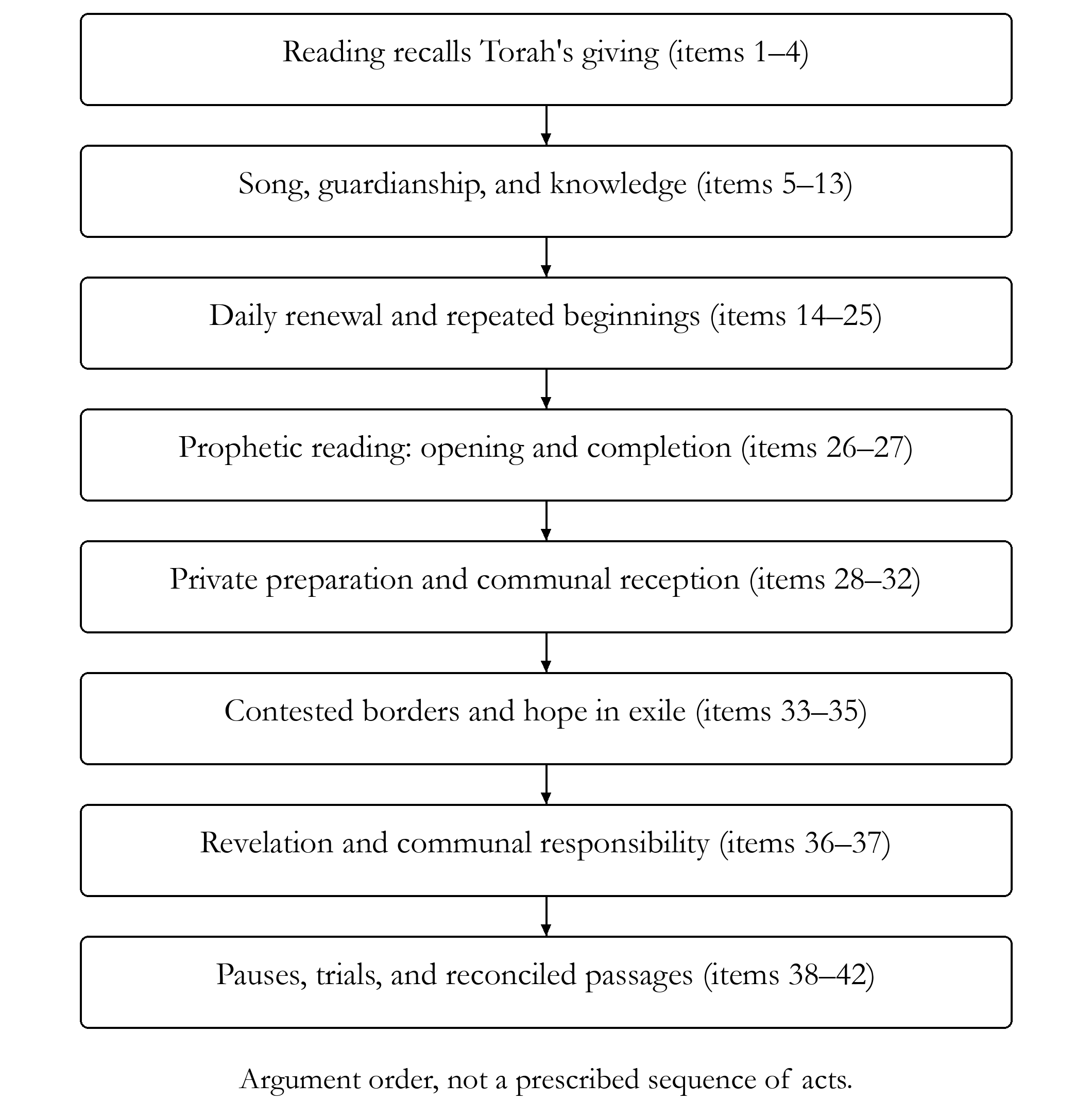
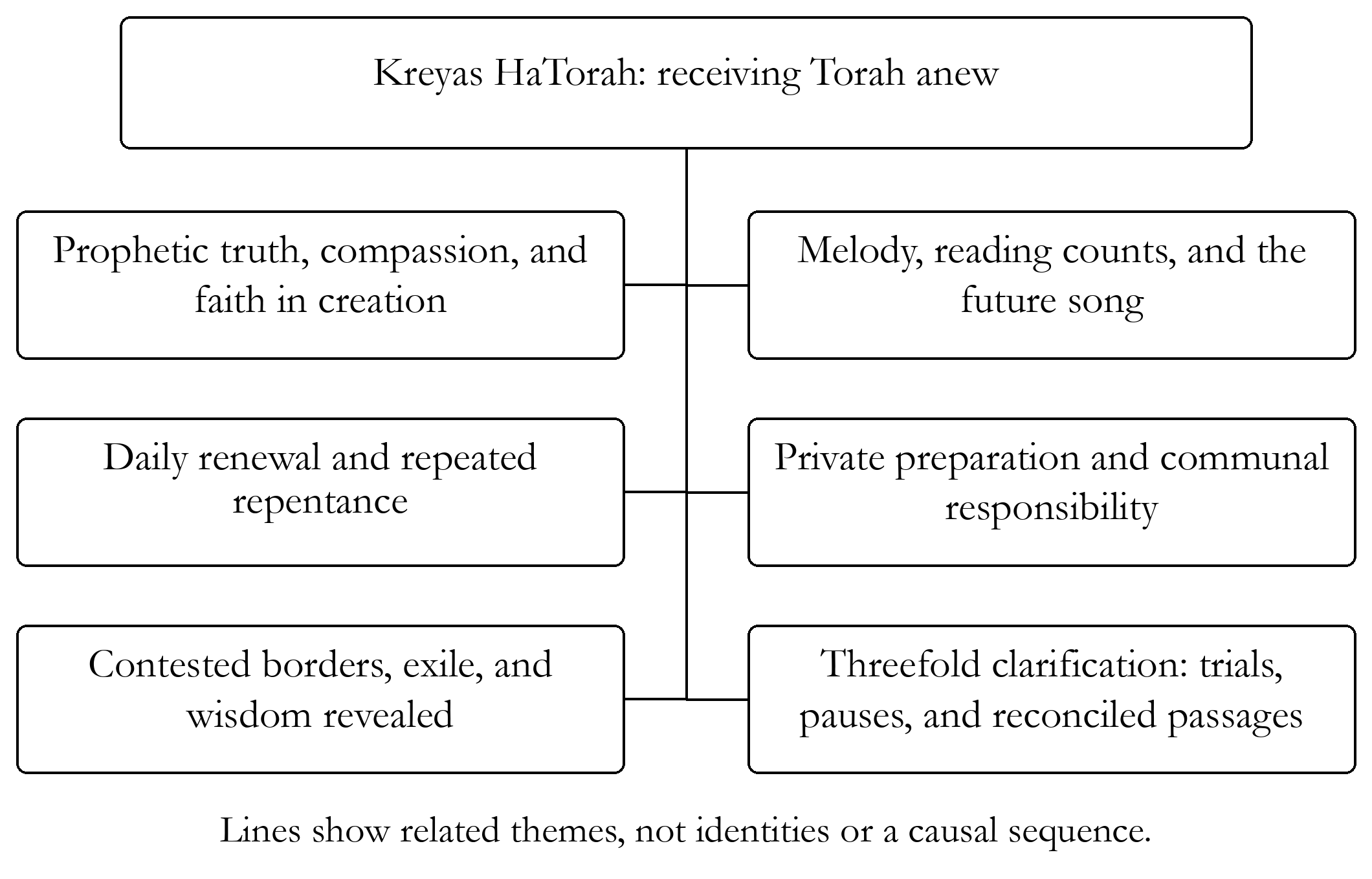
Earlier annotations and link context
Earlier Reader contexts are retained separately. Their links identify current source references; they do not assert that an earlier English selection has the same meaning in the corrected edition.
Earlier paragraph 4
Earlier Reader annotation context; not the corrected source edition
Current source references: [185]
הלכה ו אות א על פי התורה תקעו תוכחה בלקוטי תנינא סימן ח': וזה בחינת קריאת התורה בצבור בספר תורה כשרה בניגון ובטעמים. ועיקר הקריאה הוא בשבת ויום טוב שאז תיקן משה לקרות בתורה. אך כשהלכו ישראל בלא מים ג' ימים, עמדו הנביאים שביניהם ותקנו הקריאה בשני וחמישי כדי שלא יעברו ג' ימים בלא תורה. ואעזרא תיקון בשבת במנחה כמבואר בדברי רז"ל בגמרא ופוסקים:
Earlier pointed Hebrew field
וְזֶה בְּחִינַת קְרִיאַת הַתּוֹרָה בַּצִּבּוּר בְּסֵפֶר תּוֹרָה כְּשֵׁרָה בְּנִגּוּן וּבִטְעָמִים וְעִקַּר הַקְּרִיאָה הוּא בְּשַׁבָּת וְיוֹם טוֹב שֶׁאָז תִּקֵּן משֶׁה לִקְרוֹת בַּתּוֹרָה, אַךְ כְּשֶׁהָלְכוּ יִשְׂרָאֵל בְּלֹא מַיִם שְׁלשָׁה יָמִים, עָמְדוּ הַנְּבִיאִים שֶׁבֵּינֵיהֶם וְתִקְּנוּ הַקְּרִיאָה בְּשֵׁנִי וַחֲמִישִׁי כְּדֵי שֶׁלֹּא יַעַבְרוּ שְׁלשָׁה יָמִים בְּלֹא תּוֹרָה וְעֶזְרָא תִּקֵּן בְּשַׁבָּת בְּמִנְחָה, כַּמְבֹאָר בְּדִבְרֵי רַבּוֹתֵינוּ זִכְרוֹנָם לִבְרָ
Continued from LM II:78 — "Hanhagos HaPshitus"Rosh HaShanah · T'shuvah · Travel to the Tzaddik · Shofar
Earlier paragraph 5
Earlier Reader annotation context; not the corrected source edition
Current source references: [186]
כי עיקר הקריאה בתורה הוא בשבת שאז ניתנה תורה כמו שאמרו רז"ל. כי מבואר בהתורה תקעו הנ"ל, שעיקר בירור האמונה הקדושה שהוא אמונת חידוש העולם הוא דל יעי רוח נבואה שמברר המדמה שבזה תלויה האמונה הקדושה. וזה בחינת מתן תורה שאז זכו כולם על ידי משה לרוח נבואה, ואז נתבסס ונתקיים העולם וכו'. דהיינו שנתגלה אז אמונת חידוש העולם וכו'. דהיינו שנתגלה אז אמונת חידוש העולם וכו'. וכן בכל דור ודור בהכרח שיהיו צדיקים שיש להם בחינת רוח נבואה בחינת רוח הבא מן הקדש וכו'. שעל ידי זה עיקר המשרכת אמונת חידוש העולם וכו' עיין שם. ומבואר שם שעל ידי אמונת חידוש העולם זוכין לחידוש העולם של לעתיד וכו'. ועל ידי זה נתעורר שיר של נפל~ אות שהוא שיר פשוט כפול משולש מרובע שיתער לעתיד שיתנגן על ע"ב נימין וכו'. שעל ידי קול השיר הזה דייקא יכולין להוכיח בבחינת נרדי נתן ריחו וכו' עיין שם כל זה היטב. ועל כן עיקר קריאת התורה בשבת. כי שבת מורה על חידוש העולם כי זה עיקר מצות קדושת שבת להודיע כי ששת ימים עשה ה' את השמים ואת הארץ וביום השביעי שבתוכו' כמו שכתוב ברית עולם ביני ובין בני ישראל וכו' כי ששת ימים עשה ה' וכו'. וכן חידוש העולם של לעתיד הוא גם כן בחינת שבת כי אז יהיה יום שכולו שבת וכו'. וזה בחינת כל השירות והזמירות והנוגינם שמתעוררין בשבת שאז נוהגין כל ישראל להרבות בנגונים ובזמירות ושירות שהכל נמשך מקול השיר והניגון הנ"ל שיתער לעתיד בעת חידוש העולם שהוא יום שכולו שבת. ועל כן עיקר קריאת התורה בשבת כי כל הנ"ל הוא בחינת קריאת התורה. כי על ידי התורה זוכין לכל זה לברר אמונת חידוש העולם של תחלת הבריאה ולזכות לחידוש העולם של לעתיד וכו'וכנ"ל שכל זה הוא בחינת שבת כנ"ל:
Based on LM I:215 — The Twenty-Four Types of Pidyonos (continued)
Earlier paragraph 7
Earlier Reader annotation context; not the corrected source edition
Current source references: [187] [188]
אות ב אבל כשהלכו ישראל ג' ימים בלא תורה, עמדו הנביאים שביניהם ותקנו שיהיו קורין בשני וחמישי. והנביאים דיקיא. כי מבואר בהתורה הנ"ל שכשהסטרא אחרא יונקת מהרחמנות וכו', אזי צריכין בעל כח גדול שיתפלל תפלה בבחינת דין וכו'. שעל ידי זה נעשין כל התקונים המבוארין שם עד שזוכין לבחינת רוח נבואה שעל ידי זה עיקר בירו האמונה שהוא אמונת חידוש העולם וכו' עיין שם כל זה היטב היטב. וזהו בחינת כל הנביאים ובעלי רוח הקדש עמדו לישראל בכל דור ודור אחר מתן תורה על ידי משה רבינו שהוא רבן של כל הנביאים.כי עיקר ובירור האמונה הוא על ידי משה שנתן לנו את התורה שהיא עיקר הנבואה שהיא קיימת לדורות לנצח ועליה אין להוסיף ולא לגרוע כמו שאמרו רז"ל (מגילה ב') שאין נביא רשאי לחדש דבר מעתה. אך כל הנביאים והצדיקים בעלי רוח הקדש שעמדו אחר משה עד היום הזה, כולם לא באו רק להוכיח את ישראל על עונותיהם בבחינת קולו של משה שנמשך על ידי רוח נבואה וכו' כמו שכתוב שם עיין שם, שזהו בחינת כשפר הרם קולך הנאמר לענין נבואה. וכל זה הוא מחמת בחינת הנ"ל המבואר בתורה הנ"ל שהוא מה שלפעמים הסטרא אחרא יונקת מהרחמנות, ואז נתמעט הרחמנות אצלינו וכו' עד שבאין כל הקלקולים המבוארין שם והתיקון הוא על ידי הבעל כח המתפלל תפלה בבחינת דין שעל ידי זה נתתקן הכל עד שזוכין לרוח נבואה שהוא בחינת קבלת התורה וכו' וכל זה נעשה בכל דור ובכל עת בכמה בחינות. כי אף על פי שכבר קבלנו את התורה על ידי משה רבינו הוא עיקר התיקון לכל הנ"ל, אף על פי כן הסטרא אחרא וחיילותיה הם אורבים וחותרים בכל עת לקלקל ח"ו כל התקונים הנמשכין על ידי התורה שכל זה הוא בחינת מה שכתוב שם בתחלת התורה (ב~ אות ב') שלפעמים הסטרא אחרא יונקת מהרחמנות שעל ידי זה כל הקלקולים ח"ו. כי נתמעט הרחמנות אצלינו ונעשה אכזריות וכו', עד שנקטן הדעת ונתקלקלין המוחין שהם מחיצות פרוסות בפני ת~ אות ניאוף. כי הג' מוחין הם מחיצות פרוסות בפני זאת התאוה וכו'. היינו כי עיקר הדעת שהוא עיקר הרחמנות היא התורה הקדושה שנתן לנו באהבתו ובחמלתו עלינו בבחינת חמלה גדולה ויתירה חמלת עלינו הנאמר לענין התורה וזהו בחינת (משלי ל"א) ותורת חסד על לשונו. והוא עיקר הדעת והמוחין שהם מחיצות פורוסות בפני זאת התאוה בבחינת אורייתא מגינה ומצלי וכמו שכתוב מזמה תשמור עליך. וכמו שאמרו רז"ל (קידושין ל') בראית יצר הרע בראתי תורה תבלין. אך כשהסטרא אחרא יונקת מהרחמנות הזה, אז נתקלקל הרחמנות וכו'. היינו שבכל פגם מתגברת הסטרא אחרא וחילותיה לינק מהרחמנות והדעת שהיא התורה הקדושה שהוא עיקר הדעת והמוח, כי אין חכמה כחכמת התורה. וכל החכמות חיצוניות אף על פי שנראים כחכמות, באמת הם כסילות כנגד חכמת התורה כמו שכתוב בהתורה דרשו ה' וכו' (סימן ל"ז חלק א') וכמו שכתוב (ירמיה ט') אל יתהלל חכם בחכמתו וכו'. אבל הסטרא אחרא מתגברת לינק מהרחמנות האמתי שהיא התורה, ורוצים להמשיך לעצמם הרחמנות. שזהו מה שאנו רואים שהם חותרים להכניס זרה בבית ה'. להכניס חכמות חיצוניות התוך התורה הקדושה ולפרש התורה על פי דרכיהם הרעים שמגלים פנים בתורה שלא כהלכה ומהפכים דברי אלהים חיים לדרכיהם ומחציפים פניהם ואומרים שכל כוונתם לטובת ישראל שיש להם רחמנות גדול על ישראל על שהם נבוכים כל כך לפי דעתם הרעה, דהיינו מה שמדקדקים רק במצות וכל לימודם הוא רק גמרא ופוסקים וספרי מוסר וכו', והם שוקדים לתקנת ישראל ברחמנות המר והמרור שלהם, ורוצים לפתות ולהסית ולהכריח את ישראל שילכו ח"ו בדרכיהם אשר כבר ראינו מה שנמשך על ידי הרחמנות שלהם של מי שנמשך אחריהם פורק עול לגמרי כמבואר בכל הספרים הקדושים שצועקים על זה בקול מה ונמהר, וכמבואר בדברינו כמה פעמים. וכל זה כלול בדיבור הקדוש הזה שכתב אדמו"ר ז"ל שלפעמים הם יונקים מהרחמנות. כי כך מורגל בלשונם הטמא ומובא בספריהם הרעים שהם רוצים רק באמת, כי יש להם רחמנות על נערי בני ישראל ורוצים להדריכם בדרך ישרה על פי פירושי התרוה שלהם לשאול ולאבדון וכו' רחמנא ליצלן. וזה הקלקול מצוי בכל דור בכמה בחינות שונות כי תיכף אחר מתן תורה קודם שירד משה מן ההר נתקבצו על אהרן לעשות להם את העגל שאמרו גם כן שהוא מצד הרחמנו שלהם כמובן בפרשה שם שאמרו קום עשה לנו אלהים כי זה משה האיש לא ידענו מה היה לו, שדבריהם אלו בוטים כמדקיקות חרב. שמתקבצים בקיבוץ גדול לפקח על תקנת ההמון ומרחמים עליהם ומבקשים להם מי שילך לפניהם להדריכם בדרך שהם רוצים כמו שכתוב שם אשר ילכו לפנינו. וכן הוא בכל דור ודור בפרט בדור הזה כמובן למי שבקי קצת דבריהם ודרכיהם הרעים שאומרים בפיהם וממלאים בידיהם להדפיס ספרים על זה, וכל זה הוא בחינת הנ"ל מה שכתוב לעיל שלפעמים הם יונקים מהרחמנות וכו' ועל ידי זה בא ת~ אות ניאוף ונתקלקל התפלה ח"ו. והתיקון הוא על ידי הבעל כח הנ"ל וכו' שמתפלל תפלה בבחינת דין וכו' עד שנמשך רוח נבואה וכו'. וזהו בחינת כל הנביאים שעמדו אחר משה שבאים רק להוכיח את ישראל לקיים את התורה באמת כי עיקר התיקון על ידם. כי כל נבואתם נמשך מהבעל כח הנ"ל שעל ידו עיקר התיקון. וכן בכל דור ודור כל הצדיקי אמת יש להם בחינת רוח נבואה גם עתה וכו' כמבואר שם היטב.וכל כן הנביאים כשראו שהלכו ישראל במדבר ג' ימים בלא מים. שהוא מחמת שנתמעטו מימי הדעת שהם בחינת כמים לים מכסים שהוא בחינת התורה שזזה נמשך רק מהרחמנות דסטרא אחרא הנ"ל. על כן מדו ותקנו שיהיו ישראל קורין גם בשני וחמישי כדי שלא יעברו ג' ימים בלא תורה. ועל כן תקנו בשני וחמישי דייקא. כי בשני וחמישי אז הוא בחינת דינים כמובן בכוונות שיום שני הוא בחינת גבורה, ויום חמישי הוא בחינת הוד שהוא גם כן ענף הגבורה כידוע. ועל כן בהם בתי דינין יושבין ועל כן צריכין אז ביותר להמשיך על כעצמו כח התפלה בבחינת דין של הבעל כח כדי שלא תינק הסטרא אחרא מהדינים וכו' כמו שכתוב שם. ועל כן נוהגים להרבות התחנונים ותפלות הרבה בשני וחמישי כדי להמשיך עלינו כח של הבעל כח הנ"ל שיכול בכחו הגדול להתפלל תפלה בבחינת דין וכו'. כי אז צריכים תפלות ותחנונים הרבה מאד שלא תתגבר הסטרא אחרא לינק מהתפלה על ידי הדינים. רק נזכה על ידי ריבוי התפלות והתחנות לעורר רחמיו עלינו. שימשיך עלינו כח הבעל כח הנ"ל שיודע להתפלל תפלה בבחינת דין שעל ידו נתתקן כל התקינוים הנ"ל עד שזוכין לבחינת רוח נבואה שהוא קיום התורה שעל ידי זה נתתקן הכל. על כן עמדו הנביאים דייקא ותקנו לישראל שיהיו קורין בתורה בשני וחמישי דייקא שהם ימי דין וכו'. כדי שכל ישראל ימשיכו עליהם על ידי קריאת התורה בצבור כח הבעל כח הנ"ל שמשם נמשך הרוח נבואה שהוא בחינת התורה. כדי לזכות גם בימי החול להמשיך קדושת שבת לזכות לברר אמונת חידוש העולם עד שיהיה נמשך בחינת חידוש העולם שלעתיד. עד שיהיה נמשך בחינת הקול המשקה את הגן שהוא בחינת קול הניגון שיתער לעתיד שהוא שיר פשוט כפול וכו' שעולה ע"ב וכו'. שעל ידי זה יכולין להוכיח את ישראל ונתתקן הכל כמו שכתוב שם. ובשביל זה צריכין לקרות בתורה בניגון ובטעמים כדי להמשיך על עצמו קול הניגון הנ"ל שנמשך על ידי התורה כנ"ל שהוא גבוה מן הכל. כי יש בהתורה טנת"א, והטעמים שהם בחינת ניגון גבוהים מן הכל כמבוא. כי הטעמים שהם בחינת ניגון הנ"ל הם בבחינת שם ע"ב כמובא שזהו בחינת השיר והניגון הנ"ל שעולה ע"ב כמנין חסד כמו שכתוב שם:
Hilchos Kri'as HaTorah – Halacha 6F (§36–42)
Earlier paragraph 9
Earlier Reader annotation context; not the corrected source edition
Current source references: [189]
אות ג ובשביל זה קורין בשני וחמישי שלשה כהן לוי ישראל שהם בחינת חכמה בינה דעת לתקן בחינת הג' מוחין הנ"ל שי היו מחיצות פרוסות וכו' שהם בחינת ג' מיני רחמנות בחינת ג' תפלות ביום כמו שכתוב שם:
Earlier pointed Hebrew field
וּבִשְׁבִיל זֶה קוֹרִין בְּשֵׁנִי וַחֲמִישִׁי שְׁלשָׁה, כֹּהֵן, לֵוִי, יִשְׂרָאֵל, שֶׁהֵם בְּחִינַת חָכְמָה, בִּינָה, דַּעַת, לְתַקֵּן בְּחִינַת הַשְּׁלשָׁה מֹחִין הַנַּ"ל שֶׁיִּהְיוּ מְחִצּוֹת פְּרוּסוֹת וְכוּ', שֶׁהֵם בְּחִינַת שְׁלשָׁה מִינֵי רַחֲמָנוּת, בְּחִינַת שָׁלשׁ תְּפִלּוֹת בְּיוֹם, כְּמוֹ שֶׁ
body{max-width:750px;margin:40px auto;padding:0 20px;font-family:Georgia,'Times New Roman',serif;font-size:17px;line-height:1.85;color:#2b2b2b;background:#fcfaf5}
Earlier paragraph 11
Earlier Reader annotation context; not the corrected source edition
Current source references: [190]
אות ד וזה בחינת קריאת התורה בשבת במנחה. כי אז במנחה הוא סמוך לאפוקי שבתא סמוך לימי החול, על כן קורין אז בתורה להמשיך קדושת שבת שאז עיקר קבלת התורה עיקר בירור אמונת חידוש העולם וכו', להמשיך כל הקדושות האלו לימי החול שיהי לנו כח גם בימי החול לברר האמונה הקדושה שעל ידי זה כל התיקונים הנ"ל. כי במנחה בחול דינא תקיפה שלטא. אבל בכח מנחה של שבת שהוא עת רצון על ידי זה זוכין שיתהפך הדין לרחמים גדולים, והכל בכח הבעל כח הנ"ל שהוא בחינת ג' צדיקים שנסתלקו אז בשבת במנחה שעל ידי זה זוכים לתקן הכל כנ"ל, שזהו בחינת קריאת התורה כנ"ל. ועל כן נוהגים כל הצדיקים והיראים לומר תורה ומוסר בסעודה שלישית של שבת ביותר כי אז נתעורר קול הנגון הנ"ל שעל ידי זה יכולין להוכיח את ישראל בבחינתקולו של משה שנסתלק אז וכנ"ל:
Earlier pointed Hebrew field
וְזֶה בְּחִינַת קְרִיאַת הַתּוֹרָה בְּשַׁבָּת בְּמִנְחָה, כִּי אָז בְּמִנְחָה הוּא סָמוּךְ לְאַפּוּקֵי שַׁבְּתָא סָמוּךְ לִימֵי הַחֹל, עַל-כֵּן קוֹרִין אָז בַּתּוֹרָה לְהַמְשִׁיךְ קְדֻשַּׁת שַׁבָּת שֶׁאָז עִקַּר קַבָּלַת הַתּוֹרָה, עִקַּר בֵּרוּר אֱמוּנַת חִדּוּשׁ הָעוֹלָם וְכוּ', לְהַמְשִׁיךְ כָּל הַקְּדֻשּׁוֹת הָאֵלּוּ לִימֵי הַחֹל שֶׁיִּהְיֶה לָנוּ כֹּחַ גַּם בִּימֵי הַחֹל לְבָרֵר הָאֱמוּנָה הַקְּדוֹשָׁה, שֶׁעַל -יְדֵי זֶה כָּל הַתִּקּוּנִים הַנַּ"ל, כִּי בְּמִנְחָה בַּחֹל דִּינָא תַּקִּיפָה שָׁלְטָא, אֲבָל בְּכֹחַ מִנְחָה שֶׁל שַׁבָּת, שֶׁהוּא עֵת רָצוֹן, עַל-יְדֵי זֶה זוֹכִין שֶׁיִּתְהַפֵּךְ הַדִּין לְרַחֲמִים גְּדוֹלִים, וְהַכֹּל בְּכֹחַ הַבַּעַל כֹּחַ הַנַּ"ל, שֶׁהוּא בְּחִינַת שְׁלשָׁה צַדִּיקִים שֶׁנִּסְתַּלְּקוּ אָז בְּשַׁבָּת בְּמִנְחָה שֶׁעַל-יְדֵי זֶה זוֹכִים לְתַקֵּן הַכֹּל כַּנַּ"ל, שֶׁזֶּהוּ בְּחִינַת קְרִיאַת הַתּוֹרָה כַּנַּ"ל וְעַל-כֵּן נוֹהֲגִים כָּל הַצַּדִּיקִים וְהַיְרֵאִים לוֹמַר תּוֹרָה וּמוּסָר בִּסְעֻדָּה שְׁלִישִׁית שֶׁל שַׁבָּת בְּיוֹתֵר, כִּי אָז נִתְעוֹרֵר קוֹל הַנִּגּוּן הַנַּ"ל שֶׁעַל-יְדֵי זֶה דַּיְקָא יְכוֹלִין לְהוֹכִיחַ אֶת יִשְׂרָאֵל בִּבְחִינַת קוֹלוֹ שֶׁל משֶׁה שֶׁנִּסְתַּלֵּק אָז דַּיְקָא וְכַנַּ"ל:
h1,h3{font-family:Georgia,serif;color:#1a3c5e}
Earlier paragraph 13
Earlier Reader annotation context; not the corrected source edition
Current source references: [191]
אות ה וזה בחינת מה שאמרור ז"ל לענין מננין גברי העולים לתורה. בשני וחמישי וכו' ג', בראש חדש וכו' ד', ביום טוב ה', ביום כפור ו', בשבת שבעה. והקדשו (בגמרא מגילה פרק הקורא דף כ"ג) הני ג' חמשה שבעה כנגד מי. חד אמר כנגד ברכת כהנים וחד אמר כנגד שלשה שומרי הסף וחמשה רואי פני מלך ושבעה רואי פני המלך. ואחר כך הקשו על ששה של יום כפור כנגד מי וכו'. והוא תמוה תיכף בתחלת העיון מפני מה לא הקשו על ד' של ראש חדש וחול המועד. וכן הקשו התוספות שם ויישבו בדוחק שבראש חדש הסברא נותנת להוסיף אחד עיין שם, ואף אנו נאמר על פי הנ"ל. שבודאי על פי טעם הנ"ל על קריאת התורה בצבור הוא להמשיך עלינו קדושת מתן תורה שצריכין להמשיך עלינו בכל דור בכל עת, והעיקר בימים קדושים שעיקרם הוא שבת קדש שבו ניתנה תורה. וכן יום טוב וחול המועד שמקבלים כל קדושתם משבת שהוא תחלה למקראי קדש וכו'. וכן ראש חדש שהוא גם כל בחינת קדושת יום טוב בבחינת (תהלים ק"ד) עשה ירח למועדים. כי מראש חדש מונין המועדין ובהם עיקר תיקון קריאת התורה כמו שאמרו רז"ל שם משה תיקון להם ל ישראל שיהיו קורים בשבת ובמועדים וכו'. ועיקר קדושת מתן תורה שאנו ממשיכין עלינו על ידי קריאת התורה הוא בשביל להמשיך עלינו בירור המדמה וכו', שעל ידי זה נתברר אמונת חידוש העולם שכל העולם תלוי ואינו מתקיים בכל דור ובכל עת כי אם על ידי אמונת חידוש העולם שישראל ממשיכין עליהם על ידי קריאת התורה כנ"ל. ועל ידי זה זוכין לחידוש העולם שלעתיד שאז יתער השיר חדש שהוא שיר פשוט כפול משולש מרובע וכו'. ועל כן צריכין לקרות בתורה בטעמי ובניגון וכנ"ל. ועל כן לא הקשו רז"ל על מנין ד' גברי של ראש חדש וכו'. כי בודאי עיקר הקריאה של כל הימים הקדושים ראוי להיות מנין ד', כי עיקר הקריאה בשביל לעורר השיר חדש הנ"ל שהוא בבחינת ד', כי הוא שיר פשוט כפול משולש מרובע שנמשך מד' ~ אותיות השם שעיקר שלימות השיר הוא כשהוא מרובע. ועל כן בודאי היה ראוי לקרואת תמיד בכל הימים הקדושים מנין ד'. כי עיקר הקריאה בשביל רבוע הנ"ל. ועל כן לא הקשו כלל על מניין ד' של ראש חדש וכו'. כי עיקר הקריאה צריכה להיות מנין ד'. ועל כן באמת ברא חדש שהוא תיקון המועדות אז מזכירין בתפלת מוסף ומתפללין לזכות לשירי דוד מכמו שכתוב ובשירי דוד עבדך וכו'. כי עיקר השיר הנ"ל נזכה על ידי בחינת דוד מלך ישראל שוא בחינת משיח שהוא בחינת השיר הנ"ל, כי עסק כל ימיו בזמירות שירות ותשבחות וכו'. כי הוא נעים זמירות ישראל שוהוא בבחינת שלימות המרכבה ששלימותה על ידי רבוע דייקא דהיינו ד' רגלי הכסא וכו' כי דוש ברגל רביעי כמו שאמרו רז"ל. וכל עיקר קדושת ראש חדש שהוא בשביל המועדים הוא בבחינת דוד כמבואר בדברי רז"ל, ועל כן אומרים בשעת קידוש לבנה דוד מלך ישראל חי וקים. כי ביומי דדוד ושלמה קיימא דיהרא באשלמותא כי עיקר השיר הנ"ל שהוא בחינת אמונת חידוש העולם של תחלת הבריאה שעל ידי זה נזכה לחידוש העולם שלעתיד עיקרו נזכה על ידי דוד שהוא משיח שיהא תיקון העולם בימיו, והוא עתיד לבא ולתקן העולם עד שיזכה לשיר הזה בשלימות כמו שאמרו רז"ל לי נאה לברך וכו' שזה יהיה כל הקיבול שכר של הצדיקים והשרים וכו' ודוד הוא בבחינת ראש חדש שהוא תיקון המועדות כנ"ל שאז הוא בחינת חדתותי דסיהרא שאז בעת חדתותי דסיהרא כל נושאי הכסא מתקנים שיר חדש כשמביאים הארון לבית שמש שהוא שיר ששררו פרות הבשן אז כשנשאו הארון לבית שמש הוא מזמור שירו לה' שיר חדש כי נפל~ אות עשה וכו'. (שכל זה מבואר ברמזים נפלאים בסוף המעשה של ב' הבנים שנחלפו עיין שם היטב והבן) וזה השיר הוא בעצמו השיר הקדוש והנורא הנ"ל שהוא שיר פשוט כפול ומשולש ומרובע שבשביל זה קורין בתורה כנ"ל, וכו שכתוב שם בסוף התורה תקעו תוכחה שיר הנ"ל הוא בחינת שירו לה' שיר חדש כי נפל~ אות עשה וכו' עיין שם. כי ראש חדש שהוא חדתותי דסיהרא הוא בחינת חידוש העולם כמו שכתוב בברכת קידוש הלבנה וללבנה אמר שתתחדש עטרת תפםארת לעמוסי בטן שהם עתידים להתחדש כמותה וכו', ועל כן מצות קידוש הלבנה יקר מאד מאד וכמו שאמרו רז"ל אלמלא לא זכו ישראל להקביל פני אביהם שבשמים אלא פעם אחת בחדש דים וכו':
h1{text-align:center;font-size:26px;border-bottom:2px solid #c8a96e;padding-bottom:12px}
Earlier paragraph 15
Earlier Reader annotation context; not the corrected source edition
Current source references: [192]
אות ו ועל כן עיקר קידוש הלבנה הוא כשאין עננים מכסין ~ אותה מלר~ אותה. כי עיקר תיקון השיר הנ"ל הוא על ידי התפלה בבחינת דין של הבעל כח הנ"ל שעל ידי זה העננים כלים בבחינת (ישעיה י') מחיתי כעב פשעיך וכו' כמו שכתוב שם עיין שם. ובשביל זה הרבה מדקדקים יותר מדאי שלא לקדשה עד שיעברו העננים לגמרי. אבל הם טועים בזה כאשר שמענו מכמה צדיקים ומאדמו"ר ז"ל, ובפרט בעת שהזמן דחוק שסמוך לסוף חצי החדש, בפרט בחורף שבואי הוא שטות גדול לדחות מצוה נוראה כזאת בשביל דקדוש קל שלא נזכר בגמרא כלל. כי לא אמרו רק הרואה לבנה בחידושה מברך וכו'. שמובן שתיכף כשרואין ~ אותה צריכין לברך, רק שבפוסקים מבואר שכשהיא מכוסה בעננים לא יברכו, והוא דבר אמתו מובן בודאי. אבל תיכף כשרואין ~ אותה אפילו כשהעננים סביבה והיא נראית מתוך ענן קלוש בודאי מחוייבים לקדשה וכמבואר בפירוש שם בסימן תכ"ו אם יש עליה ענן קלוש וכו', ואין נוכל להחמיר בפרט כשהזמן דחוק, לדחות מצוה כזאת בשביל דקדוש קל. ובאמת זה הטעות נמשך מחמת גודל חביבת המצוה שיקרה מאד אצל ישראל וכמו שאמרו רז"ל. והיא מרמזת על חידוש העולם שישראל עתידין לעתחדש כמותה. על כן הכל חפצים שתהא זכה לגמרי אבל לא כיוונו יפה בזה, כי הם שוכחים שאנו עתה בזה העולם השפל והחשך. בפרט עתה בדורות הללו באחרית הימים האלה שהגלות, בפרט גלות הנפש מתגבר ומתפשט מאד מאד בכלל ובפרט על כל אחד ואחד. על כן עתה כל המאורות אינם מאירין כראוי. כי מיום שחרב ביתה מקדש חשכו המאורות. כי אז נאמר (שם י"ג) חשך השמש בצאתו וירח לא יגיה אורו. ואנו מחיין עצמינו במעט דמעט אור המאיר עלינו מתוך עומד החשד אפילה הזאת. ועל כן בכל המצות ובכל הקדושות אם נרצה ח"ו להמתיק עד שנוכל לקיים המצוה בבהירות ובזכות ובצחות גדול כראוי. כבר בטלה כל התורה והמצות ח"ו ח"ו. כי בודאי אין בידינו לקיים שום מצוה בשלימות עתה בכל הדקדוקים והפרטים, ובפרט בזכות וצחות המחשבה שהוא העיקר. אבל אף על פי כן אנו צריכין לקיים כל המצות כפי מה שנוכל, ורק בזה אנו מחיין עצמינו ומשיבין נפשינו בגלות המר הזה, בפרט כפי מה שיודע כל אחד מרירת נפשו ונגעי לבבו וכו', על כן בודאי חלילה לנו למנוע ממצות ברכת הלבנה בשביל דקדוקים הנ"ל, רק לקיים כמו שאמרו רז"ל בגמרא ופוסקים שמבוא שחייבים לקדשה אפילו כשרואין ~ אותה מתוך ענן קלוש וכנ"ל. ועיין היטב בדברי אדומו"ר ז"ל בכמה מקומות ובמה שעזרנו השם יבתר לבאר ולחדש בהם, מבואר ומובן היטב שעתה כל קיומינו וחיותינו הוא רק על ידי הנקודות טובות שאנו חוטפין מתוך הענן והחשך וכו', והבן היטב האמת לאמתו. כי יש בה הרבה לדבר הנוגע לכלל קדושת איש הישראלי ובפרט להקטנים במעלהלהחלושי כח שבישראל ובפרט כמו שיודע כל אחד בנפשו. אם ירצו עוד לדקדק ולהחמיר בחומרות יתירות יכולים להכשל וליפול על ידי זה יותר ח"ו ח"ו וכמבואר בדברינו הרבה בזה:
h3{font-size:19px;margin-top:32px;color:#8b6914;border-left:3px solid #c8a96e;padding-left:10px}
Earlier paragraph 17
Earlier Reader annotation context; not the corrected source edition
Current source references: [193]
אות ז ונחזור לענינינו. שבשביל זה לא הקשו רז"ל על מספר ארבע קרואים שבראש חדש וחול המועד. כי אדרבא עיקר תיקון הקריאה הוא רק בחינת ארבע שהוא בחינת שיר הנ"ל כנ"ל, ועל כן הקשו רק על שאר המספרים כנגד מי הם, והשיבו שביום טוב הוא כנגד ה' רואי פני המלך ובשבת כנגד ז' רואי פני המלך. כי עיקר השיר הנ"ל שיזכה המלך האמתי של ישראל שהוא מלך המשיח שיבא במהרה בימינו שהוא בחינת דוד המלך, וכל סמוכים אליו ביותר שהם רואי פני המלך הם יזכו ביותר לנפל~ אות נעימת השיר הזה ומהם יקבלו כל ישראל כל אחד כפי קירובו לרואי פני המלך ועל כן תקנו קריאת התורה שהוא בשביל השירה כנ"ל כנגד רואי פני המלך שהם ה' וז' וכנ"ל:
p{text-indent:28px;margin:10px 0;text-align:justify}
Earlier paragraph 19
Earlier Reader annotation context; not the corrected source edition
Current source references: [194]
אות ח ועל כן אמרו שג' שבחול הם כנגד ג' שומרי הסף. כי בחול בודאי רחוקים משיר הזה שהוא מתעורר רק בשבת וים טוב וראש חדש הוא גם כן יום טוב שהם בבחינת יום שכולו שבת יום שכולו טוב. שכל ענג שביתתו וטובו יהיה השיר הזה. אבל בחול רחוקים מזה, רק צריכים להתייגע בחול להמשיך קדושת שבת כדי לזכות על ידי זה לקדושת שבת ויום טוב בבחינת מי שטרח בערב שבת וכו', ואז כל עיקר תיקון הקריאה הוא בכח הבעל כח גדול הנ"ל שיכול תלתקן הג' מוחין על ידי תפלתו בבחינת דין וכו'. על כן עיקר הקראיה אז הוא רק בבחינת שמירת הג' מוחין הנ"ל שנזכה בכח בהתורה שיהיו ג' מחיצות פרוסות כנגד התאוה הנ"ל וכנ"ל, על כן תקנו בהם ג' קרואים כנגד שלשה שומרי הסף שהם שומריי הסף והפתח של המלך שלא יכנוס בהם זר, היינו בחינת שמירת הג' מוחין שיהיו מחיצות פרוסות בפני הרהורי התאוה הנ"ל שלא יכנוס זר בבית ה' שהם המוחין שהם בחינת קדושת הבית המקדש בבחינת (ברכות ל"ג) כל מי שיש בו דעה כאלו נבנה בית המקדש בימיו:
p.no-indent{text-indent:0}
Earlier paragraph 21
Earlier Reader annotation context; not the corrected source edition
Current source references: [195]
אות ט וזה בחינת ברכת התתורה שתקנו לקורא בצבור, ברכה לפניה ולאחריהכ אפילו אם כבר בירך ברכת בתורה בבקר. כי עיקר קריאת התרוה בציבור הוא להמשיך קדושת מתן תורה שאז נמשך רוח נבואה על כל ישראל על ידי משה רבינו וכו'. שעל ידי זה מתברר המדמה שעל ידי זה זוכין לאמונה שלימה וברורה שהעיקר הוא אמונת חידוש העולם וכו' כנ"ל. וכן הוא בכל דור וכו' כמו שכתוב שם. ומבואר שם שכנגד זה יש בחינת נביאי שקר שדהם בחינת זוהמת הנחש בחינת מנחשים ומעוננים וכו'ש על ידם מתבלבל המדמה יותר ובאים לכפירות ח"ו. על כן צריכין לברך תחלה וסוף כשקורין בתורה שמברכין אשר בחר בנו מכל העמים וכו'. היינו שמודיעין ומפרסמין שהתורה הקדושה שלנו לא נמשכה ח"ו משכל אנושי אפילו משכל אנושי של גדולי גדולי המחקרים והפילוספים או של המנחשים והמעוננים וכו'. רק שתורתנו היא תורת אמת שנמשכה רק מרוח הקדש ונבואה ברורה של משה רבינו עליו השלום שעל ידי זה בחר בנו מכל העמים ונתן לנו את תורתו. היינו שמודיעים שבנו בחר מכל העמים במקבלצםן נימוסיהם ותורתיהם מהחכמים והמחנחשים הנ"ל. אבל כל תורתנו הקדושה נתן לנו רק על ידי שבחר בנו מכל העמים. כי אנו מובחרים ומובדלים מהם ומדעותיהם כי כל תורתנו היא תורת משה אמת שניתנה רק על ידי רוח נבואה אמתיית שמברר המדמה וכו'. וזהו שמברכין לאחריה אשר נתן לנו תורת אמת וחיי עולם נטע בתוכנו, שעיקר תורתנו הקדושה תורת אמת שנתן לנו הוא לזכות לחיי עולם שהוא קיבול השכר של לעתיד שעיקרו הוא השיר הקדוש הנ"ל שהוא שיר פשוט כפול משולש ומרובע שנזכה בעת חידוש העולם של לעתיד על ידי שזכינו להאמין בחידוש העולם של תחלת הבריאה שכל זה אי אפשר לזכות כי אם על ידי תורת אמת שבלנו שהוא בחינת רוח נבואה אמתיית וכ' וכנ"ל:
.key-term{color:#6b1d1d;font-weight:600}
Earlier paragraph 23
Earlier Reader annotation context; not the corrected source edition
Current source references: [196]
אות י ועל כן באמת אמרו רזל שבשעת קריאת התורה צריכין לעמוד באימה ויראה ורתת וזיעה כאלו ניתנה עכשיו ממש כמבואר בכל הספרים הקדושים. כי עיקר קריאת התורה בצבור הוא להמשיך בחינת נתינת התורה ממש וכנ"ל:
.bold-concept{font-weight:bold;color:#1a3c5e}
Earlier paragraph 25
Earlier Reader annotation context; not the corrected source edition
Current source references: [197]
אות יא וזה שאמרו רז"ל (ב"ק פ"ב) שקריאת התורה בשני וחמישי תקנו מחמת שהלכו ג' ימים וכו' כדי שלא יעברו ג' ימים בלא תורה. ג' ימים דייקא. כי העיקר הוא לתקן הג' מוחין שיהיו ג' מחיצות פרוסות בפני זאת התאוה של משגל וכו' כמובן שם בהתורה הנ"ל. והעיקר הוא על ידי הדעת שהוא המוח הג' מהג' מוחין חכמה בינה דעת שצריכין ליזכה ביורת לבלי לפגום בו כלל.כי כל הפגמים הם על ידי פגם הדעת בבחינת פגם עץ הדעת טוב ורע שפגם אדם הראשון שעיקר הפגם היה בהדעת כמובא. ומשם היינו מהדעת הוא עיקר התיקון. כי עיקר תיקון המחשבה הוא על ידי הדעת שיודע בבירור האמת שאין צריכין להרהר ח"ו ולחשוב מחשבות חוץ. ועל כן אין צריך להתחיל ליכנוס בטוען ונטען כלל וכו' (וכמובא בספר הא"ב אל תכנוס עם פתויך בטוען ונטען וכו'). וכמו שכתוב במקום אחר בספריו הקדושים שהעיקר לבלי להתחיל לחשוב כלל וכלל. כי אף על פי שבאמת בודאי שהחכמה והתבונה מחוייבין לבטל התאוה וכו'. אבל מריבוי פגם המוחין על כן אי אפשר עם חכמה ותבונה לבטלם כי אם על יד הדעת. שיודע סוף הדבר אחר כל החקירות וההתבונות שכך הוא האמת ועל כן אין צריכין עוד לחשוב בזה כלל וכנ"ל. וגם בעיקר האמונה הקדושה העיקר הוא הדעת שיודע האמת בלבבו כי ה' הוא האלקים וכו' בלי שום חקירות כלל רק כפי מה שבלנו מאבותינו הקדושים שביררו לנו האמונה קדושה שעיקרה היא אמונת חידוש העולם על ידי התורה הקדושה שהוא רוח נבואה וכו' מכמו שכם שם. ועל ידי זה אנו יודעים בידיעה ברורה כי ה' הוא האליקם וכמו שכתוב במקום אחר שעיקר הידניה הברורה האמתיית הוא על ידי אמונה וכמו שכתוב (הושע ב') וארשתיך לי באמונה וידעת את ה'. וזהל זה נאמר (דברים ד)' וידעת היום והשבבות אל לבבך כי ה' הוא האלקים. וכתיב (דברי הימים א' ח') דע את אלקי אביך שפירושו הוא הידיעה הברורה שהיא על ידי אמונה שקבלנו מאבותינו כמובא בספרי קדש בפרט בדברינו עיין שם. וזה שאמר להם משה רבינו (דברים ד') אתה רהראת לדעת כי ה' הוא האלקים. לדעת דייקא. כי זה הפסוק נאמר שם אחר שהאריך להזכיר את כל המופתים נוראים והתגלות אלקות שהכניס בהם ביצירת מצרים וכו' ובמתן תורה וכו'. ואמר להם שעתה אחר כל מה שראיתם ראוי לכם לדעת בידיעה ברורה בלי שום חקירה עוד לכל כי ה' הוא האלקים וכנ"ל. כי מוח הD' שהוא הדעת עולה למעלה למעלה מאד ויורד עד למטה מטה מאד כמובן למשכיל בספרי קבלה הקדושה כי הדעת בבחינתכתר כמובא:
.transliteration{font-style:italic;color:#555}
Earlier paragraph 27
Earlier Reader annotation context; not the corrected source edition
Current source references: [198]
אות יב נמצא שעיקר הוא שמירת הדעת שיודע אמתת סוף הדבר שעל ידי זה יכולין להציל את עצמו מכל תוקף מצולות ים השוטפים על האדם ח"ו. שהעיקר הוא להציל את עצמו הוא על ידי פנימיות הדעת שיוע האמת כי ה' הוא האלקים ואסר לנו בתורתו להרהר וכו'. ועל ידי זה יודע לבלי להתחיל לחשוב כלל וכו'. ומה שנעשה עמו ממילא שרודפין אחריו המחשבות רעות בעצמן אל יסתכל על זה כלל ויעשה עצמו אינו יודע ואל יסתכל לאחוריו כלל וכמבוא מזה הרבה בדבריו הקדושים. ואי אפשר לבאר כל זה רק שצריך להבין בעצמו איך לברוח על ידי הדעת מכל המחשבות רעות. והכל בכח הצדיק האמת הבעל כח הנ"ל. ועל פי דרכי עצותיו והתחזקותו שמשיב כל נפש בשבעה משיבי טעם מאין סוף עד אין תכלית:
.source{font-size:.88em;color:#888}
Earlier paragraph 29
Earlier Reader annotation context; not the corrected source edition
Current source references: [199]
אות יג ועיקר שמירתה דעת הוא על ידי התורה הקדושה שניתנה על ידי משה רבינו שהוא בחינת דעת כמובא כי הוא הודיע לנו תכלית סוף הדעת האמתי שהוא לקיים התורה והמצות ולבלות ימינו על זה שעל ידי זה ניצולין מכל רע וזוכין למה שזוכין עין לא ראתה וכו'. ועל כן תיקנו קריאת התורה בצבור בשני וחמישי שלא יעברו ג' ימים בלא תורה כדי שיהיו נשמרין הג' מוחין שהעיקר הוא מוח הג' שהוא הדעת וכנ"ל:
.bracket-def{font-size:.92em;color:#666}
Earlier paragraph 31
Earlier Reader annotation context; not the corrected source edition
Current source references: [200]
אות יד וכבר מבואר שעיקר קריאת התורה בצבור בניגון ובטעמם הוא לעורר ולהמשיך בחינת נתינת התורה. כי צריך בשעת קריאת התרוה לעמוד באימה וביראה וכו' כאלו היום ניתנה בסיני וכנ"ל (ב~ אות יו"ד וכו') ועיקר הדבר כדי שנתעורר בכל יום ובכל עת ועת שיהיו דברי תורה חדשים אצלינו בכל יום כאלו היום ניתנו שבשביל זה ניתנה התורה מתחלה בסיני כמו שפירש רש"י כל פסוק (שמות י"ט) ביום הזה באו מדבר סיני שנאמר הזה וכו' שיהיו דברי תורה חדשים עליך כאלו היום ניתנו. וכן מבואר בדברי רז"ל במקומות הרבה מאד כמו שפירש רש"י על פסוק אשר אנכי מצוך היום בכל יום יהיו בעיניך כחדשים וכן הרבה. כי אורייתא שמא דקודשא בריך הוא כי עיקר כלל העבודה הוא לשמו יתברך להגדיל ולקדש שמו יתברך בבחינת (מלאכי א') בכל מקום מוקטר ומוגש לשמי וכו'. וכמו שכתוב (שמות ט') ולמען ספר שמי בכל הארץ. וכן בפסוקים הרבה וכמובא הרבה מזה בדרי רז"י. ובשביל זה ניתנה תורה שהיא שמא דקודשא בריך הוא כדי שעל ידי התורה והמצות נזכה להכיר שמו יתברך ולגדל ולקדש שמו ברבים כמו שתוב (דברים כ"ח) לעשות את כל דברי התורה הזאת וכו' ליראה את השם הנכבד והנורא הזה וכו'. ועל כן בתחלת שליחות משה להוציא את ישראל ממצרים כדי שיקבלו את התורה שאל משה תיכף (שמות ג') ואמרו לי מה שמו מה אומר אליהם והודיעו השם יתברך שמותיו הקדושים כמו שכתוב שם זה שמי לעולם וכו':
Likutay Halachos — Hilchos Kri'as HaTorah
Earlier paragraph 33
Earlier Reader annotation context; not the corrected source edition
Current source references: [201]
אות טו וזהו (נחמיה ט') ותרא את עני אבותינו במצרים ואת זעקתם שמעת על ים סוף ותתן ~ אותות ומופתים בפרעה וכו' כי ידעת כי הזידו עליהם ותעש לך שם כהיום הזה, שהשם יבתרך כביכול עשה לעצמו שם על ידי ה~ אותות והמופתים הנוראים שעשה ביציאת מצרים ומתן תורה שעל ידי זה נתגלה שמו יתברך בעולם מדור לדור עד היום הזה. וזהו ותעש לך שם כיום הזה, כיום הזה דייקא. כי צריך כל אדם להמשיך הגדלת שמו יבתרך בכל יום ויום מחדש שזה עיקר קבלת התורה שצריכין לקבל על עצמו בכל יום מחדש כנ"ל. וזהו ותעש לך שם כיום הזה, כיום הזה דייקא. שעשיית שמו יבתרך צריך להיות בכל יום מחדש שזה בחינת כיום הזה שנאמר על כל יום ויום שכל כל אדם שעומד בו בכל דור ודור:
Earlier pointed Hebrew field
וְזֶהוּ ( נְחֶמְיָה ט) "וַתֵּרֶא אֶת עֳנִי אֲבוֹתֵינוּ בְּמִצְרַיִם וְאֶת זַעֲקָתָם שָׁמַעְתָּ עַל יַם סוּף וַתִּתֵּן אוֹתוֹת וּמוֹפְתִים בְּפַרְעֹה וְכוּ' כִּי יָדַעְתָּ כִּי הֵזִידוּ עֲלֵיהֶם וַתַּעַשׂ לְךָ שֵׁם כְּהַיּוֹם הַזֶּה", שֶׁהַשֵּׁם יִתְבָּרַךְ, כִּבְיָכוֹל, עָשָׂה לְעַצְמוֹ שֵׁם עַל-יְדֵי הָאוֹתוֹת וְהַמּוֹפְתִים הַנּוֹרָאִים שֶׁעָשָׂה בִּיצִיאַת מִצְרַיִם וּמַתַּן תּוֹרָה שֶׁעַל-יְדֵי זֶה נִתְגַּלָּה שְׁמוֹ יִתְבָּרַךְ בָּעוֹלָם מִדּוֹר לְדוֹר עַד הַיּוֹם הַזֶּה וְזֶהוּ, "וַתַּעַשׂ לְךָ שֵׁם כְּהַיּוֹם הַזֶּה", 'כְּהַיּוֹם הַזֶּה' דַּיְקָא, כִּי צָרִיךְ כָּל אָדָם לְהַמְשִׁיךְ הַגְדָּלַת שְׁמוֹ יִתְבָּרַךְ בְּכָל יוֹם וְיוֹם מֵחָדָשׁ, שֶׁזֶּה עִקַּר קַבָּלַת הַתּוֹרָה שֶׁצְּרִיכִין לְקַבֵּל עַל עַצְמוֹ בְּכָל יוֹם מֵחָדָשׁ כַּנַּ"ל וְזֶהוּ "וַתַּעַשׂ לְךָ שֵׁם כְּהַיּוֹם הַזֶּה", 'כְּהַיּוֹם הַזֶּה' דַּיְקָא, שֶׁעֲשִׂיַּת שְׁמוֹ יִתְבָּרַךְ צָרִיךְ לִהְיוֹת בְּכָל יוֹם מֵחָדָשׁ, שֶׁזֶּה בְּחִינַת 'כְּהַיּוֹם הַזֶּה' שֶׁנֶּאֱמַר עַל כָּל יוֹם וְיוֹם שֶׁל כָּל אָדָם שֶׁעוֹמֵד בּוֹ בְּכָל דּוֹר וָדוֹר: ~ א
Halacha 6 – Part F (§36–42) — FINAL
Earlier paragraph 35
Earlier Reader annotation context; not the corrected source edition
Current source references: [202]
אות טז וכל זה זוכין רק על ידי הצדיק הגדול הבעל כח שיכול להתפלל תפלה בבחינת דין שעל ידי זה נעשה כל התקונים הנאמרים שם עד שזוכין לבחינת רוח נבואה שהוא בחינת מתן תורה שעל ידי זה נתגלה אמונת חידוש העולם וכו' שעל ידי זה זוכין לחידוש העולם שלעתיד וכו'. שעל ידי זה זוכין לניגון הנ"ל שעל ידי זה יכולין להוכיח את כל אחד בבחינת התוכחה שעל משה שעל ידי זה הפך עונות לזכיות והוסיף בהם ריח טוב בבחינת נרדי נתן ריחו וכו' שבשביל זה צריכין לחפש הרבה ולבקש מהשם יתברך הרבה שיזכה למוצא את הצדיק הבעל כח הזה וכו' כמו שכתוב שם, ואזי כל אחד כפי מה שזוכה לקבל כח דקדושה מהצדיק זה כמו כן ממשיך על עצמו קדושת אמונת חידוש העולם וכו' שעל ידי זה זוכה שתהיה התורה והעבודה אצלו בכל יום מחדש (כמבואר מזה במקום אחר) וזהו ואת זעקתם שמעת על ים סוף ותתן ~ אותות ומופתים בפרעה וכו'. כי כל קריעת ים סוף וה~ אותות והמופתים שנתן בפרעה וכו' הכל היה על ידי המטה עוז שהוא בחינת התפלה בבחינת דין של הבעל כח הנ"ל. כמו שכתוב שם על פסוק ויפלל שהוא ראשי תיבות והשלך לפני פרעה יהי לתנין וכו'. ועל ידי זה זכו לקבלת התורה על ידי כל התיקונים הנ"ל שעל ידי זה זוכין לבחינת חידוש העולם וכו' שעל ידי זה זוכין שיהיו דברי תורה אצלו בכל יום כחדשים וכנ"ל. וזהו שנסמך לזה ותעש לך שם כהיום הזה, כי על ידי זה אנו זוכין להגדיל שמו יתברך בכל ום מחדש שזהו בחינת כהיום הזה שהוא כל יום ויום שהאדם עומד בו כל ימי חייו וכנ"ל, שכל זה זוכין על ידי התפלה בבחינת דין של הבעל כח שעל ידי זה עשה כל ה~ אותות והמופתים וכו'. ועל כן נסמכו זה לזה וכנ"ל:
Earlier pointed Hebrew field
וְכָל זֶה זוֹכִין רַק עַל-יְדֵי הַצַּדִּיק הַגָּדוֹל הַבַּעַל כֹּחַ שֶׁיָּכוֹל לְהִתְפַּלֵּל תְּפִלָּה בִּבְחִינַת דִּין, שֶׁעַל-יְדֵי זֶה נַעֲשֶׂה כָּל הַתִּקּוּנִים הַנֶּאֱמָרִים שָׁם עַד שֶׁזּוֹכִין לִבְחִינַת רוּחַ נְבוּאָה, שֶׁהוּא בְּחִינַת מַתַּן תּוֹרָה, שֶׁעַל-יְדֵי זֶה נִתְגַּלֶּה אֱמוּנַת חִדּוּשׁ הָעוֹלָם וְכוּ', שֶׁעַל יְדֵי זֶה זוֹכִין לְחִדּוּשׁ הָעוֹלָם שֶׁלֶּעָתִיד וְכוּ', שֶׁעַל -יְדֵי זֶה זוֹכִין לַנִּגּוּן הַנַּ"ל, שֶׁעַל-יְדֵי זֶה יְכוֹלִין לְהוֹכִיחַ אֶת כָּל אֶחָד בִּבְחִינַת הַתּוֹכָחָה שֶׁל משֶׁה, שֶׁעַל-יְדֵי זֶה הָפַךְ עֲוֹנוֹת לִזְכֻיּוֹת וְהוֹסִיף בָּהֶם רֵיחַ טוֹב בִּבְחִינַת נִרְדִּי נָתַן רֵיחוֹ וְכוּ', שֶׁבִּשְׁבִיל זֶה צְרִיכִין לְחַפֵּשׂ הַרְבֵּה וּלְבַקֵּשׁ מֵהַשֵּׁם יִתְבָּרַךְ הַרְבֵּה שֶׁיִּזְכֶּה לִמְצֹא אֶת הַצַּדִּיק הַבַּעַל כֹּחַ הַזֶּה וְכוּ', כְּמוֹ שֶׁמְּבֹאָר שָׁם, וַאֲזַי כָּל אֶחָד כְּפִי מַה שֶּׁזּוֹכֶה לְקַבֵּל כֹּחַ דִּקְדֻשָּׁה מֵהַצַּדִּיק הַזֶּה, כְּמוֹ כֵן מַמְשִׁיךְ עַל עַצְמוֹ קְדֻשַּׁת אֱמוּנַת חִדּוּשׁ הָעוֹלָם וְכוּ', שֶׁעַל-יְדֵי זֶה זוֹכֶה שֶׁתִּהְיֶה הַתּוֹרָה וְהָעֲבוֹדָה אֶצְלוֹ בְּכָל יוֹם מֵחָדָשׁ ( כַּמְבֹאָר מִזֶּה בְּמָקוֹם אַחֵר ) וְזֶהוּ, "וְאֶת זַעֲקָתָם שָׁמַעְתָּ עַל יַם סוּף וַתִּתֵּן אוֹתוֹת וּמוֹפְתִים בְּפַרְעֹה וְכוּ'". כִּי כָּל קְרִיעַת יַם סוּף וְהָאוֹתוֹת וְהַמּוֹפְתִים שֶׁנָּתַן בְּפַרְעֹה וְכוּ' הַכֹּל הָיָה עַל-יְדֵי הַמַּטֵּה עֹז, שֶׁהוּא בְּחִינַת הַתְּפִלָּה בִּבְחִינַת דִּין, שֶׁל הַבַּעַל כֹּחַ הַנַּ"ל, כְּמוֹ שֶׁמְּבֹאָר שָׁם עַל פָּסוּק, "וַיְפַלֵּל", שֶׁהוּא רָאשֵׁי תֵּבוֹת, וְ'הַשְׁלֵךְ לִ'פְנֵי פַּ'רְעֹה יְ'הִי לְ'תַנִּין וְכוּ'. וְעַל-יְדֵי זֶה זָכוּ לְקַבָּלַת הַתּוֹרָה, עַל-יְדֵי כָּל הַתִּקּוּנִים הַנַּ"ל, שֶׁעַל יְדֵי זֶה זוֹכִין לִבְחִינַת חִדּוּשׁ הָעוֹלָם וְכוּ', שֶׁעַל -יְדֵי זֶה זוֹכִין שֶׁיִּהְיוּ דִּבְרֵי תּוֹרָה אֶצְלוֹ בְּכָל יוֹם כַּחֲדָשִׁים וְכַנַּ"ל וְזֶהוּ שֶׁנִּסְמַךְ לָזֶה, "וַתַּעַשׂ לְךָ שֵׁם 'כְּהַיּוֹם הַזֶּה'", כִּי עַל-יְדֵי זֶה אָנוּ זוֹכִין לְהַגְדִּיל שְׁמוֹ יִתְבָּרַךְ בְּכָל יוֹם מֵחָדָשׁ, שֶׁזֶּהוּ בְּחִינַת כְּהַיּוֹם הַזֶּה, שֶׁהוּא כָּל יוֹם וְיוֹם שֶׁהָאָדָם עוֹמֵד בּוֹ כָּל יְמֵי חַיָּיו וְכַנַּ"ל, שֶׁכָּל זֶה זוֹכִין עַל-יְדֵי הַתְּפִלָּה בִּבְחִינַת דִּין שֶׁל הַבַּעַל כֹּחַ, שֶׁעַל-יְדֵי זֶה עָשָׂה כָּל הָאוֹתוֹת וְהַמּוֹפְתִים וְכוּ' וְעַל-כֵּן נִסְמְכוּ זֶה לָזֶה וְכַנַּ"ל:
Based on LM II:8 — "Tik'u-Tochachah" (concluded)
Earlier paragraph 37
Earlier Reader annotation context; not the corrected source edition
Current source references: [203]
אות יז הכלל שכל מי שרוצה לחוס על עצמו ולחשוב על תכליתו הנצחי, כל תקנתו שאיך שהוא איך שהוא יהיה בעיני עצמו בכל יום ויום כבריה חדשה ממש וכמו שמבואר בשלחן ערוך ובפוסקים לענין כל ברכות השחר שמברכין בכל יום שכולם הם בשביל שענעשה כבריה חדשה כמו שמברכין המחזיר נשמות לפגרים מתים וכו'. וכן הנותן ליעף כח שנאמר על התחדשות הנשמה שהוא השכל וכו'. ועל כן איך שהוא צריך שתהיה העבודה שעוסק בכל יום חדשה אצלו לגמרי. כי כל אחד מישראל איך שהוא כל זמן שם ישראל נקרא עליו הוא עושה כמה מצות בכל יום. כי מניח ציצית ותפילין ואומר ברכת השחר וקריאת שמע ותפלה, והרבה אומרים תהלים ולומדים תורה מעט או הרבה. אך העיקר שיראה ליישב דעתו בכל יום שזה היום שעומד בו עדיין לא היה בעולם, וכן לא יהיה עוד יום הזה בעולם. והעבודה להשם יתברך שצריכין בזה היום היא חדשה לגמרי, ורק האדם שעומד ב~ אותו היום ב~ אותו הדור צריך לעסוק בזה. (וכמו שכתוב בשערי ציון השייך ליום ו') כי עליך נפל חובת היום. ואפילו אם יודע בעצמו שמעשיו מקולקלין הרבה וכו', וכבר נכשל במעשיו פעמים אין מספר, אף על פי כן זה היום הוא חדש לגמרי ויכול גם ממקומו שהוא שם להגדיל ולקדש שמו יתברך. כי בכל מקום מוקטר ומוגש לשמי (מלאכי א'), בכל מקום דייקא אפילו במקומות הטמעים לגמרי של העובדי עבודה זרה כמו שאמרו רז"ל (מנחות ק"י) על פסוק זה. מכל שכן איש הישראלי אפילו הגרוע שבגרועים, מאחר שעתה כוונתו לשמים ורוצה עתה להניח טלית ותפילין ולהתפלל וכו' שבודאי הוא מגדל ומקדש שמו יתברך מחדש כפי ~ אותו היום שזאת העבודה אינו יכול להשלים שום מלאך ושרף וכו'. ואפילו נשמות קדושות של ישראל שבגן עדן העליון אינם יכולים להשלים העבודה הזאת. כי לא המתים יהללויה וכו'. כי במתים חפשי כתיב, וכמו שאמר חזקיהו (ישעיה ל"ח) חי חי יודוך כמוני היום אב לבנים יודיע אל אמתך, המוני היום דייקא. היינו כמו אני היום באיזה מדריגה פחותה מאחר שאני חי, אני דייקא צריך להודות לך. אדרבא כל מה שיודע בנפשו שהוא גרוע ומקולקל ביותר, על ידו דייקא יתגדל ויתקדש שמו הגדול ביותר בבחינת כד אתי יתרו וכו' כדין איסתלק ואתייקר שמא דקודשא בריך הוא עילא ותתא. כמו שאמר אדמו"ר ז"ל (בסימן יוד חלק א') שעיקר גדולתו של השם יתברך כשהרחוקים מתקרבים וכו'. ומביא שם מאמר זה של הזוהר הקדוש. וכן במקומות הרבה. וזהו (נחמיה ט') כי ידעת כי הזידו עליהם ותעש לך שם כהיום הזה שדייקא על ידי מה שהזידו עליהם וכבשו ~ אותם בגלות מר כזה בגוף ונפש וכו', על ידי זה דייקא ותעש לך שם כהיום הזה. כי כל מה שהבעל דבר מתגבר על האדם ביותר, כשהאדם חזק בדעתו וחזק עצמו בכחו של הבעלי כח הנ"ל, אזי אדרבא נתהפך הכל לטובה בבחינת נרדי נתן ריחו הנ"ל, שעל ידי זה נתגדל ונתקדש שמו יבתרך ביותר על ידו דייקא וכנ"ל:
Earlier pointed Hebrew field
הַכְּלָל, שֶׁכָּל מִי שֶׁרוֹצֶה לָחוּס עַל עַצְמוֹ וְלַחֲשֹׁב עַל תַּכְלִיתוֹ הַנִּצְחִי, כָּל תַּקָּנָתוֹ שֶׁאֵיךְ שֶׁהוּא אֵיךְ שֶׁהוּא יִהְיֶה בְּעֵינֵי עַצְמוֹ בְּכָל יוֹם וְיוֹם כִּבְרִיָּה חֲדָשָׁה מַמָּשׁ וּכְמוֹ שֶׁמְּבֹאָר בְּשֻׁלְחָן עָרוּךְ וּבַפּוֹסְקִים לְעִנְיַן כָּל בִּרְכוֹת הַשַּׁחַר שֶׁמְּבָרְכִין בְּכָל יוֹם, שֶׁכֻּלָּם הֵם בִּשְׁבִיל שֶׁנַּעֲשֶׂה כִּבְרִיָּה חֲדָשָׁה, כְּמוֹ שֶׁמְּבָרְכִין, הַמַּחֲזִיר נְשָׁמוֹת לִפְגָרִים מֵתִים וְכוּ' וְכֵן שֶׁלֹּא עָשַׂנִּי גּוֹי וְכוּ' וְכֵן, הַנּוֹתֵן לַיָּעֵף כֹּחַ, שֶׁנֶּאֱמַר עַל הִתְחַדְּשׁוּת הַנְּשָׁמָה, שֶׁהוּא הַשֵּכֶל וְכוּ' וְעַל-כֵּן אֵיךְ שֶׁהוּא צָרִיךְ שֶׁתִּהְיֶה הָעֲבוֹדָה שֶׁעוֹסֵק בְּכָל יוֹם חֲדָשָׁה אֶצְלוֹ לְגַמְרֵי, כִּי כָּל אֶחָד מִיִּשְׂרָאֵל אֵיךְ שֶׁהוּא כָּל זְמַן שֶׁשֵּׁם יִשְׂרָאֵל נִקְרָא עָלָיו, הוּא עוֹשֶׂה כַּמָּה מִצְוֹת בְּכָל יוֹם, כִּי מַנִּיחַ צִיצִית וּתְפִלִּין וְאוֹמֵר בִּרְכַּת הַשַּׁחַר וּקְרִיאַת שְׁמַע וּתְפִלָּה, וְהַרְבֵּה אוֹמְרִים תְּהִלִּים וְלוֹמְדִים תּוֹרָה מְעַט אוֹ הַרְבֵּה, אַךְ הָעִקָּר שֶׁיִּרְאֶה לְיַשֵּׁב דַּעְתּוֹ בְּכָל יוֹם שֶׁזֶּה הַיּוֹם שֶׁעוֹמֵד בּוֹ עֲדַיִן לֹא הָיָה בָּעוֹלָם, וְכֵן לֹא יִהְיֶה עוֹד יוֹם הַזֶּה בָּעוֹלָם. וְהָעֲבוֹדָה לְהַשֵּׁם יִתְבָּרַךְ שֶׁצְּרִיכִין בְּזֶה הַיּוֹם הִיא חֲדָשָׁה לְגַמְרֵי, וְרַק הָאָדָם שֶׁעוֹמֵד בְּאוֹתוֹ הַיּוֹם בְּאוֹתוֹ הַדּוֹר צָרִיךְ לַעֲסֹק בָּזֶה ( וּכְמוֹ שֶׁאוֹמְרִים בְּ"שַׁעֲרֵי צִיּוֹן" הַשַּׁיָּךְ לְיוֹם ו), כִּי עָלֶיךָ נָפַל חוֹבַת הַיּוֹם וַאֲפִלּוּ אִם יוֹדֵעַ בְּעַצְמוֹ שֶׁמַּעֲשָׂיו מְקֻלְקָלִין הַרְבֵּה וְכוּ', וּכְבָר נִכְשַׁל בְּמַעֲשָׂיו פְּעָמִים אֵין מִסְפָּר, אַף-עַל -פִּי-כֵן זֶה הַיּוֹם הוּא חָדָשׁ לְגַמְרֵי וְיָכוֹל גַּם מִמְּקוֹמוֹ שֶׁהוּא שָׁם לְהַגְדִּיל וּלְקַדֵּשׁ שְׁמוֹ יִתְבָּרַךְ, כִּי בְּכָל מָקוֹם מֻקְטָר וּמֻגָּשׁ לִשְׁמִי ( מַלְאָכִי א), בְּכָל מָקוֹם דַּיְקָא, אֲפִלּוּ בַּמְּקוֹמוֹת הַטְּמֵאִים לְגַמְרֵי שֶׁל הָעוֹבְדֵי עֲבוֹדָה זָרָה, כְּמוֹ שֶׁאָמְרוּ רַבּוֹתֵינוּ זִכְרוֹנָם לִבְרָכָה ( מְנָחוֹת קי) עַל פָּסוּק זֶה, מִכָּל שֶׁכֵּן אִישׁ הַיִּשְׂרְאֵלִי, אֲפִלּוּ הַגָּרוּעַ שֶׁבַּגְּרוּעִים, מֵאַחַר שֶׁעַתָּה כַּוָּנָתוֹ לַשָּׁמַיִם וְרוֹצֶה עַתָּה לְהָנִיחַ טַלִּית וּתְפִלִּין וּלְהִתְפַּלֵּל וְכוּ' שֶׁבְּוַדַּאי הוּא מְגַדֵּל וּמְקַדֵּשׁ שְׁמוֹ יִתְבָּרַךְ מֵחָדָשׁ כְּפִי אוֹתוֹ הַיּוֹם, שֶׁזֹּאת הָעֲבוֹדָה אֵינוֹ יָכוֹל לְהַשְׁלִים שׁוּם מַלְאָךְ וְשָׂרָף וְכוּ' וַאֲפִלּוּ נְשָׁמוֹת קְדוֹשׁוֹת שֶׁל יִשְׂרָאֵל שֶׁבְּגַן עֵדֶן הָעֶלְיוֹן אֵינָם יְכוֹלִים לְהַשְׁלִים הָעֲבוֹדָה הַזֹּאת, כִּי לֹא הַמֵּתִים יְהַלְלוּ יָהּ וְכוּ', "כִּי בַּמֵּתִים חָפְשִׁי" כְּתִיב, וּכְמוֹ שֶׁאָמַר חִזְקִיָּהוּ ( יְשַׁעְיָה לח), "חַי חַי הוּא יוֹדוּךָ כָּמוֹנִי הַיּוֹם אָב לְבָנִים יוֹדִיעַ אֶל אֲמִתֶּךָ", 'כָּמוֹנִי הַיּוֹם' דַּיְקָא, הַיְנוּ כְּמוֹ שֶׁאֲנִי הַיּוֹם בְּאֵיזֶה מַדְרֵגָה פְּחוּתָה מֵאַחַר שֶׁאֲנִי חַי, אֲנִי דַּיְקָא צָרִיךְ לְהוֹדוֹת לְךָ אַדְּרַבָּא, כָּל מַה שֶּׁיּוֹדֵעַ בְּנַפְשׁוֹ שֶׁהוּא גָּרוּעַ וּמְקֻלְקָל בְּיוֹתֵר, עַל יָדוֹ דַּיְקָא יִתְגַּדֵּל וְיִתְקַדֵּשׁ שְׁמוֹ הַגָּדוֹל בְּיוֹתֵר בִּבְחִינַת כַּד אָתֵי יִתְרוֹ וְכוּ' כְּדֵין אִסְתְּלַק וְאִתְיְקַר שְׁמָא דְּקֻדְשָׁא בְּרִיךְ הוּא עֵילָא וְתַתָּא כְּמוֹ שֶׁאָמַר אֲדוֹנֵנוּ, מוֹרֵנוּ וְרַבֵּנוּ זִכְרוֹנוֹ לִבְרָכָה ( בְּסִימָן יוּד חֵלֶק א) שֶׁעִקַּר גְּדֻלָּתוֹ שֶׁל הַשֵּׁם יִתְבָּרַךְ כְּשֶׁהָרְחוֹקִים מִתְקָרְבִים וְכוּ'. וּמֵבִיא שָׁם מַאֲמָר זֶה שֶׁל הַזֹּהַר הַקָּדוֹשׁ וְכֵן בִּמְקוֹמוֹת הַרְבֵּה. וְזֶהוּ ( נְחֶמְיָה ט), "כִּי יָדַעְתָּ כִּי הֵזִידוּ עֲלֵיהֶם וַתַּעַשׂ לְךָ שֵׁם כְּהַיּוֹם הַזֶּה", שֶׁדַּיְקָא עַל-יְדֵי מַה שֶּׁהֵזִידוּ עֲלֵיהֶם וְכָבְשׁוּ אוֹתָם בְּגָלוּת מַר כָּזֶה בְּגוּף וְנֶפֶשׁ וְכוּ', עַל-יְדֵי זֶה דַּיְקָא 'וַתַּעַשׂ לְךָ שֵׁם כְּהַיּוֹם הַזֶּה' כִּי כָּל מַה שֶּׁהַבַּעַל דָּבָר מִתְגַּבֵּר עַל הָאָדָם בְּיוֹתֵר, כְּשֶׁהָאָדָם חָזָק בְּדַעְתּוֹ מְחַזֵּק עַצְמוֹ בְּכֹחוֹ שֶׁל הַבַּעֲלֵי כֹּחַ הַנַּ"ל, אֲזַי, אַדְּרַבָּא, נִתְהַפֵּךְ הַכֹּל לְטוֹבָה בִּבְחִינַת נִרְדִּי נָתַן רֵיחוֹ הַנַּ"ל, שֶׁעַל-יְדֵי זֶה נִתְגַּדֵּל וְנִתְקַדֵּשׁ שְׁמוֹ יִתְבָּרַ
Torah = Ain to Yaish · L'olam Yashlim · Hafsokos · Baki b'Ratzo Baki b'Shov · The Third Kasuv
Earlier paragraph 39
Earlier Reader annotation context; not the corrected source edition
Current source references: [204]
אות יח ובשביל זה תיקנו לנו משה רבינו והנביאים לקרות בתורה בצבור כדי להזכיר ~ אותנו בכל פעם מתן תורה כדי שנזכה לקבל עלינו קבלת התורה בכל יום מחדש כנ"ל. ועל כן עיקר קריאת התורה בשבת ויום טוב שבו ניתנה תורה וכו' כנ"ל אבל אחר כך כשהלכו ג' ימים וכו', תקנו לקרות בצבור גם בשני וחמישי. כי ראו שאין מספיר להזכיר בשבת לבד על כל ימות השבעת על כן תקנו לקרות גם בשני וחמישי, להזכיר בתוך כל ג' ימים מתן תורה בסיני שניתנה לג' ימים. כי הן כל אלה יפכל אל פעמים שלש עם גבר (איוב ל"ג). כי בהכרח שיעברו על כל אדם עליות וירידות הרבה מאד. והכל בשביל התחדשות הנ"ל שבשביל זה נברא יום ולילה אור וחשך, והוא יתברך מאפיל ומאיר בגשמיות וברוחניות בכלל ובפרט בכל אדם ובכל זמן וכמו שפירש רשי על פסוק (דברים כ"ט) אתם נצבים היום וכו' שנאמר אחר התוכחות, כיום הזה שהוא מאפיל ומאיר, כך עתיד להאפיל ולהאיר לכם. וכל התוכחות וכו', הן הן המציבין אתכם וכו' כי לעולם ידו על העליונה וגומר ברחמיו תמיד כרצונו. ועל כן יחיינו מיומים ביום השלישי יקימנו ונחיה לפניו. וכמו שכתוב במדרש רבה (פרק צ"א) על פסוק (בראשית מ"ב) ויאמר להם יוסף ביום השלישי וכו' שלעולם אין הקדוש ברוך הוא משהה הצדיקים בצרה ג' ימים וכו'. וכן לדוד וליונה וכו'. כי הוא יכאיב ויחבש ימחץ וידיו תרפאנה. וכתיב (שמואל א' ב') ה' ממית ומחיה מוריש ומעשיר משפיל אף מרומם מוריד שאול ויעל (ועיין לקמן בסוף הלכה זאת). ובשביל כל זה קורין בתורה בצבור בניגון ובטעמים בכל ג' ימים. כי להזכיר ~ אותנו בתוך כל ג' ימים יום מתן תוה בסיני לשלשת ימים וכו', כדי שעל ידי זה נזכיר בכל יום ויום שתהיה התורה והעבודה אצלינו מחדש שזה העיקר וכנ"ל:
This is why Kri'as HaTorah is called by the name "parshiyos" (as in the above ma'amar: "L'olam yashlim adam parshiyosav im hatzibbur"). Every matter recorded in our holy Torah is called a "parashah" — from the root meaning "m'forash" [explained/revealed]: it reveals and brings forth from concealment to revelation His holy emunah (= emunas chiddush ha'olam), which cannot be grasped by any intellect except through the holy Torah. The Torah testifies about Hashem — therefore it is called "Aidus" [testimony] (as explained in Hilchos Aidus). Chiddush ha'olam — how yaish [existence] emerged from Ayin [nothingness] — cannot be understood except through holy emunah strengthened through the holy Torah.
Earlier paragraph 41
Earlier Reader annotation context; not the corrected source edition
Current source references: [205]
אות יט וזה מה שכתוב בשלחן ערוך מקום שמפסיקין בשבת בשחרית משם מתחילין בשבת במנחה ובשני ובחמישי ובשבת הבאה. ודין זה הוא מהמשנה (מגילה פרק ג') ששנו שם בשבת במנחה ובשני וחמישי קורין כסדרן ואין עולים להם מן החשבון. והוא פלוגתא בגמרא בין ר' מאיר וכ' יהודה, ו הלכה כר' יהודה שצריכין להתחיל בכל פעם מתחלת הסדר בשבת במנחה ובשני וכחמשי ובשבת הבאה
Earlier pointed Hebrew field
וְזֶה מַה שֶּׁכָּתוּב בְּשֻׁלְחָן עָרוּךְ, מָקוֹם שֶׁמַּפְסִיקִין בְּשַׁבָּת בְּשַׁחֲרִית מִשָּׁם מַתְחִילִין בְּשַׁבָּת בְּמִנְחָה וּבְשֵׁנִי וּבַחֲמִישִׁי וּבְשַׁבָּת הַבָּאָה וְדִין זֶה הוּא מֵהַמִּשְׁנָה ( מְגִלָּה פֶּרֶק ג') שֶׁשָּׁנוּ שָׁם, בְּשַׁבָּת בְּמִנְחָה וּבְשֵׁנִי וַחֲמִישִׁי קוֹרִין כְּסִדְרָן וְאֵין עוֹלִים לָהֶם מִן הַחֶשְׁבּוֹן וְהוּא פְּלוּגְתָּא בַּגְּמָרָא בֵּין רַבִּי מֵאִיר וְרַבִּי יְהוּדָה, וַהֲלָכָה כְּרַבִּי יְהוּדָה, שֶׁצְּרִיכִין לְהַתְחִיל בְּכָל פַּעַם מִתְּחִלַּת הַסֵּדֶר בְּשַׁבָּת בְּמִנְחָה וּבְשֵׁנִי וּבַחֲמִישִׁי וּבַשַּׁ
The Torah is called "parshiyos" because it explained and brought forth from complete concealment to revelation — and through this we see, as it were, the emergence of yaish from Ayin. Whoever wishes to look at the truth can understand: it is impossible to reveal a holy Torah like this, with all the awesome and wondrous chiddushim that our Sages revealed until this day, except through the singular, primordial Creator — Who shone His ru'ach haKodesh upon the true Tzaddikim and brought forth the wisdoms of Torah from Ayin to Yaish literally. Through the Torah's revelation from Ayin to Yaish, we can understand and strengthen ourselves in emunas chiddush ha'olam — that He brought all of creation from Ayin to Yaish, just as we see that He gave us the holy Torah with all its chiddushim from Ayin to Yaish.
Earlier paragraph 42
Earlier Reader annotation context; not the corrected source edition
Current source references: [206] [207] [208]
ובזה מרמזין לנו כל הנ"ל. וזה בחינת מה ששאל משה (שמות ג') הנה אנכי בא אל בני ישראל ואמרתי להם אלקי אבותיכם שלחני אליכם ואמרו לי מה שמו מה אומר אליהם ויאמר אלקים אל משה אהיה אשר אהיה. ויאמר כה תאמר לבני ישראל אהיה שלחני אליכם ויאמר עוד וכו'. ולכאורה אינו מדוקדק הלשון שאל ואמרו י מה שמו מה אומר אליהם היה לו לשאול כפשוט שיודיעו השם יתברך שמו כדי שיודיעו לישראל, ומהו הלשון מה אומר אליהם שנראה בזה אמירה ושיחה ופלפול שנאה שידע איך להשיב להם תשובה מקובלת על שאלתם הגדולה. וגם קשה על גוף השאלה ואמרו לי מה שמו. הלא כבר הודיעם משמו כמובא בזה הפסוק בעצמו שהזכיר ואמרתי להם אלהי אבותיכם שלחני אליכם, וכי אינו מספיק זה השם הקדוש שהוא אלהי אבותיכם. גם התשובה של השם יתברך אינו מובן היטב שהשיב לו אקי' אשר אקי', ואחר כך אמר לו עוד הפעם אקי'. מהו ענין ג' פעמים אקי'. וגם הלא השם אקי' הקדוש אינו עיקר השם שציוה עלינו להזכירו לעולם, כי עיקר שמו יתברך שאנו מ זכירין תמיד הוא שם הוי' בכינוי אדנ"י, וכמו שסיים שם בעצמו ויאמר עוד אלקים אל משה וכו' ה' אלקי אבותיכם שלחני אליכם וכו' עד זה שמי לעולם וזה זכרי לדור דור. הרי צוה בפירוש שעיקר שמו לעולם הוא שם הוי' ברוך הוא, ומה זה שלא אמר לו תיכף זה השם רק אמר לו תחלה ג' פעמים אקי'. אך חחדא קושיא מותרצת בחברתאה. שזהו בעצמו שאלת משה שדקדק בלשונו והאריך בשאלתו. הנה אנכי בא אל בני ישראל ואמרתי להם אלקי אבותיכם שלחני אליכם ואף על פי כן אואמרו לי מה שמו לא יספיק להם מה שאמרתי להם אלקי אבותיכם, על כן אני שואלך מה אומר אליהם. כי בודאי יש להם כוונה עמוקה בשאלתם מה שמו אף על פי שכבר אמרתי להם אלקי אבותיכם. ועתה השיבני נא מה אומר ואשיב להם על שאלתם הגדולה הזאת. והשיב לו השם יתברך תחלה אקי' אשר אקי' וכו' ואחר כך הודיע עיקר שמו שהוא שם הוי' ברוך הוא שהוא שמו לעולם וכו': והענין על פי מה שכתבנו לעיל שעיקר העצה לקיום התורה הוא להתחיל בכל יום מחדש ובשבל זה הזהירם בתחלת נתינתה שיהיו דברי תורה בעיניו בכל יום כאלו היום ניתנה כמו שכתבו על פסוק ביום הזה וכו' וכנ"ל. כי עיקר קבלת התורה הוא שנזכה לקימה, כי לא המדרש הוא העיקר אלא המעשה. ולהכניס קיום התורה בעולם זה קשה וכבד מן הכל. כי יצרו של אדם מתגבר עליו בכל יום וכמו שאמרו רז"ל (קידושין ל'). וצריכין לזה עצות עמוקות מאד מאד בכל דור ודור ובכל יום ויום. וזה עיקר הוויכוח והפלפול הארוך שהיה בין משה ובין השם יתברך כל שבעת הימים שמיאן משה בשליחותו. כי כל עיקר קוטב טענותיו היה שאינו רוצה לילך בשליחותו מחמת ריבוי החולקים שמערבבין העולם שהם בחינת דתן ואבירם, ויצר לב האדם של כל אחד ואחד רע מנעוריו, ועל כן אני יודע שיקלקללו בכל פעם וכמו שרמז לו השם יתברך בפסוק (שמות ג') ראה ראיתי וכו' רואה אני שסופן לחטוא וכמו שאמרו רז"ל (שמות רבה פרק ג'). ועל כן לא רצה להתחיל לילך. וכמו שכתוב (שם) שלח נא ביד תשלח, ופירש רש"י יודע אני שאיני מכניסם לארץ ואיני גואלם לעתיד וכו'. וכל זה מחמת ריבוי הקלקולים שלהם אז ואחר כך בכל דור. כי אז במדבר נסו ~ אותו יתברך עשר נסיונות.וכן בכל דור שעל ידי זה כל אריכת הגלות. ועל כן שאל ואמרו לי מה שמו וכו'. היינו מאחר שכבר אמרתי להם אלקי אבותיכם שלחני אליכם, ואף על פי כן ישאלו מה שמו, שמובן כוונתם שאין מספיק להם ידיעת השם הזה לבד שהוא אלקי אבותיכם, רק הם שואלים עדיין מה שמו שנראה כוונתם במה יתקיים שמו יתברך אצלם לעולם שיזכרו ~ אותו תמיד ולא ישכחוהו. ועל כן אני מבקש מה אומר להם. השיב לו השם יתברך אקי' אשר אקי' וכו'. והענין כי מבואר בהתורה קרא את יהושע בסימן ו' שכשהאדם רוצה לעשות תשובה הוא בבחינת אקי' שהוא בחינת אנא זמין למיהוי שמתחיל שיהיה לו הוי' בעולם וכו' עיין שם היטב. ומבואר שם שצריכין לעשות תשובה על תשובה. כי אפילו בשעה שאומר חטאתי איני זך בלי פניה וכו'. ואפילו מי שכבר עשה תשובה שלימה צריך גם כן לעשות תשוב על השגתו הראשונה וכו' עיין שם כל זה היטב. נמצא שאקי' מרמז שצריכין להתחיל בכל פעם מחדש בבחינת אנא זמין למיהוי כאלו לא היה לו עדין שום הוי' בעולם וכנ"ל. וזהו עיקר העצה לקיום התורה שהוא שמו יתברך על כן השיב לו אקי' אשר אקי'. שמרמז שצריכין להתחיל להזמין עצמו בכל פעם שיהיה לו הויהי צריכין להתחיל התחלה אחר התחלה. וכמו שכתוב לעיל שצריכין לעשות תשובה על תשובה:
Earlier pointed Hebrew field
וּבָזֶה מְרַמְּזִין לָנוּ כָּל הַנַּ"ל, וְזֶה בְּחִינַת מַה שֶּׁשָּׁאַל משֶׁה ( שְׁמוֹת ג), "הִנֵּה אָנֹכִי בָּא אֶל בְּנֵי יִשְׂרָאֵל וְאָמַרְתִּי לָהֶם אֱלֹקֵי אֲבוֹתֵיכֶם שְׁלָחַנִי אֲלֵיכֶם וְאָמְרוּ לִי מַה שְּׁמוֹ מָה אוֹמַר אֲלֵיהֶם וַיֹּאמֶר אֱלֹקִים אֶל משֶׁה אֶהְיֶה אֲשֶׁר אֶהְיֶה וַיֹּאמֶר כֹּה תֹאמַר לִבְנֵי יִשְׂרָאֵל אֶהְיֶה שְׁלָחַנִי אֲלֵיכֶם וַיֹּאמֶר עוֹד וְכוּ'". וְלִכְאוֹרָה אֵינוֹ מְדֻקְדָּק הַלָּשׁוֹן שֶׁשָּׁאַל וְאָמְרוּ לִי מַה שְּׁמוֹ מָה אוֹמַר אֲלֵיהֶם? הָיָה לוֹ לִשְׁאֹל כִּפְשׁוּטוֹ שֶׁיּוֹדִיעוֹ הַשֵּׁם יִתְבָּרַךְ שְׁמוֹ כְּדֵי שֶׁיּוֹדִיעוֹ לְיִשְׂרָאֵל, וּמַהוּ הַלָּשׁוֹן 'מָה אוֹמַר אֲלֵיהֶם', שֶׁנִּרְאֶה בָּזֶה אֲמִירָה וְשִׂיחָה וּפִלְפּוּל נָאֶה, שֶׁיֵּדַע אֵיךְ לְהָשִׁיב לָהֶם תְּשׁוּבָה מְקֻבֶּלֶת עַל שְׁאֵלָתָם הַגְּדוֹלָה? וְגַם קָשֶׁה עַל גּוּף הַשְׁאֵלָה, 'וְאָמְרוּ לִי מַה שְּׁמוֹ', הֲלֹא כְּבָר הוֹדִיעָם מִשְּׁמוֹ, כַּמּוּבָא בְּזֶה הַפָּסוּק בְּעַצְמוֹ, שֶׁהִזְכִּיר, "וְאָמַרְתִּי לָהֶם אֱלֹהֵי אֲבוֹתֵיכֶם שְׁלָחַנִי אֲלֵיכֶם", וְכִי אֵינוֹ מַסְפִּיק זֶה הַשֵּׁם הַקָּדוֹשׁ שֶׁהוּא אֱלֹהֵי אֲבוֹתֵיכֶם?! גַּם הַתְּשׁוּבָה שֶׁל הַשֵּׁם יִתְבָּרַךְ אֵינוֹ מוּבָן הֵיטֵב שֶׁהֵשִׁיב לוֹ, "אֶהְיֶה אֲשֶׁר אֶהְיֶה", וְאַחַר כָּךְ אָמַר לוֹ עוֹד הַפַּעַם אֶהְיֶה, מַהוּ עִנְיַן שָׁלשׁ פְּעָמִים אֶהְיֶה?! וְגַם הֲלֹא הַשֵּׁם אֶהְיֶה הַקָּדוֹשׁ אֵינוֹ עִקַּר הַשֵּׁם שֶׁצִּוָּה עָלֵינוּ לְהַזְכִּירוֹ לְעוֹלָם, כִּי עִקַּר שְׁמוֹ יִתְבָּרַךְ שֶׁאָנוּ מַזְכִּירִין תָּמִיד הוּא שֵׁם הֲוָיָה בְּכִנּוּי אדנ"י, וּכְמוֹ שֶׁסִּיֵּם שָׁם בְּעַצְמוֹ, "וַיֹּאמֶר עוֹד אֱלֹקִים אֶל משֶׁה וְכוּ' ה' אֱלֹקֵי אֲבוֹתֵיכֶם שְׁלָחַנִי אֲלֵיכֶם וְכוּ'" עַד, "זֶה שְׁמִי לְעוֹלָם וְזֶה זִכְרִי לְדֹר דֹּר", הֲרֵי צִוָּה בְּפֵרוּשׁ שֶׁעִקַּר שְׁמוֹ לְעוֹלָם הוּא שֵׁם הֲוָיָה בָּרוּךְ הוּא, וּמַה זֶּה שֶׁלֹּא אָמַר לוֹ תֵּכֶף זֶה הַשֵּׁם, רַק אָמַר לוֹ תְּחִלָּה שָׁלשׁ פְּעָמִים אֶהְיֶה?! אַךְ חֲדָא קֻשְׁיָא מְתֹרֶצֶת בַּחֲבֶרְתָּהּ, שֶׁזֶּהוּ בְּעַצְמוֹ שְׁאֵלַת משֶׁה שֶׁדִּקְדֵּק בִּלְשׁוֹנוֹ וְהֶאֱרִיךְ בִּשְׁאֵלָתוֹ, הִנֵּה אָנֹכִי בָּא אֶל בְּנֵי יִשְׂרָאֵל וְאָמַרְתִּי לָהֶם אֱלֹקֵי אֲבוֹתֵיכֶם שְׁלָחַנִי אֲלֵיכֶם, וְאַף-עַל-פִּי-כֵן וְאָמְרוּ לִי מַה שְּׁמוֹ, וְלֹא יַסְפִּיק לָהֶם מַה שֶּׁאָמַרְתִּי לָהֶם אֱלֹקֵי אֲבוֹתֵיכֶם, עַל-כֵּן אֲנִי שׁוֹאֲלְךָ מָה אֹמַר אֲלֵיהֶם? כִּי בְּוַדַּאי יֵשׁ לָהֶם כַּוָּנָה עֲמֻקָּה בִּשְׁאֵלָתָם, מַה שְּׁמוֹ, אַף-עַל-פִּי שֶׁכְּבָר אָמַרְתִּי לָהֶם 'אֱלֹקֵי אֲבוֹתֵיכֶם' וְעַתָּה הֲשִׁיבֵנִי נָא, מָה אֹמַר וְאָשִׁיב לָהֶם עַל שְׁאֵלָתָם הַגְּדוֹלָה הַזֹּאת? וְהֵשִׁיב לוֹ הַשֵּׁם יִתְבָּרַךְ תְּחִלָּה, אֶהְיֶה אֲשֶׁר אֶהְיֶה וְכוּ', וְאַחַר כָּךְ הוֹדִיעַ עִקַּר שְׁמוֹ, שֶׁהוּא שֵׁם הֲוָיָה בָּרוּךְ הוּא, שֶׁהוּא שְׁמוֹ לְעוֹלָם וְכוּ': וְהָעִנְיָן עַל-פִּי מַה שֶּׁכָּתַבְנוּ לְעֵיל, שֶׁעִקַּר הָעֵצָה לְקִיּוּם הַתּוֹרָה הוּא לְהַתְחִיל בְּכָל יוֹם מֵחָדָשׁ וּבִשְׁבִיל זֶה הִזְהִירָם בִּתְחִלַּת נְתִינָתָהּ שֶׁיִּהְיוּ דִּבְרֵי תּוֹרָה בְּעֵינָיו בְּכָל יוֹם כְּאִלּוּ הַיּוֹם נִתְּנָה, כְּמוֹ שֶׁדָּרְשׁוּ עַל פָּסוּק, "בַּיּוֹם הַזֶּה וְכוּ'" וְכַנַּ"ל כִּי עִקַּר קַבָּלַת הַתּוֹרָה הוּא שֶׁנִּזְכֶּה לְקַיְּמָהּ, כִּי לֹא הַמִּדְרָשׁ הוּא הָעִקָּר אֶלָּא הַמַּעֲשֶׂה וּלְהַכְנִיס קִיּוּם הַתּוֹרָה בְּעוֹלָם זֶה קָשֶׁה וְכָבֵד מִן הַכֹּל, כִּי יִצְרוֹ שֶׁל אָדָם מִתְגַּבֵּר עָלָיו בְּכָל יוֹם, וּכְמוֹ שֶׁאָמְרוּ רַבּוֹתֵינוּ זִכְרוֹנָם לִבְרָכָה ( קִדּוּשִׁין ל) וּצְרִיכִין לָזֶה עֵצוֹת עֲמֻקּוֹת מְאֹד מְאֹד בְּכָל דּוֹר וָדוֹר וּבְכָל יוֹם וְיוֹם וְזֶה עִקַּר הַוִּכּוּחַ וְהַפִּלְפּוּל הָאָרֹךְ שֶׁהָיָה בֵּין משֶׁה וּבֵין הַשֵּׁם יִתְבָּרַךְ כָּל שִׁבְעַת הַיָּמִים שֶׁמֵּאֵן משֶׁה בִּשְׁלִיחוּתוֹ, כִּי כָּל עִקַּר קֹטֶב טַעֲנוֹתָיו הָיָה שֶׁאֵינוֹ רוֹצֶה לֵילֵךְ בִּשְׁלִיחוּתוֹ מֵחֲמַת רִבּוּי הַחוֹלְקִים שֶׁמְּעַרְבְּבִין הָעוֹלָם, שֶׁהֵם בְּחִינַת דָּתָן וַאֲבִירָם, וְיֵצֶר לֵב הָאָדָם שֶׁל כָּל אֶחָד וְאֶחָד רַע מִנְּעוּרָיו, וְעַל-כֵּן אֲנִי יוֹדֵעַ שֶׁיְּקַלְקְלוּ בְּכָל פַּעַם, וּכְמוֹ שֶׁרָמַז לוֹ הַשֵּׁם יִתְבָּרַךְ בְּפָסוּק ( שְׁמוֹת ג), "רָאֹה רָאִיתִי וְכוּ'" רוֹאֶה אֲנִי שֶׁסּוֹפָן לַחֲטֹא, וּכְמוֹ שֶׁאָמְרוּ רַבּוֹתֵינוּ זִכְרוֹנָם לִבְרָכָה ( שְׁמוֹת רַבָּה פֶּרֶק ג) וְעַל-כֵּן לֹא רָצָה לְהַתְחִיל לֵילֵךְ וּכְמוֹ שֶׁכָּתוּב ( שָׁם), "שְׁלַח נָא בְּיַד תִּשְׁלַח", וּפֵרֵשׁ רַשִׁ"י, יוֹדֵעַ אֲנִי שֶׁאֵינִי מַכְנִיסָם לָאָרֶץ וְאֵינִי גּוֹאֲלָם לֶעָתִיד וְכוּ' וְכָל זֶה מֵחֲמַת רִבּוּי הַקִּלְקוּלִים שֶׁלָּהֶם אָז וְאַחַר כָּךְ בְּכָל דּוֹר, כִּי אָז בַּמִּדְבָּר נִסּוּ אוֹתוֹ יִתְבָּרַךְ עֶשֶׂר נִסְיוֹנוֹת וְכֵן בְּכָל דּוֹר, שֶׁעַל-יְדֵי זֶה כָּל אֲרִיכַת הַגָּלוּת וְעַל-כֵּן שָׁאַל, "וְאָמְרוּ לִי מַה שְּׁמוֹ וְכוּ'? הַיְנוּ מֵאַחַר שֶׁכְּבָר אָמַרְתִּי לָהֶם אֱלֹקֵי אֲבוֹתֵיכֶם שְׁלָחַנִי אֲלֵיכֶם, וְאַף-עַל-פִּי-כֵן יִשְׁאֲלוּ מַה שְּׁמוֹ, שֶׁמּוּבָן כַּוָּנָתָם שֶׁאֵין מַסְפִּיק לָהֶם יְדִיעַת הַשֵּׁם הַזֶּה לְבַד שֶׁהוּא אֱלֹקֵי אֲבוֹתֵיכֶם, רַק הֵם שׁוֹאֲלִים עֲדַיִן מַה שְּׁמוֹ, שֶׁנִּרְאֶה כַּוָּנָתָם בַּמֶּה יִתְקַיֵּם שְׁמוֹ יִתְבָּרַךְ אֶצְלָם לְעוֹלָם שֶׁיִּזְכְּרוּ אוֹתוֹ תָּמִיד וְלֹא יִשְׁכְּחוּהוּ וְעַל-כֵּן אֲנִי מְבַקֵּשׁ מָה אֹמַר לָהֶם? הֵשִׁיב לוֹ הַשֵּׁם יִתְבָּרַךְ, אֶהְיֶה אֲשֶׁר אֶהְיֶה וְכוּ': וְהָעִנְיָן, כִּי מְבֹאָר בְּהַתּוֹרָה "קְרָא אֶת יְהוֹשֻׁעַ" בְּסִימָן ו, שֶׁכְּשֶׁהָאָדָם רוֹצֶה לַעֲשׂוֹת תְּשׁוּבָה הוּא בִּבְחִינַת אֶהְיֶה, שֶׁהוּא בְּחִינַת אֲנָא זָמִין לְמֵיהֱוֵי שֶׁמַּתְחִיל שֶׁיִּהְיֶה לוֹ הֲוָיָה בָּעוֹלָם וְכוּ', עַיֵּן שָׁם הֵיטֵב וּמְבֹאָר שָׁם שֶׁצְּרִיכִין לַעֲשׂוֹת תְּשׁוּבָה עַל תְּשׁוּבָה, כִּי אֲפִלּוּ בְּשָׁעָה שֶׁאוֹמֵר חָטָאתִי, אֵינוֹ זַךְ בְּלִי פְּנִיָּה וְכוּ'. וַאֲפִלּוּ מִי שֶׁכְּבָר עָשָׂה תְּשׁוּבָה שְׁלֵמָה צָרִיךְ גַּם כֵּן לַעֲשׂוֹת תְּשׁוּבָה עַל הַשָּגָתוֹ הָרִאשׁוֹנָה וְכוּ', עַיֵּן שָׁם כָּל זֶה הֵיטֵב נִמְצָא, שֶׁאֶהְיֶה מְרַמֵּז שֶׁצְּרִיכִין לְהַתְחִיל בְּכָל פַּעַם מֵחָדָשׁ בִּבְחִינַת אֲנָא זָמִין לְמֵיהֱוֵי כְּאִלּוּ לֹא הָיָה לוֹ עֲדַיִן שׁוּם הֲוָיָה בָּעוֹלָם וְכַנַּ"ל וְזֶהוּ עִקַּר הָעֵצָה לְקִיּוּם הַתּוֹרָה שֶׁהוּא שְׁמוֹ יִתְבָּרַךְ, עַל-כֵּן הֵשִׁיב לוֹ, אֶהְיֶה אֲשֶׁר אֶהְיֶה, שֶׁמְּרַמֵּז שֶׁצְּרִיכִין לְהַתְחִיל לְהַזְמִין עַצְמוֹ בְּכָל פַּעַם שֶׁיִּהְיֶה לוֹ הֲוָיָה בָּעוֹלָם שֶׁיַּכִּיר אוֹתוֹ יִתְבָּרַךְ וְכַנַּ"ל וְזֶהוּ אֶהְיֶה אֲשֶׁר אֶהְיֶה שְׁתֵּי פְּעָמִים, כִּי צְרִיכִין לְהַתְחִיל הַתְ
Therefore at Ma'ariv one blesses two berachos after Kri'as Shma, adding Bircas HaHashkivah v'HaKimah [the berachah of Lying Down and Rising] — "Hashkivainu..." — "Lay us down [in peace]..." — and "V'ha'amidainu l'chaim tovim u'l'shalom" — "Raise us up to good life and peace" — concluding: "Shomer Amo Yisrael La'ad" — "Guardian of His people Yisrael forever." For the essential strengthening of emunah is needed in the aspect of night and darkness — the aspect of galus, which resembles night. For the roots of day and night are drawn from holy da'as and holy emunah, as is known. Whoever merits complete emunah — then for him, night shines like day, darkness like light, as it is written (Tehillim 139): "Gam choshech lo yachshich mimeka..." — "Even darkness does not darken before You..." — and (Michah 7): "Ki aishaiv bachoshech Hashem or li..." — "Though I sit in darkness, Hashem is a light unto me..."
Earlier paragraph 44
Earlier Reader annotation context; not the corrected source edition
Current source references: [209] [210]
אות כ וזה בחינת אקי' השלישי שאמר לו עוד כה תאמר וכו' אקי' שלחני אליכם. כי אם תדקדק בדברי התורה קרא את יהושע הנ"ל תראה שמדבר שם בכלל מג' מיני תשובות. כי בתחלה מבאר שם שהתשובה הוא בחינת אקי' אנא זמין למיהוי וכו'. ואחר כך כתב שם שצריכין לעשות תשובה על תשובה. כי אפילו בשעה שאדם אומר חטאתי וכו' גם זה אי אפשר לומר בלי פניה וכו'. נמצא שצריך לעשות תשובה על תשובה. ואחר כך כתב ואפילו מי שעשה תשובה שלימה אף על פי כן צריך לעשות תשובה על תשובה. דהיינו שצריך בכל פעם לשוב אעל השגתו הראשונה וכו' שזהו בחינת שבת בחינת עולם הבא וכו' עיין שם היטב. נמצא שבדרך כל מזכיר כאן ג' תשובות. דהיינו תשובה הראשונה, ואחר כך מה שצריך לעשות תשובה על תשובה מחמת שהתשובה הראשונה לא היתה עדיין בשלימות כראוי כנ"ל, וזהו בחינת תשובה ב'. ואף על פי שיש בזה אלפים ורבבות מדריגות ובחינות שצריך בכל פעם להתחיל ולשוב על תשובה הראשונה שלא היתה כראוי. אבל כל זה נכלל בב' תשובות שהוא תשובה הראשונה שהתחיל להתקרב להשם יתברך, ואחר כך מה שמחזק את עצמו בכל פעם ואינו מניח את עצמו ליפול ומתחיל בכל פעם מחדש שזהו בעצמו בחינת בקי ברצוא בקי בשוב שמבאר שם אחר כך (ועיין בדברינו בזה במקום אחר). כל זה הוא בחינת תשובה ב'. אבל אחר כך כשזוכה לתשוב שלימה באמת כראוי בתכלית השלימות בלי שום פניה, ואף על פי כן הוא עושה תשובה על תשובה דהיינו על השגתו הראשונה וכו' כמו שכתוב שם, זהו ענין אחר לגמרי. וזהו בחינת תשובה ג'. וכל תשובה ותשובה הנכללין בג' תשובות כנ"ל היא בחינת אקי' שהוא בחינת אנא זמין למיהוי שצריך להתחיל להכין את עצמו בכל פעם מחדש כנ"ל. וזהו בחינת ג' פעמים אקי' שגילה השם יתברך למשה אז, שגילה לו שיוליך את ישראל בדרך זה שיתחלו בכל פעם מחדש. ואפילו אם אין יכולין לעשות כלו מגודל התגברות הגלות בגוף ונפש ופרנסה.אף על פי כן יתחילו בכל פעם להכין ולהזמין את עצמם בבחינת אקי' אנא זמין למיהוי וכו'. ועל ידי דרך זה בודאי יוציא ~ אותם מזוהמתם וטומאתם שזה עיקר הגלות ויקרב ~ אותם לשמו יתברך. ועל כן תיכף אחר כך גילה לו מיד עיקר השם הקדוש שהוא שם הוי' ברוך הוא כמו שכתוב שם ויאמר לו אלקים עוד כה תאמר וכו' ה' אלקי אבותיכם שלחני אליכם וכו'. כי זה ידוע שכל התורה והמצות שבהם תלוים כל העלמות כולם כלולים בשם הוי' ברוך הוא שהוא עיקר ושורש כל השמות כולם. ועל כן בכל הברכות וההוד~ אות ובכל התפלות ובכל המצות אנו מכוונים העיקר לשם זה. וכל התיקונים שנעשים בכל העולמות על ידי תורה ומצוה, וכן להיפך ח"ו כל הפגמים שפוגמים על ידי כל עבירה או ביטול מצוה. כל הפגמים והתיקונים עיקרם בשם זה כמובן בכל הספרים הקדושים. נמצא שעיקר ההתקרבות להשם יתברך בתורה ומצות ותפלה וכו' הוא על ידי שם זה. אבל אי אפשר שיתקיים זה השם אצלו לעולם כי אם על ידי בחינת אקי' שהוא בחינת אנא זמין למיהוי שהוא להתחיל בכל פעם מחדש כנ"ל. ועל כן אחר שגילה לו ג' פעמים אקי' שהוא עיקר כלל כל העצות והדרכים והנתיבות להתקרב לשמו הגדול יתברך שהוא על ידי שיקבלו על עצמן להתחל להזמין ולהכין עצמן בכל פעם מחדש. אז דייקא גילה לו מיד עיקר שם העצם שהוא שם הוי' ברוך הוא שבו תלוי הכל כל התקונים וכו'. ואמר לו זה שמי לעולם וזה זכרי לדור דור. כי עתה בודאי יתקיים שמו וזכרו לעולם לדור ודור מאחר שכבר הקדים לגלות העצה הנ"ל שהוא בחינת שהקדים הרפואה למכה כדרכו יתברך כמו שאמרו רז"ל (מגילה י"ג) שהוא מה שגילה לו סוד ג' פעמים אקי' שהוא להכניס בלב ישראל להתחיל בכל פעם מחדש שעל ידי זה ישארו קיימים בקדושת ישראל תמיד יהיה איך שיהיה בכל מה שיעבור עליהם בכל הגליות בגוף ונפש ופרנסה בכלל ובפרט וכו'. ועל כן על ידי זה נתקרבו לשמו הגדול שהוא שם הוי' ברוך הוא. ויתקיים אצלם לנצח בבחינת זה שמי לעולם וזה זכרי לדור דור וכנ"ל:
All external wisdoms — even their great ones — are all yaish mi'yaish [something from something]: founded on first premises, on sensory perceptions — from which they derived their wisdom. In truth we believe that even their wisdom derives only from Hashem, "ham'lamaid l'adam la'da'as" — "Who teaches man knowledge." But He gave them the power in their wisdom to incline their minds as they wish — until they can become lawless, chas v'shalom. All for the sake of b'chirah [free will] (which has great power; everything was created for b'chirah). But the wisdoms of Torah surpass all — all external wisdoms are foolishness and darkness before the light of Torah wisdom, which is drawn only from Ayin to Yaish literally.
Earlier paragraph 46
Earlier Reader annotation context; not the corrected source edition
Current source references: [211]
אות כא ועתה נוכל לומר שבשביל זה תקנו רז"ל להתחיל כל סדר וסדר ג' פעמים בכל שבוע. דהיינו בשבת במנחה ובשני וחמישי שבכל אלו הג' פעמים חוזקם לאחוריהם ומתחילין הסדר מתחלתו ואחר כך בשבת הבאה חוזרים ומתחילין הסדר מתחלתו וגומרים ~ אותו. וכן בכל שבת ושבת. כי כבר מבואר שקריאת התורה בצבור הוא להזכיר ולעורר את האדם שיתחיל בכל פעם מחדש שזה עיקר קבלת התורה כנ"ל, על כן מתחילין כל סדר ג' פעמים בכל שבוע, כנגד ג' פעמים אקי' הנ"ל שגילה השם יתברך למשה בתחלת הגאולה שעיקרה היה מתן תוה שהם מרמזין שצריכין להתחיל בכל פעם מחדש כנ"ל, וזה מרמז מה שמתחילין הסדר ג' פעמים ובכל פעם חוזרים ומתחילין ~ אותו מחדש כנגד ג' פעמים אקי' הנ"ל וכנ"ל. ואחר כך חוזרים ומתחילין בשבת הבאה וגומרים הסדר בשלימות. כי על ידי כל אלו ההתחלות הכלולים בג' כנ"ל, על ידי זה זוכין אחר כך להתחיל ולגמור בשלימות. כי לית רעותא טבא דאיתאביד. מכל שכן עובדא ועשיה טובה שעושין בכל פעם שמתחילין בעבודת ה' וכולם מתקרבין ומתקבצין לעזרתו עד שזוכה להתחיל ולגמור עבודתו כראוי שזהו בחנית מה שאחר אלו הג' פעמים שמתחילין הסדר מתחלתו בכל פעם ואין גומרין ~ אותו. אחר כך מתחילין ~ אותו בבת וגומרין ~ אותו. כי כן הדבר בעבודת ה' שהוא בחינת קבלת התורה וכנ"ל:
Earlier pointed Hebrew field
וְעַתָּה נוּכַל לוֹמַר שֶׁבִּשְׁבִיל זֶה תִּקְּנוּ רַבּוֹתֵינוּ זִכְרוֹנָם לִבְרָכָה לְהַתְחִיל כָּל סֵדֶר וְסֵדֶר שָׁלשׁ פְּעָמִים בְּכָל שָׁבוּעַ, דְּהַיְנוּ בְּשַׁבָּת בְּמִנְחָה וּבְשֵׁנִי וַחֲמִישִׁי, שֶׁבְּכָל אֵלּוּ הַשָּׁלשׁ פְּעָמִים חוֹזְרִים לַאֲחוֹרֵיהֶם וּמַתְחִילִין הַסֵּדֶר מִתְּחִלָּתוֹ וְאַחַר כָּךְ בְּשַׁבָּת הַבָּאָה חוֹזְרִים וּמַתְחִילִין הַסֵּדֶר מִתְּחִלָּתוֹ וְגוֹמְרִים אוֹתוֹ. וְכֵן בְּכָל שַׁבָּת וְשַׁבָּת, כִּי כְּבָר מְבֹאָר שֶׁקְּרִיאַת הַתּוֹרָה בְּצִבּוּר הוּא לְהַזְכִּיר וּלְעוֹרֵר אֶת הָאָדָם שֶׁיַּתְחִיל בְּכָל פַּעַם מֵחָדָשׁ, שֶׁזֶּה עִקַּר קַבָּלַת הַתּוֹרָה כַּנַּ"ל, עַל-כֵּן מַתְחִילִין כָּל סֵדֶר שָׁלשׁ פְּעָמִים בְּכָל שָׁבוּעַ כְּנֶגֶד שָׁלשׁ פְּעָמִים אֶהְיֶה הַנַּ"ל שֶׁגִּלָּה הַשֵּׁם יִתְבָּרַךְ לְמשֶׁה בִּתְחִלַּת הַגְּאֻלָּה שֶׁעִקָּרָהּ הָיָה מַתַּן תּוֹרָה, שֶׁהֵם מְרַמְּזִים שֶׁצְּרִיכִין לְהַתְחִיל בְּכָל פַּעַם מֵחָדָשׁ כַּנַּ"ל, וְזֶה מְרַמֵּז מַה שֶּׁמַּתְחִילִין הַסֵּדֶר שָׁלשׁ פְּעָמִים וּבְכָל פַּעַם חוֹזְרִים וּמַתְחִילִין אוֹתוֹ מֵחָדָשׁ כְּנֶגֶד שָׁלשׁ פְּעָמִים אֶהְיֶה הַנַּ"ל וְכַנַּ"ל. וְאַחַר כָּךְ חוֹזְרִים וּמַתְחִילִין בְּשַׁבָּת הַבָּאָה וְגוֹמְרִים הַסֵּדֶר בִּשְׁלֵמוּת, כִּי עַל-יְדֵי כָּל אֵלּוּ הַהַתְחָלוֹת הַכְּלוּלִים בַּשָּׁלשׁ כַּנַּ"ל, עַל-יְדֵי זֶה זוֹכִין אַחַר כָּךְ לְהַתְחִיל וְלִגְמֹר בִּשְׁלֵמוּת, כִּי לֵית רְעוּתָא טָבָא דְּאִיתְאֲבִיד, מִכָּל שֶׁכֵּן עוּבְדָא וַעֲשִׂיָּה טוֹבָה שֶׁעוֹשִׂין בְּכָל פַּעַם שֶׁמַּתְחִילִין בַּעֲבוֹדַת ה' וְכֻלָּם מִתְקָרְבִין וּמִתְקַבְּצִין לְעֶזְרָתוֹ עַד שֶׁזּוֹכֶה לְהַתְחִיל וְלִגְמֹר עֲבוֹדָתוֹ כָּרָאוּי, שֶׁזֶּהוּ בְּחִינַת מַה שֶּׁאַחַר אֵלּוּ הַשָּׁלשׁ פְּעָמִים שֶׁמַּתְחִילִין הַסֵּדֶר מִתְּחִלָּתוֹ בְּכָל פַּעַם וְאֵין גּוֹמְרִין אוֹתוֹ אַחַר כָּךְ מַתְחִילִין אוֹתוֹ בְּשַׁבָּת וְגוֹמְרִין אוֹתוֹ, כִּי כֵן הַדָּבָר בַּעֲבוֹדַת ה', שֶׁהוּא בְּחִינַת קַבָּלַת הַתּוֹרָה וְכַנַּ"ל:
This is what Iyov said when arguing for his emunah: "Ki yaish lakesef motza umakom lazahav yazoku, barzel mai'afar yikach" — "There is a source for silver, a place where gold is refined, iron is taken from dust" — until concluding: "V'haChochmah mai'Ayin timatza, v'aizeh makom Binah... v'ne'elmah mai'ain kol chai" — "But Wisdom — from Ayin it is found, and where is the place of Understanding?... Hidden from the eyes of all the living" (Iyov 28). The ability to extract silver and gold from earth dust is great wisdom — but it is all yaish mi'yaish (silver has a source, gold has a place). The wise searched until finding what was hidden in the earth — as with all external wisdoms. "V'haChochmah mai'Ayin timatza" — Torah wisdom is drawn from complete Ayin → through it we merit emunas chiddush ha'olam.
Earlier paragraph 48
Earlier Reader annotation context; not the corrected source edition
Current source references: [212]
אות כב וכל זה הוא בחינת שיר פשוט כפול ומשולש ומרובע שהוא הניגון הקדוש שזוכין על ידי בחינת קבלת התורה שהוא בחינת נבואה שנמשך על ידי כל התיקונים המבוארים שם. כי שיר פשוט כפול ומשולש ומרובע הוא בחינת שם הוי' ברוך הוא באחוריים שכותבים תחלה היוד, ואחר כך י"ק, ואחר כך יק"ו וכו'. נמצא שחוזקים בכל פעם לאחוריו לתחלת השם. וזהו בחינת מה שחוזרם בכל פעם ומתחילין מחדש. (וכן מבואר בהורה ויסב אלקים בסימן ס"ב חלק א' שההתחלה בכל פעם זה בחינת השם שכותבין באחוריים וכו' עיין שם(. וכן הוא ג' פעמים שהוא בחינת שיר פשוט כפול ומשולש שהוא י' י"ק יק"ו, שבכל אלו הג' פעמים חוזרים לאחוריים לתחלתו ואין גומרים השם, ואחר כך מתחילין ~ אותו וגומרים שהוא בחינת מרובע שהוא שם הוי' בשלימות, זה בחינת הנ"ל שאחר כך בפעם הרביעי שהוא בשבת הבאה מתחילין סדר וגומרים וזוכין לבחינת קבל התורה בשלימות שהוא שמא דקודשא בריך הוא שעל ידי זה נשלם השיר והניגון הנ"ל, שהוא שיר פשוט כפול ומשולש ומרובע. כי פשוט כפול משולש נמשך בג' פעמים שקראו קודם שבת, ומרובע נמשך בשבת שהוא ההתחלה והגמר וכנ"ל, ואז נתקיים זה שמי לעולם וכו' וכנ"ל. וכל זה הוא בסדר של שבוע זאת, ואחר כך תיכף בשבת במנחה חוזרים ומתחילין הסדר השני ומתנהגים בו כנ"ל. וכן בכל שבת ושבת עד שגורמים בכל שנה כל התורה כולה מבראשית עד לעיני כל ישראל שהכל המשיך אמונת חידוש העולם בכל העולם כולו וכנ"ל, ואחר כך תיכף שגומרים ~ אותר בשמיני עצרת ושמחת תורה חוזרים ומתחילים ~ אותו מיד בראשית, כי כן הדבר שצריכין בכל דור ודור ובכל שנה ושנה ובכל שבוע ושבוע ובכל יום ויום להתחיל בתורה, וכמה וכמה פעמים צריכין להתחיל ואין גומרים. וכל זה כלול בג' פעמים אקי' וכנ"ל ואחר כך כשגומרים כפי הגמר כן זוכין ליחד שם הוי' ברוך הוא שם עיקר התיקון וכנ"ל:
Earlier pointed Hebrew field
וְכָל זֶה הוּא בְּחִינַת שִׁיר פָּשׁוּט, כָּפוּל וּמְשֻׁלָּשׁ וּמְרֻבָּע, שֶׁהוּא הַנִּגּוּן הַקָּדוֹשׁ שֶׁזּוֹכִין עַל-יְדֵי בְּחִינַת קַבָּלַת הַתּוֹרָה, שֶׁהוּא בְּחִינַת נְבוּאָה שֶׁנִּמְשָׁךְ עַל-יְדֵי כָּל הַתִּקּוּנִים הַמְבֹאָרִים שָׁם, כִּי שִׁיר פָּשׁוּט, כָּפוּל וּמְשֻׁלָּשׁ וּמְרֻבָּע הוּא בְּחִינַת שֵׁם הֲוָיָה בָּרוּךְ הוּא בָּאֲחוֹרַיִם שֶׁכּוֹתְבִים תְּחִלָּה הַיּוּ"ד, וְאַחַר כָּךְ י"ק, וְאַחַר כָּךְ יק"ו וְכוּ' נִמְצָא, שֶׁחוֹזְרִים בְּכָל פַּעַם לַאֲחוֹרָיו לִתְחִלַּת הַשֵּׁם וְזֶהוּ בְּחִינַת מַה שֶּׁחוֹזְרִים בְּכָל פַּעַם וּמַתְחִילִין מֵחָדָשׁ ( וְכֵן מְבֹאָר בְּהַתּוֹרָה "וַיַּסֵּב אֱלֹקִים" בְּסִימָן סב חֵלֶק א, שֶׁהַהַתְחָלָה בְּכָל פַּעַם זֶה בְּחִינַת הַשֵּׁם שֶׁכּוֹתְבִין בָּאֲחוֹרַיִם וְכוּ', עַיֵּן שָׁם) וְכֵן הוּא שָׁלשׁ פְּעָמִים, שֶׁהוּא בְּחִינַת שִׁיר פָּשׁוּט, כָּפוּל מְשֻׁלָּשׁ, שֶׁהוּא י' י"ק יק"ו, שֶׁבְּכָל אֵלּוּ הַשָּׁלשׁ פְּעָמִים חוֹזְרִים לָאֲחוֹרַיִם לִתְחִלָּתוֹ וְאֵין גּוֹמְרִים הַשֵּׁם, וְאַחַר כָּךְ מַתְחִילִין אוֹתוֹ וְגוֹמְרִים, שֶׁהוּא בְּחִינַת מְרֻבָּע, שֶׁהוּא שֵׁם הֲוָיָה בִּשְׁלֵמוּת, זֶה בְּחִינַת הַנַּ"ל שֶׁאַחַר כָּךְ בַּפַּעַם הָרְבִיעִי, שֶׁהוּא בְּשַׁבָּת הַבָּאָה, מַתְחִילִין הַסֵּדֶר וְגוֹמְרִים וְזוֹכִין לִבְחִינַת קַבָּלַת הַתּוֹרָה בִּשְׁלֵמוּת, שֶׁהוּא שְׁמָא דְּקֻדְשָׁא בְּרִיךְ הוּא, שֶׁעַל-יְדֵי זֶה נִשְׁלָם הַשִּׁיר וְהַנִּגּוּן הַנַּ"ל, שֶׁהוּא שִׁיר פָּשׁוּט, כָּפוּל מְשֻׁלָּשׁ וּמְרֻבָּע, כִּי פָּשׁוּט, כָּפוּל, מְשֻׁלָּשׁ, נִמְשָׁךְ בְּשָׁלשׁ פְּעָמִים שֶׁקָּרְאוּ קֹדֶם שַׁבָּת וּמְרֻבָּע נִמְשָׁךְ בְּשַׁבָּת, שֶׁהוּא הַהַתְחָלָה וְהַגְּמָר וְכַנַּ"ל, וְאָז נִתְקַיֵּם, "זֶה שְׁמִי לְעֹלָם וְכוּ'" וְכַנַּ"ל. וְכָל זֶה הוּא בְּסֵדֶר שֶׁל שְׁבוּעַ זֹאת, וְאַחַר כָּךְ תֵּכֶף בְּשַׁבָּת בְּמִנְחָה חוֹזְרִים וּמַתְחִילִים הַסֵּדֶר הַשֵּׁנִי וּמִתְנַהֲגִים בּוֹ כַּנַּ"ל וְכֵן בְּכָל שַׁבָּת וְשַׁבָּת עַד שֶׁגּוֹמְרִים בְּכָל שָׁנָה כָּל הַתּוֹרָה כֻּלָּהּ מִבְּרֵאשִׁית עַד לְעֵינֵי כָּל יִשְׂרָאֵל, שֶׁהַכֹּל לְהַמְשִׁיךְ אֱמוּנַת חִדּוּשׁ הָעוֹלָם בְּכָל הָעוֹלָם כֻּלּוֹ וְכַנַּ"ל, וְאַחַר כָּךְ תֵּכֶף שֶׁגּוֹמְרִים אוֹתָהּ בִּשְׁמִינִי עֲצֶרֶת וְשִׂמְחַת תּוֹרָה, חוֹזְרִים וּמַתְחִילִים אוֹתוֹ מִיַּד בְּרֵאשִׁית, כִּי כֵן הַדָּבָר שֶׁצְּרִיכִין בְּכָל דּוֹר וָדוֹר וּבְכָל שָׁנָה וְשָׁנָה וּבְכָל שָׁבוּעַ וְשָׁבוּעַ וּבְכָל יוֹם וָיוֹם לְהַתְחִיל הַתּוֹרָה, וְכַמָּה וְכַמָּה פְּעָמִים צְרִיכִין לְהַתְחִיל וְאֵין גּוֹמְרִים וְכָל זֶה כָּלוּל בְּשָׁלשׁ פְּעָמִים אֶהְיֶה וְכַנַּ"ל וְאַחַר כָּךְ כְּשֶׁגּוֹמְרִים כְּפִי הַגְּמָר, כֵּן זוֹכִין לְיַחֵד שֵׁם הֲוָיָה בָּרוּךְ הוּא שֶׁשָּׁם עִקַּר הַתִּקּוּן וְכַנַּ"ל: ~ אות כג גַּם מְבֹאָר בְּכִתְבֵי הָאֲ
All this is hinted in the secret of the Story of the Third Day (from the Ma'aseh of the Seven Beggars): the one with the speech impediment boasted that his wisdom surpassed all the sages who boasted of their wisdoms — this one invented the production of one type of metal, that one another, one silver, one gold, etc. — but he knows from where time originates, from where the Day comes, which arrives with songs and praises in which all wisdoms are contained (see there well and understand).
Earlier paragraph 50
Earlier Reader annotation context; not the corrected source edition
Current source references: [213]
אות כג גם מבואר בכתבי האר"י ששם אקי' הוא בחינת שם יק"ו שהם ג' ~ אותיות ראשונות של שם הוי' ברוך הוא שעולים כל אחד כמו מספר אקי'. נמצא ששיר פשוט כפול משולש שהוא רק עד אותג' משם הוי' ברוך הוא, הוא בבחינת אקי' שזה זוכין על ידי הג' פעמים שקורין קודם שבת הבאה. ואחר כך בשבת הבאה קורין כל הסדר מתחלתו ועד סופו, ואז נשלם שם הוי' בבחינת שיר פשוט כפול משולש מרובע שהוא בחינת הניגון הנ"ל שזוכין על ידי קבלת התורה וכו' וכנ"ל:
Further words regarding "L'olam yashlim adam parshiyosav im hatzibbur" — all their words are exceedingly deep; in every utterance lie profound secrets.
Earlier paragraph 52
Earlier Reader annotation context; not the corrected source edition
Current source references: [214]
אות כד ועל כן בשמחת תורה כשמסיימין התורה עוסקים אז בשיר וניגון בשמחה גדולה. כי כל זה נמשך משמחת הניגון הקדוש הנ"ל שזוכין על ידי קבלת התורה וכנ"ל:
"L'olam" — "always" — specifically. At every level one must always complete his parshiyos with the tzibbur. Even if one has already reached a very great level and his own learning is exalted and precious before Hashem — nevertheless he must connect himself with the tzibbur in order to elevate the tzibbur and bind them to himself, to draw Kabbalas HaTorah anew. Even Moshe Rabbainu himself — whose kedushah and level were exceedingly lofty — could not ascend to Hashem and draw Torah except through the gathering of neshamos of Yisrael to himself. As the Sages said (Berachos 32) on "Laich raid" — "Go down": "Did I give you greatness except for the sake of Yisrael?"
Earlier paragraph 54
Earlier Reader annotation context; not the corrected source edition
Current source references: [215] [216]
אות כה ועתה מדוקדק היטב לשון הקדוש של המשנה הנ"ל. בשני ובחמישי ובשבת במנחה קורין כסדרן ואין עולין להם מן החשבון, שמרמז שקיום התורה צריכין להתחיל בכל פעם וכנ"ל.וזהו ואין עולין להם מן החשבון שפירושו בפשיטות, שהקריאה שקראו ג' פעמים בשני וחמישי ובשבת במנחה אינו עולה להם מן החשבון כלל כאלו לא התחילו לקרות הסדר כלל. רק צריכין להתחליל בשבת הבאה מתחלת הסדר וכן הוא ממש לענין העצה הנוראה לקיום התורה הנ"ל שהוא בחינת אקי' להתחיל להכין את עצמם בכל פעם מחדש וכו' כנ"ל, שזהו בחינת ההתחלות שמתחילין בכל פעם מתחלת הסדר ואחר כך מתחילין וגומרין ~ אותו כנ"ל. וזהו ואין עולין להם מן החשבון, שצריך האדם לסלק מדעתו בכל יום ובכל פעם כל מה שעבר עליו עד ~ אותו היום ו~ אותו השעה, ואל יעלה אצלו בחשבון כלל כאלו לא התחיל עדיין מעולם כלל. כי אם תשכיל ותבין בענין הירידות והנפילות שעוברין על כל אחד, עיקר נפילתו בדעתו של כל אחד הוא מחמתש נדמה לו בדעתו שכבר נסה את עצמו והתחיל קצת בעבודת ה' ונפל מזה ואחר כך התחזק להתחיל עוד ונפל עוד הפעם וכן היה כמה פעמים. על כן מסיתו הבעל דבר לייאש את עצמו ח"ו לגמרי ואומר לו בלבו הלא אתה רואה כי אפס תקוה וכו', כידוע כל זה למי שעוסק בלימוד הקדוש הזה של התקרבות בני הנעורים לעבודת השם יתברך. אבל מי שזוכה להתחבר לחבירם כשרים ואמתיים תמיד עד שיזכה לקבל ולקבוע בלבו עצה הקדושה הנ"ל לשכוח בכל פעם כל מה שעבר עליו, על פי שכבר התחיל אלפים ובבות פעמים בלי מספר, רק עתה יתחיל מחדש להכין ולהזמן את עצמוב כל מה שיוכל הן לצעוק אל ה' מעומק הלב כמו שצריך עתה ב~ אותה שעה, הן להתחיל ללמוד ולהתפלל ולעסוק במצות, הן לשמח את נפשו במה שלא עשני גוי וכו', והבדילנו מן התועים וכו', ולהפוך היגון ואנחה לשמחה וכו' וכו', על ידי כל זה ישאר קיים בקיום התורה תמיד. שזהו בחינת ואין עולין להם מן החשבון שכל ההתחלות בתורה ועבודה שהתחיל עד עתה לא יעלה לו מן החשבון כאלו לא התחיל עדיין מעולם. כי זה ידוע לכל שאפילו אם חטא כל ימיו ושב באחרונה מוחלין לו הכל כמו שאמרו רז"ל (קידושין מ'), וכמבואר בכל ספרי מוסר. וכן כבר נמצאו כמה בעלי תשובות בעולם שלא שבו בתשובה עד סוף ימיהם. כי בודאי מי שב בימי נעוריו אין למעלה הימנו. אבל אם כבר נתרשל ח"ו ולא שב עד סוף ימיו, גם כן אשרי לו מה ששב בסוף ימיו על כל פנים. אבל עיקר הנפילה בדעתו של הרבה בני אדם שכבר התחילו כמה פעמים ונפלו וכו', עיקר נפילתם הוא מחמת שראו שכבר התחילו כמה פעמים ונפלו, על כן רוצה הבעל דבר להסיתם לייאש את עצמו ח"ו. על כן צריכין לילך בדרך הנ"ל להתחיל מחדש באיזה בחינה שהוא וישכח מדעתו לגמרי כל מה שעבר עליו בבחינת ואין עולין להם מן החשבון שכל ההתחלות שהתחיל עד הנה שכלולים בג' פעמים שמתחילין הסדר בכל שבוע כנ"ל, כל זה לא יעלה לו מן החשבון, כי עתה צריך להתחיל מחדש לגמרי. וכן לעולם עד שיזכה לבחינת תשובה של שבת (עיין בהתורה בטח בה' סימן ע"ט חלק א') שאז יתחיל ויגמור בשלימות כראוי וכנ"ל. כי בכלל ישראל מרמזין על זה ג' פעמים בכל סדר שמתחעילין ג' פעמים בכל שבוע כנגד ג' פעמים אקי' הנ"ל ובשבת מתחילין וגומרין כנ"ל. ודעת לנבון נקל שאצל כל אדם בפרטיות מרמזין לו על ידי זה שיתחיל בכל פעם מחדש כמה וכמה פעמים בכל שבוע ובכל יום ויום וכו'. וכמו שאמר אדומו"ר ז"ל שהיה לו כמה וכמה התחלות ביום אחד כמובא בשבחיו הקדושים. ועל ידי זה דייקא זכה אחר כך למה שזכה וכנ"ל. והבן היטב:
All Moshe's damage regarding striking the rock (which prevented him from entering Eretz Yisrael) was in this matter: he elevated his tefillah and did not connect it properly with the collective neshamos of Yisrael (as explained in Torah "Tisha Tikkunim"). How much more so ordinary people — how much more the lowly and the most corrupted: their entire tikkun is to beseech Hashem always and intend in all their avodah that they merit connecting with the holy tzibbur.
Earlier paragraph 56
Earlier Reader annotation context; not the corrected source edition
Current source references: [217]
אות כו וזה בחינת קריאת מפטיר שתקנו לקרות בנביא אחר קריאת התורה בשבת ויום טוב שז עיקר הקריאה. והטעם מובא בפוסקים.כי פעם אחת גזרו שלא לקרות בתורה והיו קורין בנביאים וכו', ואחר כך נתבטלה הגזירה שונארה תקונה במקומה שגם כשקורין בתורה יקראו אחר כך בנביא מעין הפרשה שהוא קריאת המפטיר, היינו על פי המבואר בתורה תקעו הנ"ל, שבכל דור יש צדיקים שיש להם איזה בחינת רוח הקדש הוא בחינת רוח נבואה וכו' שעל ידי זה עיקר בירור המדמה שהוא בירור האמונה. וצריך כל אחד הרוצה לחוס על תכליתו הנצחי לחפש ולבקש מאד מאד אחרי הצדיקים כאלה. כי כל האמונה הקדושה שעיקרה היא אמונת חידוש העולם תלוי בזה וכו' כמו שכתוב שם. וכבר בארנו שזהו בחינת קריאת התורה בצבור שהוא בחינת המשכת קבלת התורה וכו' כנ"ל. ועל כן אחר קריאת התורה קורין בנביא למפטיר, להודיע ולהורות שעיקר המשכת קדושת האמונה הקדושה שהוא בחינת קבלת התורה, עיקרה נמשך בכל דור על ידי הנביאי אמת שהם בחינת בעלי רוח הקדש שבכל דור שעל ידיהם לא תשתכח התורה מישראל. ועל כן המפטיר קורא בתורה תחלה ג' פסוקים משום כבוד התורה ואחר כך מברך על ההפטרה וקורא בנביא להורות שעיקר הוא הלךורה שניתנה על ידי משה רבינו שהוא רבן של כל הנביאים ואין נביא רשאי לחדש דבר מעתה. אך כל הנביאים שאחריו לא באו רק לחזר דברי תורה ולהמשיך בירור האמונה בכל דור ודור על ידי רוח הקדש שלהם שזה אינו נפסק לעולם כנ"ל. ועל כן אפילו בעת שמלכות הרשעה התגברו וגזרו שלא לקרות בתורה, כי רצו להשכיח ח"ו התורה מישראל. נתייעצו בני ישראל הקדושים ועשו תקנה נפלאה לקרות בנביאים. כי על ידי המשכת הנביאים לא תשתכח התורה. כי הנביאים הם מבררים האמונה שזה עיקר קבלת התורה כנ"ל. ועל כן גם עתה שנתבטלה הגזירה נשארה התקנה במקומה לקרות בנביאים למפטיר, להורות שגם עכשיו כל תקותינו שתתקיים התורה ולא תשתכח עוד הוא על ידי בחינת הנביאים שהיו בכל דור שהמשיכו ברוח קדשם בירור המדמה שהוא בירור האמונה. וכן עתה בכל דור ודור, כל קיומנו הוא על ידי הצדיקים בעלי רוח הקדש שהם מבררים האמונה כנ"ל. ועל כן אומרים בברכת ההפטרה ומספרין בשבח נור~ אות גדולתו יתברך שבודאי יגמור הכל כרצונו עד שיבא משיח כמו שאומרים בברכות שלאחריה צור כל העולמים צדיק בכל הדורות האל הנאמן האומר והעושה המדבר והמקיים שכל דבריו אמת וצדק וכו' ודבר אחד מדבריך אחור לא ישוב ריקם וכו' וכן על כסאו לא ישב זר וכו' כי בשם קדשך נשבעת לו שלא יכבה נרו לעולם ועד וכו'. כי כל זה נזכה על ידי כח הצדיקים בעלי רוח הקדש שבכל דור ודור שעל ידי זה זוכין לאמונת חידוש העולם עד שזוכין לבחינת חידוש העולם של לעתיד וכו', שעל ידי זה זוכין לקול השיר הנ"ל שעל ידי זה גדילין כל הריחות והיר~ אות שהם בחינת התנוצצות משיח וכו' כמו שכתוב שם. וזהו בחינת צדיקי בכל הדורות, כי השם יתברך מגלה אלקותו וצדקתו בכל הדורות על ידי צדיקי אמת בעלי רוח הקדש שבכל דור שעל ידם עיקר בירור האמונה שעל ידי זה עיקר התגלות אלקותו יתברך בכל דור ודור:
Earlier pointed Hebrew field
וְזֶה בְּחִינַת קְרִיאַת מַפְטִיר שֶׁתִּקְּנוּ לִקְרוֹת בַּנָּבִיא אַחַר קְרִיאַת הַתּוֹרָה בְּשַׁבָּת וְיוֹם טוֹב שֶׁאָז עִקַּר הַקְּרִיאָה וְהַטַּעַם מוּבָא בַּפּוֹסְקִים, כִּי פַּעַם אַחַת גָּזְרוּ שֶׁלֹּא לִקְרוֹת בַּתּוֹרָה וְהָיוּ קוֹרִין בַּנְּבִיאִים וְכוּ', וְאַחַר כָּךְ נִתְבַּטְּלָה הַגְּזֵרָה וְנִשְׁאֲרָה הַתַּקָּנָה בִּמְקוֹמָהּ, שֶׁגַּם כְּשֶׁקּוֹרִין בַּתּוֹרָה יִקְרְאוּ אַחַר כָּךְ בַּנָּבִיא מֵעֵין הַפָּרָשָׁה שֶׁהוּא קְרִיאַת הַמַּפְטִיר, הַיְנוּ עַל-פִּי הַמְבֹאָר בַּתּוֹרָה "תִּקְעוּ" הַנַּ"ל, שֶׁבְּכָל דּוֹר יֵשׁ צַדִּיקִים שֶׁיֵּשׁ לָהֶם אֵיזֶה בְּחִינַת רוּחַ הַקֹּדֶשׁ שֶׁהוּא בְּחִינַת רוּחַ נְבוּאָה וְכוּ', שֶׁעַל-יְדֵי זֶה עִקַּר בֵּרוּר הַמְדַמֶּה, שֶׁהוּא בֵּרוּר הָאֱמוּנָה וְצָרִיךְ כָּל אֶחָד הָרוֹצֶה לָחוּס עַל תַּכְלִיתוֹ הַנִּצְחִי לְחַפֵּשׂ וּלְבַקֵּשׁ מְאֹד מְאֹד אַחֲרֵי צַדִּיקִים כָּאֵלֶּה, כִּי כָּל הָאֱמוּנָה הַקְּדוֹשָׁה, שֶׁעִקָּרָהּ הִיא אֱמוּנַת חִדּוּשׁ הָעוֹלָם, תָּלוּי בָּזֶה וְכוּ', כְּמוֹ שֶׁמְּבֹאָר שָׁם וּכְבָר בֵּאַרְנוּ, שֶׁזֶּהוּ בְּחִינַת קְרִיאַת הַתּוֹרָה בְּצִבּוּר, שֶׁהוּא בְּחִינַת הַמְשָׁכַת קַבָּלַת הַתּוֹרָה וְכוּ' כַּנַּ"ל וְעַל-כֵּן אַחַר קְרִיאַת הַתּוֹרָה קוֹרִין בַּנָּבִיא לְמַפְטִיר, לְהוֹדִיעַ וּלְהוֹרוֹת שֶׁעִקַּר הַמְשָׁכַת קְדֻשַּׁת הָאֱמוּנָה הַקְּדוֹשָׁה, שֶׁהוּא בְּחִינַת קַבָּלַת הַתּוֹרָה, עִקָּרָהּ נִמְשָׁךְ בְּכָל דּוֹר עַל-יְדֵי הַנְּבִיאֵי אֱמֶת, שֶׁהֵם בְּחִינַת בַּעֲלֵי רוּחַ הַקֹּדֶשׁ שֶׁבְּכָל דּוֹר, שֶׁעַל יְדֵיהֶם לֹא תִּשְׁתַּכַּח הַתּוֹרָה מִיִּשְׂרָאֵל וְעַל-כֵּן הַמַּפְטִיר קוֹרֵא בַּתּוֹרָה תְּחִלָּה שְׁלשָׁה פְּסוּקִים מִשּׁוּם כְּבוֹד הַתּוֹרָה וְאַחַר כָּךְ מְבָרֵךְ עַל הַהַפְטָרָה וְקוֹרֵא בַּנָּבִיא, לְהוֹרוֹת שֶׁעִקַּר הוּא הַתּוֹרָה שֶׁנִּתְּנָה עַל-יְדֵי משֶׁה רַבֵּנוּ, שֶׁהוּא רַבָּן שֶׁל כָּל הַנְּבִיאִים וְאֵין נָבִיא רַשַּׁאי לְחַדֵּשׁ דָּבָר מֵעַתָּה, אַךְ כָּל הַנְּבִיאִים שֶׁאַחֲרָיו לֹא בָּאוּ רַק לְחַזֵּק דִּבְרֵי תּוֹרָה וּלְהַמְשִׁיךְ בֵּרוּר הָאֱמוּנָה בְּכָל דּוֹר וָדוֹר עַל-יְדֵי רוּחַ הַקֹּדֶשׁ שֶׁלָּהֶם, שֶׁזֶּה אֵינוֹ נִפְסָק לְעוֹלָם כַּנַּ"ל וְעַל-כֵּן אֲפִלּוּ בְּעֵת שֶׁמַּלְכוּת הָרִשְׁעָה הִתְגַּבְּרוּ וְגָזְרוּ שֶׁלֹּא לִקְרוֹת בַּתּוֹרָה, כִּי רָצוּ לְהַשְׁכִּיחַ חַס וְשָׁלוֹם הַתּוֹרָה מִיִּשְׂרָאֵל, נִתְיָעֲצוּ בְּנֵי יִשְׂרָאֵל הַקְּדוֹשִׁים וְעָשׂוּ תַּקָּנָה נִפְלָאָה לִקְרוֹת בַּנְּבִיאִים, כִּי עַל-יְדֵי הַמְשָׁכַת הַנְּבִיאִים לֹא תִּשְׁתַּכַּח הַתּוֹרָה, כִּי הַנְּבִיאִים הֵם מְבָרְרִים הָאֱמוּנָה, שֶׁזֶּה עִקַּר קַבָּלַת הַתּוֹרָה כַּנַּ"ל וְעַל-כֵּן גַּם עַתָּה שֶׁנִּתְבַּטְּלָה הַגְּזֵרָה נִשְׁאֲרָה הַתַּקָּנָה בִּמְקוֹמָהּ לִקְרוֹת בַּנְּבִיאִים לְמַפְטִיר, לְהוֹרוֹת שֶׁגַּם עַכְשָׁיו כָּל תִּקְוָתֵנוּ שֶׁתִּתְקַיֵּם הַתּוֹרָה וְלֹא תִּשְׁתַּכַּח עוֹד הוּא עַל-יְדֵי בְּחִינַת הַנְּבִיאִים שֶׁהָיוּ בְּכָל דּוֹר שֶׁהִמְשִׁיכוּ בְּרוּחַ קָדְשָׁם בֵּרוּר הַמְדַמֶּה, שֶׁהוּא בֵּרוּר הָאֱמוּנָה וְכֵן עַתָּה בְּכָל דּוֹר וָדוֹר, כָּל קִיּוּמֵנוּ הוּא עַל-יְדֵי הַצַּדִּיקִים בַּעֲלֵי רוּחַ הַקֹּדֶשׁ שֶׁהֵם מְבָרְרִים הָאֱמוּנָה כַּנַּ"ל וְעַל-כֵּן אוֹמְרִים בְּבִרְכַּת הַהַפְטָרָה וּמְסַפְּרִין בְּשֶׁבַח נוֹרְאוֹת גְּדֻלָּתוֹ יִתְבָּרַךְ שֶׁבְּוַדַּאי יִגְמֹר הַכֹּל כִּרְצוֹנוֹ עַד שֶׁיָּבוֹא מָשִׁיחַ, כְּמוֹ שֶׁאוֹמְרִים בַּבְּרָכוֹת שֶׁלְּאַחֲרֶיהָ, צוּר כָּל הָעוֹלָמִים צַדִּיק בְּכָל הַדּוֹרוֹת, הָאֵל הַנֶּאֱמָן הָאוֹמֵר וְהָעוֹשֶׂה הַמְדַבֵּר וְהַמְקַיֵּם שֶׁכָּל דְּבָרָיו אֱמֶת וָצֶדֶק וְכוּ' וְדָבָר אֶחָד מִדְּבָרֶיךָ אָחוֹר לֹא יָשׁוּב רֵיקָם וְכוּ', וְכֵן, עַל כִּסְאוֹ לֹא יֵשֵׁב זָר וְכוּ' כִּי בְשֵׁם קָדְשְׁךָ נִשְׁבַּעְתָּ לוֹ שֶׁלֹּא יִכְבֶּה נֵרוֹ לְעוֹלָם וָעֶד וְכוּ' כִּי כָּל זֶה נִזְכֶּה עַל-יְדֵי כֹּחַ הַצַּדִּיקִים בַּעֲלֵי רוּחַ הַקֹּדֶשׁ שֶׁבְּכָל דּוֹר וָדוֹר, שֶׁעַל-יְדֵי זֶה זוֹכִין לֶאֱמוּנַת חִדּוּשׁ הָעוֹלָם עַד שֶׁזּוֹכִין לִבְחִינַת חִדּוּשׁ הָעוֹלָם שֶׁל לֶעָתִיד וְכוּ', שֶׁעַל -יְדֵי זֶה זוֹכִין לְקוֹל הַשִּׁיר הַנַּ"ל, שֶׁעַל-יְדֵי זֶה גְּדֵלִין כָּל הָרֵיחוֹת וְהַיִּרְאוֹת שֶׁהֵם בְּחִינַת הִתְנוֹצְצוּת מָשִׁיחַ וְכוּ', כְּמוֹ שֶׁמְּבֹאָר שָׁם וְזֶהוּ בְּחִינַת 'צַדִּיק בְּכָל הַדּוֹרוֹת', כִּי הַשֵּׁם יִתְבָּרַךְ מְגַלֶּה אֱלֹקוּתוֹ וְצִדְקָתוֹ בְּכָל הַדּוֹרוֹת עַל-יְדֵי צַדִּיקֵי אֱמֶת בַּעֲלֵי רוּחַ הַקֹּדֶשׁ שֶׁבְּכָל דּוֹר שֶׁעַל יָדָם עִקַּר בֵּרוּר הָאֱמוּנָה, שֶׁעַל -יְדֵי זֶה עִקַּר הִתְגַּלּוּת אֱלֹקוּתוֹ יִתְבָּרַךְ בְּכָל דּוֹר וָדוֹר: ~ אות כז וְזֶהוּ לְשׁוֹן הַפְטָרָה וּמַפְטִיר, שֶׁה
This is what the Midrash Rabbah says (D'varim 2): "B'sochachos al avon yisarta ish" — "With rebukes for sin You chastised a man" — this is Moshe, for because of one light sin of striking the rock You chastised him. "Vatamas ka'ash chamudo" — "You melted like a moth his desire" — his desire to enter Eretz Yisrael was dissolved. "Ach hevel kol adam nitzav Selah" — "Surely every man standing is mere vapor" — other men are certainly all vapor. The Midrash reminds us: learn a kal vachomer from Moshe, who for a light sin did not enter Eretz Yisrael (his damage being that he did not connect himself with the tzibbur). How much more so every person filled with sins — certainly vapor. Therefore his entire remedy: exert himself all his days to be included within the tzibbur, within the neshamos of Yisrael connected to the true Tzaddik who constantly works to gather and bind them to himself. Through this even he has great hope: "Hain Ail kabir lo yim'as" — "Behold, God is mighty and does not despise." Within the collective, the Tzaddik will elevate even his nefesh, though greatly damaged by sins (as explained in Rabbainu z"l's words extensively, and in Torah "Ashray Ha'am-Hashgachah" (Siman 13) on the pasuk "Arisi mori im b'sami"). As I heard from Rabbainu z"l's holy mouth regarding this.
Earlier paragraph 58
Earlier Reader annotation context; not the corrected source edition
Current source references: [218]
אות כז וזהו לשון הפטרה ומפטיר שהוא לשון גמר. כי עיקר הגמר והפטור מכל השיעבודים והחובות והצרות שעיקרם צרות הנפש הוא על ידי בחינת הנביאים שמכניסים קיום התורה בעולם שהם הצדיקי אמת שבכל דור בעלי רוח הקדש שעל ידם לא תשתכח התורה והאמונה מישראל וכנ"ל. ועל כן נקרא הפטרה, כי על ידם תתקרב הגאולה שלימה לגאלינו ולפוטרינו מכל הצרות בגוף ונפש במהרה בימינו אמן סלה:
Earlier pointed Hebrew field
וְזֶהוּ לְשׁוֹן הַפְטָרָה וּמַפְטִיר, שֶׁהוּא לְשׁוֹן גְּמָר, כִּי עִקַּר הַגְּמָר וְהַפְּטוּר מִכָּל הַשִּׁעְבּוּדִים וְהַחוֹבוֹת וְהַצָּרוֹת שֶׁעִקָּרָם צָרוֹת הַנֶּפֶשׁ, הוּא עַל-יְדֵי בְּחִינַת הַנְּבִיאִים שֶׁמַּכְנִיסִים קִיּוּם הַתּוֹרָה בָּעוֹלָם, שֶׁהֵם הַצַּדִּיקֵי אֱמֶת שֶׁבְּכָל דּוֹר בַּעֲלֵי רוּחַ הַקֹּדֶשׁ שֶׁעַל יָדָם לֹא תִשְׁתַּכַּח הַתּוֹרָה וְהָאֱמוּנָה מִיִּשְׂרָאֵל וְכַנַּ"ל וְעַל-כֵּן נִקְרָא הַפְטָרָה, כִּי עַל יָדָם תִּתְקָרֵב הַגְּאֻלָּה שְׁלֵמָה לְגָאֳלֵנוּ וּלְפָטְרֵנוּ מִכָּל הַצָּרוֹת בְּגוּף וָנֶפֶשׁ בִּמְהֵרָה בְּיָמֵינוּ אָמֵן סֶלָה:
This is the aspect of the halacha in the Shulchan Aruch (OC 138:1): it is forbidden to begin within two p'sukim of the preceding parashah, and likewise forbidden to end within two p'sukim of the following parashah. The Gemara's reason (Megillah 22): "because of the nichnasim v'hayotz'im" — those entering and those leaving — lest the entering ones mistakenly think only two p'sukim were read for the previous oleh, or the leaving ones mistakenly think only two will be read for the next.
Earlier paragraph 59
Earlier Reader annotation context; not the corrected source edition
Current source references: [219]
גם הפטרה הוא לשון התחלה כמו שפירש רש"י על פי פטר רחם שהוא לשון פתח והתחלה כמו פוטר מים וכו'. ושניהם אמת. כי קריאתה הפטרה מרמז על התהחלה ועל הגמר. כי עיקר קריאת ההפטרה שקורין בנביא אחר קריאתה תורה הוא בשביל להמשיך קדושת קבלת התורה בכל דור שעיקרה הוא שנזכה להתעורר להתחדש בכל יום ויום להתחיל בכל יום חדש וכנ"ל, וזהו לשון הפטרה שהוא לשון התחלה כנ"ל. ועל ידי זה בעצמו נזכה לגמר הגאולה לפטור כל הצרות וכל השיעבודים כי על ידי כל אלו היראים שילכו בדרך זה לבלי להניח להפיל את עצמו בשום אופן בעולם, רק להתחיל בכל יום מחדש, על ידי זה נזכה לביאת משיח שנמשך על ידי כל הבחינות הנ"ל כמו שכתוב שם על פסוק וירא מנוחה כי טוב וכו' עד ויהי למס עובד וכו' עיין שם. נמצא שעל ידי שמתגברין להתחיל בכל יום מחדש נזכה לגמר טוב שהוא גמר הגאולה שלימה. וכל זה זוכין על ידי בחינת הנביאים שהם בחינת צדיקי אמת שבכל דור כנ"ל. ועל כן קורין בנביא אחר קריאת התורה כנ"ל, ועל כן נקרא הפטרה לשון התחלה ולשון גמר וכנ"ל:
Earlier pointed Hebrew field
גַּם הַפְטָרָה הוּא לְשׁוֹן הַתְחָלָה, כְּמוֹ שֶׁפֵּרֵשׁ רַשִׁ"י עַל פָּסוּק, "פֶּטֶר רֶחֶם", שֶׁהוּא לְשׁוֹן פֶּתַח וְהַתְחָלָה, כְּמוֹ פּוֹטֵר מַיִם וְכוּ' וּשְׁנֵיהֶם אֱמֶת, כִּי קְרִיאַת הַפְטָרָה מְרַמֵּז עַל הַהַתְחָלָה וְעַל הַגְּמָר, כִּי עִקַּר קְרִיאַת הַהַפְטָרָה שֶׁקּוֹרִין בַּנָּבִיא אַחַר קְרִיאַת הַתּוֹרָה הוּא בִּשְׁבִיל לְהַמְשִׁיךְ קְדֻשַּׁת קַבָּלַת הַתּוֹרָה בְּכָל דּוֹר, שֶׁעִקָּרָהּ הוּא שֶׁנִּזְכֶּה לְהִתְעוֹרֵר לְהִתְחַדֵּשׁ בְּכָל יוֹם וָיוֹם לְהַתְחִיל בְּכָל יוֹם מֵחָדָשׁ וְכַנַּ"ל, וְזֶהוּ לְשׁוֹן הַפְטָרָה, שֶׁהוּא לְשׁוֹן הַתְחָלָה כַּנַּ"ל. וְעַל-יְדֵי זֶה בְּעַצְמוֹ נִזְכֶּה לִגְמַר הַגְּאֻלָּה לִפְטֹר כָּל הַצָּרוֹת וְכָל הַשְּׁעְבּוּדִים, כִּי עַל-יְדֵי כָּל אֵלּוּ הַיְרֵאִים שֶׁיֵּלְכוּ בְּדֶרֶךְ זֶה לִבְלִי לְהַנִּיחַ לְהַפִּיל אֶת עַצְמוֹ בְּשׁוּם אֹפֶן בָּעוֹלָם, רַק לְהַתְחִיל בְּכָל יוֹם מֵחָדָשׁ, עַל-יְדֵי זֶה נִזְכֶּה לְבִיאַת מָשִׁיחַ שֶׁנִּמְשָׁךְ עַל-יְדֵי כָּל הַבְּחִינוֹת הַנַּ"ל, כְּמוֹ שֶׁמְּבֹאָר שָׁם עַל פָּסוּק, "וַיַּרְא מְנוּחָה כִּי טוֹב וְכוּ'", עַד "וַיְהִי לְמַס עוֹבֵד וְכוּ'", עַיֵּן שָׁם נִמְצָא, שֶׁעַל-יְדֵי שֶׁמִּתְגַּבְּרִין לְהַתְחִיל בְּכָל יוֹם מֵחָדָשׁ נִזְכֶּה לִגְמָר טוֹב, שֶׁהוּא גְּמַר הַגְּאֻלָּה שְׁלֵמָה וְכָל זֶה זוֹכִין עַל-יְדֵי בְּחִינַת הַנְּבִיאִים, שֶׁהֵם בְּחִינַת צַדִּיקֵי אֱמֶת שֶׁבְּכָל דּוֹר כַּנַּ"ל וְעַל-כֵּן קוֹרִין בַּנָּבִיא אַחַר קְרִיאַת הַתּוֹרָה כַּנַּ"ל, וְעַל-כֵּן נִקְרָא הַפְטָרָה לְשׁוֹן הַתְחָלָה וּלְשׁוֹן גְּמָר וְכַנַּ"ל:
This is the aspect of needing to include the quality of night within day and day within night — for it is all one. Emunah and holy da'as are one, as it is written (Hoshea 2): "V'airastich li be'emunah v'yada'at es Hashem" — "I will betroth you to Me with faithfulness, and you shall know Hashem." Therefore at night, the order of Kedushah is not mentioned in Bircas Ma'ariv Aravim — for kodesh is the aspect of mochin and da'as, which illuminates only by day. But at night one strengthens oneself only through emunah — the aspect of (Tehillim 92): "Ve'emunascha balailos" — "And Your faithfulness in the nights."
Earlier paragraph 60
Earlier Reader annotation context; not the corrected source edition
Current source references: [220]
ועל כן בשבועות שהוא קבלת התורה שהעיקר לקבל התורה מחדש באופן שנזכה לקיימה, על כן נוהגין שמתחילין ההתחלה מכל ספר ומסיימין הגמר. היינו בחינת הנ"ל. שעל ידי שמתחילין בכל פעם מחדש על ידי זה זוכין לגמור כנ"ל. כי בכל שנה ושנה בשבועות שהוא זמן מתן תורתנו צריכין להמשיך עלינו מחדש הארת קדושת כל הצדיקים שהתחילו תקונים נוראים וגמרו שהם בחינת ספריהם הקדושים שגילו בעום. והעיקר הוא ספרי תנ"ך וש"ס משניות שהם כלל כל התורה שבכתב ובעל פה. על כן אומרים ההתחלה והסוף מכל ספרים הנ"ל כדי להמשיך עלינו מחדש התחלת תקונם שעל ידי זה זוכין לגמור בכי טוב וכנ"ל:
Earlier pointed Hebrew field
וְעַל-כֵּן בְּשָׁבוּעוֹת, שֶׁהוּא קַבָּלַת הַתּוֹרָה, שֶׁהָעִקָּר לְקַבֵּל הַתּוֹרָה מֵחָדָשׁ בְּאֹפֶן שֶׁנִּזְכֶּה לְקַיְּמָהּ, עַל-כֵּן נוֹהֲגִין שֶׁמַּתְחִילִין הַהַתְחָלָה מִכָּל סֵפֶר וּמְסַיְּמִין הַגְּמָר, הַיְנוּ בְּחִינַת הַנַּ"ל, שֶׁעַל -יְדֵי שֶׁמַּתְחִילִין בְּכָל פַּעַם מֵחָדָשׁ, עַל-יְדֵי זֶה זוֹכִין לִגְמֹר כַּנַּ"ל, כִּי בְּכָל שָׁנָה וְשָׁנָה בְּשָׁבוּעוֹת, שֶׁהוּא זְמַן מַתַּן תּוֹרָתֵנוּ, צְרִיכִין לְהַמְשִׁיךְ עָלֵינוּ מֵחָדָשׁ הֶאָרַת קְדֻשַּׁת כָּל הַצַּדִּיקִים שֶׁהִתְחִילוּ תִּקּוּנִים נוֹרָאִים וְגָמְרוּ שֶׁהֵם בְּחִינַת סִפְרֵיהֶם הַקְּדוֹשִׁים שֶׁגִּלּוּ בָּעוֹלָם וְהָעִקָּר הוּא סִפְרֵי תַּנַ"ךְ וְשַׁ"ס מִשְׁנָיוֹת, שֶׁהֵם כְּלַל כָּל הַתּוֹרָה שֶׁבִּכְתָב וּבְעַל פֶּה, עַל-כֵּן אוֹמְרִים הַהַתְחָלָה וְהַסּוֹף מִכָּל סְפָרִים הַנַּ"ל כְּדֵי לְהַמְשִׁיךְ עָלֵינוּ מֵחָדָשׁ הַתְחָלַת תִּקּוּנָם, שֶׁעַל-יְדֵי זֶה זוֹכִין לִגְמֹר בְּכִי טוֹב וְכַנַּ"ל: ~ אות כח וְזֶה
Then one binds all retzonos to the root of the Ratzon through Bircas Ahavas Olam, etc. — as above. Then Kri'as Shma, etc. Then Bircas Emes Ve'Emunah — for in the morning we say "Emes V'Yatziv v'Nachon v'Kayam..." — "True, and firm, and correct, and enduring..." — because then is the aspect of the revelation of the light of truth that will be revealed at the time of geulah (the aspect of day). But at night — the aspect of the darkness of galus — the essential strengthening is only through emunah. This is the berachah of Emes Ve'Emunah at Ma'ariv — which is also a berachah of geulah, the aspect of the pidyon, as it concludes: "Ki fadah Hashem es Yaakov u'g'alo miyad chazak mimenu..." — "For Hashem has redeemed Yaakov and rescued him from a hand stronger than his..." — concluding: "Ga'al Yisrael" — "He redeemed Yisrael."
Earlier paragraph 62
Earlier Reader annotation context; not the corrected source edition
Current source references: [221] [222] [223]
אות כח וה בחינת (ברכות ח') לעולם ישלים אדם פרשיותיו עם הצבור שנים מקרא ואחד תרגום, ואפילו עטרות ודיבון וכו'. תרגום בחינת בירור המדמה שהוא בבחינת שינה ותרדמה שהוא בחינת תרגום כי תרגום בגימטריא תרדמה כמו שכתוב בהתורה תפלה לחבקוק (סימן י"ט חלק א' עיין שם). כי כבר מבואר שקריאת התורה בצבור הוא להמשיך על כל אדם שמטה אזנו היטב לשמוע קריאת התורה הקדושה להמשיך עליו בחינת נתינת התורה ממש מחדש וכנ"ל. ועל כן אין קוראין בתורה בפחות מיוד כי צריכין לקרות בצבור דייקא. כי עיקר קבלת התורה שהוא בחינת כלליות רוח הנבואה נמשך רק מצבור שהם קיבוץ נפשות שיראל רבים יחד ולפחות עשרה, כי אכל בי ערה שכינתא שריא. וכמבואר שם בהתורה הנ"ל, שהנבואה נמשכת מנפשות ישראל וכמו שכתוב שם על פפסוק בשבעים נפש ירדו אבותיך מצרימה וכו'. (וגם זה בחינת מה שכתבו שם מענין המעלה המופלגת מתוספת שכנים וכו', שזה בחינת התיקון הנעשכה על ידי התפלה בבחינת דין וכו'. כי כל מה שנתרבה נפש יותר אל הקיבוץ הקדוש וכו', יש כח יותר להמשיך רוח נבואה שהוא בחינת קבלת התורה שנמשך מקיבוץ הרבה נפשות ישראל יחד. ועיין מזה במקום אחר). אבל אף על פי שעיקר קריאת התורה הוא בצבור. אף על פי כן בודאי צריך גם כל יחיד ויחיד ללמוד ולהגות בתורה בכל יום בפני עצמו כמו שכתוב (יהושע א') והגית בו יומם ולילה וכו'. וכן אפילו מי שזוכה ללמוד אצל קיבוץ ישיבה קדושה אמתיית שהוא מעלה גדולה. כי תלמוד תורה דרבים יקר מאד מאד כמו שאמרו רז"ל (מגילה ג'). אף על פי כן בודאי אי אפשר לפטור עצמו בזה לבד. כי צריך גם להרבות בתורה בפני עצמו. כי לימוד תורה דרבים אי אפשר שיהיה בקביעות כל היום רק איזה שעות ביום כנהוג. כי אי אפשר שיהי ומקובצים כל היום מכל שכן גם בלילה. אבל בפני עצמו הוא מוחויב ללמוד תמיד כנ"ל, על כן צריך לאחוז בזה ללמוד ברבים, וגם מזה אל תנח ידך להגות בתורה בפני עצמו. כי באמת צריכים שניהם דייקא. כי בודאי עיקר קבלת התורה הוא על ידי קיבוץ נפשות רבים מישראל כנ"ל שזהו בחינת קריאת התורה בצבור כנ"ל. אבל צריכין לזה זכיה גדולה שיזכה להתחבר ולכלול נפשו בתוך נפשות ישראל של בני צבור הגונים אשר על ידם נמשך בחינת רוח נבואה אמתיית שהוא בחינת נתינת התורה כנ"ל.וזהו בחינת מה שכתוב שם בתורה הנ"ל (ב~ אות ח') שצריכין לחפש ולבקש מאד מאד את הצדיק האמת שיכול להמשיך בחינת רוח נבואה על ידי קיבוץ נפשות ישראל וכו' עיין שם. כי בשעה שעודמים לשמוע קריאת התורה צריכים לעמוד באימה ויראה ברתת וזיער ולהטות אזנו היטב לכל דיבור ודיבור של התורה הקדושה כאלו הוא עומד תחת הר סיני (כמובא בספרי קדש וכמבואר לעיל מזה) ולכווין להמשיך על עצמו קדושת קבלת התורה שניתנה בסיני על ידי משה רבינו עליו השלום, על ידי קיבוץ נפשות ישראל יחד כמו שכתוב (שמות י"ט) ויחן שם ישראל נגד ההר ופירש רש"י כולם יחד כאיש אחד וכו'. כי אז היתה גם נפשו שם כמו שכתוב (דברים כ"ט) את אשר ישנו פה ואת אשר איננו פה וכו' וכמו שאמרו רז"ל (תנחמא פקודי ג') שכל נפשות ישראל של כל הדורות העתידין לבא כולם עמדו על הר סיני. וכן בכל דור ודור שנמשכה התורה אלינו על ידם כמו שכתוב (אבות פרק א') משה קבל תורה מסיני ומסרה ליהושע ויהושע לזקנים וזקנים לנביאים וכו' עד היום הזה, בכולם היה עיקר המשכת התורה על ידי קיבוץ הישיבות ההקדושות אצל רבם האמתי שעל ידי זה נכללו נפשותם יחד שעל ידי זה נמשך בחינת קבלת התורה בכל דור ודור. ועל כן בכל עת שבאים לשמוע קריאת התורה בצבור צריכין לכווין שתהיה נפשו נכללת בכל נפשות ישראל שהצדיקים אמתיים שבכל דור ודור עוסקים לקבצם ולכוללם יחד שמשם נמשך בחינת קבלת התורה בכל דור ודור כנ"ל שזה עיקר בחינת קדושת הצבור כשהם מקובצים ומחוברים ולכולים נפשותם יחד על ידי הצדיק הרבי האמתי שבכל דור ודור שהוא נקרא רועה ישראל בחינת (ישעיה מ') כרועה עדרו ירעה בזרועו יקבץ טלאים ובחיקו ישא עלות ינהל. ומהצדיקים הרועים האמתיים האלו שבכל דור מקבלים כל צבור וצבור בכל מקום שהם מתקבצים לקרות בתורה ולעסוק בה. אבל כל יחיד ויחיד צריך לכין את עצמו הרבה לזה שיזכה שתהיה נפשו נכללת בתוך הצבור הקדוש הזה שנכללים יחד על ידי הרבי האמת שבכל דור וכנ"ל. וזה בחינת לעולם ישלים אדם פרשיותיו עם הצבור. שכל יחיד ויחיד אף על פי ששומע בכל שבת קריאת התורה בצבור אף על פי כן אינו יוצא בזה לבד וצריך לקרות בעצמו הפרשה תחלה כמבואר לשון זה בשלחן ערוך אורח חיים (סימן רפ"ה ס"א). כי צריך להכין את עצמו קודם שבת לקרות הפרשה שנים מקרא ואחד תרגום כדי שיזכה להכלל יחד בתוך נפשות הצבור הקדוש בעת קריאת התורה כנ"ל עד שימשיך על עצמו בחינת קבלת התורה מחדש ממש כנתינתה מסיני על ידי זה על ידי קיבוץ הנפשות יחדיו וכנ"ל. ועתה מדוקדק היטב הלשון לעולם ישלים אדם פרשיותיו עם הצבור ולא אמרו לעולם יקרא אדם הפרשה תחלה. אך דקדקו ואמרו לעולם ישלים אדם פרשיותיו עם הצבור. כי כל כוונת קריאת הפרשה תחלה הוא כדי שישלים פרשיותיו עם הצבור שיהיה נשלם ונכלל חלקו בתורה כפי שורש נפשו שזהו בחינת פרשיותיו, שהם פרשיות התורה שלו של נפשו כנ"ל, שיהו נשלמים עם הצבור שיהיה נשלם ונכלל עמהם יחד על ידי שהכין את עצמו לזה מקודם כנ"ל. וכמו שכתוב במתן תורה (שמות י"ט) והיו נכונים ליום השלישי וכו' וכתיב (שם) היו נכונים לשלשת ימים. כי צריכים הכנה רבה לקבלת התורה שיזכה להכלל עם הנפשות יחד וכנ"ל. שזהו בחינת הכנה רבה דשבת בחינת (שם ט"ז) והיה ביום הששי והכינו את אשר יביאו והיה משנה, שמרמז גם על קריאת הפרשה שנים מקרא וכו' כמובא. כי עיקר קריאת התורה בשבת שאז ניתנה תורה, ועל כן צריכין הכנהנ רבה שזהו בחינת לעולם ישלים אדם פרשיותיו עם הצבור וכנ"ל:
The prohibition against reading only two p'sukim is very severe — they even decreed not to begin or end within two of a parashah break. The matter according to the above: one must guard the three Mochin as partitions against the ta'avah; the essential is the third Moach (Da'as), where the Aitz HaDa'as grips, where the essential nisayon and birur lie. This = Shnayim Mikra v'Echad Targum. One cannot merit the above shir (of the future chiddush ha'olam = the ultimate delight of Olam Haba) except through the birur of Da'as from the Aitz HaDa'as Tov VaRa (= Targum). Each Yisrael merits according to how he stood in the nisayon of the above ta'avah, and according to how he sought the true Tzaddik Ba'al Ko'ach through whom the essential birur of the m'dameh occurs.
Earlier paragraph 64
Earlier Reader annotation context; not the corrected source edition
Current source references: [224]
אות כט וזהו בחינת שנים מקרא ואחד תרגום. כי עיקר המשכת רוח נבואה שהוא בחינת קבלת התורה מחדש בכל דור ובכל יום הוא על ידי הצדיק הבעל כח שעוסק לתקן הג' מוחין על ידי כל התיקונים המבוארים שם. וזהו בחינת שנים מקרא ואחד תרגום שהם בחינת תיקון הגף מוחין שהם חכמה בינה דעת. כי שנים מקרא הם בחינת חכמה ובינה שהם תרין רעין דלא מתפרשין. ואחד תרגום בחינת מוח הג' שהוא הדעת שם צריכין עיקר התיקון לברר הדעת מאחיזת עץ הדעת טוב ורע שחטא בו אדם הראשון ביום הששי שעל ידי זה נתבלבל המדמה על ידי זוהמת הנחש שעל ידי זה כל הקלקולים. והעיר הוא בלבול אמונת חידוש העולם שצריכין הצדיקים לברר ולתקן בכל דור ודור וכמבואר לעיל (ב~ אות י"א י"ב) שעיקר התיקון צריכין בבחינת המוח הגף שהוא הדעת. וזהו בחינת ואחר תרגום כי תרגום בגימטריא תרדמה בחינת תיקון המדמה שהוא בחינת שינה ותרדמה שתקונו על ידי בחינת תרגום שנאמר ברוח הקדש על ידי אונקלוס הגר. כי על ידי הגרים נתתקן ביותר כל הנ"ל עד שנמשך בחינת קבלת התרוה שנכתבה בפרשת וישמע יתרו. כי יתרו שמע ונתגייר על ידי ששמע קריעת ים סוף ומלחמת עמלק שנמשך מהתפלה בבחינת דין של הבעל כח וכו' כמבואר שם היטב שעל ידי זה נתרבה כבודו יתברך וכו' עד שזכו לקבלת התורה כמו שכתוב שם עיין שם שעל ידי זה נתברר המדמה שהוא בחינת תרגום. ועל כן נאמר התרגום על ידי אונקלוס הגר דייקא וכנ"ל:
Earlier pointed Hebrew field
וְזֶהוּ בְּחִינַת שְׁנַיִם מִקְרָא וְאֶחָד תַּרְגּוּם, כִּי עִקַּר הַמְשָׁכַת רוּחַ נְבוּאָה, שֶׁהוּא בְּחִינַת קַבָּלַת הַתּוֹרָה מֵחָדָשׁ בְּכָל דּוֹר וּבְכָל יוֹם, הוּא עַל-יְדֵי הַצַּדִּיק הַבַּעַל כֹּחַ שֶׁעוֹסֵק לְתַקֵּן הַשְּׁלשָׁה מֹחִין עַל -יְדֵי כָּל הַתִּקּוּנִים הַמְבֹאָרִים שָׁם וְזֶהוּ בְּחִינַת שְׁנַיִם מִקְרָא וְאֶחָד תַּרְגּוּם, שֶׁהֵם בְּחִינַת תִּקּוּן הַשְּׁלשָׁה מֹחִין, שֶׁהֵם חָכְמָה בִּינָה דָּעַת, כִּי שְׁנַיִם מִקְרָא הֵם בְּחִינַת חָכְמָה וּבִינָה, שֶׁהֵם תְּרֵין רֵעִין דְּלָא מִתְפָּרְשִׁין, וְאֶחָד תַּרְגּוּם, בְּחִינַת מֹחַ הַשְּׁלִישִׁי, שֶׁהוּא הַדַּעַת, שֶׁשָּׁם צְרִיכִין עִקַּר הַתִּקּוּן לְבָרֵר הַדַּעַת מֵאֲחִיזַת עֵץ הַדַּעַת טוֹב וְרַע שֶׁחָטָא בּוֹ אָדָם הָרִאשׁוֹן בַּיּוֹם הַשִּׁשִּׁי, שֶׁעַל-יְדֵי זֶה נִתְבַּלְבֵּל הַמְדַמֶּה, עַל-יְדֵי זֻהֲמַת הַנָּחָשׁ, שֶׁעַל-יְדֵי זֶה כָּל הַקִּלְקוּלִים וְהָעִקָּר הוּא בִּלְבּוּל אֱמוּנַת חִדּוּשׁ הָעוֹלָם שֶׁצְּרִיכִין הַצַּדִּיקִים לְבָרֵר וּלְתַקֵּן בְּכָל דּוֹר וָדוֹר וְכַמְבֹאָר לְעֵיל ( בְּאוֹת יא יב), שֶׁעִקַּר הַתִּקּוּן צְרִיכִין בִּבְחִינַת הַמֹּחַ הַשְּׁלִישִׁי, שֶׁהוּא הַדַּעַת וְזֶהוּ בְּחִינַת "וְאֶחָד תַּרְגּוּם", כִּי תַּרְגּוּם בְּגִימַטְרִיָּא תַּרְדֵּמָה, בְּחִינַת תִּקּוּן הַמְדַמֶּה, שֶׁהוּא בְּחִינַת שֵׁינָה וְתַרְדֵּמָה שֶׁתִּקּוּנוֹ עַל-יְדֵי בְּחִינַת תַּרְגּוּם שֶׁנֶּאֱמַר בְּרוּחַ הַקֹּדֶשׁ עַל-יְדֵי אוּנְקְלוּס הַגֵּר כִּי עַל-יְדֵי הַגֵּרִים נִתְתַּקֵּן בְּיוֹתֵר כָּל הַנַּ"ל עַד שֶׁנִּמְשָׁךְ בְּחִינַת קַבָּלַת הַתּוֹרָה שֶׁנִּכְתְּבָה בְּפָרָשַׁת וַיִּשְׁמַע יִתְרוֹ, כִּי יִתְרוֹ שָׁמַע וְנִתְגַּיֵּר עַל-יְדֵי שֶׁשָּׁמַע קְרִיעַת יַם סוּף וּמִלְחֶמֶת עֲמָלֵק שֶׁנִּמְשַׁךְ מֵהַתְּפִלָּה בִּבְחִינַת דִּין שֶׁל הַבַּעַל כֹּחַ וְכוּ', כַּמְבֹאָר שָׁם הֵיטֵב, שֶׁעַל -יְדֵי זֶה נִתְרַבָּה כְּבוֹדוֹ יִתְבָּרַךְ וְכוּ' עַד שֶׁזָּכוּ לְקַבָּלַת הַתּוֹרָה, כְּמוֹ שֶׁכָּתוּב שָׁם, עַיֵּן שָׁם שֶׁעַל-יְדֵי זֶה נִתְבָּרֵר הַמְדַמֶּה, שֶׁהוּא בְּחִינַת תַּרְגּוּם וְעַל-כֵּן נֶאֱמַר הַתַּרְגּוּם עַל-יְדֵי אוּנְקְלוּס הַגֵּר דַּיְקָא וְכַנַּ"ל: ~ אות ל וְעִקַּ
Corresponding to this are the three p'sukim that each oleh must read at minimum. Every aspect of "three" in the Torah relates to this: "B'rich Rachamana d'yahiv lan Orayan t'lisa'i b'yom t'lisa'i b'yarcha t'lisa'i" — "Blessed is the Merciful One Who gave us a threefold Torah on the third day in the third month" (Shabbos 88). All corresponds to the three Mochin whose essential is the third (Da'as = the birur = Targum).
Earlier paragraph 66
Earlier Reader annotation context; not the corrected source edition
Current source references: [225]
אות ל ועיקר בחינת קבלת התורה הוא לברר המדמה כדי שנזכה לאמונה שלימה שעיקרה הוא אמונת חידו העולם שעל ידי זה זוכין לחידוש העולם שלעתיד שעל ידי זה נמשך השיר הנ"ל.וזה זוכין על ידי תיקון המוחין כנ"ל. כי הב' מוחין חכמה ובינה הם בחינת י" כידוע. ועל ידם נברא העולם הזה והעולם הבא כמו שכתוב (ישעיה כ"ו) כי ביה ה' צור העולמים כמו שאמרו רז"ל (מנחות כ"ט) שזהו בחנית חידוש העולם של תחלת הבריאה שהוא בחינת בריאת העולם הזה, וחידוש העולם של לעתיד שהוא בחינת בריאת העולם הבא. כי כל העולם הבא יזכה כל אחד בעת חידוש העולם לעתיד. ועל כן על ידי תיקון המוחין זוכין לשני עולמות שהם בחינת אמונת חידו העולם הזה וחידוש העולם שלעתיד. אבל אי אפשר לזכות לזה כי אם על ידי בירור עץ הדעת טווב ורע. כי האדם נברא ביום השי כדי שעל ידו יהיה נכלל כל הבריאה בשב. והעיקר היה תלוי על ידי שיהיה נזהר מפגם אכילת עץ הדעת טוב ורע. כי כל הבריאה שנבראה בששת ימי המעשה מיום א' עד יום הששי, כל זה הוא חידוש העולם זה שנבראה באלו הימים. ושבת הוא בחינת עולם הבא בחינת חידוש העולם של לעתיד. ועיקר התיקון שיהיה נכלל ההעולם הזה בהעולם הבא, ששת ימי המעשה בשבת. כי אי אפשר לזכות ליום שכולו שבת שהוא חידוש העולם של לעתיד כי אם מי שטרח בערב שבת כמו שאמרו רז"ל (עבודה זרה ג'). ועיקר הטירחא בערב שבת שהוא כלל העולם הזה הוא לעמוד בנסיון בזה העולם שכל הנסיונות נמשכין מבחינת עץ הדעת טוב ורע. ועל כן צריכין ביום הששי דייקא לקרות שנים מקרא ואחד תרגום כמובא בכתבי האר"י. כי אז ביום הששי נברא האדם, ואז צריכין לכלול העולם הזה בהעולם הבא על ידי תיקון הב' מוחין י"ק שבהם נבראו שעיקר התיקון על ידי שמבררין המוח הג' שהוא הדעת שמחברם יחד כידוע שם עיקר כל נסיונות כי שם אחיזת עץ הדעת טוב ורע שהיה צריך האדם לבררו אז אם היה נזהר שלא לאכול ממנו. ועתה עוסקים כל הצדיקים והיראים הנלוים אליהם לעסוק בתיקון זה בכל דור ודור, וכפי התיקון כן זוכין לחבר ולכלול העולם הזה והעולם הבא יחד שהם בחינת ב' המוחין הנ"ל. כי על ידי אמונת חידוש העולם הז זוכין לחידוש העולם של לעתיד שזה נמשך על ידי תיקון המוחין כנ"ל נמצא שעל ידי תיקון המוחין נכללין יחד. כי כן הדבר כי שרשם מב' המוחין הנ"ל. ועיקר התיקון על ידי בירור המוח הגף שהוא הדעת ששם כל הנסיונות וכו' שעל ידי זה נכללין יחד כפי מה שזוכין לברר על ידי כל הבחינות הנ"ל. ועל כן כל העולם היה תלוי עד ששי בסיון שנרמז בה' דהששי דייקא (שבת פ"ח). כי עיקר התיקון על ידי בחינת יום הששי דיקיא שאז הוא בחינת לחם משנה. כי אז צריכין לכלול שני העולמות יחד העולם הזה והעולם הבא על ידי שממשיכין אמונת חידוש העולם של עכשיו שהוא בחינת העולם הזה שעל ידי זה זוכין לאמונת חידוש העולם של לעתיד שכל זה תלוי בקבלת התורה שעל ידי זה נתברר המדמה וכו' וכנ"ל:
Therefore every Yisrael who wants to care for his soul and emerge from his contamination and draw close to true Tzaddikim, genuinely intending to return to Hashem — must know that he will inevitably pass through many breakers and waves, aspects and nisyonos and refinements. If he is not a fool, simpleton, and dullard, and does not abandon his place through everything — he will certainly merit a good end forever. This = "baki baHalachah, baki b'ratzo, baki b'shov" — "expert in running, expert in returning" — "zaka'ah man d'ayil v'nafik" — "fortunate is one who enters and exits" (Siman 6). All this power is received only from the true Tzaddik (= Moshe), who constantly gives over his nefesh for the weak of Yisrael, devising wondrous strategies in wisdom to sustain and maintain all the neshamos who wish to draw close.
Earlier paragraph 68
Earlier Reader annotation context; not the corrected source edition
Current source references: [226]
אות לא ועל ידי ה' דהששי נשלם השם הקדוש הוי' ברוך הוא שהוא בראשי תיבות יום הששי ויכלו השמים, שמשם מתחילין הקידוש בשבת שאז נכללין ששת ימי המעשה בשבת שהוא בחינת חידוש העולם של לעתיד שעל ידי זה זוכין לשיר פשוט כפול משולש מרובע שהוא בחינת ד' ~ אותיות הוי'. וזהו בעצמו בחינת ע"ב תיבות של קידוש. כי שיר פשוט וכו' עולה ע"ב כנל, כי הקידוש על היין הוא בבחינת שיר הנ"ל בבחינת (ברכות ל"ה) אין אומרים שיר אלא על היין. היינו שיר פשוט וכו' שעולה ע"ב בחינת ע"ב תיבות דקידוש עם הב' תיבות יום הששי כמבוא שהכל כלול בשם הוי' שמרומז בראשי תיבות יום הששי ויכלו השמים וכנ"ל גם תיבות ויכלו עולה ע"ב כמובא. כי ויכלו לשון תכלית שבסוף יום הששי כלתה מלאכתו של יוצר בראשית שעיקרה בשביל התכלית שהוא שבת שהוא תכלית שמים וארץ שעיקר התכלית הוא השיר והניגון הנל שעולה ע"ב שיתער אז וכו' וכנ"ל:
Earlier pointed Hebrew field
וְעַל-יְדֵי ה' דְּהַ'שִּׁשִּׁי נִשְׁלָם הַשֵּׁם הַקָּדוֹשׁ 'הֲוָיָה' בָּרוּךְ הוּא, שֶׁהוּא בְּרָאשֵׁי תֵּבוֹת, י'וֹם הַ'שִּׁשִּׁי וַ'יְכֻלּוּ הַ'שָּׁמַיִם, שֶׁמִּשָּׁם מַתְחִילִין הַקִּדּוּשׁ בְּשַׁבָּת, שֶׁאָז נִכְלָלִין שֵׁשֶׁת יְמֵי הַמַּעֲשֶׂה בְּשַׁבָּת, שֶׁהוּא בְּחִינַת חִדּוּשׁ הָעוֹלָם שֶׁל לֶעָתִיד, שֶׁעַל-יְדֵי זֶה זוֹכִין לְשִׁיר פָּשׁוּט, כָּפוּל, מְשֻׁלָּשׁ, מְרֻבָּע, שֶׁהוּא בְּחִינַת אַרְבַּע אוֹתִיּוֹת הֲוָיָה וְזֶהוּ בְּעַצְמוֹ בְּחִינַת ע"ב תֵּבוֹת שֶׁל קִדּוּשׁ, כִּי שִׁיר פָּשׁוּט וְכוּ' עוֹלֶה ע"ב כַּנַּ"ל, כִּי הַקִּדּוּשׁ עַל הַיַּיִן הוּא בִּבְחִינַת שִׁיר הַנַּ"ל, בִּבְחִינַת ( בְּרָכוֹת לה) אֵין אוֹמְרִים שִׁיר אֶלָּא עַל הַיַּיִן, הַיְינוּ שִׁיר פָּשׁוּט וְכוּ' שֶׁעוֹלֶה ע"ב בְּחִינַת ע"ב תֵּבוֹת דְּקִדּוּשׁ עִם הַשְּׁתֵּי תֵּבוֹת יוֹם הַשִּׁשִּׁי, כַּמּוּבָא שֶׁהַכֹּל כָּלוּל בְּשֵׁם הֲוָיָה שֶׁמְּרֻמָּז בְּרָאשֵׁי תֵּבוֹת יוֹם הַשִּׁשִּׁי וַיְכֻלּוּ הַשָּׁמַיִם וְכַנַּ"ל, גַּם תֵּבוֹת וַיְכֻלּוּ עוֹלֶה ע"ב, כַּמּוּבָא כִּי וַיְכֻלּוּ לְשׁוֹן תַּכְלִית, שֶׁבְּסוֹף יוֹם הַשִּׁשִּׁי כָּלְתָה מְלַאכְתּוֹ שֶׁל יוֹצֵר בְּרֵאשִׁית שֶׁעִקָּרָהּ בִּשְׁבִיל הַתַּכְלִית, שֶׁהוּא שַׁבָּת, שֶׁהוּא תַּכְלִית שָׁמַיִם וָאָרֶץ, שֶׁעִקַּר הַתַּכְלִית הוּא הַשִּׁיר וְהַנִּגּוּן הַנַּ"ל שֶׁעוֹלֶה ע"ב שֶׁיִּתְּעַר אָז וְכוּ' וְכַנַּ"ל: שַׁיָּךְ לְעֵיל: ~ או
This is the aspect of the hafsokos [breaks] in the Torah between parashah and parashah (= the p'suchos and s'sumos [open and closed sections]). As explained in the Sages' words (brought in Rashi on Parshas Vayikra): "What purpose did the breaks serve? To give Moshe space to contemplate between parashah and parashah, between matter and matter. Kal vachomer for a commoner learning from a commoner." The essential reason Moshe needed space to contemplate = the muddiness of the world's deeds. Because of this it is very difficult for the Tzaddik (= Moshe) to draw Torah into the world from concealment to revelation (= "parashah"). There are many, many accusations — as the Sages said: how much the malachim protested against Kabbalas HaTorah. So with every utterance and matter Moshe needed to receive — his mind was wearied until he needed space to contemplate between parshiyos.
Earlier paragraph 70
Earlier Reader annotation context; not the corrected source edition
Current source references: [227]
אות לב שייך לעיל וזהו (אבות פרק א') אם אין אני לי מי לי וכשאני לעצמי מה אני ואם לא עכשיו אימתי. היינו ענין הנ"ל שצריכין שניהם דוקא לקרות בחבור ולהשלים פרשיותיו בפני עצמו כדי שעל ידי זה יזכה להכלל בתוך נפשות הצבור הקדוש שזה עיקר בחינת קבלת התורה כנ"ל. וזהו אם אין אני לי מי לי שאם לא אשתדל בעצמי ללמוד ולהגות בתורה ועבודה מי לי כי חובבת האדם של כל אחד ואחד אין מי שיפטור ~ אותו מזה. וכשאני לעצמי מה אני כי בודאי תורתי ועבודתי בעצמה אינה נחשבה. כי עיקר בחינת קבלת התורה שמחויב כל איש ישראלי לקבל בכל דור שהוא רק על ידי שיתחבר ויכלול בתוך הצבור הקדוש כנ"ל. ואם אומר שלא ללמוד ולהתפלל כי אם כשאזכה לבא ולהתחבר לצבור הגון העוסקים בתורה ועבודה, על זה משיב לעצמו ואם לא עכשיו אימתי. כי ח"ו יכלה זמן ימי חייו ולא יזכה לזה כי לימוד ועבודה של הצבור אינו קבוע בתמידות כנל, ובתוך כך יאבד הרבה מימי חייו בלא תורה ועבודה. וגם כי לא בנקל זוכין למצוא צבור הגון שיזכה להשלים עבודתו על ידם. וכל כוונת התנא להורות לאדם הרוצה לפקח על ימי חייו שלא יאבד ימיו ח"ו. שצריך להשתדל לבקש ולחפש מאד ולהתפל להשם יתברך שיזכה למצוא רבי אמתי עם צבור הגון שהם תלמידיו הנלווים אליו, ויאחז בזה וגם מזה אל תנח ידך להתחבר בכל עבודתו בתורה ותפלה עם הצבור ההגון כנ"ל. וגם בפני עצמו יעסוק בתורה ותפלה בעת שאינו יכול להתוועד עם הצבור, וגם אז יהיה מקושר עצהם בפנימיות לבבו שכל כוונתו בעוסקו בתרוה ותפלה יהיה שיזכה להכלל תמיד עם הצבור הקדוש הנכללים בהרבי האמתי שיש לו בחינת רוח הקדש וכו' שעיקר התיקון על ידו וכנ"ל:
Through this space where he paused and contemplated, he did an awesome kindness for the world who needed to receive from him. This break = "bitulah shel Torah zehu kiyumah" — "the nullification of Torah is its very sustenance" — as Rabbainu z"l wrote on the Sages' statement "v'damya ainav kiS'ray Siharah" (Siman 16): through the Tzaddik's bitul — nullifying himself from his perception between matter and matter — he sustains and maintains all the world, all the simple people, the scholars and God-fearing who sometimes lapse (as explained in LM II:78 and elsewhere).
Earlier paragraph 72
Earlier Reader annotation context; not the corrected source edition
Current source references: [228]
אות לג וזהו מה שהזכירו אצל האזהרה להשלים פרשיוטתיו עם הצבור שמות ואפילו עטרות ודיבון. ולמה תפסו עטרות ודיבון דייקא, הלא יש עוד פסוקים שאין להם תרגום כגון ראובן ושמעון וכו' אך בזה רמזו לנו ענין נפלא המרומז בדבריהם על פי מה שכתוב בתורה תקעו הנ"ל בסופה שכל מה שנאמר שם הכל הוא בחינת מלחמת עוג מלך הבשן עיין שם היטב. כי עוג הוא בחינת הקליפה שרוצה לינק מהרחמנות והדעת וכו', והכנעתו על ידי הגעל כח הנ"ל וכו' וכו' שהוא בחינת משה שקבל התורה והרג ~ אותו על ידי זה וכו' כמו שכתוב שם. ועל כן תפסו עטרות ודיבון וכו' שהם העיירו של עבר הירדן שהיה של סיחון ועוג. כי עיקר התיקון של קריאת הפרשה שמו"ת שהוא בשביל לזכות לבחינת קבלת התורה שהוא בחינת קריאת התורה בצבור כנ"ל העיקר הוא לזכות לשיר הנל שיתער בעת שיהיה חידוש העולם שעל ידי זה מכניעין עקב עשו שהוא בחינת קליפת עוג בבחינת ומחייה בקרסולי' וקטלי' כמו שכתוב שם. ומבואר שם שחידוש העולם הוא בבחינת ארץ ישראל וכו', ועיירות של סיחון ועוג היו סמוכין לארץ ישראל והיו יונקים מקדושת ארץ ישראל הרבה, ועל כן היה קשה מאד להכניעם. כי הם עמדו על גבול הקדושה שהוא ארץ ישראל ולא רצו להניח את ישראל לכנוס לתוכה והיה בלתי אפשר להכניעם כי אם על ידי משה רבינו שהיה בעל כח גדול וכו' וכנ"ל. ועל כן הזכירו עטרות ודיבון שהם עיירות של עבר הירדן שהיו של סיחון ועוג שהיו סמוכים לארץ ישראל שצריכים בשעת קריאת הפרשה שמו"ת לקרואת גם שמות אלו העיירות כדי להכניע ולבטל מהם קליפות סיחון ועוג כדי לכובשם בקדושת ישראל:
Earlier pointed Hebrew field
וְזֶהוּ מַה שֶּׁהִזְכִּירוּ אֵצֶל הָאַזְהָרָה לְהַשְׁלִים פָּרָשִׁיּוֹתָיו עִם הַצִּבּוּר שְׁנַיִם וְאֶחָד תַּרְגּוּם וַאֲפִלּוּ עֲטָרוֹת וְדִיבוֹן וְלָמָּה תָּפְסוּ עֲטָרוֹת וְדִיבוֹן דַּיְקָא, הֲלֹא יֵשׁ עוֹד פְּסוּקִים שֶׁאֵין לָהֶם תַּרְגּוּם, כְּגוֹן רְאוּבֵן וְשִׁמְעוֹן וְכוּ'?! אַךְ בָּזֶה רָמְזוּ לָנוּ עִנְיָן נִפְלָא הַמְרֻמָּז בְּדִבְרֵיהֶם עַל-פִּי מַה שֶּׁכָּתוּב בַּתּוֹרָה "תִּקְעוּ" הַנַּ"ל בְּסוֹפָהּ, שֶׁכָּל מַה שֶּׁנֶּאֱמַר שָׁם, הַכֹּל הוּא בְּחִינַת מִלְחֶמֶת עוֹג מֶלֶךְ הַבָּשָׁן, עַיֵּן שָׁם הֵיטֵב כִּי עוֹג הוּא בְּחִינַת הַקְּלִפָּה שֶׁרוֹצָה לִינֹק מֵהָרַחֲמָנוּת וְהַדַּעַת וְכוּ', וְהַכְנָעָתוֹ עַל-יְדֵי הַבַּעַל כֹּחַ הַנַּ"ל וְכוּ' וְכוּ', שֶׁהוּא בְּחִינַת משֶׁה שֶׁקִּבֵּל הַתּוֹרָה וְהָרַג אוֹתוֹ עַל-יְדֵי זֶה וְכוּ', כְּמוֹ שֶׁמְּבֹאָר שָׁם וְעַל-כֵּן תָּפְסוּ עֲטָרוֹת וְדִיבוֹן וְכוּ', שֶׁהֵם הָעֲיָרוֹת שֶׁל עֵבֶר הַיַּרְדֵּן שֶׁהָיָה שֶׁל סִיחוֹן וְעוֹג כִּי עִקַּר הַתִּקּוּן שֶׁל קְרִיאַת הַפָּרָשָׁה שְׁנַיִם מִקְרָא וְאֶחָד תַּרְגּוּם שֶׁהוּא בִּשְׁבִיל לִזְכּוֹת לִבְחִינַת קַבָּלַת הַתּוֹרָה, שֶׁהוּא בְּחִינַת קְרִיאַת הַתּוֹרָה בְּצִבּוּר כַּנַּ"ל, הָעִקָּר הוּא לִזְכּוֹת לַשִּׁיר הַנַּ"ל שֶׁיִּתְּעַר בְּעֵת שֶׁיִּהְיֶה חִדּוּשׁ הָעוֹלָם, שֶׁעַל-יְדֵי זֶה מַכְנִיעִין עֲקֵב עֵשָׂו, שֶׁהוּא בְּחִינַת קְלִפַּת עוֹג, בִּבְחִינַת וּמַחְיֵהּ בְּקַרְסוּלֵיהּ וְקַטְלֵהּ, כְּמוֹ שֶׁמְּבֹאָר שָׁם וּמְבֹאָר שָׁם שֶׁחִדּוּשׁ הָעוֹלָם הוּא בִּבְחִינַת אֶרֶץ יִשְׂרָאֵל וְכוּ', וַעֲיָרוֹת שֶׁל סִיחוֹן וְעוֹג הָיוּ סְמוּכִין לְאֶרֶץ יִשְׂרָאֵל וְהָיוּ יוֹנְקִים מִקְּדֻשַּׁת אֶרֶץ יִשְׂרָאֵל הַרְבֵּה, וְעַל-כֵּן הָיָה קָשֶׁה מְאֹד לְהַכְנִיעָם, כִּי הֵם עָמְדוּ עַל גְּבוּל הַקְּדֻשָּׁה, שֶׁהוּא אֶרֶץ יִשְׂרָאֵל, וְלֹא רָצוּ לְהַנִּיחַ אֶת יִשְׂרָאֵל לִכְנֹס לְתוֹכָהּ וְהָיָה בִּלְתִּי אֶפְשָׁר לְהַכְנִיעָם כִּי אִם עַל-יְדֵי משֶׁה רַבֵּנוּ שֶׁהָיָה בַּעַל כֹּחַ גָּדוֹל וְכוּ' וְכַנַּ"ל וְעַל-כֵּן הִזְכִּירוּ עֲטָרוֹת וְדִיבוֹן, שֶׁהֵם עֲיָרוֹת שֶׁל עֵבֶר הַיַּרְדֵּן שֶׁהָיוּ שֶׁל סִיחוֹן וְעוֹג שֶׁהָיוּ סְמוּכִים לְאֶרֶץ יִשְׂרָאֵל, שֶׁצְּרִיכִים בִּשְׁעַת קְרִיאַת הַפָּרָשָׁה שְׁנַיִם מִקְרָא וְאֶחָד תַּרְגּוּם לִקְרוֹת גַּם שֵׁמוֹת אֵלּוּ הָעֲיָרוֹת כְּדֵי לְהַכְנִיעַ וּלְבַטֵּל מֵהֶם קְלִפּוֹת סִיחוֹן וְעוֹג כְּדֵי לְכָבְשָׁם
Thus through the hafsokos between the parshiyos (= the section markers), all the distant ones coming to draw close can endure — they who need to receive the above beki'us: baki b'ratzo, baki b'shov, baki b'ayil, baki b'nafik. They receive this from the Tzaddik's bitul (= the hafsokos between parshiyos). Through the Tzaddik's bitul from Torah between matters, he contemplates how to bring this parashah and matter into the world in a way that will endure and strengthen people in their place through whatever they face. Precisely through the bitul and hafsakah he implants this strengthening in them. All these m'koravim [those drawn close] who merit strengthening themselves → their essential birur (= birur of the Aitz HaDa'as Tov VaRa = the third Moach) → for which three p'sukim specifically must be read.
Earlier paragraph 74
Earlier Reader annotation context; not the corrected source edition
Current source references: [229]
אות לד ועל כן אחר שכבש משה ארץ סיחון ועוג שהוא עבר הירדן, אז התפלל הרבה לכנוס לארץ ישאל. כמו שכתוב (דברים ג') ואתחנן אל ה' בעת ההוא לאמר. אתה החילות להר~ אות וכו'. ופירש רש"י שסבר מאחר שכבש סיחון ועוג כבר נתבטלה הגזרה ויוכל לכנוס לארץ ישראל וכו'. היינו על פי הנ"ל. כי סבר מאחר שכבר כבש סיחון ועוג שהם הקליפות שסמוכים לארץ ישראל שאי אפשר להכניעם כי אם על ידי התפלה של הבעל כח וכו' עד שזוכין לבחינת חידוש העולם של לעתיד שהוא בבחינת ארץ ישרא וכו'. על כן מאחר שהוא כבר זכה לזה לכבוש ארצם ולהכניעם על כן עתה בודאי יוכל לכנוס לארץ ישראל. כי הלא כבר זכה לבחינת קדושת ארץ ישראל הוא בחינת חידוש העולם של לעתיד שעל ידי זה הכניעם כנ"ל. אבל השם יבתרך השיב לו (שם) רב לך אל תוסף דבר אלי עוד בדבר הזה. ועיקר העיכוב היה מחמתש בני הצבור לא היו באחדות עמו בשלימות כמו שכתוב ויתעבר ה' בי למענכם וכו'. והעיקר היה על ידי מי מריבה אשר רבו בני ישראל וכו'. כי עיקר העיכוב מהש אין הצדיקים אמתיים יכולים הכניס את ישראל לארץ ישראל הוא מחמת קלקול הצבור והעיקר על ידי המחלוקת. ועל כן אמר לו השם יתברך אל תוסף דבר אלי עוד בדבר הזה. כי לבי' לפומי' לא גלי כי צריכים עוד בעלי כח הרבה שיעסקו בתקונים הנ"ל, עד שיכניסו נקודת האמת בלב ישראל עד שיחפשו באמת אחרי הצדיקי אמת עד שימצאו ~ אותם עד שיבררו המדמה ויחזו אמונת חידוש העולם בלב כל ישראל עד שיזכו לכל הנ"ל עד שיכניסו כל ישראל לארץ ישראל:
Earlier pointed Hebrew field
וְעַל-כֵּן אַחַר שֶׁכָּבַשׁ משֶׁה אֶרֶץ סִיחוֹן וְעוֹג שֶׁהוּא עֵבֶר הַיַּרְדֵּן, אָז הִתְפַּלֵּל הַרְבֵּה לִכְנֹס לְאֶרֶץ יִשְׂרָאֵל, כְּמוֹ שֶׁכָּתוּב ( דְּבָרִים ג), "וָאֶתְחַנַּן אֶל ה' בָּעֵת הַהִוא לֵאמֹר אַתָּה הַחִילוֹתָ לְהַרְאוֹת וְכוּ'" וּפֵרֵשׁ רַשִׁ"י שֶׁסָּבַר מֵאַחַר שֶׁכָּבַשׁ סִיחוֹן וְעוֹג כְּבָר נִתְבַּטְּלָה הַגְּזֵרָה וְיוּכַל לִכְנֹס לְאֶרֶץ יִשְׂרָאֵל וְכוּ' הַיְנוּ עַל -פִּי הַנַּ"ל, כִּי סָבַר מֵאַחַר שֶׁכְּבָר כָּבַשׁ סִיחוֹן וְעוֹג, שֶׁהֵם הַקְּלִפּוֹת שֶׁסְּמוּכִים לְאֶרֶץ יִשְׂרָאֵל, שֶׁאִי אֶפְשָׁר לְהַכְנִיעָם כִּי אִם עַל-יְדֵי הַתְּפִלָּה שֶׁל הַבַּעַל כֹּחַ וְכוּ' עַד שֶׁזּוֹכִין לִבְחִינַת חִדּוּשׁ הָעוֹלָם שֶׁל לֶעָתִיד שֶׁהוּא בִּבְחִינַת אֶרֶץ יִשְׂרָאֵל וְכוּ' עַל-כֵּן מֵאַחַר שֶׁהוּא כְּבָר זָכָה לָזֶה לִכְבֹּשׁ אַרְצָם וּלְהַכְנִיעָם, עַל-כֵּן עַתָּה בְּוַדַּאי יוּכַל לִכְנֹס לְאֶרֶץ יִשְׂרָאֵל, כִּי הֲלֹא כְּבָר זָכָה לִבְחִינַת קְדֻשַּׁת אֶרֶץ יִשְׂרָאֵל, שֶׁהוּא בְּחִינַת חִדּוּשׁ הָעוֹלָם שֶׁל לֶעָתִיד שֶׁעַל-יְדֵי זֶה הִכְנִיעָם כַּנַּ"ל, אֲבָל הַשֵּׁם יִתְבָּרַךְ הֵשִׁיב לוֹ ( שָׁם), "רַב לְךָ אַל תּוֹסֶף דַּבֵּר אֵלַי עוֹד בַּדָּבָר הַזֶּה" וְעִקַּר הָעִכּוּב הָיָה מֵחֲמַת שֶׁבְּנֵי הַצִּבּוּר לֹא הָיוּ בְּאַחְדוּת עִמּוֹ בִּשְׁלֵמוּת, כְּמוֹ שֶׁכָּתוּב, "וַיִּתְעַבֵּר ה' בִּי לְמַעַנְכֶם וְכוּ'" וְהָעִקָּר הָיָה עַל -יְדֵי מֵי מְרִיבָה אֲשֶׁר רָבוּ בְּנֵי יִשְׂרָאֵל וְכוּ', כִּי עִקַּר הָעִכּוּב מַה שֶּׁאֵין הַצַּדִּיקִים אֲמִתִּיִּים יְכוֹלִים לְהַכְנִיס אֶת יִשְׂרָאֵל לְאֶרֶץ יִשְׂרָאֵל הוּא מֵחֲמַת קִלְקוּל הַצִּבּוּר וְהָעִקָּר עַל-יְדֵי הַמַּחֲלֹקֶת וְעַל-כֵּן אָמַר לוֹ הַשֵּׁם יִתְבָּרַךְ, "אַל תּוֹסֶף דַּבֵּר אֵלַי עוֹד בַּדָּבָר הַזֶּה" כִּי לִבֵּיהּ לְפוּמֵיהּ לֹא גָּלֵי, כִּי צְרִיכִים עוֹד בַּעֲלֵי כֹּחַ הַרְבֵּה שֶׁיַּעַסְקוּ בַּתִּקּוּנִים הַנַּ"ל, עַד שֶׁיַּכְנִיסוּ נְקֻדַּת הָאֱמֶת בְּלֵב יִשְׂרָאֵל, עַד שֶׁיְּחַפְּשׂוּ בֶּאֱמֶת אַחֲרֵי הַצַּדִּיקֵי אֱמֶת עַד שֶׁיִּמְצְאוּ אוֹתָם, עַד שֶׁיְּבָרְרוּ הַמְדַמֶּה וִיחַזְּקוּ אֱמוּנַת חִדּוּשׁ הָעוֹלָם בְּלֵב כָּל יִשְׂרָאֵל, עַד שֶׁיִּזְכּוּ לְכָל הַנַּ"ל, עַד שֶׁיַּכְנִיסוּ כָּל יִשְׂרָאֵל לְאֶרֶץ יִשְׂרָאֵל:
Now see: this is hinted in the Sages' words — the prohibition against beginning or ending fewer than three p'sukim near a parashah break, because of those entering and leaving. They hinted: whoever wants to accept upon himself Kabbalas HaTorah (= Kri'as HaTorah) must read at least three p'sukim — for the essential tikkun is the third Moach where all the nisyonos and birur lie. It is forbidden to begin with fewer than three near a parashah break — lest the one entering to draw close to Hashem mistakenly think one can enter Torah and draw close through only two p'sukim, without the birur of the third Moach (where the Aitz HaDa'as grips). If he makes this mistake, chas v'shalom, he will never truly draw close — for immediately when the inevitable trials come, he may fall completely.
Earlier paragraph 76
Earlier Reader annotation context; not the corrected source edition
Current source references: [230]
אות לה וזהו (תהלים מ"ב) אלקי עלי נפשי תשתוחח על כן אזכרך מארץ ירדן וחרמונים מהר מצער. שדוד המלך עליו השלום צועק בקול מר עבור אריכת הגלות של עכשיו ואומר עלי נפשי תשתוחח שנפשי תשתוחח עלי מגודל הכליון עינים שאנו מצפים על הגאולה ועדיין הקץ סתום מאתנו ועיקר דאגותינו הוא על כן אזכרך מארץ ירדן וחרמונים מהר מצער שהוא הר סיני שם קבלנו התורה היינו שנפשינו עלינו תשתוחח ואנו דואגים ומתאוננים מתי נזכה לגאולה שלימה מאחר שאנו זוכרים ~ אותך מארץ ירדן וחרמונים שעשית לנו נסים ונפל~ אות ונור~ אות כאלה לכבוש כל ארץ עבר הירדן ששם הר חרמון ששם היו קליפות חזקות וקשות מאד שהם סיחון ועוג ואף על פי כן כבשם משה בכחו הגדול. וכל זה היה מהר מצער שהוא הר סיני ששם קבלנו התורה שעל ידי זה זכה משה להכניעם כנ"ל. ואחרי שהיה לנו כבר בכל כח כזה שהכניע לקיפות סיחון ועוג, ואף על פי כן עדיין לא נכנסנו לארץ ישראל עד שגרם החטא שנחרב הבית ב' פעמם ואנו בגלות הארוך הזה זה כמה, על כן עלי נפשי תשתוחח מתי מתי נוכל לזכות לגאולה שלימה. כי הלא אחרי כל הנסים והישועות האלה שעשית לנו ברץ ירדן וחרמונים וכו' כנ"ל, אחרי כל אלה עברו עלינו צרות ותל~ אות בלי שיעור מאז ועד הנה. כי (שם) תהום אל תהום קורא שצרה קוראה לחברתה כמו שפירש רשי וכל משברך וגליך עלי עברו שכל מיני צרות עברו עלינו, ועתה מתי נזכה למצוא הבעל כח הזה שיוכל לגמור התיקונים הנ"ל ולהכניסנו לארץ ישראל. ועלכן נסמך לזה יומם יצוה ה' חסדו ובלילה שירה עמי וכו', יומם יצוה חסדו זה בחינת להגיד בבקר חסדך שהוא בחינת חידוש העולם של לעתיד כמו שכתוב שם בהתורה הנ"ל. ובלילה שירה עמי, בלילה זה בחינת הזמן של עכשיו שגם עתה שירה עמי. כי בכח שאנו מאמינים בחידוש העולם על ידי זה נמשך עלינו הארת קדושת חידוש העולם של לעתיד שאז יעתר שיר חדש שמשם אנו מקבלים כל השירות והתשבחות שאנו עוסקים בזהם עכשיו לשיר ולשבח ~ אותו יתברך בשירות ותשבחות אשר רק הם חיינו ומשיב נפשינו להתקיים במרירת הגלות הזה. וזהו תפלה לאל חיי, כי על ידי זה יש לנו כח להתפלל להשם יתברך ולצעוק לפניו על אריכת הגלות. וזהו אומרה לאל סלעי למה שכחתני וכו' וכו'. ועל כן סיים מה תשתוחחי נפשי ותהמי עלי הוחילי לאלהים כי עוד אודנו וכו', כי עדיין יש לי תקוה לחלות לה'. כי השם יתברך ברחמיו שולח לנו צדיקים אמתיים בעלי כח גדולים בכל דור ודור שעל ידי זה יגמור התיקון שהתחיל משה עד שיעקרו ויבטלו קליפת עוג לגמרי שהוא בחינת זוהמת הנחש בחינת עקב עשו עד שיגמרו הגאולה שלימה ויכנסיו כל ישראל לארץישראל במהרה בימינו אמן:
Earlier pointed Hebrew field
וְזֶהוּ ( תְּהִלִּים מב), "אֱלֹקַי עָלַי נַפְשִׁי תִּשְׁתּוֹחָח עַל-כֵּן אֶזְכָּרְךָ מֵאֶרֶץ יַרְדֵּן וְחֶרְמוֹנִים מֵהַר מִצְעָר" שֶׁדָּוִד הַמֶּלֶךְ עָלָיו הַשָּׁלוֹם, צוֹעֵק בְּקוֹל מַר עֲבוּר אֲרִיכַת הַגָּלוּת שֶׁל עַכְשָׁיו וְאוֹמֵר, 'עָלַי נַפְשִׁי תִּשְׁתּוֹחָח' שֶׁנַּפְשִׁי תִּשְׁתּוֹחָח עָלַי מִגֹּדֶל הַכִּלְיוֹן עֵינַיִם שֶׁאָנוּ מְצַפִּים עַל הַגְּאֻלָּה וַעֲדַיִן הַקֵּץ סָתוּם מֵאִתָּנוּ וְעִקַּר דַּאֲגוֹתֵינוּ הוּא 'עַל כֵּן אֶזְכָּרְךָ מֵאֶרֶץ יַרְדֵּן וְחֶרְמוֹנִים מֵהַר מִצְעָר', שֶׁהוּא הַר סִינַי שֶׁשָּׁם קִבַּלְנוּ הַתּוֹרָה, הַיְנוּ שֶׁנַּפְשֵׁנוּ עָלֵינוּ תִּשְׁתּוֹחָח וְאָנוּ דּוֹאֲגִים וּמִתְאוֹנְנִים מָתַי נִזְכֶּה לִגְאֻלָּה שְׁלֵמָה, מֵאַחַר שֶׁאָנוּ זוֹכְרִים אוֹתְךָ מֵאֶרֶץ יַרְדֵּן וְחֶרְמוֹנִים שֶׁעָשִׂיתָ לָנוּ נִסִּים וְנִפְלָאוֹת וְנוֹרָאוֹת כָּאֵלֶּה לִכְבֹּשׁ כָּל אֶרֶץ עֵבֶר הַיַּרְדֵּן שֶׁשָּׁם הַר חֶרְמוֹן שֶׁשָּׁם הָיוּ קְלִפּוֹת חֲזָקוֹת וְקָשׁוֹת מְאֹד שֶׁהֵם סִיחוֹן וְעוֹג, וְאַף-עַל-פִּי-כֵן כְּבָשָׁם משֶׁה בְּכֹחוֹ הַגָּדוֹל וְכָל זֶה הָיָה מֵהַר מִצְעָר שֶׁהוּא הַר סִינַי, שֶׁשָּׁם קִבַּלְנוּ הַתּוֹרָה, שֶׁעַל-יְדֵי זֶה זָכָה משֶׁה לְהַכְנִיעָם כַּנַּ"ל. וְאַחֲרֵי שֶׁהָיָה לָנוּ כְּבָר בַּעַל כֹּחַ כָּזֶה שֶׁהִכְנִיעַ קְלִפּוֹת סִיחוֹן וְעוֹג, וְאַף-עַל-פִּי-כֵן עֲדַיִן לֹא נִכְנַסְנוּ לְאֶרֶץ יִשְׂרָאֵל עַד שֶׁגָּרַם הַחֵטְא שֶׁנֶּחֱרַב הַבַּיִת שְׁנֵי פְּעָמִים וְאָנוּ בַּגָּלוּת הָאָרֹךְ הַזֶּה זֶה כַּמָּה, עַל-כֵּן עָלַי נַפְשִׁי תִּשְׁתּוֹחָח מָתַי מָתַי נוּכַל לִזְכּוֹת לִגְאֻלָּה שְׁלֵמָה, כִּי הֲלֹא אַחֲרֵי כָּל הַנִּסִּים וְהַיְשׁוּעוֹת הָאֵלֶּה שֶׁעָשִׂיתָ לָנוּ בְּאֶרֶץ יַרְדֵּן וְחֶרְמוֹנִים וְכוּ' כַּנַּ"ל, אַחֲרֵי כָּל אֵלֶּה עָבְרוּ עָלֵינוּ צָרוֹת וּתְלָאוֹת בְּלִי שִׁעוּר מֵאָז וְעַד הֵנָּה, כִּי ( שָׁם) "תְּהוֹם אֶל תְּהוֹם קוֹרֵא", שֶׁצָּרָה קוֹרְאָה לַחֲבֶרְתָּהּ, כְּמוֹ שֶׁפֵּרֵשׁ רַשִׁ"י "וְכָל מִשְׁבָּרֶךָ וְגַלֶּיךָ עָלַי עָבָרוּ", שֶׁכָּל מִינֵי צָרוֹת עָבְרוּ עָלֵינוּ, וְעַתָּה מָתַי נִזְכֶּה לִמְצֹא הַבַּעַל כֹּחַ הַזֶּה שֶׁיּוּכַל לִגְמֹר הַתִּקּוּנִים הַנַּ"ל וּלְהַכְנִיסֵנוּ לְאֶרֶץ יִשְׂרָאֵל וְעַל-כֵּן נִסְמַךְ לָזֶה, "יוֹמָם יְצַוֶּה ה' חַסְדּוֹ וּבַלַּיְלָה שִׁירָה עִמִּי וְכוּ'", 'יוֹמָם יְצַוֶּה חַסְדּוֹ', זֶה בְּחִינַת לְהַגִּיד בַּבֹּקֶר חַסְדֶּךָ, שֶׁהוּא בְּחִינַת חִדּוּשׁ הָעוֹלָם שֶׁל לֶעָתִיד, כְּמוֹ שֶׁמְּבֹאָר שָׁם בְּהַתּוֹרָה הַנַּ"ל "וּבַלַּיְלָה שִׁירֹה עִמִּי", בַּלַּיְלָה זֶה בְּחִינַת הַזְּמַן שֶׁל עַכְשָׁו שֶׁגַּם עַתָּה שִׁירֹה עִמִּי, כִּי בְּכֹחַ שֶׁאָנוּ מַאֲמִינִים בְּחִדּוּשׁ הָעוֹלָם עַל-יְדֵי זֶה נִמְשָׁךְ עָלֵינוּ הֶאָרַת קְדֻשַּׁת חִדּוּשׁ הָעוֹלָם שֶׁל לֶעָתִיד, שֶׁאָז יִתְּעַר שִׁיר חָדָשׁ שֶׁמִּשָּׁם אָנוּ מְקַבְּלִים כָּל הַשִּׁירוֹת וְהַתִּשְׁבָּחוֹת שֶׁאָנוּ עוֹסְקִים בָּהֶם עַכְשָׁו לָשִׁיר וּלְשַׁבֵּחַ אוֹתוֹ יִתְבָּרַךְ בְּשִׁירוֹת וְתִשְׁבָּחוֹת, אֲשֶׁר רַק הֵם חַיֵּינוּ וּמֵשִׁיב נַפְשֵׁנוּ לְהִתְקַיֵּם בִּמְרִירַת הַגָּלוּת הַזֶּה וְזֶהוּ, "תְּפִלָּה לְאֵל חַיָּי", כִּי עַל-יְדֵי זֶה יֵשׁ לָנוּ כֹּחַ לְהִתְפַּלֵּל לְהַשֵּׁם יִתְבָּרַךְ וְלִצְעֹק לְפָנָיו עַל אֲרִיכַת הַגָּלוּת. וְזֶהוּ, "אוֹמְרָהּ לְאֵל סַלְעִי לָמָּה שְׁכַחְתָּנִי וְכוּ' וְכוּ'" וְעַל-כֵּן סִיֵּם, "מַה תִּשְׁתּוֹחֲחִי נַפְשִׁי וַתֶּהֱמִי עָלָי הוֹחִילִי לֵאלֹהִים כִּי עוֹד אוֹדֶנּוּ וְכוּ'", כִּי עֲדַיִן יֵשׁ לִי תִּקְוָה לְחַלּוֹת לַה', כִּי הַשֵּׁם יִתְבָּרַךְ בְּרַחֲמָיו שׁוֹלֵחַ לָנוּ צַדִּיקִים אֲמִתִּיִּים בַּעֲלֵי כֹּחַ גְּדוֹלִים בְּכָל דּוֹר וָדוֹר שֶׁעַל-יְדֵי זֶה יִגְמֹר הַתִּקּוּן שֶׁהִתְחִיל משֶׁה עַד שֶׁיַּעַקְרוּ וִיבַטְּלוּ קְלִפַּת עוֹג לְגַמְרֵי, שֶׁהוּא בְּחִינַת זֻהֲמַת הַנָּחָשׁ, בְּחִינַת עֲקֵב עֵשָׂו עַד שֶׁיִּגְמְרוּ הַגְּאֻלָּה שְׁלֵמָה וְיַכְנִיסוּ כָּל יִשְׂרָאֵל לְאֶרֶץ יִשְׂרָאֵל בִּמְהֵרָה בְּיָמֵינוּ, אָמֵן:
Likewise, the one leaving must be very careful not to mistakenly think only two p'sukim will be read after him — meaning: inevitably there will also be those who leave, for one cannot always be "inside," and one must go outside somewhat. But then one must be especially careful not to fall completely, chas v'shalom. This = the admonition of the above beki'us: baki b'ayil, baki b'nafik — zaka'ah man d'ayil v'nafik. Therefore one must be careful not to end within two p'sukim of a parashah break — lest the one leaving mistakenly think one can draw close to Torah and avodah through only two p'sukim without the birur of Da'as (= three p'sukim specifically). If he makes this mistake, chas v'shalom, he may leave entirely.
Earlier paragraph 78
Earlier Reader annotation context; not the corrected source edition
Current source references: [231]
אות לו וזהו שהזכיר קריאת התורה בשפ פרשיות כמו שהזכירו שם במאמר ה"ל לעולם ישלים אדם פרשיותיו עם הצבור. כי כל ענין וענין שנזכר בתורתנו הקדושה נקרא בשם פרשה, על שם הוא מפורש ומוציא לאור מהעלם אל הגילוי אמונתו הקדושה שעיקרה הוא אמונת חידוש העולם שאי אפשר להשיג בשום שכל כי אם על ידי התורה הקדושה. כי התורה מעידה על השם יבתרך שעל כן נקראת עדות (וכמבואר מזה בהלכות עדות עיין שם). כי חידוש העולם אי אפשר להבין איך נמשך היש מאין כי אם על ידי אמונה הקדושה שמתחזקת על ידי התורה הקדושה שנקראת פרשיות על שם שפירשה והוציאה מהעלם גמור אל הגילוי שבזה אנו רואין עין בעין יציאת יש מאין. כי מי שרוצה להסתכל על האמת יכול להבין שאי אפשר לגלות תורה קדושה כזאת עם כל החידושים נוראים ונפלאים שגילו חכמינו ז"ל עד שהיום הזה, כי אם על ידי הבורא היחיד הקדמון יתברך שמו ויתעלה שהופיא רוח קדשו על הצדיקים אמתיים והוציא חכמות התורה מאין ליש ממש. ועל ידי התגלות התורה מאין ליש אנו יכולין להבין ולהתחזק באמונת חידוש העולם שהמציא כל הבריאה מאין ליש כמו שאנו רואין שנתן לנו התורה הקדושה עם כל חידושיה וכו' מאין ליש ממש כנ"ל:
Earlier pointed Hebrew field
וְזֶהוּ שֶׁהִזְכִּיר קְרִיאַת הַתּוֹרָה בְּשֵׁם פָּרָשִׁיּוֹת, כְּמוֹ שֶׁהִזְכִּירוּ שָׁם בַּמַּאֲמָר הַנַּ"ל, לְעוֹלָם יַשְׁלִים אָדָם פָּרָשִׁיּוֹתָיו עִם הַצִּבּוּר, כִּי כָּל עִנְיָן וְעִנְיָן שֶׁנִּזְכָּר בְּתוֹרָתֵנוּ הַקְּדוֹשָׁה נִקְרָא בְּשֵׁם פָּרָשָׁה, עַל שֵׁם שֶׁהוּא מְפֹרָשׁ וּמוֹצִיא לָאוֹר מֵהֶעְלֵם אֶל הַגִּלּוּי אֱמוּנָתוֹ הַקְּדוֹשָׁה שֶׁעִקָּרָהּ הוּא אֱמוּנַת חִדּוּשׁ הָעוֹלָם, שֶׁאִי אֶפְשָׁר לְהַשִּיג בְּשׁוּם שֵׂכֶל כִּי אִם עַל-יְדֵי הַתּוֹרָה הַקְּדוֹשָׁה, כִּי הַתּוֹרָה מְעִידָה עַל הַשֵּׁם יִתְבָּרַךְ שֶׁעַל-כֵּן נִקְרֵאת "עֵדוּת" ( וְכַמְבֹאָר מִזֶּה בְּהִלְכוֹת עֵדוּת, עַיֵּן שָׁם) כִּי חִדּוּשׁ הָעוֹלָם אִי אֶפְשָׁר לְהָבִין אֵיךְ נִמְשָׁךְ הַיֵּשׁ מֵאַיִן כִּי אִם עַל-יְדֵי אֱמוּנָה הַקְּדוֹשָׁה שֶׁמִּתְחַזֶּקֶת עַל-יְדֵי הַתּוֹרָה הַקְּדוֹשָׁה שֶׁנִּקְרֵאת פָּרָשִׁיּוֹת עַל שֵׁם שֶׁפֵּרְשָׁהּ וְהוֹצִיאָהּ מֵהֶעְלֵם גָּמוּר אֶל הַגִּלּוּי, שֶׁבָּזֶה אָנוּ רוֹאִין עַיִן בְּעַיִן יְצִיאַת יֵשׁ מֵאַיִן, כִּי מִי שֶׁרוֹצֶה לְהִסְתַּכֵּל עַל הָאֱמֶת יָכוֹל לְהָבִין שֶׁאִי אֶפְשָׁר לְגַלּוֹת תּוֹרָה קְדוֹשָׁה כָּזֹאת עִם כָּל הַחִדּוּשִׁים נוֹרָאִים וְנִפְלָאִים שֶׁגִּלּוּ חֲכָמֵינוּ זִכְרוֹנָם לִבְרָכָה עַד הַיּוֹם הַזֶּה כִּי אִם עַל-יְדֵי הַבּוֹרֵא הַיָּחִיד הַקַּדְמוֹן יִתְבָּרַךְ שְׁמוֹ וְיִתְעַלֶּה, שֶׁהוֹפִיעַ רוּחַ קָדְשׁוֹ עַל הַצַּדִּיקִים אֲמִתִּיִּים וְהוֹצִיא חָכְמוֹת הַתּוֹרָה מֵאַיִן לְיֵשׁ מַמָּשׁ וְעַל-יְדֵי הִתְגַּלּוּת הַתּוֹרָה מֵאַיִן לְיֵשׁ אָנוּ יְכוֹלִין לְהָבִין וּלְהִתְחַזֵּק בֶּאֱמוּנַת חִדּוּשׁ הָעוֹלָם, שֶׁהִמְצִיא כָּל הַבְּרִיאָה מֵאַיִן לְיֵשׁ, כְּמוֹ שֶׁאָנוּ רוֹאִין שֶׁנָּתַן לָנוּ הַתּוֹרָה הַקְּדוֹשָׁה עִם כָּל חִדּוּשֶׁיהָ וְכוּ' מֵאַיִן לְיֵשׁ מַמָּשׁ כַּנַּ"ל: כִּי כָּ
All this is hinted in the din of the hafsokos between parshiyos — not to begin or end within two p'sukim of them — for the entire purpose of the hafsokos was for this: to sustain and maintain those entering and leaving, that they remain in their place: "Zaka'ah man d'ayil v'nafik."
Earlier paragraph 79
Earlier Reader annotation context; not the corrected source edition
Current source references: [232]
כי כל החכמות החיצוניות אף על פי שיש מהם כמה חכמות גדולות, אבל כולם הם יש מיש. כי כולם מיוסדים על מושכלות הראשונות, ועל הר~ אות החושים ומהם המציאו חכמתם. ובאמת אנו מאמינים שגם חכמתם נמשך רק מהשם יבתרך המלמד לאדם לדעת. רק שנתן להם כח בחכמתם להטות דעתם כמו שירצו עד שיכולם להתפקר ח"ו והכל בשביל הבחירה. כי הבחירה יש לה כח גדול. כי הכל נברא בשביל הבחירה כמו שכתוב במקום אחר, אבל חכמות התורה עולה על הכל. וכל החכמות חיצוניות הם כסילות וחשך נגד עאור חכמות התורה ששנמשכת רק מאין ליש ממש. וזה שאמר איוב לענין הטענות שטען עם חביריו שהוא חזק באמונתו יתברך וענה ואמר כי יש לכסף מוצא ומקום לזהב יזוקו ברזל מעפר יקח וכו', עד שמסיים והחכמה מאין תמצא ואיזה מקום בינה וכו' ונעלמה מעין כל חי. היינו שאמר שמעלת החכמים שהמציאו עשיית כסף וזהב מעפר הארץ וכו' אינו כלום נגד חכמות התורה שעליה סיים והחכמה מאין תמצא וכמו שפירשו רז"ל. היינו אף על פי שהיא חכמה גדולה למצוא עשיית כסף וזהב וכו', אבל הל הוא יש מיש. כי יש לכסף מוצא ומקום לזהב יזוקו וכו' רק שהם בחכמתם חקרו עד שמצאו הזהב והכסף שהיה נעלם בעפר הארץ וכן שאר כל מיני חכמות. אבל החכמה מאין תמצא ואיזה מקום בינה. כי חכמות ותבונות התורה היא נמשכת מאין גמור כנ"ל, ועל כן על ידה זוכין לאונת חידוש העולם וכנ"ל:
Earlier pointed Hebrew field
כִּי כָּל הַחָכְמוֹת הַחִיצוֹנִיּוֹת אַף-עַל-פִּי שֶׁיֵּשׁ מֵהֶם כַּמָּה חָכְמוֹת גְּדוֹלוֹת, אֲבָל כֻּלָּם הֵם יֵשׁ מִיֵּשׁ, כִּי כֻּלָּם מְיֻסָּדִים עַל מוּשְׂכָּלוֹת הָרִאשׁוֹנוֹת, וְעַל הֵרָאוֹת הַחוּשִׁים וּמֵהֶם הִמְצִיאוּ חָכְמָתָם וּבֶאֱמֶת אָנוּ מַאֲמִינִים שֶׁגַּם חָכְמָתָם נִמְשָׁךְ רַק מֵהַשֵּׁם יִתְבָּרַךְ הַמְלַמֵּד לָאָדָם לָדַעַת, רַק שֶׁנָּתַן לָהֶם כֹּחַ בְּחָכְמָתָם לְהַטּוֹת דַּעְתָּם כְּמוֹ שֶׁיִּרְצוּ עַד שֶׁיְּכוֹלִים לְהִתְפַּקֵּר חַס וְשָׁלוֹם, וְהַכֹּל בִּשְׁבִיל הַבְּחִירָה, כִּי הַבְּחִירָה יֵשׁ לָהּ כֹּחַ גָּדוֹל, כִּי הַכֹּל נִבְרָא בִּשְׁבִיל הַבְּחִירָה, כְּמוֹ שֶׁמְּבֹאָר בְּמָקוֹם אַחֵר, אֲבָל חָכְמוֹת הַתּוֹרָה עוֹלָה עַל הַכֹּל וְכָל הַחָכְמוֹת חִיצוֹנִיּוֹת הֵם כְּסִילוּת וְחשֶׁךְ נֶגֶד אוֹר חָכְמוֹת הַתּוֹרָה שֶׁנִּמְשֶׁכֶת רַק מֵאַיִן לְיֵשׁ מַמָּשׁ וְזֶה שֶׁאָמַר אִיּוֹב לְעִנְיַן הַטְּעָנוֹת שֶׁטָּעַן עִם חֲבֵרָיו שֶׁהוּא חָזָק בֶּאֱמוּנָתוֹ יִתְבָּרַךְ וְעָנָה וְאָמַר , "כִּי יֵשׁ לַכֶּסֶף מוֹצֵא וּמָקוֹם לַזָּהָב יָזוֹקוּ בַּרְזֶל מֵעָפָר יִקַּח וְכוּ'", עַד שֶׁמְּסַיֵּם, "וְהַחָכְמָה מֵאַיִן תִּמָּצֵא וְאֵיזֶה מָקוֹם בִּינָה וְכוּ' וְנֶעֱלָמָה מֵעֵין כָּל חָי" הַיְנוּ שֶׁאָמַר שֶׁמַּעֲלַת הַחֲכָמִים שֶׁהִמְצִיאוּ עֲשִׂיַּת כֶּסֶף וְזָהָב מֵעֲפַר הָאָרֶץ וְכוּ' אֵינוֹ כְּלוּם נֶגֶד חָכְמוֹת הַתּוֹרָה שֶׁעָלֶיהָ סִיֵּם, "וְהַחָכְמָה מֵאַיִן תִּמָּצֵא" וּכְמוֹ שֶׁפֵּרְשׁוּ רַבּוֹתֵינוּ זִכְרוֹנָם לִבְרָכָה, הַיְנוּ אַף-עַל-פִּי שֶׁהִיא חָכְמָה גְּדוֹלָה לִמְצֹא עֲשִׂיַּת כֶּסֶף וְזָהָב וְכוּ', אֲבָל הַכֹּל הוּא יֵשׁ מִיֵּשׁ, כִּי יֵשׁ לַכֶּסֶף מוֹצָא וּמָקוֹם לַזָּהָב יָזוֹקוּ וְכוּ', רַק שֶׁהֵם בְּחָכְמָתָם חָקְרוּ עַד שֶׁמָּצְאוּ הַזָּהָב וְהַכֶּסֶף שֶׁהָיָה נֶעֱלָם בַּעֲפַר הָאָרֶץ וְכֵן שְׁאָר כָּל מִינֵי חָכְמוֹת, אֲבָל הַחָכְמָה מֵאַיִן תִּמָּצֵא וְאֵיזֶה מְקוֹם בִּינָה, כִּי חָכְמוֹת וּתְבוּנוֹת הַתּוֹרָה הִיא נִמְשֶׁכֶת מֵאַיִן גָּמוּר כַּנַּ"ל, וְעַל-כֵּן עַל יָדָהּ זוֹכִין לֶאֱמוּנַת חִדּוּשׁ הָע
Afterward we add Bircas Hashkiveinu. This is the aspect of what is explained in the Torah [LM I:215]: even when the Ratzon is revealed through tzedakah, the metzach of the nachash returns and overpowers — casting doubt upon the ratzon, etc. Then one must strengthen oneself and give tzedakah again, etc.; see there.
Earlier paragraph 80
Earlier Reader annotation context; not the corrected source edition
Current source references: [233]
וכל זה מרומז סוד המעשה של היום ג' מהמעשה של הז' בעטלירש שהתפאר הכבד פה שחכמתו עולה על כל החכמים שהתפארו בחכמתם שזה המציא עשיית מין מתכות פלוני וזה מין מתכות פלוני וזה המציא כסף וזה זהב וכו' וכו', אבל הוא יודע מהיכן נתהוה הזמן מהיכן נמשך היום שבא בשירים ושבחים שבהם כלולים כל החכמות וכו' וכו' עיין שם היטב והבן:
Upon this depends the entire essential battle of every Yid throughout all the times that pass over him all the days of his life — especially those beginning to approach holiness, to draw close to Hashem and to the true tzaddikim. There are many who have already merited the aspect of geulah — the illumination of the Ratzon, whose ratzon and longing and yearning for Hashem is already strong and who draw close to Him, etc. — but afterward they fall from this. This is a general rule: all distancings and falls at their root are drawn from the blemish of emunas haRatzon — from which all the desires stem. The essential source is the above: the ratzon is not yet strong enough, and the Sitra Achra — the metzach of the nachash, which draws from the elder of the Sitra Achra — tunnels and overpowers to cast doubt upon the ratzon. Certainly it cannot deny the Ratzon completely — for the true tzaddikim, Moshe Rabbeinu and those after him, already fought and defeated it, and revealed the Ratzon in the world through all the awesome signs and wonders that Moshe performed before all Yisrael, and through the holy pleasant Torah given to us in writing and orally, and through all the prophets, elders, and holy tzaddikim who came after him and revealed wondrous and awesome Torah novellae, etc. But its remaining power against the weak among Yisrael is only through casting doubt upon the ratzon. There is much to say about this. This is the aspect of the blemish of the Eirev Rav who made the Eigel through saying: "Ki zeh Moshe ha'ish lo yadanu meh hayah lo" — "For this man Moshe — we do not know what has become of him." "Lo yadanu" — "We do not know" — precisely — they cast doubt upon the Ratzon, which is the aspect of the holiness of Moshe who was engaged in revealing the Ratzon through Yetzias Mitzrayim and Mattan Torah with such awesome signs. Even the Eirev Rav could not deny it completely — rather, they schemed to cast doubt, in the aspect of "lo yadanu meh hayah lo." All this was because Moshe delayed slightly in coming — the aspect of (Shemos 32): "Vayar ha'am ki voshaish Moshe..." — "The people saw that Moshe was delayed..." For whoever wishes to draw upon himself emunas haRatzon and be saved from all troubles through this, and fill all his lacks only through this — must wait and wait, in the aspect of (Eichah 3): "Tov v'yachil v'dumam lishu'as Hashem" — "It is good to wait quietly for Hashem's salvation." And they did the exact opposite: because they perceived that "voshaish Moshe" — "Moshe was delayed" — they overpowered themselves to cast doubt upon the ratzon, until they made avodah zarah — the opposite of emunas haRatzon. Through this we have suffered what we have suffered throughout all the generations to this day — the galus extends greatly, all because of the cheit ha'Eigel, as it is written (Shemos 32): "U'v'yom pakdi u'fakadti..." — "On the day that I make an accounting, I will hold them to account..." For the essential galus is through lack of emunah, as brought many times in our writings. And the essential lack of emunah is in the above aspect: no matter what the true tzaddikim come and do through their wondrous Torah revelations, etc. — the adversary schemes at all times, collectively and individually upon each person, to cast doubt upon the ratzon. Even when many fall in their spirits after having begun somewhat in avodas Hashem, and they no longer strengthen themselves with strong ratzon for Hashem — this too is drawn from the doubts above. For it is all one and interdependent. The stronger one is in emunas haRatzon — that everything is through His will — certainly one's own ratzon to do His will is also strengthened. For in the end, what will be the purpose of him, etc.? But through the adversary's overpowering, he casts doubt in one's heart as though there is no more hope to return to Him, and as though the good ratzon accomplishes nothing, chas v'shalom — when in truth it is the opposite! The essential Yahadus is the ratzon — as our Master and Teacher z"l elaborated in countless conversations. And because of this, one becomes lax even in the good ratzon. All this is drawn from the casting of doubt, and from there the galus is prolonged. Regarding this we pray Bircas Hashkiveinu — after we have already concluded "Ga'al Yisrael" (the aspect of the pidyon through the illumination of the Ratzon) — we then pray again about the prolonging of the galus (which resembles night and sleep). Its essential cause is the casting of doubt, as above. From there is the essential sleep — for from the abundance of confusions of the aspect of night (the darkness of galus), one must lie down and sleep and nullify one's da'as completely. The essential purpose of sleep is to renew one's neshamah (one's seichel) within emunah — the aspect of "chadashim lab'karim..." — "new every morning..." — as is known. Regarding this we pray after Bircas Ga'al Yisrael: "Hashkivainu l'shalom... v'ha'amidainu l'shalom, v'hasair mimenu oyaiv..." — "Lay us down in peace... raise us up to peace, and remove from us the enemy..." — all of which are drawn from the kefiros in the Ratzon, the aspect of wild beasts that rip and tear. May He in His mercy save us from them and may we merit to lie down and rise in shalom — for shalom is the aspect of emunah, as explained elsewhere. Throughout the entire prolonged galus, both collectively and individually (the aspect of darkness and sleep), may we merit to lie down and arise in shalom: that our emunah be strengthened each time more, and we be saved from the doubts. "V'yishmor tzaisainu u'vo'ainu l'chaim u'l'shalom mai'atah v'ad olam" — "May He guard our going out and coming in, for life and peace, from now until forever." It concludes: "Shomer Amo Yisrael La'ad" — for we have no one upon whom to lean except our Father in heaven, as our Sages said at the end of Maseches Sotah regarding the prolonging of galus and the era of ikvesa d'Meshicha. For shamor is the aspect of emunah, as is known — for from there is the essential protection. On Shabbos we bless "HaForais Sukas Shalom" — for the essential tikkun is through Shabbos, when the essential illumination of the Ratzon shines. Therefore on Shabbos one does not need to ask for protection as the poskim rule — for then the Sukas Shalom is spread, for then Ra'ava d'Ra'avin is revealed. This is what our Sages said (Berachos 4b) regarding Bircas Hashkiveinu: since the Sages established it, it is considered like an extended geulah — "ki'geulah arichta damya" — "it resembles an extended geulah" — an extended geulah specifically. For now the galus has been prolonged upon us greatly in our many sins — all because of the doubts, as above. Because of the prolonging of the galus, we need an extended geulah — meaning: we must strengthen ourselves greatly each time in strengthening the ratzon, through which we bring the complete geulah closer each time, and we will merit an extended geulah with no interruption afterward. All of this is the aspect of the fourth berachah of Kri'as Shma at Ma'ariv — Bircas Hashkiveinu — for the strengthening of the ratzon. How beautiful and pleasant are the words of our Sages who hinted in their holy words that Bircas Hashkiveinu is like an extended geulah, as above. For this reason one must give tzedakah before tefillah (Shulchan Aruch OC 92:10) — especially at "V'Atah moshel bakol" which is adjacent to Birchos Kri'as Shma. For the essential tikkun of the elders, etc., is through tzedakah; see there in the Torah well, and you will understand. Therefore in the later generations, when they saw that the galus was being greatly prolonged, they added the berachah of "Baruch Hashem L'Olam Amein v'Amein..." which speaks entirely of strengthening emunah and that Hashem will complete our geulah, as it says: "Y'hi chevod Hashem l'olam..." — "May the glory of Hashem endure forever..." — as the wise person will understand from all the holy pleasant verses in this berachah. This is the aspect of (Melachim I 18): "Vayar kol ha'am vayiplu al p'naihem vayomru: Hashem Hu HaElokim, Hashem Hu HaElokim!" — which is mentioned in this berachah. For Eliyahu accomplished through his awesome wonders that they doubled their declaration: "Hashem Hu HaElokim" twice. As our Sages said: what was revealed on Har HaCarmel was greater than what was revealed at Har Sinai. For all the avodah zarah and kefiros after Mattan Torah were drawn from the doubts, from which came the cheit ha'Eigel and from there all the kefiros of the modern philosophers. Therefore Eliyahu said to them (ibid.): "Ad masai atem pos'chim al shtai has'ifim — im Hashem..." — "How long will you hop between two opinions? If Hashem [is God, follow Him]..." — "pos'chim al shtai has'ifim" — "hopping between two opinions" — precisely — the aspect of doubt. He asked "Anaini Hashem anaini" — "Answer me, Hashem, answer me!" — twice. The first "anaini" — "answer me": that emunas haRatzon be revealed. The second "anaini": for the strengthening of the ratzon — that they not cast doubt upon the ratzon, chas v'shalom, through which the metzach of the nachash reasserts itself. Hashem fulfilled his request, and they all fell on their faces in complete bittul and said "Hashem Hu HaElokim" twice — acknowledging emunas haRatzon and the strengthening of the ratzon forever. This is the essential thing needed now. Therefore all this is said at night before sleep — for the essential tikkun for the prolonging of the galus (which resembles night) is through this. This is: "Ilmalai shamru Yisrael shtai Shabbasos miyad hayu nig'alin" — "Had Yisrael kept two Shabbosos, they would have been immediately redeemed" — "If Yisrael kept two Shabbosos, they would be immediately redeemed" — two Shabbosos specifically: to merit the two aspects — the illumination of the Ratzon and the strengthening of the ratzon. For the essential revelation of the Ratzon is through keeping Shabbos, as above. This is: "Nason titain" — "give, you shall give — even a hundred times" — said regarding tzedakah. And similarly: "Paso'ach tiftach" — "open, you shall open [your hand]." For the essential illumination of the Ratzon is through tzedakah, and the strengthening of the ratzon is likewise through tzedakah — as explained there. Therefore one must give tzedakah abundantly: give, and give again, even a hundred times — in order to strengthen the ratzon each time. For the adversary's overpowering in casting doubt is virtually without limit — and one must strengthen oneself against it each time. The essential strengthening is through tzedakah. The essential tzedakah is to give to worthy poor people, etc. — those included among the elders of kedushah who add holiness, etc., and renew themselves each time. This is the virtue of one who assists through his tzedakah in printing worthy Torah novellae based on the foundations of the true tzaddikim — for through this one merits even more to accomplish the tikkun effected by tzedakah: to elevate the da'as that has fallen from the elders who are not as they should be, etc. — as explained there. For through his tzedakah given so that these Torah novellae should illuminate in the world, he draws the illumination of the elders of kedushah, etc. Also, through the abundance of holy sefarim in which Torah novellae are taught — through this the doubts that the metzach of the nachash seeks to cast upon the ratzon are nullified. For the essential purpose of the holy sefarim of the Torah is to nullify the doubts in the Torah. In each generation the da'as weakens until one no longer knows the interpretation of the earlier true sefarim. Therefore true chachamim come in each generation and explain to us — with explanations, commentaries, and novellae on all the words of the holy Torah — and from this they compose holy sefarim. This is in order to resolve the doubts that exist in previously written Torah — both in the revealed and the hidden. All the sefarim come to clarify the doubts. And all the doubts in the Torah are the aspect of doubts in the Ratzon — not knowing His will in the Torah completely. For all the mitzvos of the Torah are His retzonos: He willed that this mitzvah be fulfilled thus, and that mitzvah thus — for example: tefillin with four parshiyos, on leather, etc. As explained in the Rebbe's words (Siman 33) [LM I:33]. When there is a doubt in some law of tefillin, it is a doubt in His will — how He willed this mitzvah. Such as the doubt that arose through the dispute between Rashi and Rabbeinu Tam regarding the order of the parshiyos, and the like. So too all the doubts in the laws of issur and heter, etc. All the worthy authors come to clarify the doubts in the Torah and compose many sefarim from this — all to clarify the doubts. The more the doubts are clarified, the more the doubts cast by the metzach of the nachash upon the Ratzon are nullified — in the aspect of sweetening the din at its root. For since the true chachamim toil to clarify the doubts in the Torah (which are doubts in His will), through this they greatly strengthen emunas haRatzon — for through this they publicize that the essential thing is to do His will, and the doubt is merely about what His will is in this particular mitzvah. They toil to explain to us how to fulfill His will. The more one strives to fulfill His will, the more emunah is strengthened — that everything is through His will. For the one depends on the other, as above. As it is written: "Ki kol mitzvosecha emunah." It follows: the holy sefarim renewed in each generation are the aspect of strengthening the ratzon — to nullify the doubt of the metzach of the nachash. For through the sefarim clarifying all the doubts in the Torah (which are doubts about His will in the specifics of each mitzvah's laws), the evil fallen doubts are nullified — the doubts that the metzach of the nachash casts upon the Ratzon. Therefore, when one gives tzedakah for the sake of the abundance of holy sefarim — through this the metzach of the nachash is utterly nullified. For it has been explained that its essential overpowering is through doubts, and its nullification is through tzedakah — in the aspect of the tanina [sea-serpent] that came and swallowed and then the tzipara pushkantza [bird], the aspect of oraiv [raven], the aspect of tzedakah, came and severed its head — as explained in the Torah. Through the tzedakah given for these sefarim that nullify the doubts at their root — the tikkun of tzedakah is accomplished in wondrous completeness, for the entire metzach of the nachash is uprooted so that it can no longer cast doubts at all. This is: "Tzidkas'cha tzedek l'olam" — "Your righteousness is righteousness forever" — that the tzedakah endure forever — this is merited through: "v'Sorascha emes" — "and Your Torah is truth" — through giving tzedakah to compose sefarim and illuminate them in the world, to explain the words of the Torah so that all know the truth of the Torah, the aspect of "v'Sorascha emes." Through this certainly: "Tzidkas'cha tzedek l'olam" — for this tzedakah endures forever, for the essential tikkun of tzedakah is drawn through this. The essential are the holy sefarim that lead to practice — to the fulfillment of the Torah. For this, one needs a great many sefarim without end — so that every person, whatever his level, in whatever passes over him all the days of his fleeting life, in his youth and old age, in good times and in trouble, chas v'shalom — can revive himself, restore his soul, and receive and draw from them true counsel on how to conduct himself in a way that he will remain standing. And if he falls, he will not be completely cast down, etc. The essential tikkun is through strengthening the ratzon, as above. For in whatever passes over him — however he may be — if he strengthens himself in the ratzon, certainly Hashem will have mercy on him and show him the true path, to fulfill His will. Until from this holy sefarim are composed — to explain paths and counsel to nullify the doubts that other people have — in the aspect of (Tehillim 40): "Az amarti hinai vasi, bimgilas saifer kasuv alai" — "Then I said: behold, I have come; in the scroll of the book it is written about me" — that I merited that many sefarim were multiplied through me. And this was through (ibid.): "La'asos r'tzoncha Elokai chafatzti" — "I desired to do Your will, my God" — through the strong ratzon that I always desired to do Your will. "V'Sorascha b'soch mai'ai" — "And Your Torah was within my innards" — even when I could not bring it from potential to actual deed to do Your will, Your Torah was always hidden within my innards, which were churning and hoping always to do Your will — the aspect of "mai'ai mai'ai ochilah..." — "My innards, my innards — I hope..." — Through this I merited many sefarim — the aspect of "bimgilas saifer kasuv alai." This is also what is explained (in Siman 61, the Torah "Chadi Rabbi Shimon") [LM I:61]: through machlokes, a sefer is made — the aspect of (Iyov 31): "V'saifer kasav ish rivi" — "The book my adversary has written." For all machlokes is the aspect of doubts — from the abundance of forgetfulness, machlokes increases. Through this, many sefarim are needed to clarify the doubts and to clarify the decision and psak halachah between the disputants. By rectifying these doubts at their holy root, the evil doubts of the metzach of the nachash (whose essence is through the doubts it casts upon the Ratzon) are nullified. This is (Koheles 12): "Divrai chachamim kadarvonos, uch'masme ros nesu'im, ba'alai asufos, kulam nitnu mairo'eh echad" — "The words of the wise are like goads, and like well-fastened nails; the masters of assemblies — all were given by one Shepherd." Our Sages expounded (Chagigah 3b): even though these declare tamei and those declare tahor, etc. — both are the words of the living God, for all were given by one Shepherd. Adjacent to this is stated: "V'yosair maihaimah b'ni hizahair — asos sefarim harbai ain kaitz" — "And more than these, my son, be cautious: the making of many books is without end." For because of this, many sefarim without end are needed — to clarify at every time and in every generation the doubts and the divided counsels that each person has, not knowing how to save his soul from what he must escape, as he knows within himself. The essential tikkun is the strong ratzon without limit, as above. But for this too one needs many true holy sefarim — to strengthen one's ratzon anew each time, each day anew. The essential tikkun is through tzedakah. Therefore the tzedakah given for these sefarim is more precious than anything — for this is the essential tikkun of tzedakah. As our Sages said (Koheles 5): "Ohaiv kesef lo yisba kesef, u'mi ohaiv behamon lo sevu'ah" — "He who loves money will not be satisfied with money; he who loves abundance will have no harvest" — which our Sages expounded (as cited by Rashi): even one who loves mitzvos will not be satisfied, etc. — unless there is among them a mitzvah that endures forever, such as writing a Sefer Torah and building the Beis HaMikdash, etc. All the more so when one's tzedakah brings merit to the many through new holy sefarim — the aspect of the endurance of the Torah for every person, to nullify the doubts, etc. — certainly his reward is without end and his tzedakah endures forever. For at every time, in all future generations, he brings merit to Yisrael that the Torah endure through him. Fortunate is he! This is (Tehillim 106): "Ashrai shomrai mishpat" — "Fortunate are those who guard justice" — the Torah — that he guards it from being forgotten by bringing merit to the many through holy sefarim, as above. And this is: "Osai tzedakah b'chol ais" — "those who do righteousness at all times" — for at all times his tzedakah is active, as they study the sefarim that bring the endurance of Torah into the world. For the essential reason the Sages permitted writing the Oral Torah was because of the abundance of forgetfulness — as our Sages said. And forgetfulness is drawn from the cheit ha'Eigel, as our Sages said: "Had the luchos not been broken..." The cheit ha'Eigel was the aspect of doubts (as in §30 above). Therefore they permitted writing the Oral Torah for the sake of "ais la'asos laHashem" — "It is a time to act for Hashem" — to nullify the doubts, etc. This is: "Az nidb'ru yir'ai Hashem ish el rai'aihu, vayakshev Hashem vayishma, vayikasaiv saifer zikaron l'fanav — yir'ai Hashem u'l'choshvai Sh'mo." — "Then those who fear Hashem spoke to one another, and Hashem listened and heard, and a book of remembrance was written before Him — for those who fear Hashem and contemplate His Name." Our Sages expounded this on the strengthening of the ratzon, as they said (Berachos 6a): "What is 'u'l'choshvai Sh'mo'? Even one who merely thought to do a mitzvah and was unable — it is considered as though he did it." Meaning: one who has only good ratzon to do His will — it is counted as though he did it. Through this, a sefer is written — the aspect of "vayikasaiv saifer zikaron l'fanav." The more sefarim are written and composed, the more the ratzon is strengthened. And the more the ratzon is strengthened, the more sefarim are made — the aspect of "asos sefarim harbai ain kaitz" — for this cycle repeats. This is: "Az nidb'ru yir'ai Hashem ish el rai'aihu..." — the God-fearing speak to one another about the strengthening of the ratzon. They speak with one another in yir'as Shamayim and yearn for Hashem — the opposite of the deniers of the Ratzon who are mentioned first in this passage (Malachi 3), which speaks of those who cast doubt upon the Ratzon: "Amartem shav avod Elokim... gam nasnu osai rishah..." — "You have said: 'It is useless to serve God...' and even the evildoers have been built up..." And it concludes: "Az nidb'ru yir'ai Hashem..." — as Rashi explains: the God-fearing and worthy ones speak with each other not to be swayed by their words, chas v'shalom. Meaning: not to deny and not to cast any doubt upon the Ratzon. Through this: "Vayakshaiv Hashem vayishma vayikasaiv saifer..." unto "u'l'choshvai Sh'mo" — through this holy sefarim multiply and the ratzon is strengthened each time more, as above.
Earlier paragraph 82
Earlier Reader annotation context; not the corrected source edition
Current source references: [234]
אות לז ועוד לאלקי מלין. בענין דברי רז"ל הנ"ל לעולם ישלים אדם פרשיותיו עם הצבור וכו'. שכל דבריהם עמוקים מאד ובכל דיבור ודיבור יש בהם רזין עמוקין. והענין לעולם ישלים אדם וכו', לעולם דייקא. שבכל דרגא שהוא צריך לעולם להשלים פרשיותיו עם הצבור. כי אם אפילו הגיע כבר למעלה גדולה מאד שלימודו בעצמו גבוה ויקר אצלו השם יתברך מאד, אף על פי כן צריך לקשר עצמו עם הצבור כדי להעלות הצבור לקשרם אליו כדי שיוכל להמשיך בחינת קבלת התורה מחדש בכל פעם. כי אפילו משה רבינו בעצמו שקדושתו ומעלתו היתה גבוה מאד מאד אף על פי כן לא היה יכול לעלות לה' ולהמשיך תורה כי אם על ידי קיבוץ נפשות ישראל אליו וכמו שאמרו רז"ל (ברכות ל"ב) על פסוק לך רד כלום נתתי לך גדולה אלא בשביל ישראל. וכל הפגם שלו בענין הכאת הצור שעל ידי זה לא זכה לכנוס לארץ ישראל היה בענין זה שסילק אז תפלתו ולא קשרה כראוי עם כלל נפשות ישראל (כמבואר בהתורה ט' תיקונין וכו' עיין שם) מכל שכן וכל שכן אנשים פשוטים, מכל שכן הנמוכים והגרועים ביותר שכל תקונם שיבקשו מהשם יבתרך תמיד ויכוונו בכל עבודתם שיזכו להתקשר עם הצבור הקדוש וכו' כנ"ל. וזה שאמרו במדרש רבה (דברים ב') בתוכחות על עון יסרת איש זה משה דכתיב בי' והאיש משה שבשביל עון אחד קל של הכאת הצור יסרת ~ אותו. ותמס עכש חמודו, שהמסת ובטלת חמדתו וחמד מאד ליכנוס לארץ ישראל. אך כל הבל כל אדם נצב סלה, שאר בני אדם הם בודאי כל הבל. הבל הבלים וכו' היינו כנ"ל. שכוונת המדרש להזכיר ולהזהיר את האדם שיפקח על דרכיו ויחוס על עצמו לבקש תחבולה לנפשו להנצל ממש שצריך להנצח בעלמא דיןובעלמא דאתי. וזה שההירו שילמוד ק"ו ממשה רבינו שבשביל עון קל לא נכנס לארץ ישראל, וכל פגמו היה שלא קישר את עצמו עם הציבור כנ"ל, מכל שכן וכל שכן כל אדם שמלא עונות הוא בודאי הבל. ועלכ ן בודאי כל תקנתו שישתדל כל ימיו לבקש על נפשו להיות נכלל בתוך הצבור בתוך נפשות שיראל המקושרים להצדיק האמת העוסק תמיד לקבצם ולקשרם אליו חד. כי רק על ידי זה יש לו גם כן תקוה גדולה כי הן אל כביר לא ימאס, ובתוך הכלל יעלה הצדיק גם נפשו אף אם היא פגומה בעונות מאד וכמבואר בדבריו ז"ל הרבה בזה (וכמו שכתוב בהתורה אשרי העם השגחה סימן י"ג על פסוק אריתי מורי עם בשמי וכו' עיין שם) וכמו ששמעתי מפיו הקדוש בזה:
Earlier pointed Hebrew field
וְעוֹד לֵאלֹקַי מִלִּין, בְּעִנְיַן דִּבְרֵי רַבּוֹתֵינוּ זִכְרוֹנָם לִבְרָכָה הַנַּ"ל, לְעוֹלָם יַשְׁלִים אָדָם פָּרָשִׁיּוֹתָיו עִם הַצִּבּוּר וְכוּ' שֶׁכָּל דִּבְרֵיהֶם עֲמֻקִּים מְאֹד וּבְכָל דִּבּוּר וְדִבּוּר יֵשׁ בָּהֶם רָזִין עֲמֻקִּין. וְהָעִנְיָן, לְעוֹלָם יַשְׁלִים אָדָם וְכוּ', 'לְעוֹלָם' דַּיְקָא, שֶׁבְּכָל דַּרְגָּא שֶׁהוּא צָרִיךְ לְעוֹלָם לְהַשְׁלִים פָּרָשִׁיּוֹתָיו עִם הַצִּבּוּר, כִּי אִם אֲפִלּוּ הִגִּיעַ כְּבָר לְמַעֲלָה גְּדוֹלָה מְאֹד שֶׁלִּמּוּדוֹ בְּעַצְמוֹ גָּבוֹהַּ וְיָקָר אֵצֶל הַשֵּׁם יִתְבָּרַךְ מְאֹד, אַף-עַל-פִּי-כֵן צָרִיךְ לְקַשֵּׁר עַצְמוֹ עִם הַצִּבּוּר כְּדֵי לְהַעֲלוֹת הַצִּבּוּר לְקַשְּׁרָם אֵלָיו, כְּדֵי שֶׁיּוּכַל לְהַמְשִׁיךְ בְּחִינַת קַבָּלַת הַתּוֹרָה מֵחָדָשׁ בְּכָל פַּעַם, כִּי אֲפִלּוּ משֶׁה רַבֵּנוּ בְּעַצְמוֹ שֶׁקְדֻשָּׁתוֹ וּמַעֲלָתוֹ הָיְתָה גָּבוֹהַּ מְאֹד מְאֹד, אַף-עַל -פִּי-כֵן לֹא הָיָה יָכוֹל לַעֲלוֹת לַה' וּלְהַמְשִׁיךְ תּוֹרָה כִּי אִם עַל -יְדֵי קִבּוּץ נַפְשׁוֹת יִשְׂרָאֵל אֵלָיו, וּכְמוֹ שֶׁאָמְרוּ רַבּוֹתֵינוּ זִכְרוֹנָם לִבְרָכָה ( בְּרָכוֹת לב) עַל פָּסוּק, "לֶךְ רֵד", כְּלוּם נָתַתִּי לְךָ גְּדֻלָּה, אֶלָּא בִּשְׁבִיל יִשְׂרָאֵל וְכָל הַפְּגָם שֶׁלּוֹ בְּעִנְיַן הַכָּאַת הַצּוּר שֶׁעַל -יְדֵי זֶה לֹא זָכָה לִכְנוֹס לְאֶרֶץ יִשְׂרָאֵל הָיָה בְּעִנְיָן זֶה שֶׁסִּלֵּק אָז תְּפִלָּתוֹ וְלֹא קִשְּׁרָהּ כָּרָאוּי עִם כְּלַל נַפְשׁוֹת יִשְׂרָאֵל ( כַּמְבֹאָר בְּהַתּוֹרָה ט' תִּקּוּנִין וְכוּ', עַיֵּן שָׁם) מִכָּל שֶׁכֵּן וְכָל שֶׁכֵּן אֲנָשִׁים פְּשׁוּטִים, מִכָּל שֶׁכֵּן הַנְּמוּכִים וְהַגְּרוּעִים בְּיוֹתֵר שֶׁכָּל תִּקּוּנָם שֶׁיְּבַקְּשׁוּ מֵהַשֵּׁם יִתְבָּרַךְ תָּמִיד וִיכַוְּנוּ בְּכָל עֲבוֹדָתָם שֶׁיִּזְכּוּ לְהִתְקַשֵּׁר עִם הַצִּבּוּר הַקָּדוֹשׁ וְכוּ' כַּנַּ"ל וְזֶה שֶׁאָמְרוּ בַּמִּדְרָשׁ רַבָּה ( דְּבָרִים ב) "בְּתוֹכָחוֹת עַל עָוֹן יִסַּרְתָּ אִישׁ", זֶה משֶׁה, דִּכְתִיב בֵּיהּ, "וְהָאִישׁ משֶׁה", שֶׁבִּשְׁבִיל עָוֹן אֶחָד קַל שֶׁל הַכָּאַת הַצּוּר יִסַּרְתָּ אוֹתוֹ "וַתָּמָס כָּעָשׁ חַמוּדוֹ", שֶׁהֵמַסְתָּ וּבִטַּלְתָּ חֶמְדָּתוֹ שֶׁחָמַד מְאֹד לִכְנֹס לְאֶרֶץ יִשְׂרָאֵל, "אַךְ כָּל הֶבֶל כָּל אָדָם נִצָּב סֶלָה", שֶׁשְּׁאָר בְּנֵי אָדָם הֵם בְּוַדַּאי "כָּל הֶבֶל", הֲבֵל הֲבָלִים וְכוּ', הַיְנוּ כַּנַּ"ל שֶׁכַּוָּנַת הַמִּדְרָשׁ לְהַזְכִּיר וּלְהַזְהִיר אֶת הָאָדָם שֶׁיִּפְקַח עַל דְּרָכָיו וְיָחוֹס עַל עַצְמוֹ לְבַקֵּשׁ תַּחְבּוּלָה לְנַפְשׁוֹ לְהִנָּצֵל מִמַּה שֶּׁצָּרִיךְ לְהִנָּצֵל בְּעָלְמָא דֵּין וּבְעָלְמָא דְּאָתֵי וְזֶה שֶׁהִזְהִירוּ שֶׁיִּלְמֹד קַל וָחֹמֶר מִמּשֶׁה רַבֵּנוּ, שֶׁבִּשְׁבִיל עָוֹן קַל לֹא נִכְנַס לְאֶרֶץ יִשְׂרָאֵל, וְכָל פְּגָמוֹ הָיָה שֶׁלֹּא קִשֵּׁר אֶת עַצְמוֹ עִם הַצִּבּוּר כַּנַּ"ל, מִכָּל שֶׁכֵּן וְכָל שֶׁכֵּן כָּל אָדָם שֶׁמָּלֵא עֲוֹנוֹת הוּא בְּוַדַּאי הֶבֶל וְעַל-כֵּן בְּוַדַּאי כָּל תַּקָּנָתוֹ שֶׁיִּשְׁתַּדֵּל כָּל יָמָיו לְבַקֵּשׁ עַל נַפְשׁוֹ לִהְיוֹת נִכְלָל בְּתוֹךְ הַצִּבּוּר בְּתוֹךְ נַפְשׁוֹת יִשְׂרָאֵל הַמְקֻשָּׁרִים לְהַצַּדִּיק הָאֱמֶת הָעוֹסֵק תָּמִיד לְקַבְּצָם וּלְקַשְּׁרָם אֵלָיו יַחַד, כִּי רַק עַל-יְדֵי זֶה יֵשׁ לוֹ גַּם כֵּן תִּקְוָה גְּדוֹלָה, כִּי הֵן אֵל כַּבִּיר לֹא יִמְאָס, וּבְתוֹךְ הַכְּלָל יַעֲלֶה הַצַּדִּיק גַּם נַפְשׁוֹ אַף אִם הִיא פְּגוּמָה בַּעֲוֹנוֹת מְאֹד, וְכַמְבֹאָר בִּדְבָרָיו זִכְרוֹנוֹ לִבְרָכָה הַרְבֵּה בָּזֶה ( וּכְמוֹ שֶׁכָּתוּב בְּהַתּוֹרָה "אַשְׁרֵי הָעָם-הַשְׁגָּחָה" סִימָן יג עַל פָּסוּק, "אָרִיתִי מוֹרִי עִם בְּשָׂמִי וְכוּ'", עַיֵּן שָׁם) וּכְמוֹ שֶׁ
This is the aspect of "Hain kol aileh yif'al Ail pa'amayim shalosh im gaver" — "God does all these things two or three times with a man" (Iyov 33). And: "Y'chayainu miyomayim, bayom hash'lishi y'kimainu v'nichyeh l'fanav" — "He will revive us from the two days; on the third day He will raise us and we will live before Him" (Hoshaia 6).
Earlier paragraph 84
Earlier Reader annotation context; not the corrected source edition
Current source references: [235] [236]
אות לח וזה בחינת מה שכתוב בשולחן ערוך (אורח חיים סימן קל"ח ס"א) שאסור להתחיל להקורא ב' פסוקים סמוך לפרשה שלפניה, וכן אסור לסיים ב' פעמים סמוך לפרשה שלאחריה. והטעם אמרו בגמרא (מגילה כ"ב) משום הנכנסים והיוצאין שלא יטעו הנכנסין שקראו לזה שלפניו רק ב' פסוקים וכן שלא יטעו היוצאין שיקראו לשלאחריו רק ב' פעמים. והנה נראה מדבברי רז"ל שהאיסור לקרות רק ב' פסוקים חמור מאד עד שמחמת זה גזרו גזיחרה שלא להתחיל ולסיים ב' פעמים סמוך לפרשה, והענין על פי הנ"ל שצריכן לשמור מאד את הג' מוחין שיהיה מחיצות פרוסות בפני זאת התאוה. והעיקר הוא מוח הג' שהוא הדעת ששם אחיזת עץ הדעת טוב ורע שעל ידי זה עיקר הנסיון והבירור, ועל ידו עיקר התיקון וכנ"ל (ב~ אות י"א י"ב). שזהו בחינת קריאת הפרשה שנים מקרא ואחד תרגום. כי אי אפשר לזכות לשיר הנ"ל שיהיה בעת חידוש העולם לעתיד שהוא תכלית שעשוע עולם הבא כי אם על ידי בירור הדעת מאחיזת עץ הדעת טוב ורע שזהו בחינת תרגום שזוכה לזה כל אחד מישראל כפי מה שעמד בנסיון וצירוף בתאוה הנ"ל. וכפי מה שזכה לחפש ולבקש את הצדיק האמת הבעל כח הנ"ל שעל ידו עיקר בירור המדמה וכו' וכנ"ל. וכנגד זה הם בחינת ג' פסוקים שבתורה שמחויב כל אחד מהקוראים לקרות לפחות. וזה כל בחינת שלשה ושלשה של התורה כמו שאמרו רז"ל (שבת פ"ח) בריך רחמנא דיהיב לן אוריין תליתאי ביום תליתאי בירחא תליתאי וכו'. כי הכל כנגד בחינת השלשה מוחין הנ"ל שעיקר הוא המוח השלישי שהוא הדעת ששם עיקר הבירור שהוא בבחינת תרגום וכו' וכנ"ל. ועל כן צריך לידע כל אחד מישראל שרוצה לחוס על נפשו ולצאת מזוהמתו ולהתקרב לצדיקי אמת וכוונתו באמת לשוב להשם יתברך צריך לידע שבהכרח שיעברו עליו כמה וכמה משברים וגלים ובחינות ונסיונות וצירופים. ואם לא יהיה שוטה ופתי וכסיל ולא יניח את מקומו בכל מה שיעבור עליו בודאי יזכה לאחרית טוב לנצח. וזהו בחינת מה שכתוב בסימן ו' שמי שרוצה לשוב בתשובה צריך שיהיה בקי בהלכה בקי ברצוא בקי בשוב בבחינת זכאה מאן דעייל ונפיק וכו' עיין שם היטב. וכל זה הכח מקבלין רק מהצדיק האמת שהוא בחינת משה שהוא מוסר נפשו תמיד בשביל חלושי כח שבישראל, ועושה כמה תחבולות בחכמה נפלאה כדי להחיות ולקיים את כל הנפשות החפצים להתקרב כמבואר בדברי אדומו"ר ז"ל הרבה בזה. וזהו בחינת ההפסקות שבתורה שבין פרשה לפרשה שהם הפתוחות והסתומות. כי מבואר בדרי רז"ל ומובא בפירוש רש"י בפרשת ויקרא ומה היו הפסקות משמשות ליתן ריוח למשה להתבונן בין פרשה לפרשה ובין ענין לענין ק"ו להדיוט הלמד מן הדיוט עד כאן לשונו. והעיקר מה שהיה צריך משה ריוח להתבונן בין פרה לפרשה הוא מחמת עכירת המעשים של העולם שמחמת זה קשה מאד להצדיק שהוא בחינת משה להמשיך תורה להעולם מההעלם אל הגילוי שזהו בחינת פרשה כנ"ל. כי יש כמה וכמה קטרוגים על זה כמבואר בדברי רז"ל (שם) כמה קטרגו המלאכים על קבלת התורה. וכן הוא בכל דיבור ודיבור ובכל ענין וענין שהיה צריך משה לקבל. ומחמת זה נתייגע מוחו בעת שקיבל הדיבור עד שהיה צריך ליתן לו רווח להתבונן בין פרשה לפרשה וכו'. ובזה הרווח שהיה מפסיק ומתבונן וכו', על ידי זה עשה טובה נוראה להעולם הצריכים לקבל ממנו. כי זה ההפסק הוא בבחינת ביטולה של תורה זהו קיומה. שזהו בחנית מה שכתב אדומו"ר ז"ל על מאמר רז"ל ודמיא עיניו כתרי סיהרא וכו' עיין שם (בסימן ט"ז) וכן במקומות אחרים. ומבואר מהם שעל ידי הביטול של הצדיק שמבטל עצמו מהשגתו בין ענין לענין על ידי זה הוא מחיה ומקיים את כל העולם את כל האנשים הפשוטים הן אנשים פשוטים ממש הן הלומשים והיריאים שמבטלים לפעמים וכו' (כמבואר בסימן עץח לקוטי תנינא ובמקום אחר) נמצא שעל ידי ההפסקות שבין הפרשיות שהם סימני הפרשיות, על ידי זה דייקא יכולים להתקיים כל הרחוקים הבאים להתקרב שצריכם לקבל בחינת בקי~ אות הנ"ל בחינת בקי ברצוא בקי בשוב בקי בעייל בקי בנפיק וכו', שמקבלים כל זה מהביטול של הצדיק שזהובחינת ההפסקות שבין פרשה לפרשה וכנ"ל. כי עלידי הצדיק מבטל עצמו מהתורה בין ענין לענין על ידי זה מתבונן איך להכניס הפרשה והענין הזה לתוך העולם באופן שיתקיים אצלם ויתחזקו על עמדם בכל מה שיעבור עליהם. כי דייקא על ידי הביטול וההפסקה מכניס בהם התחזקות הזה כנ"ל, וכמובן בדבריו ז"ל בכמה מקומות. וכל אלו המקורבין הזוכין להתחזק כנ"ל על ידי זה עיקר הבירור שלהם שהוא בחינת בירור עץ הדעת טוב ורע שהוא בחינת מוח השלישי שבשביל זה צריכין לקרות ג' פסוקים דיקיא כנ"ל:
This is why the third galus is so prolonged now — for the sake of clarifying the third Moach, clarifying the Aitz HaDa'as. This is accomplished essentially through Yaakov, the third of the Avos. The third Bais HaMikdash (which we await) will be built through him, as the Sages said. This is "V'hachut ham'shulash lo vim'hairah yinastaik" — "The threefold cord is not quickly broken" (Koheles 4). As it is collectively, so it is individually for every person: the essential birur is of the third Moach. This = reading Torah three times (three p'sukim specifically). This birur is impossible except through many ascents and descents (= ayil v'nafik). Therefore they decreed not to begin or end with fewer than three near a parashah break — because of those entering and leaving.
Earlier paragraph 86
Earlier Reader annotation context; not the corrected source edition
Current source references: [237]
אות לט ועתה תראה שזהו מרומז בדברי רז"ל שאמרו שאסור להתחיל ולסיים פחות מג' פסוקים סמוך לפרשה משום הנכנסין והיוצאין, רמזו בזה שכל מי שרוצהלקבל על עצמו בחינת קבלת התורה שזהו בחינת קריאת התורה כנ"ל שההכרח שיקרא דייקא לפחות ג' פסוקים שהעיקר לתקן מוח הגף כנ"ל ששם כל הנסיון והבירור כנ"ל. על כן אסור להתחיל ולסיים פחות מג' פסוקים סמוך לפרשה משום הנכנסין והיוצאין שלא יטעו וכו' כנ"ל. היינו שלא יטעה הנכנס להתקרב להשם יתברך שיכולין לכנוס בתורה ולהתקרב להשם יתברך על ידי בחינת ב' פסוקים לבד בלי בירור מוח הג', שבו אחיזת עץ הדעת. כי אז ח"ו אם יטעה בזה לא יתקרב לעולם כנ"ל. כי תיכף כשיעבור מה שבהכרח לעבור עליו יוכל יפול לגמרי ח"ו. וכן היוצא צריך ליזהר ביותר שלא יטעה שיקראו לאחריו רק ב' פסוקים.היינו שבהכרח שימצאו גם יוצאים. כי אי אפשר להיות בפנים תמיד, ובהכרח לצאת לחוץ קצת, אבל אז צריך ליזהר ביותר שלא יפול לגמרי ח"ו שזהו בחינת אזהרת הבקי~ אות הנ"ל בחינת בקי בעיל בקי בנפיק בחינת זכאה מאן דעייל ונפיק. ועל כן צריכים ליזהר שלא לסיים ב' פסוקים סמוך לפרשה שלא יטעה היוצא שאפשר להתקרב אל התורה והעבודה על ידי בחינת ב' פסוקים בלבד בלי בירור הדעת שהוא בחינת גף פסוקים דייקא. כי אם יטעה בזה ח"ו יוכל לצאת לגמרי וכנ"ל, ועל כן רמזו כל זה בהדין של ההפסקות שבין פרשה לפרה שלא להתחיל ולסיים ב' פסוקים סמוך להם. כי כל עיקר ההפסקות שבין הפרשיות היה בשביל זה בשביל להחזיק ולקיחים את הנכנסין והיוצאין שישארו על עמדם בבחינת זכאה מאן דעייל ונפיק וכנ"ל:
This is what the Sages hinted when they said regarding the hafsokos: it was to give Moshe space to contemplate — and concluded: "kal vachomer l'hedyot halomaid min hahedyot" — "all the more so for a commoner learning from a commoner." The essential purpose of Moshe's hafsokos for contemplation was so that the commoners would learn a kal vachomer: that they too should place space between matter and matter to contemplate. From these aspects of space needed for contemplation derive all the aspects of ayil v'nafik — needing to pause and cease from learning, each according to his level.
Earlier paragraph 88
Earlier Reader annotation context; not the corrected source edition
Current source references: [238]
אות טמ וזה בחינת (איוב ל"ג) הן כל אלה יפעל אמר לו פעמים שלש עם גבר. וזה בחינת יחיינו מיומים ביום השלישי יקימנו ונחיה לפניו (הושע ו') שבשביל זה מתארך עתה הגלות השלישי כל כך בשביל לברר המוח הג' לברר בחינת עדץ הדעת וכו', שזה נעשה עיקרו על ידי בחינת יעקב שהוא שלישי לאבות שהבית השלישי שאנו מקוים יהיה נבנה על ידו כמו שאמרו רז"ל, שזהו בחינת (קהלת ד') והחוט המשולש לא במהרה ינתק. וכמו שהוא בכלליות כן הוא בפרטיות אצל כל אדם שהעיקר לברר המוח הג' כנ"ל, שזהו בחינת קריאה בתורה ג' פעמים דייקא שזה אי אפשר לברר כי אם על ידי כמה עליות וירידות שהם בחינת עייל ונפיק. ועל כן גזרו שלא להתחיל ולסיים פחות מג' פעמים סמוך לפרשה בשביל הנכנסין והיוצאין וכנ"ל:
Earlier pointed Hebrew field
וְזֶה בְּחִינַת ( אִיּוֹב לג), "הֵן כָּל אֵלֶּה יִפְעַל אֵל פְּעָמִים שָׁלֹשׁ עִם גָּבֶר" וְזֶה בְּחִינַת יְחַיֵּנוּ מִיּוֹמָיִם בַּיּוֹם הַשְּׁלִישִׁי יְקִימֵנוּ וְנִחְיֶה לְפָנָיו ( הוֹשֵׁעַ ו), שֶׁבִּשְׁבִיל זֶה מִתְאָרֵךְ עַתָּה הַגָּלוּת הַשְּׁלִישִׁי כָּל כָּךְ, בִּשְׁבִיל לְבָרֵר הַמֹּחַ הַשְּׁלִישִׁי, לְבָרֵר בְּחִינַת עֵץ הַדַּעַת וְכוּ', שֶׁזֶּה נַעֲשֶׂה עִקָּרוֹ עַל-יְדֵי בְּחִינַת יַעֲקֹב שֶׁהוּא שְׁלִישִׁי לָאָבוֹת שֶׁהַבַּיִת הַשְּׁלִישִׁי שֶׁאָנוּ מְקַוִּים יִהְיֶה נִבְנֶה עַל יָדוֹ, כְּמוֹ שֶׁאָמְרוּ רַבּוֹתֵינוּ זִכְרוֹנָם לִבְרָכָה , שֶׁזֶּהוּ בְּחִינַת ( קֹהֶלֶת ד) וְהַחוּט הַמְשֻׁלָּשׁ לֹא בִּמְהֵרָה יִנָּתֵק וּכְמוֹ שֶׁהוּא בִּכְלָלִיּוּת כֵּן הוּא בִּפְרָטִיּוּת אֵצֶל כָּל אָדָם, שֶׁהָעִקָּר לְבָרֵר הַמֹּחַ הַשְּׁלִישִׁי כַּנַּ"ל, שֶׁזֶּהוּ בְּחִינַת קְרִיאָה בַּתּוֹרָה שָׁלשׁ פְּעָמִים דַּיְקָא, שֶׁזֶּה אִי אֶפְשָׁר לְבָרֵר כִּי אִם עַל-יְדֵי כַּמָּה עֲלִיּוֹת וִירִידוֹת, שֶׁהֵם בְּחִינַת עָיִיל וְנָפִיק וְעַל-כֵּן גָּזְרוּ שֶׁלֹּא לְהַתְחִיל וּלְסַיֵּם פָּחוֹת מִשָּׁלשׁ פְּעָמִים סָמוּךְ לְפָרָשָׁה בִּשְׁבִיל הַנִּכְנָסִין וְהַיּוֹצְאִין וְכַנַּ"ל:
As it is in learning, so it is in the paths of avodas Hashem (which is the essential thing): one will inevitably undergo many ascents and descents (= ayil v'nafik). The essential power to strengthen oneself through them = through the hafsokos.
Earlier paragraph 90
Earlier Reader annotation context; not the corrected source edition
Current source references: [239]
אות מא וזהו שרמזו רז"ל בדבריהם הנ"ל שאמרו לענין הנפסקות שהיה ליתן ריווח למשה וכו' וסיימו שם ק"ו להדיוט הלמד מן ההדיוט. היינו שההפסקות של שמשה שהיה להתבונן וכו' עיקרם היה בשביל שילמדו ק"ו ההדיוטות שישימו ריווח בין ענין לענין להתבונן כו'.ומאלו הבחינות של ריווח שצריכין ליתן בשביל ההתבוננות משם נשתלשל ונמשך כל בחינת עייל ונפיק הנ"ל שצריכיין להפסיק ולבטל מן הלימוד כל אחד לפי בחינתו.וכמו שהוא בענין הלימוד כמו כן הוא בדרכי עבודת ה' שהוא העיקר שבהכרח שיעברו עליו עליות וירידות הרבה שהם בחינת עייל ונפיק שעיקר הכח להתזחזק בהם הוא על ידי בחינת ההפסקות הנ"ל וכו' כנ"ל:
This is the aspect of "Sh'nai k'suvim hamachishim zeh es zeh, ad sheyavo hakasuv hash'lishi v'yachri'a bainaihem" — "Two p'sukim that contradict each other, until the third pasuk comes and resolves between them." The essential is the third kasuv — the one that resolves — which = the third Moach (Da'as), where the essential refinement and birur lie.
Earlier paragraph 92
Earlier Reader annotation context; not the corrected source edition
Current source references: [240]
אות מב וזה בחינת שני כתובים המכחישים זה את זה עד שיבא הכתוב השלישי ויכריע ביניהם, שהעיקר הוא הכתוב השלישי שהוא המכריע שהוא בחינת המוח הג' הנ"ל ששם עיקר הצירוף והבירור וכו' כנ"ל. כי עיקר ההכחשה שבין ב' הכתובים הוא מצדינו, מחמת חסרון דעתינו. כי בודאי משפטי ה' ישרים צדקו יחדיו, ובאמת בודאי אין בהם שום הכחשה ח"ו רק מחמת חסרון דעתינו נראין ב' הכתובים כמכחישין זה את זה. וכל זה מחמת שלא נתברר עדיין מוח הג' שהוא הדעת ששם עיקר הבירור הנ"ל, שזהו בחינת הכתוב השלישי כנ"ל. ועל כן ההכרעה והתיקון הוא על ידי הכתוב הג', המכריע בין ב' כתובים המכחישין זה את זה. כי עיקר שלימות ידיעת התורה הוא על ידי הדעת ששם עיקר הבירור שהוא המוח הג' בחינת הכתוב השלישי וכנ"ל. (ועיין לעיל ב~ אות י"ח בסופו):
Earlier pointed Hebrew field
וְזֶה בְּחִינַת 'שְׁנֵי כְּתוּבִים הַמַּכְחִישִׁים זֶה אֶת זֶה עַד שֶׁיָּבוֹא הַכָּתוּב הַשְּׁלִישִׁי וְיַכְרִיעַ בֵּינֵיהֶם', שֶׁהָעִקָּר הוּא הַכָּתוּב הַשְּׁלִישִׁי, שֶׁהוּא הַמַּכְרִיעַ שֶׁהוּא בְּחִינַת הַמֹּחַ הַשְּׁלִישִׁי הַנַּ"ל שֶׁשָּׁם עִקַּר הַצֵּרוּף וְהַבֵּרוּר וְכוּ' כַּנַּ"ל כִּי עִקַּר הַהַכְחָשָׁה שֶׁבֵּין שְׁנֵי הַכְּתוּבִים הוּא מִצִּדֵּנוּ, מֵחֲמַת חֶסְרוֹן דַּעְתֵּנוּ, כִּי בְּוַדַּאי מִשְׁפְּטֵי ה' יְשָׁרִים צָדְקוּ יַחְדָּו, וּבֶאֱמֶת בְּוַדַּאי אֵין בָּהֶם שׁוּם הַכְחָשָׁה חַס וְשָׁלוֹם, רַק מֵחֲמַת חֶסְרוֹן דַּעְתֵּנוּ נִרְאִין שְׁנֵי הַכְּתוּבִים כְּמַכְחִישִׁין זֶה אֶת זֶה וְכָל זֶה מֵחֲמַת שֶׁלֹּא נִתְבָּרֵר עֲדַיִן מֹחַ הַשְּׁלִישִׁי, שֶׁהוּא הַדַּעַת, שֶׁשָּׁם עִקַּר הַבֵּרוּר הַנַּ"ל, שֶׁזֶּהוּ בְּחִינַת הַכָּתוּב הַשְּׁלִישִׁי כַּנַּ"ל וְעַל-כֵּן הַהַכְרָעָה וְהַתִּקּוּן הוּא עַל-יְדֵי הַכָּתוּב הַשְּׁלִישִׁי, הַמַּכְרִיעַ בֵּין שְׁנֵי כְּתוּבִים הַמַּכְחִישִׁין זֶה אֶת זֶה, כִּי עִקַּר שְׁלֵמוּת יְדִיעַת הַתּוֹרָה הוּא עַל -יְדֵי הַדַּעַת שֶׁשָּׁם עִקַּר הַבֵּרוּר, שֶׁהוּא הַמֹּחַ הַשְּׁלִישִׁי, בְּחִינַת הַכָּתוּב הַשְּׁלִישִׁי וְכַנַּ"ל ( וְעַיֵּן לְעֵיל בְּאוֹת י
The essential apparent contradiction between two k'suvim is from our side — due to our lack of Da'as. For certainly "Mishp'tai Hashem y'sharim tzadku yachdav" — "The judgments of Hashem are straight; they are righteous altogether." In truth there is certainly no contradiction, chas v'shalom — only due to our lack of Da'as do the two k'suvim appear to contradict. All because the third Moach (Da'as) has not yet been clarified — where the essential birur lies (= the third kasuv). Therefore the resolution and tikkun is through the third kasuv, which resolves between the two seemingly contradictory ones. The essential completeness of knowing Torah is through Da'as — where the essential birur lies — the third Moach = the third kasuv.
💬 Comments
…Comments are currently read-only.
Loading comments…