
Bais HaKnesses — Laws of the Synagogue (House of Assembly) 2:
ליקוטי הלכות - Likutay Halachos
Matched source edition · Volume 5 · Bracketed references are separate from the traditional items.
בית הכנסת ב:Bais HaKnesses — Laws of the Synagogue (House of Assembly) 2:
הלכות בית הכנסת הֲלָכָה ב
Laws of Bais HaKnesses—Halacha 2
מָכְרוּ תֵּבָה יִקְנוּ מִטְפַּחַת, עַיֵּן שָׁם. אֲבָל לְהֵפֶךְ לֹא. מַעֲלִין בַּקֹּדֶשׁ וְלֹא מוֹרִידִין. תַּשְׁמִישֵׁי קְדֻשָׁה נִגְנָזִין, תַּשְׁמִישֵׁי מִצְוָה נִזְרָקִין:
If they sold an ark, they shall purchase a Torah wrapping (Megillah 25b); see there. But not the reverse. One raises in holiness and does not lower (Megillah 9b). Accessories of holiness are stored away; accessories of a mitzvah are discarded (Megillah 26b).
כִּי הַיְרִידָה הִיא תַּכְלִית הָעֲלִיָּה, כַּמּוּבָא וְכַמְבֹאָר הֵיטֵב בְּדִבְרֵי רַבֵּנוּ נֵרוֹ יָאִיר(בְּסִימָן יב בְּלִקּוּטֵי תִּנְיָנָא)עַל פָּסוּק,"וְאַיֵּה הַשֶׂה לָעוֹלָה". שֶׁכְּשֶׁיּוֹרֵד וְנוֹפֵל חַס וְשָׁלוֹם, לַמַּדְרֵגוֹת הַתַּחְתּוֹנִים מְאֹד, רַחֲמָנָא לִצְלָן, לִבְחִינַת מְקוֹמוֹת הַמְטֻנָּפִים וּמַתְחִיל לְבַקֵּשׁ אוֹתוֹ יִתְבָּרַךְ אַיֵּה מְקוֹם כְּבוֹדוֹ, מֵחֲמַת שֶׁשָּׁם נִסְתָּר וְנֶעְלָם מְאֹד הוּא יִתְבָּרַךְ וּבָזֶה בְּעַצְמוֹ הוּא חוֹזֵר וּמְדַבֵּק עַצְמוֹ אֵלָיו יִתְבָּרַךְ, כִּי מְקוֹמוֹת אֵלּוּ מְקַבְּלִין חִיּוּת מִבְּחִינַת אַיֵּה,שֶׁהוּא הַכָּבוֹד הָעֶלְיוֹן, עַיֵּן שָׁם הֵיטֵב הֵיטֵב, כִּי הוּא עִנְיָן דַּק וְעָמֹק:
For descent is the ultimate ascent, as brought and as explained well in the words of Rabbainu, may his light shine (in section 12 of Likutay Tinyana), concerning the verse “And where is the lamb for the burnt offering?” When one descends and falls, G-d forbid, to very low levels—may the Merciful One save us—to the aspect of filthy places, and begins to seek Him, blessed be He: “Where is the place of His glory?”—because there He, blessed be He, is very concealed and hidden—through this very thing he returns and attaches himself to Him, blessed be He. For these places receive vitality from the aspect of “Where?” which is the upper glory. Study it there well, well, for it is a subtle and deep matter.
וְהִנֵּה הַיְרִידָה לְצֹרֶךְ הָעֲלִיָּה הוּא רַק בָּעוֹלָם הַזֶּה שֶׁהוּא עוֹלַם הָעֲשִׂיָּה, שֶׁהוּא מָלֵא קְלִפּוֹת שֶׁאִי אֶפְשָׁר לַעֲלוֹת כִּי אִם עַל-יְדֵי יְרִידוֹת, כִּי בְּלֹא זֶה יִהְיֶה עָלָיו קִטְרוּגִים רַבִּים וּמְנִיעוֹת רַבּוֹת,עַל-כֵּן צָרִיךְ דַּיְקָא לֵירֵד לִמְדוֹר הַקְּלִפּוֹת, לְהַכְנִיעָם בִּמְקוֹמָם וְלִמְצֹא שָׁם דַּיְקָא אוֹתוֹ יִתְבָּרַךְ בִּבְחִינַת יְרִידָה תַּכְלִית הָעֲלִיָּה כַּנַּ"ל וְאָז עוֹלֶה לָבֶטַח בְּלִי מוֹנֵעַ, אֲבָל לֶעָתִיד לָבֹא שֶׁיִּהְיֶה כֻּלּוֹ קֹדֶשׁ וְאֶת רוּחַ הַטֻּמְאָה יַעֲבִיר מִן הָאָרֶץ וְיִתְבַּטְּלוּ כָּל הַקְּלִפּוֹת, אָז יַעֲלוּ מִדַּרְגָּא לְדַרְגָּא מֵחַיִל אֶל חָיִל בְּלִי יְרִידָה וְכַמּוּבָן בַּמַּאֲמָר רַבִּי יוֹחָנָן מִשְׁתָּעֵי, חֲזֵינָא כַּוְרָא דְּאַפִּיק רֵישֵׁיהּ מִמַּיָּא וְדַמְיָא עֵינָיו כִּתְרֵי סִיהֲרֵי וְכוּ',עַיֵּן שָׁם הֵיטֵב(בְּסִימָן טז)וְהַכְּלָל הַיּוֹצֵא מִשָּׁם, שֶׁמַּה שֶּׁצָּרִיךְ הַצַּדִּיק לְבַטֵּל מִדְּבֵקוּתוֹ הוּא רַק בָּעוֹלָם הַזֶּה, מֵחֲמַת עֲנָנִין דִּמְכַסְּיָין עַל עַיְנִין כְּדֵי שֶׁלֹּא יִתְגַּבְּרוּ חַס וְשָׁלוֹם, וְיִתְבַּטֵּל מִכֹּל וָכֹל. אֲבָל לֶעָתִיד לָבֹא שֶׁיִּתְבַּטְּלוּ הָעֲנָנִין וְכוּ', אָז לֹא יִצְטָרֵךְ לְבַטֵּל מִדְּבֵקוּתוֹ וְכוּ', עַיֵּן שָׁם. וְכָל זֶה הוּא בְּעַצְמוֹ עִנְיַן יְרִידָה לְצֹרֶךְ הָעֲלִיָּה, כִּי כְּשֶׁהַצַּדִּיק מְבַטֵּל מִדְּבֵקוּתוֹ וַאֲזַי הוּא בִּבְחִינַת סִיהֲרָא, כַּמְבֹאָר שָׁם, זֶהוּ יְרִידָה אֶצְלוֹ, אֲבָל הוּא לְצֹרֶךְ הָעֲלִיָּה, כִּי אַחַר כָּךְ נִתְחַדֵּשׁ שִׂכְלוֹ וּמַשִׂיג יוֹתֵר מִבַּתְּחִלָּה וְכָל זֶה אֵינוֹ נוֹהֵג רַק בָּעוֹלָם הַזֶּה, אֲבָל לֶעָתִיד לָבֹא יִתְבַּטְּלוּ הָעֲנָנִין וְלֹא יִצְטָרֵךְ לִירִידָה כַּנַּ"ל. וְזֶה בְּחִינַת 'מַעֲלִין בַּקֹּדֶשׁ וְלֹא מוֹרִידִין'. כִּי תַּשְׁמִישֵׁי קְדֻשָׁה הֵם רֶמֶז עַל בְּחִינַת עָלְמָא דְּאָתִי שֶׁיִּהְיֶה כֻּלּוֹ קוֹדֶשׁ כֻּלּוֹ טוֹב. וְעַל-כֵּן נֶאֱמַר בָּהֶם, מַעֲלִין בַּקֹּדֶשׁ וְלֹא מוֹרִידִין, כִּי שָׁם הוּא הָעֲלִיּוֹת בְּלִי יְרִידוֹת כַּנַּ"ל. וְזֶהוּ בְּחִינַת תַּשְׁמִישֵׁי מִצְוָה נִזְרָקִין, תַּשְׁמִישֵׁי קְדֻשָׁה נִגְנָזִין. כִּי תַּשְׁמִישֵׁי מִצְוָה הֵם בְּחִינַת מַלְכוּת, כְּמוֹ שֶׁכָּתוּב: "כָּל מִצְוֹתֶיךָ צֶדֶק", וְצֶדֶק מַלְכוּתָא קַדִּישָׁא. וּבִבְחִינָה זוֹ יֵשׁ עֲלִיּוֹת וִירִידוֹת, כִּי לִפְעָמִים נִקְטָן וְנִתְצַמְצֵם בְּחִינַת הַמַּלְכוּת וְיוֹרֵד לַמַּדְרֵגוֹת הַתַּחְתּוֹנִים וַאֲפִלּוּ בִּמְדוֹר הַקְּלִפּוֹת, בְּסוֹד 'וּמַלְכוּתוֹ בַּכֹּל מָשָׁלָה', וְזֶהוּ בְּעַצְמוֹ בְּחִינַת אַיֵּה שֶׁמְּחַיֶּה מְקוֹמוֹת אֵלּוּ בְּסוֹד אֲנִי רִאשׁוֹן וַאֲנִי אַחֲרוֹן, כִּי מַלְכוּת בָּרֹאשׁ וּמַלְכוּת בַּסּוֹף, הַיְנוּ שֶׁבְּחִינַת מַלְכוּת שָׁרְשָׁהּ בַּכֶּתֶר, שֶׁהוּא בְּחִינַת אַיֵּה, כִּי סוֹף מַעֲשֶׂה בְּמַחֲשָׁבָה תְּחִלָּה, וּכְשֶׁהַמַּלְכוּת בְּהַסְתָּרָה וְקַטְנוּת גָּמוּר עַד שֶׁמְּלֻבָּשׁ בִּמְקוֹמוֹת כָּאֵלּוּ לְהַחֲיוֹתָם,אֲזַי דַּיְקָא הוּא בִּבְחִינַת אַיֵּה, כִּי אֲזַי נִסְתַּלְּקִין הַמֹּחִין שֶׁבָּאִין אֵלָיו בְּתוֹסֶפֶת וְאֵין לָהּ רַק עֶצֶם חִיּוּתָהּ שֶׁיֵּשׁ לָהּ בְּסוֹד נְקֻדָּה. וְשֹׁרֶשׁ חִיּוּת הַנְּקֻדָּה הוּא מִבְּחִינַת אַיֵּה, כִּי שָׁם שָׁרְשָׁהּ,כִּי סוֹף מַעֲשֶׂה בְּמַחֲשָׁבָה תְּחִלָּה וְכוּ' כַּנַּ"ל:
Now, descent for the sake of ascent applies only in this world, which is the world of Aseyuh, action, which is full of kelipos, husks. It is impossible to ascend except through descents, for without this there would be many accusations and many obstacles against him. Therefore one must specifically descend to the dwelling of the kelipos, to subdue them in their place and find Him, blessed be He, specifically there, in the aspect of descent being the ultimate ascent, as above. Then he ascends securely, without a hindrance. But in the future, when everything will be holy, and He will remove the spirit of impurity from the earth, and all the kelipos will be nullified, then they will ascend from level to level, from strength to strength, without descent. As is understood in the discourse “Rabbi Yochanan related: I saw a fish that raised its head from the water, and its eyes resembled two moons,” etc.; study it well there (in section 16). The principle emerging from there is that the Tzadik’s need to cease from his attachment applies only in this world, because of clouds that cover the eyes, so that they should not overpower, G-d forbid, and he become utterly nullified. But in the future, when the clouds will be nullified, etc., he will not need to cease from his attachment, etc.; see there. All this is itself the matter of descent for the sake of ascent. For when the Tzadik ceases from his attachment, then he is in the aspect of the moon, as explained there. This is descent for him, but it is for the sake of ascent, for afterward his intellect is renewed, and he attains more than at first. All this applies only in this world, but in the future the clouds will be nullified, and he will not need descent, as above. This is the aspect of “One raises in holiness and does not lower” (Megillah 9b). For accessories of holiness hint at the aspect of the World to Come, which will be entirely holy, entirely good. Therefore it is said concerning them, “One raises in holiness and does not lower,” for there the ascents are without descents, as above. This is the aspect of “Accessories of a mitzvah are discarded; accessories of holiness are stored away.” (Megillah 26b) For accessories of a mitzvah are the aspect of Malchoos, as written, “All Your commandments are righteousness,” and righteousness is the holy Malchoos. In this aspect there are ascents and descents, for sometimes the aspect of Malchoos is diminished and contracted, and descends to the lower levels, even to the dwelling of the kelipos, in the secret of “His sovereignty rules over all.” This is itself the aspect of “Where?” that gives life to these places, in the secret of “I am first, and I am last.” For Malchoos is at the beginning and Malchoos is at the end; that is, the aspect of Malchoos is rooted in Kesehr, the Crown, which is the aspect of “Where?” For the end of the deed is first in thought. When Malchoos is in complete concealment and smallness, until it is clothed in such places to give them life, then specifically it is in the aspect of “Where?” For then the mental faculties that come to it as an addition withdraw, and it has only its essential vitality, which it has in the secret of a point. The root of the point’s vitality is from the aspect of “Where?” for there is its root, for the end of the deed is first in thought, etc., as above.
נִמְצָא, שֶׁמַּה שֶּׁכָּתוּב שָׁם בְּדִבְרֵי רַבֵּנוּ נֵרוֹ יָאִיר, בַּמַּאֲמָר "רַבִּי יוֹחָנָן" הַנַּ"ל, שֶׁכְּשֶׁהַצַּדִּיק מְבַטֵּל מִדְּבֵקוּתוֹ הוּא בִּבְחִינַת סִיהֲרָא זֶהוּ בְּעַצְמוֹ בְּחִינַת הַיְרִידָה צֹרֶךְ הָעֲלִיָּה הַנַּ"ל. כִּי סִיהֲרָא הוּא בְּחִינַת מַלְכוּת . וְכָל הָעֲלִיּוֹת וִירִידוֹת הֵם בִּבְחִינַת מַלְכוּת, כִּי בְּחִינַת מַלְכוּת עוֹלֶה וְיוֹרֵד לַמַּדְרֵגוֹת הַנַּ"ל לְהַכְנִיעָם וְאַחַר כָּךְ עוֹלֶה מִשָּׁם כַּיָּדוּעַ. וְזֶהוּ בְּעַצְמוֹ בְּחִינַת אַיֵּה שֶׁמְּחַיֶּה מְקוֹמוֹת הָאֵלּוּ, שֶׁהוּא בְּחִינַת שֹׁרֶשׁ נְקֻדּוֹת הַמַּלְכוּת כַּיָּדוּעַ, שֶׁעַל-יְדֵי זֶה הַיְרִידָה תַּכְלִית הָעֲלִיָּה כַּנַּ"ל. וְעַל-כֵּן תַּשְׁמִישֵׁי מִצְוָה כְּשֶׁנִּסְתַּלְּקִין מִמִצְוָתָן נִזְרָקִין, כִּי שָׁם יֵשׁ בְּחִינַת הִסְתַּלְּקוּת הַקְדֻשָׁה לִפְעָמִים בְּעֵת הַיְרִידָה כַּנַּ"ל, אֲבָל תַּשְׁמִישֵׁי קְדֻשָׁה נִגְנָזִין, כִּי הֵם בִּבְחִינַת עָלְמָא דְּאָתֵי כֻּלּוֹ קֹדֶשׁ וְאָז לֹא יִהְיֶה יְרִידָה כְּלָל וְעַל-כֵּן אָסוּר לְזָרְקָן, כִּי אֵין בָּהֶם יְרִידָה רַק נִגְנָזִין וְהַגְּנִיזָה הִיא בְּחִינַת קְבוּרָה וְהַעֲלָמָה. וְכֵן הַדִּין בֶּאֱמֶת לְקָבְרָם וְזֶהוּ גְּנִיזָתָן, הַיְנוּ שֶׁצָּרִיךְ לְגָנְזָן בָּאוֹר הַגָּנוּז, שֶׁהוּא אוֹר אֵין סוֹף בָּרוּךְ הוּא, שֶׁשָּׁם הוּא סוֹד קְבוּרַת תַּלְמִידֵי חֲכָמִים וְשָׁם הוּא גְּנִיזָתָן, כִּי הַקְדֻשָׁה נִכְלֶלֶת בַּקְדֻשָׁה הָעֶלְיוֹנָה עַד לְמַעְלָה מַעְלָה וְכוּ'. וְזֶהוּ בְּעַצְמוֹ בְּחִינַת מַעֲלִין בַּקֹּדֶשׁ וְלֹא מוֹרִידִין, כִּי הָעֲלִיּוֹת אֵלּוּ הֵם בְּלִי יְרִידָה, כִּי לֶעָתִיד לֹא יִהְיֶה שׁוּם יְרִידָה לְצֹרֶךְ הָעֲלִיָּה רַק יִהְיֶה כֻּלּוֹ קֹדֶשׁ כַּנַּ"ל:
Thus, what is written there in the words of Rabbainu, may his light shine, in the above discourse “Rabbi Yochanan”—that when the Tzadik ceases from his attachment he is in the aspect of the moon—is itself the above aspect of descent for the sake of ascent. For the moon is the aspect of Malchoos. All the ascents and descents are in the aspect of Malchoos, for the aspect of Malchoos ascends and descends to the above levels to subdue them, and afterward ascends from there, as is known. This is itself the aspect of “Where?” that gives life to these places, which is the aspect of the root of the points of Malchoos, as is known; through this, descent is the ultimate ascent, as above. Therefore accessories of a mitzvah, when they withdraw from their mitzvah, are discarded, for there is sometimes an aspect of withdrawal of holiness at the time of descent, as above. But accessories of holiness are stored away (Megillah 26b), for they are in the aspect of the World to Come, entirely holy, and then there will be no descent at all. Therefore it is forbidden to discard them, for there is no descent in them; rather, they are stored away. Storing away is the aspect of burial and concealment; and indeed the law is to bury them, and this is their storing away. That is, they must be stored away in the hidden light, which is the light of the Infinite One, blessed be He, where the secret of the burial of Torah scholars is, and there is their storing away. For holiness is included in the upper holiness, higher and higher, etc. This is itself the aspect of “One raises in holiness and does not lower” (Megillah 9b), for these ascents are without descent. For in the future there will be no descent at all for the sake of ascent; rather, everything will be holy, as above.
Summary & study aids — Bais HaKnesses — Laws of the Synagogue (House of Assembly) 2:
Translator's editorial learning aids; separate from the original teaching
Translator's Summary — Bais HaKnesses — Laws of the Synagogue (House of Assembly) / Halacha 2
Overview and study aid from the translator; not part of the original text of Likutay Halachos.
Core Message
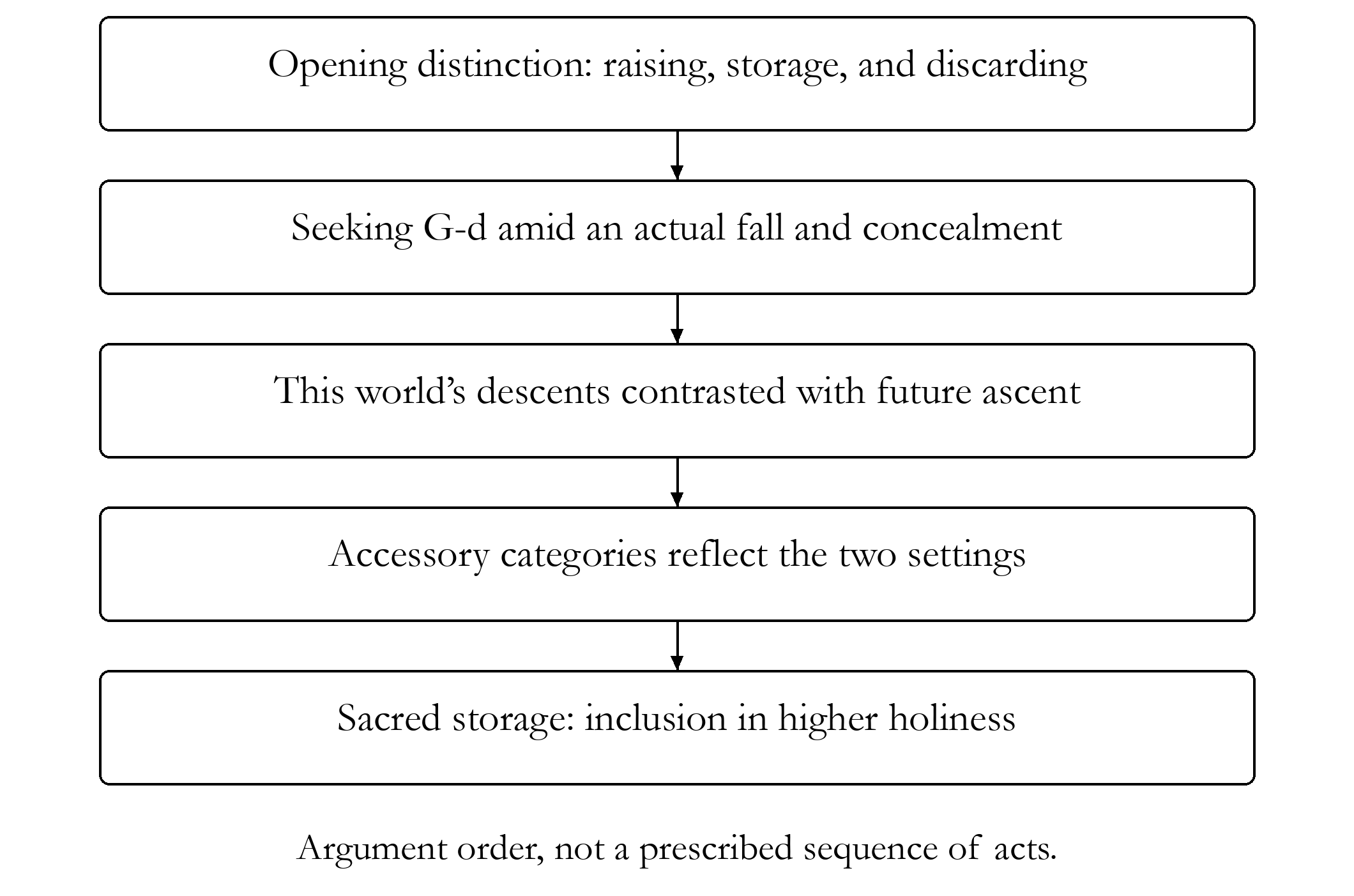
The opening laws distinguish raising in holiness from lowering, and sacred storage from discarding. The explanation contrasts this world’s ascents and descents with the future’s uninterrupted ascent. Accessories of holiness point toward that future holiness; their being stored away is presented as inclusion in higher holiness, not a loss of sanctity.
Main Pillars
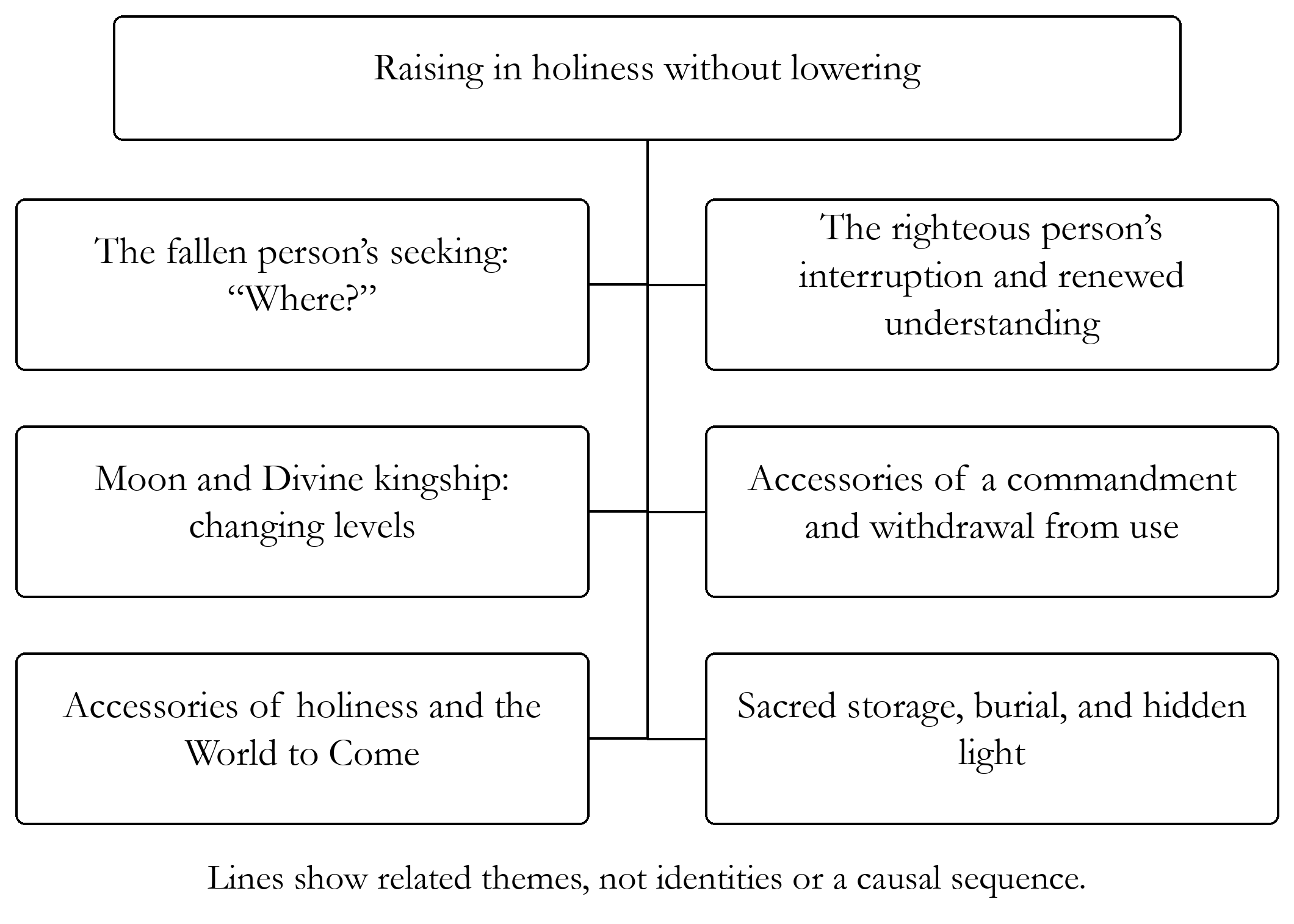
• Seeking after a fall: in a place where G-d is deeply concealed, the fallen person’s question, “Where is the place of His glory?”, is itself a turning back toward Him. The source calls this subtle and deep.
• A distinct example concerns the righteous person’s interruption of attachment in this world. It is a descent relative to his own level; afterward his understanding is renewed. The future is described as free of the obscuring clouds that make this interruption necessary.
• The moon and Divine kingship are associated with ascent and descent. Even in extreme concealment, the remaining point of vitality is rooted above in “Where?”; concealment is not presented as independence from G-d.
• The two accessory categories carry different symbolic associations: accessories of a commandment relate to changing levels, while accessories of holiness hint at the wholly holy World to Come. Sacred storage is linked with burial, concealment, and the hidden light.
Practical Takeaways
• Keep seeking after an actual fall distinct from choosing to fall. The passage’s account of return supplies no instruction to seek impurity or manufacture a descent.
• Read the storage discussion as part of the explanation of “raises in holiness and does not lower,” not as a claim that discarding and preserving are interchangeable ways of honoring sacred objects.
Expanded Study Aid — Bais HaKnesses — Laws of the Synagogue (House of Assembly) / Halacha 2
Key Terms and Concept Notes
• “Where?” — The question of seeking amid concealment also names the upper source of vitality in the passage’s symbolic account.
• Moon and Divine kingship — These are linked aspects within the explanation of changing levels, including the righteous person’s temporary interruption of attachment.
• Hidden light — Sacred storage is interpreted as holiness being included in higher holiness, associated with burial and concealment in this light.
Series Continuity Note
The final paragraph brings the moon, the question “Where?”, and the two accessory categories back to the opening law. It does not erase present descents; it explains why the sacred objects that hint at the future are treated under the principle of ascent without lowering.
Diagram 1 — The argument for ascent without lowering
Diagram 2 — Two settings: present descent and future uninterrupted ascent
— End of translator study aid and diagrams. Not part of the original text of Likutay Halachos. —
Bais HaKnesses (Synagogue) — Halacha 3
Earlier annotations and link context
Earlier Reader contexts are retained separately. Their links identify current source references; they do not assert that an earlier English selection has the same meaning in the corrected edition.
Earlier paragraph 3
Earlier Reader annotation context; not the corrected source edition
Current source references: [245] [246] [247] [248]
הלכה ב אות א מכרו תיבה יקנו מטפחת עיין שם. אבל להיפך לא. מעלין בקדש ולא מורידין. תשמישי קדושה נגנזין, תשמישי מצוה נזרקין. כי הירידה היא תכלית העליה כמובא וכמבואר היטב בדברי רבינו נ"י (בסימן י"ב בלקוטי תנינא) על פסוק ואיה השה לעולה. שכשיורד ונופל ח"ו למדרגות התחתונים מאד רחמנא ליצלן לבחינת מקומות המטונפים ומתחיל לבקש ~ אותו יתברך איה מקום כבודו, מחמת ששם נסתר ונעלם מאד הוא יתברך ובזה בעצמו הוא חוזר ומדבק עצמו אליו יתברך. כי מקומות אלו מקבלין חיות מבחינת איה שהוא הכבוד העליון עיין שם היטב היטב, כי הוא ענין דק ועמוק. והנה הירידה לצורך העליה הוא רק בעולם הזה שהוא עולם העשיה שהוא מלא קליפות שאי אפשר לעלות כי אם על ידי ירידות. כי בלא זה יהיה עליו קטרוגים רבים ומניעות רבות, על כן צריך דייקא לירדה למדור הקליפות להכניעם במקומם ולמצוא שם דייקא ~ אותו יתברך בבחינת ירידה תכלית העליה כנ"ל ואז עולה לבטח בלי מונע. אבל לעתיד לבא שיהיה כולו קדש ואתרוח הטומאה יעביר מן הארץ ויתבטל כל הקליפות, אז יעלו מדרגא לדרגא מחיל אל חיל בלי ירידה וכמובן במאמר ר' יוחנן משתעי חזינא כוורא דאפיק רישי' ממיא ודמיא עיניו כתרי סיהרי וכו' עיין שם היטב (בסימן ט"ז) והכלל היוצא משם שמה שצריך הצדיק לבטל מדביקותו הוא רק בעולם הזה מחמת עננין דמכסיין על עיינין כדי שלא יתגברו ח"ו ויתבטל מכל וכל. אבל לעתיד לבא שיתבטלו העננין וכו', אז לא יצטרך לבטל מדביקותו וכו' עיין שם. וכל זה הוא בעצמו ענין ירידה לצורך העליה, כי כשהצדיק מבטל מדביקותו אזי הוא בבחינת סיהרא כמבואר שם, זהו ירידה אצלו. אבל הוא לצורך העליה. כי אחר כך נתחדש שכלו ומשיג יותר מבתחלה וכל ה אינו נוהג רק בעולם הזה, אבל לעתיד לבא יתבטלו העננין ולא יצטרך לירידה כנ"ל. וזה בחינת מעלין בקדש ולא מורידין. כי תשמישי קדושה הם רמז על בחינת עלמא דאתי שיהיה כולו קדש כולו טוב. ועל כן נאמר בהם מעלין בקדש ולא מורידין, כי שם הוא העליות בלי ירידות כנ"ל. וזהו בחינת תשמישי מצוה נזרקין תשמישי קדושה נגנזין. כי תשמישי מצוה הם בחינת מלכות כמו שכתוב כל מצותיך צדק וצדק מלכותא קדישא. ובבחינה זו יש עליות וירידות. כי לפעמים נקטן ונתצמצם בחינת המלכות ויורד למדריגות התחתונים ואפילו במדור הקליפות בסוד ומלכותו בכל משלה וזהו בעצמו בחינת איה שמחיה מקומות אלו בסוד אני ראשון ואני אחרון. כי מלכות בראש ומלכות בסוף. היינו שבחינת מלכות שרשה בכתר שהוא בחינת איה. כי סוף מעשה במחשבה תחלה, וכשהמלכות בהסתרה וקטנות גמור עד שמלובש במקומות כאלו להחיותם, אזי דייקא הוא בבחינת איה כי אזי נסתלקין המוחין שבאין אליו בתוספת ואין לה רק עצם חיותה שיש לה בסוד נקודה. ושורה חיות הנקודה הוא מבחינת איה כי שם שורה כי סוף מעשה במחשבה תחלה וכו' כנ"ל. נמצא שמה שכתוב שם בדברי רבינו נ"י במאמר ר' יוחנן הנ"ל שכשהצדיק מבטל מדביקותו הוא בבחינת סיהרא זהו בעצמו בחינת הירידה צורך העליה הנ"ל. כי סיהרא הוא בחינת מלכות. וכל העליות וירידות הם בבחינת מלכות כי בחינת מלכות עולה ויורד למדרגות ה"ל להכניעם ואחר כך עולה משם כידוע. וזהו בעצמו בחינת איה שמחיה מקומות האלו שהוא בכחינת שורש נקודות המלכות כידוע שעל ידי זה הירידה תכלית העליה כנ"ל. ועל כן תשמישי מצוה כשנסתלקין ממצותן נזרקין כי שם יש בחינת הסתלקות הקדושה לפעמים בעת הירידה כנ"ל. אבל תשמישי קדושה נגנזין, כי הם בבחינת עלמא דאתי כולו קדש ואז לא יהיה ירידה כלל ועל כן אסור לזורקן כי אין בהם ירידה רק נגנזין והגניזה היא בחינת קבורה והעלמה. וכן הדין באמת לקוברם וזהו גניזתן היינו שצריך לגונזן באור הגנוז שהוא אור אין סוף ברוך הוא ששם הוא סוד קבורת תלמידי חכמים ושם הוא גניזתן. כי הקדושה נכרללת בקדושה העליונה על למעלה מעלה וכו'. וזהו בעצמו בחינת מעלין בקדש ולא מורידין כי העליות אלו הם בלי ירידה. כי לעתיד לא יהיה שום ירידה לצורך העליה רק יהיה כולו קדש כנ"ל:
According to the Torah "Tik'u — Tochachah" (cited in Hilchos Hashkamas HaBoker, Halacha 5):
💬 Comments
…Comments are currently read-only.
Loading comments…