
Teaching 2 english · AI illustration
Teachings
- Teaching 1 · א׳
- Teaching 2 · ב׳
- Teaching 3 · ג׳
- Teaching 4 · ד׳
- Teaching 5 · ה׳
- Teaching 6 · ו׳
- Teaching 7 · ז׳
- Teaching 8 · ח׳
- Teaching 9 · ט׳
- Teaching 10 · י׳
- Teaching 11 · י״א
- Teaching 12 · י״ב
- Teaching 13 · י״ג
- Teaching 14 · י״ד
- Teaching 15 · ט״ו
- Teaching 16 · ט״ז
- Teaching 17 · י״ז
- Teaching 18 · י״ח
- Teaching 19 · י״ט
- Teaching 20 · כ׳
- Teaching 21 · כ״א
- Teaching 22 · כ״ב
- Teaching 23 · כ״ג
- Teaching 24 · כ״ד
- Teaching 25 · כ״ה
- Teaching 26 · כ״ו
- Teaching 27 · כ״ז
- Teaching 28 · כ״ח
- Teaching 29 · כ״ט
- Teaching 30 · ל׳
- Teaching 31 · ל״א
- Teaching 32 · ל״ב
- Teaching 33 · ל״ג
- Teaching 34 · ל״ד
- Teaching 35 · ל״ה
- Teaching 36 · ל״ו
- Teaching 37 · ל״ז
- Teaching 38 · ל״ח
- Teaching 39 · ל״ט
- Teaching 40 · מ׳
- Teaching 41 · מ״א
- Teaching 42 · מ״ב
- Teaching 43 · מ״ג
- Teaching 44 · מ״ד
- Teaching 45 · מ״ה
- Teaching 46 · מ״ו
- Teaching 47 · מ״ז
- Teaching 48 · מ״ח
- Teaching 49 · מ״ט
- Teaching 50 · נ׳
- Teaching 51 · נ״א
- Teaching 52 · נ״ב
- Teaching 53 · נ״ג
- Teaching 54 · נ״ד
- Teaching 55 · נ״ה
- Teaching 56 · נ״ו
- Teaching 57 · נ״ז
- Teaching 58 · נ״ח
- Teaching 59 · נ״ט
- Teaching 60 · ס׳
- Teaching 61 · ס״א
- Teaching 62 · ס״ב
- Teaching 63 · ס״ג
- Teaching 64 · ס״ד
- Teaching 65 · ס״ה
- Teaching 66 · ס״ו
- Teaching 67 · ס״ז
- Teaching 68 · ס״ח
- Teaching 69 · ס״ט
- Teaching 70 · ע׳
- Teaching 71 · ע״א
- Teaching 72 · ע״ב
- Teaching 73 · ע״ג
- Teaching 74 · ע״ד
- Teaching 75 · ע״ה
- Teaching 76 · ע״ו
- Teaching 77 · ע״ז
- Teaching 78 · ע״ח
- Teaching 79 · ע״ט
- Teaching 80 · פ׳
- Teaching 81 · פ״א
- Teaching 82 · פ״ב
- Teaching 83 · פ״ג
- Teaching 84 · פ״ד
- Teaching II-1 · חלק ב׳ · א׳
- Teaching II-2 · חלק ב׳ · ב׳
- Teaching II-3 · חלק ב׳ · ג׳
- Teaching II-4 · חלק ב׳ · ד׳
- Teaching II-5 · חלק ב׳ · ה׳
- Teaching II-6 · חלק ב׳ · ו׳
- Teaching II-7 · חלק ב׳ · ז׳
- Teaching II-8 · חלק ב׳ · ח׳
- Teaching II-9 · חלק ב׳ · ט׳
- Teaching II-10 · חלק ב׳ · י׳
- Teaching II-11 · חלק ב׳ · י״א
- Teaching II-12 · חלק ב׳ · י״ב
- Teaching II-13 · חלק ב׳ · י״ג
- Teaching II-14 · חלק ב׳ · י״ד
תְּפִלָּה
Prayer
Sefer Hamidos - The Book of Traits · 98 individual teachings
See the complete visual collection together, or open pictures teaching by teaching below.
Sefer HaMidos · Prayer
All pictures
134 pictures from 66 teachings. Select any picture to view, share, or download it.
א׳
צָרִיךְ אָדָם לִהְיוֹת נִכְסָף וּמִשְׁתּוֹקֵק לַטּוֹב הַכְּלָלִי, אַף־עַל־פִּי שֶׁיִּמָשֵׁךְ לוֹ לְבַד הֶפְסֵד.
1
1. A person should yearn and long for the general good, even though it will draw for himself alone, a loss.
ב׳
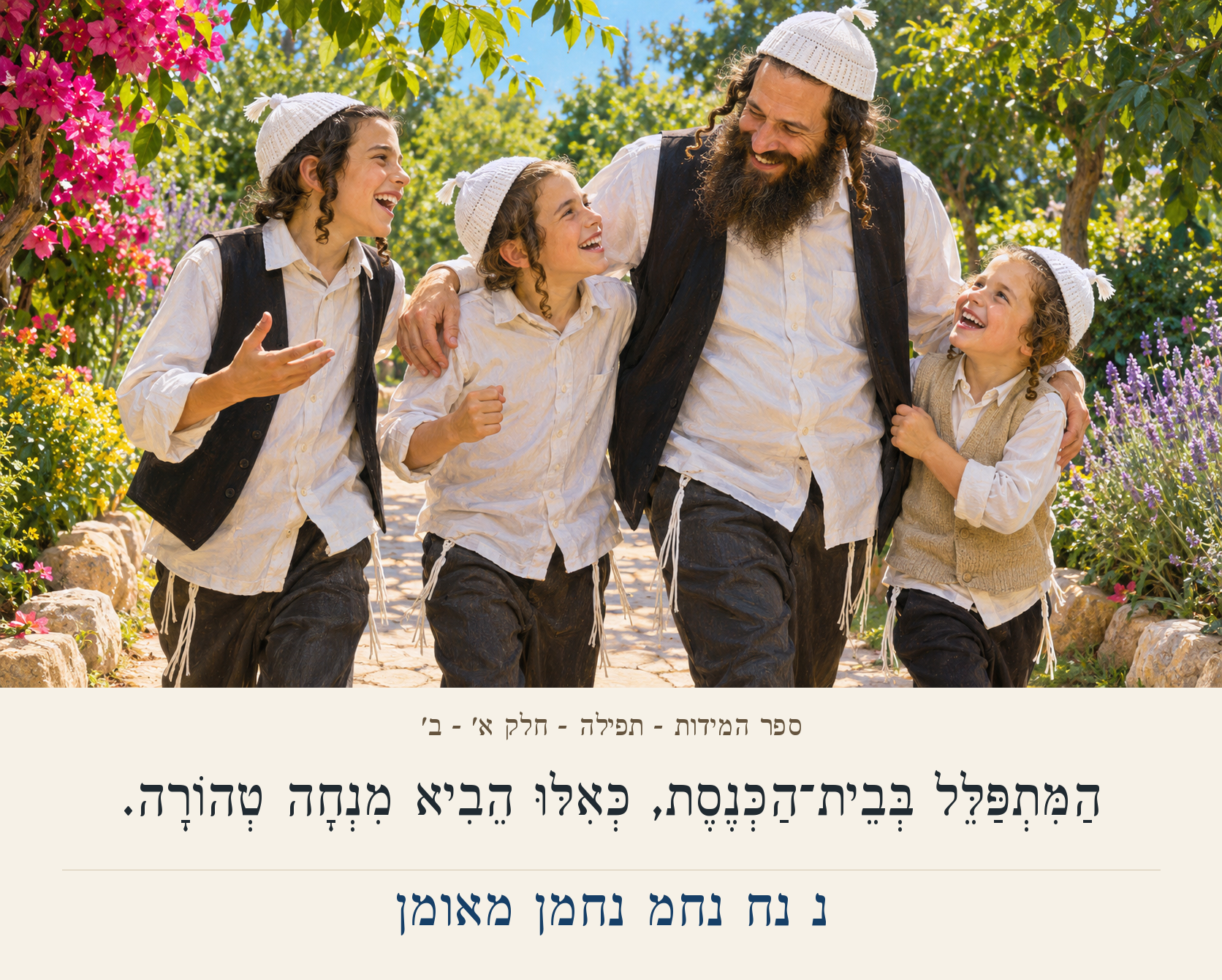
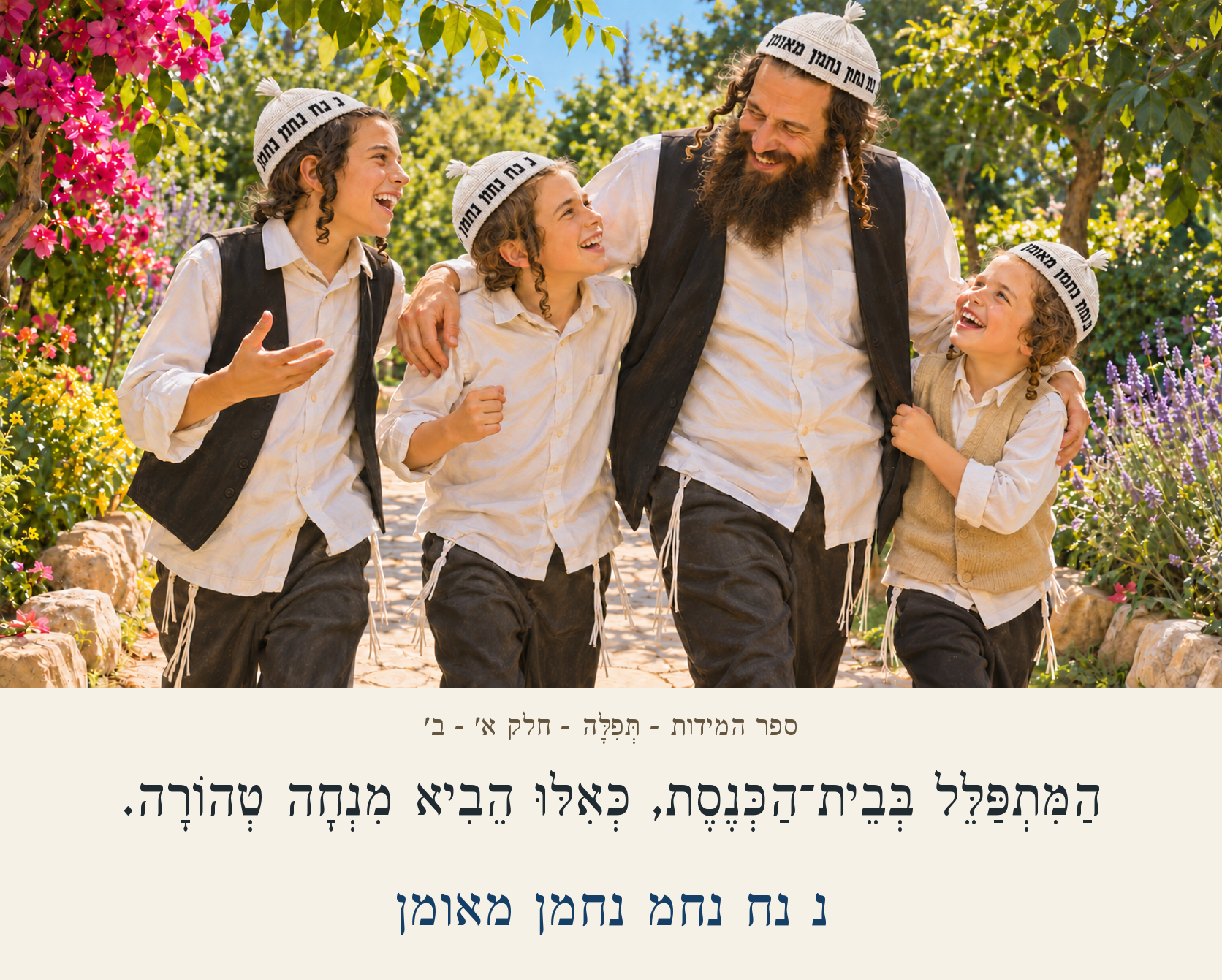
הַמִּתְפַּלֵּל בְּבֵית־הַכְּנֶסֶת, כְּאִלּוּ הֵבִיא מִנְחָה טְהוֹרָה.
2
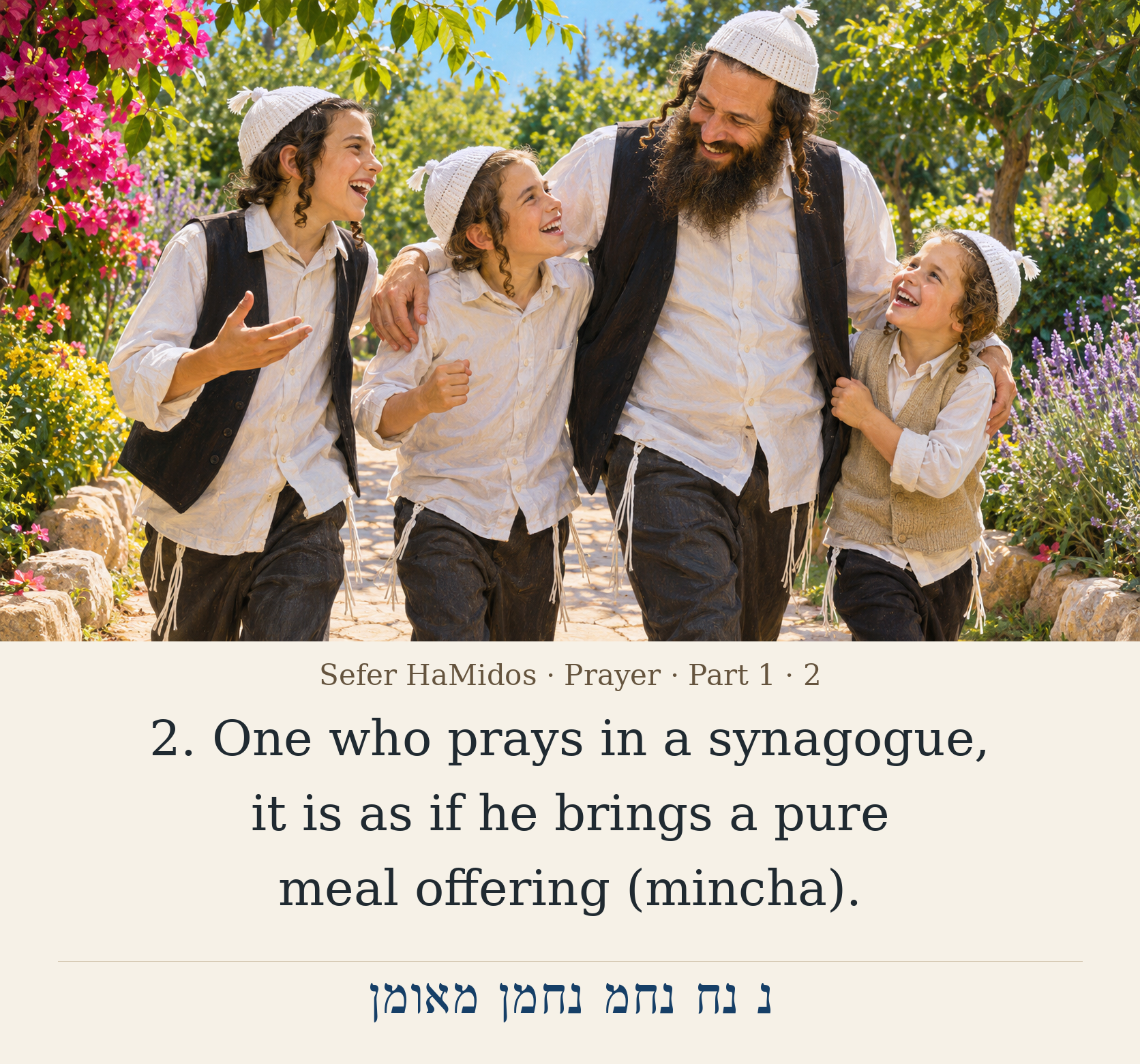
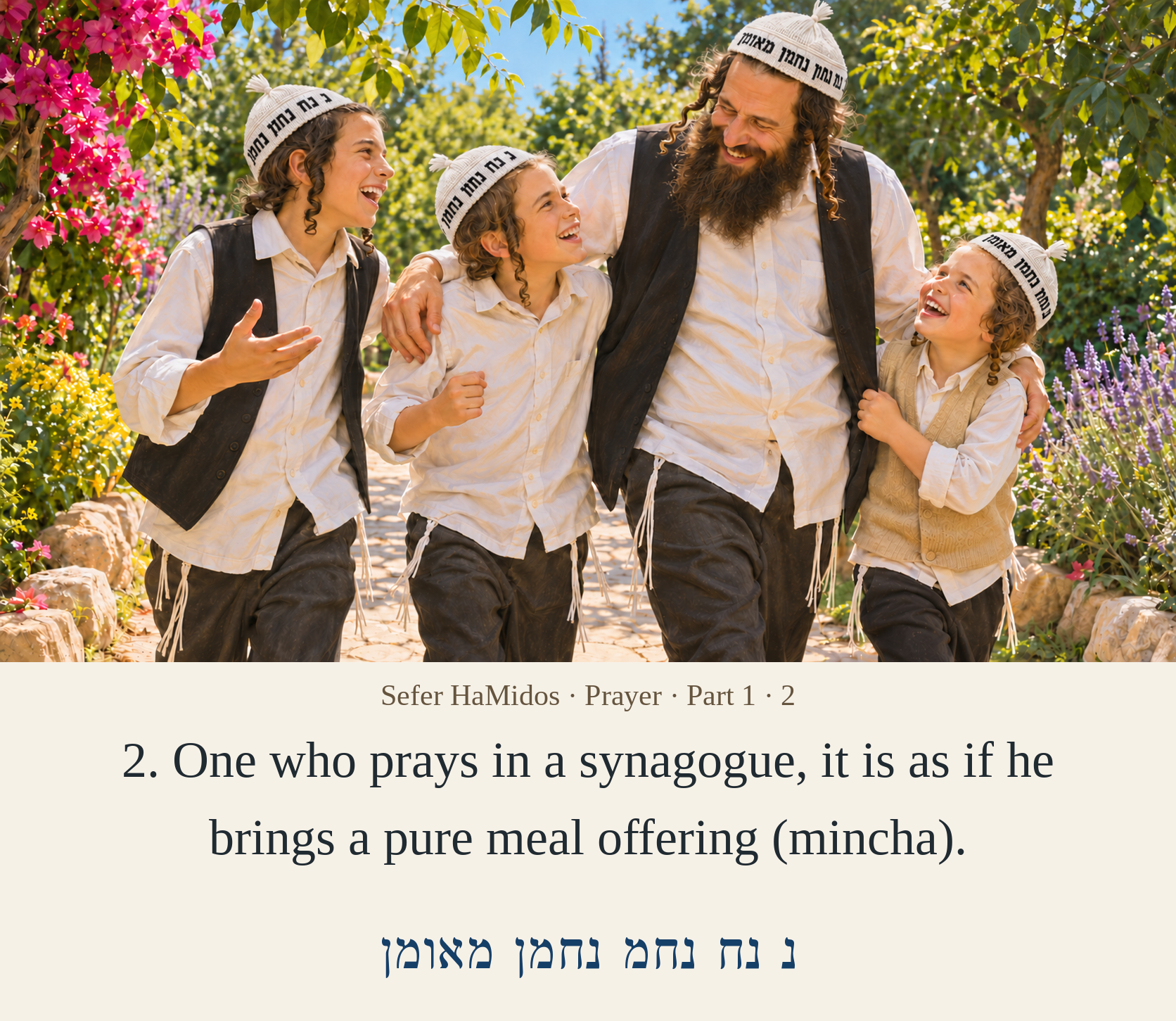
2. One who prays in a synagogue, it is as if he brings a pure meal offering (mincha).
📷 Pictures / videos for this teaching
AI-generated editorial illustration of a joyful father and children on their way to communal prayer; the synagogue is outside the frame. The quoted teaching concerns prayer in a synagogue, not walking outdoors. איור שנוצר בבינה מלאכותית: אב וילדים שמחים בדרכם לתפילה בציבור; בית הכנסת מחוץ לתמונה. דברי המקור עוסקים בתפילה בבית הכנסת, ולא בהליכה בחוץ.
ג׳
הַקָּדוֹשׁ־בָּרוּךְ־הוּא מָצוּי בְּבֵית־הַכְּנֶסֶת.
3
3. The Holy One, Blessed be He, is found in the synagogue.
ד׳
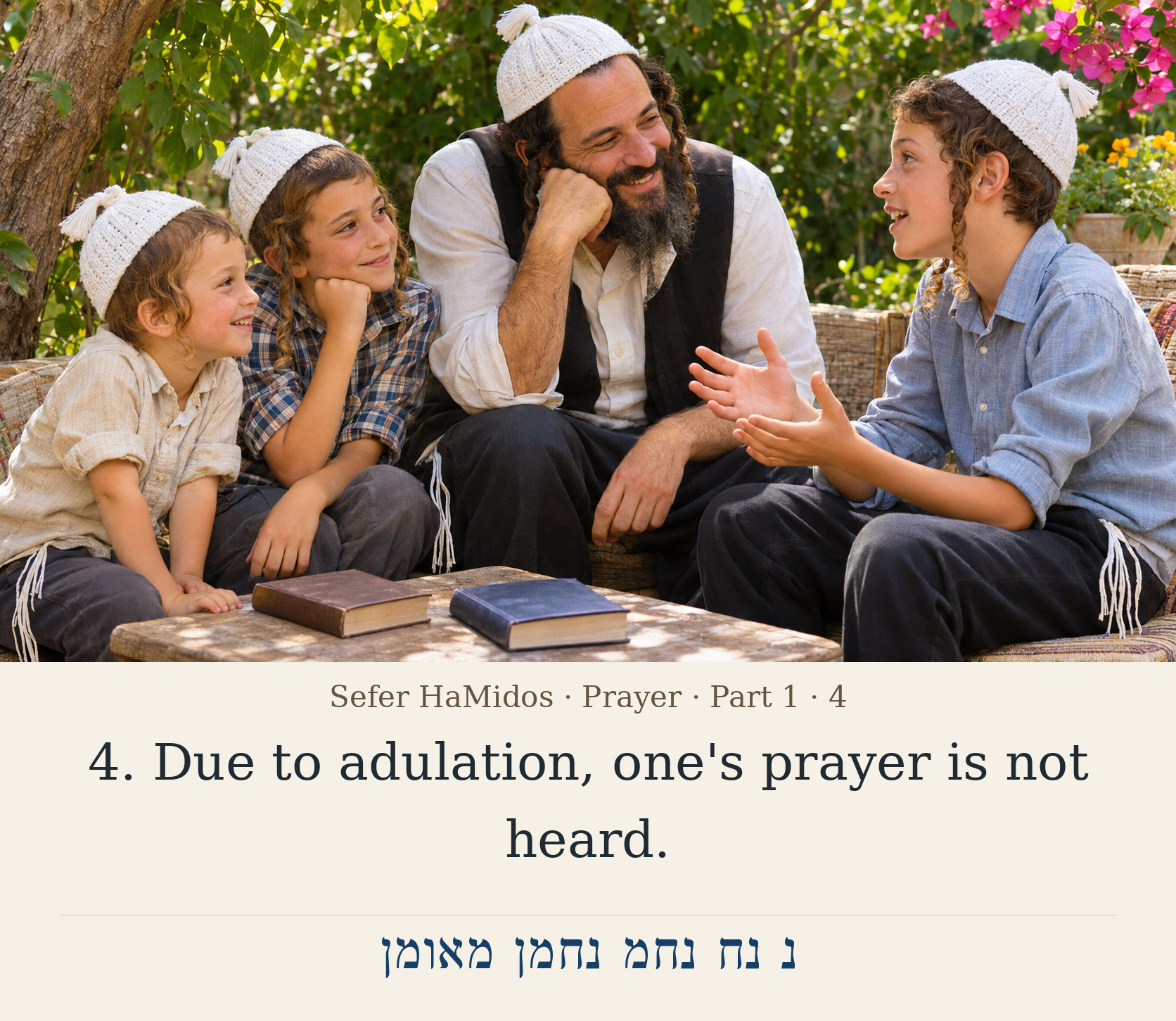
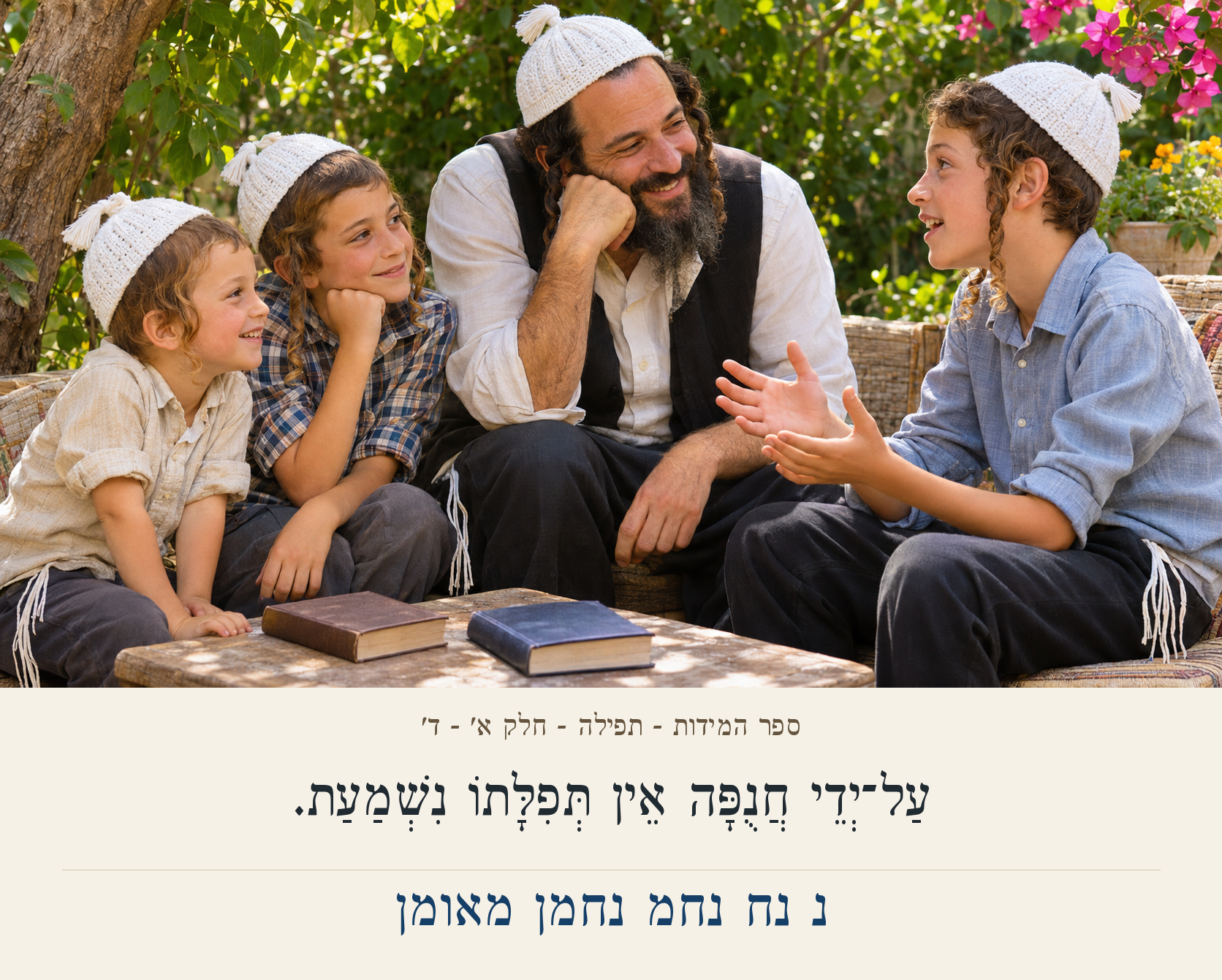
עַל־יְדֵי חֲנֻפָּה אֵין תְּפִלָּתוֹ נִשְׁמַעַת.
4
4. Due to adulation, one's prayer is not heard.
📷 Pictures / videos for this teaching
An editorial illustration of a family lesson about honest speech. The quoted teaching warns about flattery; the scene does not establish that a particular prayer is heard. איור של לימוד משפחתי על דיבור כן. דברי המקור מזהירים מחנופה; התמונה אינה קובעת שתפילה מסוימת נשמעת.
ה׳
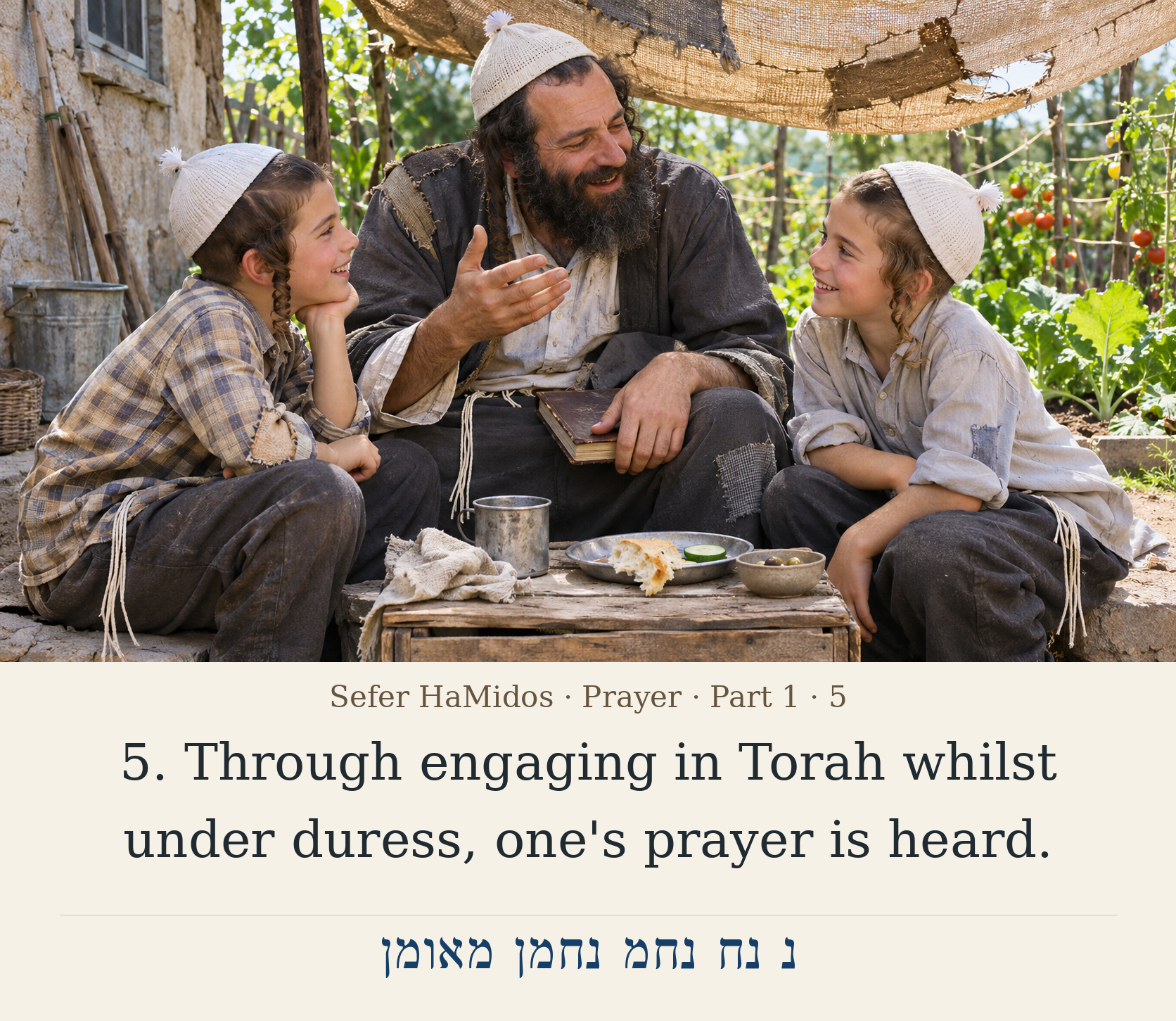
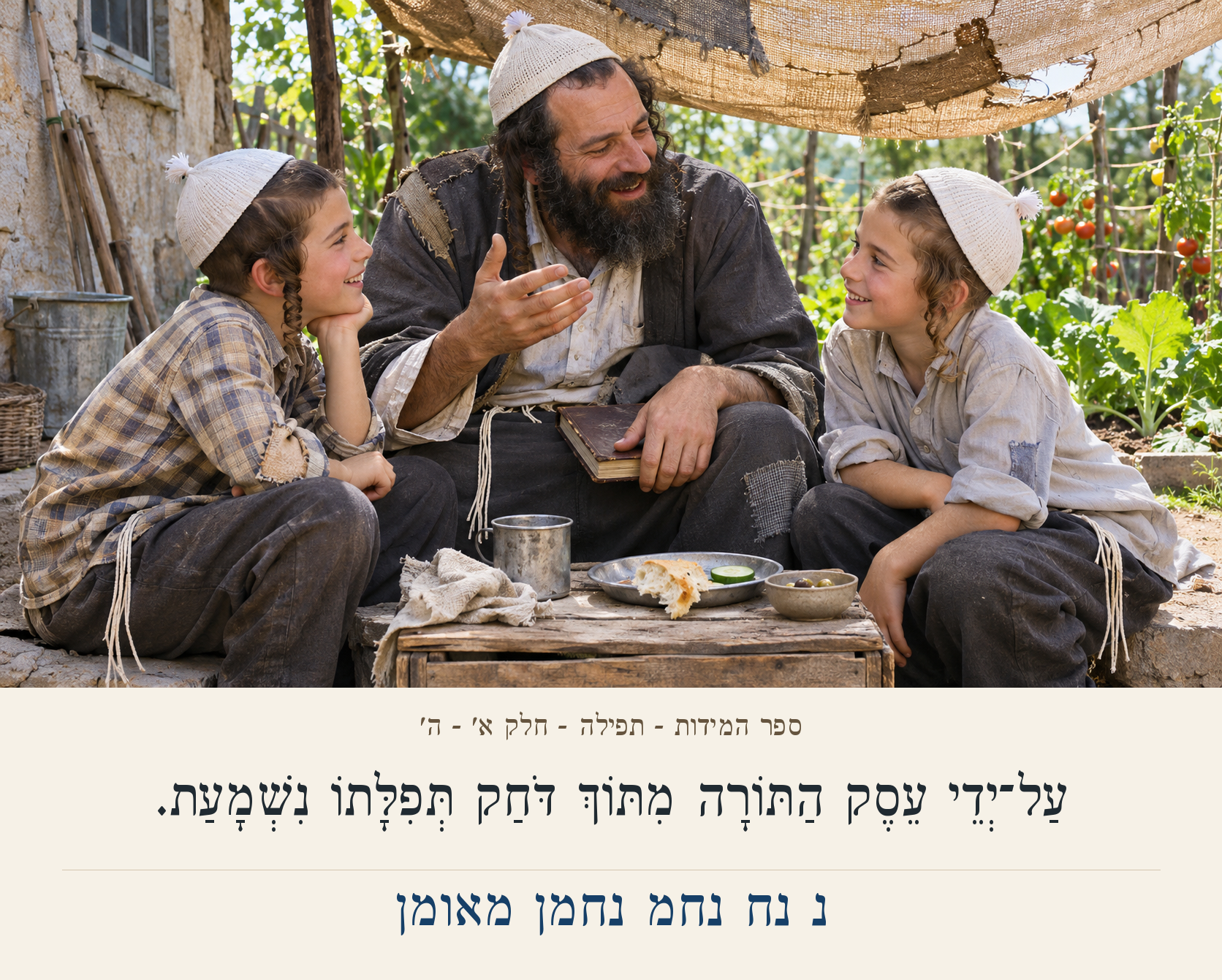
עַל־יְדֵי עֵסֶק הַתּוֹרָה מִתּוֹךְ דֹּחַק תְּפִלָּתוֹ נִשְׁמָעַת.
5
5. Through engaging in Torah whilst under duress, one's prayer is heard.
📷 Pictures / videos for this teaching
An editorial illustration of Torah learning amid material hardship. The picture does not depict or prove an answer to prayer. איור של לימוד תורה מתוך דוחק חומרי. התמונה אינה מציגה או מוכיחה מענה לתפילה.
ו׳
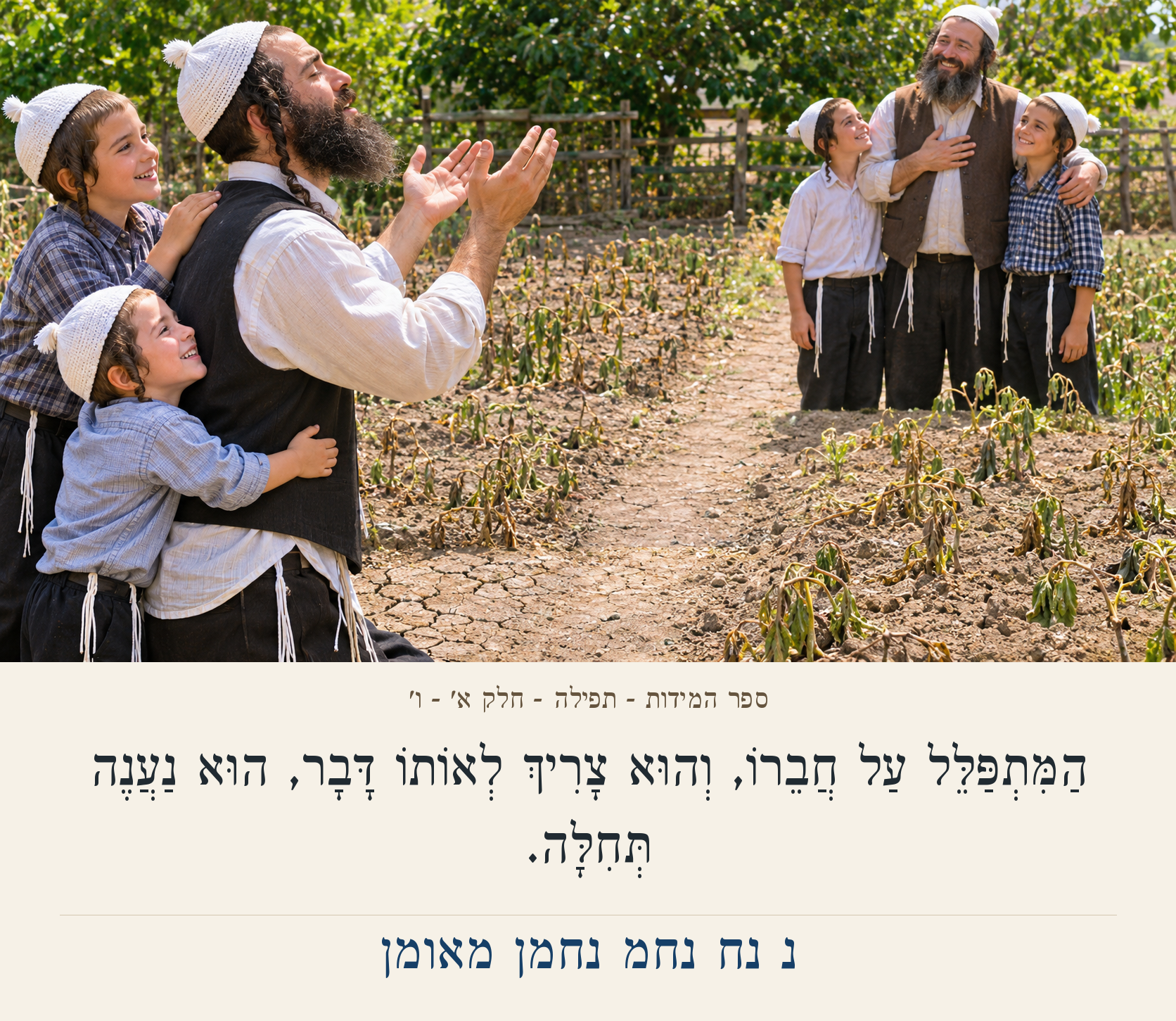
הַמִּתְפַּלֵּל עַל חֲבֵרוֹ, וְהוּא צָרִיךְ לְאוֹתוֹ דָּבָר, הוּא נַעֲנֶה תְּחִלָּה.
6
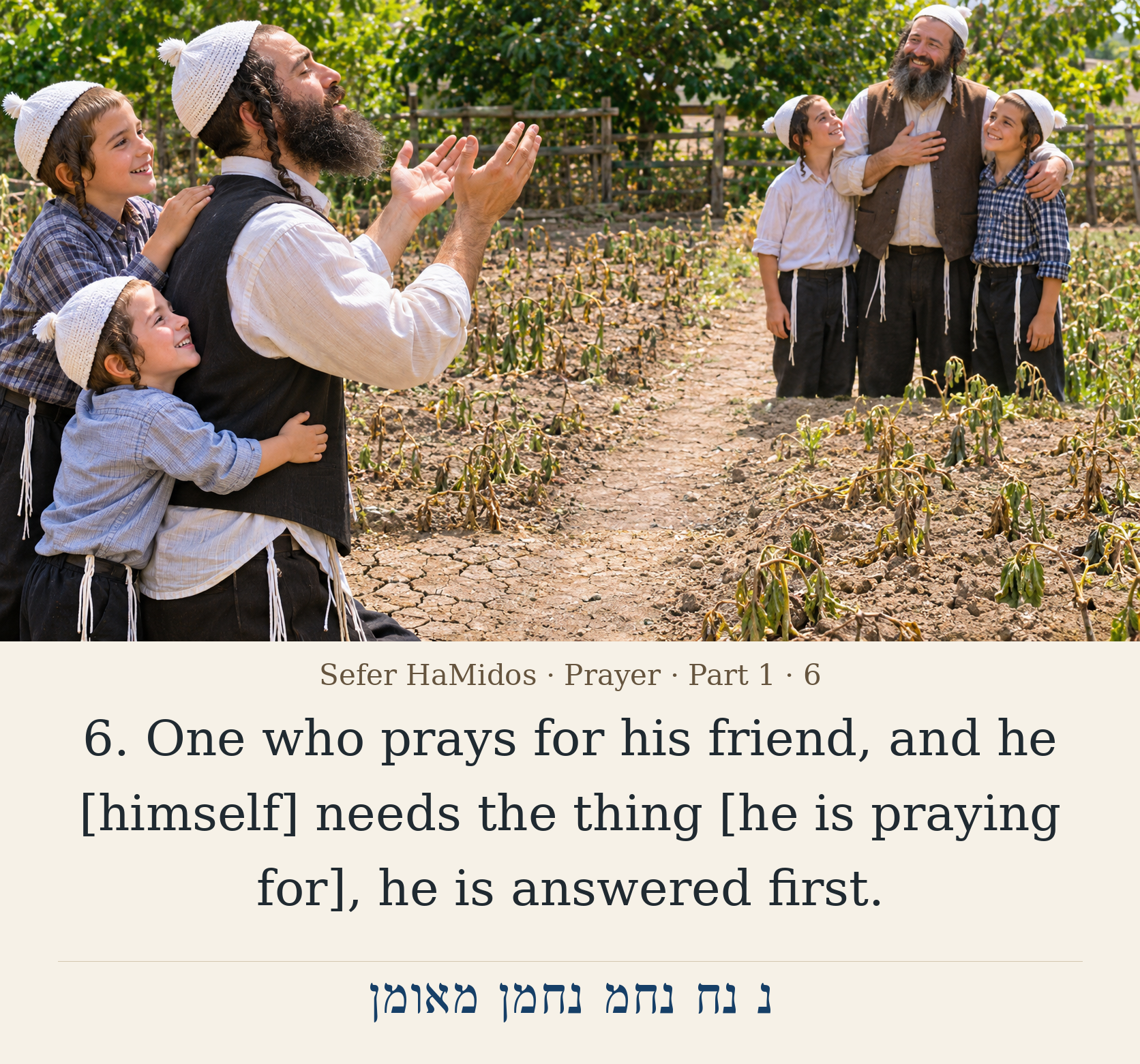
6. One who prays for his friend, and he [himself] needs the thing [he is praying for], he is answered first.
📷 Pictures / videos for this teaching
An editorial scene of praying for a friend while sharing the same need. The quoted teaching, not a depicted sequence of events, states who is answered first. איור של תפילה על חבר מתוך צורך משותף. דברי המקור, ולא רצף אירועים בתמונה, קובעים מי נענה תחילה.
ז׳
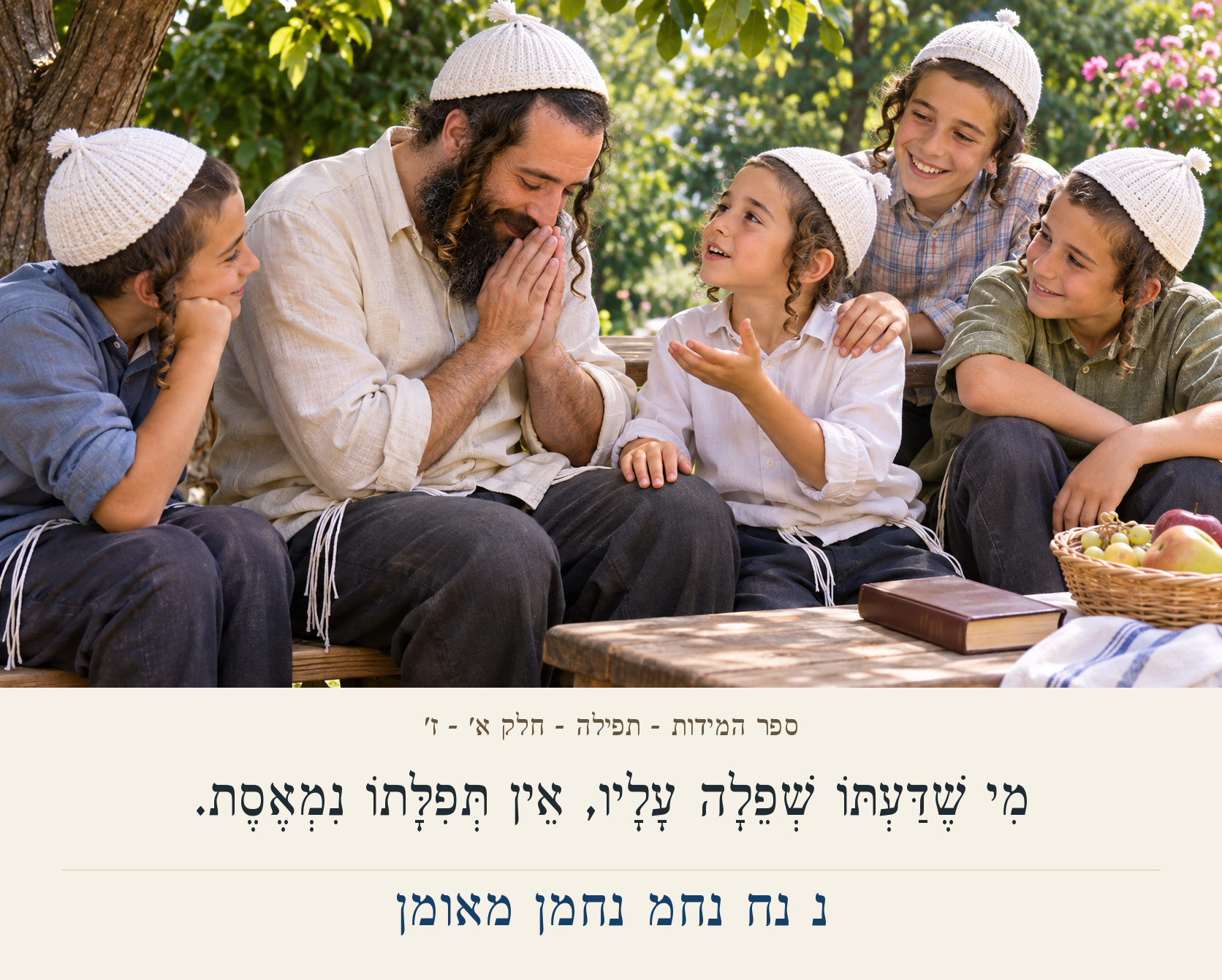
מִי שֶׁדַּעְתּוֹ שְׁפֵלָה עָלָיו, אֵין תְּפִלָּתוֹ נִמְאֶסֶת.
7
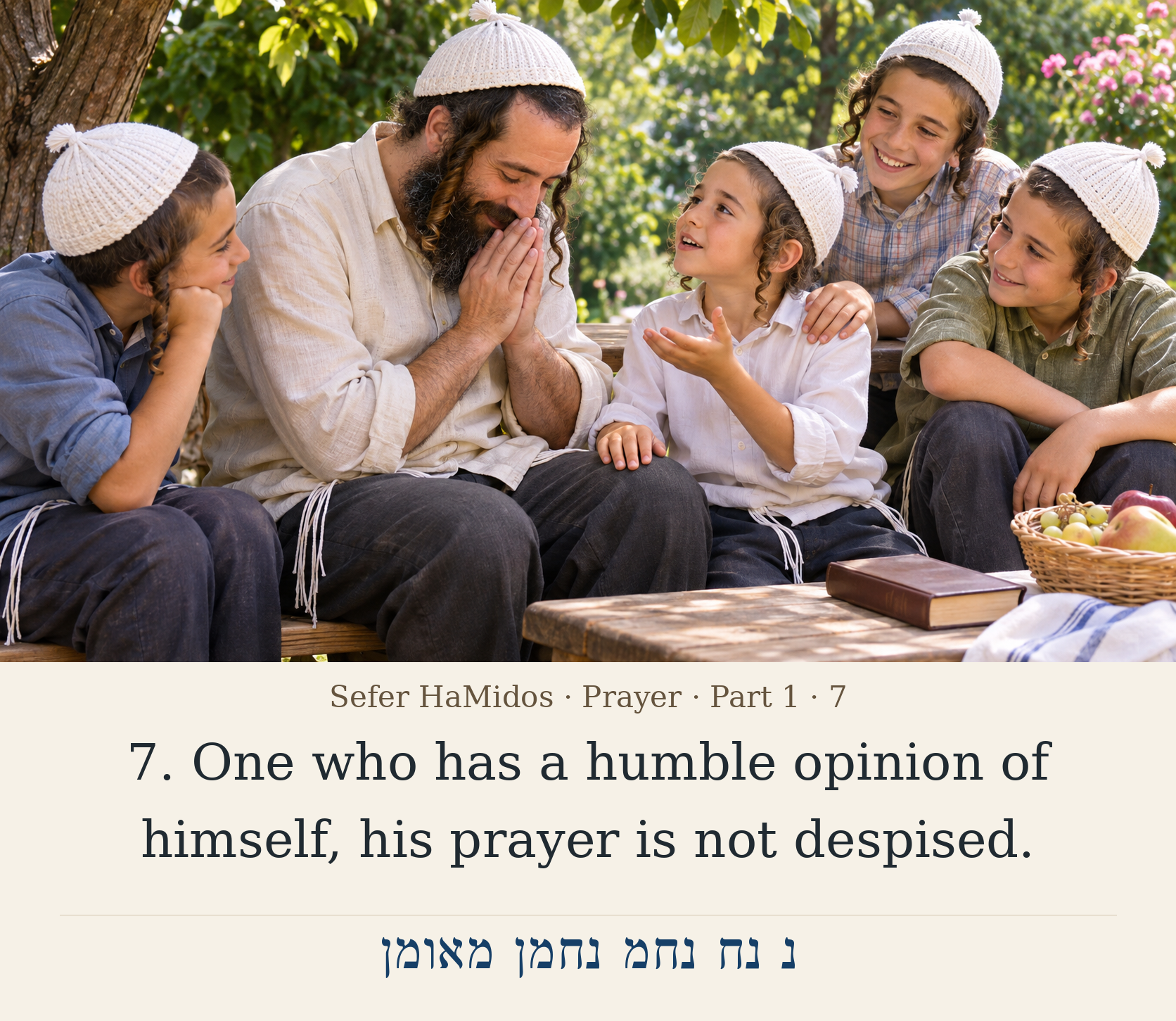
7. One who has a humble opinion of himself, his prayer is not despised.
📷 Pictures / videos for this teaching
An editorial illustration of dignified humility and prayer, not self-hatred or humiliation. איור של ענווה ותפילה מתוך כבוד, ולא של שנאה עצמית או השפלה.
ח׳
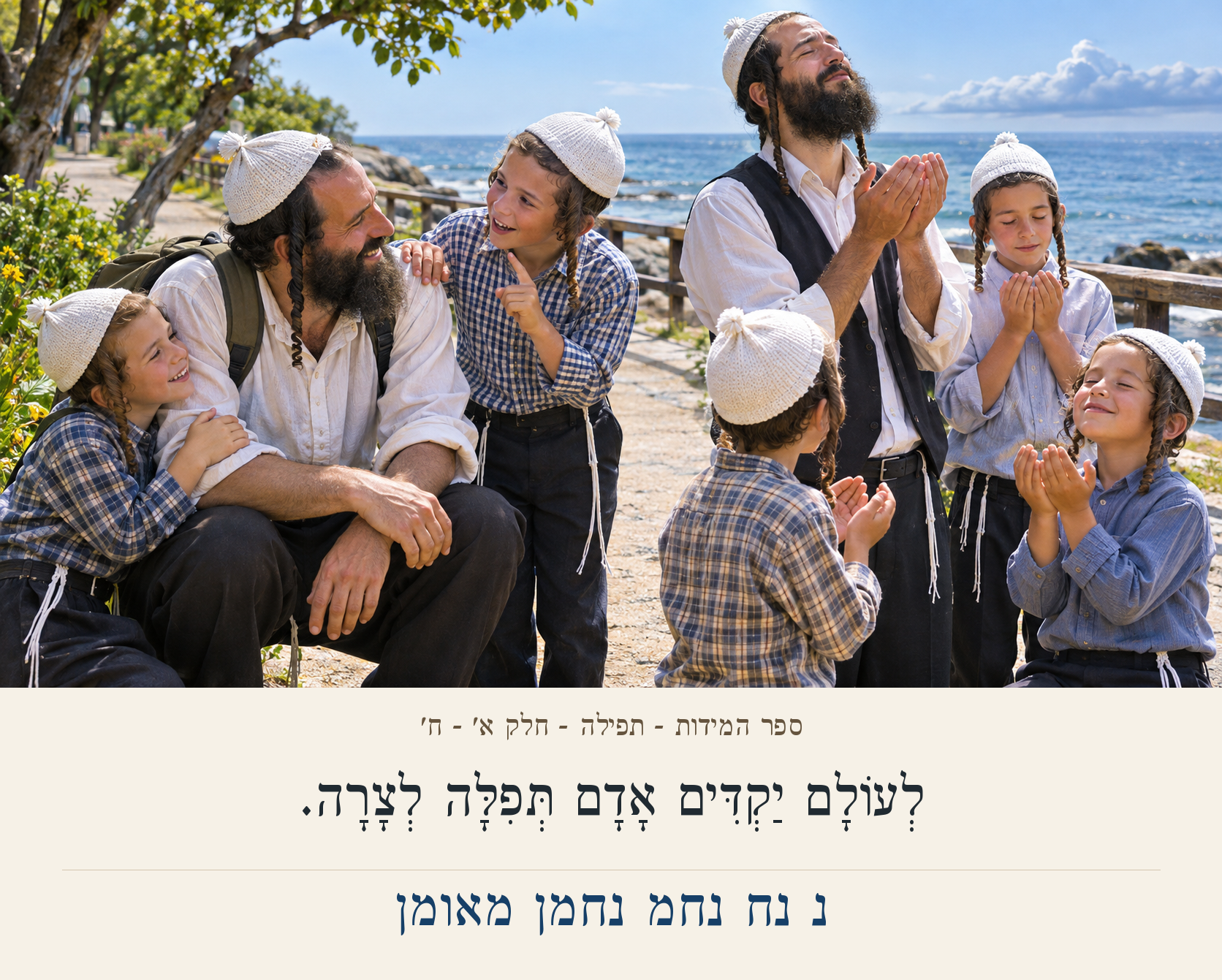
לְעוֹלָם יַקְדִּים אָדָם תְּפִלָּה לְצָרָה.
8
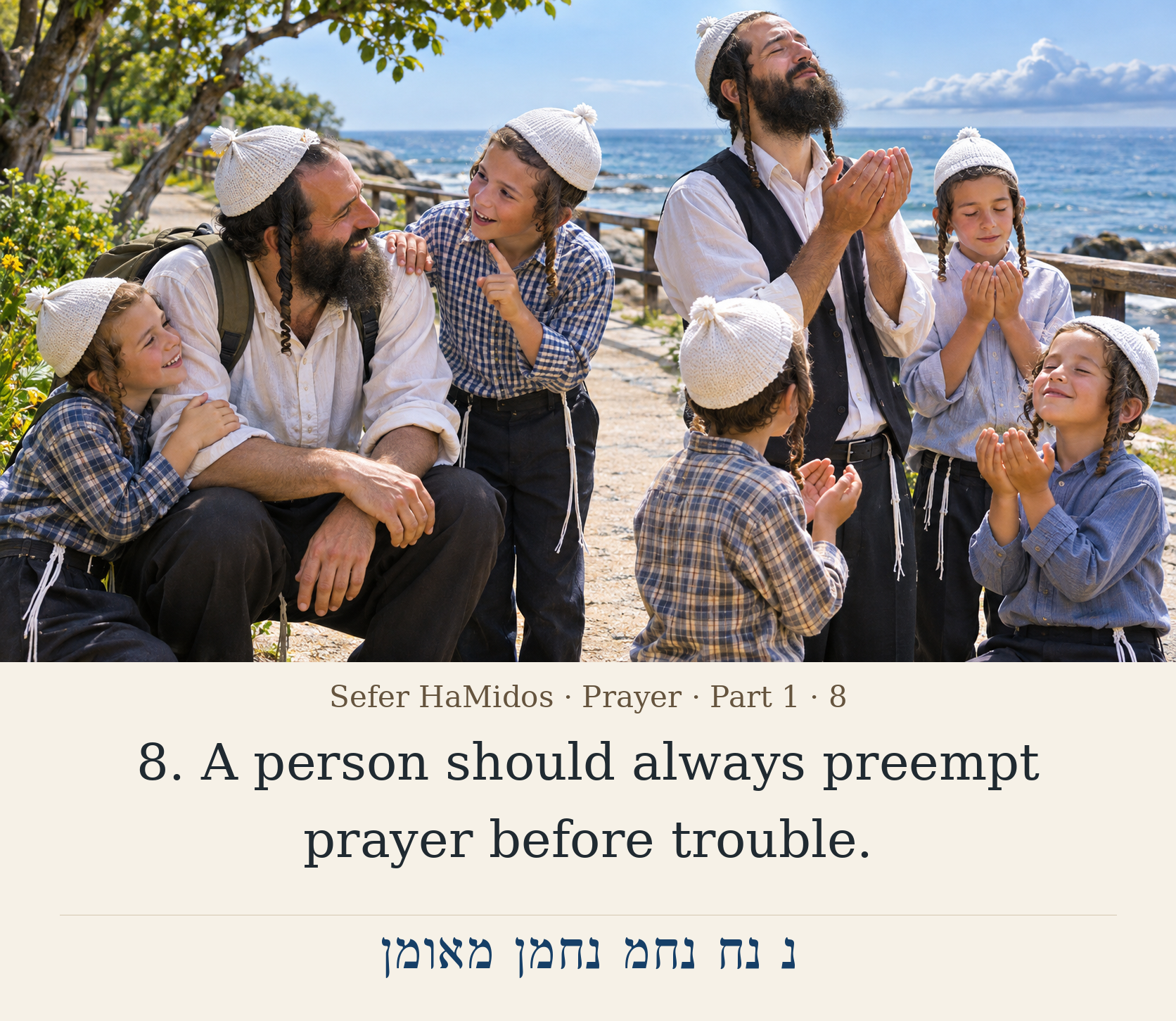
8. A person should always preempt prayer before trouble.
📷 Pictures / videos for this teaching
An editorial illustration of prayer before trouble, not a promise that trouble will never come. איור של הקדמת תפילה לצרה, ולא הבטחה שצרה לעולם לא תבוא.
ט׳
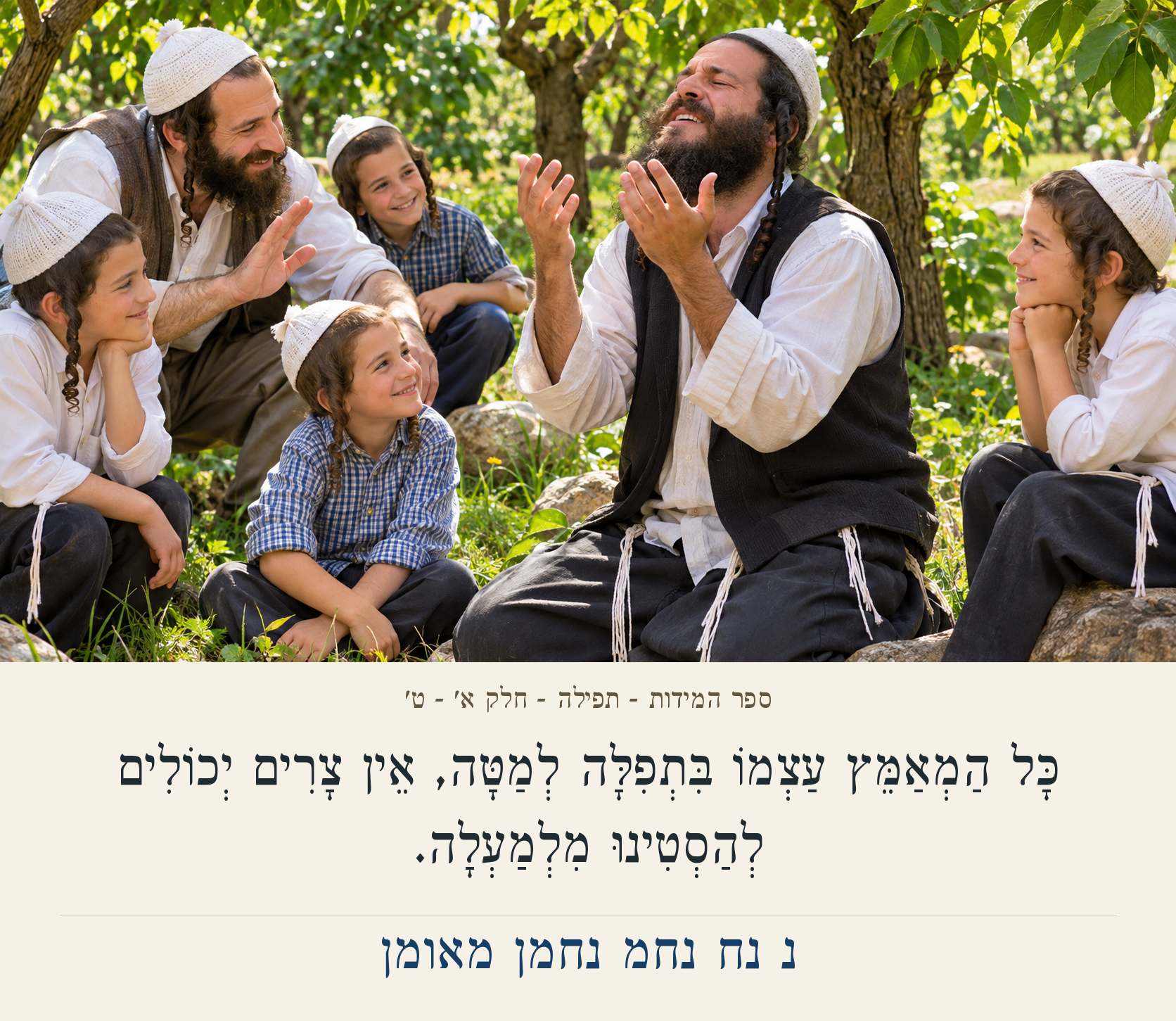
כָּל הַמְאַמֵּץ עַצְמוֹ בִּתְפִלָּה לְמַטָּה, אֵין צָרִים יְכוֹלִים לְהַסְטִינוּ מִלְמַעְלָה.
9
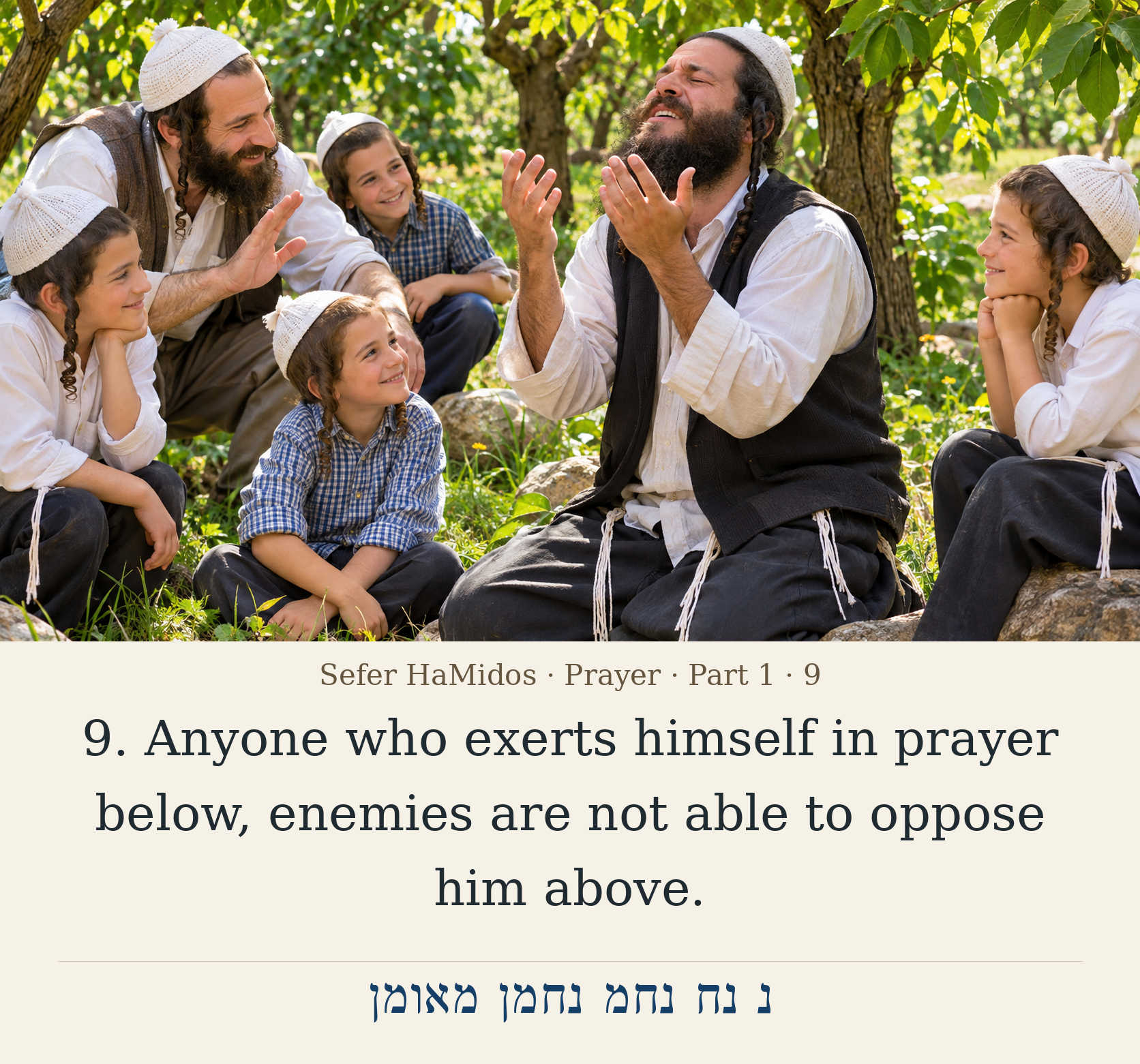
9. Anyone who exerts himself in prayer below, enemies are not able to oppose him above.
📷 Pictures / videos for this teaching
An editorial illustration of human effort in prayer below. Enemies and opposition above are not pictured; the complete quoted teaching, not the scene, states that consequence. איור של מאמץ אנושי בתפילה למטה. הצרים והקטרוג למעלה אינם מצוירים; דברי המקור המלאים, ולא התמונה, קובעים את התוצאה.
י׳
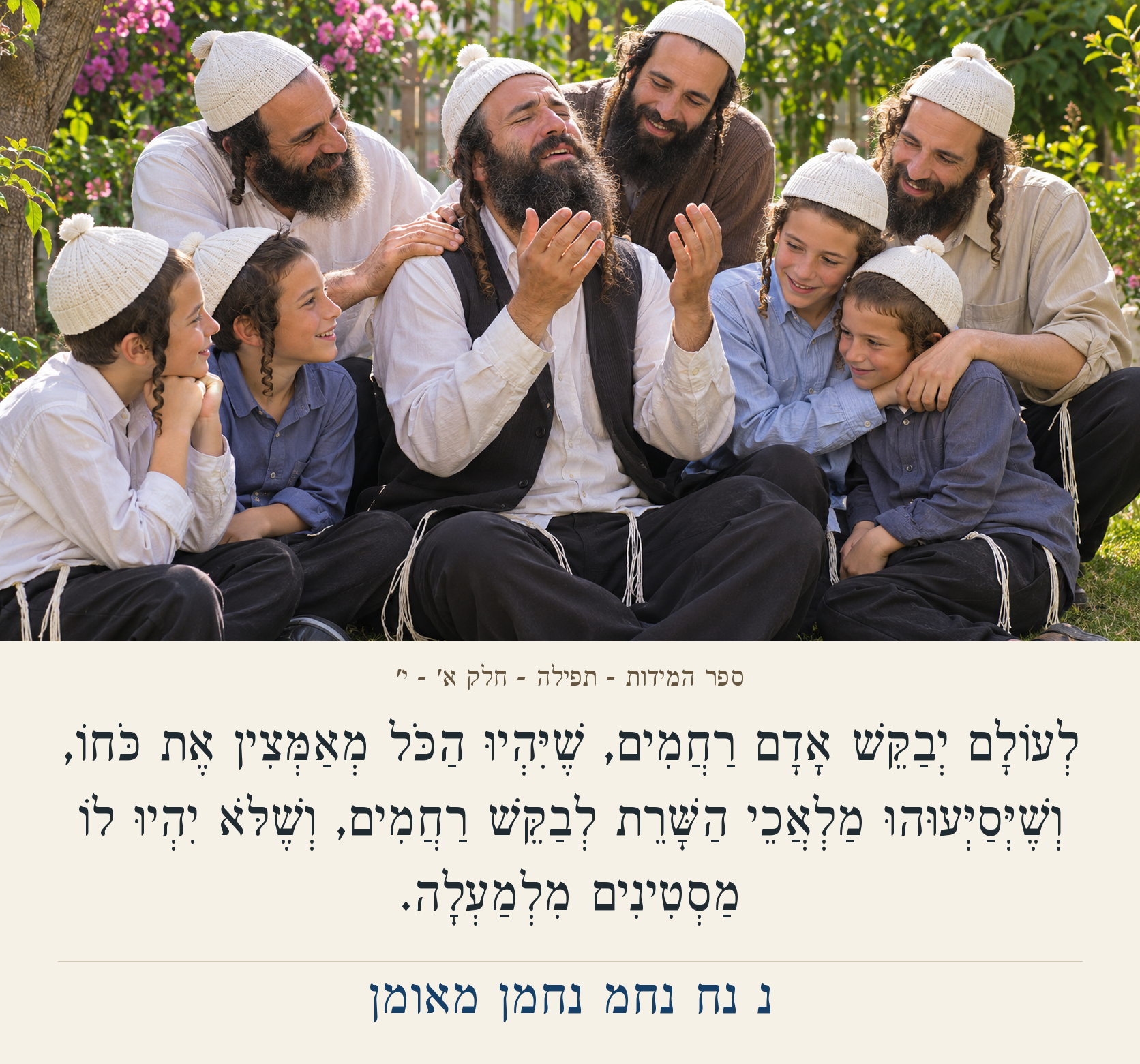
לְעוֹלָם יְבַקֵּשׁ אָדָם רַחֲמִים, שֶׁיִּהְיוּ הַכֹּל מְאַמְּצִין אֶת כֹּחוֹ, וְשֶׁיְּסַיְּעוּהוּ מַלְאֲכֵי הַשָּׁרֵת לְבַקֵּשׁ רַחֲמִים, וְשֶׁלֹּא יִהְיוּ לוֹ מַסְטִינִים מִלְמַעְלָה.
10
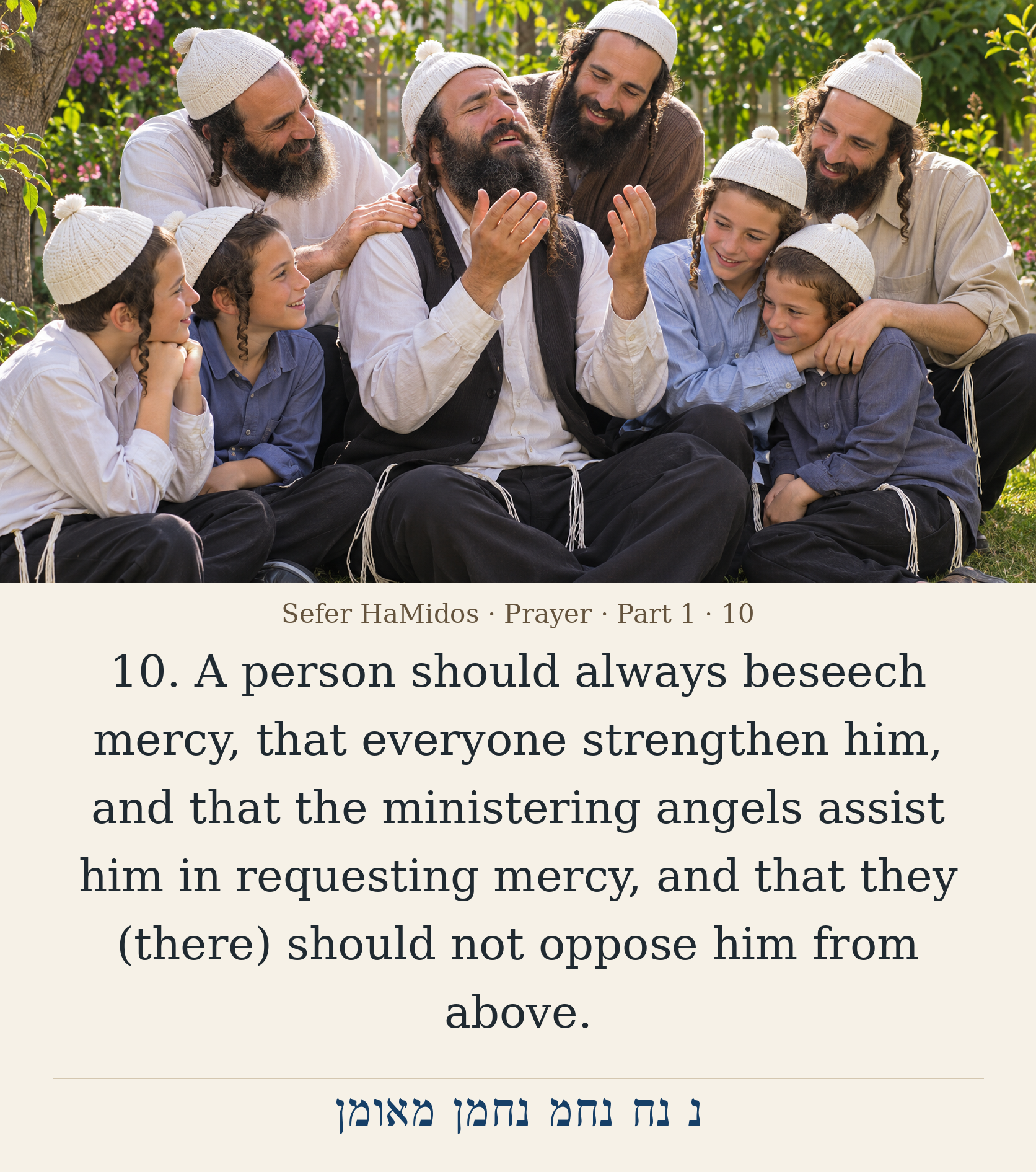
10. A person should always beseech mercy, that everyone strengthen him, and that the ministering angels assist him in requesting mercy, and that they (there) should not oppose him from above.
📷 Pictures / videos for this teaching
An editorial illustration of prayer and ordinary human support. The people do not represent ministering angels; angelic assistance and the absence of opponents above remain unpictured requests in the complete teaching. The canonical English parenthetical “(there)” is retained, not a pictured location or an identification of the angels as opponents. איור של תפילה ותמיכה אנושית רגילה. האנשים אינם מייצגים מלאכי השרת; סיוע המלאכים והבקשה שלא יהיו מקטרגים למעלה נשארים בדברי המקור ואינם מצוירים. ההערה שבסוגריים באנגלית נשמרת ואינה זיהוי של המלאכים כמקטרגים.
י״א
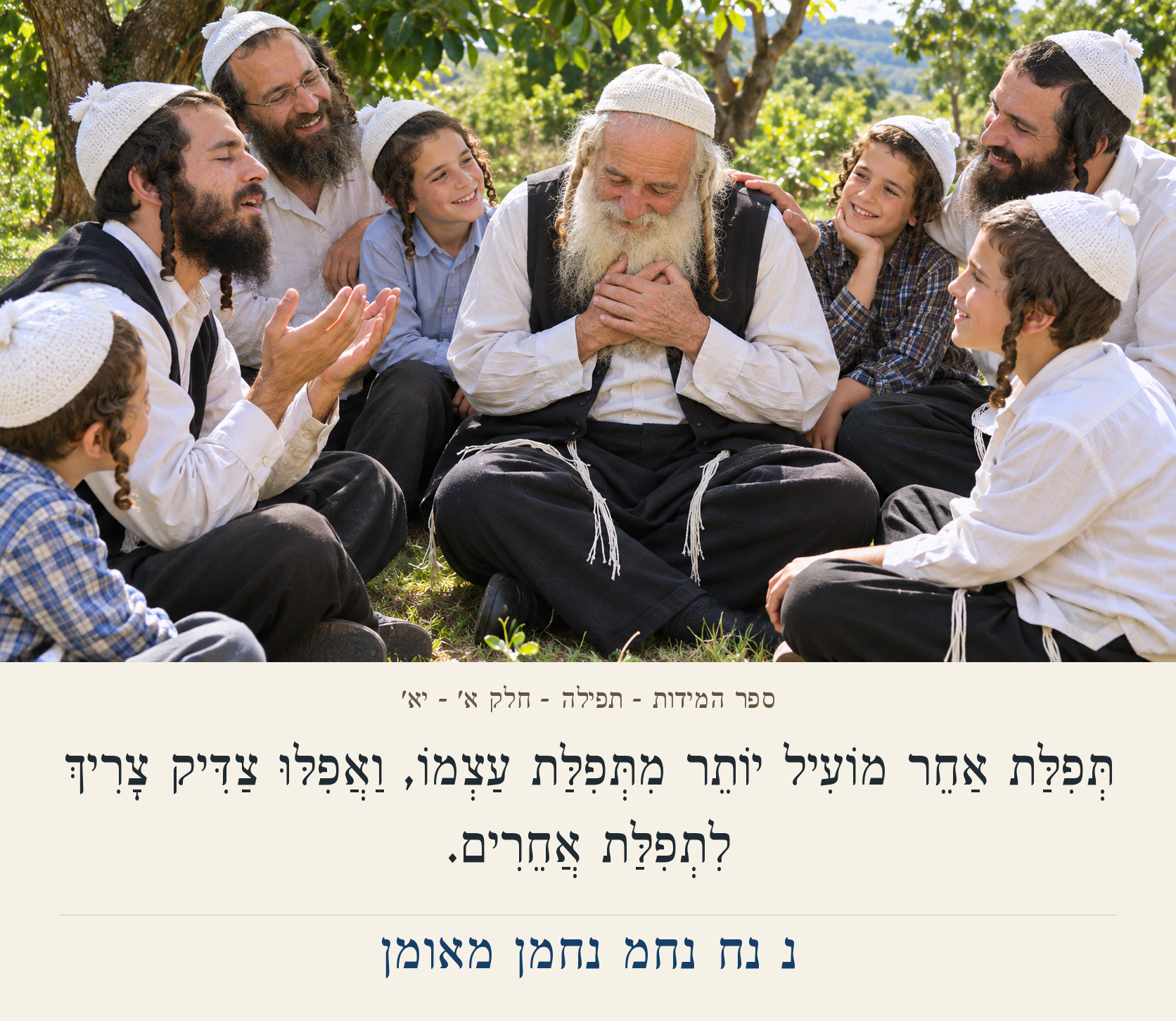
תְּפִלַּת אַחֵר מוֹעִיל יוֹתֵר מִתְּפִלַּת עַצְמוֹ, וַאֲפִלּוּ צַדִּיק צָרִיךְ לִתְפִלַּת אֲחֵרִים.
11
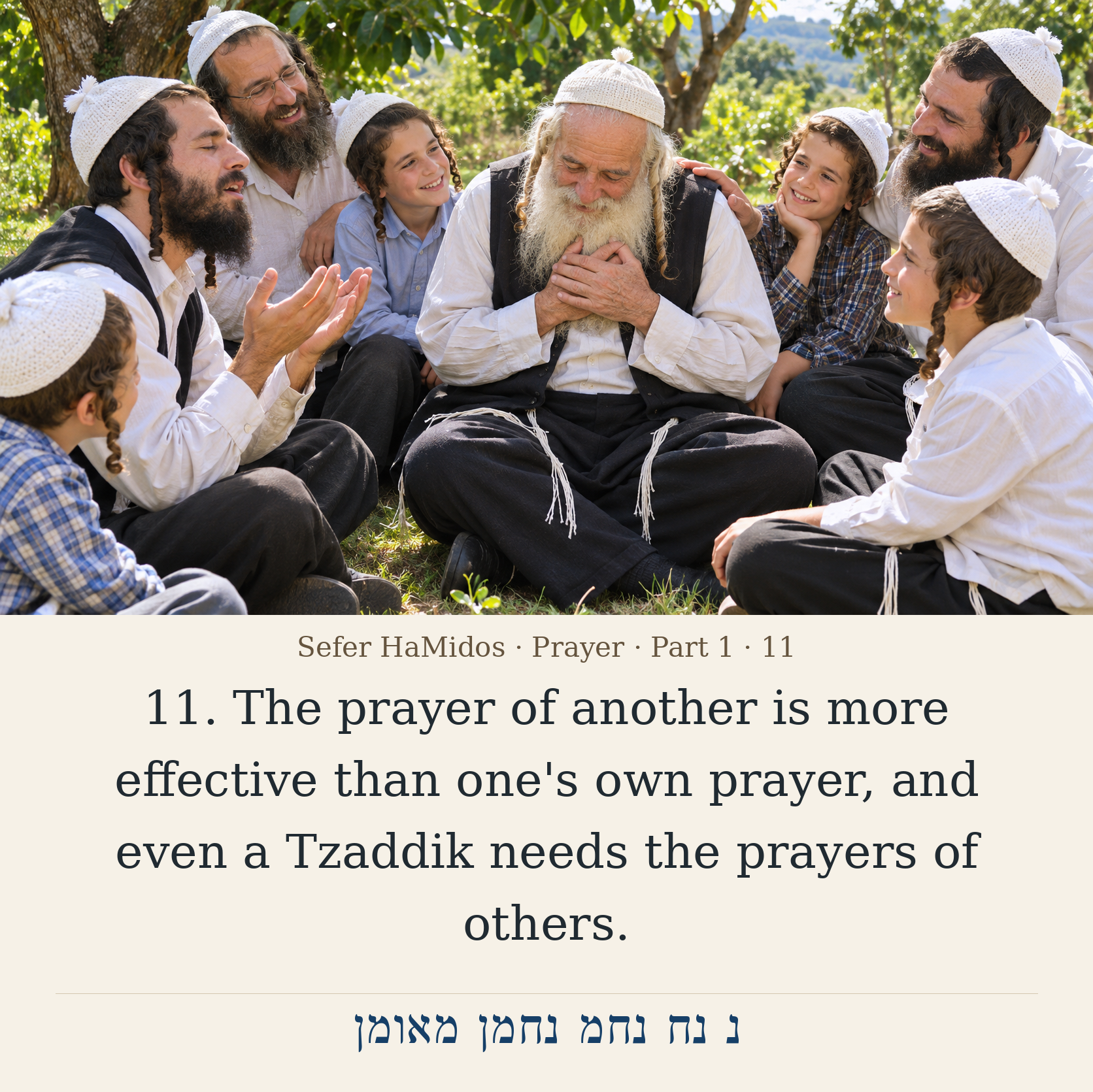
11. The prayer of another is more effective than one's own prayer, and even a Tzaddik needs the prayers of others.
📷 Pictures / videos for this teaching
An editorial illustration of receiving the prayers of others. No historical righteous person is identified and no miraculous answer is shown; the complete teaching retains that even a righteous person needs others’ prayers. איור של קבלת תפילות הזולת. אין זיהוי של צדיק היסטורי ואין הצגת מענה ניסי; דברי המקור המלאים משמרים שגם צדיק צריך לתפילת אחרים.
י״ב
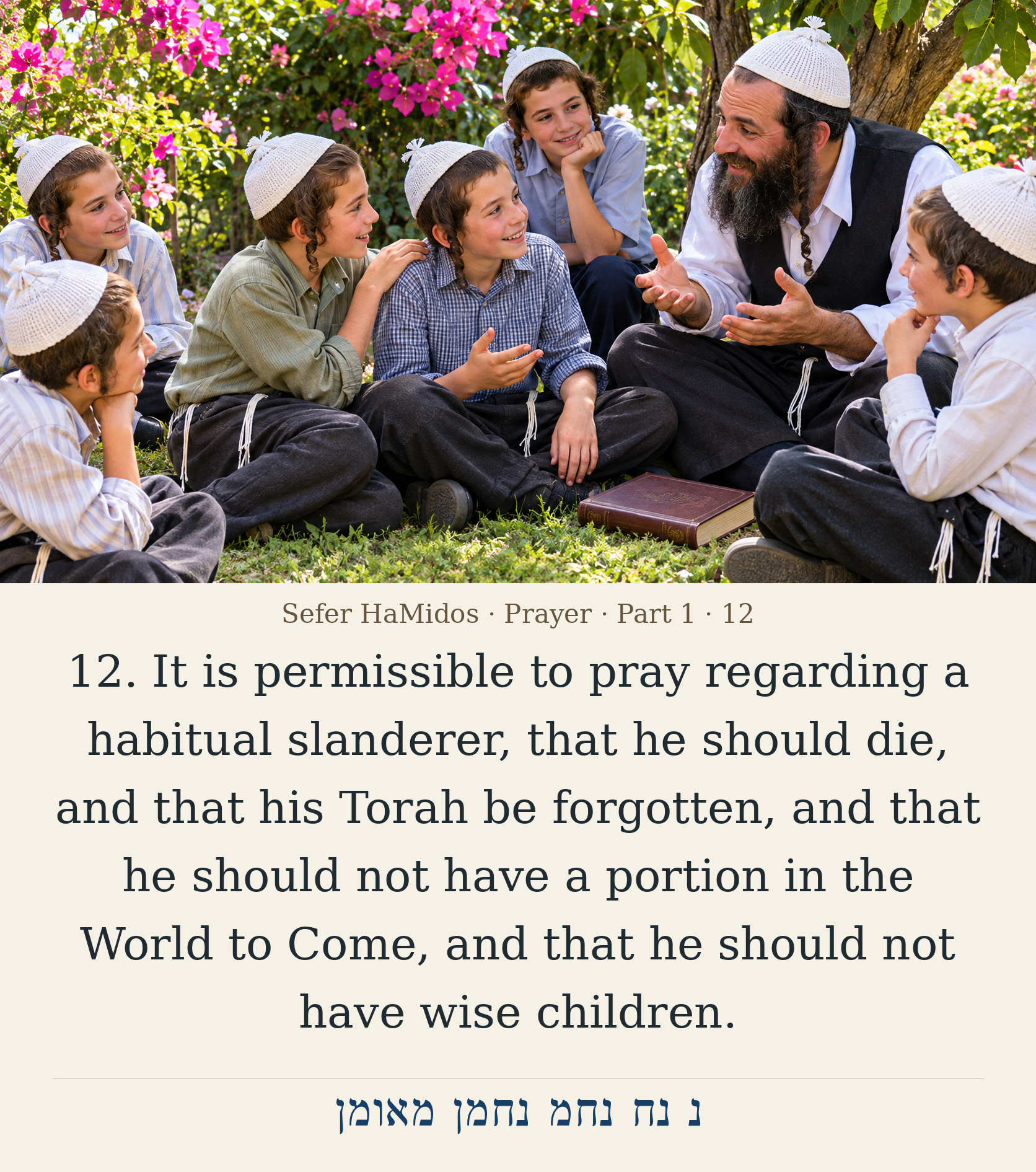
מֻתָּר לְהִתְפַּלֵּל עַל בַּעַל לָשׁוֹן הָרָע, שֶׁיָּמוּת וְשֶׁיִּשְׁתַּכַּח תּוֹרָתוֹ וְשֶׁלֹּא יִהְיֶה לוֹ חֵלֶק לָעוֹלָם הַבָּא וְשֶׁלֹּא יִהְיוּ לוֹ בָּנִים חֲכָמִים.
12
12. It is permissible to pray regarding a habitual slanderer, that he should die, and that his Torah be forgotten, and that he should not have a portion in the World to Come, and that he should not have wise children.
📷 Pictures / videos for this teaching
Editorial learning setting only, not a depiction of punishment or a direction to target anyone. The complete quotation preserves permission regarding a habitual slanderer to pray for his death, forgotten Torah, no portion in the World to Come, and no wise children; lack of wise children is not childlessness. No pictured person is identified as a slanderer, cursed, punished, or rejoicing at a consequence, and no child represents offspring lacking wisdom. מסגרת לימודית מאוירת בלבד, לא תיאור עונש ולא הוראה לפגוע באדם כלשהו. הציטוט המלא משמר היתר בנוגע לבעל לשון הרע: שימות, שתשתכח תורתו, שלא יהיה לו חלק לעולם הבא ושלא יהיו לו בנים חכמים; אין פירוש הסעיף האחרון שלא יהיו לו ילדים. איש מהמצוירים אינו מזוהה כבעל לשון הרע, כמקולל, כנענש או כשמח בתוצאה, ואין ילד המייצג בנים שאינם חכמים.
י״ג
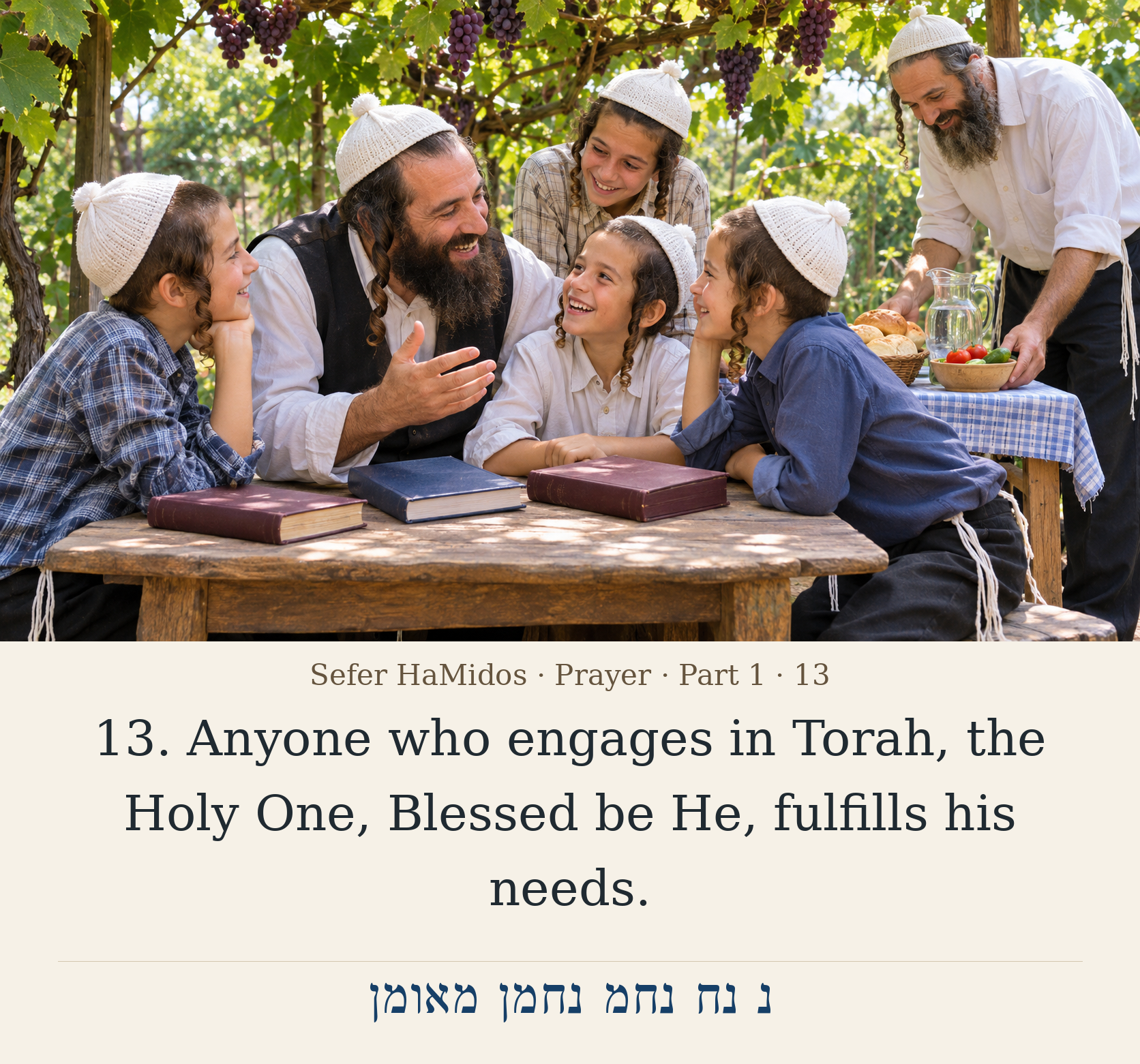
כָּל הָעוֹסֵק בַּתּוֹרָה, הַקָּדוֹשׁ־בָּרוּךְ־הוּא עוֹשֶׂה לוֹ חֲפָצָיו.
13
13. Anyone who engages in Torah, the Holy One, Blessed be He, fulfills his needs.
📷 Pictures / videos for this teaching
An editorial scene of Torah learning with ordinary practical provision. The human helper does not depict God or establish a payment-for-study mechanism or promise of luxury; the complete teaching attributes fulfillment of needs to the Holy One. איור של לימוד תורה לצד צרכים מעשיים רגילים. המסייע האנושי אינו דימוי של הקב״ה ואינו מציג שכר מסחרי ללימוד או הבטחה למותרות; דברי המקור המלאים מייחסים את מילוי הצרכים לקב״ה.
י״ד
יָפָה צְעָקָה לָאָדָם בֵּין קֹדֶם גְּזַר־דִּין בֵּין לְאַחַר גְּזַר־דִּין.
14
14. Crying out is good for a person, whether before the decree or after the decree.
ט״ו
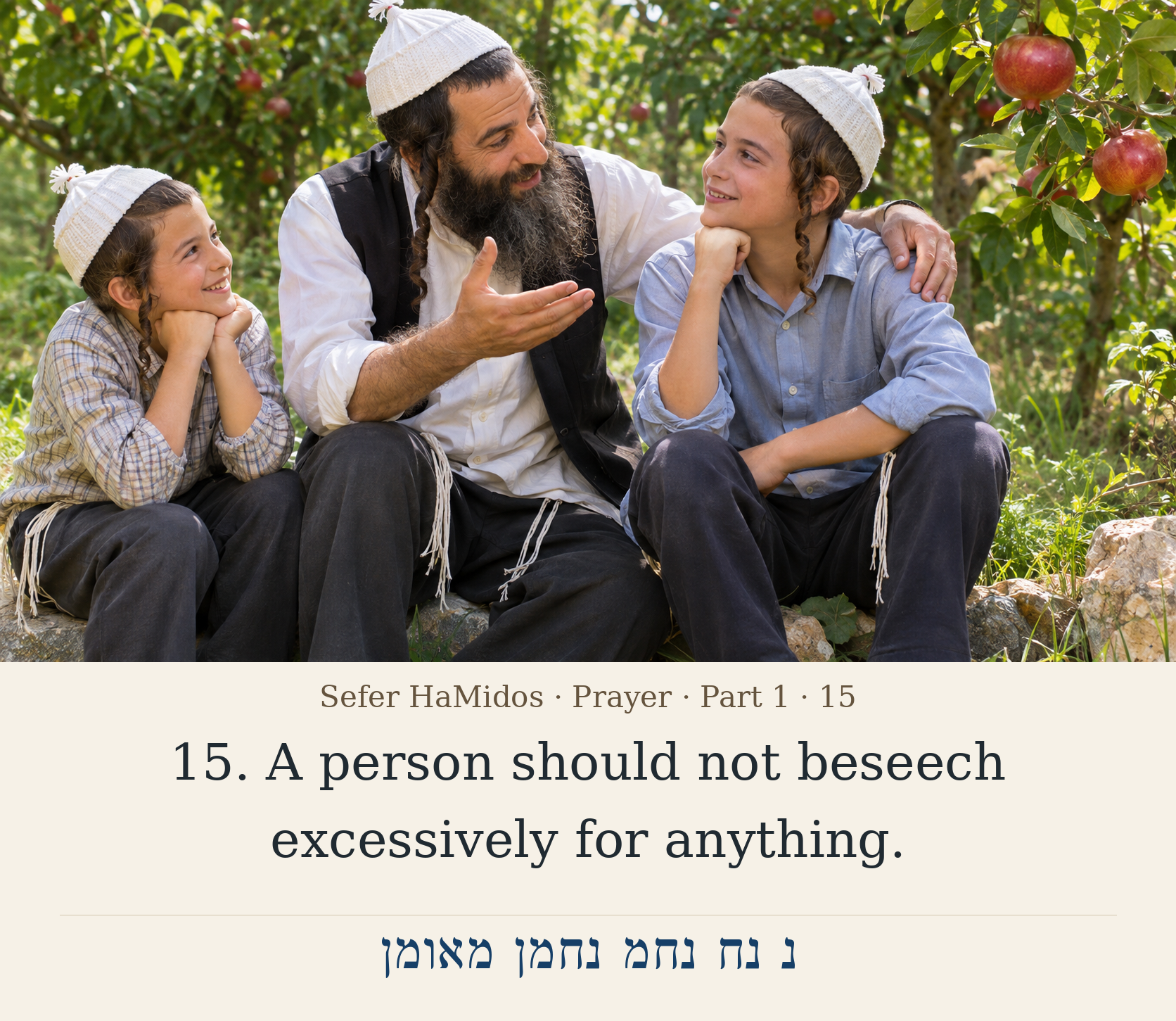
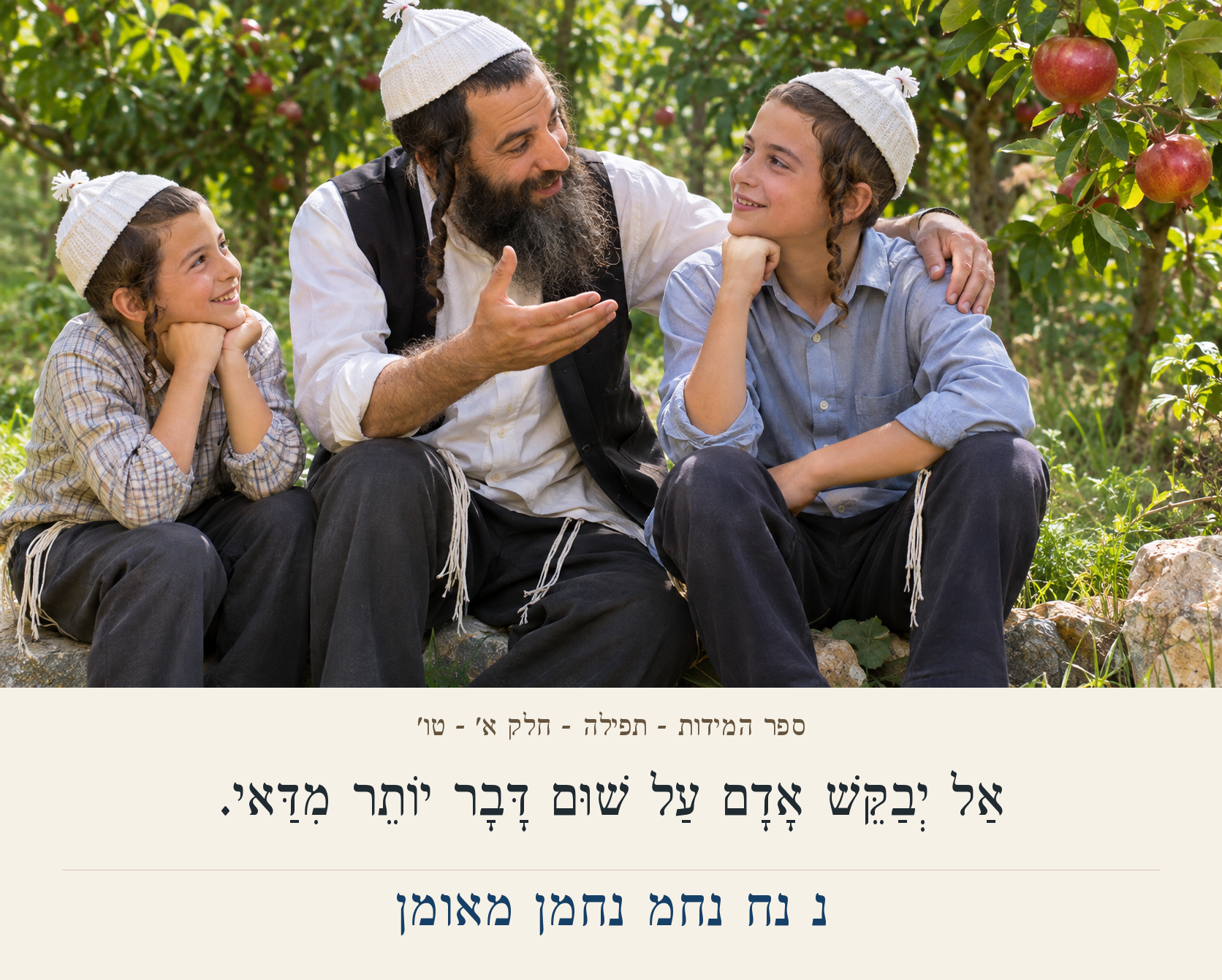
אַל יְבַקֵּשׁ אָדָם עַל שׁוּם דָּבָר יוֹתֵר מִדַּאי.
15
15. A person should not beseech excessively for anything.
📷 Pictures / videos for this teaching
An editorial family lesson about avoiding excessive beseeching. No child is labelled greedy and no requested outcome is shown; this is not a ban on prayer or a limitation on mercy. איור של לימוד משפחתי על הימנעות מבקשה מופרזת. אין ילד המזוהה כחמדן ואין תוצאה מבוקשת המוצגת בתמונה; אין כאן איסור תפילה או הגבלה על הרחמים.
ט״ז
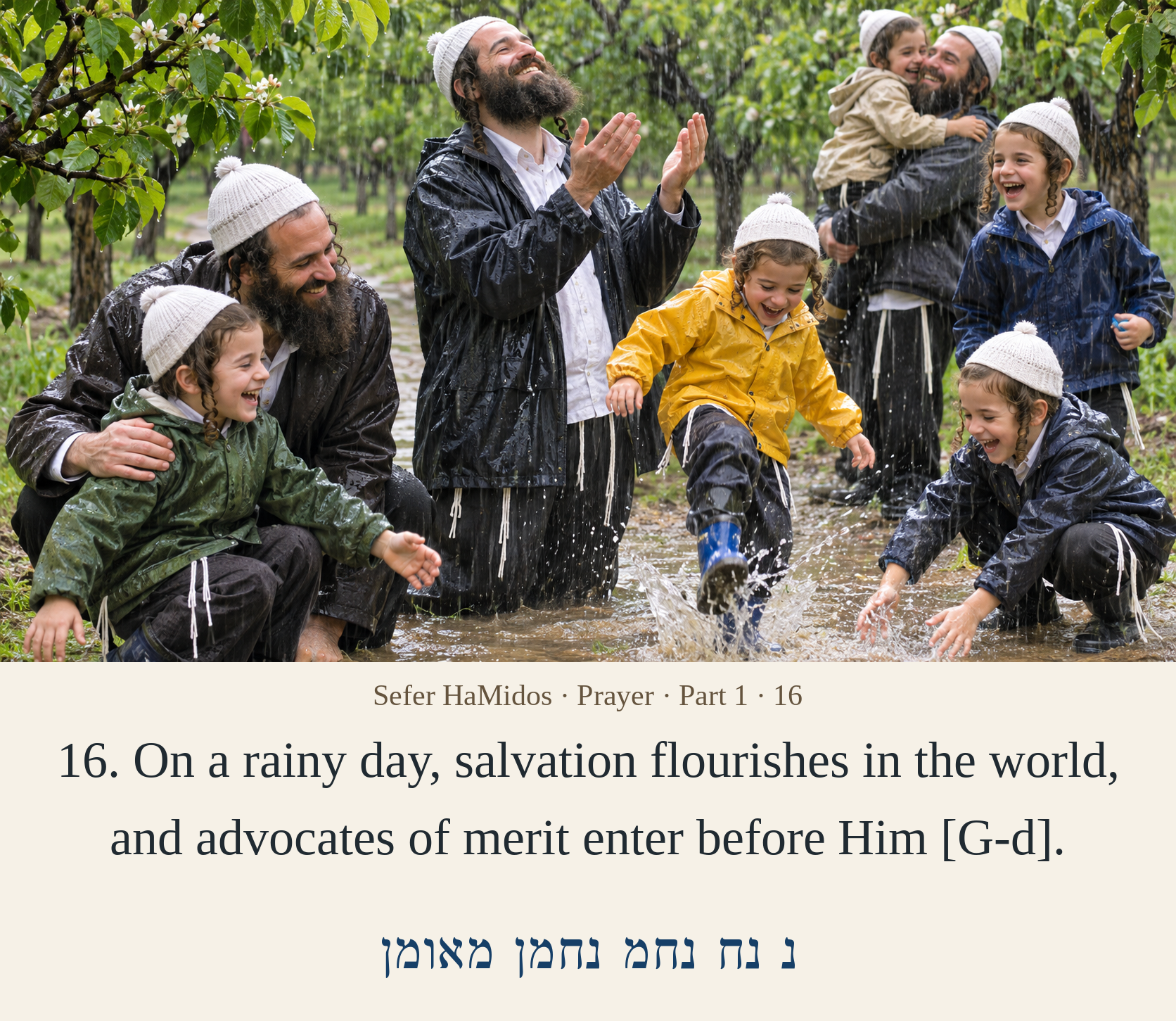
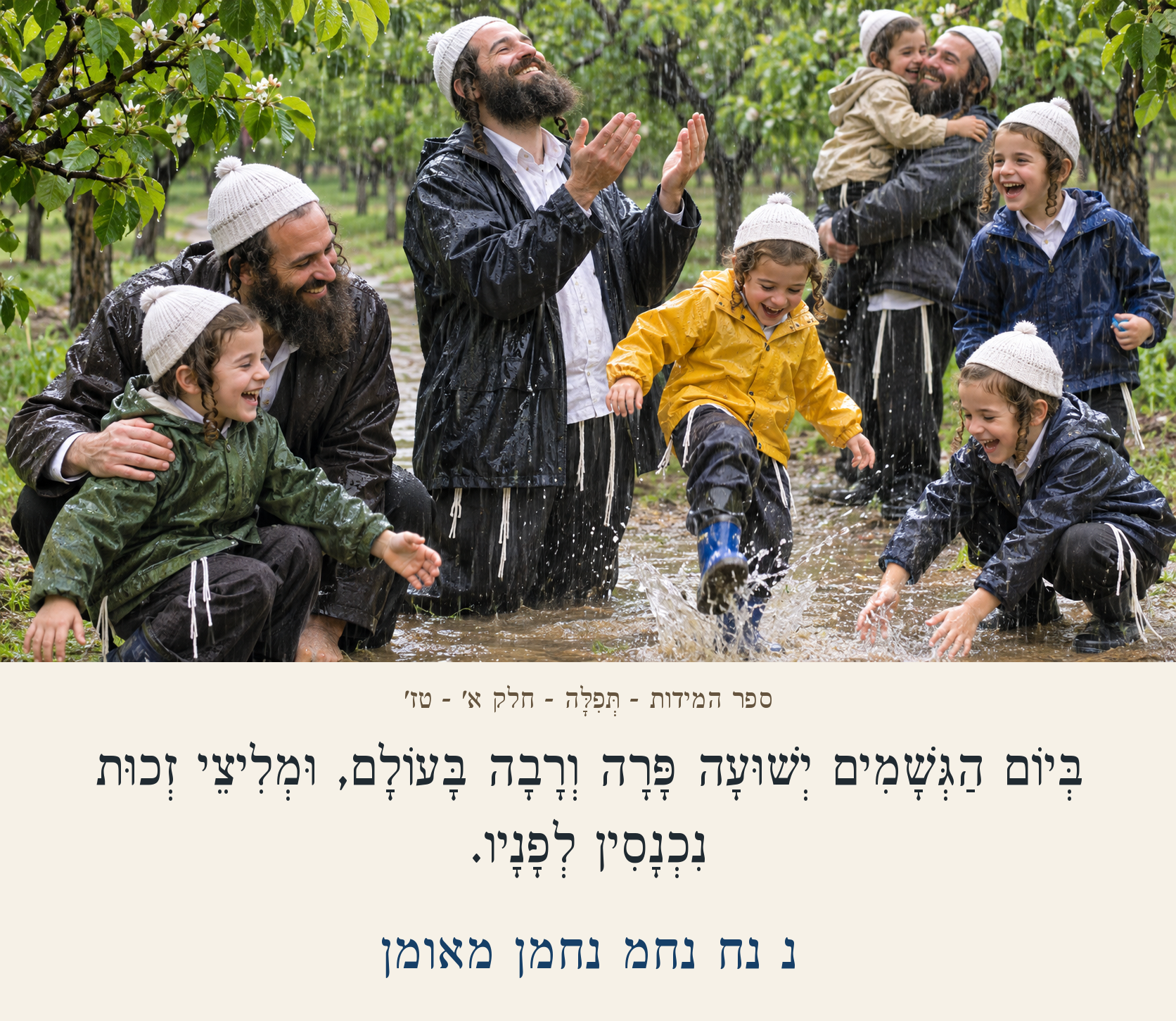
בְּיוֹם הַגְּשָׁמִים יְשׁוּעָה פָּרָה וְרָבָה בָּעוֹלָם, וּמְלִיצֵי זְכוּת נִכְנָסִין לְפָנָיו.
16
16. On a rainy day, salvation flourishes in the world, and advocates of merit enter before Him [G-d].
📷 Pictures / videos for this teaching
Editorial human scene only; advocates of merit before God are not depicted.
י״ז
תְּפִלַּת יָחִיד אֵינָהּ נִשְׁמַעַת אֶלָּא־אִם־כֵּן לִבּוֹ מְכֻוָּן, וּתְפִלַת צִבּוּר נִשְׁמַעַת, אַף־עַל־פִּי שֶׁאֵין לֵב כֻּלָּם שָׁלֵם.
17
17. The prayer of an individual is not heard unless he concentrates in his heart, but the prayer of a congregation is heard, even though all of them do not [pray with] a full heart.
י״ח
לֹא מַצְלִינָן אַתַּרְתֵּי.
18
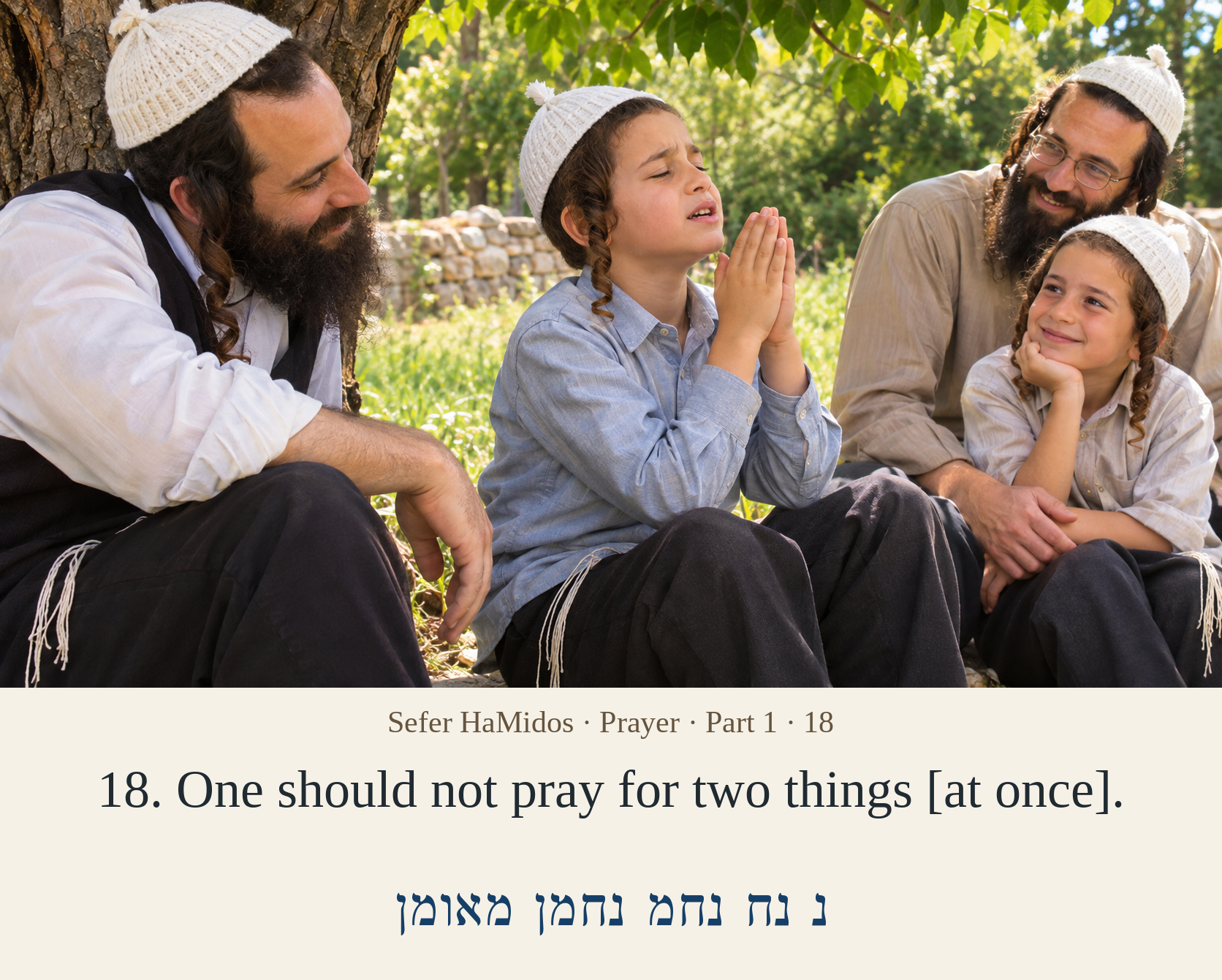
18. One should not pray for two things [at once].
📷 Pictures / videos for this teaching
Editorial family lesson, not a visual definition of two simultaneous requests.
י״ט
אָסוּר לְהַטְרִיחַ אֶת הַשֵּׁם לְשַׁנּוֹת אֶת הַטֶּבַע.
19
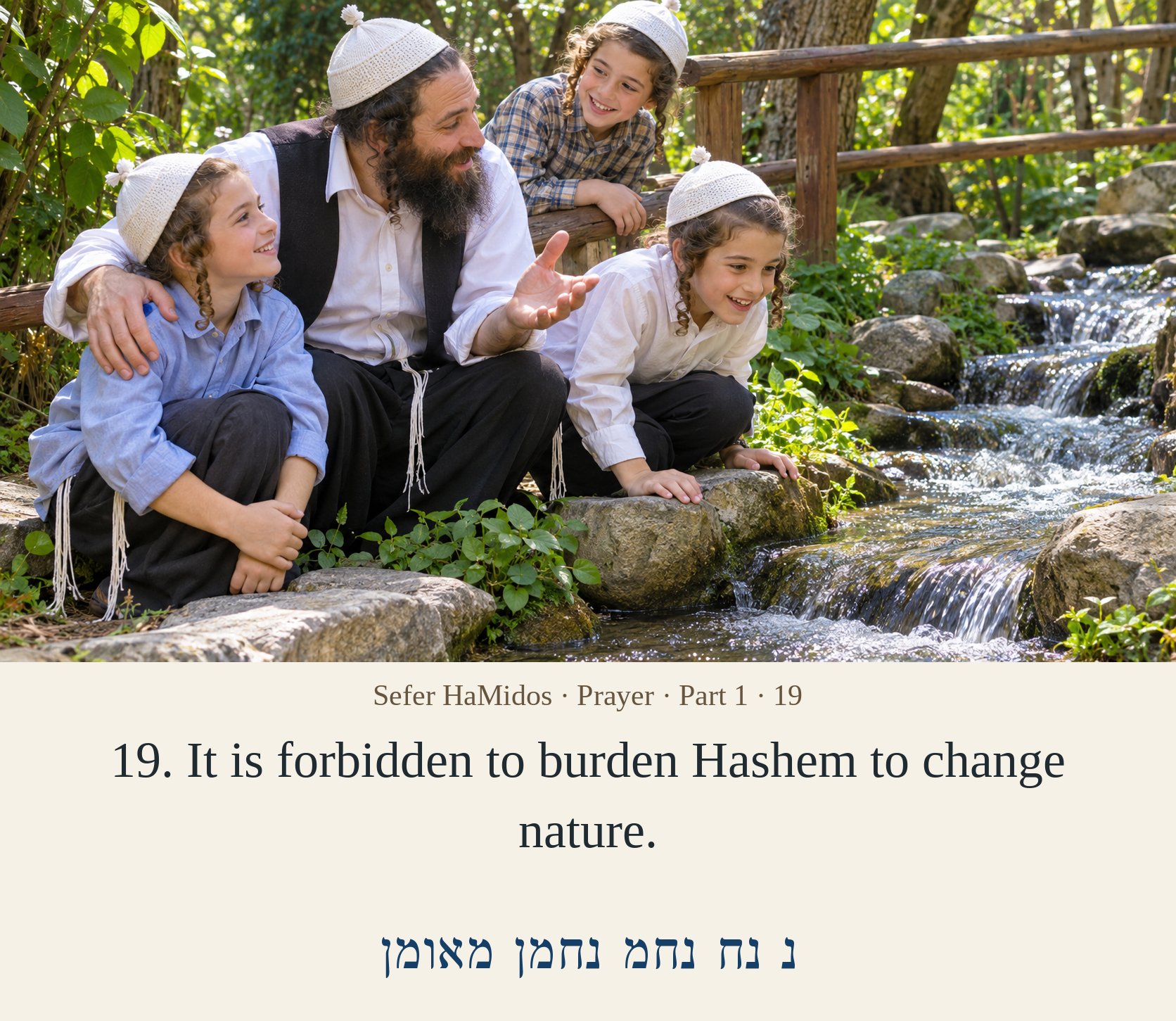
19. It is forbidden to burden Hashem to change nature.
📷 Pictures / videos for this teaching
No miracle or alteration of nature is depicted; the complete prohibition remains in the source caption.
כ׳
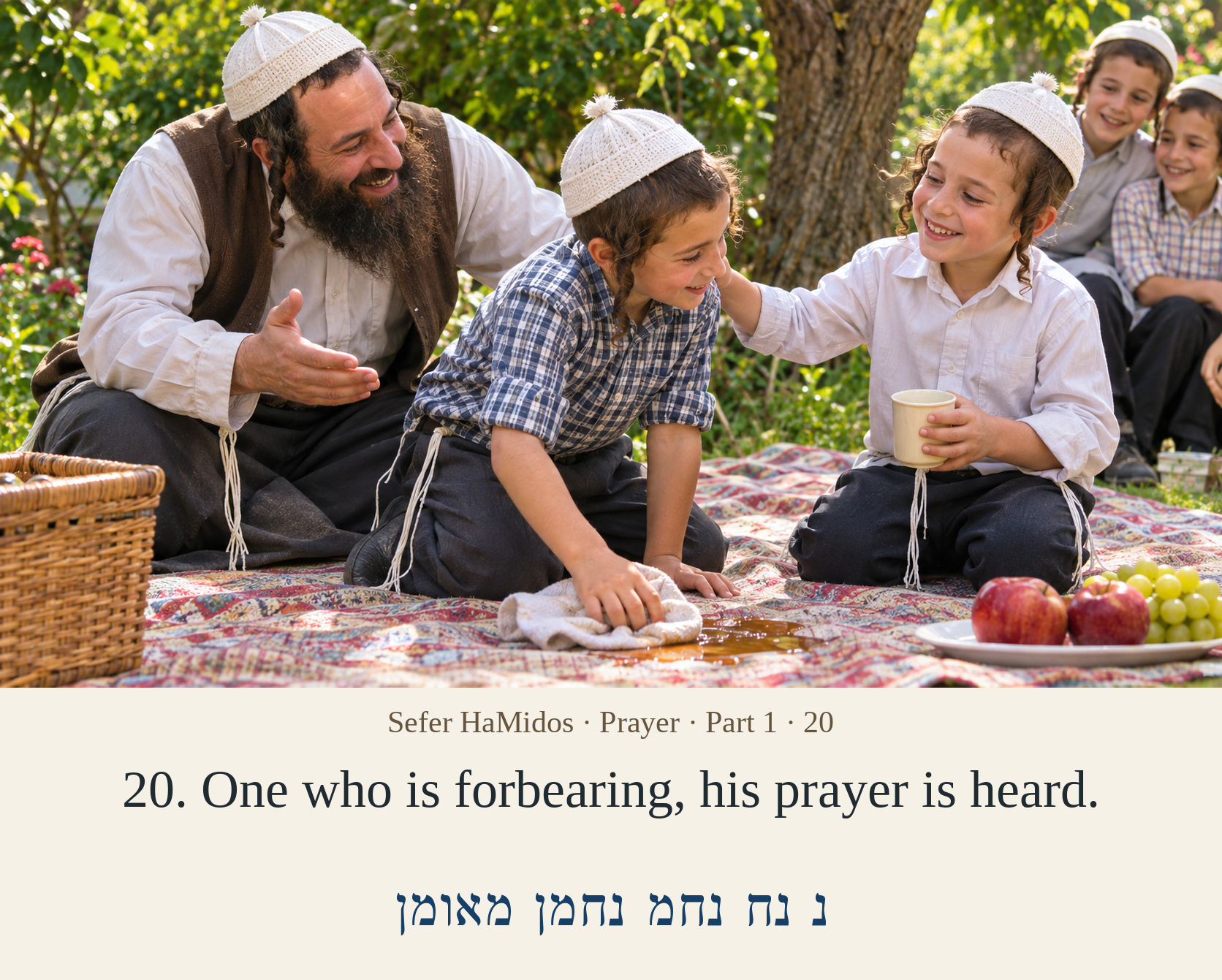
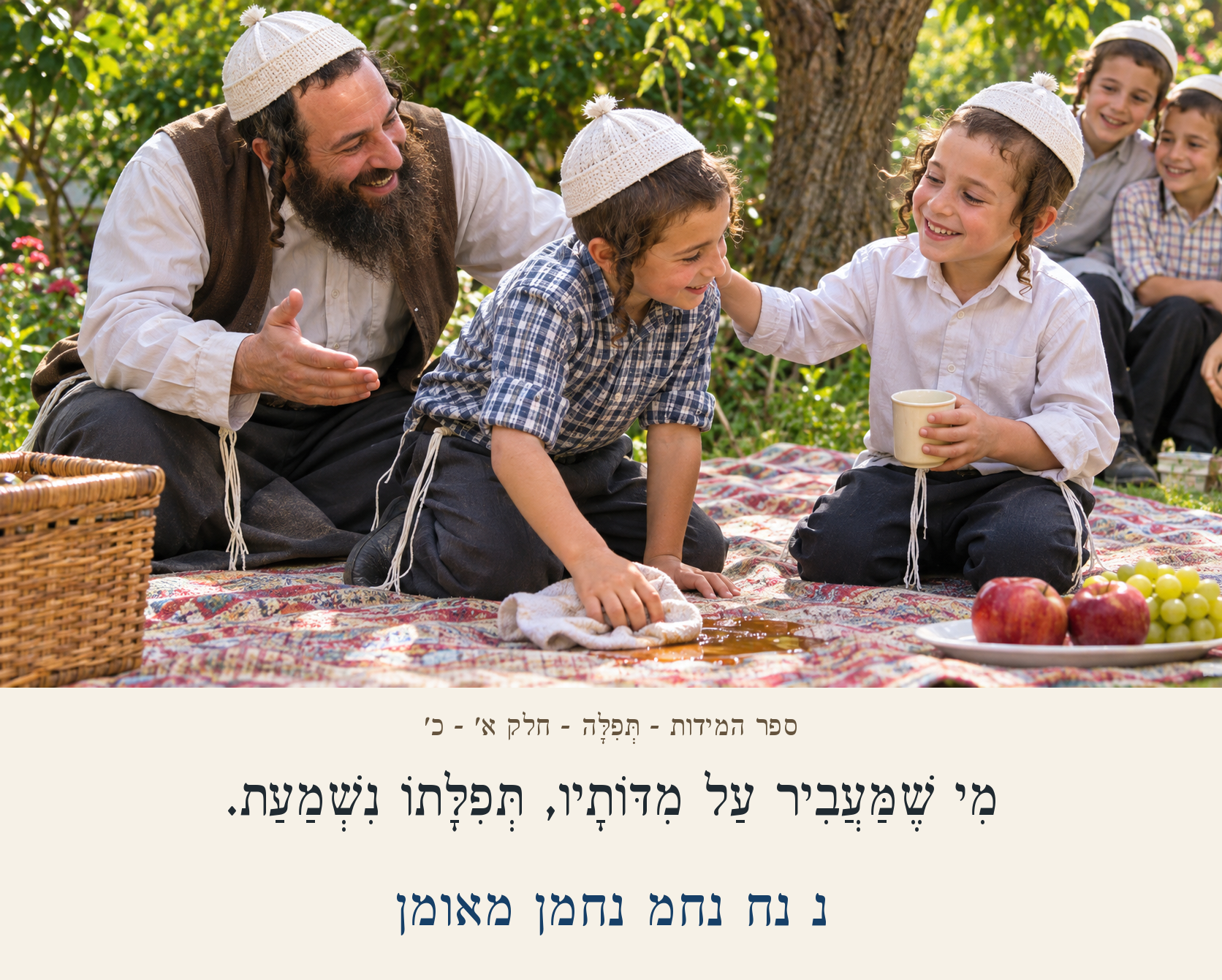
מִי שֶׁמַּעֲבִיר עַל מִדּוֹתָיו, תְּפִלָּתוֹ נִשְׁמַעַת.
20
20. One who is forbearing, his prayer is heard.
📷 Pictures / videos for this teaching
An editorial illustration of forbearance, not proof of a guaranteed visible outcome.
כ״א
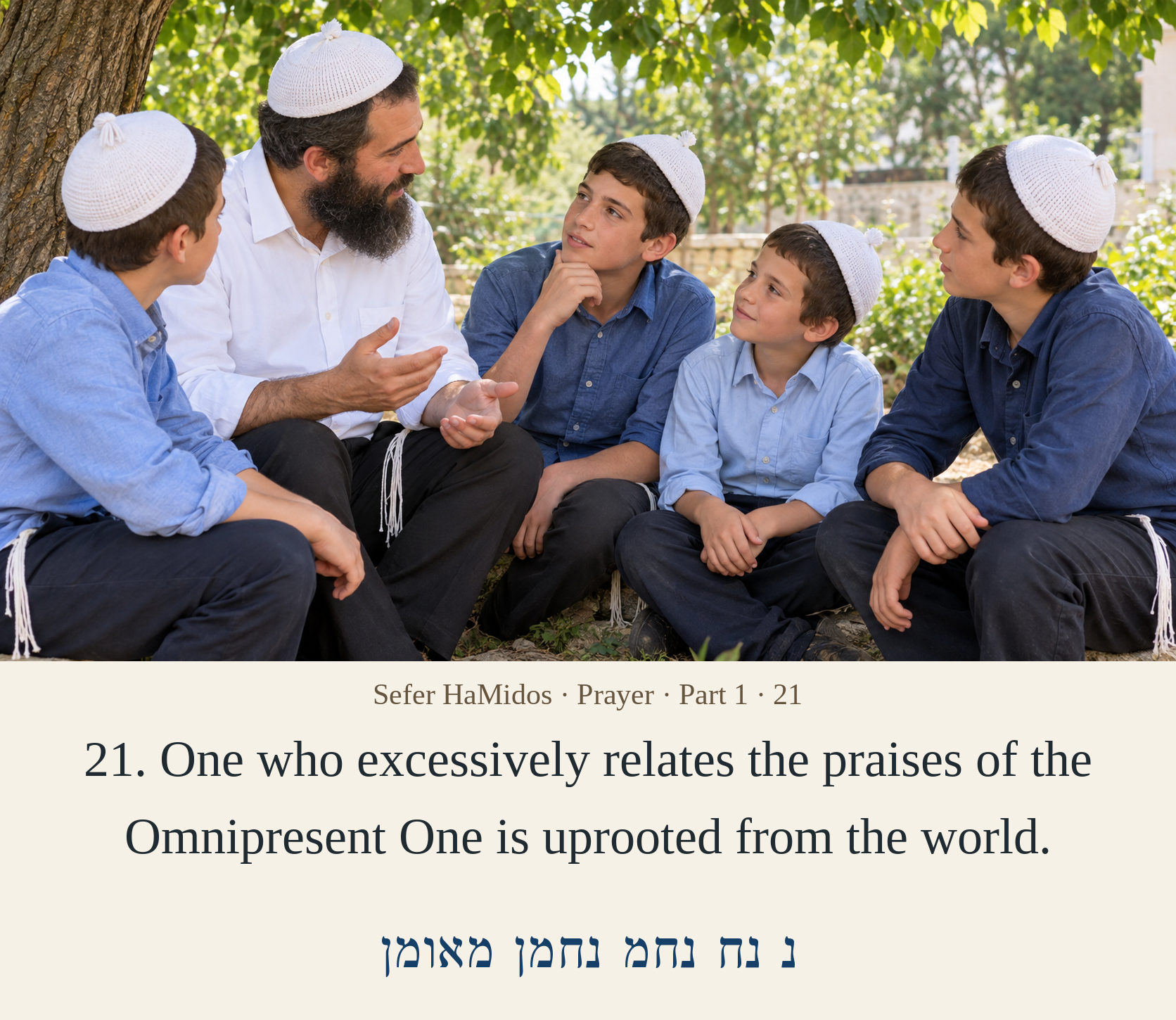
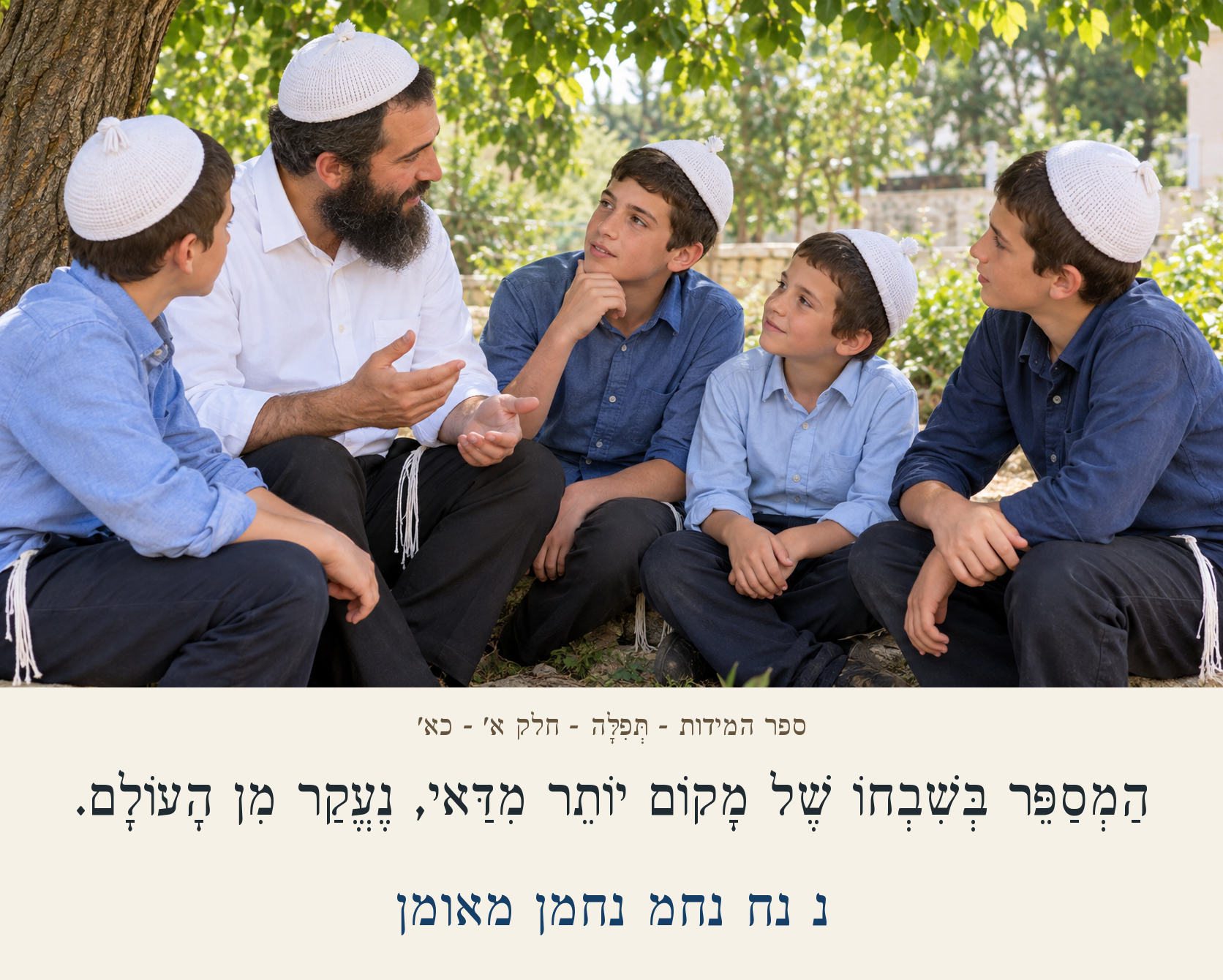
הַמְסַפֵּר בְּשִׁבְחוֹ שֶׁל מָקוֹם יוֹתֵר מִדַּאי, נֶעֱקַר מִן הָעוֹלָם.
21
21. One who excessively relates the praises of the Omnipresent One is uprooted from the world.
📷 Pictures / videos for this teaching
The scene is a teaching setting, not punishment or rejoicing at harm. The complete source warning about excessive praise and being uprooted from the world is preserved.
כ״ב
בֵּית־הַכְּנֶסֶת שֶׁמְּחַשְּׁבִין בּוֹ חֶשְׁבּוֹנוֹת, לְסוֹף שֶׁיָּלִינוּ בּוֹ מֵת מִצְוָה.
22
22. A synagogue in which financial calculations are made -- in the end, the body of a Met Mitzvah (an anonymous corpse whose duty of burial falls on the congregation at large) will repose there.
כ״ג
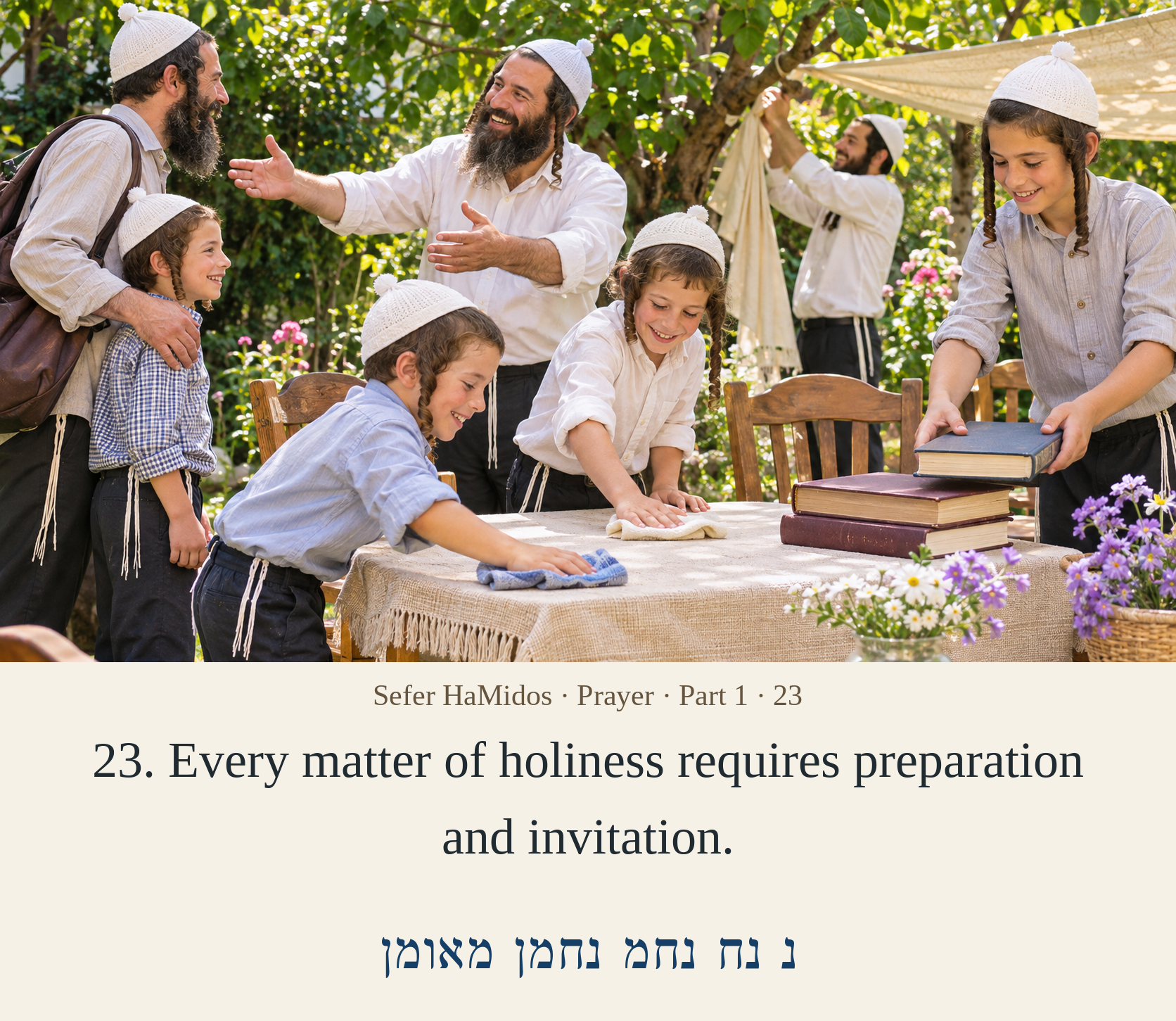
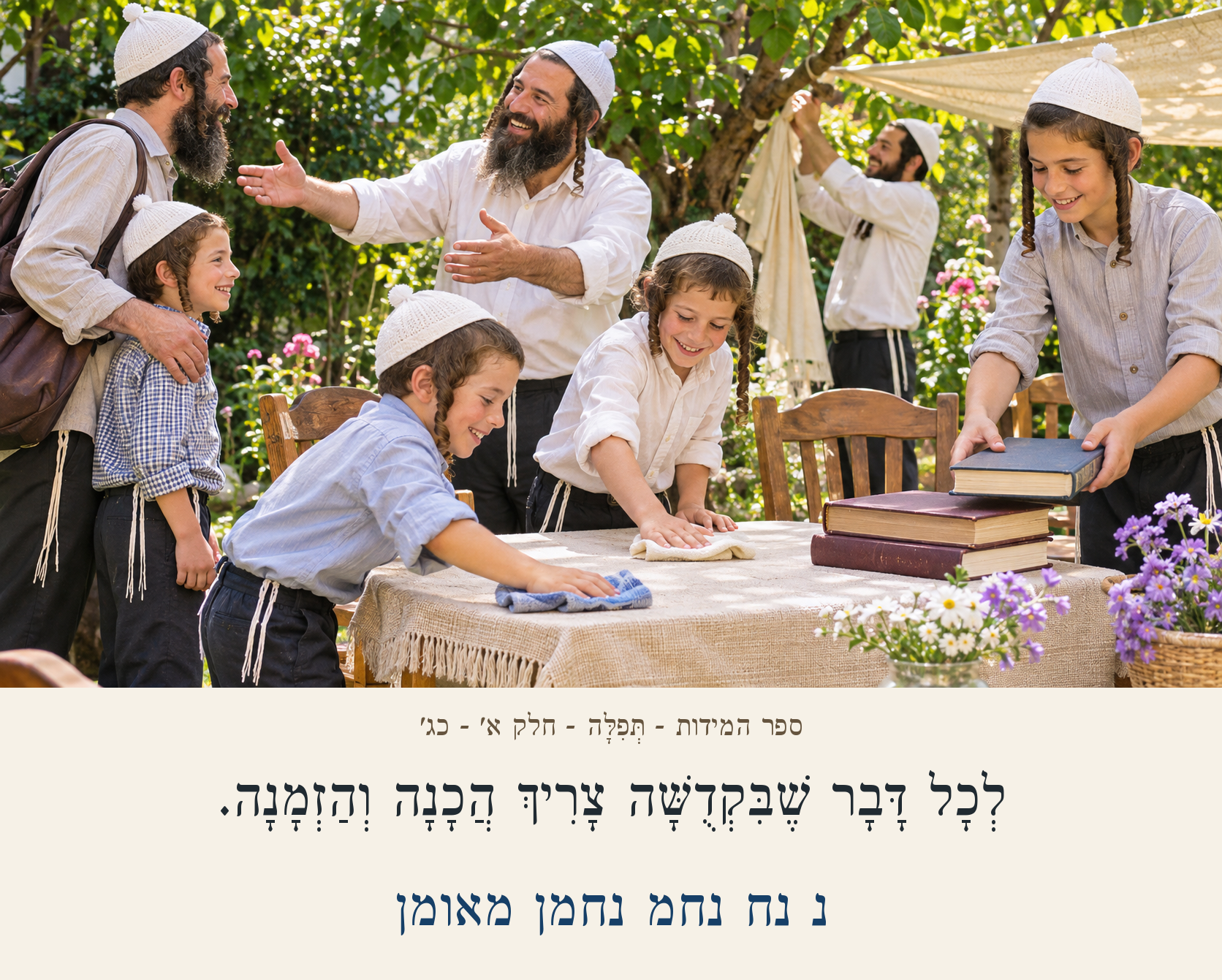
לְכָל דָּבָר שֶׁבִּקְדֻשָּׁה צָרִיךְ הֲכָנָה וְהַזְמָנָה.
23
23. Every matter of holiness requires preparation and invitation.
📷 Pictures / videos for this teaching
Preparation is illustrated; the picture does not prescribe a particular ritual.
כ״ד
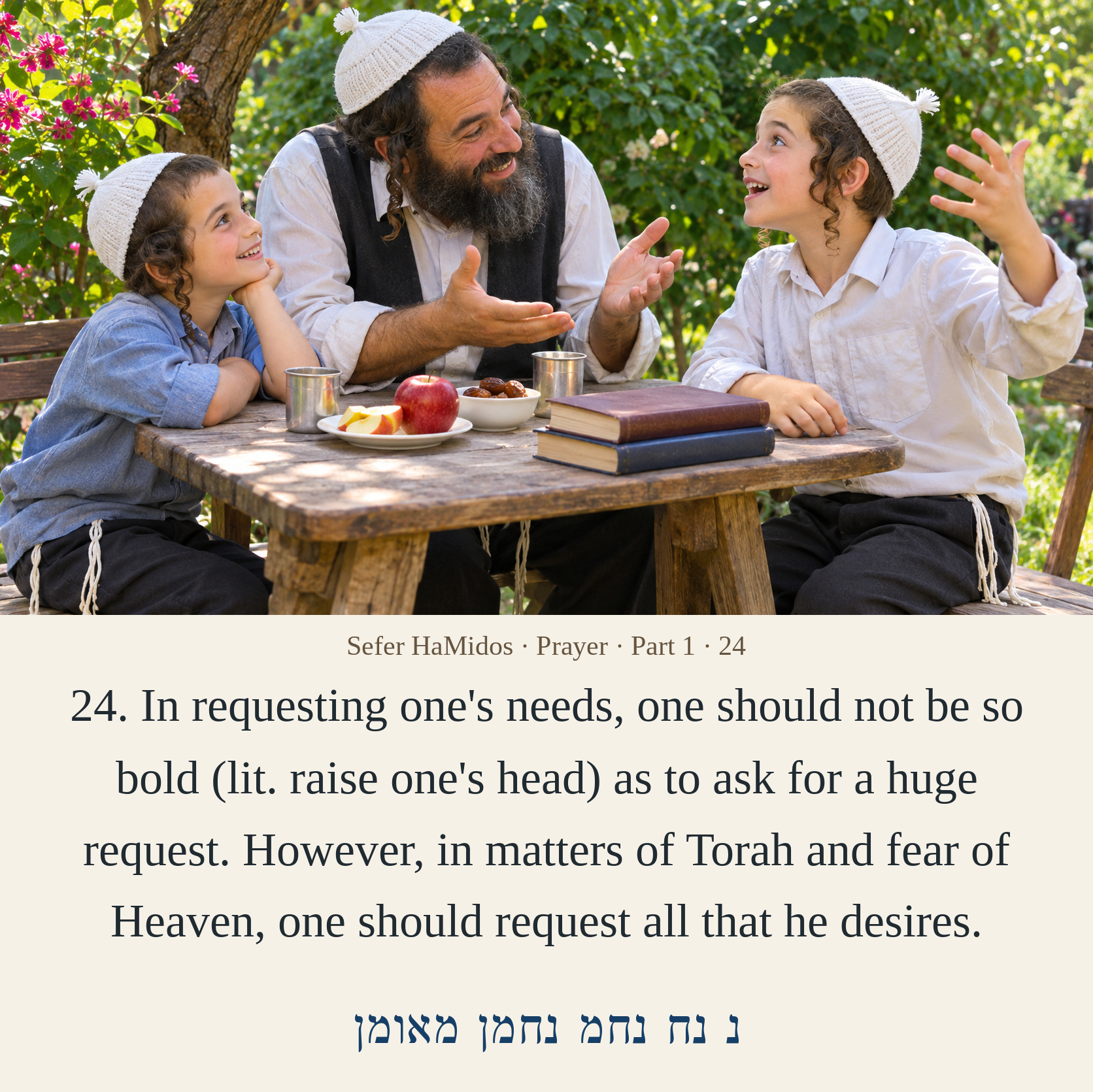
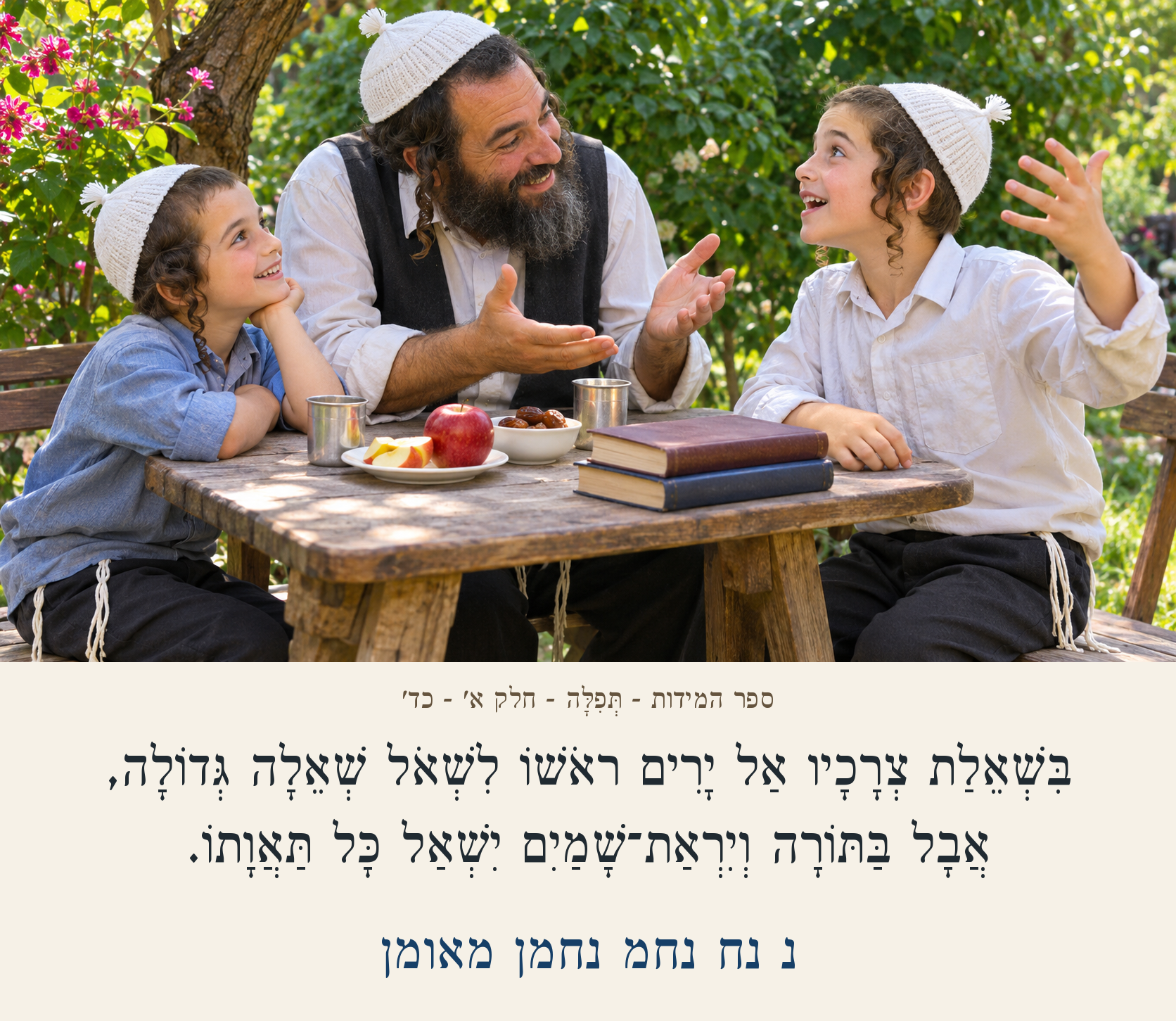
בִּשְׁאֵלַת צְרָכָיו אַל יָרִים ראֹשׁוֹ לִשְׁאֹל שְׁאֵלָה גְּדוֹלָה, אֲבָל בַּתּוֹרָה וְיִרְאַת־שָׁמַיִם יִשְׁאַל כָּל תַּאֲוָתוֹ.
24
24. In requesting one's needs, one should not be so bold (lit. raise one's head) as to ask for a huge request. However, in matters of Torah and fear of Heaven, one should request all that he desires.
📷 Pictures / videos for this teaching
Ordinary modest provision is not a ban on aspiration: the complete teaching preserves unrestricted requests in Torah and fear of Heaven.
כ״ה
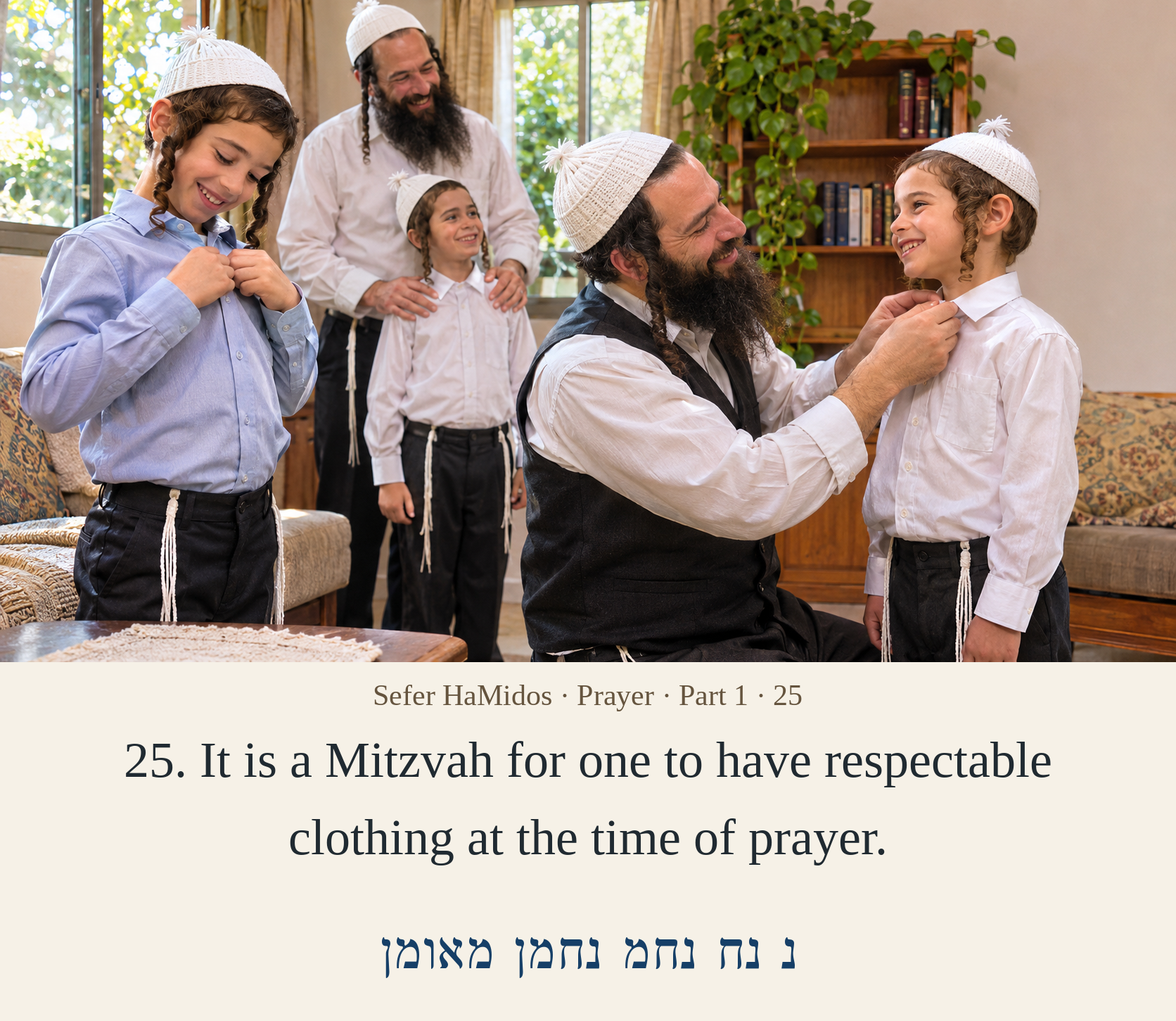
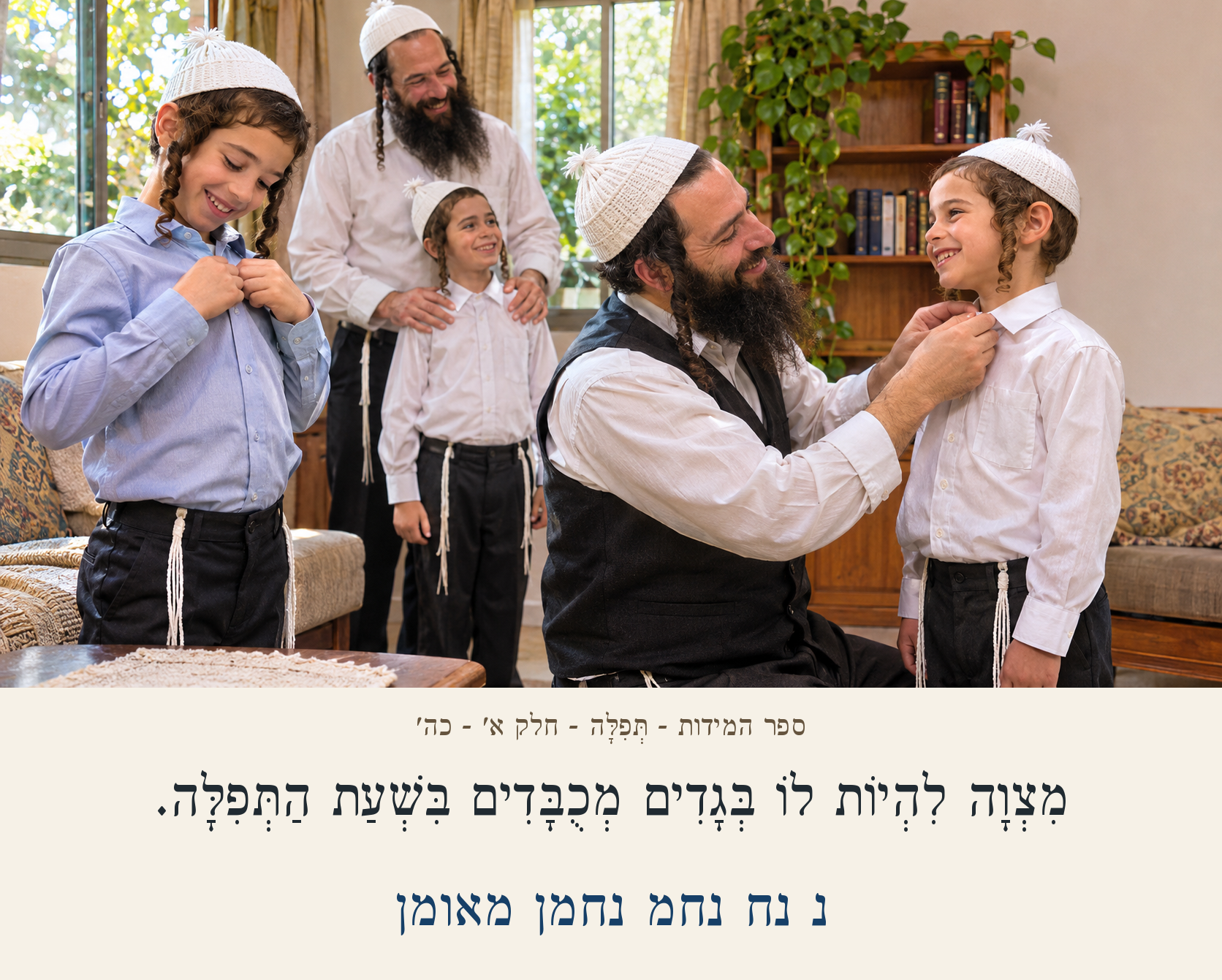
מִצְוָה לִהְיוֹת לוֹ בְּגָדִים מְכֻבָּדִים בִּשְׁעַת הַתְּפִלָּה.
25
25. It is a Mitzvah for one to have respectable clothing at the time of prayer.
📷 Pictures / videos for this teaching
Respectable clothing is the teaching; the illustration does not prescribe costly clothing or a particular fashion.
כ״ו
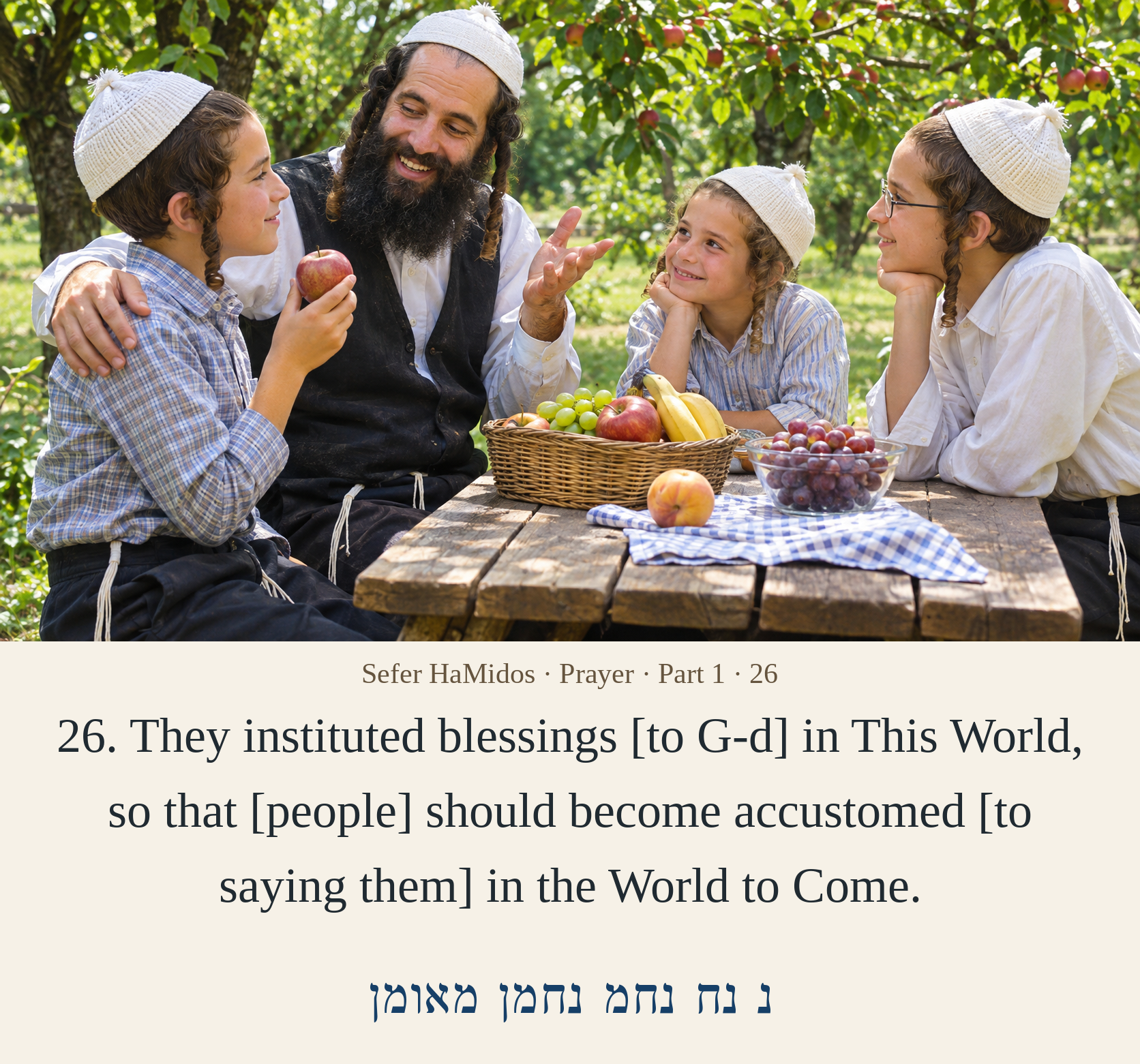
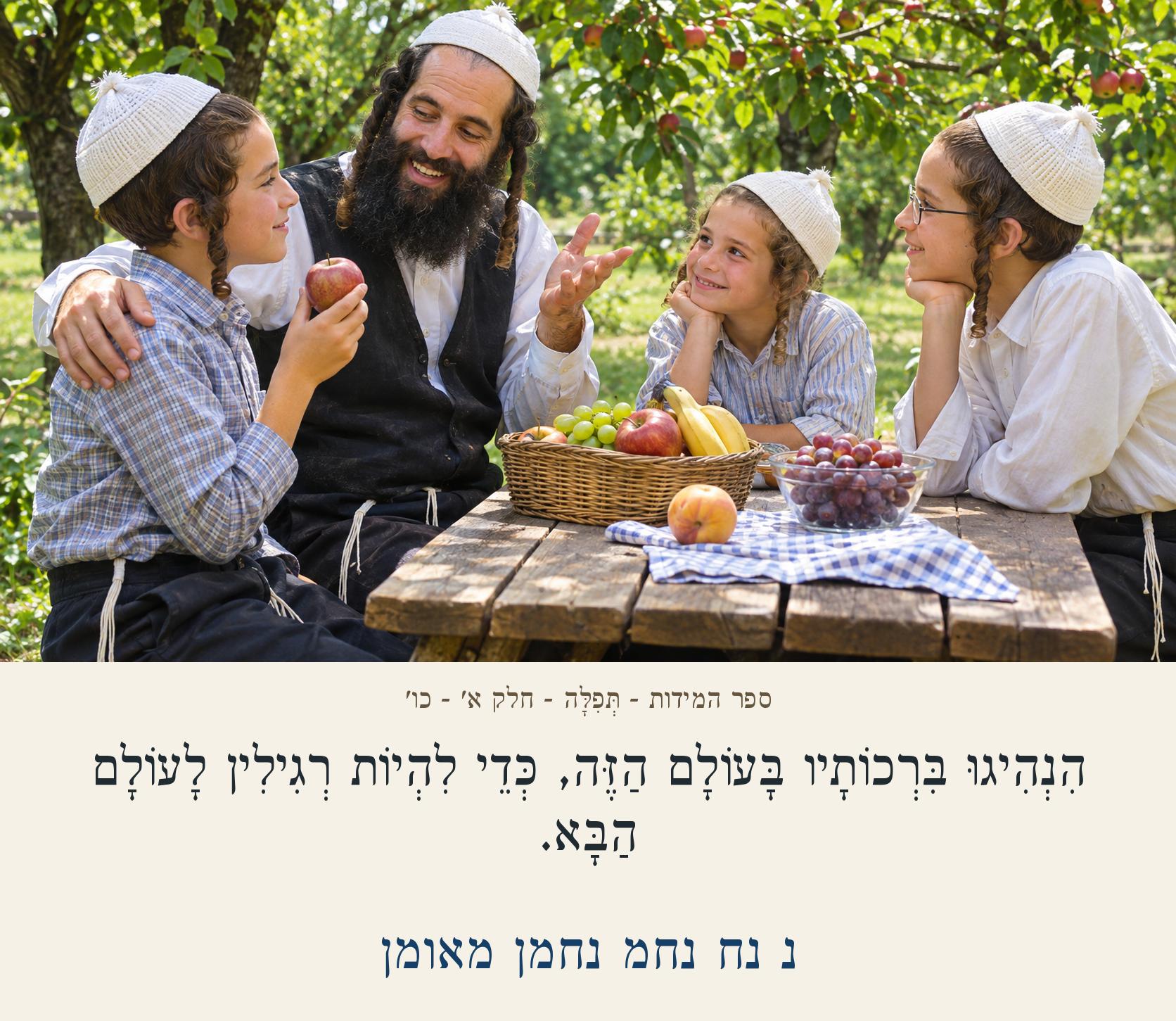
הִנְהִיגוּ בִּרְכוֹתָיו בָּעוֹלָם הַזֶּה, כְּדֵי לִהְיוֹת רְגִילִין לָעוֹלָם הַבָּא.
26
26. They instituted blessings [to G-d] in This World, so that [people] should become accustomed [to saying them] in the World to Come.
📷 Pictures / videos for this teaching
The scene illustrates learning blessings in this world. Their purpose for the World to Come remains in the complete teaching; no afterlife is depicted.
כ״ז
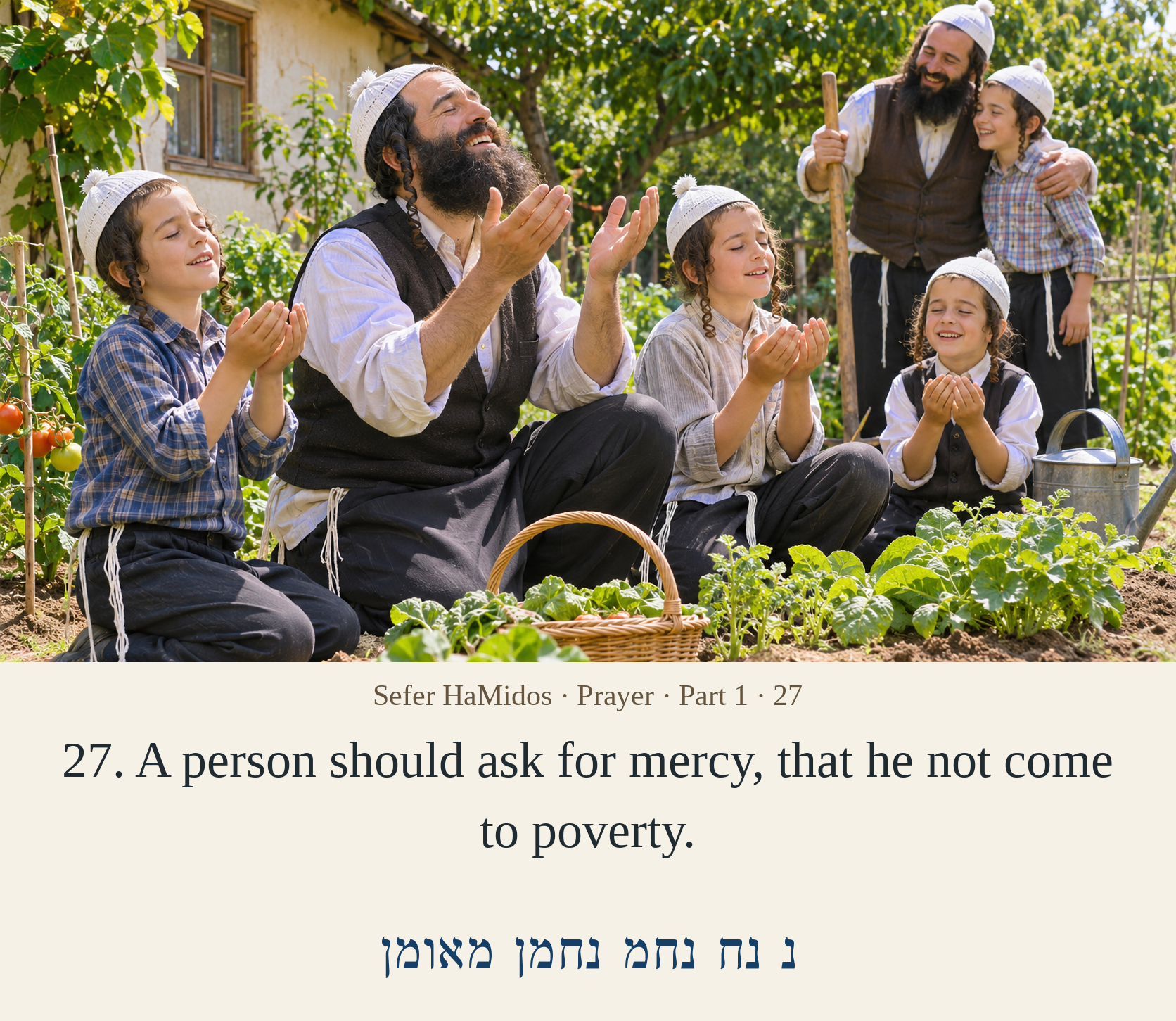
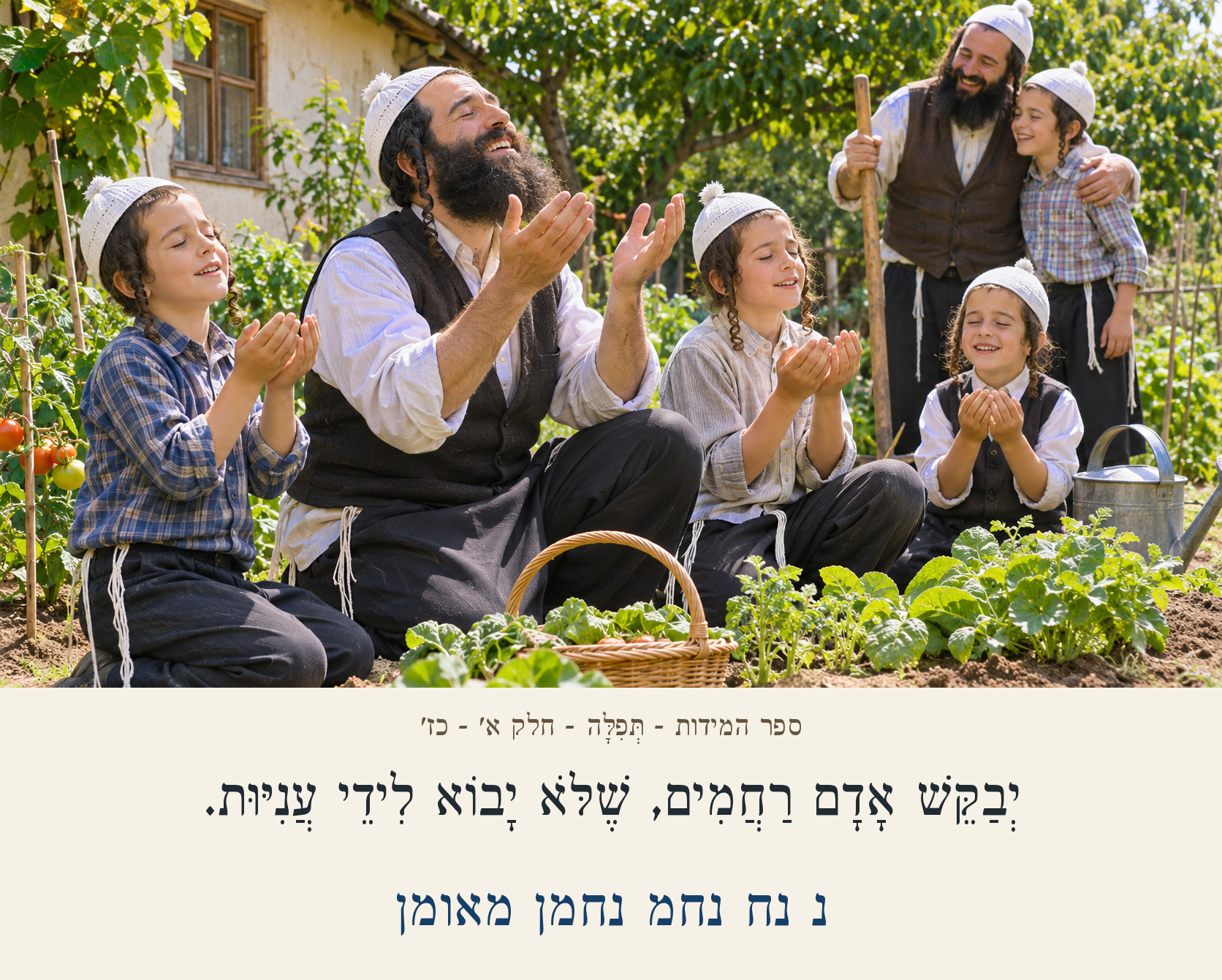
יְבַקֵּשׁ אָדָם רַחֲמִים, שֶׁלֹּא יָבוֹא לִידֵי עֲנִיּוּת.
27
27. A person should ask for mercy, that he not come to poverty.
📷 Pictures / videos for this teaching
The teaching is to ask for mercy not to come to poverty. The garden is an editorial family setting, not a substitute for prayer or a judgment about poor people.
כ״ח
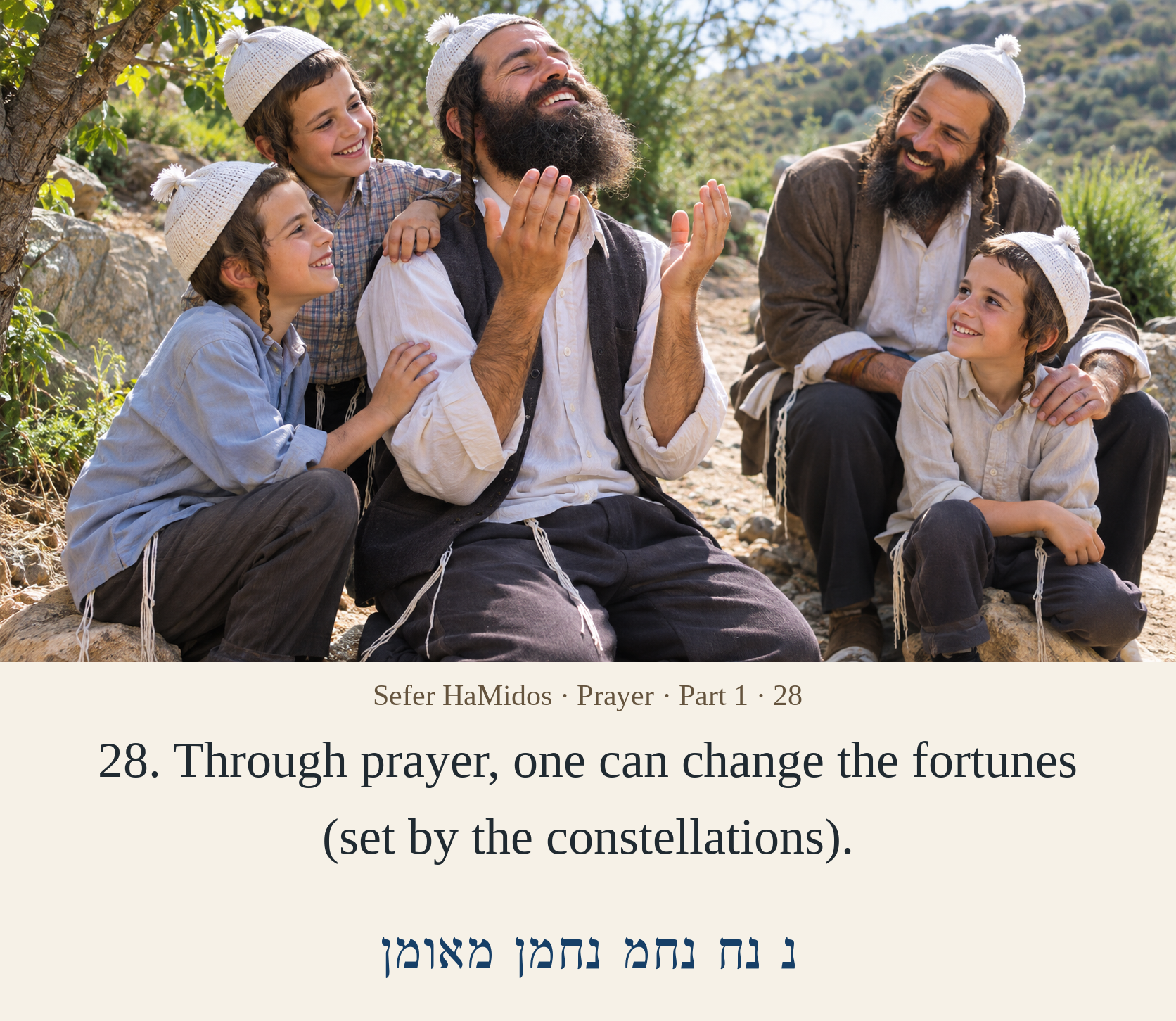
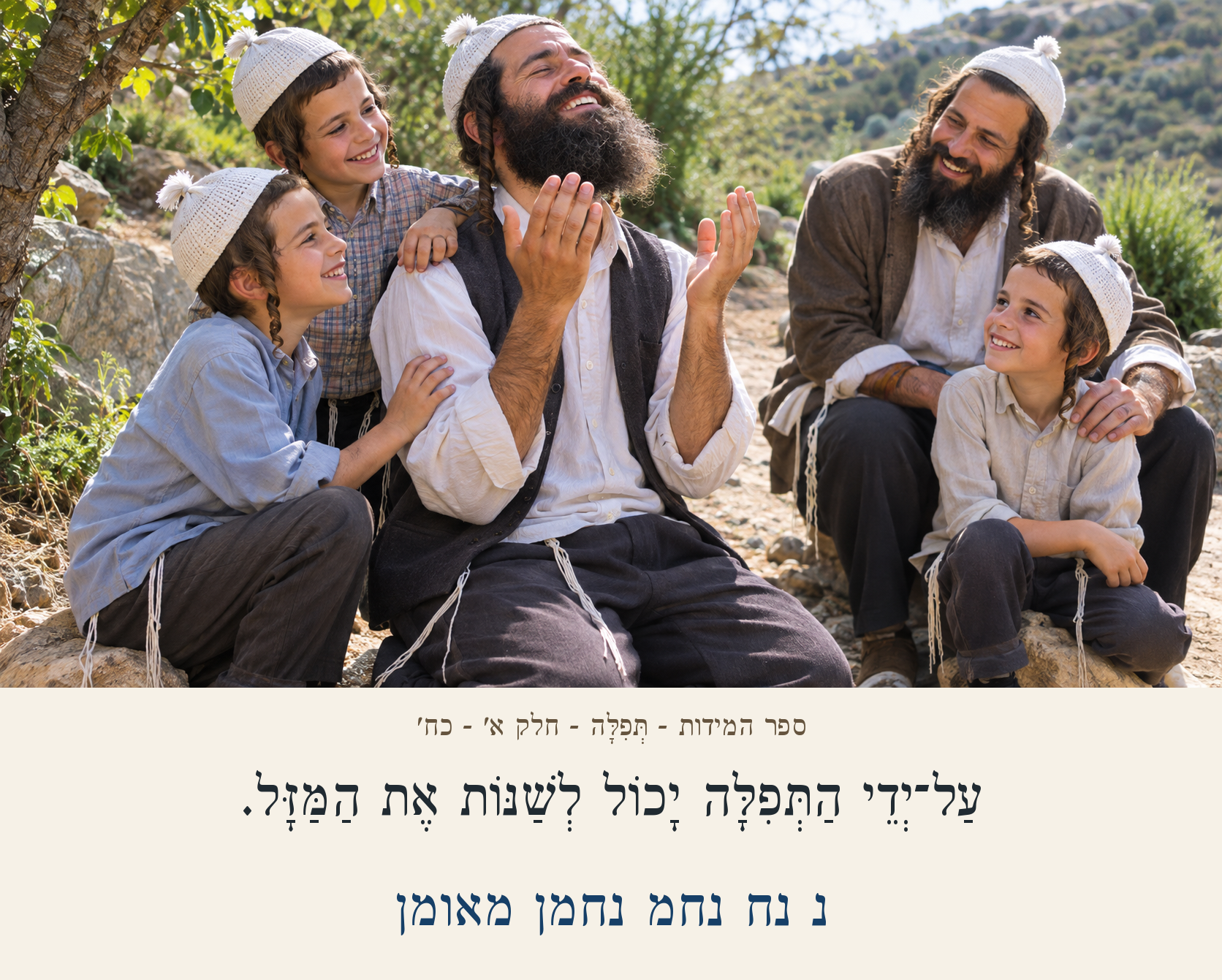
עַל־יְדֵי הַתְּפִלָּה יָכוֹל לְשַׁנּוֹת אֶת הַמַּזָּל.
28
28. Through prayer, one can change the fortunes (set by the constellations).
📷 Pictures / videos for this teaching
The complete teaching preserves the explanation about fortunes set by the constellations. The ordinary hillside scene depicts prayer, not celestial powers or a visible supernatural mechanism.
כ״ט
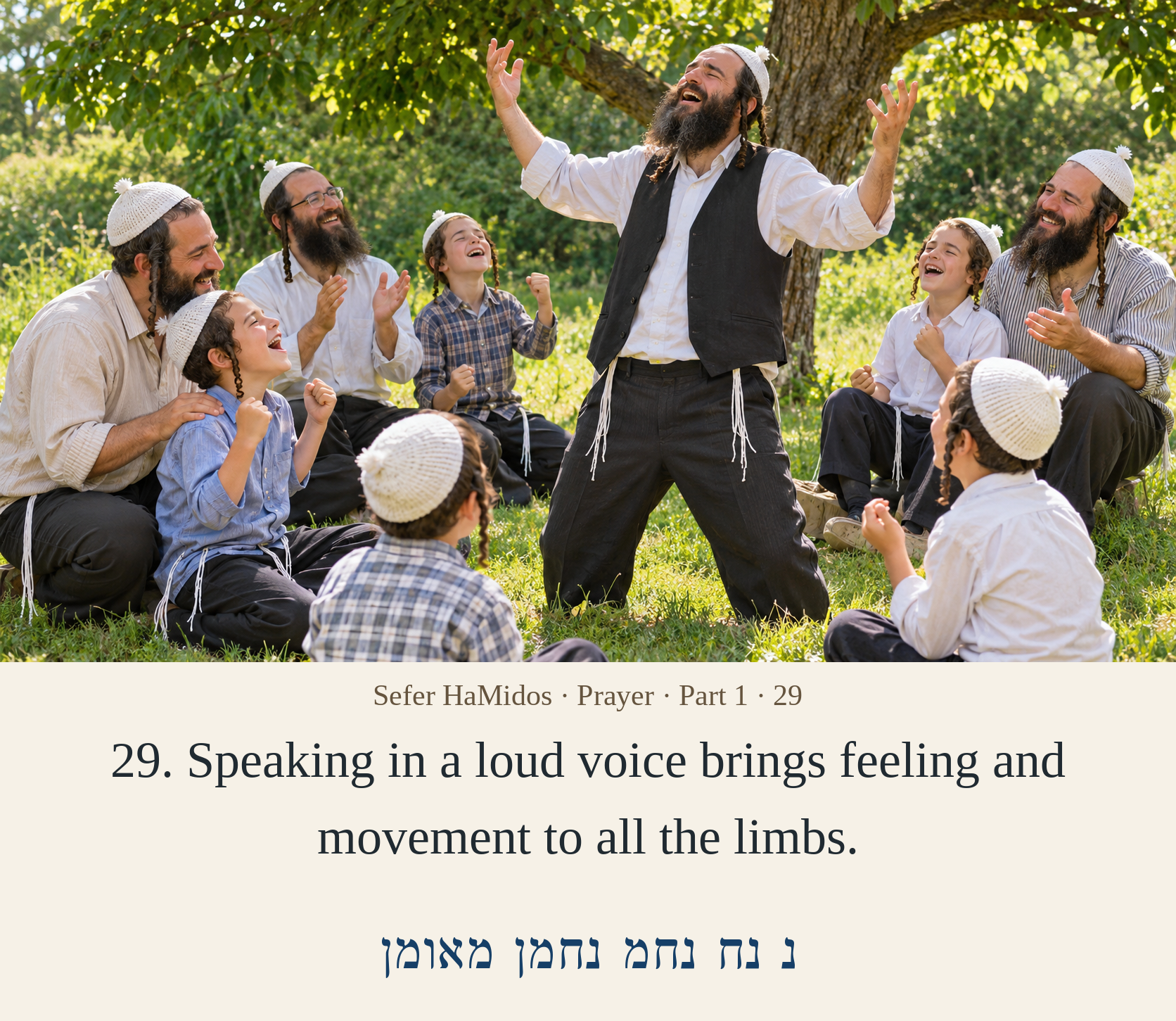
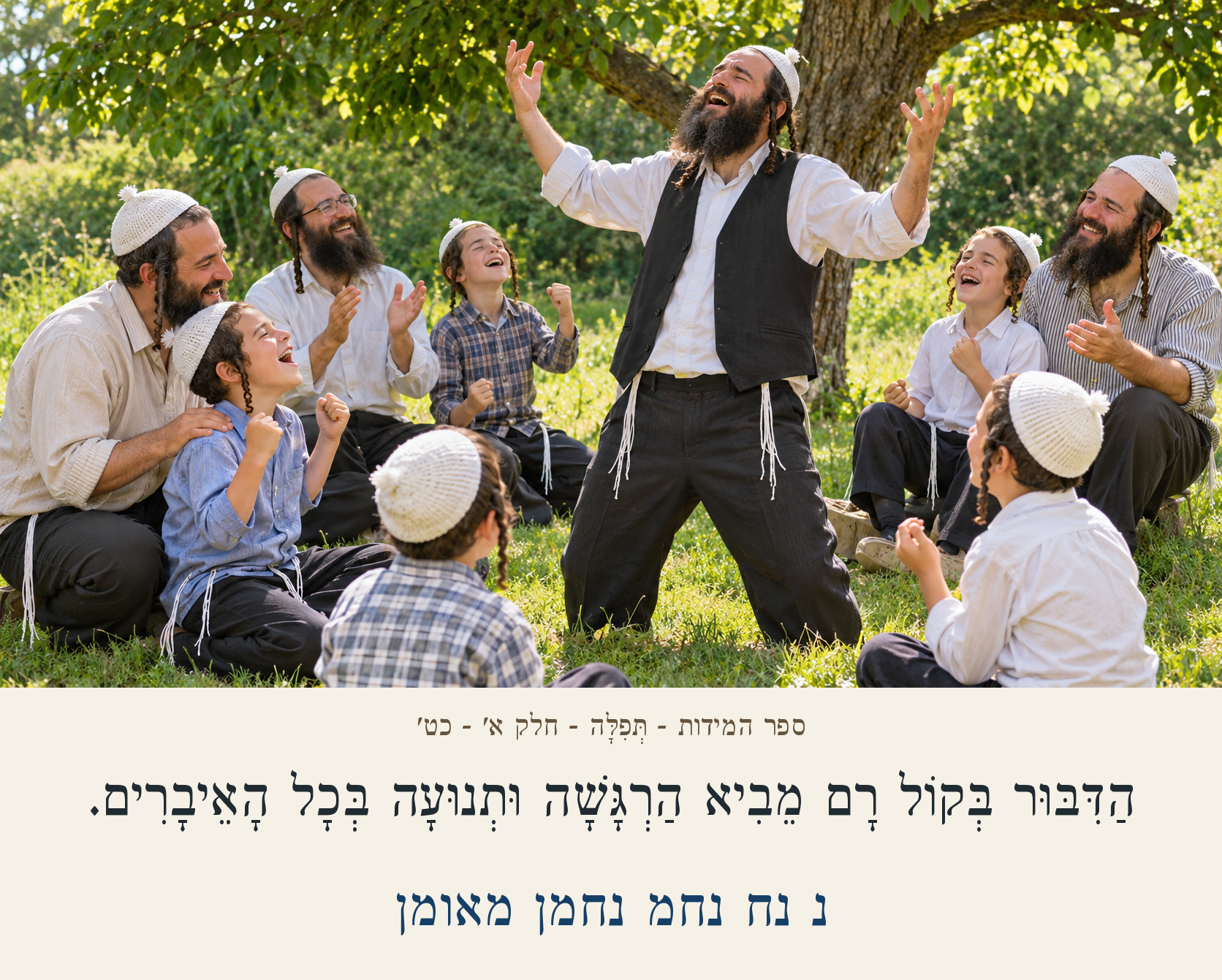
הַדִּבּוּר בְּקוֹל רָם מֵבִיא הַרְגָּשָׁה וּתְנוּעָה בְּכָל הָאֵיבָרִים.
29
29. Speaking in a loud voice brings feeling and movement to all the limbs.
📷 Pictures / videos for this teaching
The illustration relates expressive prayer to the teaching about speaking in a loud voice; it does not prescribe a new ritual or a particular gesture.
ל׳
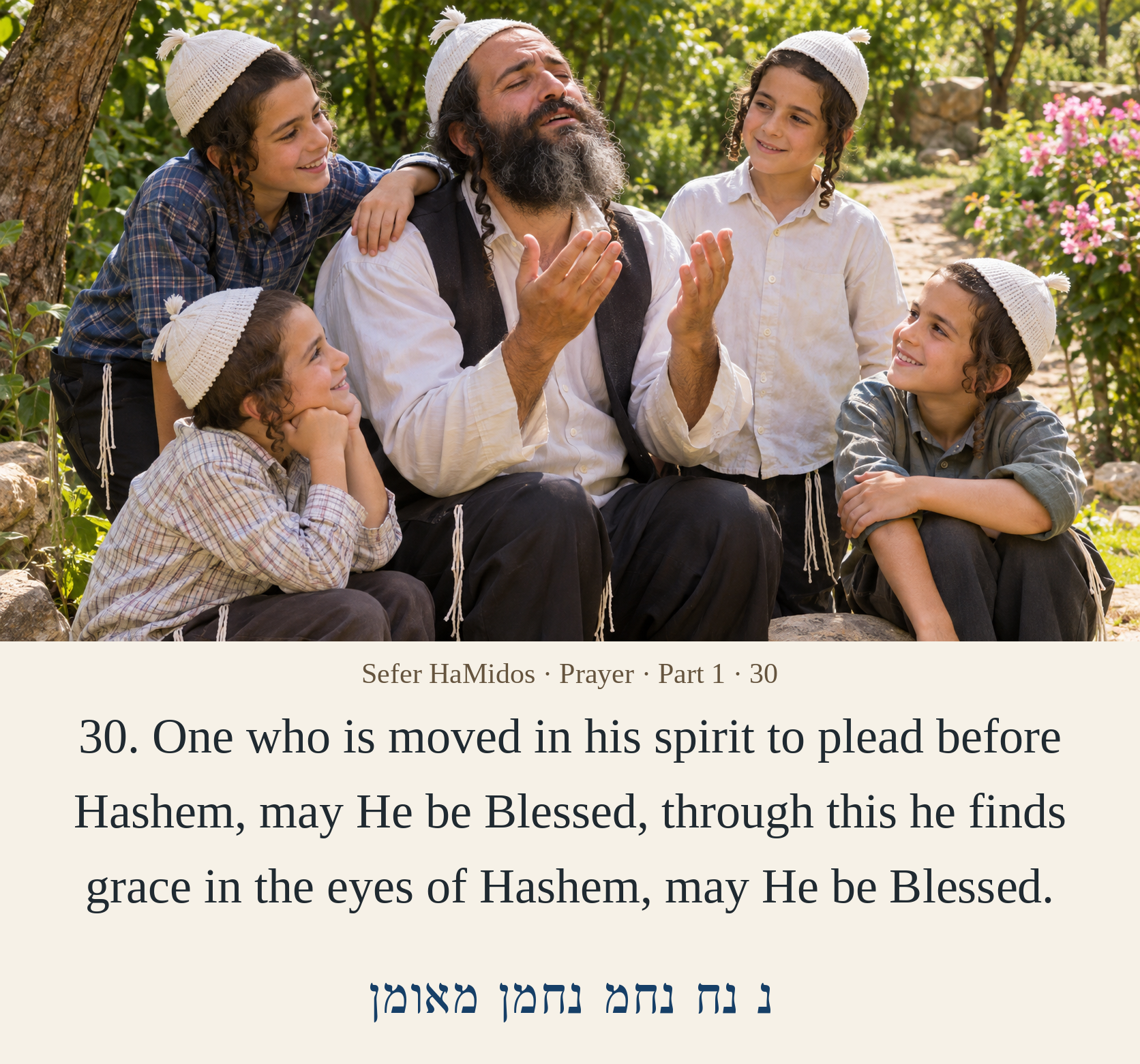
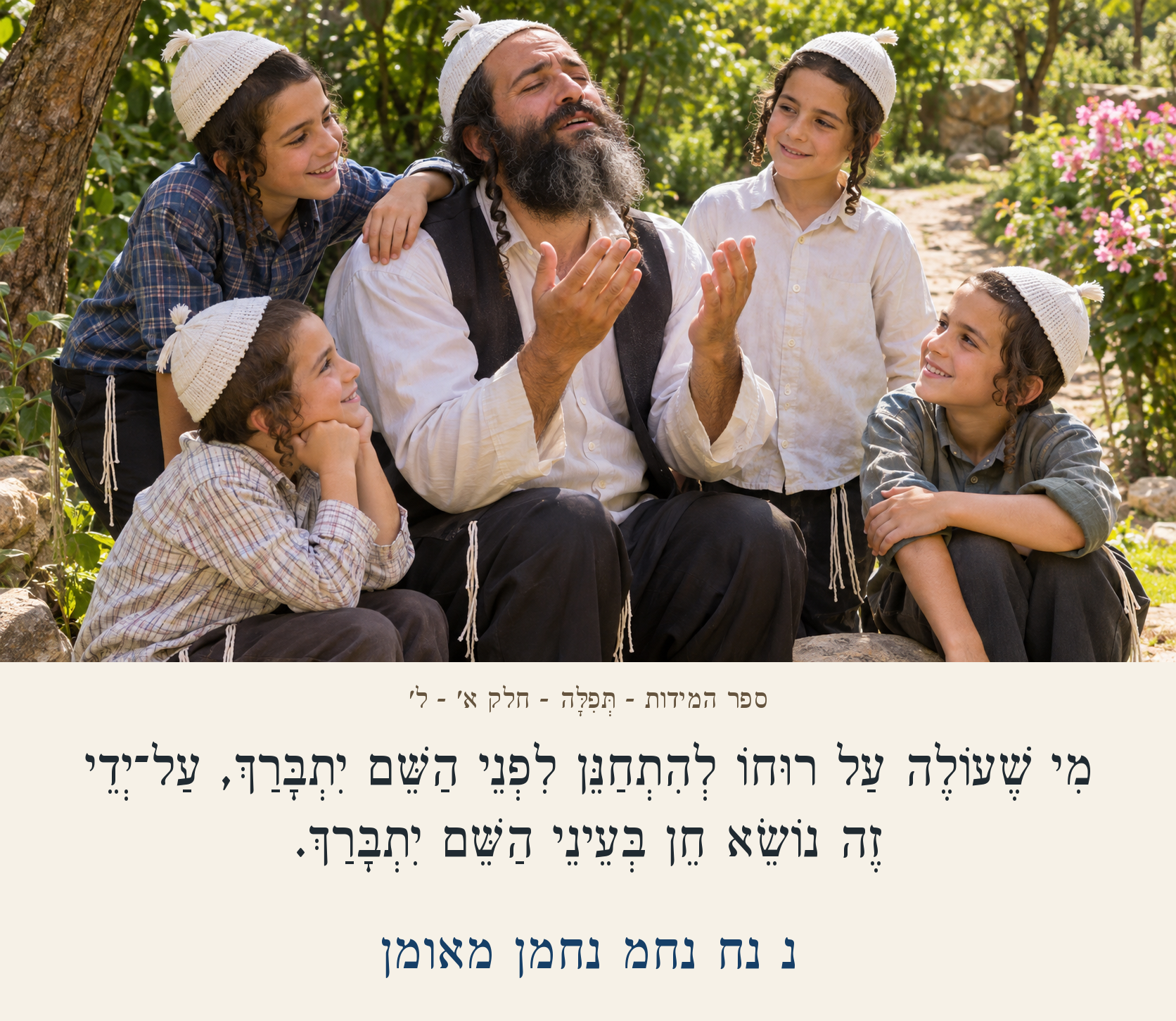
מִי שֶׁעוֹלֶה עַל רוּחוֹ לְהִתְחַנֵּן לִפְנֵי הַשֵּׁם יִתְבָּרַךְ, עַל־יְדֵי זֶה נוֹשֵׂא חֵן בְּעֵינֵי הַשֵּׁם יִתְבָּרַךְ.
30
30. One who is moved in his spirit to plead before Hashem, may He be Blessed, through this he finds grace in the eyes of Hashem, may He be Blessed.
📷 Pictures / videos for this teaching
The scene depicts human prayer only. The teaching about finding grace before Hashem is preserved in full, without a visual representation of God.
ל״א
עַל־יְדֵי בִּטָּחוֹן הַקָּדוֹשׁ־בָּרוּךְ הוּא שׁוֹמֵעַ תְּפִלָּתוֹ.
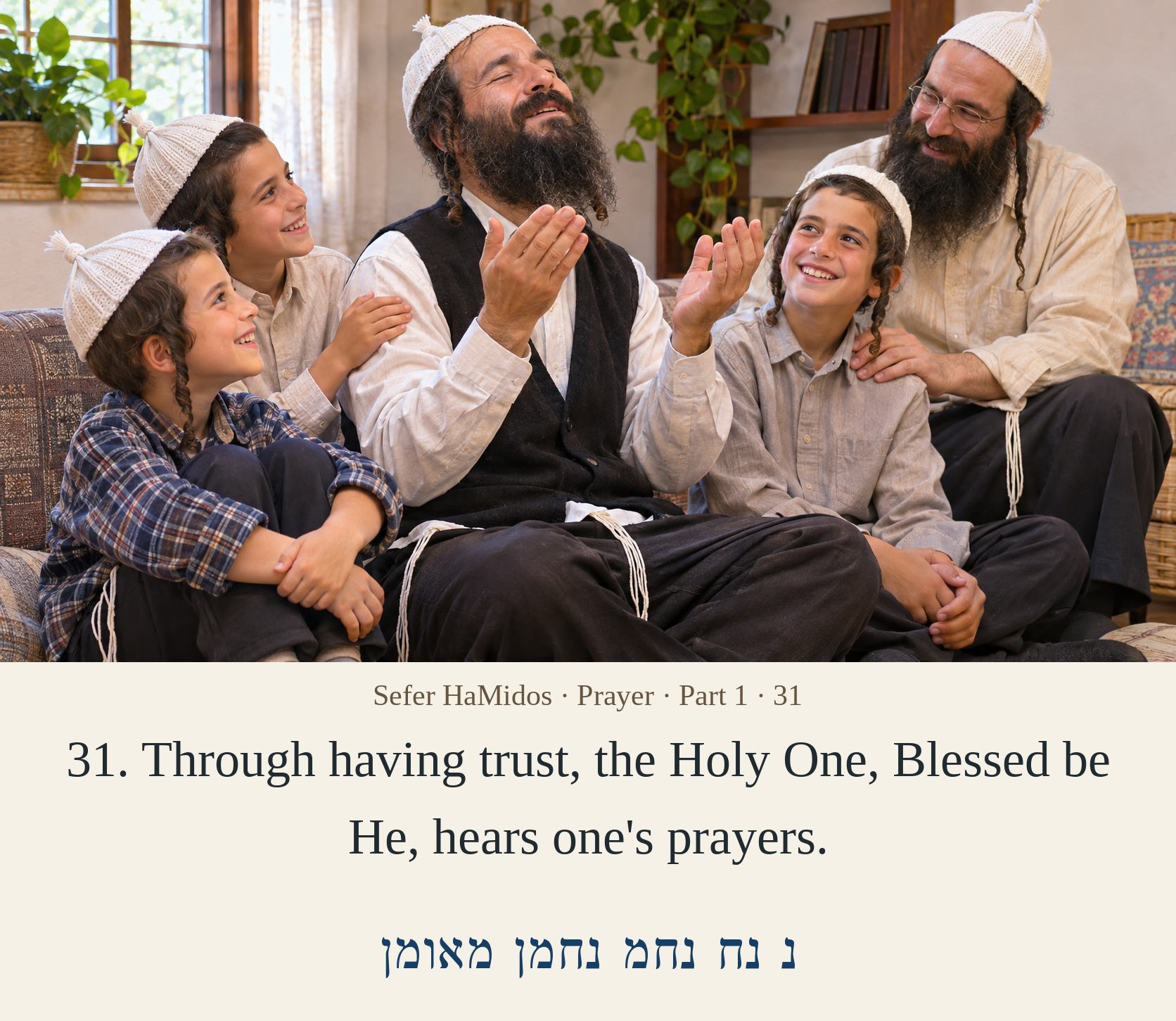
31
31. Through having trust, the Holy One, Blessed be He, hears one's prayers.
📷 Pictures / videos for this teaching
The teaching about trust and prayer is preserved in full; the illustration is not a promise that every worldly difficulty disappears.
ל״ב
אַל תִּתְפַּלֵּל בְּבַיִת, שֶׁבָּנָה בַּעַל־מַחֲלֹקֶת.
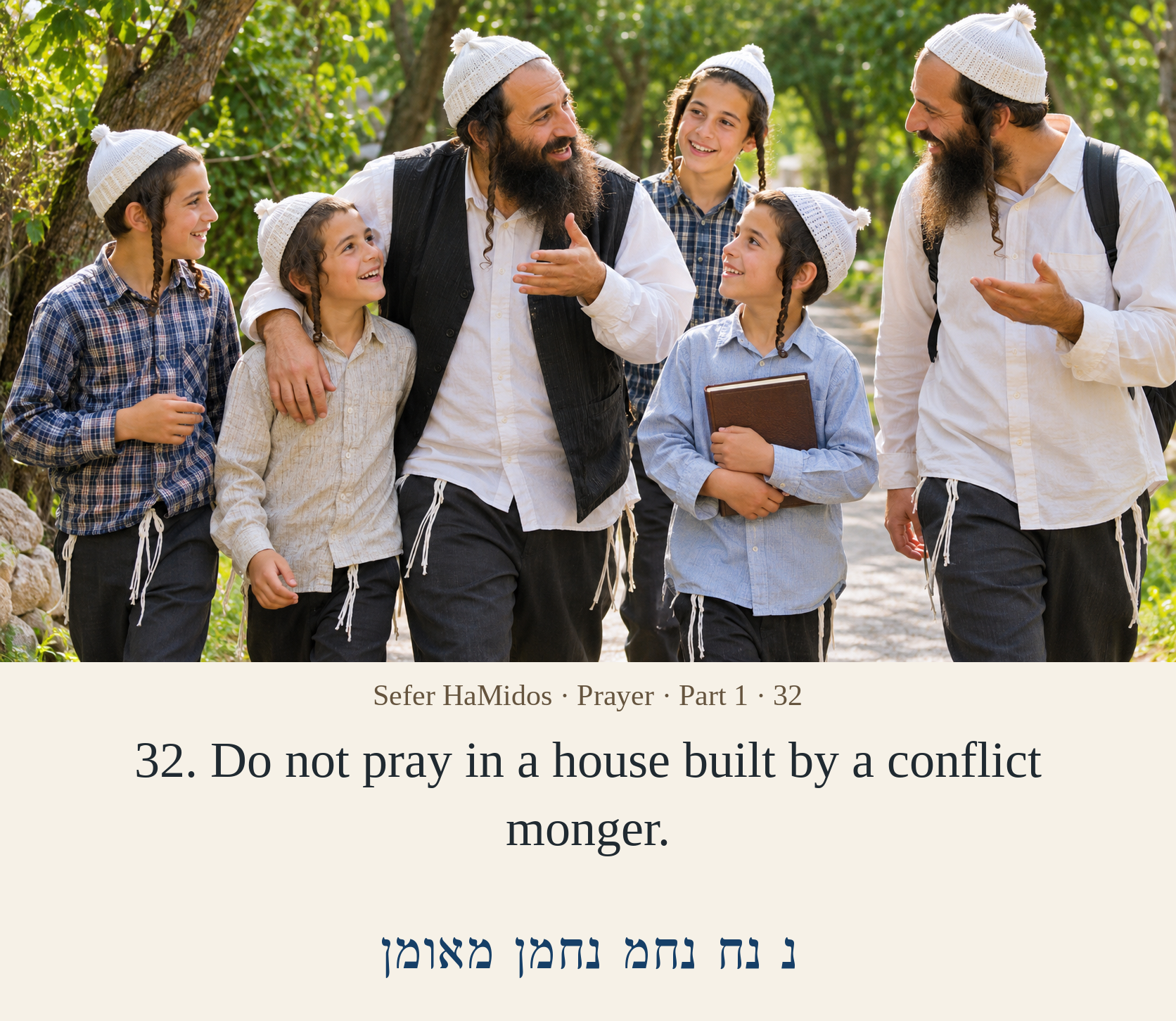
32
32. Do not pray in a house built by a conflict monger.
📷 Pictures / videos for this teaching
The peaceful walk is an editorial learning setting, not a depiction of a conflict monger or a prohibited house. It does not replace the teaching’s restriction on where to pray.
ל״ג
קֹדֶם הַתְּפִלָּה תִּתֵּן צְדָקָה, וּתְקַשֵּׁר אֶת עַצְמְךָ לְצַדִּיקֵי הַדּוֹר.
33
33. Before the prayer, give charity, and bind yourself to the Tzaddikim of the generation.
ל״ד
אָדָם מְקַבֵּל שֶׁפַע וְכֹחַ אֱלֹקִי כְּפִי אוֹתוֹ הַמָּקוֹם שֶׁמִּתְפַּלֵּל בּוֹ.
34
34. A person receives abundance and G-dly power according to the place where he prays.
ל״ה
כְּשֶׁהַצִּבּוּר מִתְפַּלְּלִים, הוּא עֵת רָצוֹן.
35
35. When a congregation prays, it is a time of [Divine] favor.
ל״ו
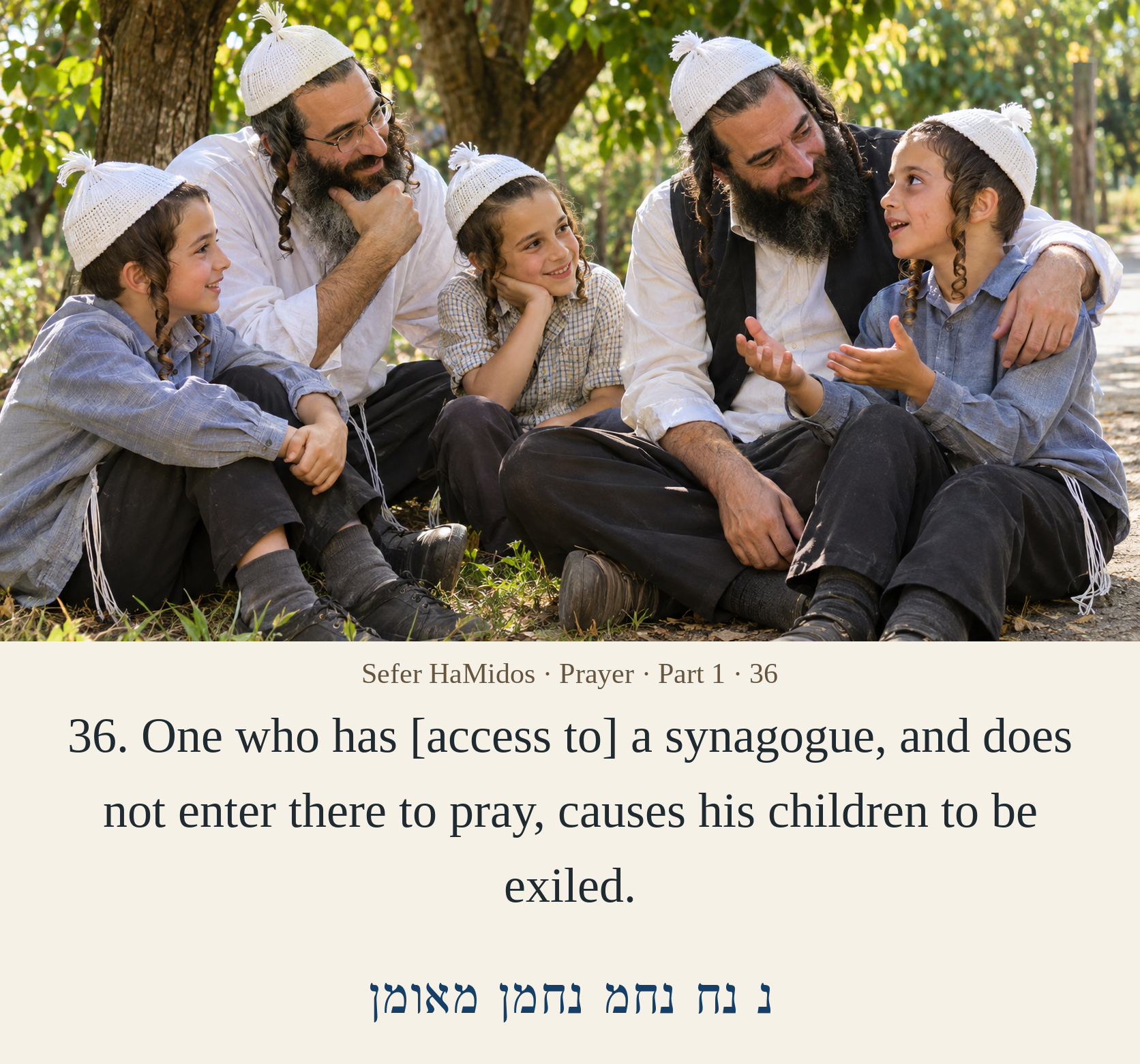
מִי שֶּׁיֶּשׁ לוֹ בֵּית־הַכְּנֶסֶת, וְאֵינוֹ נִכְנָס לְשָׁם לְהִתְפַּלֵּל, גּוֹרֵם גָּלוּת לְבָנָיו.
36
36. One who has [access to] a synagogue, and does not enter there to pray, causes his children to be exiled.
📷 Pictures / videos for this teaching
The outdoor family lesson is an editorial setting only, not a substitute for entering an accessible synagogue to pray. The complete teaching preserves the access condition, failure to enter, and exile for his children; it does not diagnose the plight of actual displaced children.
ל״ז
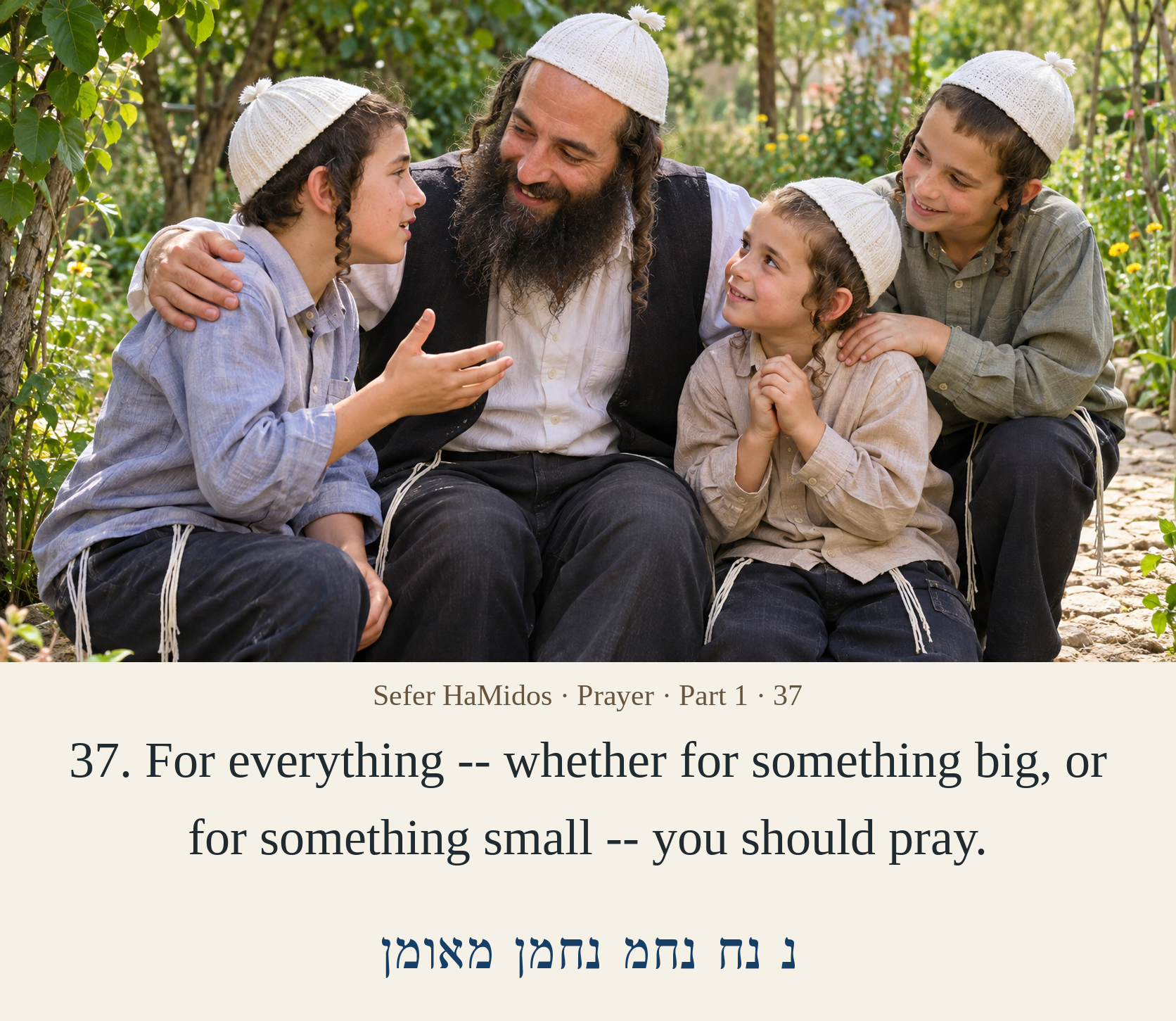
עַל כָּל הַדְּבָרִים, הֵן עַל דָּבָר גָּדוֹל הֵן עַל דָּבָר קָטָן, תִּתְפַּלֵּל.
37
37. For everything -- whether for something big, or for something small -- you should pray.
📷 Pictures / videos for this teaching
The family conversation illustrates attention to needs large and small. The complete teaching directs prayer for everything; no requested outcome is guaranteed by the illustration.
ל״ח
אַקְדִּימוּ וְאַחֲשִׁיכוּ לְבֵי־כְנִישְׁתָּא כִּי הֵיכֵי דְּתַאֲרִיכוּ חַיֵּי.
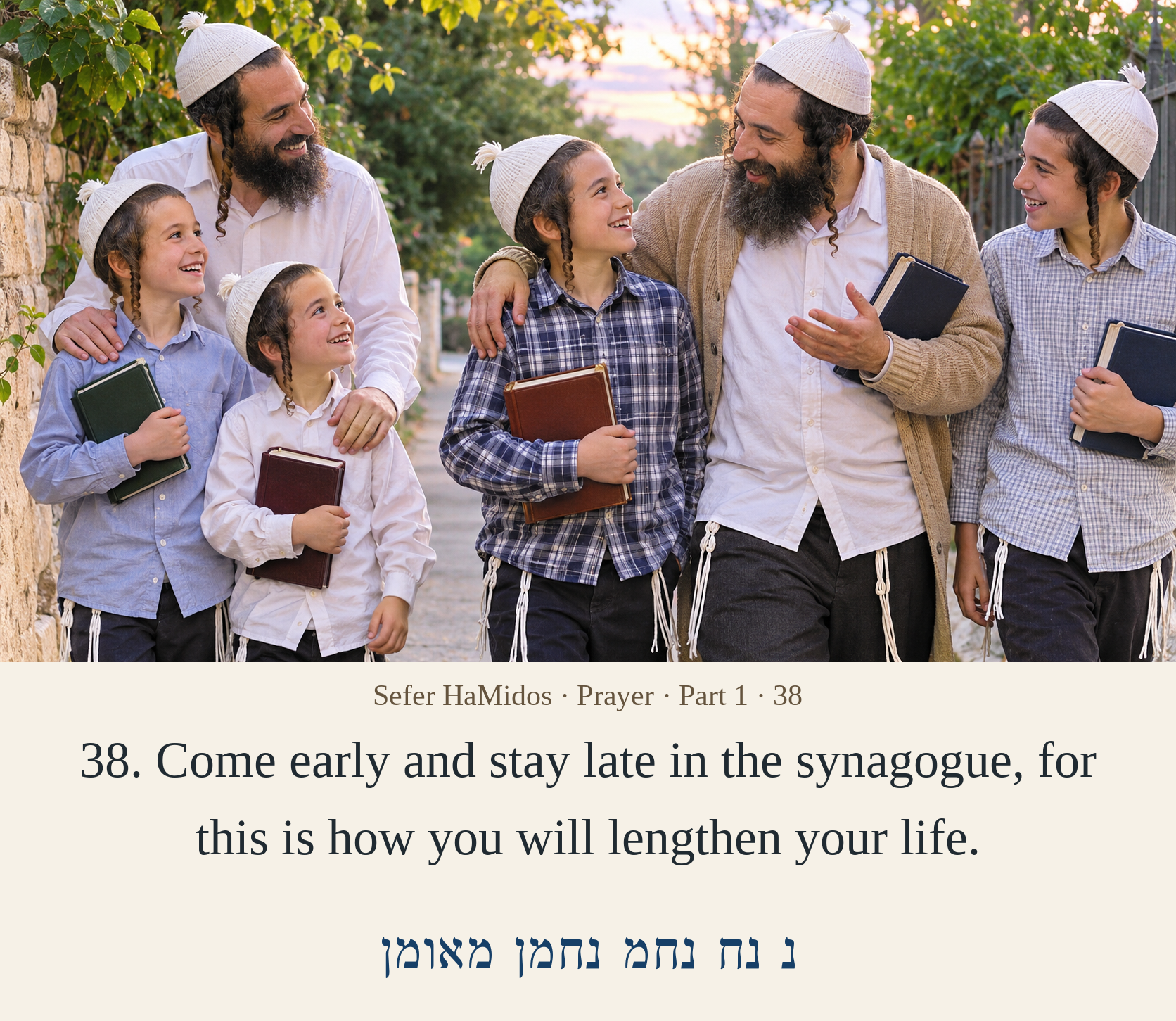
38
38. Come early and stay late in the synagogue, for this is how you will lengthen your life.
📷 Pictures / videos for this teaching
The family walk with closed books is an editorial preparation scene only. Early arrival and late departure in the synagogue, and lengthened life, remain explicit in the complete teaching. The walk does not fulfill either attendance condition.
ל״ט
מִי שֶׁאֶפְשָׁר לוֹ לְבַקֵּשׁ רַחֲמִים עַל חֲבֵרוֹ וְאֵינוֹ מְבַקֵּשׁ, נִקְרָא חוֹטֵא.
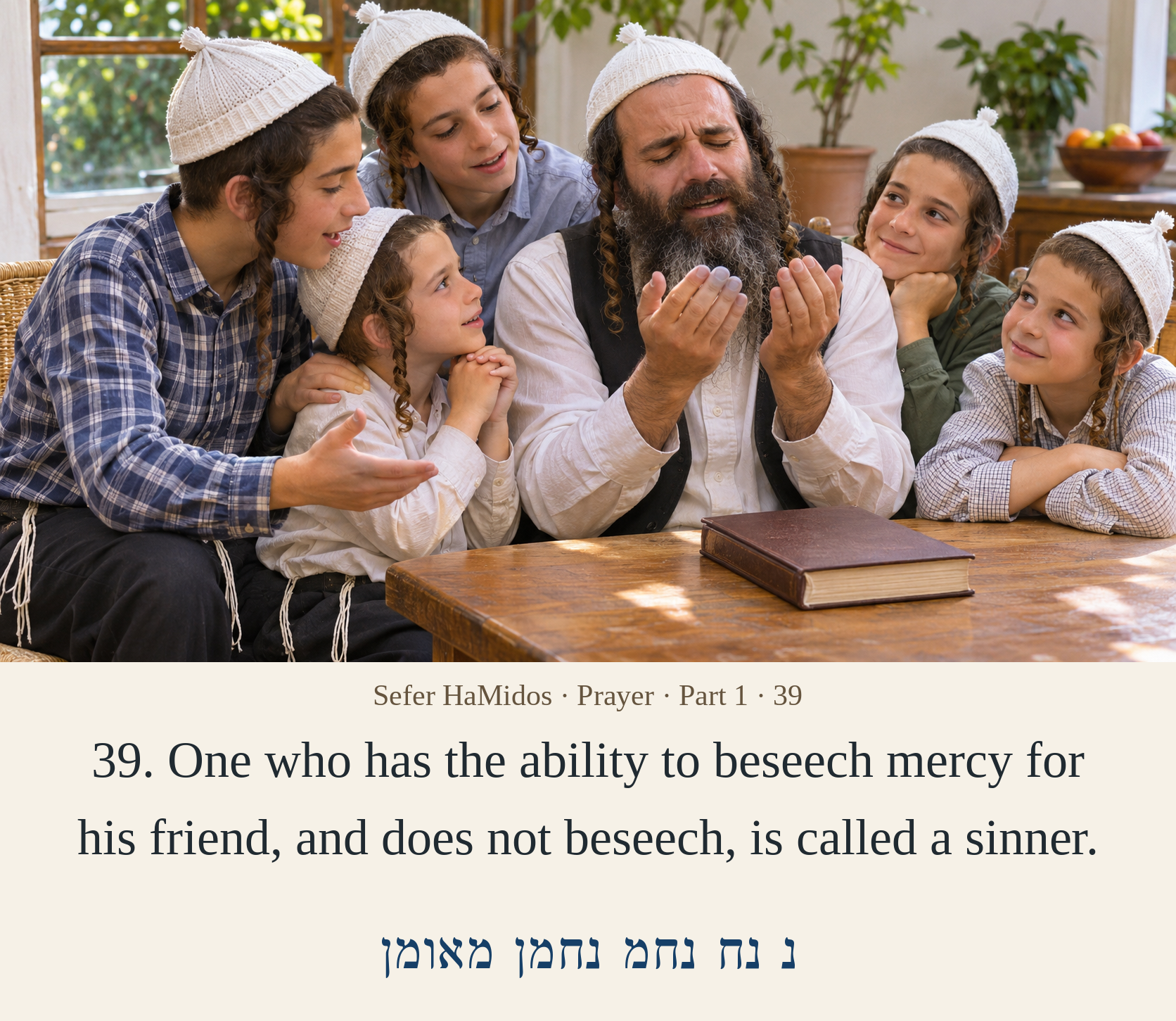
39
39. One who has the ability to beseech mercy for his friend, and does not beseech, is called a sinner.
📷 Pictures / videos for this teaching
The scene gives a positive editorial example of prayer for another person. The full warning remains unchanged: one able to beseech mercy for his friend who does not do so is called a sinner. No pictured child is accused.
מ׳
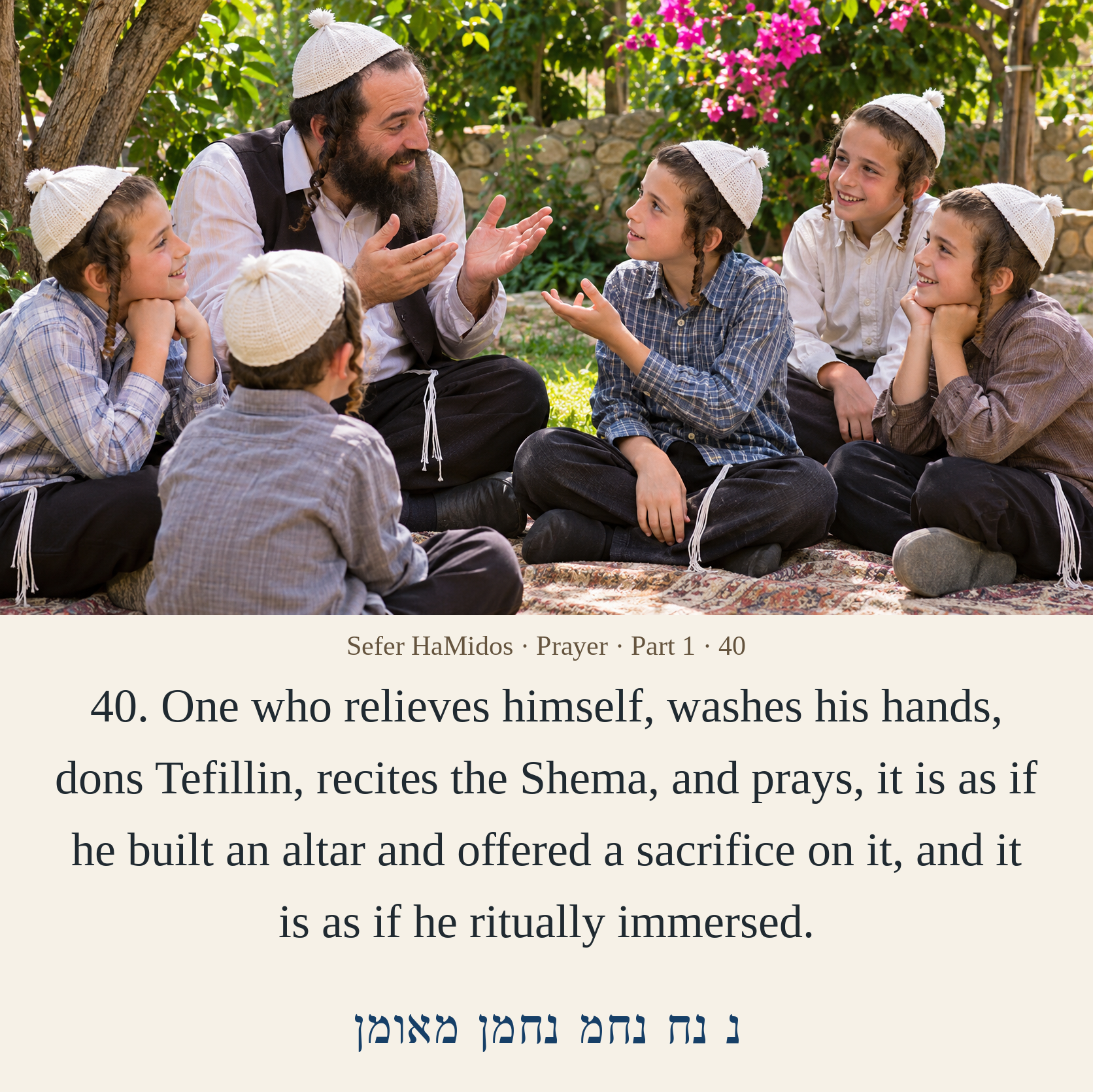
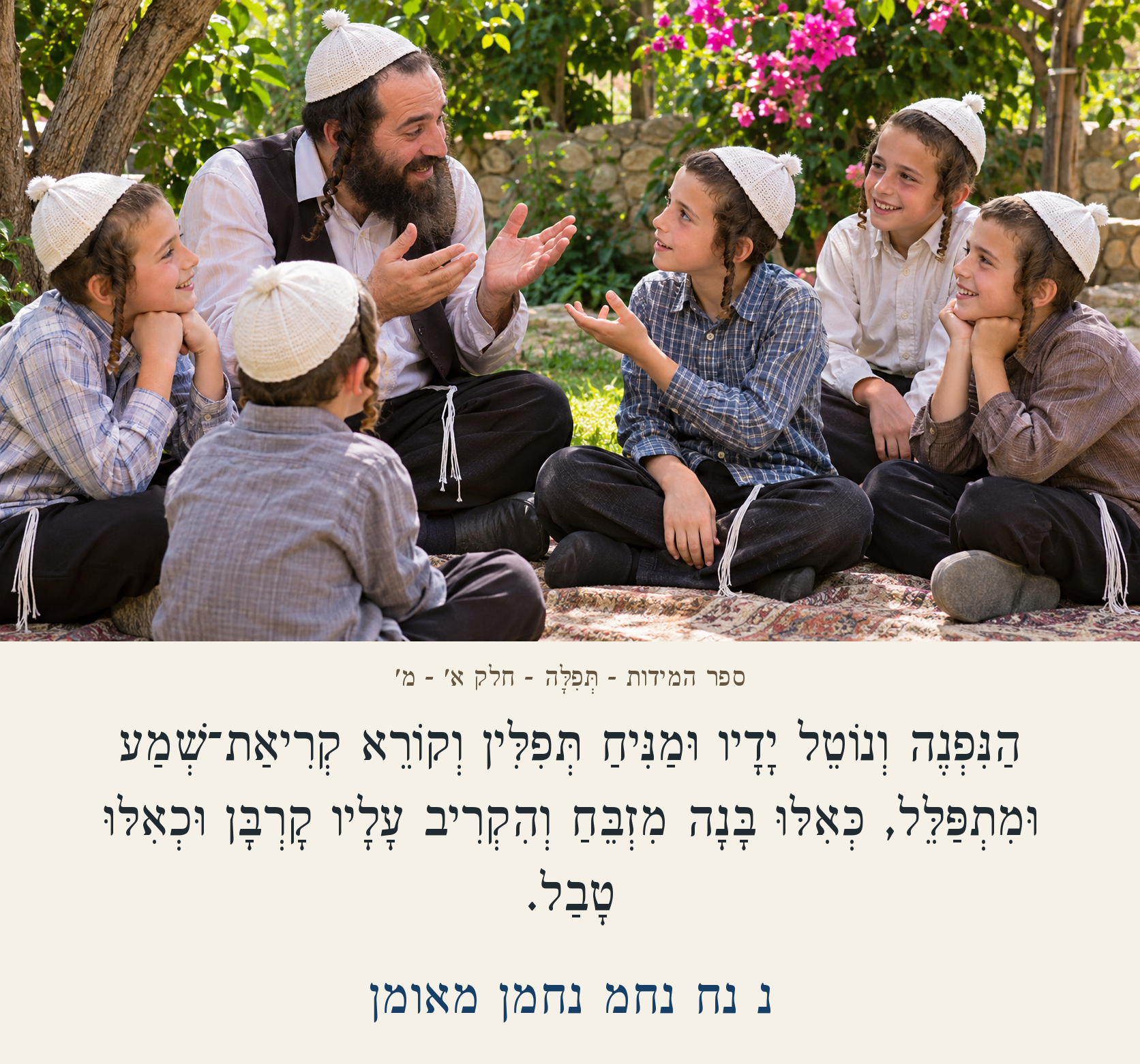
הַנִּפְנֶה וְנוֹטֵל יָדָיו וּמַנִּיחַ תְּפִלִּין וְקוֹרֵא קְרִיאַת־שְׁמַע וּמִתְפַּלֵּל, כְּאִלּוּ בָּנָה מִזְבֵּחַ וְהִקְרִיב עָלָיו קָרְבָּן וּכְאִלּוּ טָבַל.
40
40. One who relieves himself, washes his hands, dons Tefillin, recites the Shema, and prays, it is as if he built an altar and offered a sacrifice on it, and it is as if he ritually immersed.
📷 Pictures / videos for this teaching
This is a family lesson, not performance of the ritual sequence. The complete caption preserves relieving oneself, washing hands, donning Tefillin, reciting Shema, and praying, followed by both as-if comparisons. No altar, sacrifice or immersion is depicted; the lesson does not fulfill or replace any condition.
מ״א
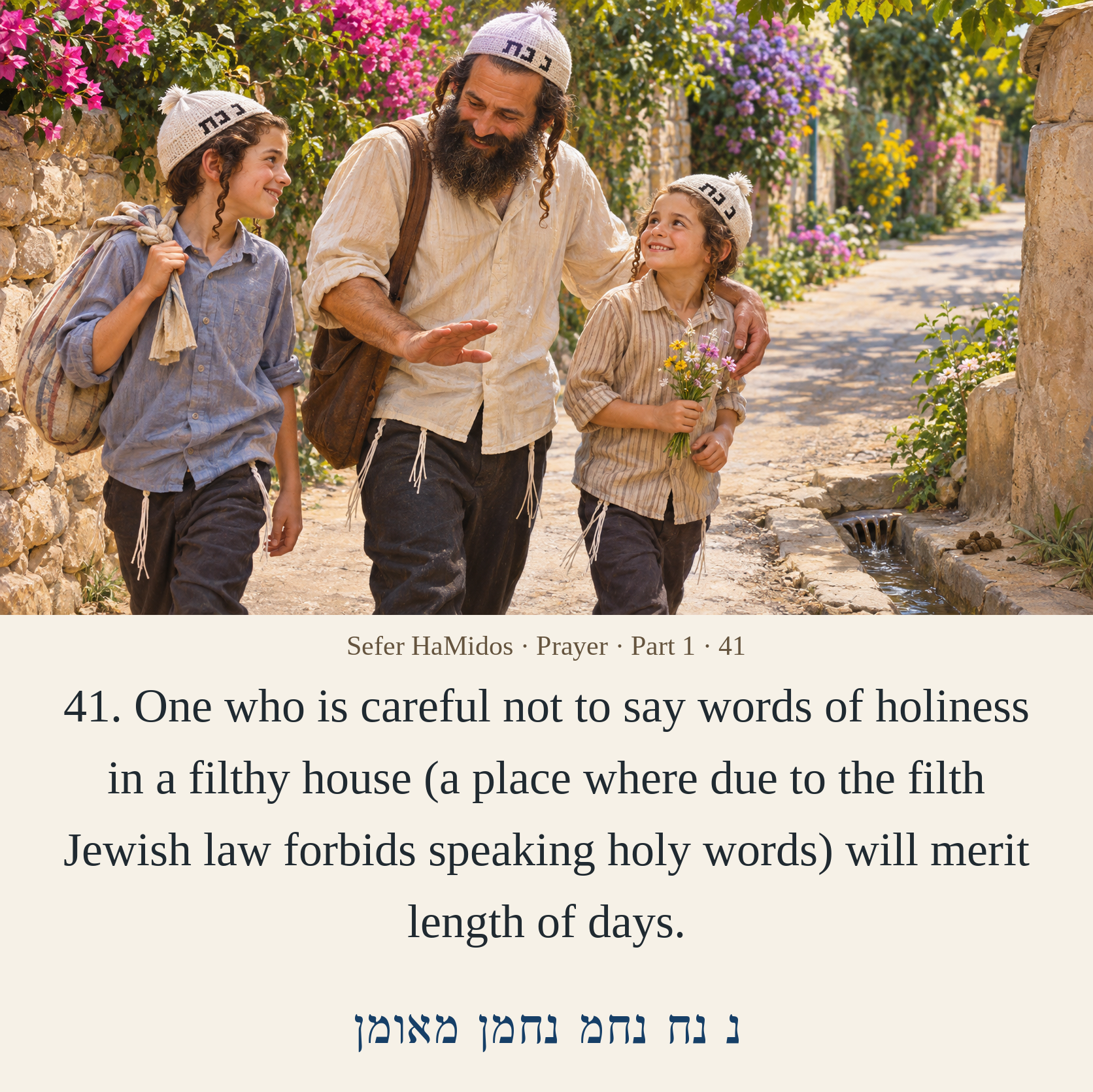
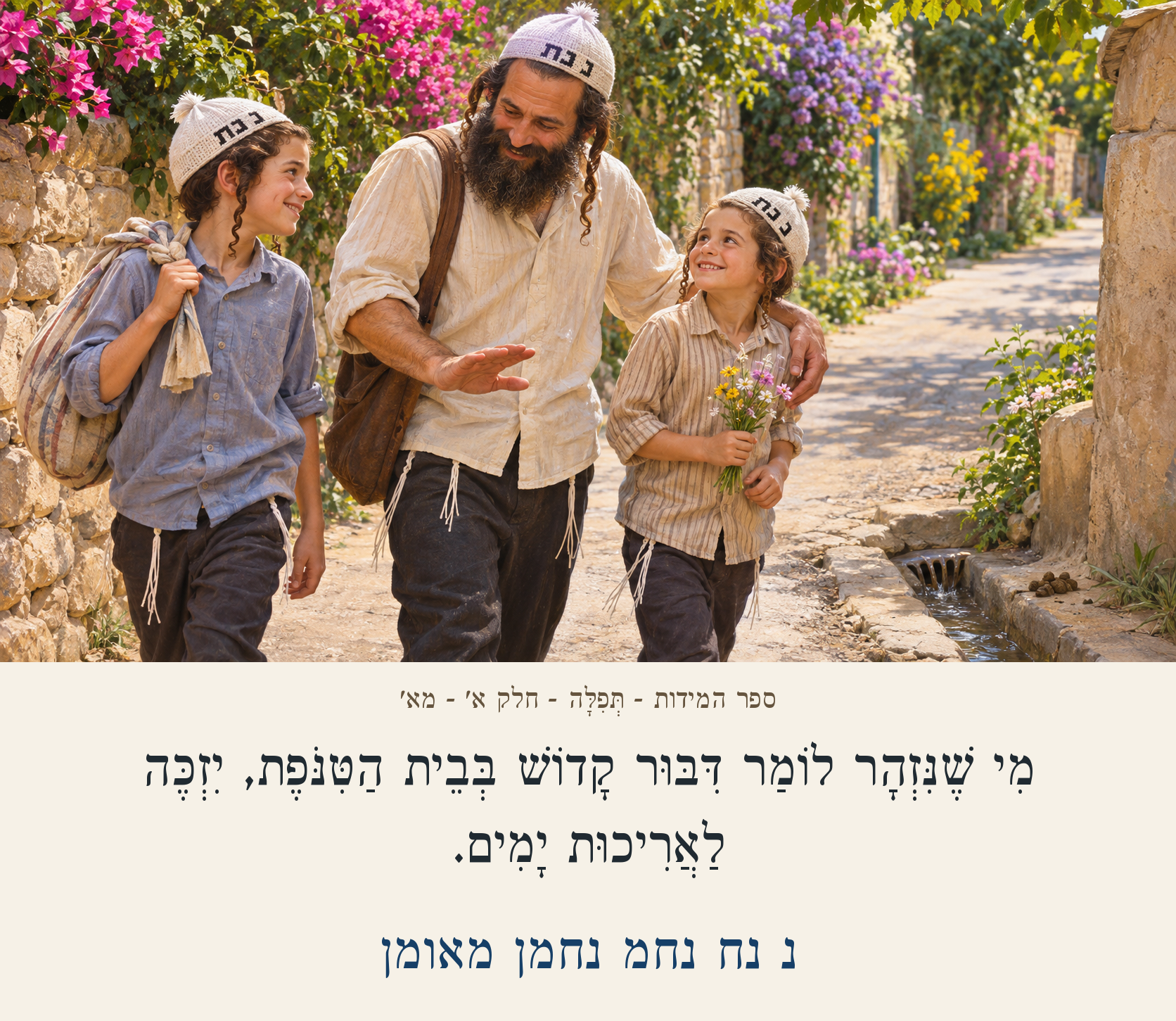
מִי שֶׁנִּזְהָר לוֹמַר דִּבּוּר קָדוֹשׁ בְּבֵית הַטִּנֹּפֶת, יִזְכֶּה לַאֲרִיכוּת יָמִים.
41
41. One who is careful not to say words of holiness in a filthy house (a place where due to the filth Jewish law forbids speaking holy words) will merit length of days.
📷 Pictures / videos for this teaching
AI-generated editorial illustration by ajew.org using ChatGPT/OpenAI from a text-only project prompt, with locally typeset complete canonical captions. Contextual illustration only: smiles do not establish speech, kinship, the legal status of the place, restraint from holy words, or a guaranteed lifespan. Only visible curved cap-letter fragments were reviewed; hidden circumference is uncertified.
מ״ב
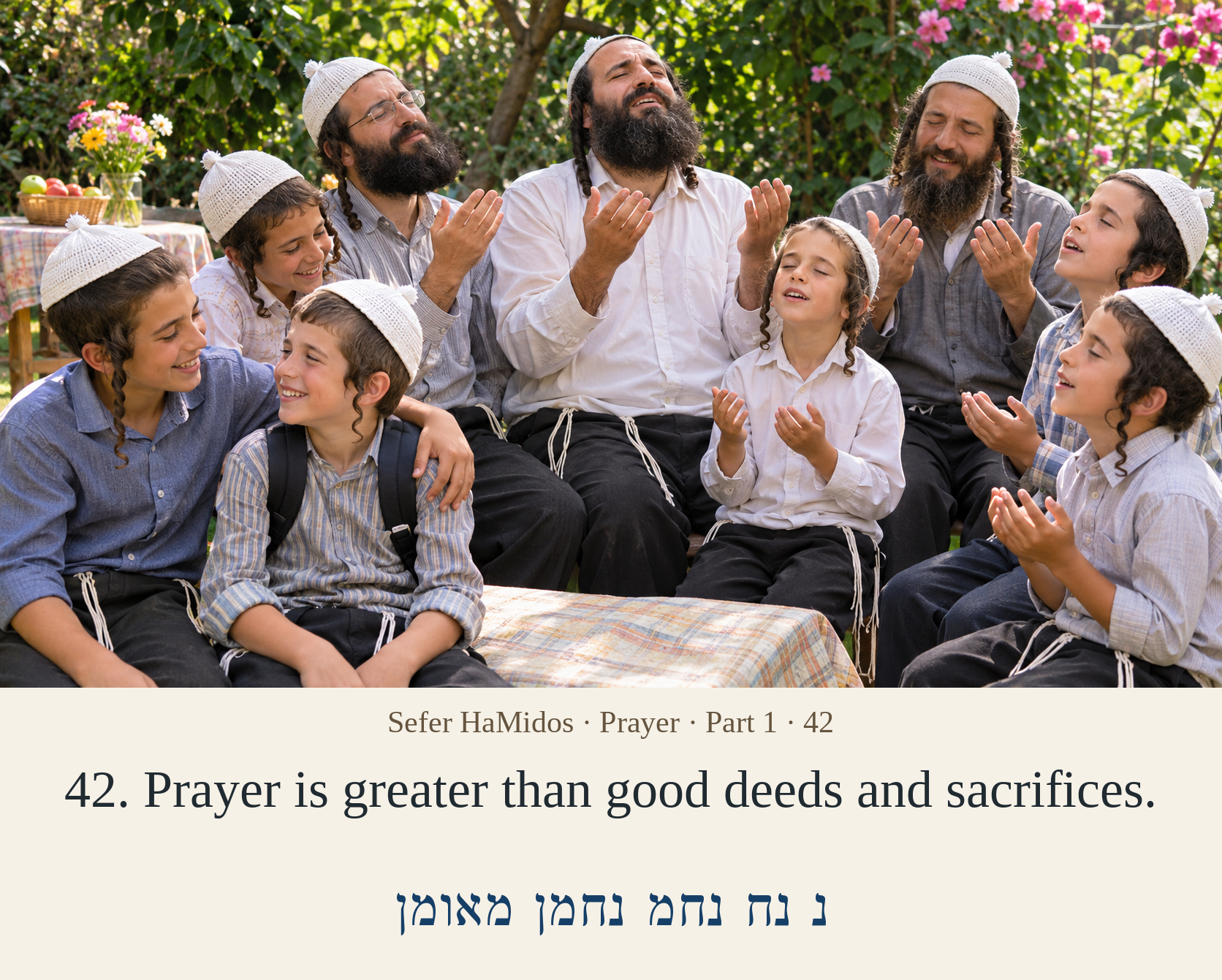
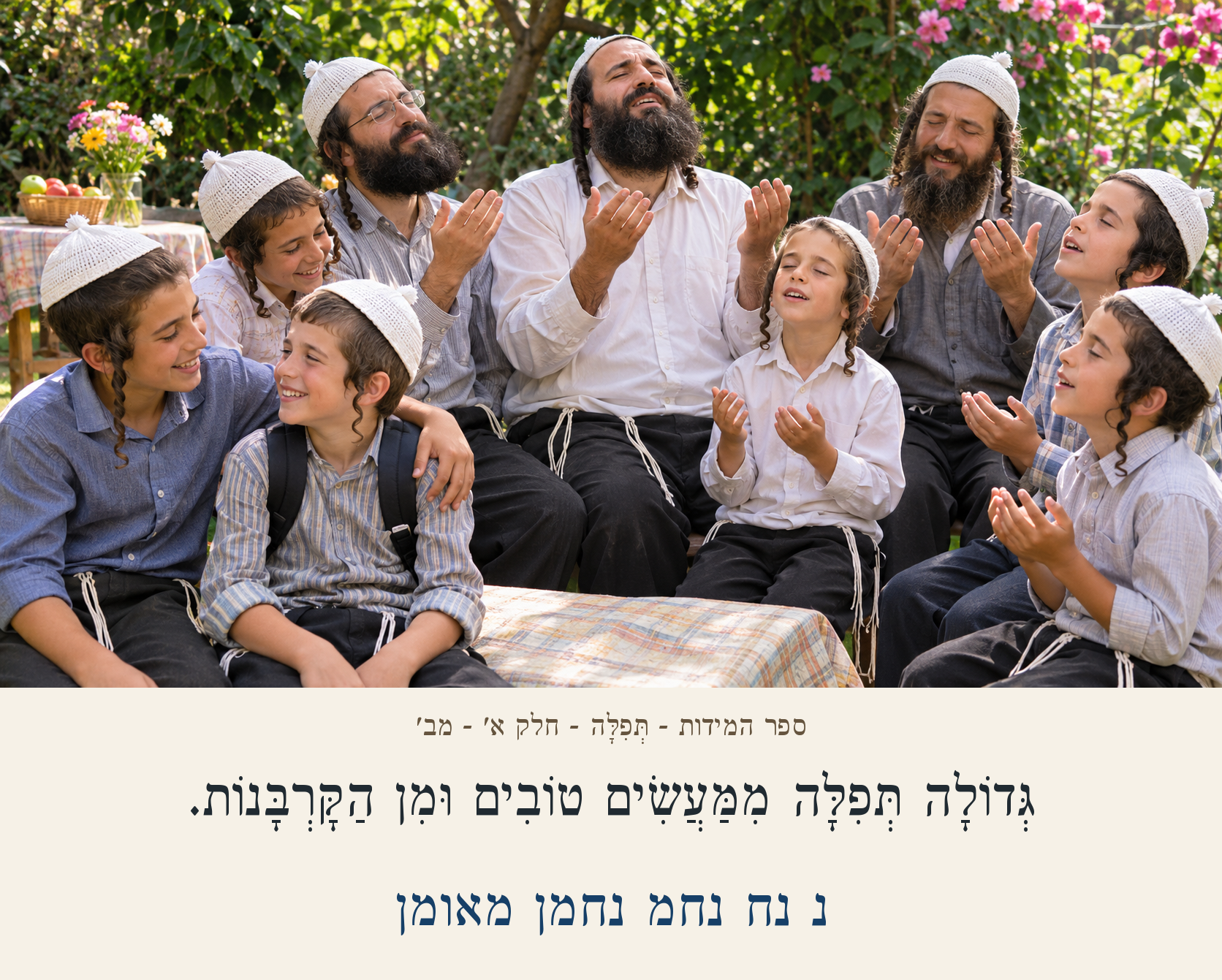
גְּדוֹלָה תְּפִלָּה מִמַּעֲשִׂים טוֹבִים וּמִן הַקָּרְבָּנוֹת.
42
42. Prayer is greater than good deeds and sacrifices.
📷 Pictures / videos for this teaching
The teaching compares prayer with good deeds and sacrifices; the illustration does not diminish their value.
מ״ג
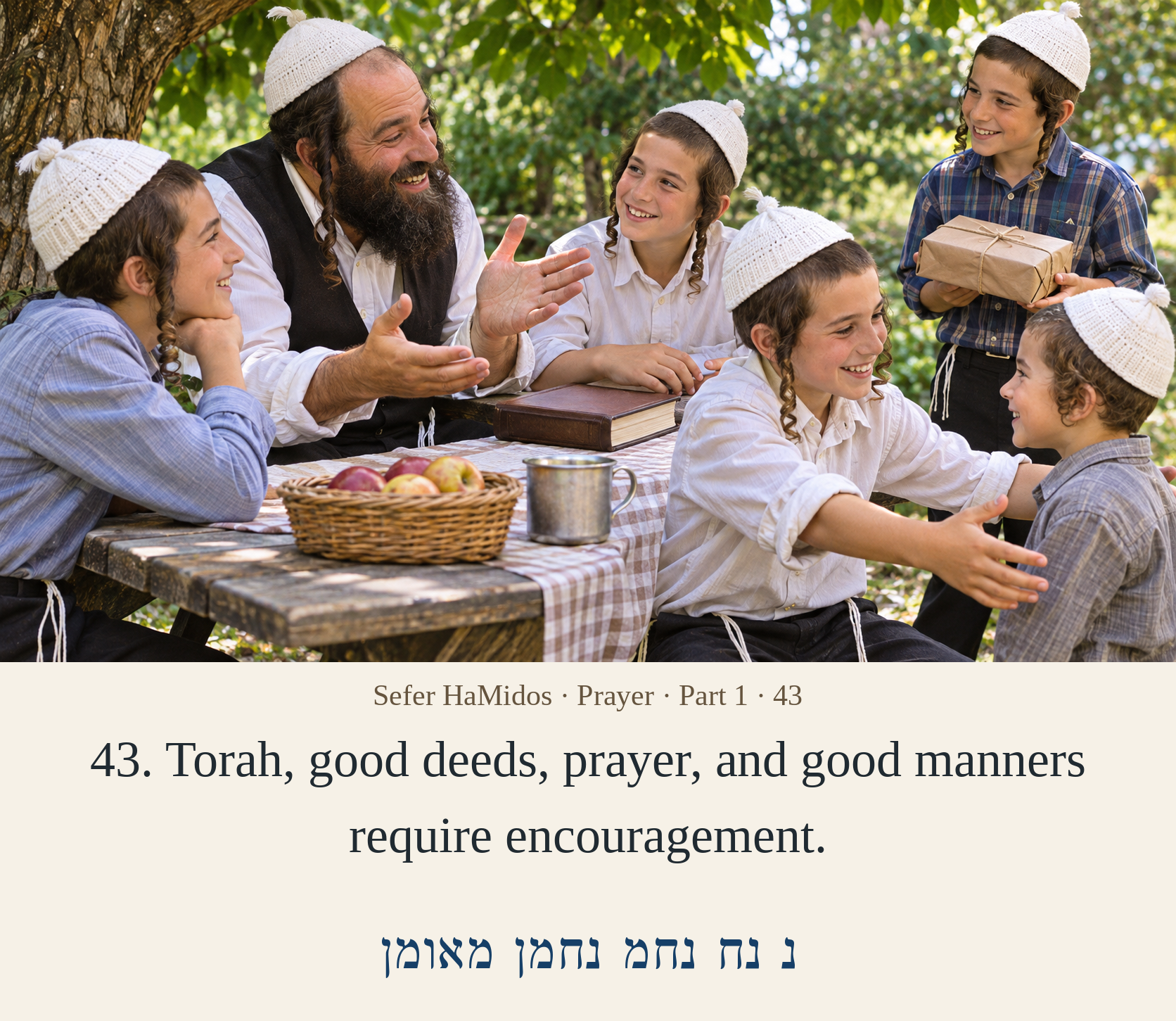
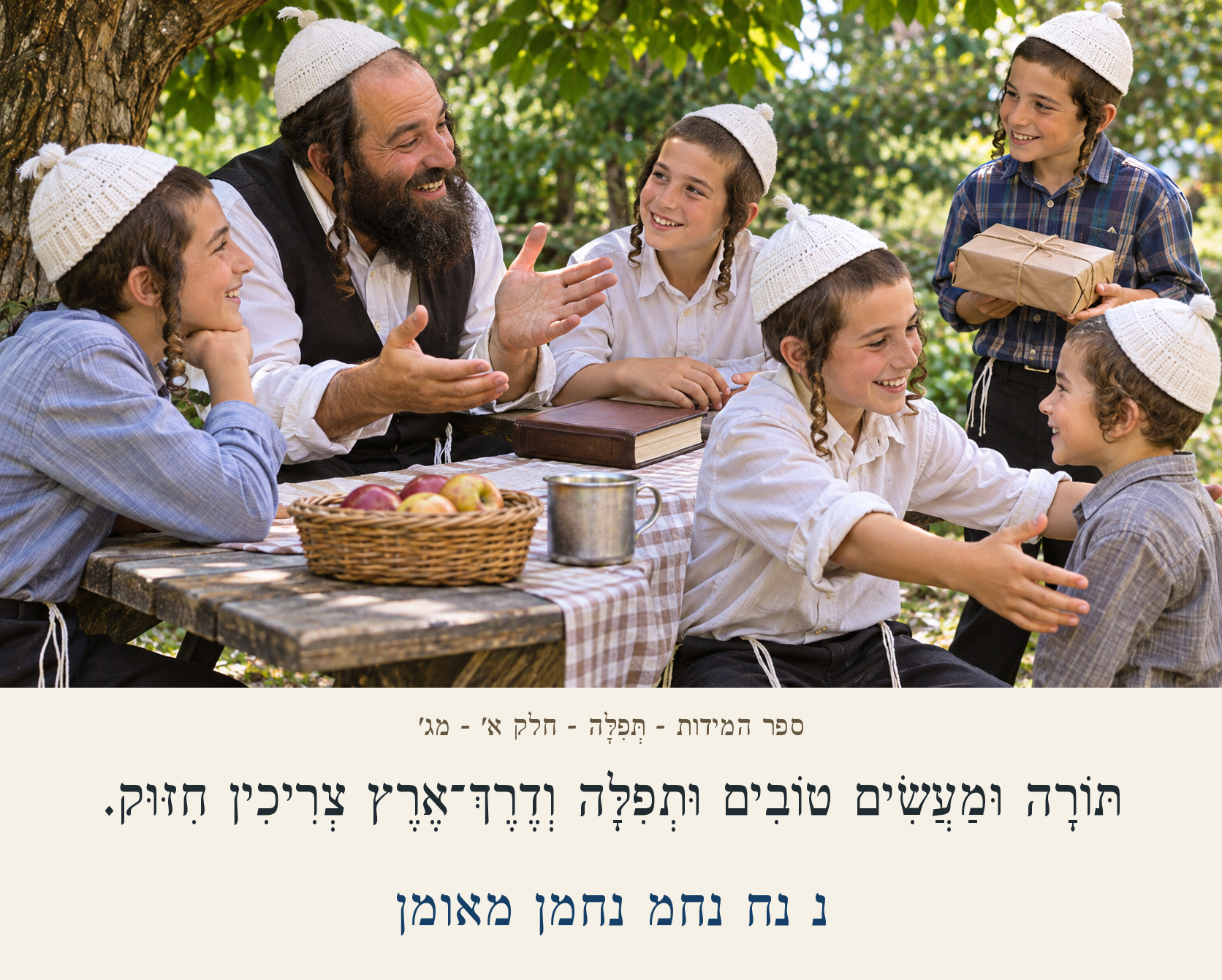
תּוֹרָה וּמַעֲשִׂים טוֹבִים וּתְפִלָּה וְדֶרֶךְ־אֶרֶץ צְרִיכִין חִזּוּק.
43
43. Torah, good deeds, prayer, and good manners require encouragement.
📷 Pictures / videos for this teaching
The family scene illustrates encouragement. The complete teaching names Torah, good deeds, prayer and good manners.
מ״ד
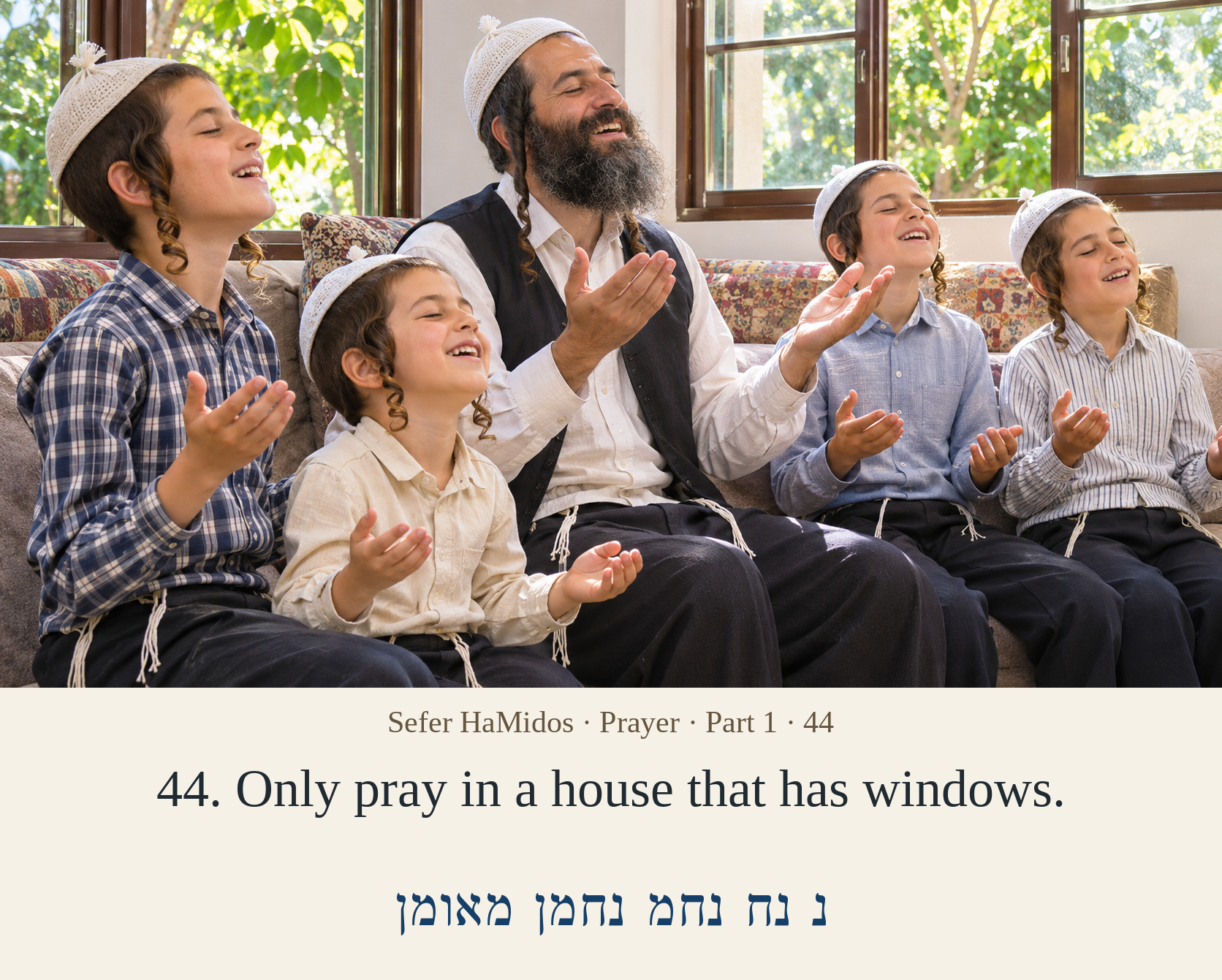
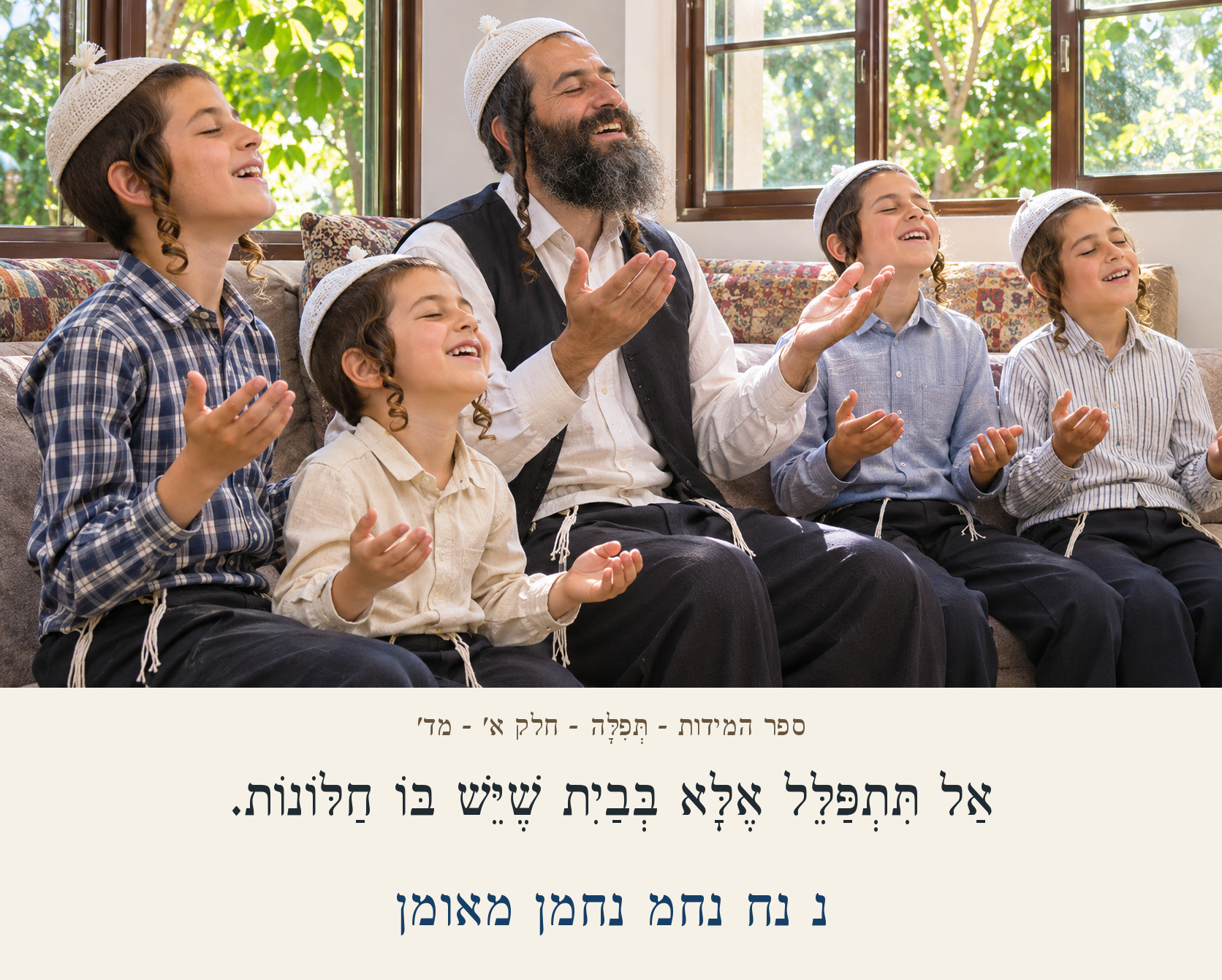
אַל תִּתְפַּלֵּל אֶלָּא בְּבַיִת שֶׁיֵּשׁ בּוֹ חַלּוֹנוֹת.
44
44. Only pray in a house that has windows.
📷 Pictures / videos for this teaching
The domestic windows illustrate the condition stated in the teaching; this is not a synagogue scene.
מ״ה
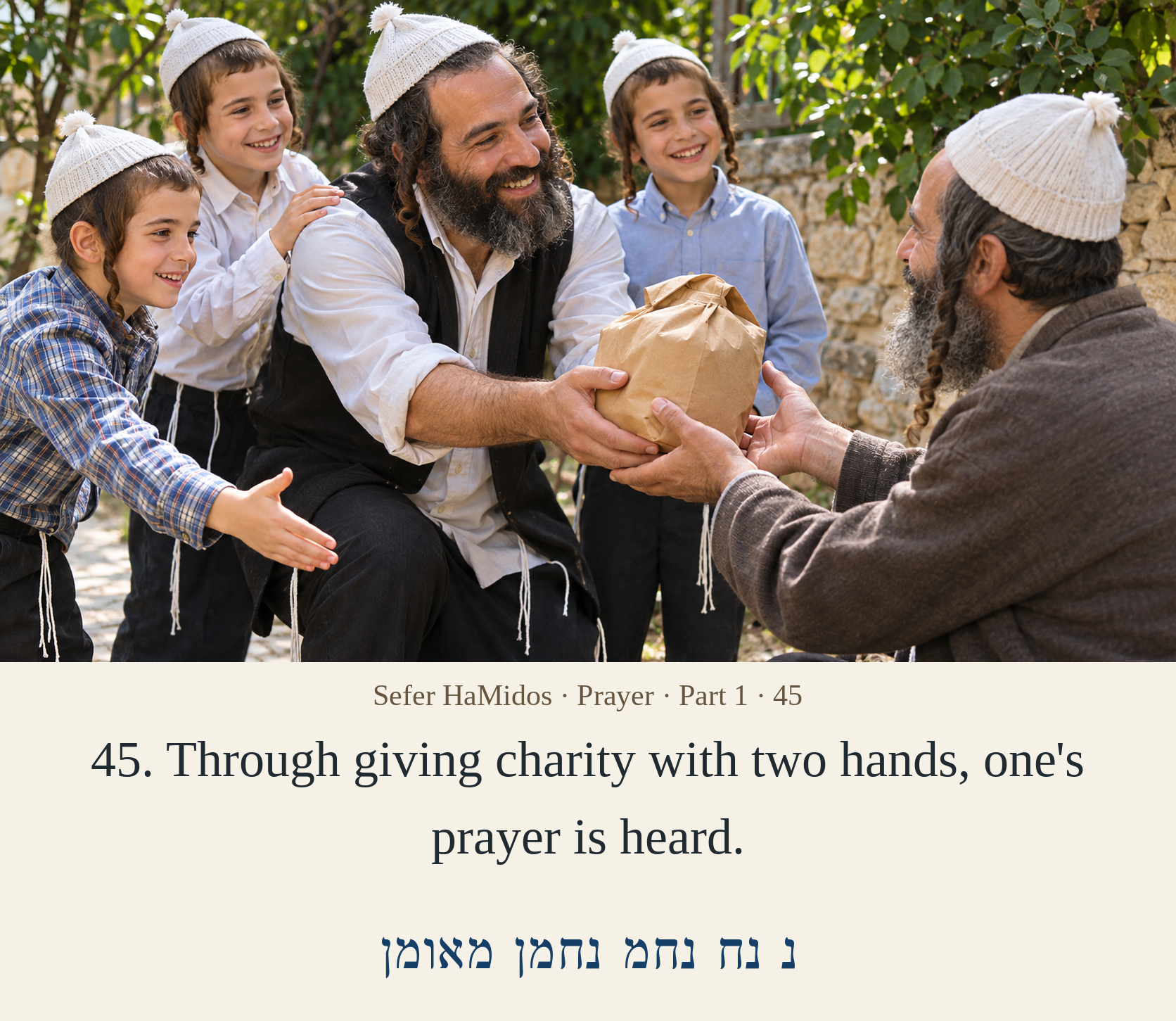
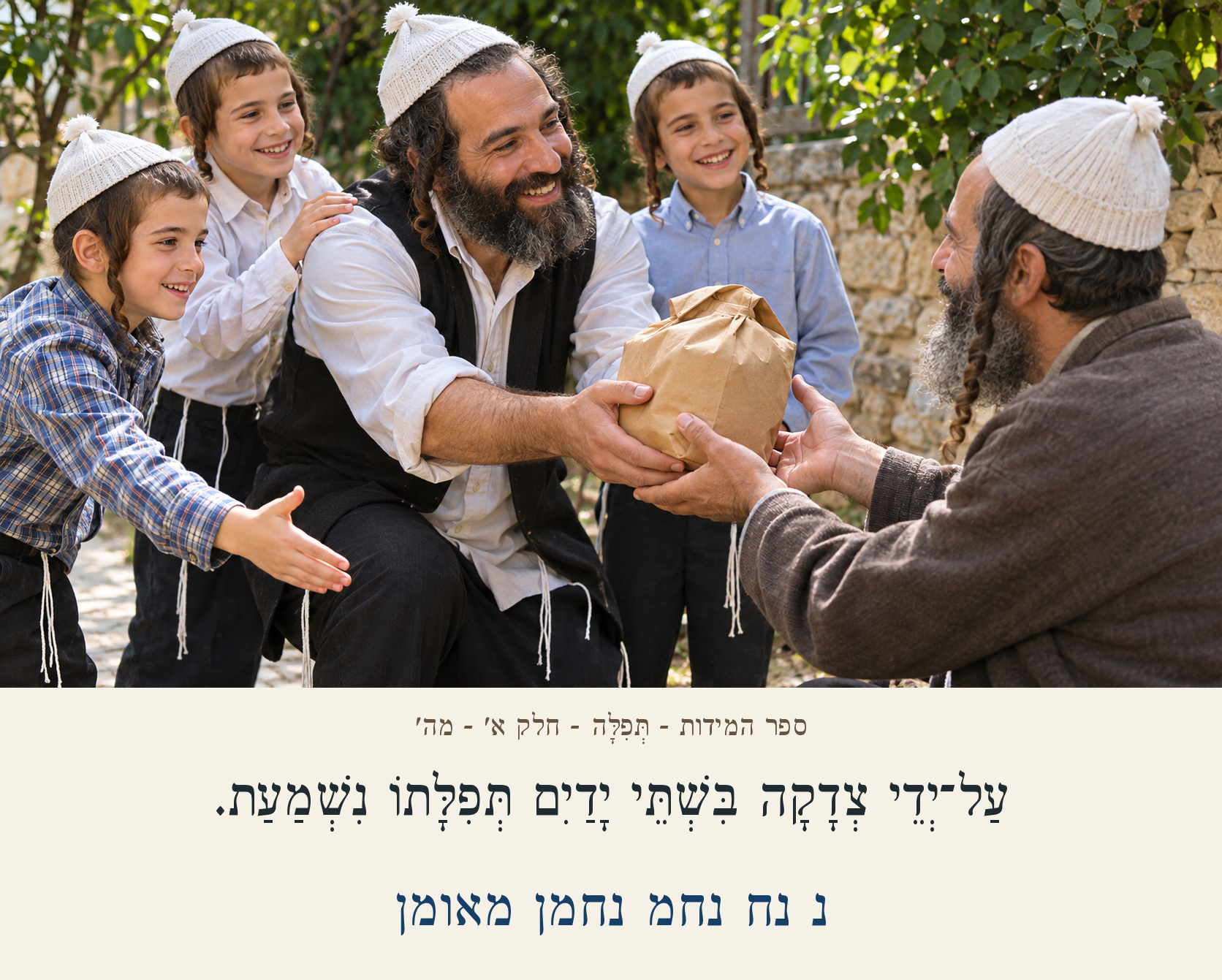
עַל־יְדֵי צְדָקָה בִּשְׁתֵּי יָדַיִם תְּפִלָּתוֹ נִשְׁמַעַת.
45
45. Through giving charity with two hands, one's prayer is heard.
📷 Pictures / videos for this teaching
The two-handed giving illustrates the teaching. Prayer being heard is the source’s statement, not a promise of a particular worldly outcome.
מ״ו
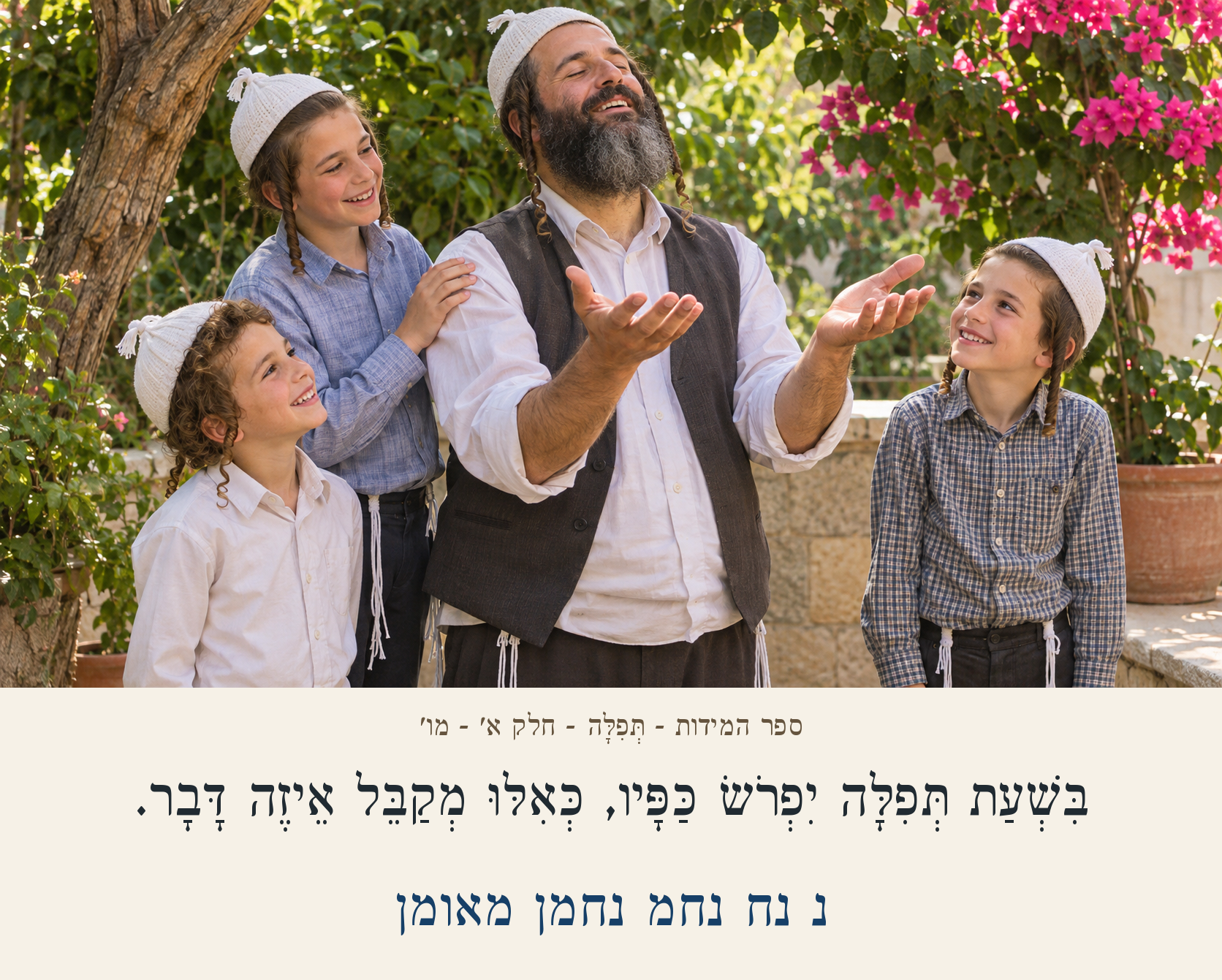
בִּשְׁעַת תְּפִלָּה יִפְרֹשׂ כַּפָּיו, כְּאִלּוּ מְקַבֵּל אֵיזֶה דָּבָר.
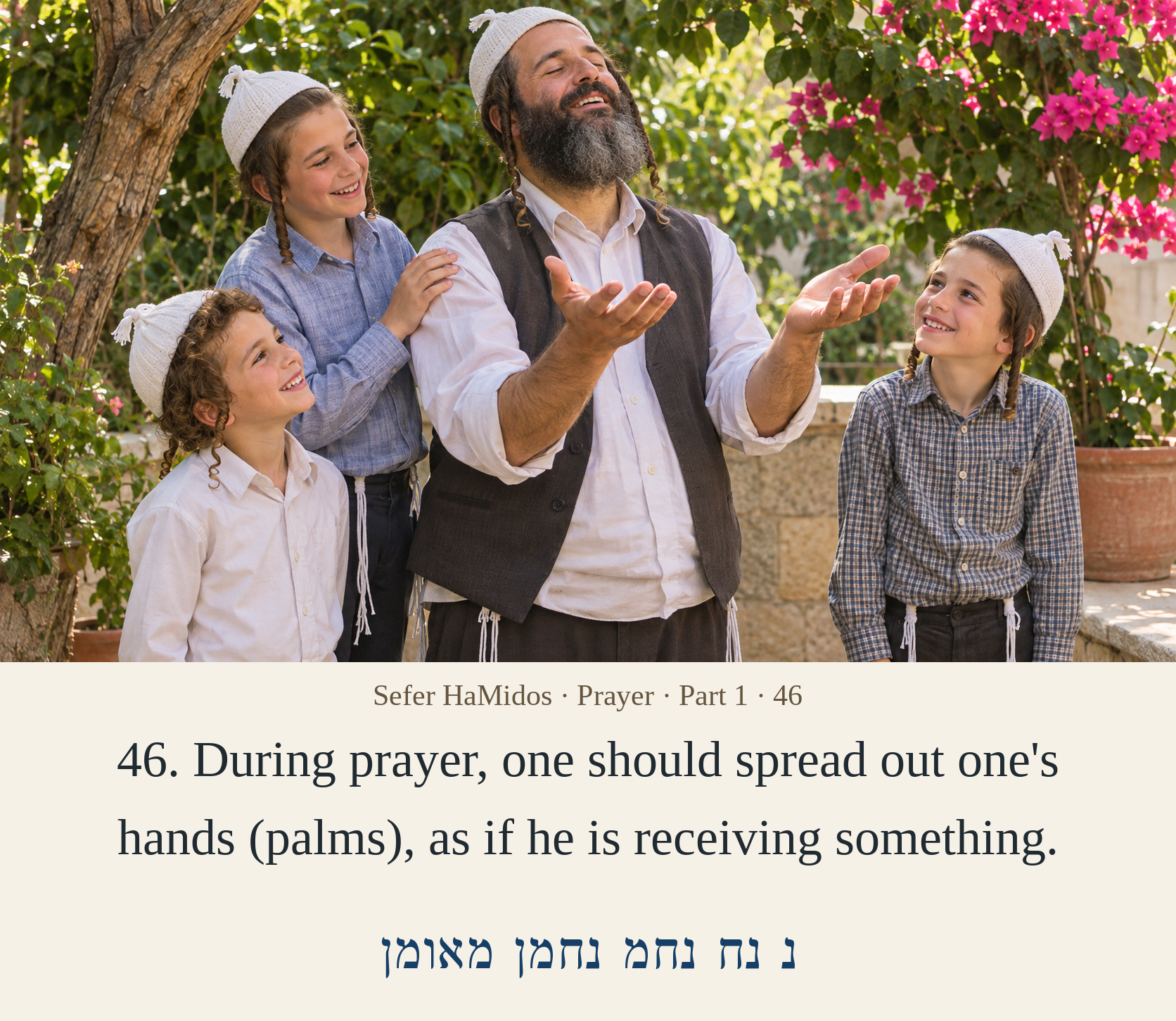
46
46. During prayer, one should spread out one's hands (palms), as if he is receiving something.
📷 Pictures / videos for this teaching
The open palms illustrate “as if receiving”; no actual or supernatural delivery is depicted.
מ״ז
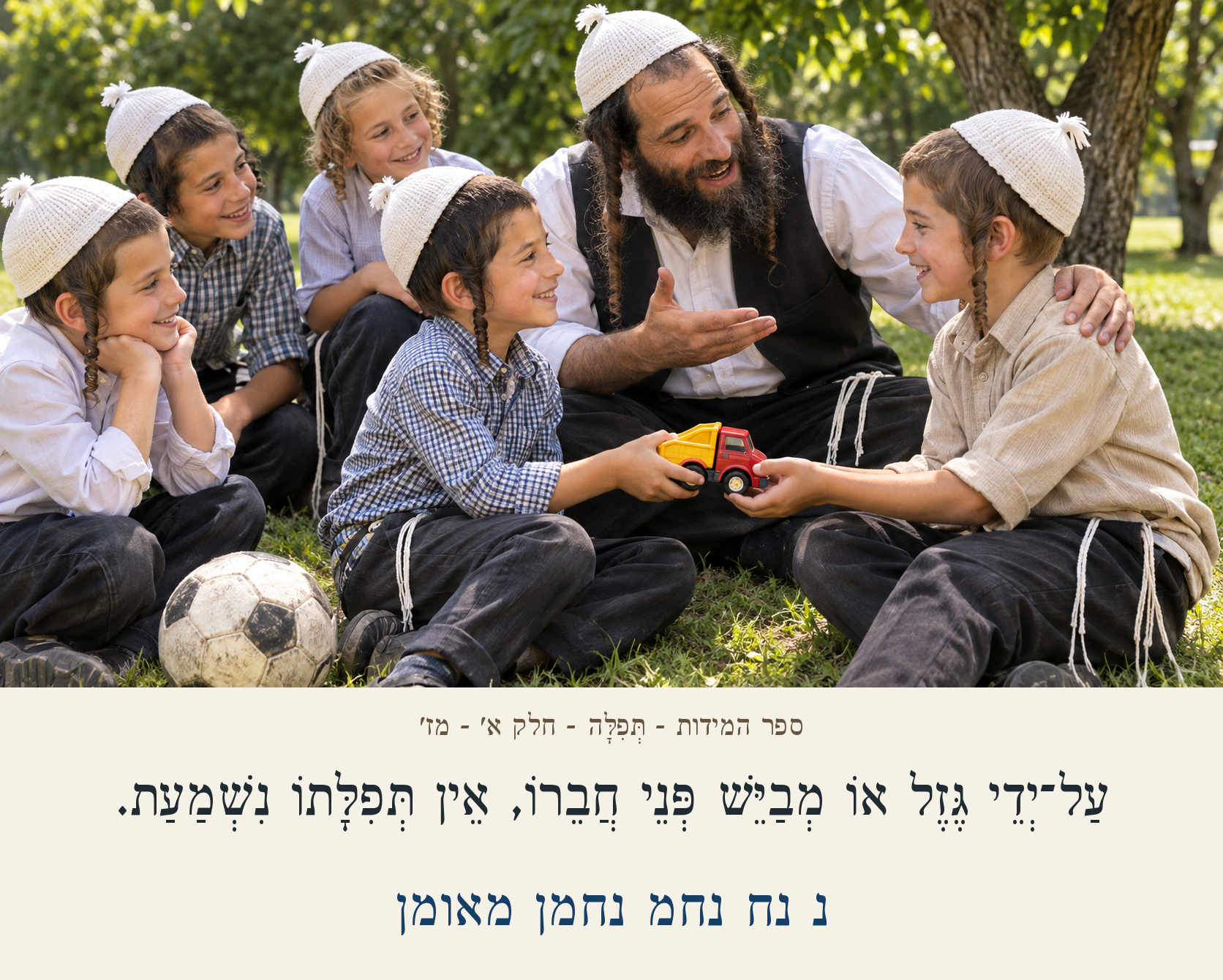
עַל־יְדֵי גֶּזֶל אוֹ מְבַיֵּשׁ פְּנֵי חֲבֵרוֹ, אֵין תְּפִלָּתוֹ נִשְׁמַעַת.
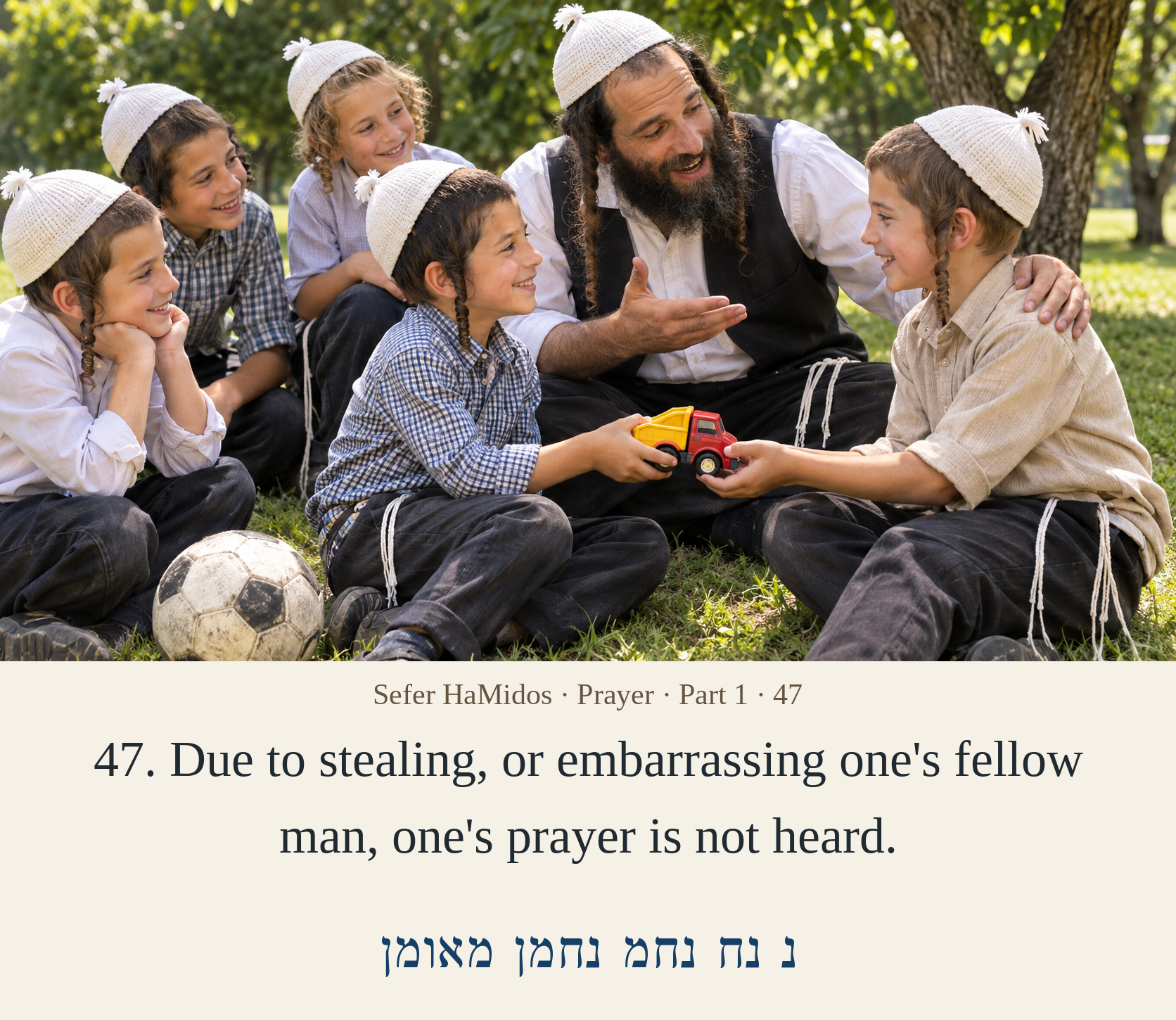
47
47. Due to stealing, or embarrassing one's fellow man, one's prayer is not heard.
📷 Pictures / videos for this teaching
The toy-sharing scene illustrates care for another’s property and dignity, not a pictured theft or humiliation. The complete warning retains both alternatives: stealing or embarrassing one’s fellow.
מ״ח
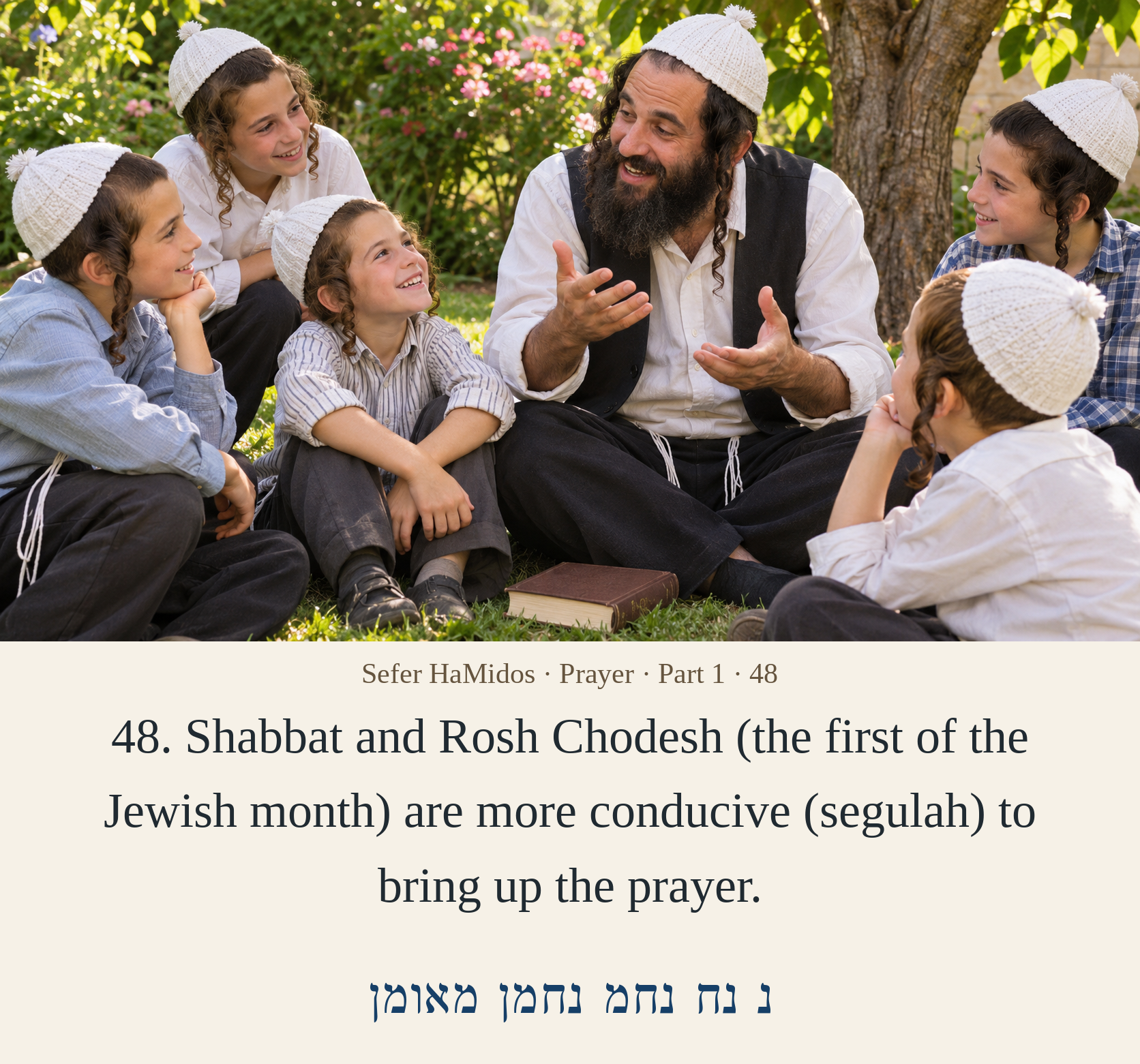
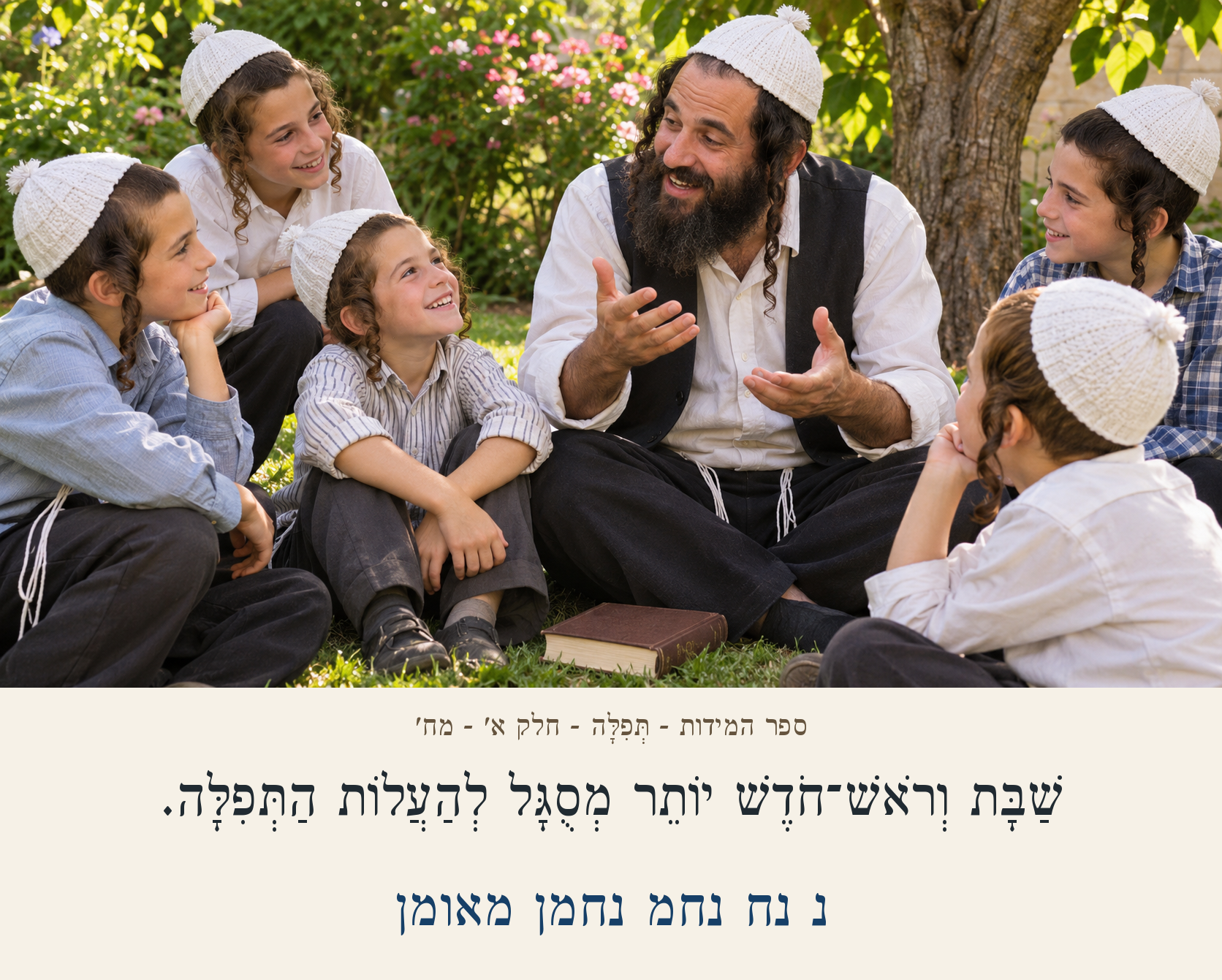
שַׁבָּת וְרֹאשׁ־חֹדֶשׁ יוֹתֵר מְסֻגָּל לְהַעֲלוֹת הַתְּפִלָּה.
48
48. Shabbat and Rosh Chodesh (the first of the Jewish month) are more conducive (segulah) to bring up the prayer.
📷 Pictures / videos for this teaching
The garden lesson does not establish a visible date. The complete teaching names both Shabbat and Rosh Chodesh; it does not say that prayer on other days fails.
מ״ט
כְּשֶׁאָדָם נֶעֱצָר, זֶה סִימָן שֶׁאֵין תְּפִלָּתוֹ נִתְקַבֶּלֶת.
49
49. When a person is constipated, this is a sign that his prayer is not accepted.
נ׳
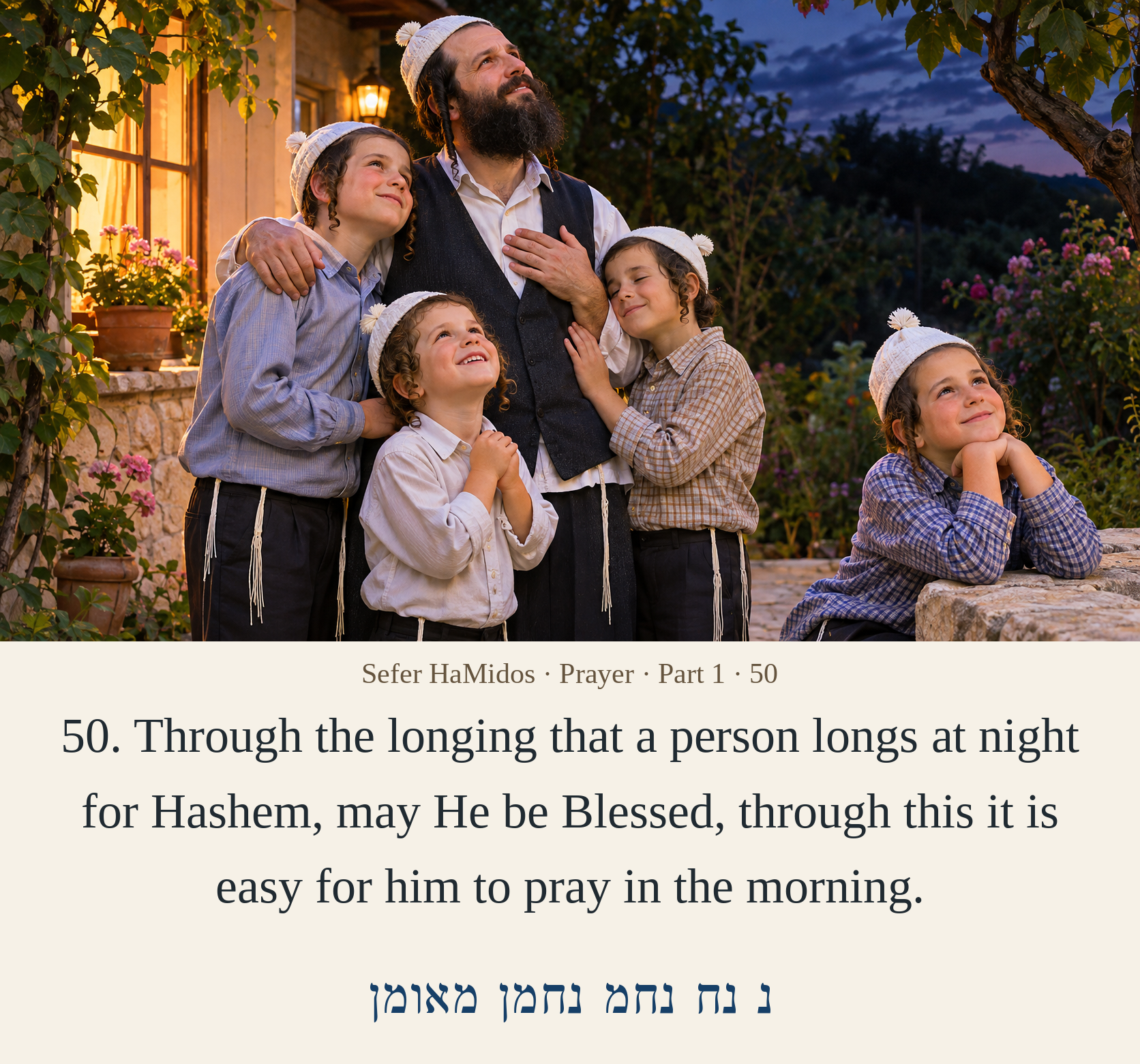
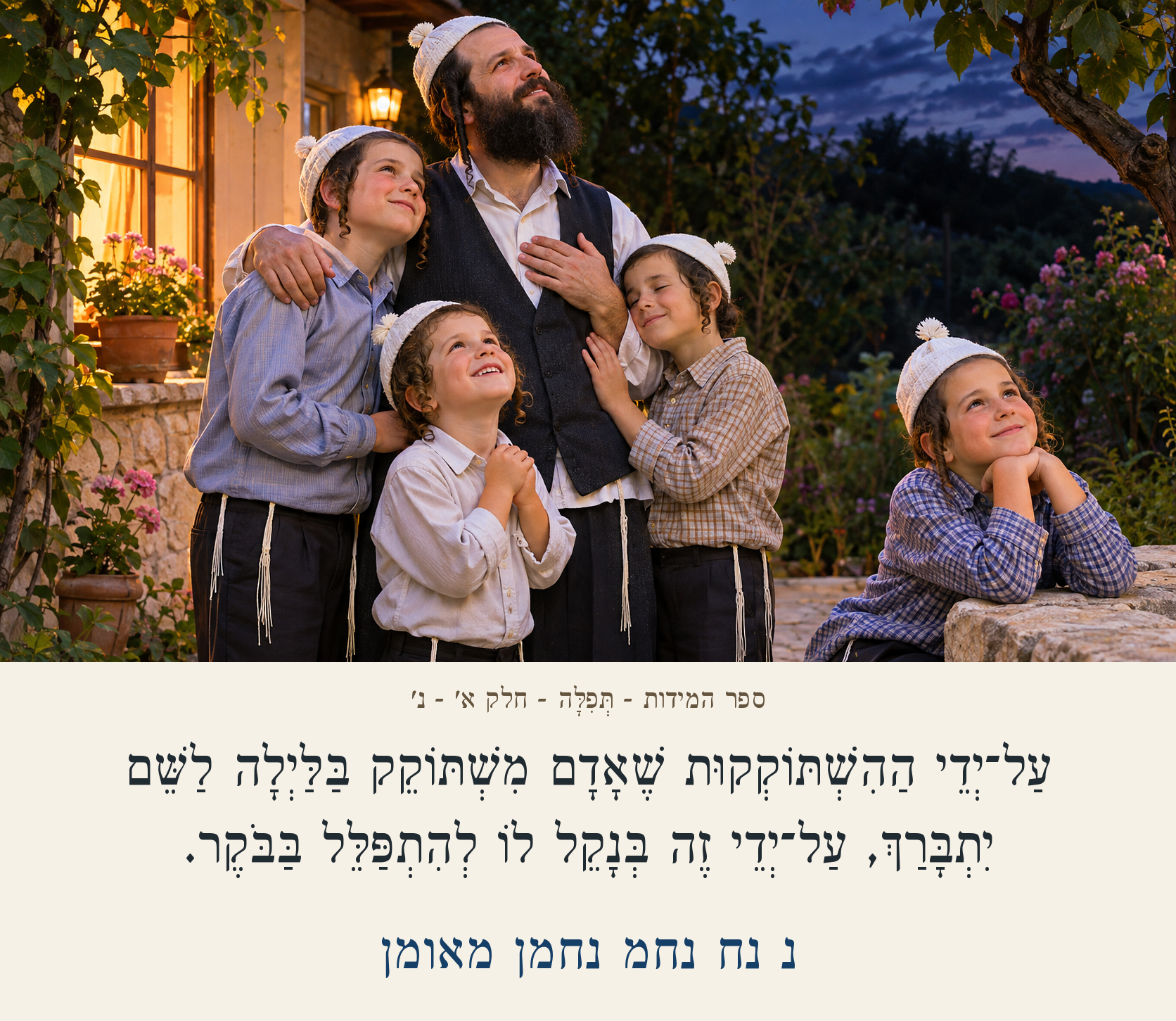
עַל־יְדֵי הַהִשְׁתּוֹקְקוּת שֶׁאָדָם מִשְׁתּוֹקֵק בַּלַּיְלָה לַשֵּׁם יִתְבָּרַךְ, עַל־יְדֵי זֶה בְּנָקֵל לוֹ לְהִתְפַּלֵּל בַּבֹּקֶר.
50
50. Through the longing that a person longs at night for Hashem, may He be Blessed, through this it is easy for him to pray in the morning.
📷 Pictures / videos for this teaching
The single nightfall scene illustrates longing for Hashem at night. Easier prayer in the morning remains the complete source’s stated consequence, not a second pictured time.
נ״א
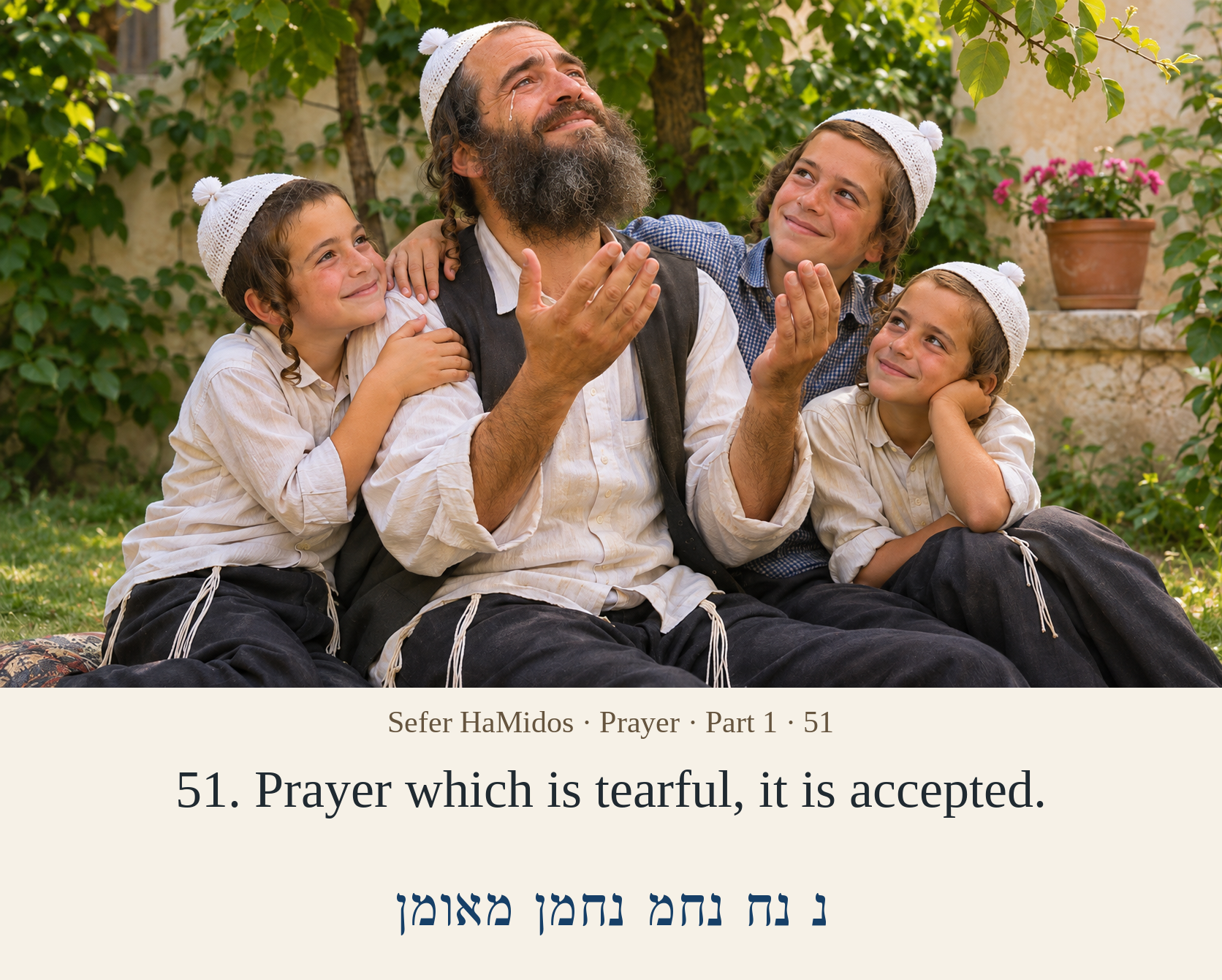
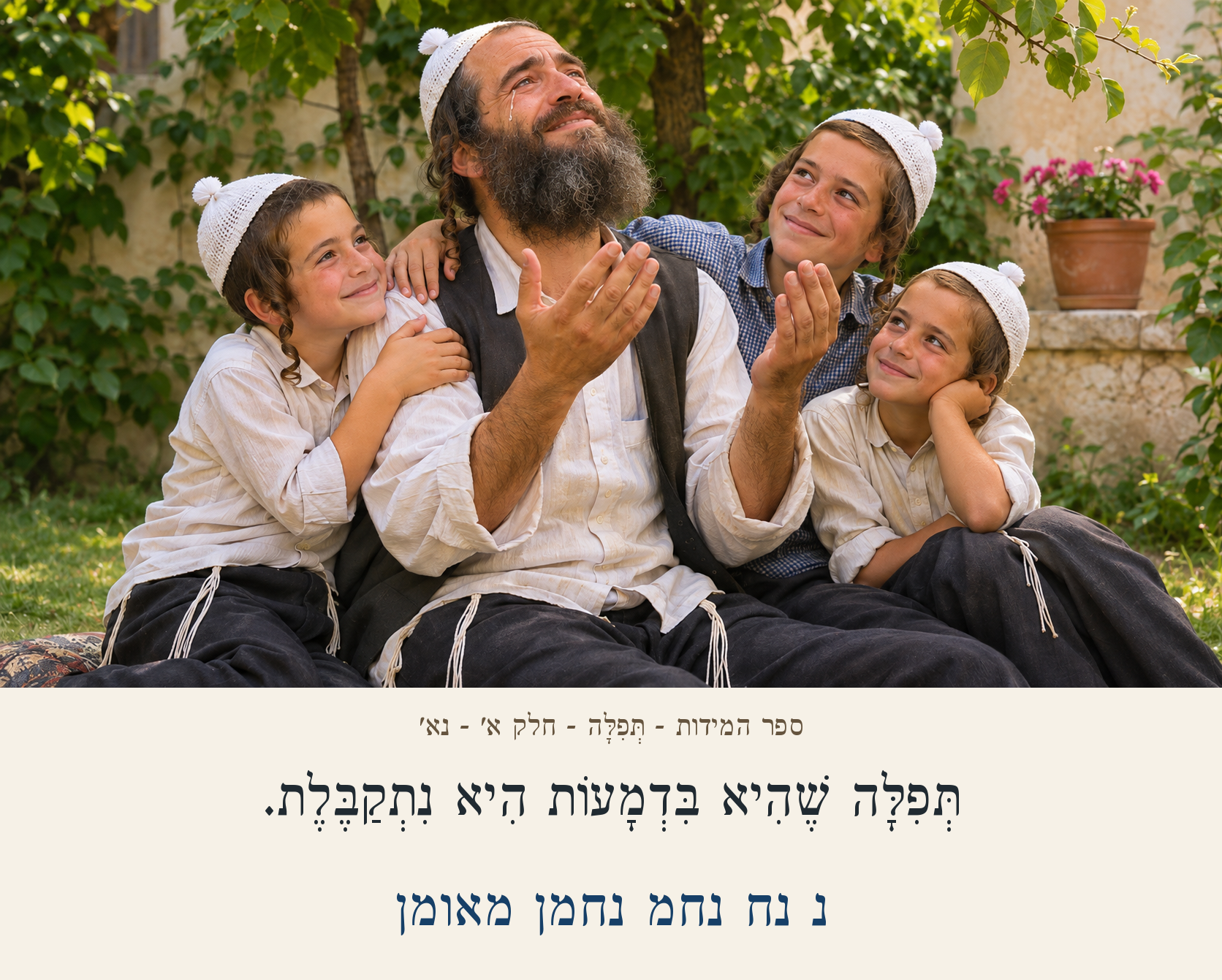
תְּפִלָּה שֶׁהִיא בִּדְמָעוֹת הִיא נִתְקַבֶּלֶת.
51
51. Prayer which is tearful, it is accepted.
📷 Pictures / videos for this teaching
The father’s tears illustrate tearful prayer. Acceptance is the teaching’s statement, not a guarantee of a specified worldly result or an instruction to force tears.
נ״ב
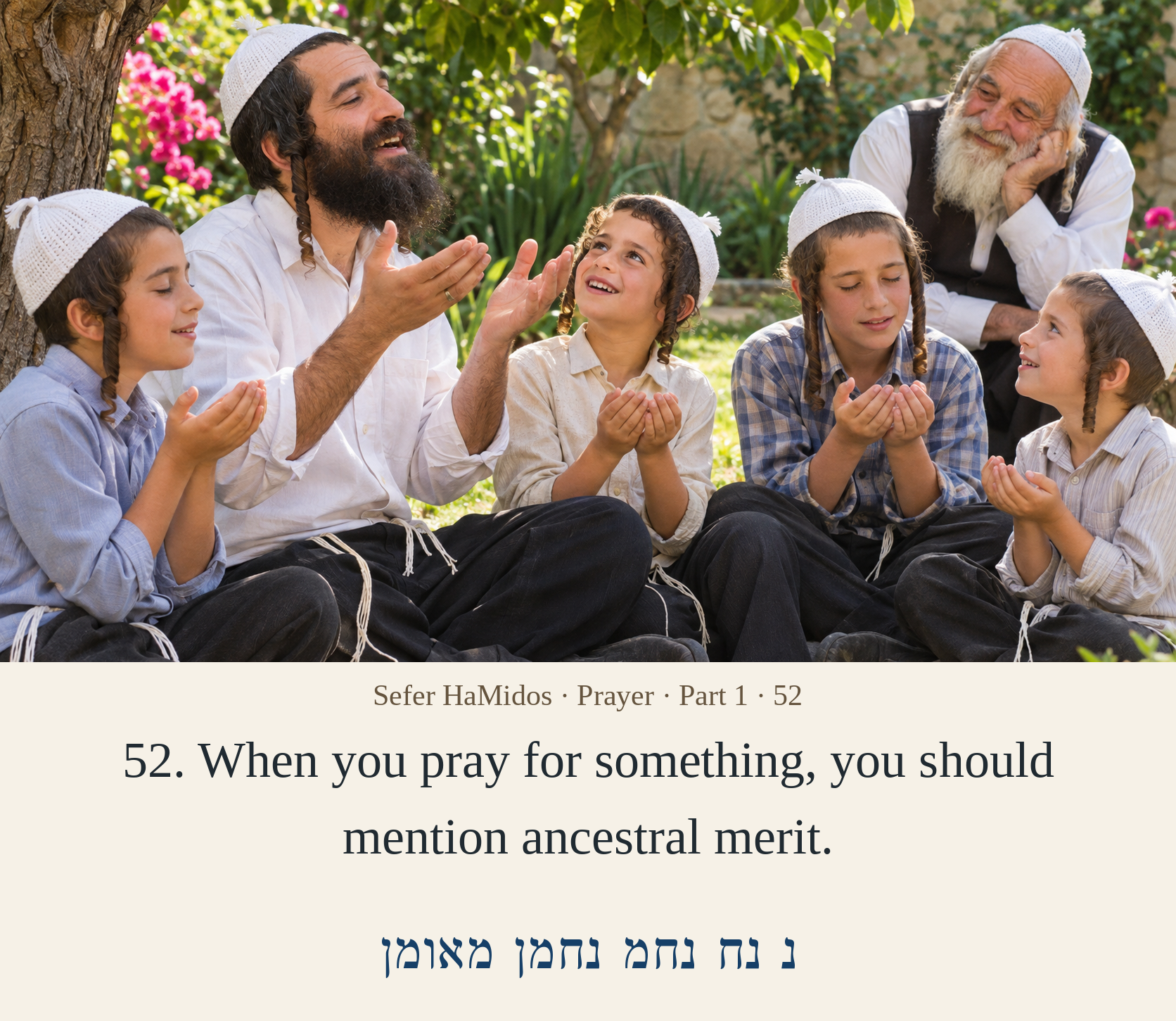
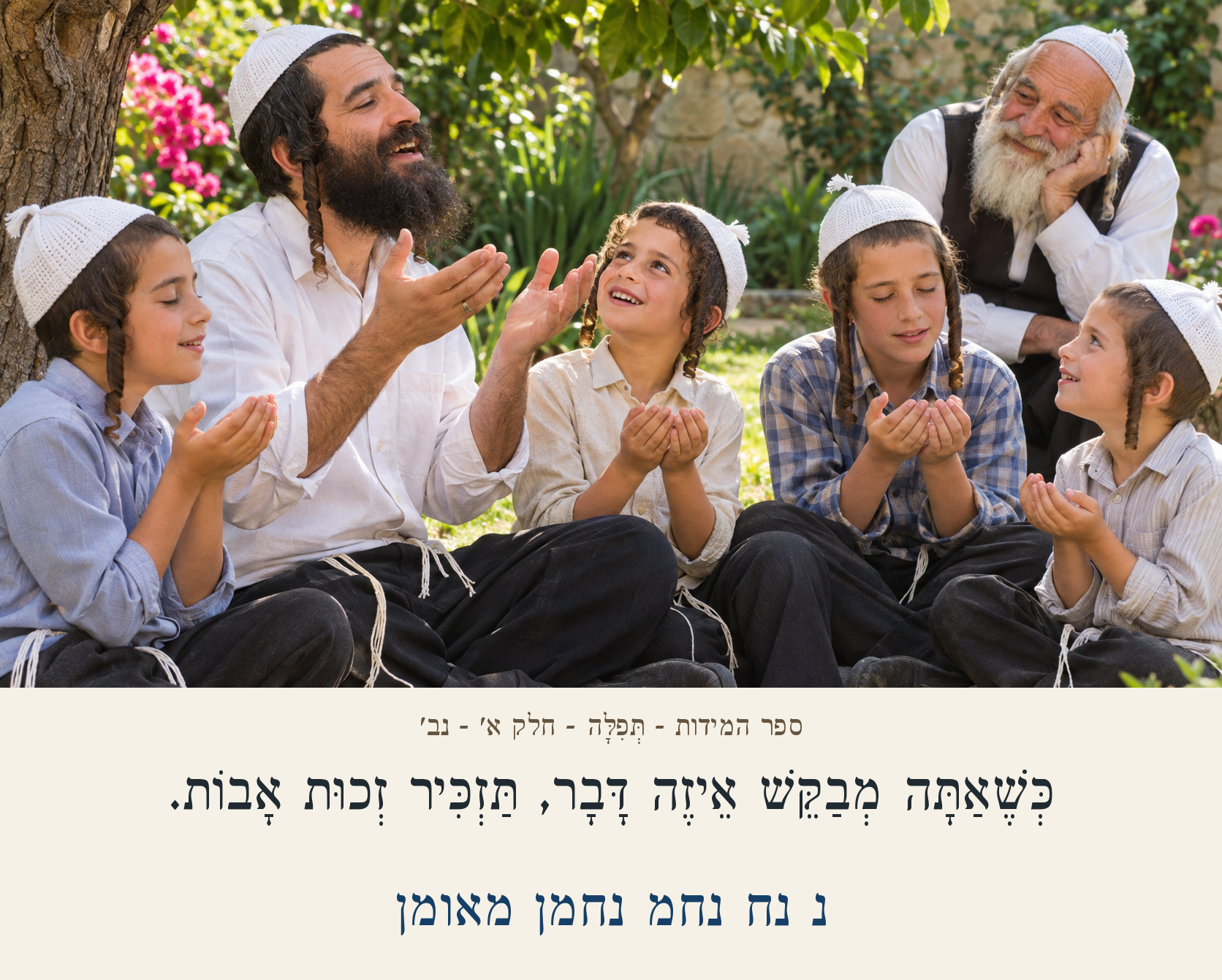
כְּשֶׁאַתָּה מְבַקֵּשׁ אֵיזֶה דָּבָר, תַּזְכִּיר זְכוּת אָבוֹת.
52
52. When you pray for something, you should mention ancestral merit.
📷 Pictures / videos for this teaching
The ordinary living grandfather provides family context only; he is not an identified patriarch or a physical embodiment of ancestral merit. The complete teaching says to mention ancestral merit when requesting something.
נ״ג
כְּשֶׁהַקָּדוֹשׁ־בָּרוּךְ־הוּא מַעֲנִישׁ אֵיזֶה רָשָׁע שֶׁיּוֹדֵעַ בּוֹ, שֶׁלֹּא יַעֲשֶׂה עוֹד תְּשׁוּבָה, וְהַצַּדִּיק מִתְפַּלֵּל עָלָיו יוֹתֵר מִדַּאי, עַל־יְדֵי זֶה נֶעֱנָשׁ הַצַּדִּיק.
53
53. When the Holy One, Blessed be He, punishes an evildoer that He knows will not ever repent, and the Tzaddik prays too much for him, through this the Tzaddik is punished.
נ״ד
כְּשֶׁהַמִּתְפַּלֵל נוֹפֵל לְקַטְנוּת, זֶה סִימָן שֶׁלֹּא יִתְבַּלְבֵּל [יִתְקַבֵּל] תְּפִלָּתוֹ.
54
54. When someone praying falls into small-mindedness, this is a sign that his prayer will not be accepted [the original text has a noted mistake: confused].
נ״ה
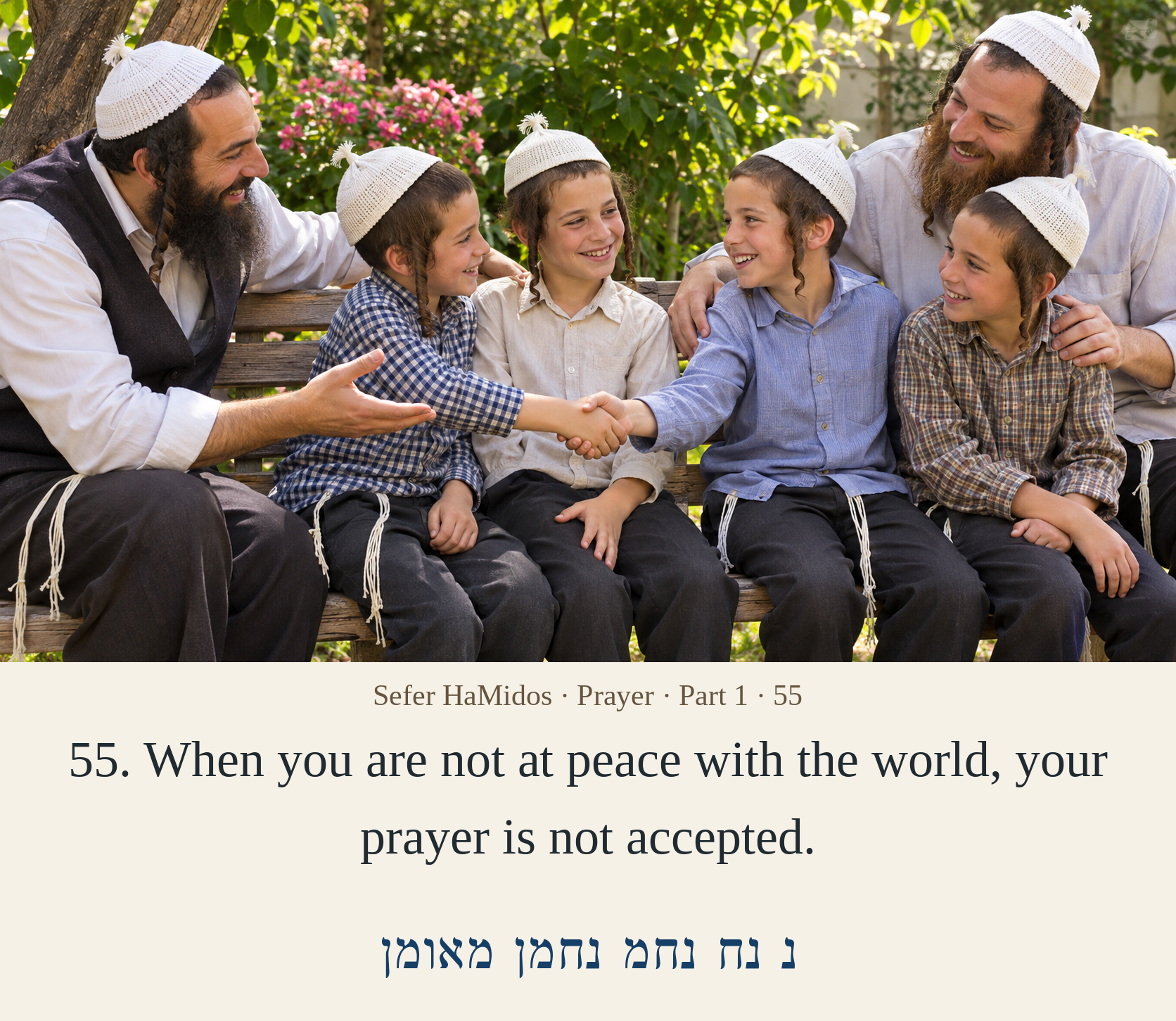
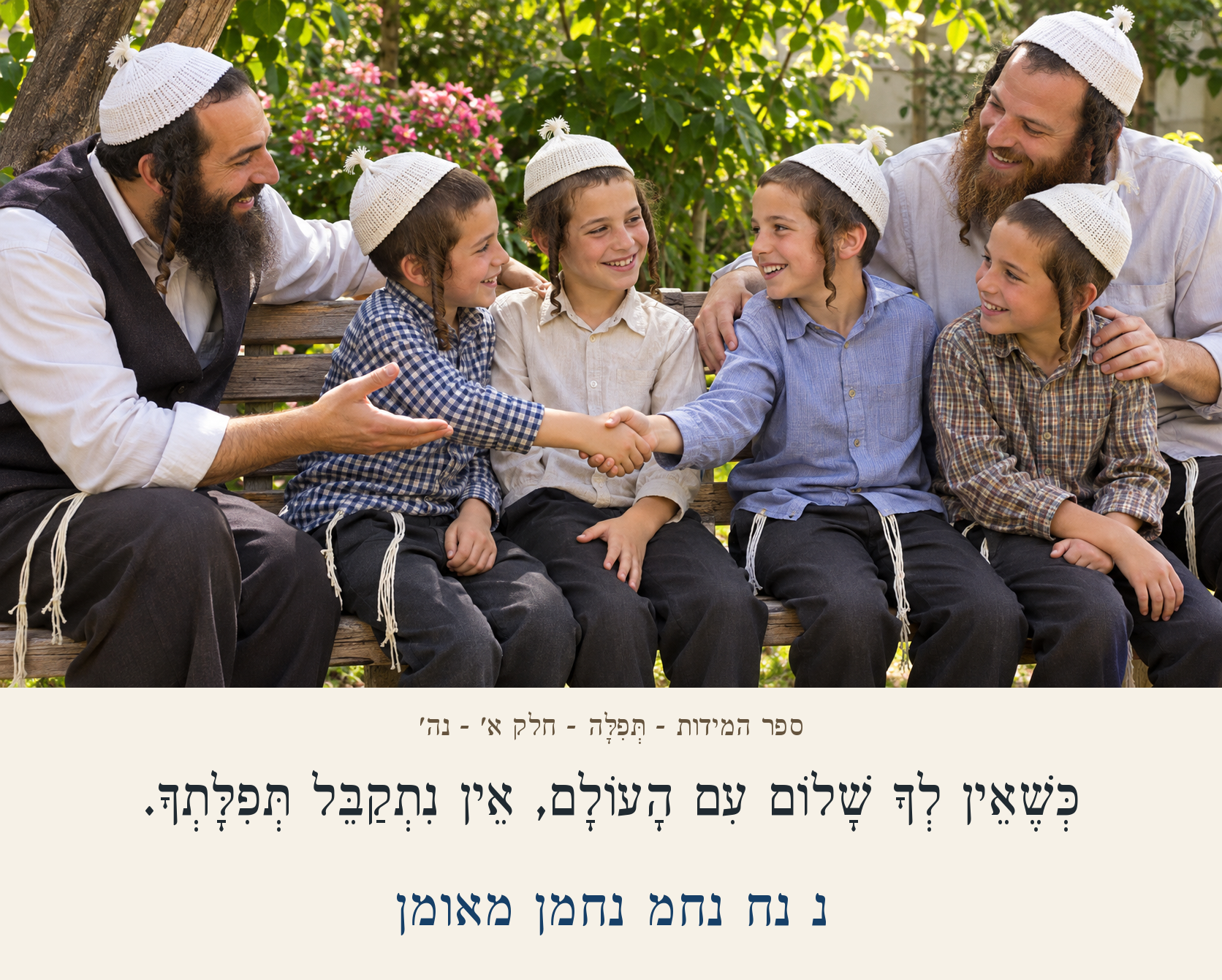
כְּשֶׁאֵין לְךָ שָׁלוֹם עִם הָעוֹלָם, אֵין נִתְקַבֵּל תְּפִלָּתְךָ.
55
55. When you are not at peace with the world, your prayer is not accepted.
📷 Pictures / videos for this teaching
The handshake illustrates working toward peace. The complete negative condition and consequence remain: when not at peace with the world, prayer is not accepted. No person is shown condemned.
נ״ו
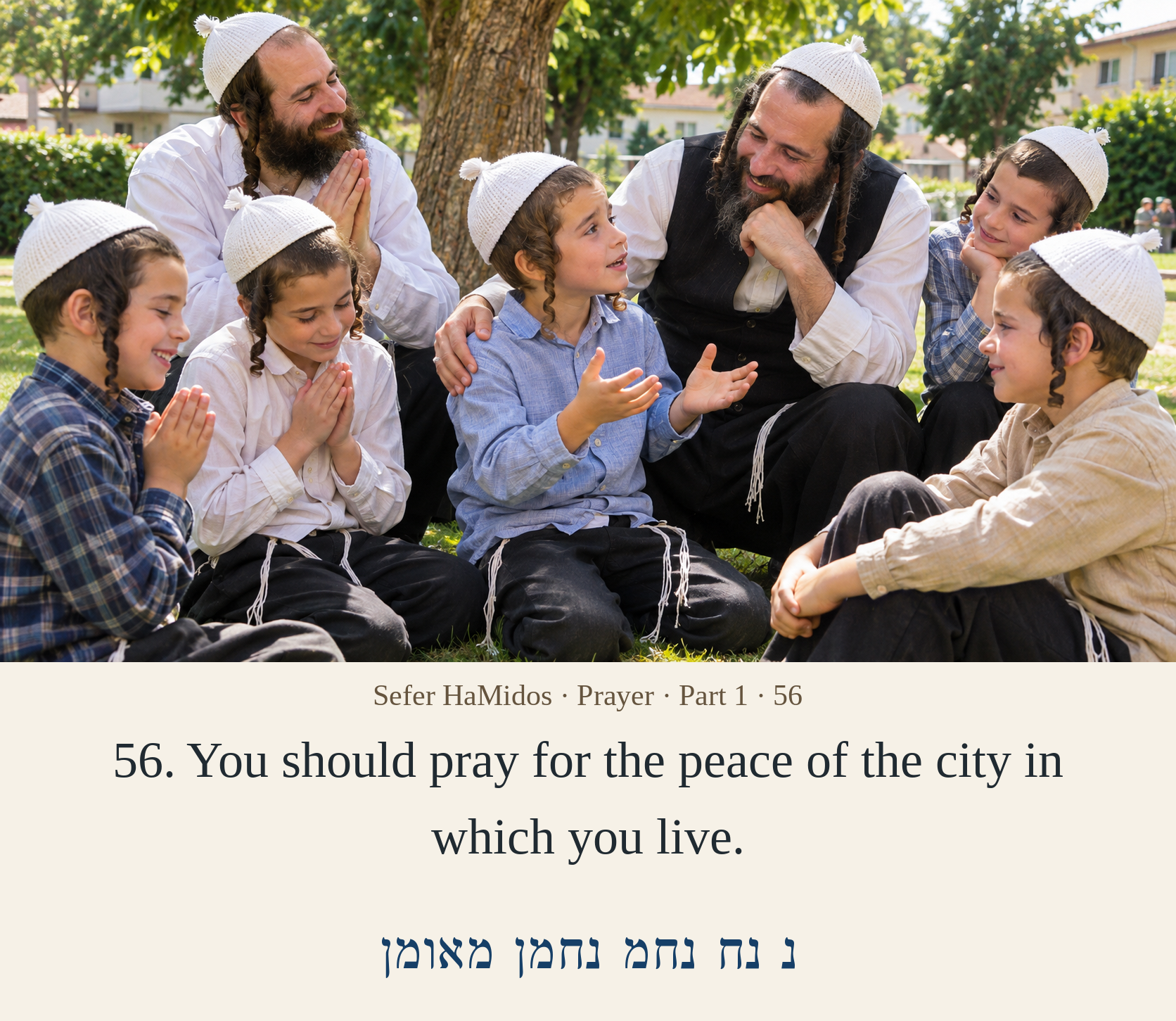
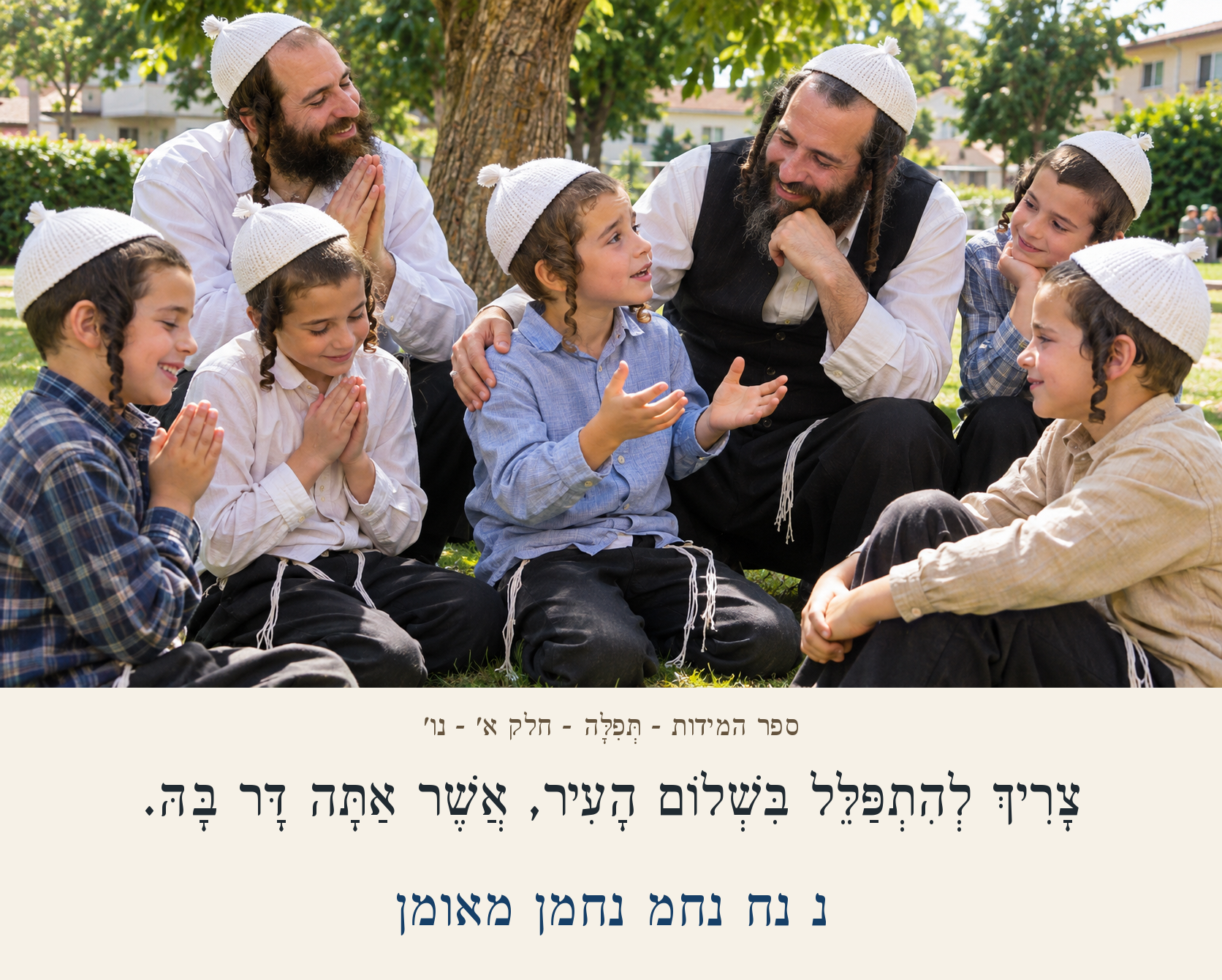
צָרִיךְ לְהִתְפַּלֵּל בִּשְׁלוֹם הָעִיר, אֲשֶׁר אַתָּה דָּר בָּהּ.
56
56. You should pray for the peace of the city in which you live.
📷 Pictures / videos for this teaching
The residential park gathering is an editorial setting for prayer for one’s own city’s peace. No named city, political position or visible supernatural result is asserted.
נ״ז
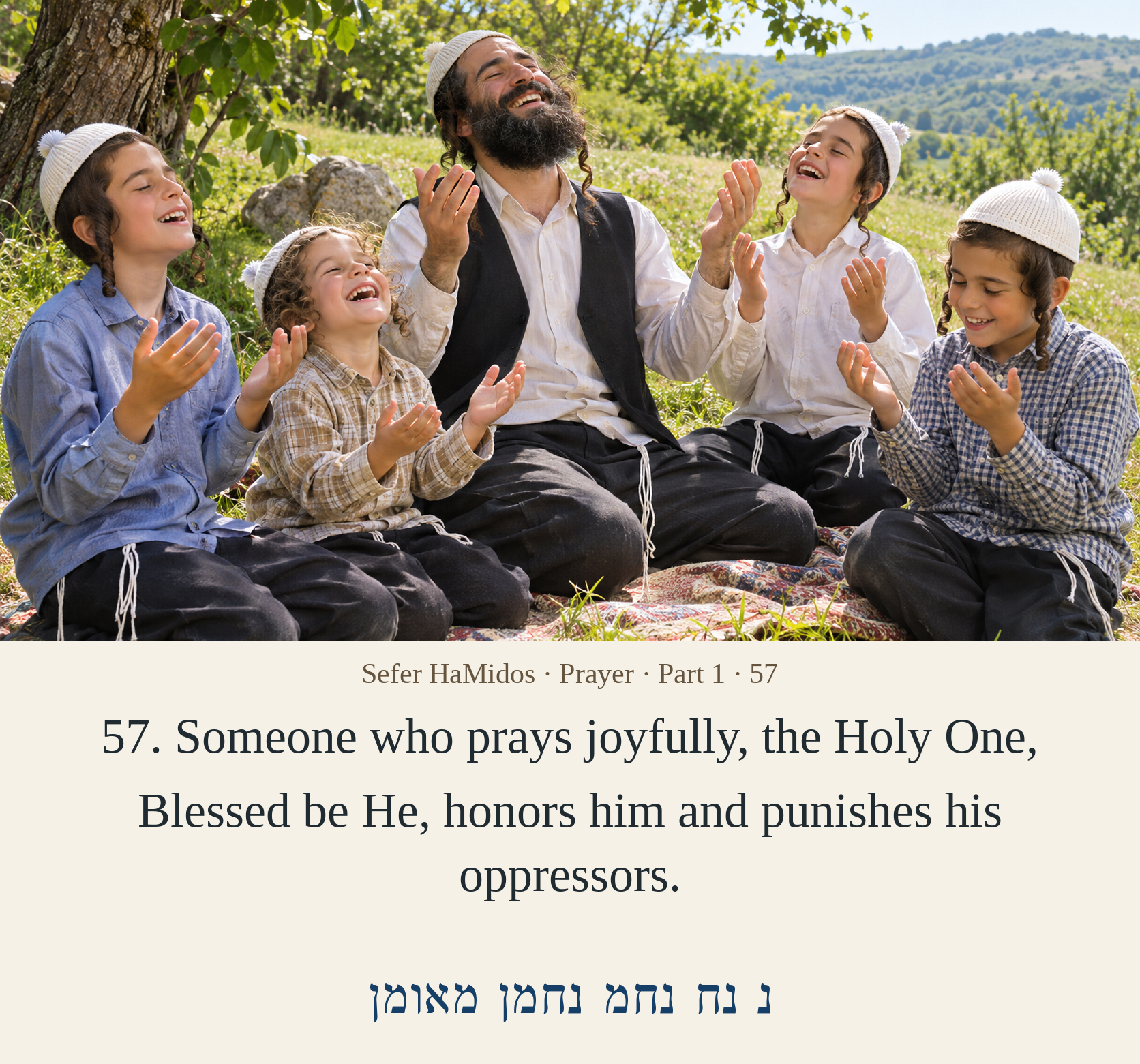
מִי שֶׁמִּתְפַּלֵּל בְּשִׂמְחָה, הַקָּדוֹשׁ־בָּרוּךְ־הוּא מְכַבֵּד אוֹתוֹ וּפוֹקֵד אֶת לוֹחֲצָיו.
57
57. Someone who prays joyfully, the Holy One, Blessed be He, honors him and punishes his oppressors.
📷 Pictures / videos for this teaching
Joy belongs to the prayer, never to anyone’s harm. The complete caption retains both divine honoring of the person and punishment of his oppressors; neither consequence is enacted in the art.
נ״ח
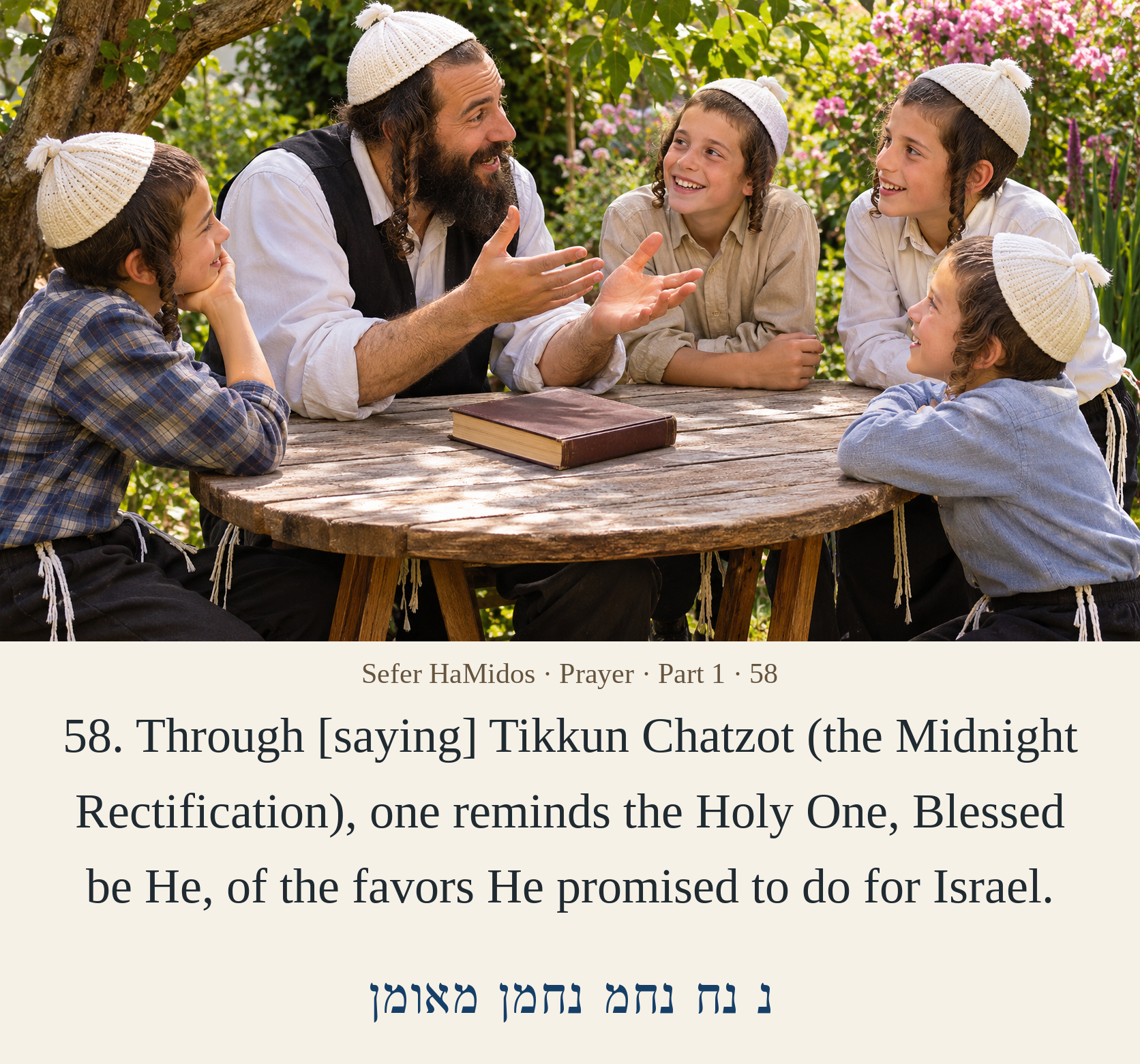
עַל־יְדֵי תִּקּוּן־חֲצוֹת מַזְכִּירִין אֶת [לִפְנֵי] הַקָּדוֹשׁ־ בָּרוּךְ־הוּא אֶת הַטּוֹבוֹת, שֶׁהִבְטִיחַ לְיִשְׂרָאֵל.
58
58. Through [saying] Tikkun Chatzot (the Midnight Rectification), one reminds the Holy One, Blessed be He, of the favors He promised to do for Israel.
📷 Pictures / videos for this teaching
This daylight family lesson is about Tikkun Chatzot, not performance of the midnight practice or a substitute for it. The full midnight-practice condition, favors promised Israel, and literal Hebrew variant את [לפני] are preserved.
נ״ט
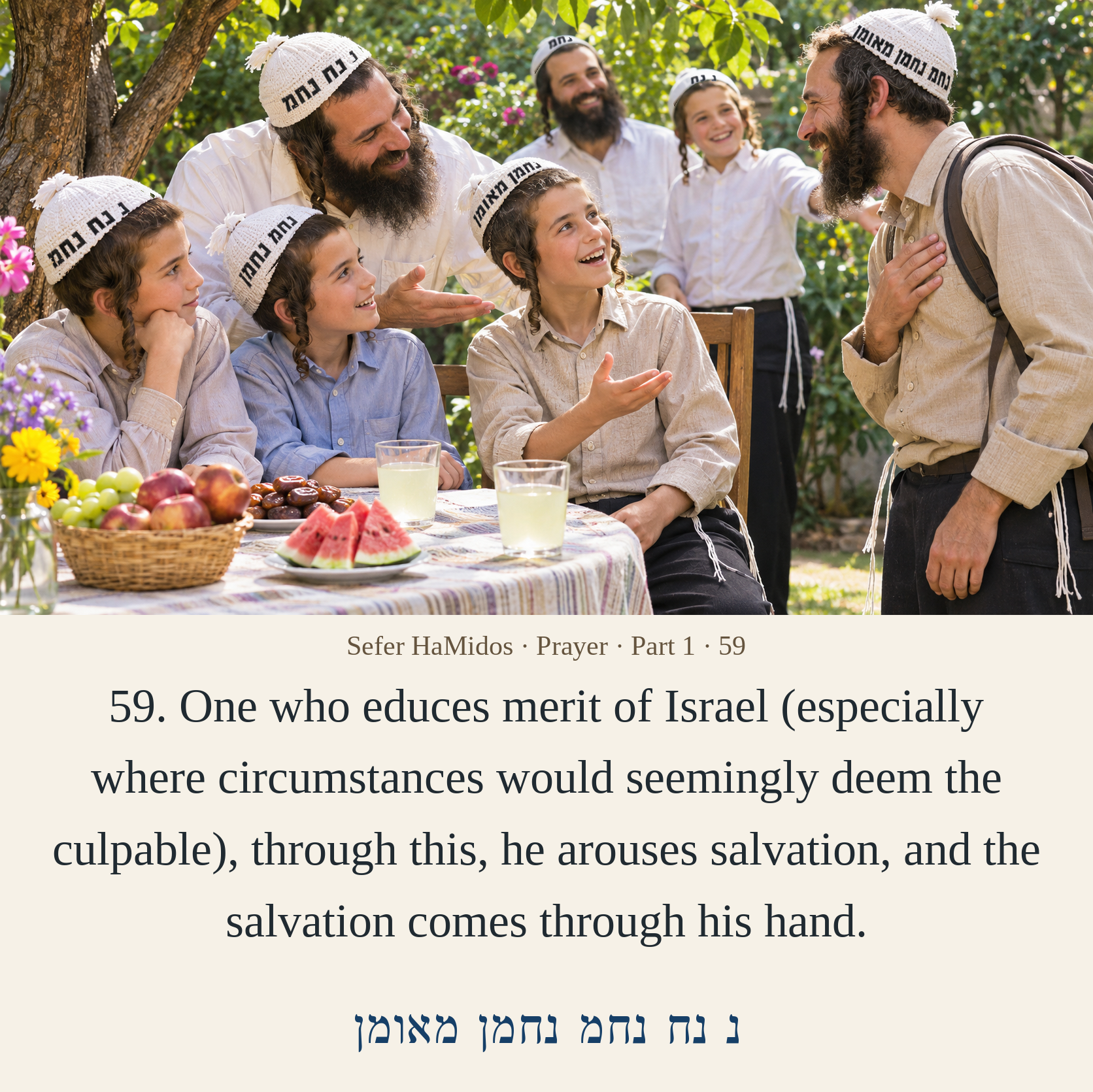
מִי שֶׁמְּלַמֵּד זְכוּת עַל יִשְׂרָאֵל, עַל־יְדֵי זֶה מְעוֹרֵר תְּשׁוּעָה, וְהַתְּשׁוּעָה בָּאָה עַל יָדוֹ.
59
59. One who educes merit of Israel (especially where circumstances would seemingly deem the culpable), through this, he arouses salvation, and the salvation comes through his hand.
📷 Pictures / videos for this teaching
The garden welcome is an editorial metaphor for favorable judgment, not evidence of anyone’s guilt, motive or timing, and does not depict divine salvation. The complete source teaching is quoted in both languages.
ס׳
מִי שֶׁאֵין מִתְפַּלֵּל עַל צָרַת יִשְׂרָאֵל, נִקְרָא חוֹטֵא.
60
60. One who does not pray concerning the suffering of Israel is called a (inadvertent) sinner.
ס״א
צָרִיךְ אָדָם לְהִתְפַּלֵּל עַל זַרְעוֹ וְעַל כָּל הַבָּאִים אַחֲרָיו.
61
61. A person needs to pray for his offspring, and for all those who will come after him.
ס״ב
אָסוּר לָאָדָם שֶׁיִּהְיֶה כְּפוּי טוֹבָה בֵּין לְיִשְׂרָאֵל בֵּין לְגוֹי.
62
62. It is forbidden for a person to be ungrateful, neither to a Jew nor to a Gentile.
📷 Pictures / videos for this teaching
An editorial family teaching scene, not a depicted act of thanks or an identification of a helper. The complete source teaching prohibits ingratitude toward both a Jew and a Gentile.


ס״ג
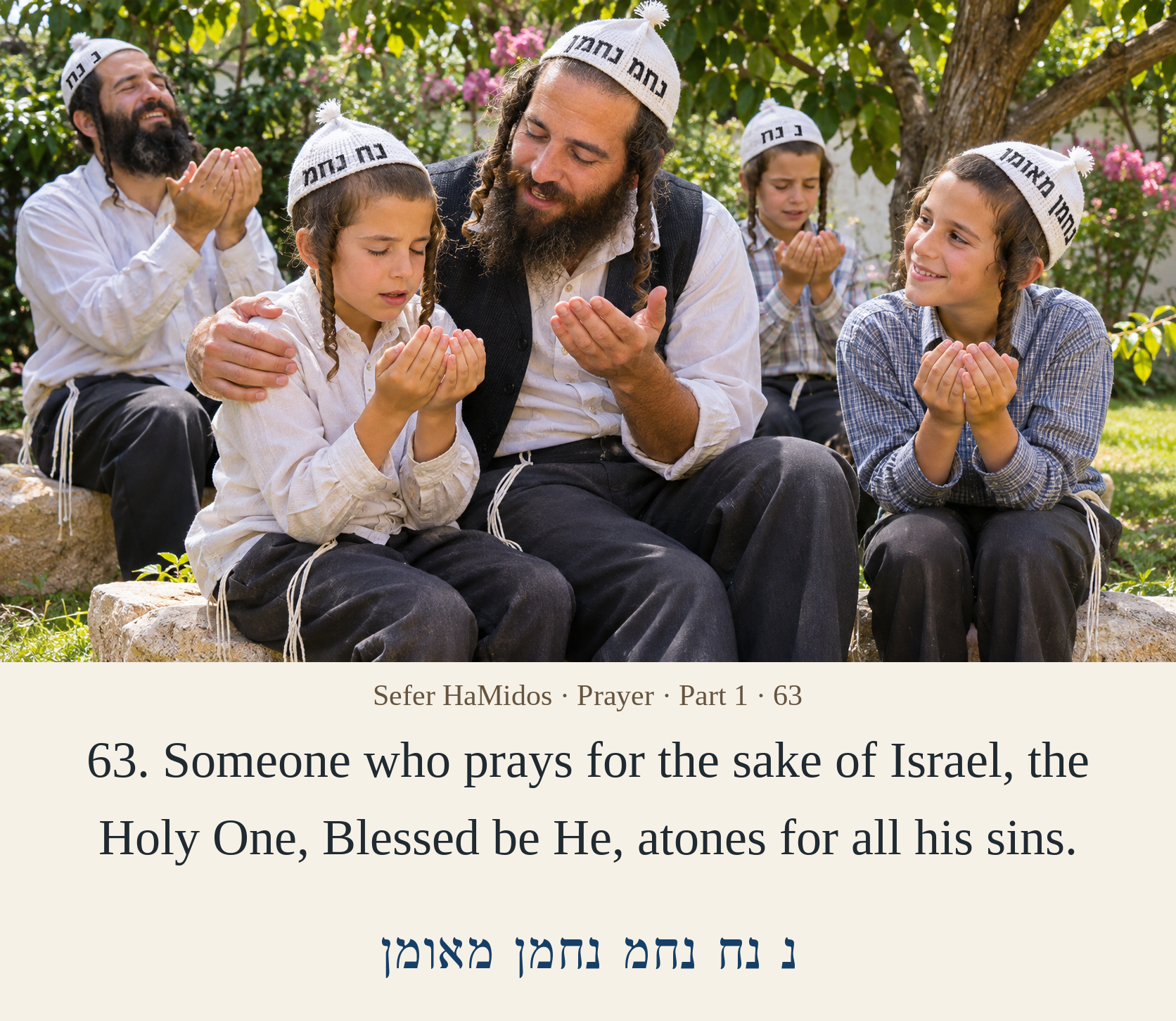
מִי שֶׁמִּתְפַּלֵּל עַל יִשְׂרָאֵל, הַקָּדוֹשׁ־בָּרוּךְ־הוּא מְכַפֵּר לוֹ עַל כָּל עֲווֹנוֹתָיו.
63
63. Someone who prays for the sake of Israel, the Holy One, Blessed be He, atones for all his sins.
📷 Pictures / videos for this teaching
An editorial community prayer scene, not a depiction of atonement or an identification of anyone’s prayer subject, sins, or family relationships. The complete teaching states that the Holy One, Blessed be He, atones for all the sins of someone who prays for the sake of Israel.
ס״ד
הַחוֹלֶה שֶׁמִּתְפַּלֵּל עַל עַצְמוֹ בִּדְמָעוֹת, בְּוַדַּאי הַקָּדוֹשׁ־בָּרוּךְ־הוּא יְרַפֵּא אוֹתוֹ וִיקַבֵּל תְּפִלָּתוֹ.
64
64. A sick person who prays for himself with tears, the Holy One, Blessed be He, will certainly heal him and accept his prayers.
ס״ה
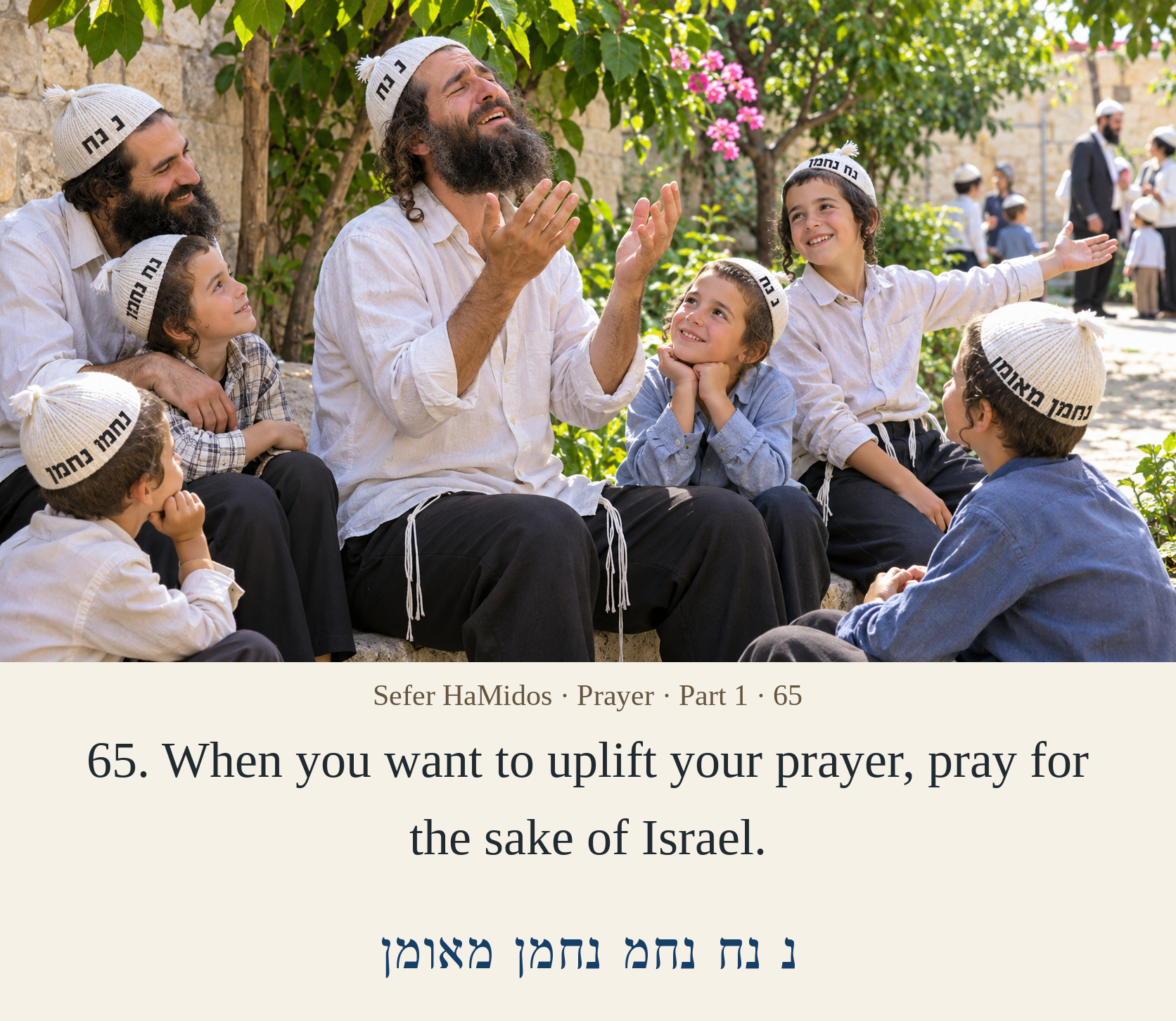
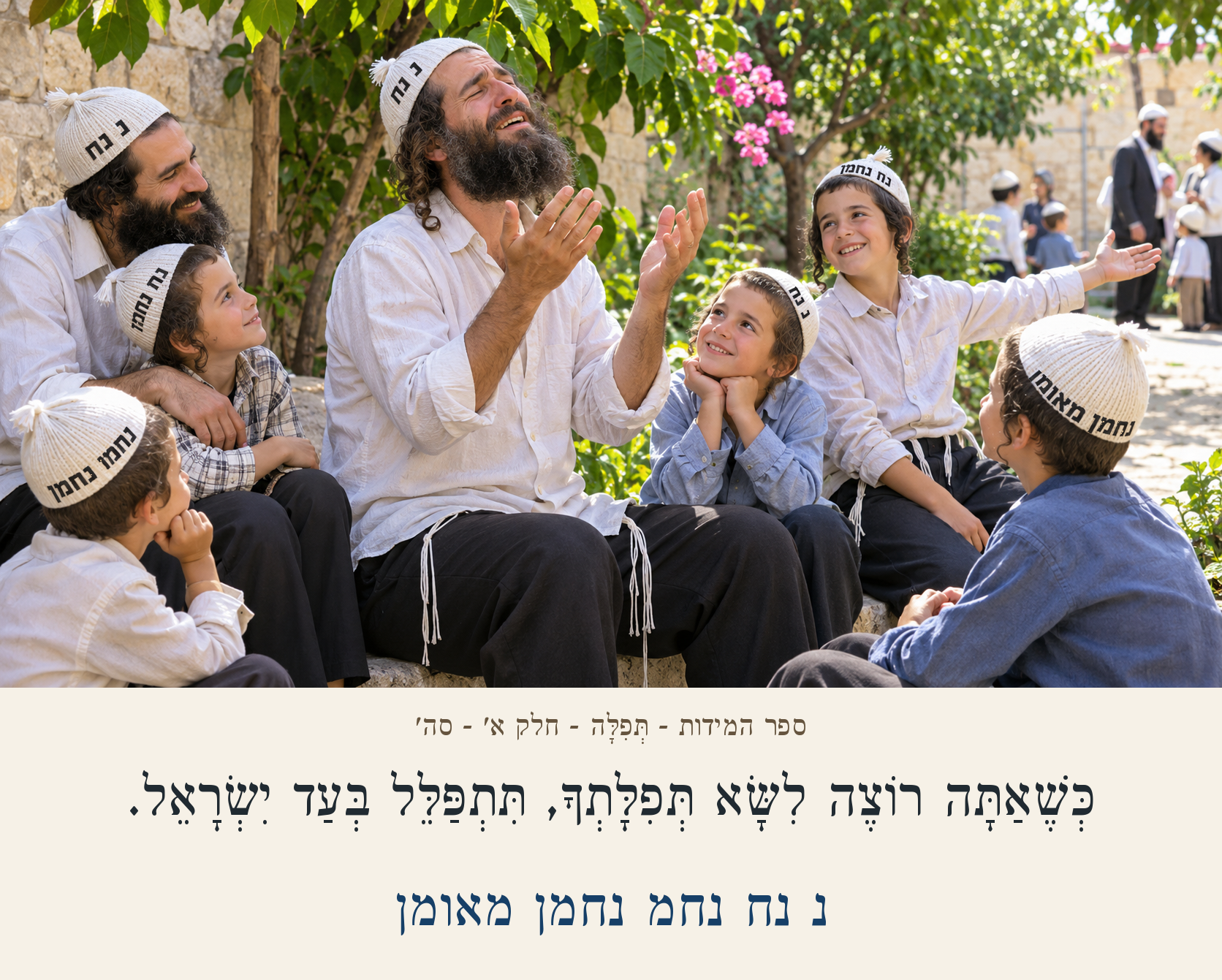
כְּשֶׁאַתָּה רוֹצֶה לִשָּׂא תְּפִלָּתְךָ, תִּתְפַּלֵּל בְּעַד יִשְׂרָאֵל.
65
65. When you want to uplift your prayer, pray for the sake of Israel.
📷 Pictures / videos for this teaching
Editorial community prayer context only. The complete teaching says: When you want to uplift your prayer, pray for the sake of Israel. The scene does not establish the subject or beneficiary of any individual’s prayer, achieved uplift, family relationships.
ס״ו
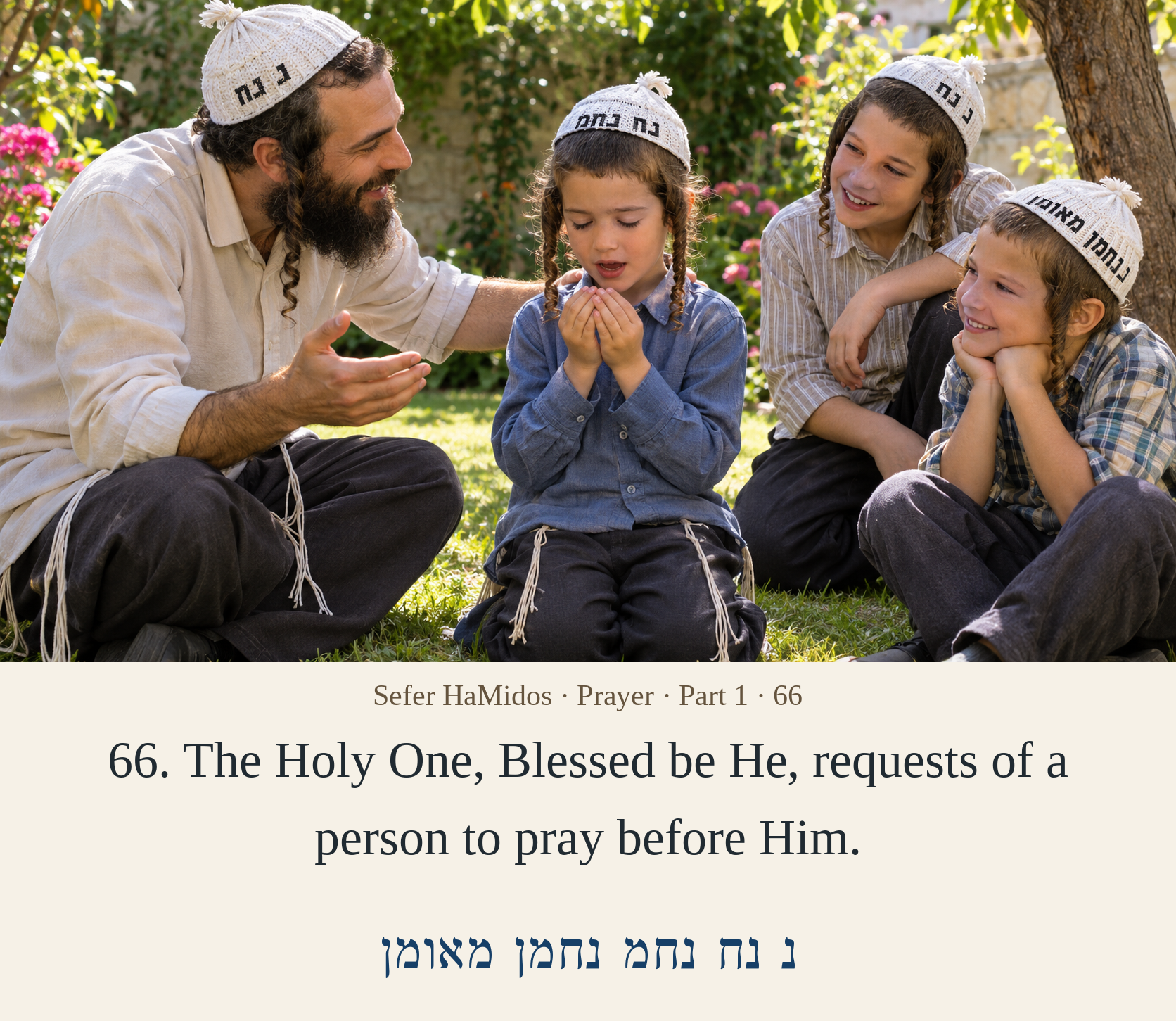
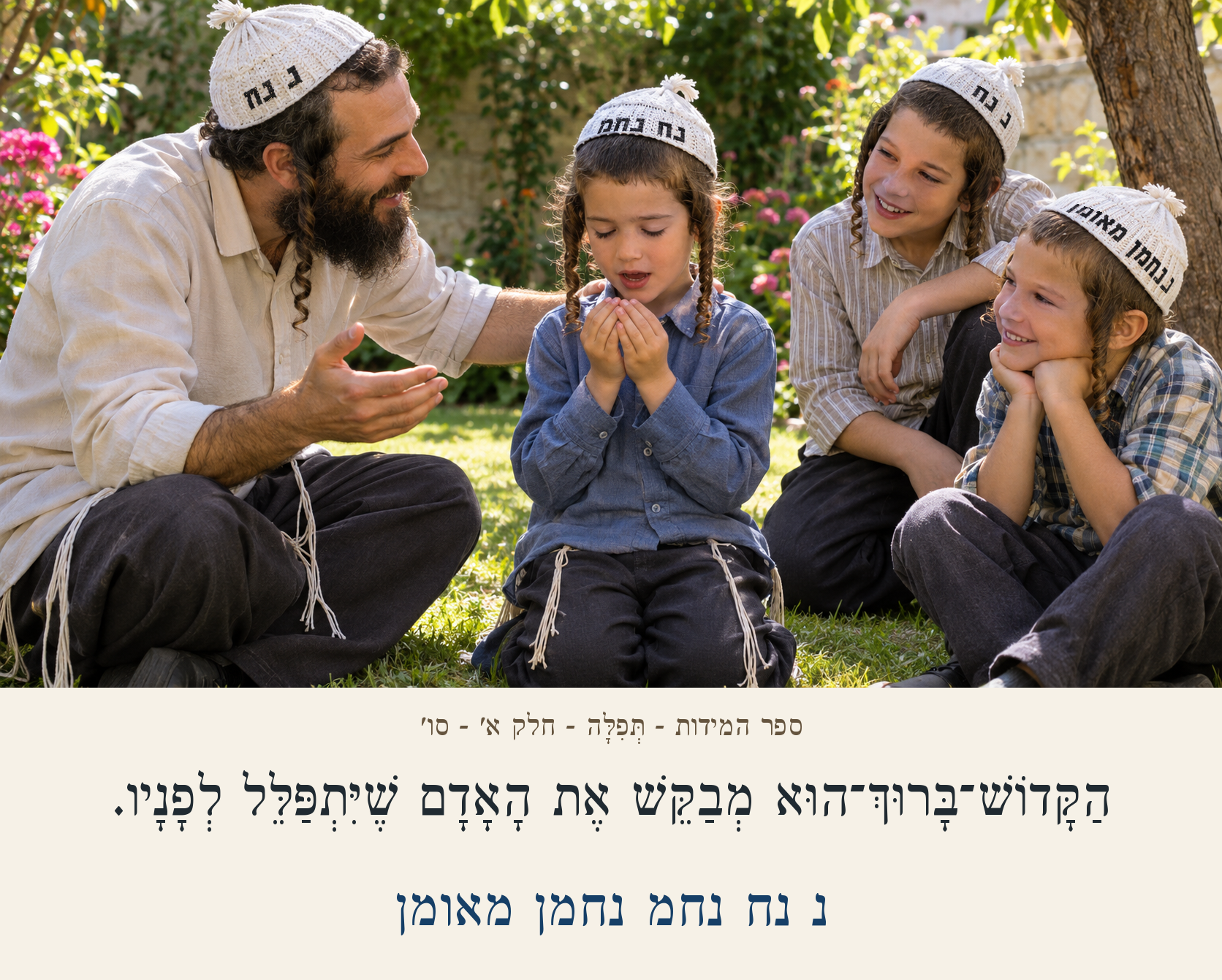
הַקָּדוֹשׁ־בָּרוּךְ־הוּא מְבַקֵּשׁ אֶת הָאָדָם שֶׁיִּתְפַּלֵּל לְפָנָיו.
66
66. The Holy One, Blessed be He, requests of a person to pray before Him.
📷 Pictures / videos for this teaching
AI-generated editorial illustration. An adult and three boys gathered in a garden, in an ordinary prayer-encouragement scene. The complete canonical Hebrew and English teaching is quoted separately; the illustration does not establish divine agency, hearing, acceptance, forgiveness, spiritual fulfillment, kinship or hidden lettering.
ס״ז
מִי שֶׁמַּצִּיל אֶת הֶעָנִי מֵחָזָק מִמֶּנּוּ בְכֹחַ, הוּא בְּנָקֵל בְּאוֹתִיּוֹת הַתְּפִלָּה.
67
67. Someone who saves a poor person from someone who has stronger strength (koach, also often an allusion to it's numerical value 28 – letters of creation, that are incorporated into the prayer) than him, is easily (resonated) in the letters of the prayer.
ס״ח
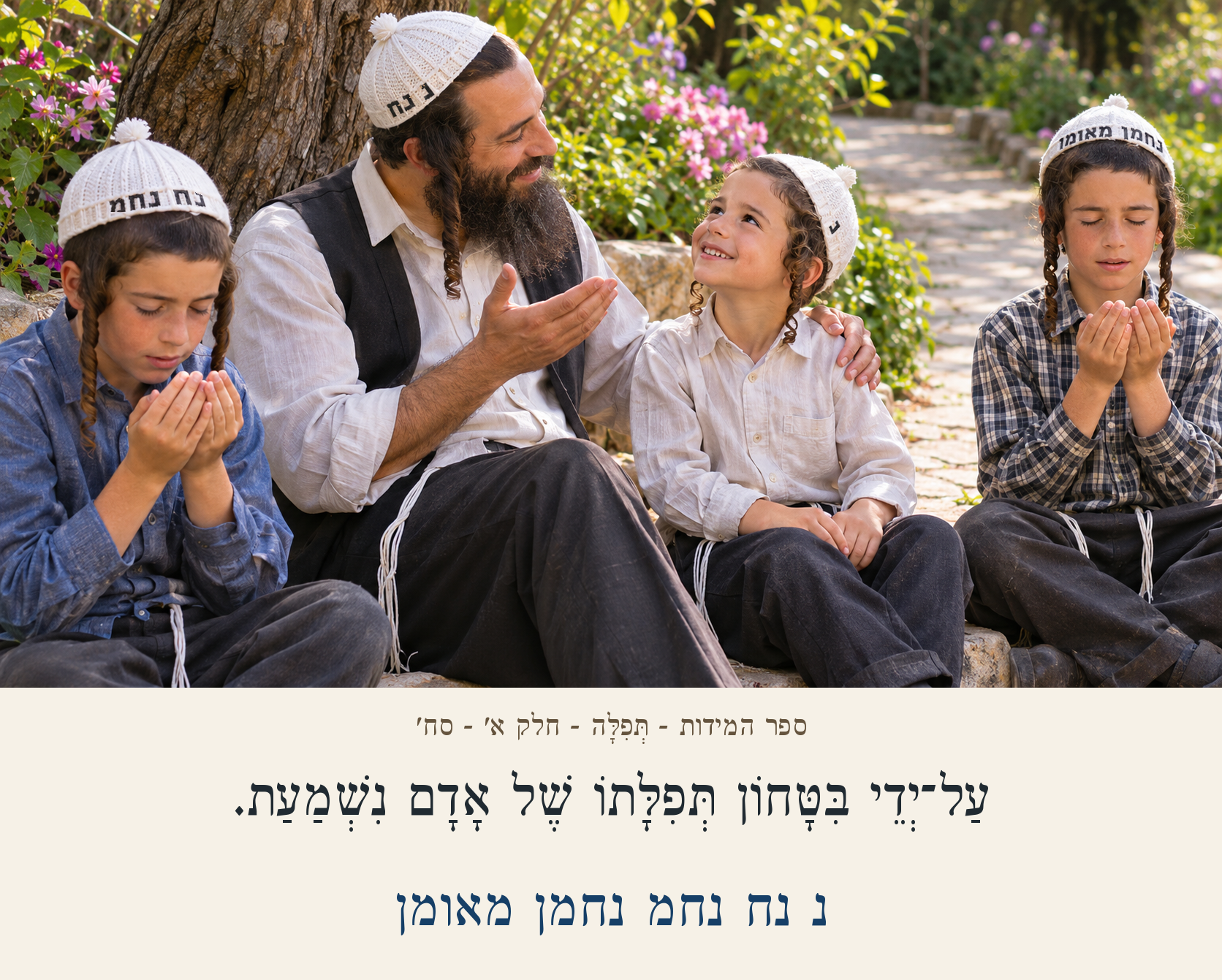
עַל־יְדֵי בִּטָּחוֹן תְּפִלָּתוֹ שֶׁל אָדָם נִשְׁמַעַת.
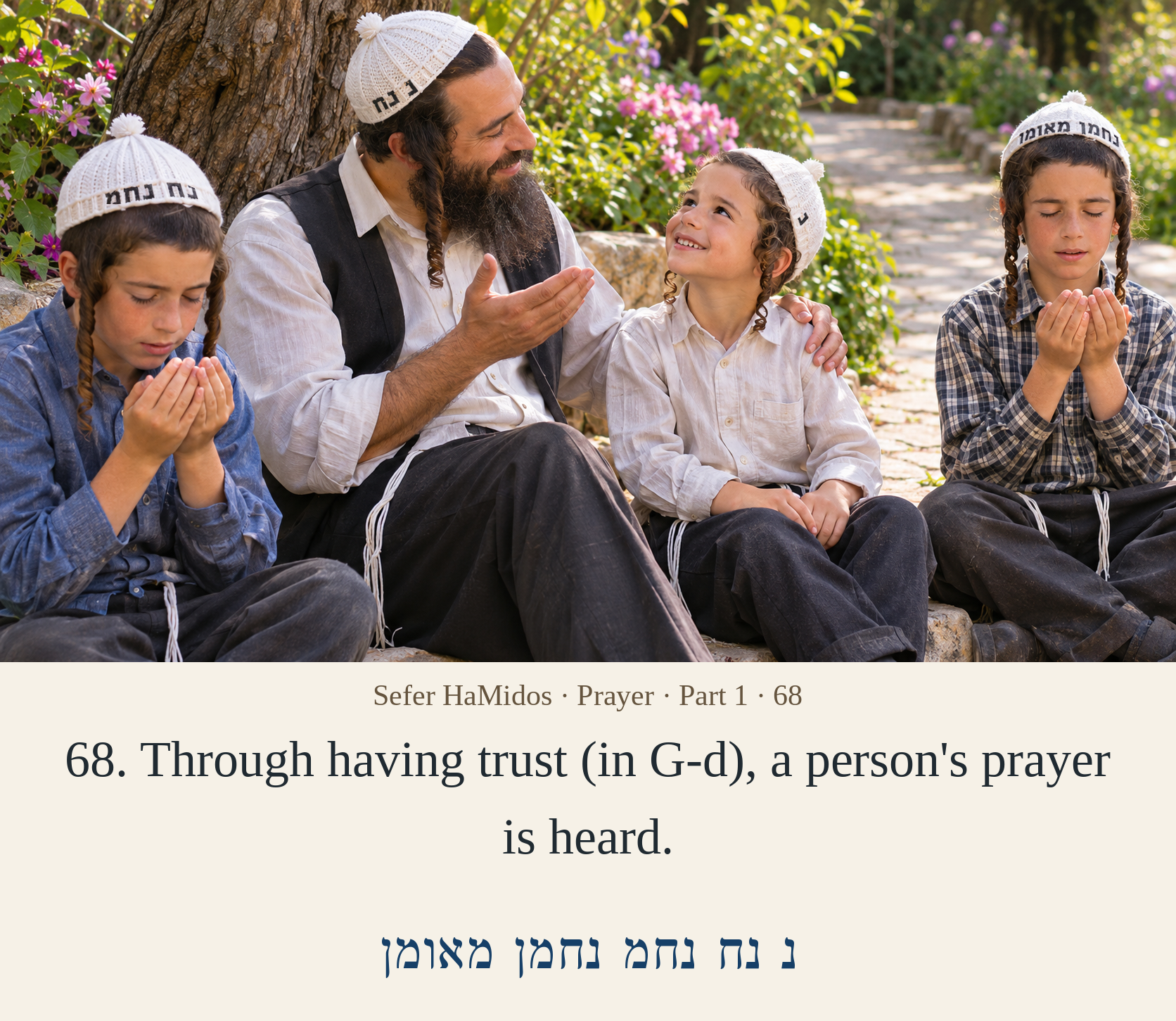
68
68. Through having trust (in G-d), a person's prayer is heard.
📷 Pictures / videos for this teaching
AI-generated editorial illustration. An ordinary warm garden prayer-themed scene. The complete canonical Hebrew and English teaching is quoted separately; the illustration does not establish divine agency, hearing, acceptance, forgiveness, spiritual fulfillment, kinship or hidden lettering.
ס״ט
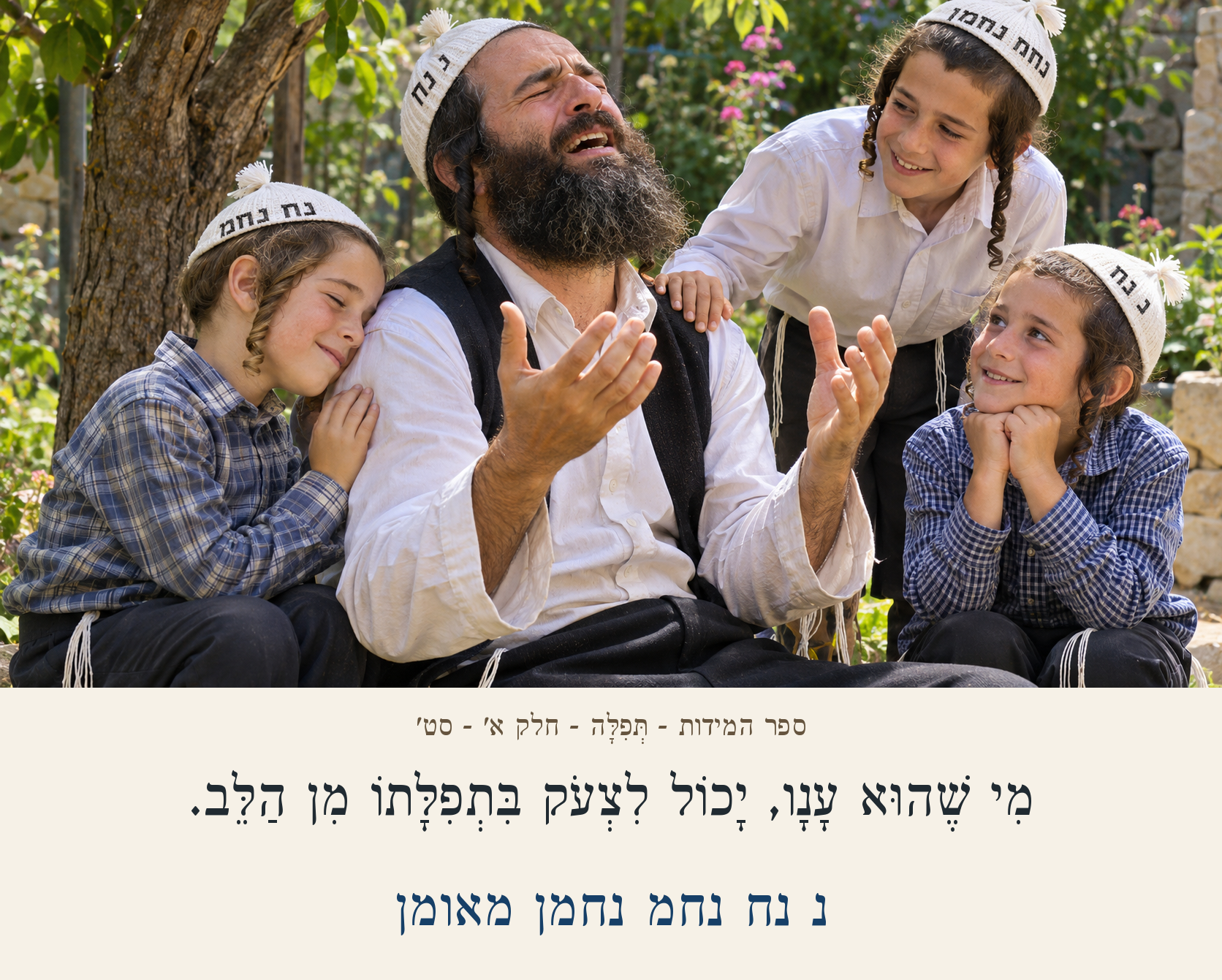
מִי שֶׁהוּא עָנָו, יָכוֹל לִצְעֹק בִּתְפִלָּתוֹ מִן הַלֵּב.
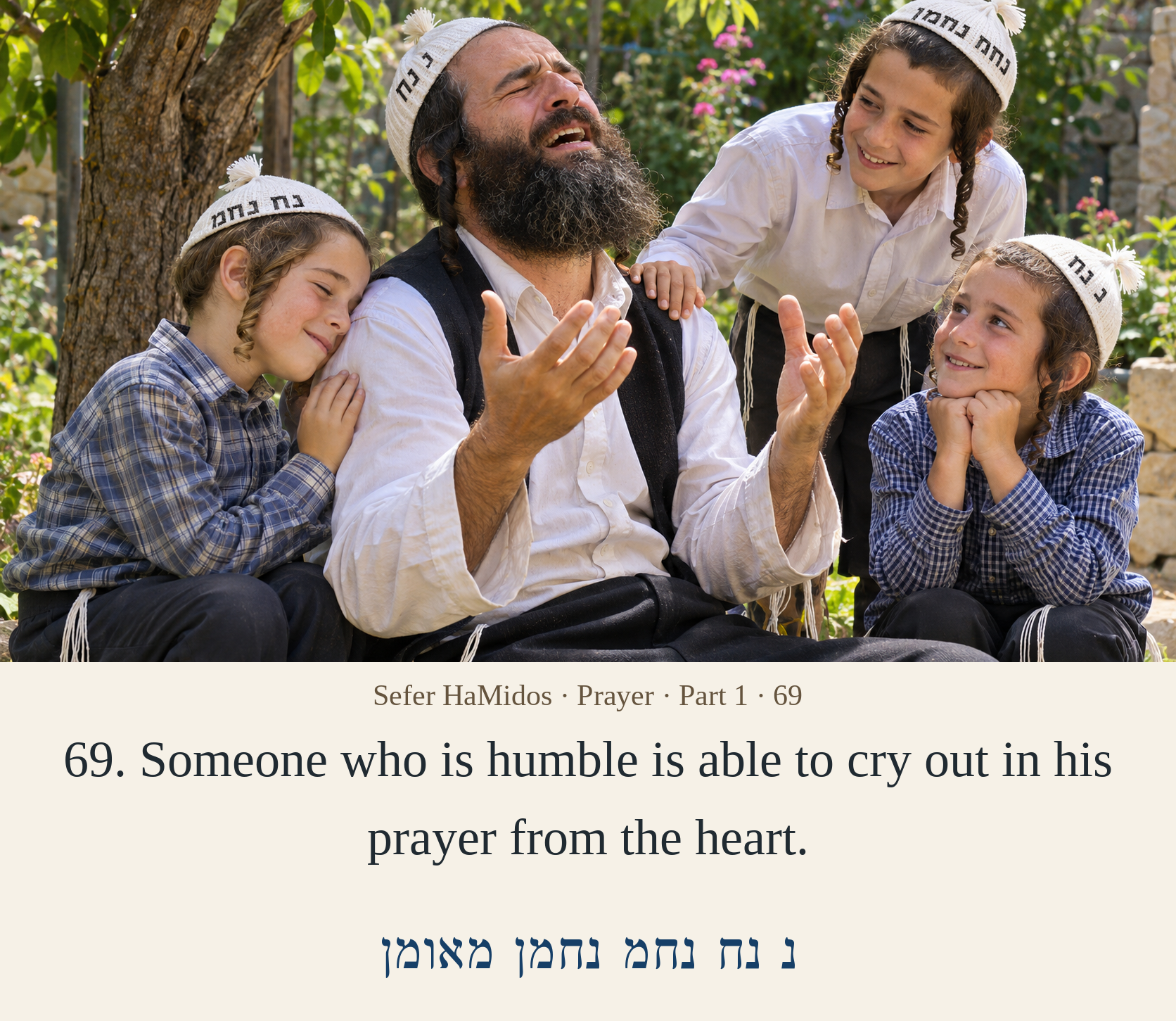
69
69. Someone who is humble is able to cry out in his prayer from the heart.
📷 Pictures / videos for this teaching
AI-generated editorial illustration. An ordinary warm garden prayer-themed scene. The complete canonical Hebrew and English teaching is quoted separately; the illustration does not establish divine agency, hearing, acceptance, forgiveness, spiritual fulfillment, kinship or hidden lettering.
ע׳
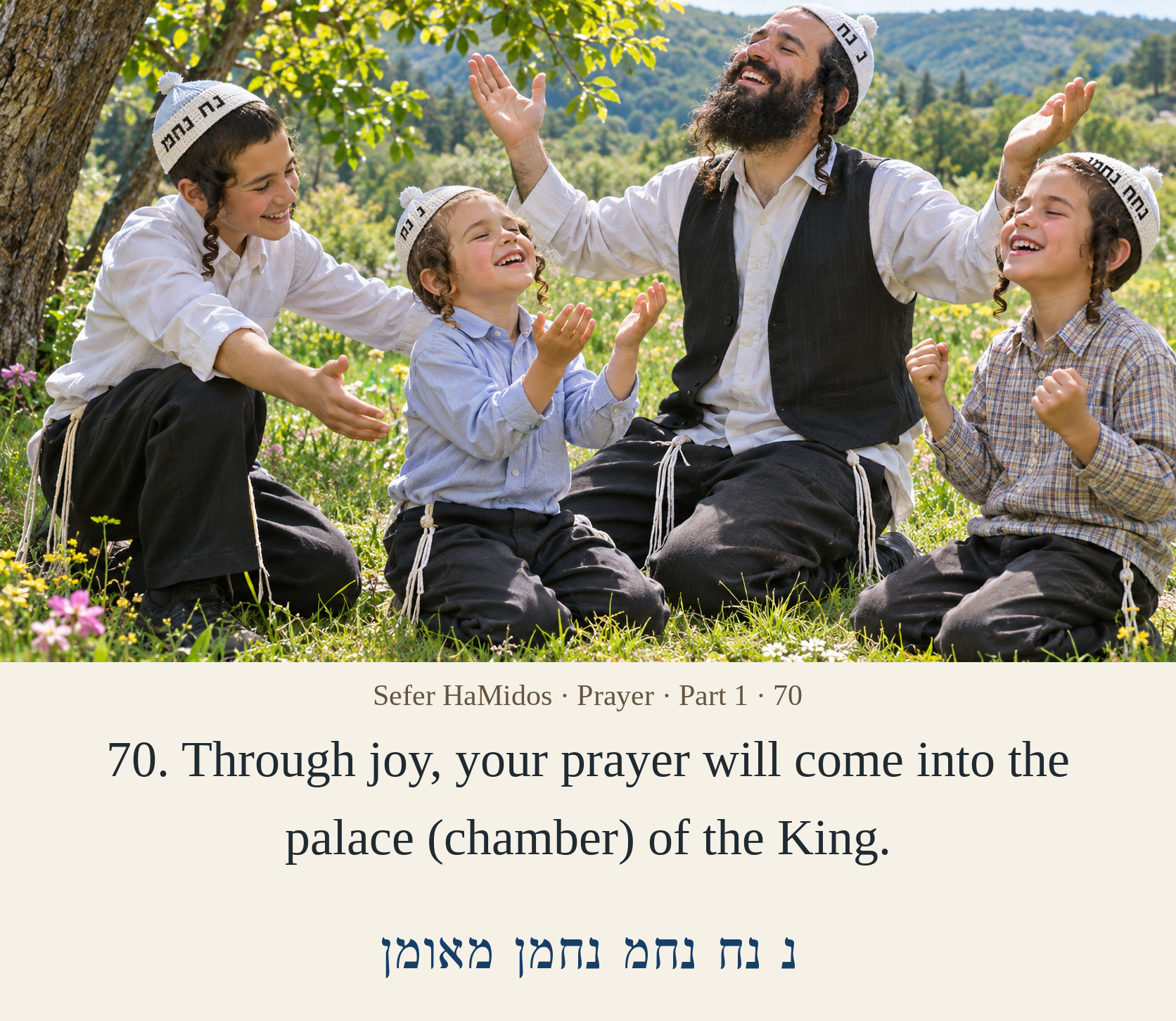
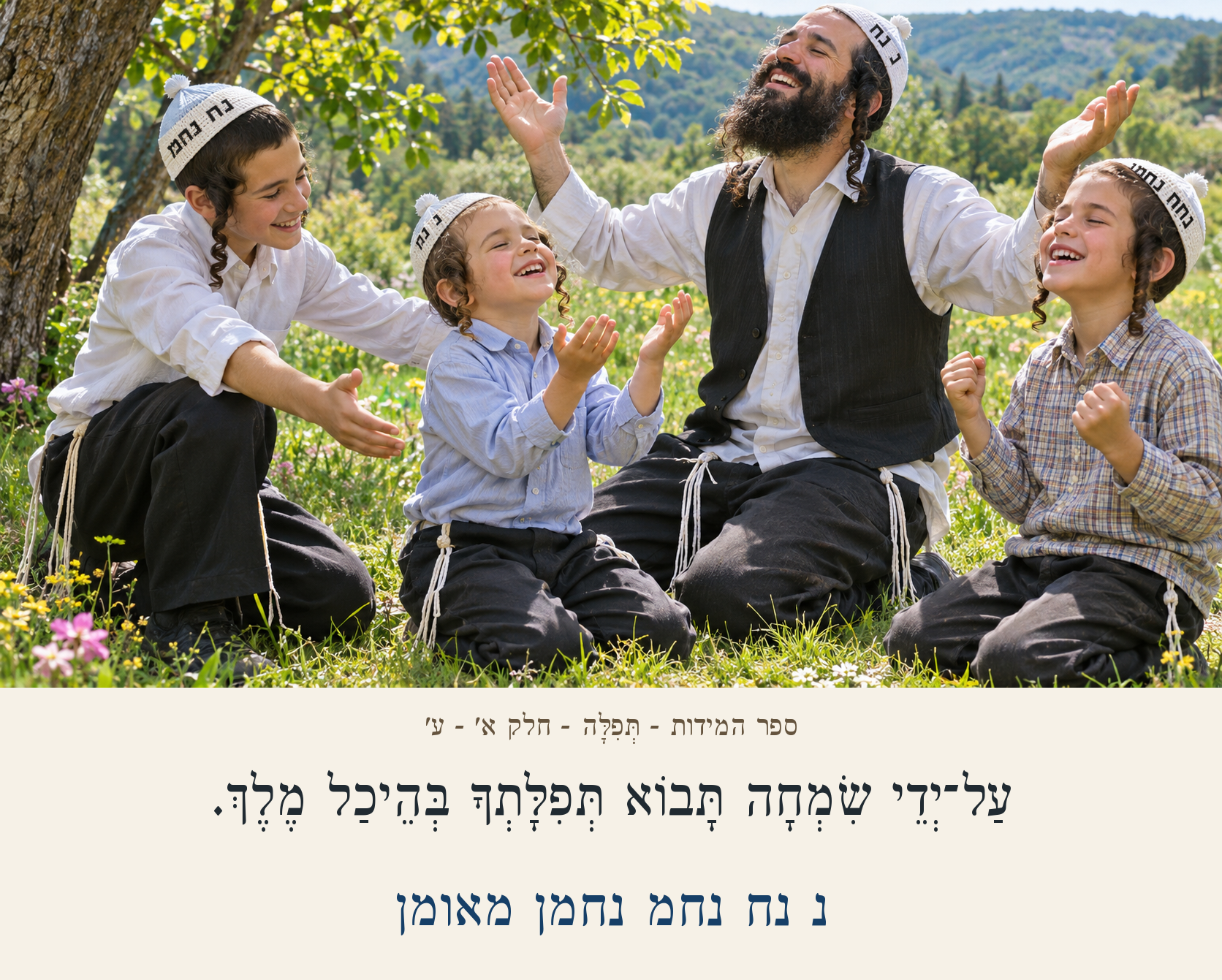
עַל־יְדֵי שִׂמְחָה תָּבוֹא תְּפִלָּתְךָ בְּהֵיכַל מֶלֶךְ.
70
70. Through joy, your prayer will come into the palace (chamber) of the King.
📷 Pictures / videos for this teaching
AI-generated editorial illustration. An ordinary joyful outdoor meadow prayer-themed scene. The complete canonical Hebrew and English teaching is quoted separately; the illustration does not establish divine agency, hearing, acceptance, forgiveness, spiritual fulfillment, kinship or hidden lettering.
ע״א
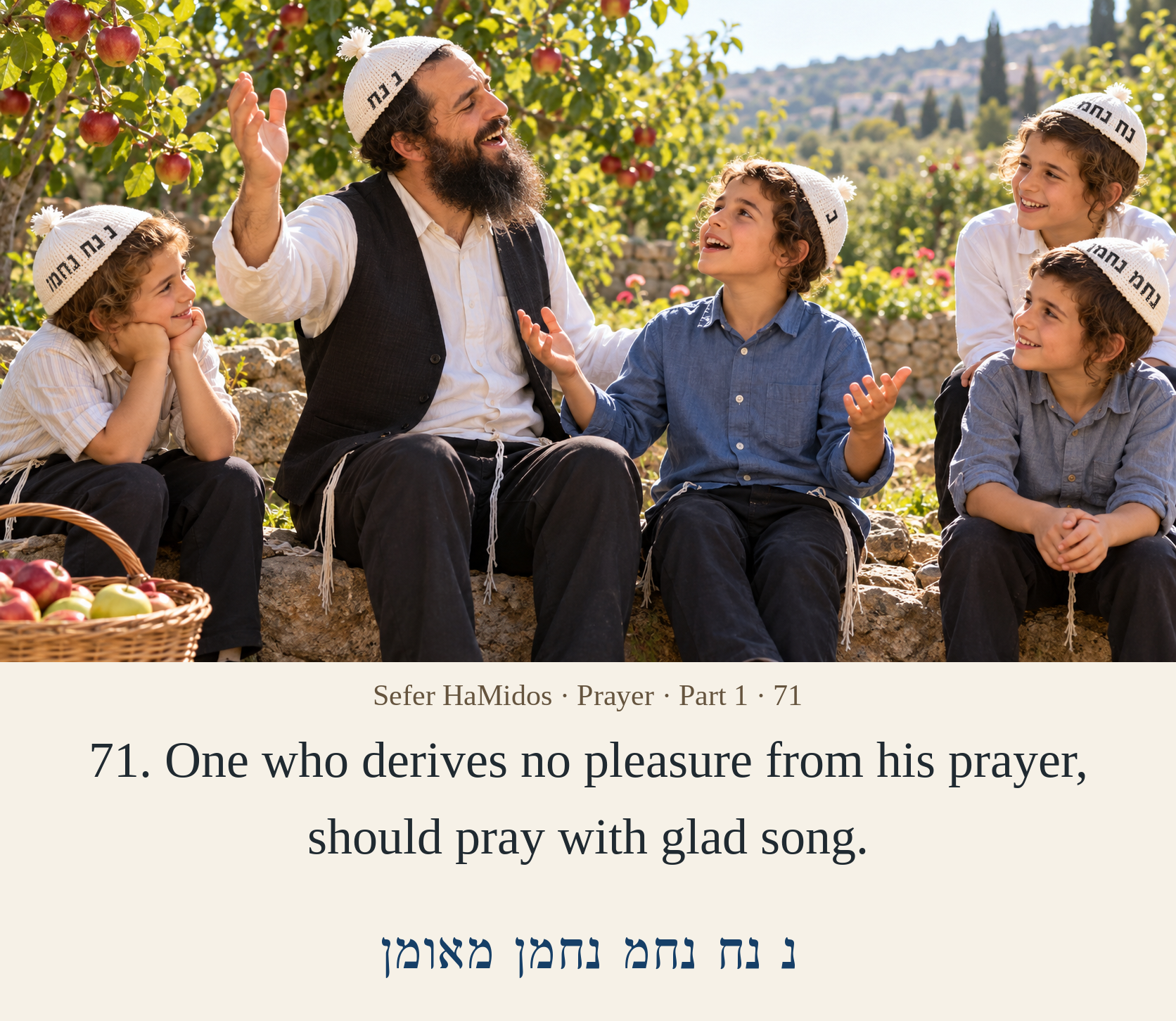
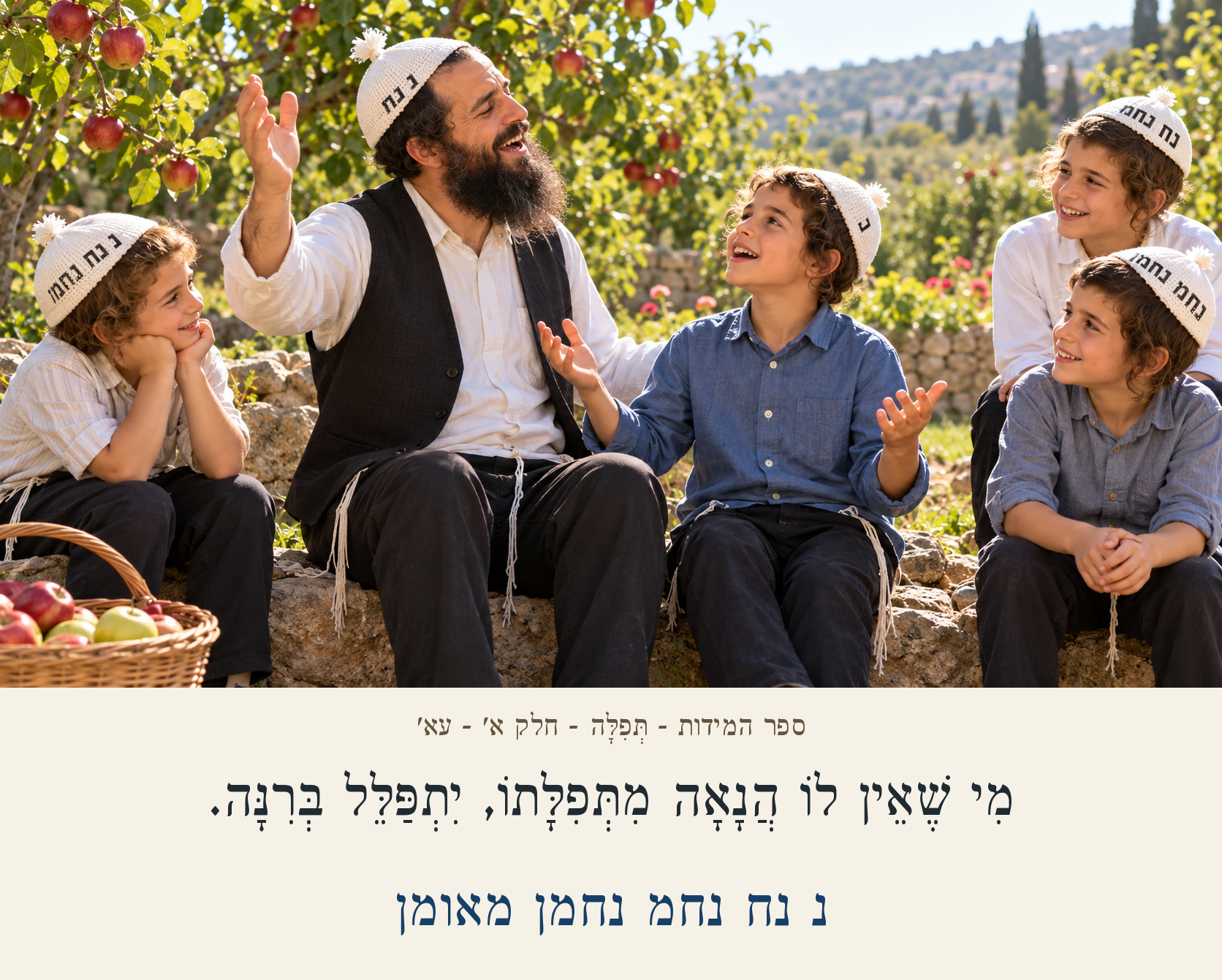
מִי שֶׁאֵין לוֹ הֲנָאָה מִתְּפִלָּתוֹ, יִתְפַּלֵּל בְּרִנָּה.
71
71. One who derives no pleasure from his prayer, should pray with glad song.
📷 Pictures / videos for this teaching
AI-generated editorial illustration. An adult and boys gathered in an orchard, in a glad-song-themed scene; a still image does not establish sound or a prior lack of pleasure. The complete canonical Hebrew and English teaching is quoted separately; the illustration does not establish divine agency, hearing, acceptance, forgiveness, spiritual fulfillment, kinship or hidden lettering.
ע״ב
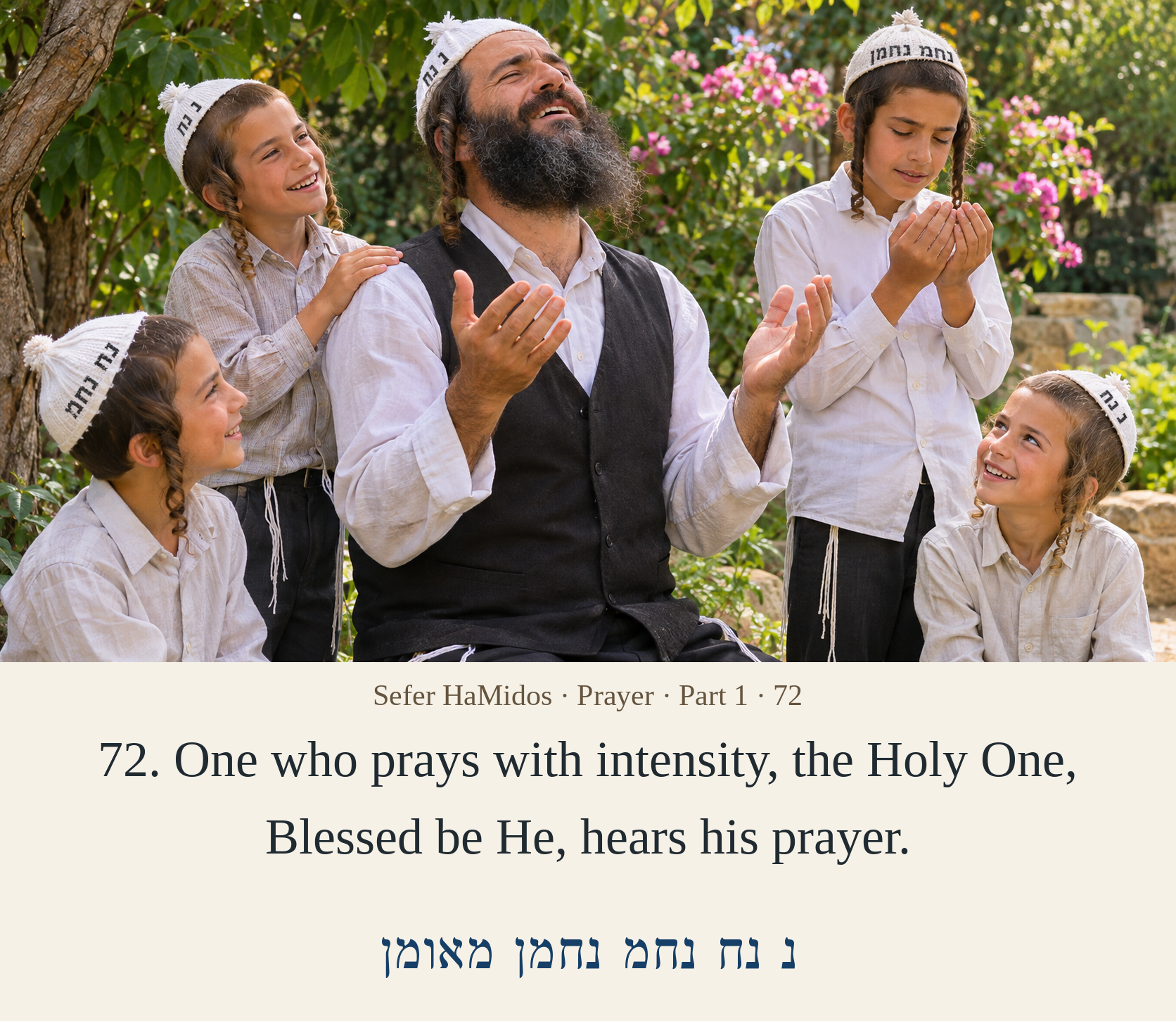
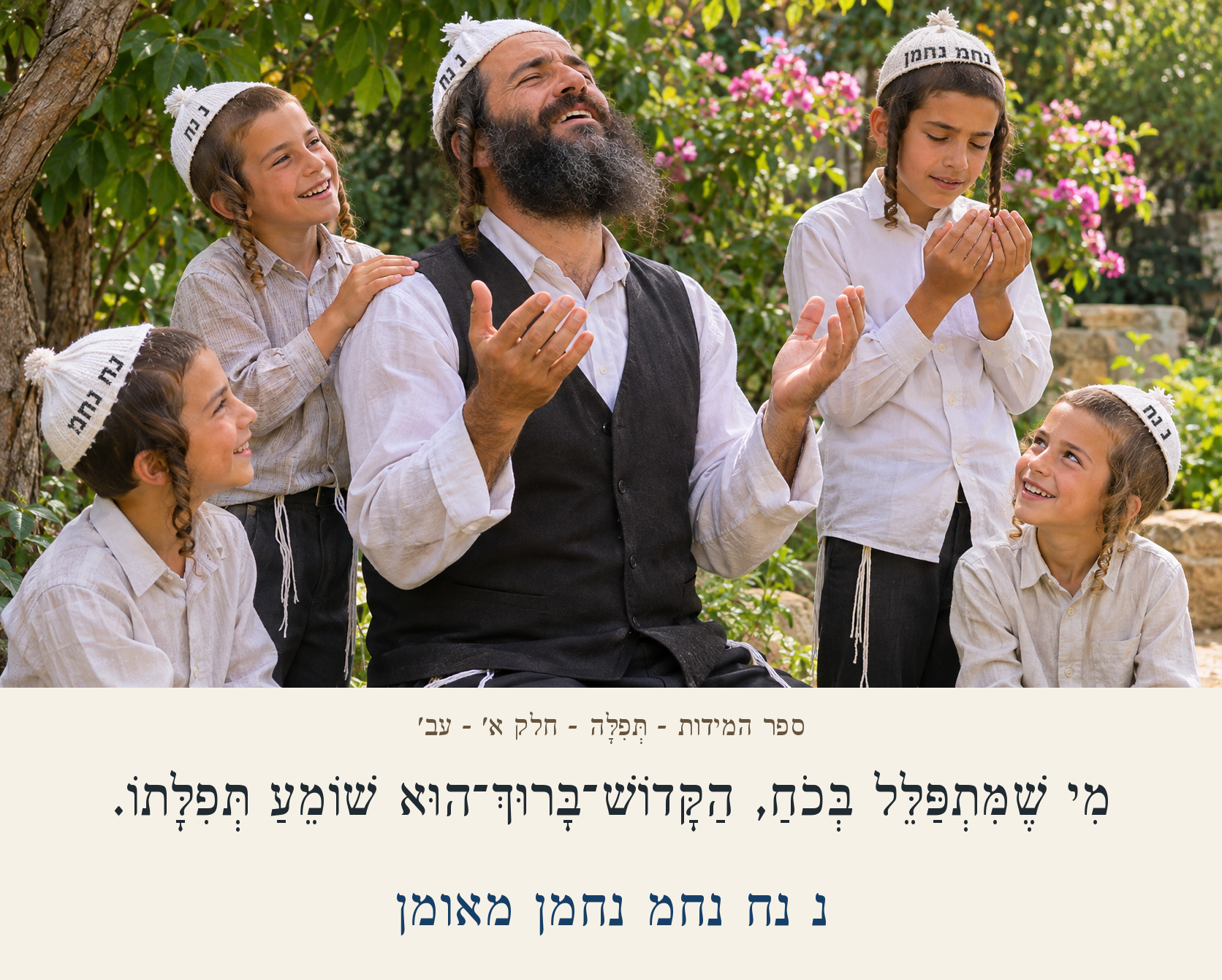
מִי שֶׁמִּתְפַּלֵּל בְּכֹחַ, הַקָּדוֹשׁ־בָּרוּךְ־הוּא שׁוֹמֵעַ תְּפִלָּתוֹ.
72
72. One who prays with intensity, the Holy One, Blessed be He, hears his prayer.
📷 Pictures / videos for this teaching
AI-generated editorial illustration. An adult and boys gathered in a garden, in a concentrated-prayer-themed scene. The complete canonical Hebrew and English teaching is quoted separately; the illustration does not establish divine agency, hearing, acceptance, forgiveness, spiritual fulfillment, kinship or hidden lettering.
ע״ג
מִי שֶׁנָּדַר אֵיזֶהוּ נֶדֶר, אֵין מְקַבְּלִין תְּפִלָּתוֹ עַד שֶׁיְּשַׁלֵּם אֶת נִדְרוֹ.
73
73. One who took a vow upon himself, his prayer is not accepted until he fulfills his vow.
ע״ד
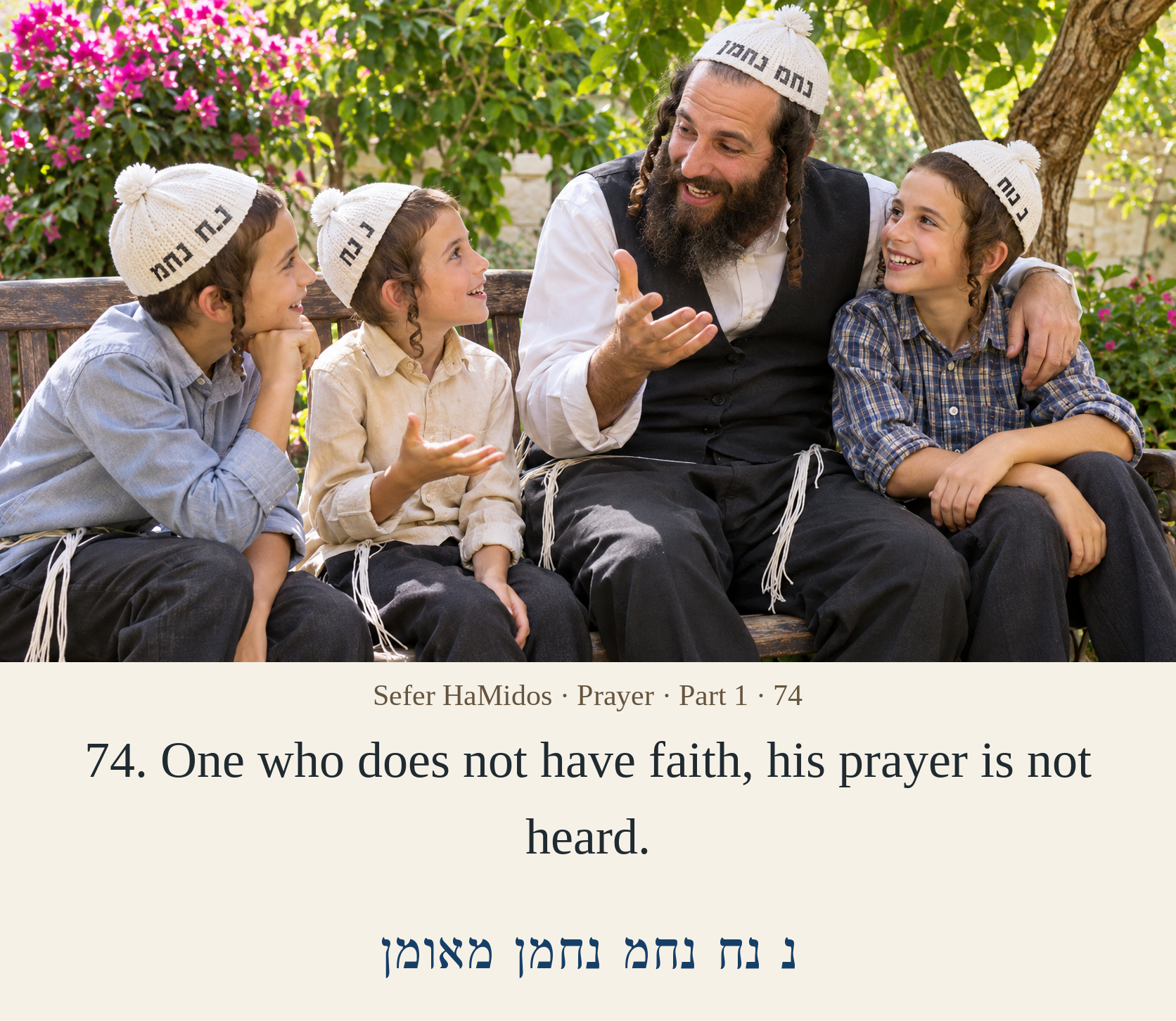
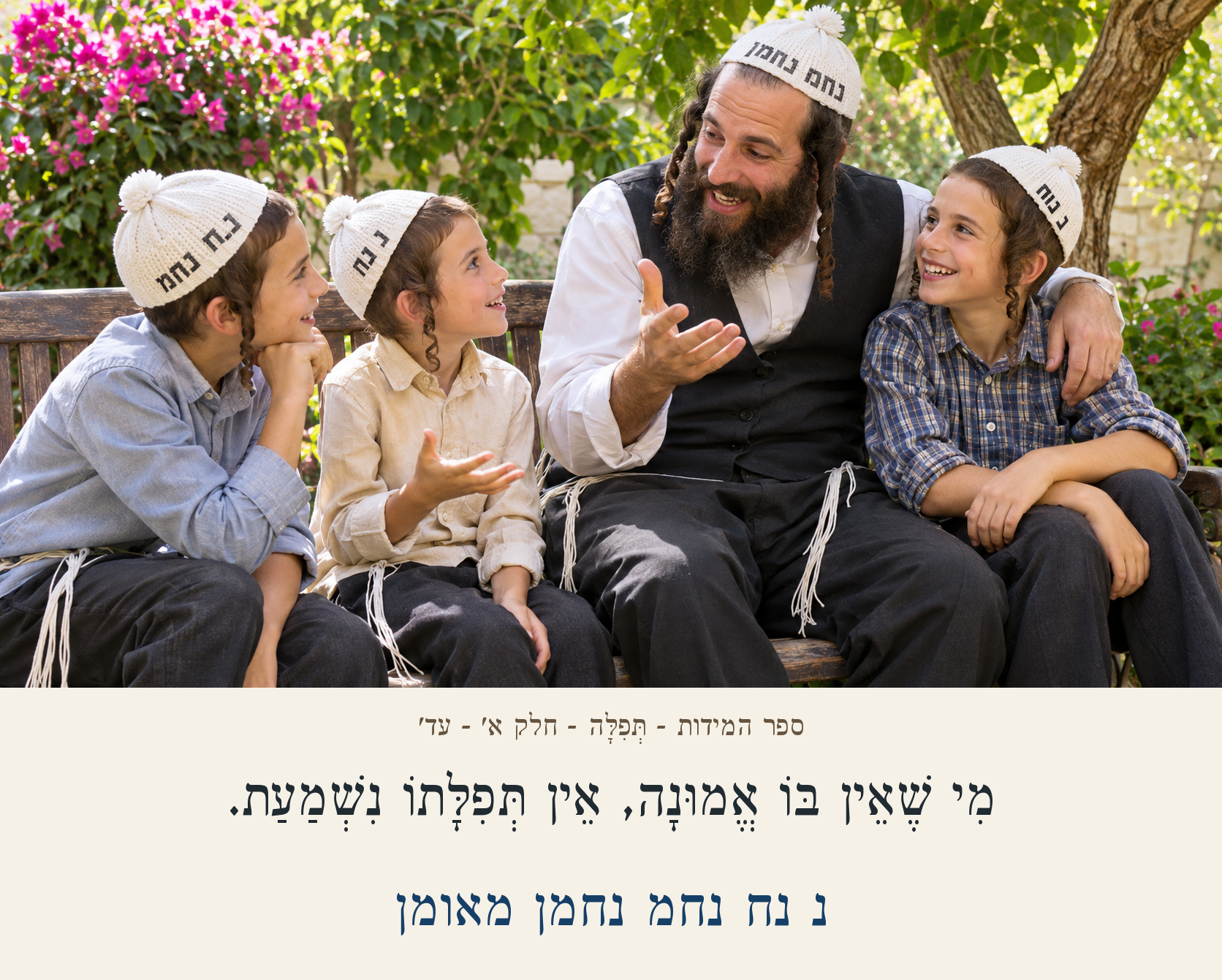
מִי שֶׁאֵין בּוֹ אֱמוּנָה, אֵין תְּפִלָּתוֹ נִשְׁמַעַת.
74
74. One who does not have faith, his prayer is not heard.
📷 Pictures / videos for this teaching
AI-generated editorial illustration. An adult and boys gathered for an ordinary warm garden lesson; no person is identified as lacking faith. The complete canonical Hebrew and English teaching is quoted separately; the illustration does not establish divine agency, hearing, acceptance, forgiveness, spiritual fulfillment, kinship or hidden lettering.
ע״ה
מִי שֶׁמְּשַׂמֵּחַ אֶת הַצַּדִּיק, תְּפִלָּתוֹ נִשְׁמַעַת.
75
75. One who makes the tzadik happy, his prayer is heard.
ע״ו
צָרִיךְ קֹדֶם הַתְּפִלָּה לְדַבֵּק אֶת רוּחוֹ בַּבּוֹרֵא, וּמֵחֲמַת הַדְּבֵקוּת יֵצְאוּ הַדִּבּוּרִים מֵעַצְמָן מִפִּיו.
76
76. Before praying, one should attach one's spirit to the Creator, and due to the attachment, the words will emerge from his mouth of their own accord.
ע״ז
כְּשֶׁתִּשְׁמַע חֶרְפָּתְךָ וְתִשְׁתֹּק, תִּזְכֶּה שֶׁיַּעֲנֶה הַקָּדוֹשׁ־בָּרוּךְ־הוּא בַּקָּשָׁתְךָ.
77
77. When you hear yourself being humiliated and you are silent, you merit that the Holy One, Blessed be He, will answer your request.
ע״ח
מִי שֶׁמִּתְפַּלֵּל עַל חֲבֵרוֹ, עַל־יְדֵי זֶה הַקָּדוֹשׁ־בָּרוּךְ־ הוּא כּוֹפֵל לוֹ אֶת טוֹבָתוֹ.
78
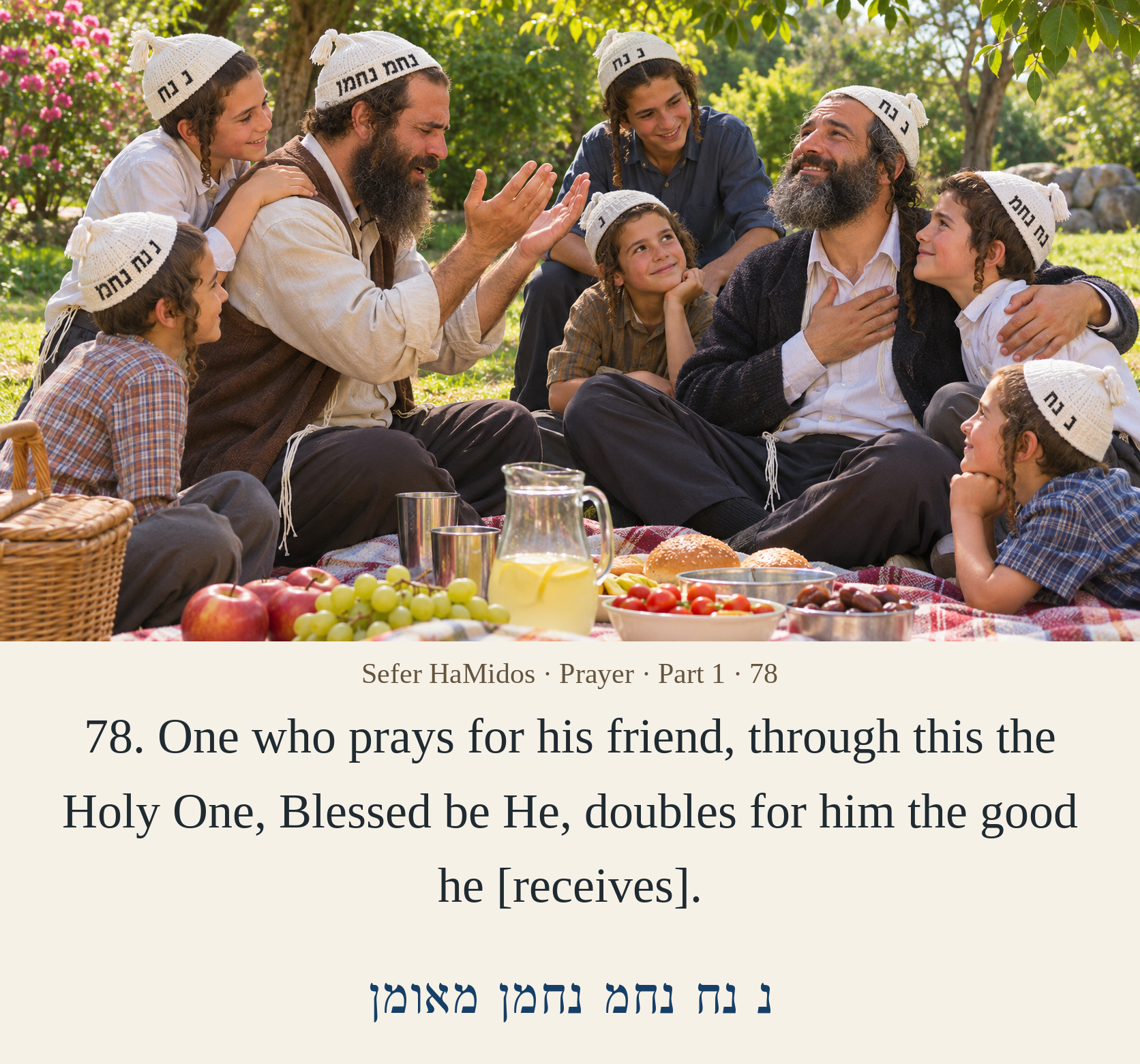
78. One who prays for his friend, through this the Holy One, Blessed be He, doubles for him the good he [receives].
📷 Pictures / videos for this teaching
AI-generated editorial illustration. Adults and boys gathered at an outdoor picnic, in a friendship and prayer-themed scene; neither a prayer beneficiary nor a doubled reward is identified. The complete canonical Hebrew and English teaching is quoted separately; the illustration does not establish divine agency, hearing, acceptance, forgiveness, spiritual fulfillment, kinship or hidden lettering.
ע״ט
תְּפִלָּה שֶׁאֵינָהּ נִתְקַבֶּלֶת לְמַעְלָה נִשְׂרֶפֶת.
79
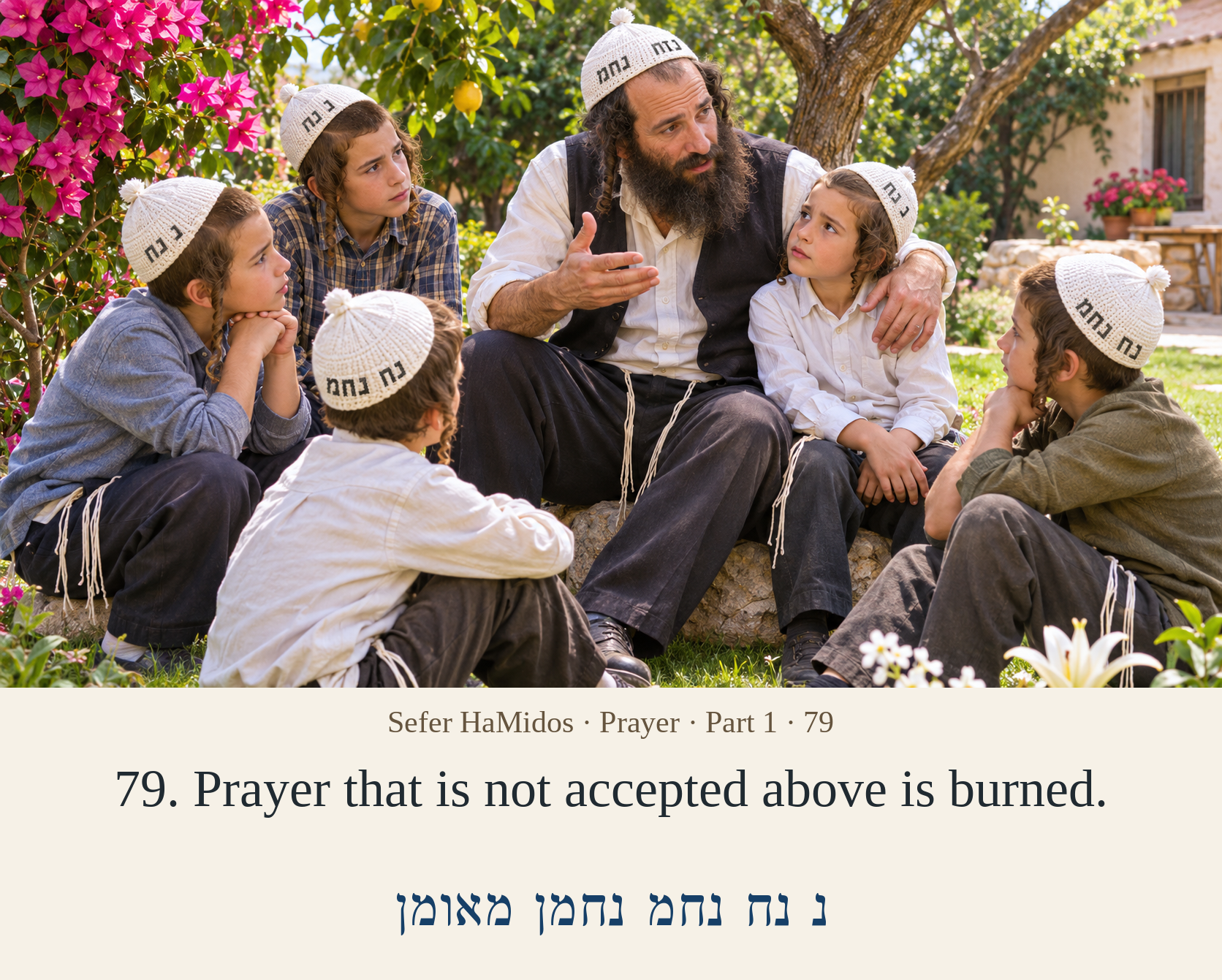
79. Prayer that is not accepted above is burned.
📷 Pictures / videos for this teaching
AI-generated editorial illustration. An adult and boys gathered for an ordinary garden lesson; no fire, burning object or unseen heavenly process is depicted. The complete canonical Hebrew and English teaching is quoted separately; the illustration does not establish divine agency, hearing, acceptance, forgiveness, spiritual fulfillment, kinship or hidden lettering.
פ׳
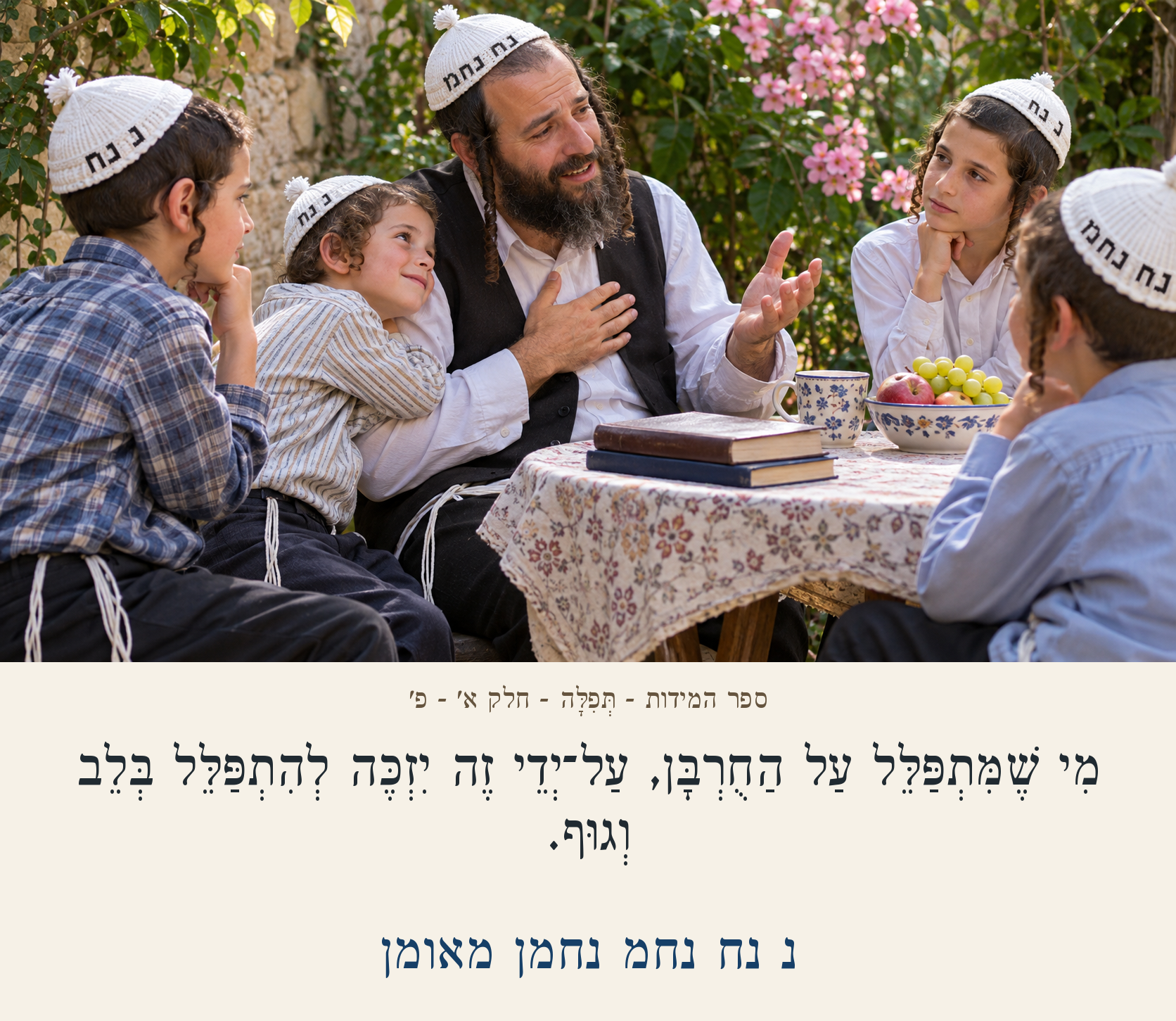
מִי שֶׁמִּתְפַּלֵּל עַל הַחֻרְבָּן, עַל־יְדֵי זֶה יִזְכֶּה לְהִתְפַּלֵּל בְּלֵב וְגוּף.
80
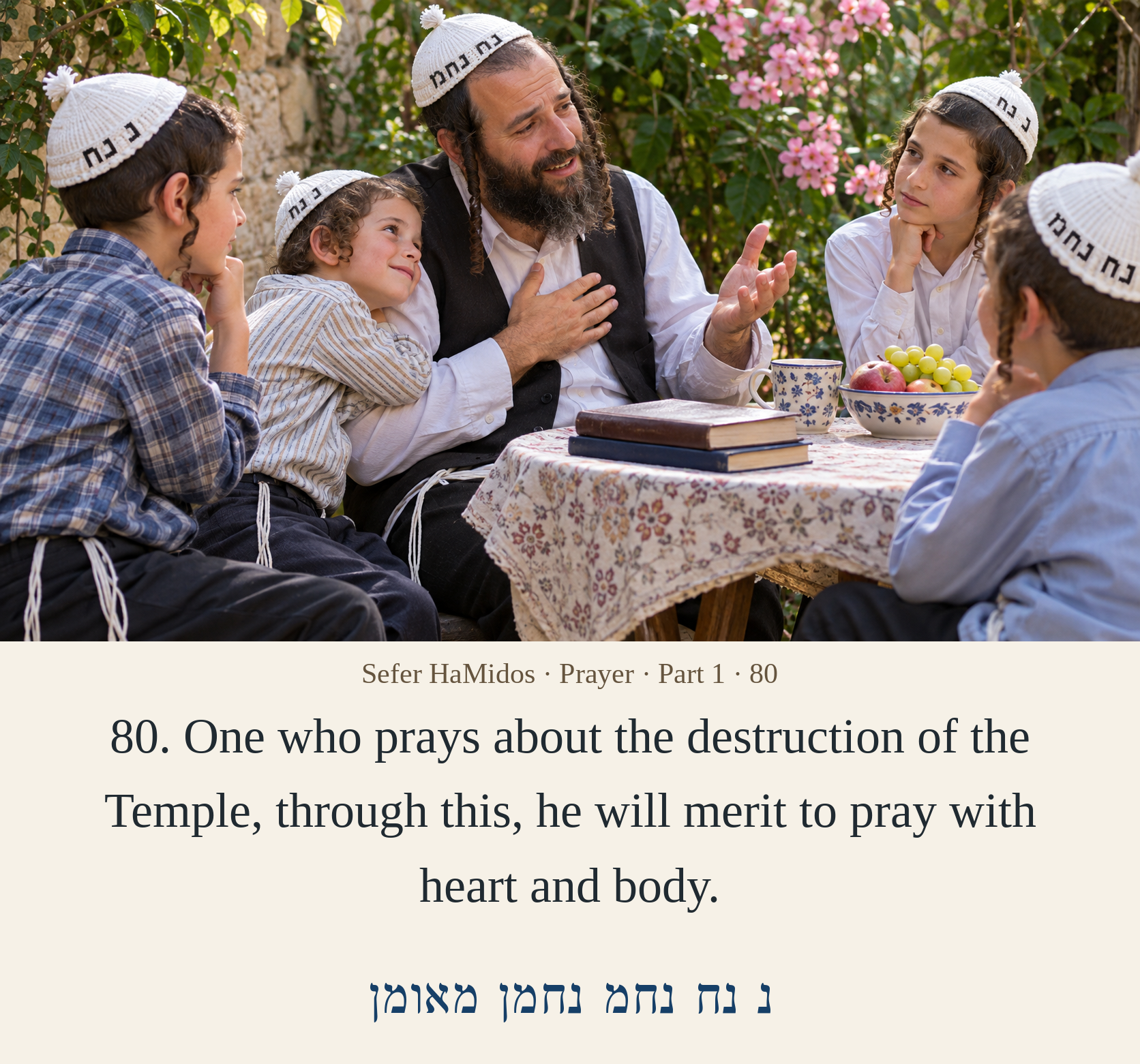
80. One who prays about the destruction of the Temple, through this, he will merit to pray with heart and body.
📷 Pictures / videos for this teaching
AI-generated editorial illustration. An adult and boys gathered for a garden lesson; neither the Temple nor its destruction is depicted. The complete canonical Hebrew and English teaching is quoted separately; the illustration does not establish divine agency, hearing, acceptance, forgiveness, spiritual fulfillment, kinship or hidden lettering.
פ״א
תְּפִלָּה שֶׁהִיא בְּשִׂמְחָה הִיא עֲרֵבָה וּמְתוּקָה לַשֵּׁם יִתְבָּרַךְ.
81
81. Pray which is with joy, is pleasing and sweet to Hashem, may He be Blessed.
פ״ב
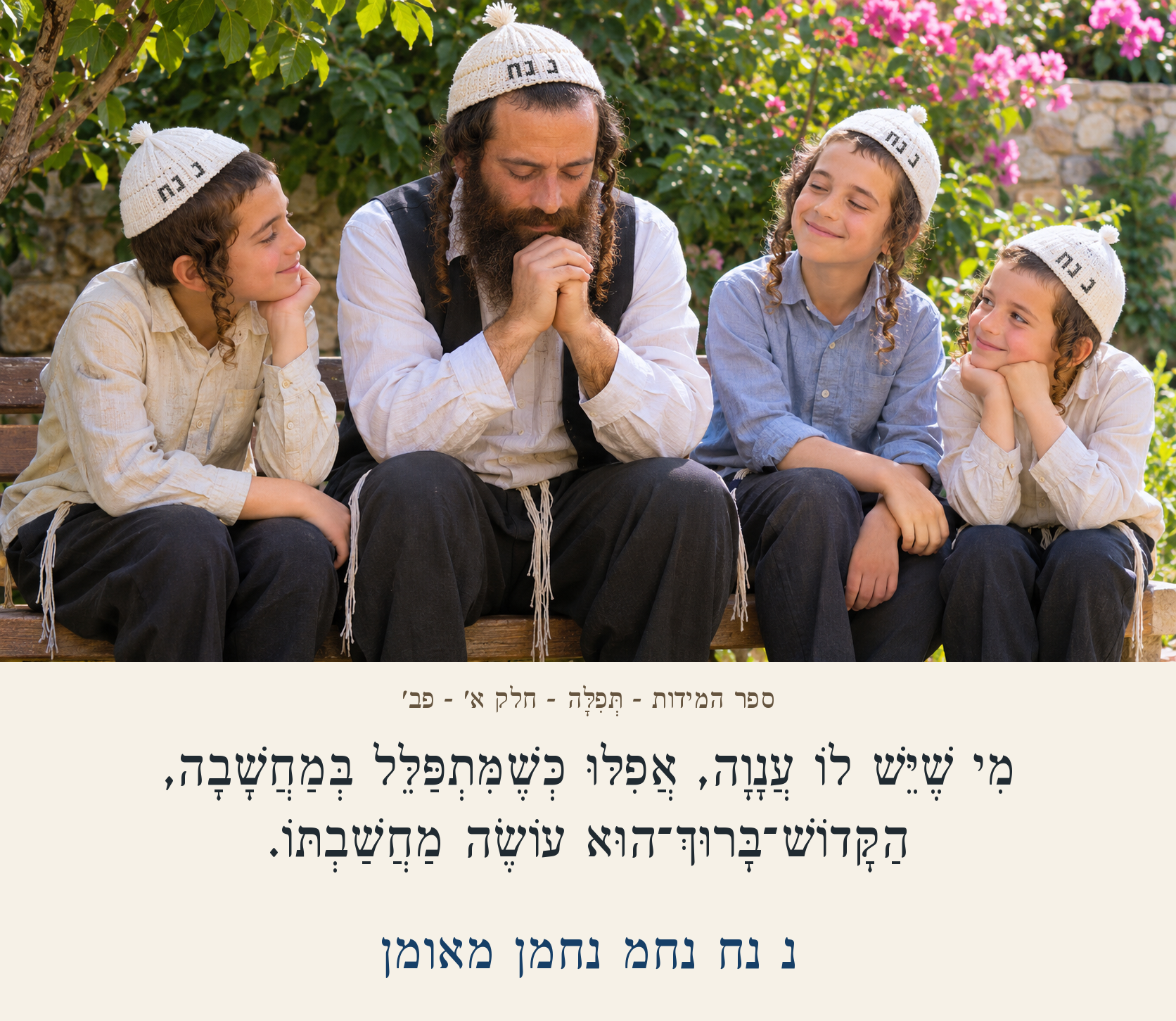
מִי שֶׁיֵּשׁ לוֹ עֲנָוָה, אֲפִלּוּ כְּשֶׁמִּתְפַּלֵּל בְּמַחֲשָׁבָה, הַקָּדוֹשׁ־בָּרוּךְ־הוּא עוֹשֶׂה מַחֲשַׁבְתּוֹ.
82
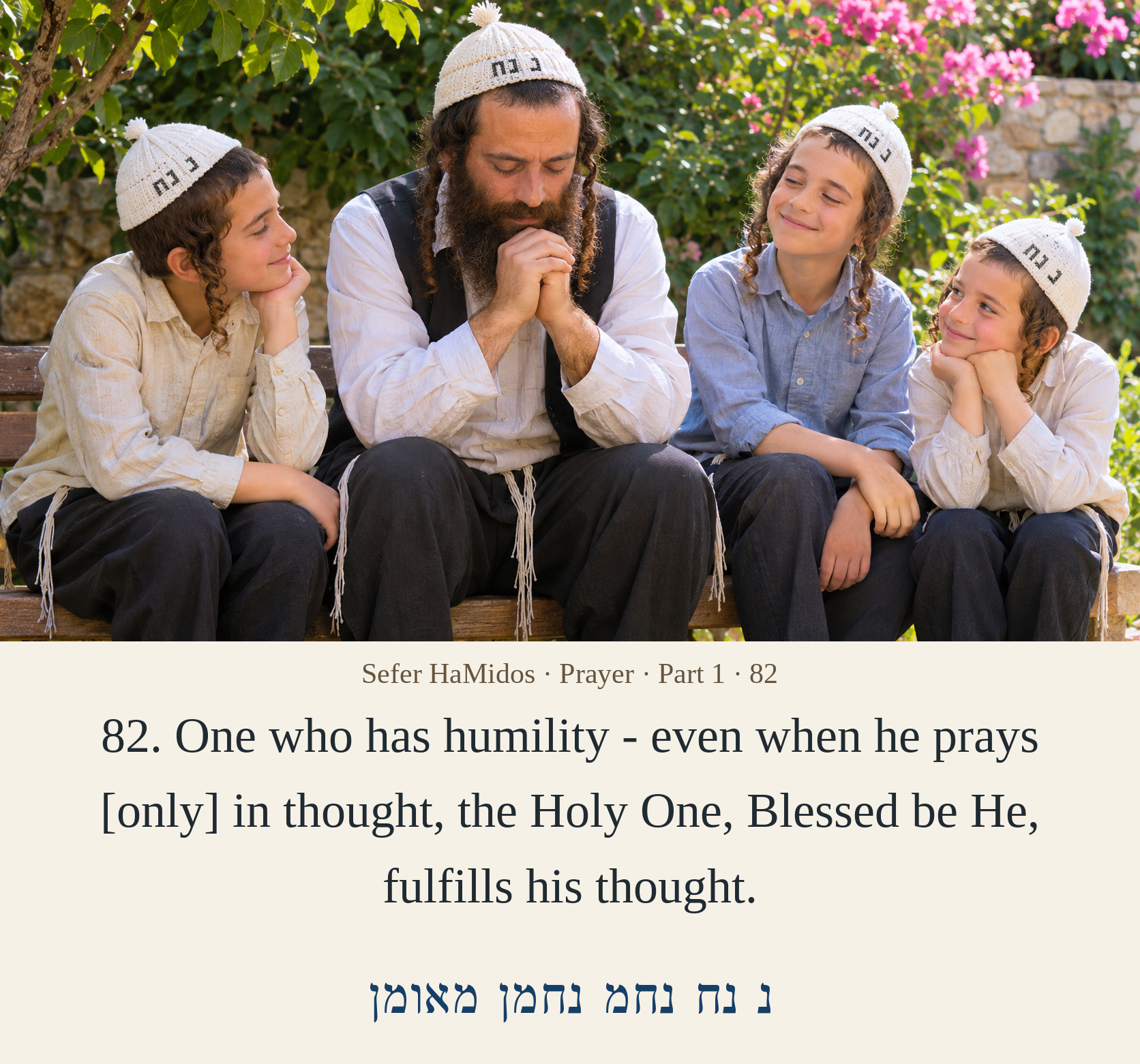
82. One who has humility - even when he prays [only] in thought, the Holy One, Blessed be He, fulfills his thought.
📷 Pictures / videos for this teaching
AI-generated editorial illustration. An adult and three boys gathered quietly in a garden; inward thought, humility and fulfillment are not visible events. The complete canonical Hebrew and English teaching is quoted separately; the illustration does not establish divine agency, hearing, acceptance, forgiveness, spiritual fulfillment, kinship or hidden lettering.
פ״ג
לִפְעָמִים הַקָּדוֹשׁ־בָּרוּךְ־הוּא אֵין מְקַבֵּל תְּפִלַּת הַצַּדִּיק, כְּשֶׁמִּתְפַּלֵּל עַל אֵיזֶה אָדָם, כִּי הַקָּדוֹשׁ־בָּרוּךְ־הוּא יוֹדֵעַ, שֶׁיַּמְשִׁיךְ זֶה הָאָדָם לְאַחַר זְמַן אֶת הַצַּדִּיק בַּחֲטָאִים מֵחֲטָאָיו.
83
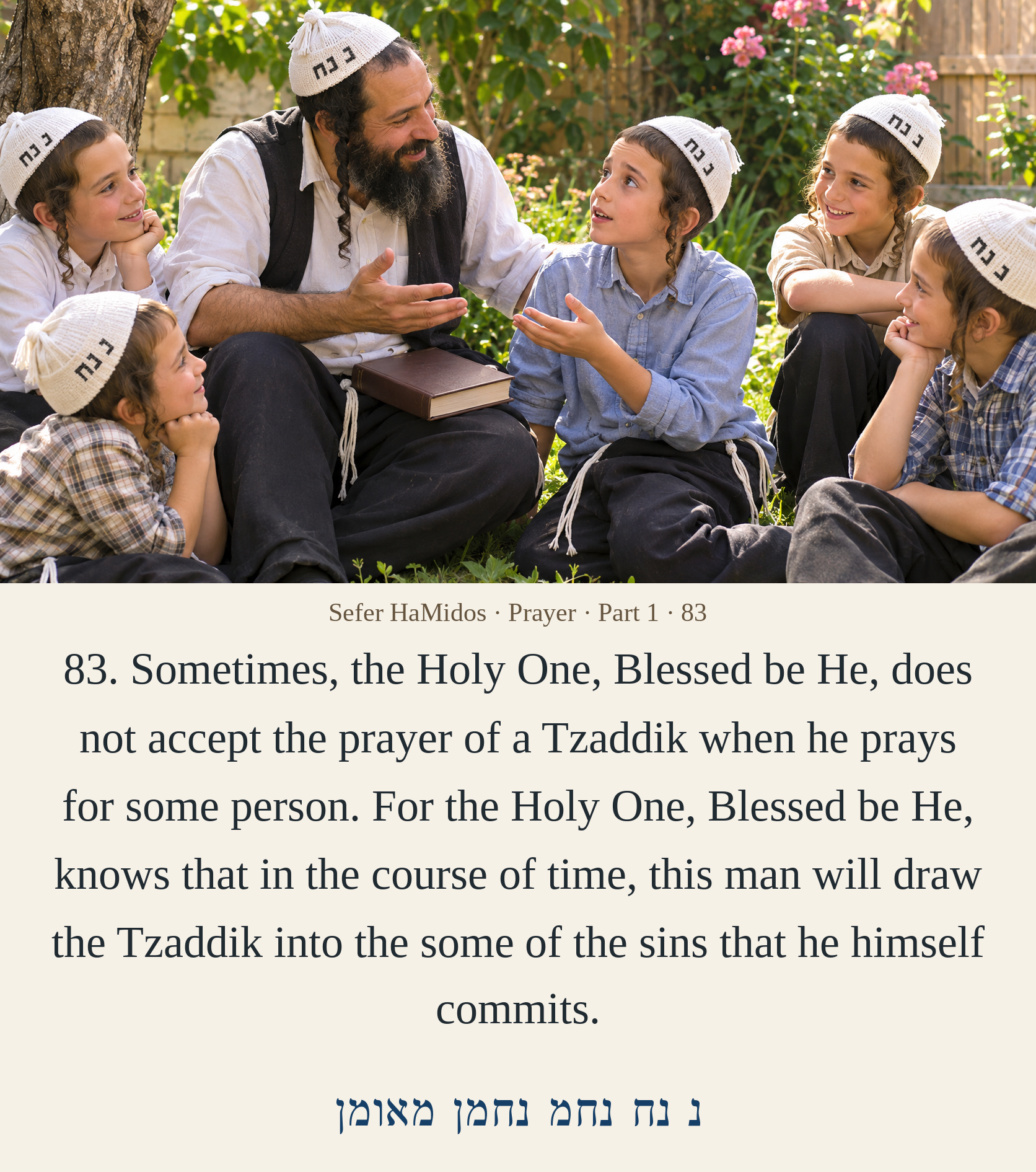
83. Sometimes, the Holy One, Blessed be He, does not accept the prayer of a Tzaddik when he prays for some person. For the Holy One, Blessed be He, knows that in the course of time, this man will draw the Tzaddik into the some of the sins that he himself commits.
📷 Pictures / videos for this teaching
AI-generated editorial illustration. An adult and five boys in an ordinary warm garden learning circle; no person is identified as a Tzaddik or sinner, and no divine rejection or future influence is depicted. The complete canonical Hebrew and English teaching is quoted separately; the illustration does not establish divine agency, hearing, acceptance, forgiveness, spiritual fulfillment, kinship or hidden lettering.
פ״ד
אֵין הַמַּחֲשָׁבָה הוֹלֶכֶת אֶלָּא אַחַר הָעוֹבֵד. (פֵּרוּשׁ מִי שֶׁעוֹבֵד הַשֵּׁם, אַחֲרָיו הוֹלְכִים וְנִמְשָׁכִים הַמַּחֲשָׁבוֹת לְבַלְבֵּל יוֹתֵר מִשְּׁאָר בְּנֵי־אָדָם, וְזֶהוּ אֵין הַמַּחֲשָׁבָה הוֹלֶכֶת אֶלָּא אַחַר הָעוֹבֵד)
84
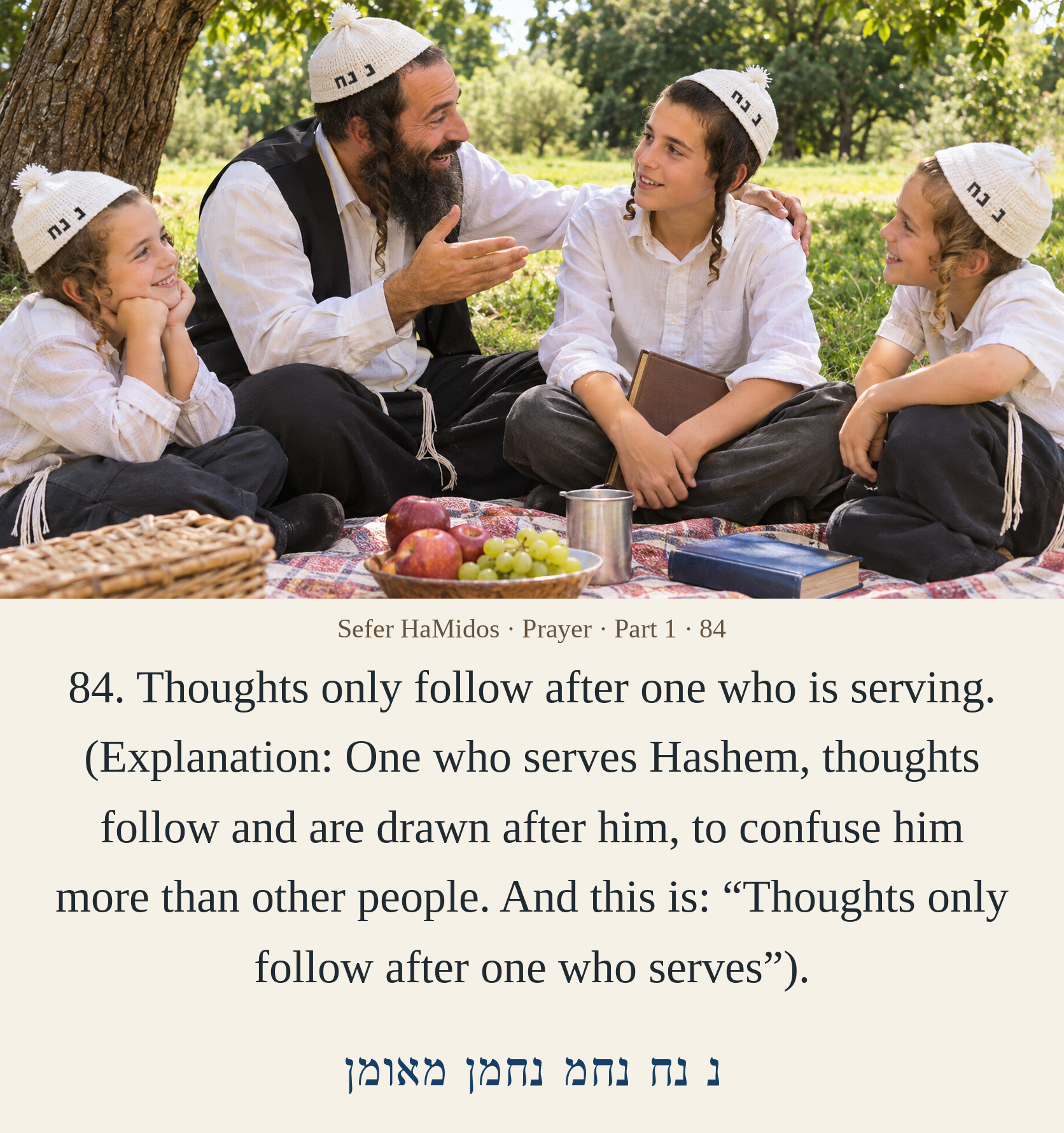
84. Thoughts only follow after one who is serving. (Explanation: One who serves Hashem, thoughts follow and are drawn after him, to confuse him more than other people. And this is: “Thoughts only follow after one who serves”).
📷 Pictures / videos for this teaching
AI-generated editorial illustration. An adult and three boys at an ordinary warm garden picnic; inward service, confusing thoughts and spiritual results are not depicted. The complete canonical Hebrew and English teaching is quoted separately; the illustration does not establish divine agency, hearing, acceptance, forgiveness, spiritual fulfillment, kinship or hidden lettering.
חלק ב׳ · א׳
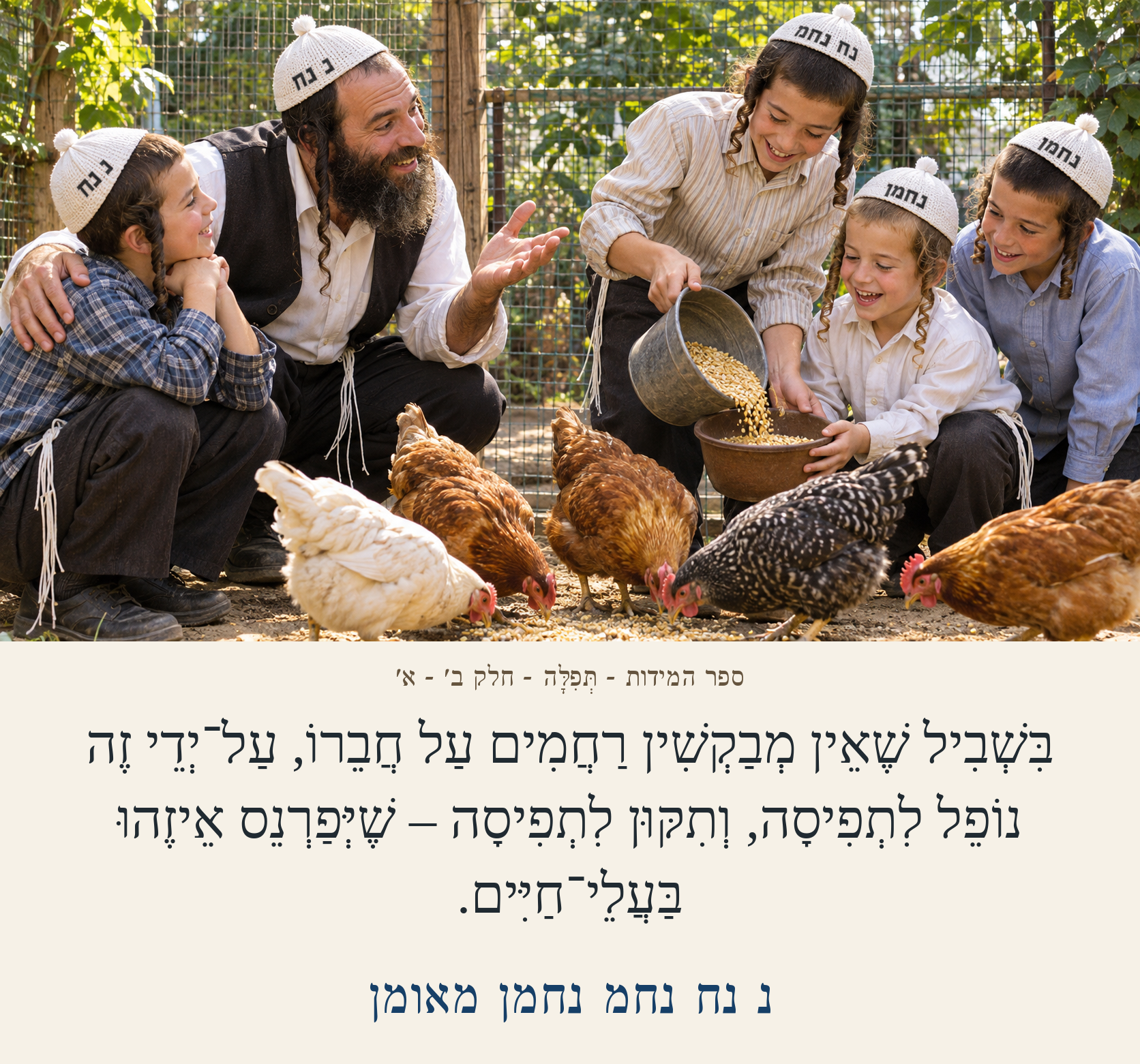
בִּשְׁבִיל שֶׁאֵין מְבַקְשִׁין רַחֲמִים עַל חֲבֵרוֹ, עַל־יְדֵי זֶה נוֹפֵל לִתְפִיסָה, וְתִקּוּן לִתְפִיסָה – שֶׁיְּפַרְנֵס אֵיזֶהוּ בַּעֲלֵי־חַיִּים.
II-1
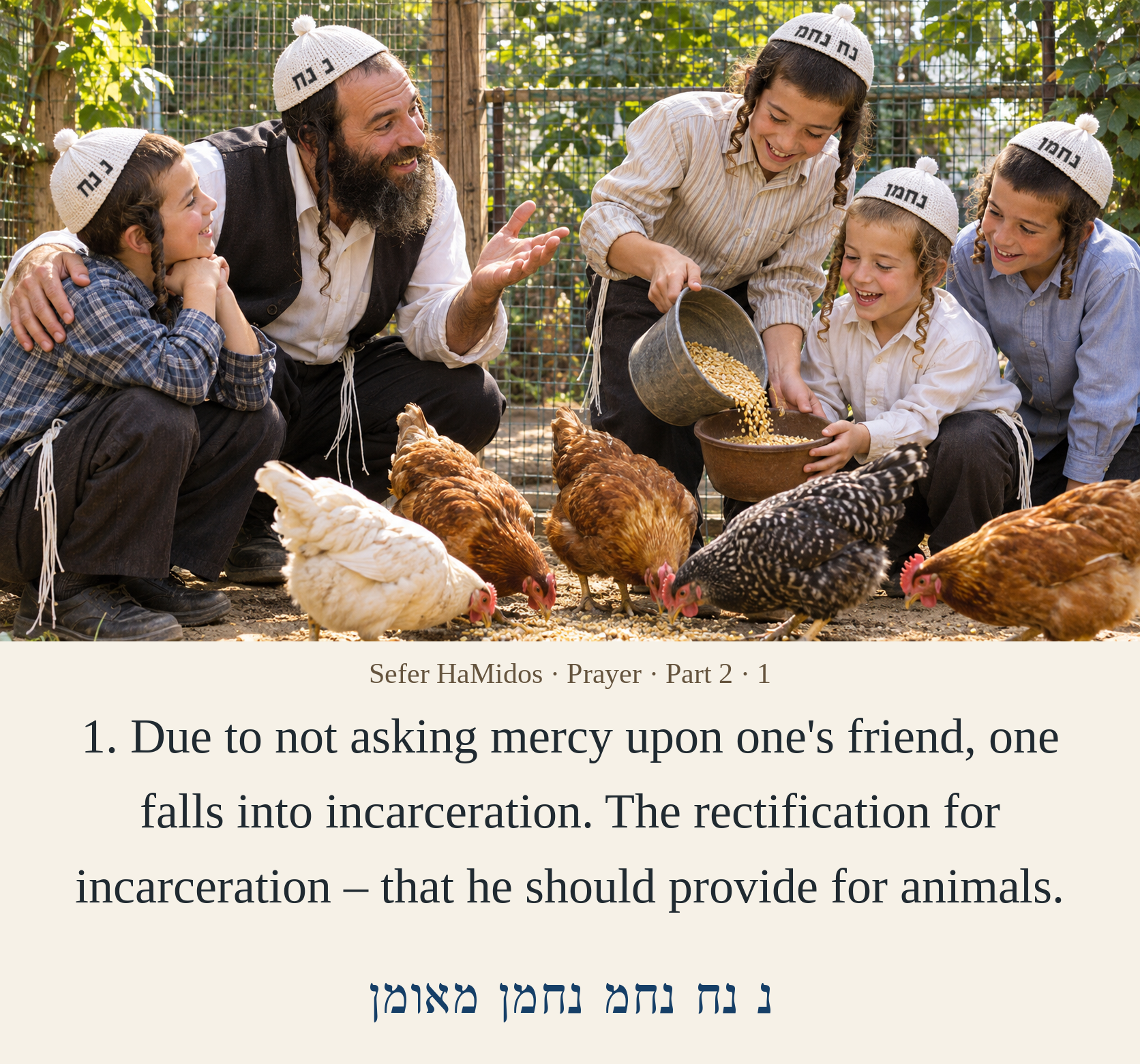
1. Due to not asking mercy upon one's friend, one falls into incarceration. The rectification for incarceration – that he should provide for animals.
📷 Pictures / videos for this teaching
AI-generated editorial illustration. An adult and four boys feeding chickens. The enclosure is for chickens, not a prison; no crime, incarceration or release is depicted. The complete canonical Hebrew and English teaching is quoted separately; the illustration does not establish divine agency, hearing, acceptance, forgiveness, spiritual fulfillment, kinship or hidden lettering.
חלק ב׳ · ב׳
הַתְּפִלָּה מְעֻלָּה [מוֹעִילָה], כְּשֶׁפָּנָיו כְּלַפֵּי מַעְלָה.
II-2
2. Prayer is paramount [another text: is effective] when one's face is turned upward.
חלק ב׳ · ג׳
מִי שֶׁמְּבַקֵּשׁ רַחֲמִים עַל בְּנֵי־דוֹרוֹ, זוֹכֶה לְגִלּוּי שְׁכִינָה.
II-3
3. One who requests mercy for the members of his generation merits revelation of the Divine Presence.
חלק ב׳ · ד׳
עַל־יְדֵי שִׁירוֹת וְתִשְׁבָּחוֹת מַמְשִׁיכִין שְׁכִינָתוֹ לְמַטָּה.
II-4
4. Through songs and praises, one draws down the Divine Presence.
חלק ב׳ · ה׳
תְּפִלַּת שְׁלִיחַ־צִבּוּר יֵשׁ בָּהּ בְּחִינַת מִלְחָמָה.
II-5
5. The prayer of the leader of the prayer service possesses the aspect of war.
חלק ב׳ · ו׳
מִי שֶׁמְּקַיֵּם "יְהִי מָמוֹן חֲבֵרְךָ חָבִיב עָלֶיךָ כְּשֶׁלְּךָ", עַל־יְדֵי זֶה זוֹכֶה לְהִתְפַּלֵּל בְּכַוָּנַת הַלֵּב.
II-6
6. One who fulfills [the maxim] "Your fellow man's money should be as dear to you as your own", through this he merits to pray with heartfelt intention.
חלק ב׳ · ז׳
אֲמִירַת תְּהִלִּים סְגֻלָּה לְהוֹרִיד גְּשָׁמִים. "תְּהִלִּם" – לִ'מְטַר הַ'שָּׁמַיִם תִּ'שְׁתֶּה מָ'יִם.
II-7
7. The saying of Tehilim (Psalms) is conducive (segulah) to causing rain to fall. [This is learned from the acronym of the Hebrew letters of the word] TeHiLiM = Li’mtar Hashamayim Tishteh Ma'yim (from the rain of the heavens it will drink water).
חלק ב׳ · ח׳
כָּל הַמֵּצֵר בְּצָרוֹת יִשְׂרָאֵל וּמִתְפַּלֵּל עֲלֵיהֶם, אַף־עַל־פִּי שְׁמֵּטִיחַ דְּבָרִים כְּלַפֵּי מַעְלָה אֵינוֹ נֶעֱנָשׁ.
II-8
8. Anyone who is troubled by the sufferings of Israel and prays for them, even though he slams his words (slightly disrespectfully) towards Heaven, he is not punished.
חלק ב׳ · ט׳
יֵשׁ תְּפִלּוֹת שֶׁאֵינָם נִתְקַבְּלִים לְמַעְלָה אֶלָּא עַד שֶׁנּוֹתְנִים כָּל־כָּךְ מָעוֹת לִצְדָקָה כְּפִי מִסְּפַּר הָאוֹתִיּוֹת שֶׁל הַתְּפִלָּה הַשַּׁיָּךְ לְזֶה הַדָּבָר. לְמָשָׁל, כְּשֶׁמִּתְפַּלֵּל אֵלּוּ הַתֵּבוֹת: "תֵּן לִי בָּנִים", צָרִיךְ לִתֵּן צְדָקָה כְּמִסְפַּר אוֹתִיּוֹת "תֵּן לִי בָּנִים".
II-9
9. There are prayers that are not accepted Above until one gives the amount of charity equal to the number of letters in the prayer relevant to the matter. For example, when one prays with the words "Give me children", one needs to give charity according to the number (numerical value) of the letters in the words “Give me children”(=592).
חלק ב׳ · י׳
עַל־יְדֵי תְּפִלָּה יָכוֹל לְשַׁנּוֹת זִוּוּגוֹ הַנִּכְרָז בַּשָּׁמַיִם.
II-10
10. Through prayer, one can change the marital match proclaimed for him in Heaven.
חלק ב׳ · י״א
הַתְּפִלָּה שֶׁל רַבִּים נִשְׁמַעַת יוֹתֵר כְּשֶׁהֵם בִּכְנוּפְיָא מִמַּה שֶּׁהֵם מְפֹרָדִים.
II-11
11. The prayers of the many are heard more when they are gathered together, then to when they are scattered about.
חלק ב׳ · י״ב
לִפְעָמִים אֵינָהּ בָּאָה הַיְשׁוּעָה אֶלָּא עַד שֶׁיִּתְפַּלְּלוּ כַּמָּה בְּנֵי־אָדָם, וְלֹא דַּי בִּתְפִלַּת יָחִיד.
II-12
12. Sometimes salvation does not come until several people pray, and the prayer of an individual is not enough.
חלק ב׳ · י״ג
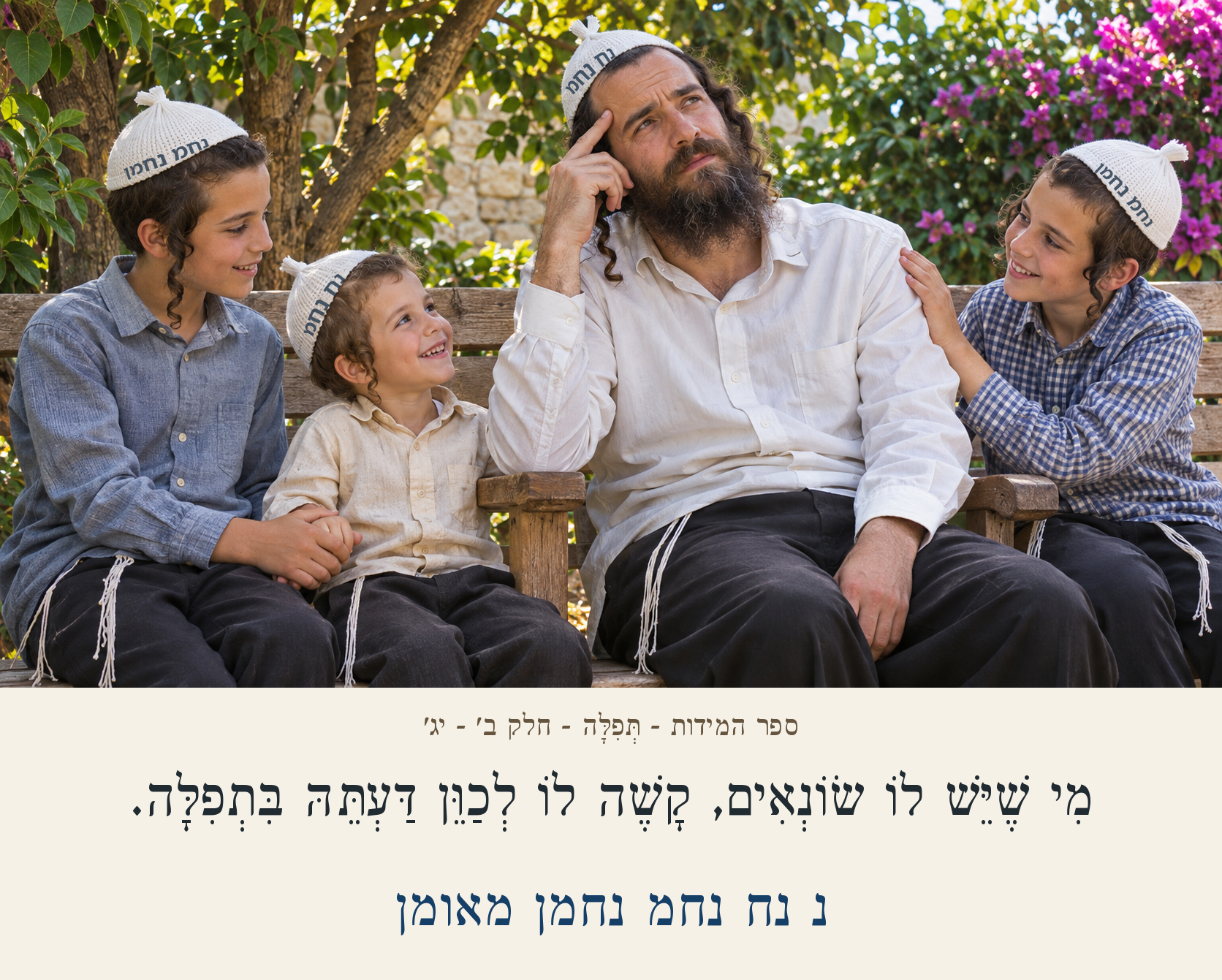
מִי שֶׁיֵּשׁ לוֹ שׂוֹנְאִים, קָשֶׁה לוֹ לְכַוֵּן דַּעְתֵּהּ בִּתְפִלָּה.
II-13
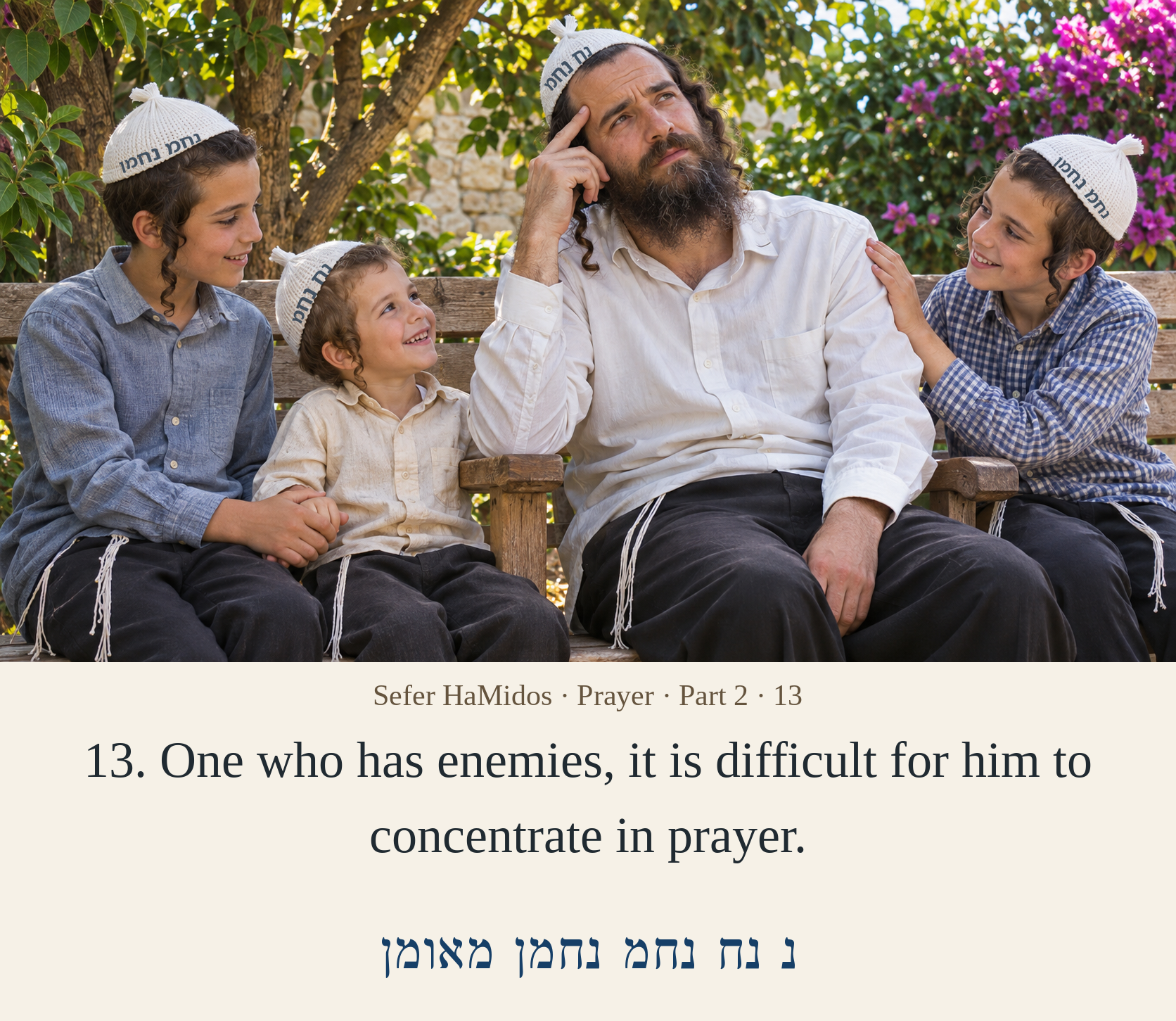
13. One who has enemies, it is difficult for him to concentrate in prayer.
📷 Pictures / videos for this teaching
AI-generated editorial illustration by ajew.org using ChatGPT/OpenAI, with locally typeset cap lettering and captions. This warm family scene provides a prayer context; it does not identify anyone as an enemy or establish the man’s actual enemies or concentration. The complete teaching’s condition and difficulty of concentrating in prayer remain in the exact bilingual captions.
חלק ב׳ · י״ד
צָרִיךְ אָדָם לְהִזָּהֵר, בְּשָׁעָה שֶׁמַּזְכִּיר אֶת הַשֵּׁם, שֶׁיִּהְיֶה בִּקְדֻשָּׁה וּבְטָהֳרָה, הַיְנוּ שֶׁיְּקַדֵּשׁ רוּחַ פִּיו כָּל־כָּךְ שֶׁיְּהֵא בִּבְחִינַת רוּחַ נְבוּאָה, וְאָז הָרוּחַ הַזֶּה הוֹלֵךְ וּמַפִּיל אוֹתָם הַבּוֹטְחִים בְּשָׁוְא וּבְהֶבֶל, וְזֶהוּ: בְּ'שֵׁם יְ'הֹוָה אֱ'לֹקֵינוּ נַ'זְכִּיר – הֵמָּה כָּרְעוּ וְנָפָלוּ.
II-14
14. One must be careful when one mentions the Name of G-d, that it be said in holiness and purity. That is, he should sanctify the breath of his mouth to such a degree that it becomes the aspect of the spirit of prophecy. Then, this spirit goes out and casts down those who trust in falsehood and vanity. This is [hinted at in the first letters of the verse (Psalms 20:8)]: B’Shem YKVK Aelokainu Nazkir ("With the Name of the L-rd our G-d we mention") [= NAB’Y (Prophet). And the next verse continues:] "They bowed and fell."
💬 Comments
…Comments are currently read-only.
Loading comments…