
Sections
Hilchos Kadish — Halacha 1
ליקוטי הלכות - Likutay Halachos
Matched source edition · Volume 4 · Bracketed references are separate from the traditional items.
הִלְכוֹת קַדִּישׁ הֲלָכָה אHilchos Kadish Halacha 1
Based on Likutay Moharan II:4 — 'OoviYom HaBeekoorim — Vi'es HaOrevim Tziveesi L'chalkelecha.' See the entire teaching there; part of it was brought in another volume in Hilchos Tefillas HaMincha, together with some introductions that emerge from there.
עַל-פִּי הַמַּאֲמָר 'וּבְיוֹם הַבִּכּוּרִים-וְאֶת הָעוֹרְבִים צִוִּיתִי לְכַלְכְּלֶךָ' בְּלִקּוּטֵי תִּנְיָנָא סִימָן ד, עַיֵּן שָׁם כָּל הַמַּאֲמָר וְהוּבָא קְצָת בְּכֶרֶךְ אַחֵר בְּהִלְכוֹת תְּפִלַּת הַמִּנְחָה וּקְצָת הַקְדָּמוֹת הַיּוֹצֵא מִשָּׁם בְּקִצּוּר:
אות א§1
כִּי עַל-יְדֵי צְדָקָה זוֹכִין שֶׁאֵין צְרִיכִין לַעֲשׂוֹת שׁוּם עֵסֶק וְשׁוּם מְלָאכָה כִּי אַף-עַל-פִּי שֶׁכָּל הָעֲסָקִים וְהַמַּשָּא וּמַתָּן הֵם בְּחִינַת אִתְעָרוּתָא דִּלְתַתָּא, כִּי נִמְשָׁכִין מִל"ט מְלָאכוֹת הַמִּשְׁכָּן שֶׁהֵם כְּנֶגֶד עוּבְדָא דִּבְרֵאשִׁית וְכוּ' אַף-עַל-פִּי-כֵן אִם הָיָה שׁוֹפֵעַ חַסְדּוֹ יִתְבָּרַךְ לֹא הָיִינוּ צְרִיכִין לְשׁוּם עֵסֶק, כִּי הָיָה מִתְקַיֵּם הָעוֹלָם בְּחַסְדּוֹ וַאֲפִלּוּ הַהֶכְרֵחִיּוּת הָיוּ נַעֲשִׂין עַל -יְדֵי אֲחֵרִים, בִּבְחִינַת ( יְשַׁעְיָה סא) וְעָמְדוּ זָרִים וְרָעוּ צֹאנְכֶם וּבְנֵי נֵכָר אִכָּרֵיכֶם וְכֹרְמֵיכֶם וְאַתֶּם כֹּהֲנֵי ה' תִּקָּרֵאוּ בְּחִינַת חֶסֶד שֶׁהוּא בְּחִינַת כֹּהֵן וְכוּ' וּלְקַבֵּל הַחֶסֶד צְרִיכִין כְּלִי וְצִנּוֹר.
For through tzedakah one merits that one does not need to make any business transaction and any melachah [labor]. For although all businesses and all commerce are the aspect of is'aroosah dilisatah [arousal from below] — for they are drawn from the thirty-nine melachos of the Mishkan [Tabernacle], which correspond to the work of Creation, etc. — nevertheless, if His Chesed, yisbarach, were flowing, we would not need any business at all. For the world would be sustained through His Chesed, and even the necessities would be done by others, in the aspect of (Yeshayahu 61): "Vi'amdoo zurim viru'oo tzoanchem, oovnai naichur eekuraichem vichoarmaichem, vi'attem Kohanai Hashem teekurai'oo" — "Strangers shall stand and tend your flocks, and sons of foreigners shall be your plowmen and your vinedressers; and you shall be called the priests of Hashem" — the aspect of Chesed, which is the aspect of Kohain, etc. And in order to receive the Chesed one needs a vessel and a channel.
וְעַל-כֵּן צְרִיכִין יִרְאָה, סִטְרָא דְּלֵוִי שֶׁהוּא בְּחִינַת כְּלִי לְקַבֵּל שֶׁפַע הַחֶסֶד וְיִרְאָה נַעֲשֶׂה עַל-יְדֵי רָצוֹן עַל-יְדֵי שֶׁנִּתְגַּלֶּה שֶׁהַכֹּל מִתְנַהֵג עַל-יְדֵי רְצוֹנוֹ יִתְבָּרַךְ לְבַד וְאֵין שׁוּם חִיּוּב הַטֶּבַע כְּלָל וְזֶה נִתְגַּלֶּה עַל-יְדֵי הַשָּׁלֹשׁ רְגָלִים שֶׁהֵם בְּחִינַת מִקְרָא קֹדֶשׁ כִּי קְדֻשַּׁת יוֹם טוֹב קוֹרֵא וּמְגַלֶּה הָרָצוֹן שֶׁהַכֹּל רַק עַל-יְדֵי רְצוֹנוֹ לְבַד כִּי בְּכָל הַיָּמִים טוֹבִים עָשָׂה הַשֵּׁם יִתְבָּרַךְ אוֹתוֹת נוֹרָאוֹת שֶׁעַל-יְדֵי זֶה נִתְגַּלֶּה הָרָצוֹן, אַךְ יֵשׁ קוֹל שַׁאֲגַת הַחַיּוֹת רָעוֹת שֶׁהֵם חַכְמֵי הַטֶּבַע שֶׁהֵם רוֹצִים לְהִתְגַּבֵּר עַל קוֹל הַקְּרִיאָה שֶׁל יוֹם טוֹב שֶׁמְּגַלֶּה אֶת הָרָצוֹן וְהַכְנָעָתָם הוּא עַל-יְדֵי חָכָם שֶׁבִּקְדֻשָּׁה שֶׁיּוֹדֵעַ לְקַשֵּׁר כָּל הָרְצוֹנוֹת לְשֹׁרֶשׁ הָרָצוֹן שֶׁהוּא בְּחִינַת מֵצַח הָרָצוֹן בְּחִינַת רַעֲוָא דְּרַעֲוִין אַךְ יֵשׁ מֵצַח הַנָּחָשׁ שֹׁרֶשׁ חָכְמַת הַטֶּבַע וִינִיקָתוֹ מִזִּקְנֵי הַדּוֹר שֶׁאֵין בָּהֶם שְׁלֵמוּת שֶׁאֵין מוֹסִיפִין קְדֻשָּׁה וְדַעַת בְּכָל יוֹם וְכוּ' עַיֵּן שָׁם. וְעַל-יְדֵי צְדָקָה מַעֲלִין אֵלּוּ הַיָּמִים הַנְּפוּלִים וְעַל-יְדֵי זֶה נִכְנָע מֵצַח הַנָּחָשׁ וּמִתְגַּבֵּר וּמִתְגַּלֶּה מֵצַח הָרָצוֹן וְעַל-יְדֵי זֶה נִשְׁמָע קוֹל הַקְּרִיאָה שֶׁל יוֹם טוֹב שֶׁמְּגַלֶּה הָרָצוֹן וְעַל-יְדֵי זֶה נַעֲשֶׂה יִרְאָה וְעַל-יְדֵי הַיִּרְאָה נִשְׁפָּע הַחֶסֶד וַאֲזַי אֵין צְרִיכִין לְשׁוּם עֵסֶק, כִּי נִתְקַיֵּם וְעָמְדוּ זָרִים וְרָעוּ צֹאנְכֶם וְכוּ' עַיֵּן שָׁם כָּל זֶה הֵיטֵב:
Therefore one needs yeeruh [awe/fear of God], the side of Levi, which is the aspect of the vessel for receiving the flow of Chesed. And yeeruh is made through Ratzon [Will] — through its being revealed that everything is governed by His will, yisbarach, alone, and there is no compulsion of nature at all. This is revealed through the Shaloash Regalim [three pilgrimage festivals], which are the aspect of (Vayikra 23:3): Mikra Kodesh [holy convocation]. For the kedushah of Yom Tov calls and reveals the Ratzon — that everything is only through His will alone — because on all the Yomim Tovim Hashem, yisbarach, performed awesome signs, through which the Ratzon was revealed. However, there is the sound of the roar of the wild beasts, who are the wise men of nature. They want to overpower the sound of the calling of Yom Tov, which reveals the Ratzon. Their subjugation is through the chacham of kedushah, who knows how to bind all the retzonos [wills] to the root of the Ratzon, which is the aspect of the maitzach haRatzon [Forehead of the Will], the aspect of Rava diRavin [Will of Wills]. However, there is the maitzach hanachash [Forehead of the Serpent], the root of the wisdom of nature, and its nourishment is from the elders of the generation who do not have shelaimus [completion] — who do not add kedushah and da'as each day, etc.; see there. And through tzedakah these fallen days are elevated. Through this the metzach hanachash is subdued, and the metzach haRatzon prevails and is revealed. Through this the sound of the calling of Yom Tov is heard, which reveals the Ratzon. Through this yeeruh is made, and through the yeeruh the Chesed flows. Then one does not need any business, because "Strangers shall stand and tend your flocks," etc., is fulfilled. See there well concerning all this.
אות ב§2
וְזֶה בְּחִינַת תְּפִלָּה שֶׁהִיא הִתְגַּלּוּת הָרָצוֹן כִּי הַתְּפִלָּה מְגַלֶּה הָרָצוֹן וּמַכְנִיעַ וּמְבַטֵּל חָכְמַת הַטֶּבַע כִּי הַטֶּבַע מְחַיֵּב כָּךְ וְהַתְּפִלָּה מְשַׁנָּה הַטֶּבַע וְכַמְבֹאָר בְּדִבְרֵי רַבֵּנוּ זִכְרוֹנוֹ לִבְרָכָה כַּמָּה פְּעָמִים וְעַל-כֵּן הֵם שָׁלֹשׁ תְּפִלּוֹת בַּיּוֹם כְּנֶגֶד שְׁלֹשָׁה אָבוֹת שֶׁהֵם בְּחִינַת שְׁלֹשָׁה רְגָלִים כַּמּוּבָא כִּי שָׁלֹשׁ תְּפִלּוֹת הֵם בְּחִינַת שָׁלֹשׁ רְגָלִים שֶׁמְּגַלִּין הָרָצוֹן כַּנַּ"ל וְכַמְבֹאָר כָּל זֶה הֵיטֵב בְּהִלְכוֹת תְּפִלַּת הַמִּנְחָה עַל-פִּי מַאֲמָר הַנַּ"ל.
This is the aspect of tefillah, which is the revelation of the Ratzon. For tefillah reveals the Ratzon and subdues and nullifies the wisdom of nature. For nature dictates this way, while tefillah changes nature, as is explained in the words of Rabbainu, zichroanoa livrachah, many times (Likutay Moharan 7:1, 9:5). Therefore there are three tefillos each day, corresponding to the three Avos [Patriarchs], who are the aspect of the Shaloash Regalim, as brought (Tor Orach Chaim 417). For the three tefillos are the aspect of the three Regalim, which reveal the Ratzon, as mentioned above (1); and all this is explained well in Hilchos Tefillas HaMincha (Halacha 2) according to the above-mentioned teaching.
וְזֶה בְּחִינַת סֵדֶר הַתְּפִלָּה בְּשַׁחֲרִית, שֶׁבִּתְחִלָּה מְסַדְּרִין וְאוֹמְרִים סֵדֶר הַקָּרְבָּנוֹת לְתַקֵּן וּלְבָרֵר עוֹלַם הָעֲשִׂיָּה כַּיָּדוּעַ, זֶה בְּחִינַת מְלֶאכֶת מַעֲשֵׂה בְּרֵאשִׁית שֶׁהֵם בְּחִינַת מַעֲשֵׂה הַמִּשְׁכָּן שֶׁמִּשָּׁם נִמְשָׁכִין כָּל הַמְּלָאכוֹת, וְכָל הָעֲשִׂיּוֹת וְכָל הַמַּשָּא וּמַתָּן וְהָעֲסָקִים שֶׁהֵם כְּלוּלִים בְּל"ט מְלָאכוֹת שֶׁזֶּה בְּחִינַת עֲשִׂיָּה. בְּחִינַת וּמַעֲשֵׂה יָדֵינוּ כּוֹנְנָה עָלֵינוּ וְכוּ' שֶּׁבֵּרְכָם מֹשֶׁה בִּגְמַר מְלֶאכֶת הַמִּשְׁכָּן יְהִי רָצוֹן שֶׁתִּשְׁרֶה שְׁכִינָה בְּמַעֲשֵׂה יְדֵיכֶם. וְזֶה בְּחִינַת הַקָּרְבָּנוֹת שֶׁמְּסַדְּרִין כִּי כָּל הַקָּרְבָּנוֹת הָיוּ בַּמִּשְׁכָּן שֶׁעַל יָדָם מְבָרְרִין בְּחִינַת עֲשִׂיָּה שֶׁהוּא בְּחִינַת כָּל הָעֲשִׂיּוֹת וְכָל הַמַּשָּא וּמַתָּן וְהַמְּלָאכוֹת שֶׁהֵם כְּלוּלִים בִּמְלֶאכֶת הַמִּשְׁכָּן כַּנַּ"ל וְהֵם נִתְבָּרְרִים עַל-יְדֵי סֵדֶר הַקָּרְבָּנוֹת שֶׁהֵם בְּחִינַת מַעֲשֵׂה הַמִּשְׁכָּן שֶׁשָּׁם קְרֵבִין כָּל הַקָּרְבָּנוֹת וְזֶה עִקַּר מַעֲשֵׂה הַמִּשְׁכָּן לְהַקְרִיב שָׁם קָרְבָּנוֹת:
This is the aspect of the order of the morning tefillah. First, we arrange and recite the order of the Korbanos [offerings], to rectify and clarify the world of Asiyah [Action], as is known (Pree Aitz Chaim, Shar HaTefila 4). This is the aspect of the work of Creation, which is the aspect of the work of the Mishkan — from which all melachos, all actions, all commerce, and all businesses are drawn, all of them included in the thirty-nine melachos. This is the aspect of Asiyah, the aspect of (Tehillim 90:17): "Ooma'asai yudainoo koaninuh ulainoo" — "Establish the work of our hands upon us" — with which Moshe blessed them at the completion of the work of the Mishkan (Tanchuma Pikuday 11): "May it be His will that the Shechinah rest upon the work of your hands." This is the aspect of the Korbanos that we arrange, for all the Korbanos were in the Mishkan. Through them the aspect of Asiyah is clarified — which is the aspect of all actions, all commerce, and all melachos that are included in the work of the Mishkan, as mentioned above. They are clarified through the order of the Korbanos, which are the aspect of the work of the Mishkan, for there all the Korbanos are offered; and this is the essential work of the Mishkan: to offer Korbanos there.
אות ג§3
וְאַחַר כָּךְ אוֹמְרִים פְּסוּקֵי דְּזִמְרָה שֶׁהֵם בְּחִינַת יִרְאָה סִטְרָא דְּלֵוִי כִּי כָּל הַזְּמִירוֹת וְהַנִּגּוּנִים הֵם מִסִּטְרָא דְּלֵוִי כַּיָּדוּעַ. כִּי אָנוּ מַעֲלִין כָּל הָעוֹלָמוֹת עַל-יְדֵי סֵדֶר הַתְּפִלָּה מִתַּתָּא לְעֵלָּא כַּיָּדוּעַ וְעַל-כֵּן אָנוּ מַעֲלִין כָּל הָעֲשִׂיּוֹת וְהָעֲסָקִים עַל יְדֵי סֵדֶר הַקָּרְבָּנוֹת לִבְחִינַת יִרְאָה שֶׁמִּשָּׁם נִמְשָׁךְ הַחִיּוּת לָהֶם עַל-יְדֵי הַחֶסֶד הַנִּשְׁפָּע עַל-יְדֵי הַיִּרְאָה שֶׁמְּחַיֶּה וּמְקַיֵּם כָּל הָעוֹלָם כַּנַּ"ל וְהַיִּרְאָה נַעֲשֶׂה עַל-יְדֵי הָרָצוֹן וְעַל-כֵּן אַחַר פְּסוּקֵי דְּזִמְרָה שֶׁהֵם בְּחִינַת יִרְאָה סִטְרָא דְּלֵוִי, אַחַר כָּךְ אוֹמְרִים בִּרְכַּת קְרִיאַת שְׁמַע שֶׁהֵם בְּחִינַת הִתְגַּלּוּת הָרָצוֹן כִּי בִּקְרִיאַת שְׁמַע אָנוּ מְעִידִין עַל יִחוּדוֹ יִתְבָּרַךְ שֶׁהוּא יִתְבָּרַךְ לְבַדּוֹ יָחִיד בְּעוֹלָמוֹ וְהוּא לְבַדּוֹ מַנְהִיג הָעוֹלָם בִּרְצוֹנוֹ לְבַד, כְּמוֹ שֶׁאָמְרוּ רַבּוֹתֵינוּ זִכְרוֹנָם לִבְרָכָה ( בְּרָכוֹת יג) שֶׁצָּרִיךְ לְהַאֲרִיךְ בַּד' דְּאֶחָד כְּדֵי שֶׁיַּמְלִיכֵהוּ לְמַעְלָה וּלְמַטָּה וּבָאַרְבַּע רוּחוֹת, דְּהַיְנוּ שֶׁהוּא יִתְבָּרַךְ לְבַדּוֹ מוֹשֵׁל בְּעוֹלָמוֹ כִּי הוּא לְבַדּוֹ יִתְבָּרַךְ מַנְהִיג הָעוֹלָם בִּרְצוֹנוֹ לְבַד וְזֶה בְּחִינַת בִּרְכַּת קְרִיאַת שְׁמַע שֶׁאוֹמְרִים יוֹצֵר אוֹר וּבוֹרֵא חֹשֶׁךְ וְכוּ' יוֹצֵר הַמְּאוֹרוֹת וּבָזֶה אָנוּ מְגַלִּין וּמְפַרְסְמִין שֶׁאֵין שׁוּם מַעֲרֶכֶת הַשָּׁמַיִם כְּלָל, וּמַכְנִיעִין וּמְבַטְּלִין חָכְמַת הַטֶּבַע שֶׁהִיא חָכְמַת הַכּוֹכָבִים וּמַזָּלוֹת כִּי אָנוּ מוֹדִים וּמְעִידִין שֶׁהַשֵּׁם יִתְבָּרַךְ בָּרָא אֶת הַמְּאוֹרוֹת שֶׁבַּשָּׁמַיִם וְהוּא מַנְהִיג וּמְחַיֶּה אוֹתָם-אֶת כָּל הַמְּאוֹרוֹת וּמְחַדֵּשׁ בְּטוּבוֹ בְּכָל יוֹם תָּמִיד מַעֲשֵׂה בְּרֵאשִׁית וְאֵין שׁוּם טֶבַע כְּלָל רַק הַכֹּל בִּרְצוֹנוֹ וְזֶה בְּחִינַת יוֹם טוֹב שֶׁמְּגַלֶּה אֶת הָרָצוֹן בְּחִינַת וַיַּרְא אֱלֹקִים אֶת הָאוֹר כִּי טוֹב וַיִּקְרָא אֱלֹקִים לָאוֹר יוֹם כִּי כְּשֶׁיּוֹדְעִין שֶׁהַשֵּׁם יִתְבָּרַךְ מַנְהִיג הַכֹּל בִּרְצוֹנוֹ לְבַד וְהוּא לְבַדּוֹ יָצַר הַמְּאוֹרוֹת שֶׁבַּשָּׁמַיִם זֶה עִקַּר אוֹר יוֹם כִּי לְהֵפֶךְ חָכְמַת הַטֶּבַע הוּא בְּחִינַת חֹשֶׁךְ בְּחִינַת חָשַׁךְ הַשֶּׁמֶשׁ בְּצֵאתוֹ וְיָרֵחַ לֹא יַגִּיהַּ אוֹרוֹ וְכַמּוּבָא לְעֵיל מִזֶּה בְּהִלְכוֹת נְטִילַת יָדַיִם שַׁחֲרִית כִּי עִקַּר הָאוֹר הוּא הַשֵּׁם יִתְבָּרַךְ לְבַד וּכְשֶׁמְּגַלִּין שֶׁהַכֹּל עַל-יְדֵי רְצוֹנוֹ לְבַדּוֹ זֶה בְּחִינַת יוֹם טוֹב בְּחִינַת אוֹר יוֹם שֶׁהוּא בְּחִינַת טוֹב בְּחִינַת וּבְטוּבוֹ מְחַדֵּשׁ וְכוּ' בְּחִינַת וַיַּרְא אֱלֹקִים אֶת הָאוֹר כִּי טוֹב וַיִּקְרָא אֱלֹקִים לָאוֹר יוֹם וְכוּ' כַּנַּ"ל וְעַל-יְדֵי שֶׁבְּיוֹם טוֹב נִתְגַּלֶּה הָרָצוֹן כַּנַּ"ל עַל-כֵּן נִקְרָא יוֹם טוֹב, כִּי אָז דַּיְקָא מֵאִיר אוֹר יוֹם שֶׁהוּא בְּחִינַת טוֹב כַּנַּ"ל. וְכֵן בְּכָל יוֹם וָיוֹם אָנוּ מַמְשִׁיכִין קְדֻשַּׁת יוֹם טוֹב שֶׁהוּא הִתְגַּלּוּת הָרָצוֹן שֶׁמְּגַלִּין בְּבִרְכַּת הַמְּאוֹרוֹת שֶׁהוּא בִּרְכַּת קְרִיאַת שְׁמַע שֶׁאָז מְעִידִין שֶׁהַשֵּׁם יִתְבָּרַךְ בָּרָא כָּל הַמְּאוֹרוֹת שֶׁבַּשָּׁמַיִם וְכָל הַכּוֹכָבִים וּמַזָּלוֹת כֻּלָּם הוּא לְבַדּוֹ יִתְבָּרַךְ בְּרָאָם וְאֵין שׁוּם טֶבַע כְּלָל וְזֶה עִקַּר אוֹר יוֹם וְכוּ' בְּחִינַת יוֹם טוֹב וְכוּ' כַּנַּ"ל: וְזֶה בְּחִינַת סֵדֶר קְדֻשָּׁה שֶׁאוֹמְרִים בְּבִרְכַּת יוֹצֵר הַמְּאוֹרוֹת זֶה בְּחִינַת מִקְרָא קֹדֶשׁ שֶׁהַקֹּדֶשׁ קוֹרֵא וּמְגַלֶּה אֶת הָרָצוֹן כִּי בְּכָל מָקוֹם שֶׁיֵּשׁ קְדֻשָּׁה נִתְגַּלֶּה הָרָצוֹן בִּבְחִינַת מִקְרָא קֹדֶשׁ כַּנַּ"ל כִּי קֹדֶשׁ הִיא בְּחִינַת חָכְמָה כַּיָּדוּעַ, הַיְנוּ בְּחִינַת הַחֲכָמִים שֶׁבִּקְדֻשָּׁה שֶׁהֵם בְּחִינַת קֹדֶשׁ שֶׁהֵם מְגַלִּין אֶת הָרָצוֹן וְעַל-כֵּן עִקַּר קְדֻשַּׁת יוֹם טוֹב תָּלוּי בְּחַכְמֵי הַדּוֹר שֶׁהֵם קוֹבְעִים אֶת הַשָּׁנִים וְהֶחֳדָשִׁים וְכָל הַיָּמִים טוֹבִים תְּלוּיִים בָּהֶם, כְּמוֹ שֶׁכָּתוּב ( וַיִּקְרָא כג) אֵלֶּה מוֹעֲדֵי ה' אֲשֶׁר תִּקְרְאוּ אֹתָם מִקְרָאֵי קֹדֶשׁ כְּמוֹ שֶׁדָּרְשׁוּ רַבּוֹתֵינוּ זִכְרוֹנָם לִבְרָכָה ( רֹאשׁ הַשָּׁנָה כד) כִּי עִקַּר בְּחִינַת מִקְרָאֵי קֹדֶשׁ דְּהַיְנוּ לִקְרוֹת וּלְגַלּוֹת אֶת הָרָצוֹן הוּא עַל-יְדֵי חַכְמֵי הַדּוֹר שֶׁעַל יָדָם נִשְׁמָע קוֹל הַקְּרִיאָה שֶׁל יוֹם טוֹב עַל-יְדֵי שֶׁהֵם מְקַשְּׁרִים כָּל הָרְצוֹנוֹת לְשֹׁרֶשׁ הָרָצוֹן כַּנַּ"ל וְזֶה בְּחִינַת סֵדֶר קְדֻשָּׁה שֶׁבְּבִרְכַּת הַמְּאוֹרוֹת שֶׁהֵם בְּחִינַת הִתְגַּלּוּת הָרָצוֹן כִּי עַל-יְדֵי בְּחִינַת קְדֻשָּׁה נִתְגַּלֶּה הָרָצוֹן בִּבְחִינַת מִקְרָא קֹדֶשׁ כַּנַּ"ל נִמְצָא שֶׁעַל-יְדֵי קְרִיאַת שְׁמַע וּבִרְכוֹתֶיהָ נִתְגַּלֶּה הָרָצוֹן וְאַחַר כָּךְ מִתְפַּלְּלִין הַתְּפִלָּה בְּלַחַשׁ וְאָז עוֹלִין לַמָּקוֹם שֶׁעוֹלִין וְאָז מִתְקַשְּׁרִין לִבְחִינַת רָצוֹן שֶׁבִּרְצוֹנוֹת רַעֲוָא דְּרַעֲוִין שֶׁזֶּה עִקַּר בְּחִינַת הַתְּפִלָּה בִּבְחִינַת וַאֲנִי תְפִלָּתִי לְךָ ה' עֵת רָצוֹן:
Afterward we say Pesukay diZimrah [Verses of Song], which are the aspect of yeeruh, the side of Levi; for all songs and melodies are from the side of Levi, as is known. For through the order of tefillah we raise all the worlds from below to Above, as is known (Pree Aitz Chaim, Shar HaTefila 4). Therefore we elevate all actions and businesses through the order of the Korbanos to the aspect of yeeruh, from which vitality is drawn to them through the Chesed that flows through yeeruh, which gives life and sustains the whole world, as mentioned above (1). And yeeruh is made through the Ratzon. Therefore after Pesukay diZimrah, which are the aspect of yeeruh, the side of Levi, we afterward say the blessings of Kreyas shima, which are the aspect of the revelation of the Ratzon. For in Kreyas shima we testify to His unity, yisbarach — that He alone, yisbarach, is singular in His world, and He alone governs the world by His will alone. As our Rabbis, zichronam livrachah, said (Berachos 13b), that one must prolong the dalet of Echad in order to coronate Him above and below and in the four directions — meaning that He alone, yisbarach, rules in His world, for He alone, yisbarach, governs the world by His will alone. This is the aspect of the blessings of Kreyas shima, where we say: "Yoatzehr or oovoiray choashech... Yoatzehr hameoros" — "Who forms light and creates darkness... Who forms the luminaries." Through this we reveal and publicize that there is no system of the heavens at all, and we subdue and nullify the wisdom of nature, which is the wisdom of the stars and constellations. For we acknowledge and testify that Hashem, yisbarach, created the luminaries in the heavens, and He governs them and gives them life — all the luminaries — and in His goodness He renews the work of Creation every day, constantly. There is no nature at all; everything is only by His will. This is the aspect of Yom Tov, which reveals the Ratzon, the aspect of (Biraishis 1:4-5): "And God saw the light, that it was good; and God called the light Day." For when one knows that Hashem, yisbarach, governs everything by His will alone, and that He alone formed the luminaries in the heavens, this is the essential light of day. For the opposite — the wisdom of nature — is the aspect of darkness, the aspect of (Isaiah 13:10): "The sun is darkened in its going forth, and the moon will not shine its light," as was brought above in Hilchos Netilas Yadayim Shacharis (2:1). For the essential light is Hashem, yisbarach, alone; and when we reveal that everything is by His will alone, this is the aspect of Yom Tov, the aspect of the light of day, which is the aspect of good — the aspect of "in His goodness He renews," etc.; the aspect of "And God saw the light, that it was good; and God called the light Day," etc., as mentioned above. And because on Yom Tov the Ratzon is revealed, as mentioned above (1), therefore it is called Yom Tov — for specifically then the light of day, which is the aspect of good, shines, as mentioned above. So too, every single day we draw the kedushah of Yom Tov, which is the revelation of the Ratzon, which we reveal in the blessing of the luminaries, which is the blessing of Kreyas shima. For then we testify that Hashem, yisbarach, created all the luminaries in the heavens and all the stars and constellations; all of them He alone, yisbarach, created, and there is no nature at all. This is the essential light of day, etc., the aspect of Yom Tov, etc., as mentioned above. This is the aspect of the order of Kedushah that we say in the blessing of Yoatzehr hami’oaroas (Orach Chaim 59:63). This is the aspect of Mikra Kodesh — that the Kodesh calls and reveals the Ratzon. For wherever there is kedushah, the Ratzon is revealed in the aspect of Mikra Kodesh, as mentioned above (1), because Kodesh is the aspect of Chochmah, as is known (Zohar Acharai 61a) — meaning the aspect of the chachamim of kedushah, who are the aspect of Kodesh, who reveal the Ratzon. Therefore the essential kedushah of Yom Tov depends on the chachamim of the generation, who establish the years and the months, and all the Yomim Tovim depend on them, as it is written (Vayikra 23:2,3): "These are the appointed times of Hashem, which you shall call as holy convocations" — as our Rabbis, zichronam livrachah, expounded (Rosh HaShanah 24a). For the essential aspect of Mikra'ei Kodesh — to call and reveal the Ratzon — is through the chachamim of the generation; through them the sound of the calling of Yom Tov is heard, because they bind all the retzonos to the root of the Ratzon, as mentioned above. This is the aspect of the order of Kedushah in the blessing of the luminaries, which are the aspect of the revelation of the Ratzon. For through the aspect of kedushah, the Ratzon is revealed in the aspect of Mikra Kodesh, as mentioned above. Thus through Kreyas shima and its blessings the Ratzon is revealed. Afterward one prays the tefillah silently, and then one ascends to the place to which one ascends. Then one binds oneself to the aspect of Ratzon sheberetzonos [the Will within wills], Rava diRavin [Will of Wills], which is the essential aspect of tefillah, in the aspect of (Tehillim 69): "Va'ani tefillasi lecha Hashem eis Ratzon" — "As for me, my prayer is to You, Hashem, at a time of Ratzon."
אות ד§4
וְזֶה בְּחִינַת קַדִּישׁ שֶׁאוֹמְרִין בֵּין עוֹלָם לְעוֹלָם וְהוּא בְּחִינַת הָעַמּוּד שֶׁבֵּין עוֹלָם לְעוֹלָם שֶׁדֶּרֶךְ שָׁם עוֹלִין מֵעוֹלָם לְעוֹלָם כַּמְבֹאָר בַּכַּוָּנוֹת כִּי מַעֲלַת הַקַּדִּישׁ גָּבוֹהַּ מְאֹד מְאֹד כְּמוֹ שֶׁאָמְרוּ רַבּוֹתֵינוּ זִכְרוֹנָם לִבְרָכָה וּכְמוֹ שֶׁכָּתוּב בַּזֹּהַר הַקָּדוֹשׁ כִּי הוּא מַתְבַּר כָּל שַׁלְשְׁלָאִין דְּפַרְזְלָא כִּי הַקַּדִּישׁ הוּא בְּחִינַת הִתְגַּלּוּת הָרָצוֹן בִּבְחִינַת בְּעָלְמָא דִי בְרָא כִרְעוּתֵיהּ וְיַמְלִיךְ מַלְכוּתֵיהּ וּמַעֲלִין וּמְקַשְּׁרִין הָרָצוֹן לְשֹׁרֶשׁ הָרָצוֹן שֶׁהוּא בְּחִינַת רַעֲוָא דְּרַעֲוִין בִּבְחִינַת מַה שֶּׁאוֹמְרִין בַּקַּדִּישׁ יִתְבָּרַךְ וְיִשְׁתַּבַּח וְכוּ' לְעֵילָּא מִן כָּל בִּרְכָתָא וְשִׁירָתָא תֻּשְׁבְּחָתָא וְכוּ' דַּאֲמִירָן בְּעָלְמָא וְכוּ' כִּי כָּל הַשִּׁירוֹת וְהַתִּשְׁבָּחוֹת שֶׁאוֹמְרִין כֻּלָּם הֵם בְּחִינַת הִתְגַּלּוּת הָרָצוֹן שֶׁמּוֹדִים וּמְשַׁבְּחִין לְהַשֵּׁם יִתְבָּרַךְ שֶׁבָּרָא הַכֹּל בִּרְצוֹנוֹ וּבְקַדִּיש אוֹמְרִים לְעֵילָּא מִן כָּל בִּרְכָתָא וְשִׁירָתָא וְכוּ' זֶה בְּחִינָה לְמַעְלָה מִבְּחִינַת הִתְגַּלּוּת הָרָצוֹן שֶׁבְּזֶה הָעוֹלָם הַיְנוּ בְּחִינַת רָצוֹן שֶׁבָּרְצוֹנוֹת בְּחִינַת רַעֲוָא דְּרַעֲוִין שֶׁשָּׁם מִתְקַשְּׁרִין כָּל הָרְצוֹנוֹת בְּחִינַת שֹׁרֶשׁ הָרָצוֹן כִּי בַּקַּדִּישׁ עוֹלִים וּמִתְקַשְּׁרִים לִבְחִינַת שֹׁרֶשׁ הָרָצוֹן הַנַּ"ל וְעַל-כֵּן הַקַּדִּישׁ הוּא גָּבוֹהַּ מִכָּל הַקְּדֻשּׁוֹת שֶׁהֵם בְּחִינַת הִתְגַּלּוּת הָרָצוֹן כַּנַּ"ל כִּי הַקַּדִּישׁ הוּא בְּחִינַת שֹׁרֶשׁ הָרָצוֹן כַּנַּ"ל וְעַל-כֵּן נִתְתַּקֵּן בִּלְשׁוֹן תַּרְגּוּם כִּי לְשׁוֹן תַּרְגּוּם מִשָּׁם עִקַּר יְנִיקַת חַכְמֵי הַטֶּבַע כִּי הַתַּרְגּוּם הוּא בְּחִינַת עֵץ הַדַּעַת טוֹב וָרָע, כְּמוֹ שֶׁאָמַר רַבֵּנוּ זִכְרוֹנוֹ לִבְרָכָה בְּמָקוֹם אַחֵר. וְזֶה בְּחִינַת הַטֶּבַע שֶׁשָּׁם מְעֹרָב טוֹב וָרָע וְשָׁם עִקַּר בְּחִינַת הַבְּחִירָה כִּי כְּשֶׁמַּאֲמִינִים שֶׁהַטֶּבַע בְּעַצְמָהּ מִתְנַהֶגֶת בִּרְצוֹנוֹ לְבַד זֶה בְּחִינַת הַטּוֹב שֶׁבַּטֶּבַע וְאָז הַטֶּבַע נִכְלָל בְּהַשְׁגָּחָה וְרָצוֹן וּלְהֵפֶךְ כְּשֶׁמִּתְגַּבְּרִים חַס וְשָׁלוֹם חַכְמֵי הַטֶּבַע שֶׁמַּפְרִידִין הַטֶּבַע מֵהַשְׁגָּחָה זֶה בְּחִינַת הָרַע שֶׁבַּטֶּבַע נִמְצָא שֶׁהַטֶּבַע הוּא בִּבְחִינַת עֵץ הַדַּעַת טוֹב וְרַע שֶׁהִיא בְּחִינַת לְשׁוֹן תַּרְגּוּם וְעַל-כֵּן הַקַּדִּישׁ שֶׁהוּא עִקַּר הִתְגַּלּוּת הָרָצוֹן עַל-יְדֵי שֶׁעוֹלִין וּמִתְקַשְּׁרִין לְשֹׁרֶשׁ הָרָצוֹן כַּנַּ"ל עַל-כֵּן נִתְתַּקֵּן בִּלְשׁוֹן תַּרְגּוּם.
This is the aspect of the Kadish that we say between one world and another world. It is the aspect of the pillar between one world and another world, through which one ascends from world to world, as explained in the Kavanos [Kabbalistic intentions – Pree Aitz Chaim Introduction to Shar Hakadishim]. For the level of the Kadish is very, very high, as our Rabbis, zichronam livrachah, said (Shabbos 119b), and as is written in the Zohar HaKadosh (Teruma 129b): it is "masbar kol shalshilu'in difarziluh" — breaks all iron chains. For the Kadish is the aspect of the revelation of the Ratzon, in the aspect of: "Bi'alma dee vra cheeroosay, vi'yamleech malchoosay" — "In the world that He created according to His will, and may He reign with His kingship." And one raises and binds the Ratzon to the root of the Ratzon, which is the aspect of Rava diRavin [Will of Wills]. This is the aspect of what we say in the Kadish: "Yisburach vi'yishtabach... li'ayla min kol beerchasa vi'sheerasa tooshbichasa... da'ameerun bi'alma..." — "May He be blessed and praised... above all blessings and songs and praises... that are said in the world..." For all the songs and praises that we say are all the aspect of the revelation of the Ratzon — that we acknowledge and praise Hashem, yisbarach, Who created everything by His will. And in the Kadish we say: "above all blessings and songs," etc. This is an aspect above the revelation of the Ratzon in this world — namely, the aspect of Ratzon sheberetzonos, the aspect of Rava diRavin, where all the retzonos are bound, the aspect of the root of the Ratzon. For in the Kadish one ascends and binds oneself to the aspect of the root of the Ratzon mentioned above. Therefore the Kadish is higher than all the Kedushos, which are the aspect of the revelation of the Ratzon, as mentioned above; for the Kadish is the aspect of the root of the Ratzon, as mentioned above. Therefore it was instituted in lashon Targum [the Aramaic language] (Tor Orach Chaim 56). For from lashon Targum is the essential nourishment of the wise men of nature. For the Targum is the aspect of the Aitz HaDa'as Tov vaRa [Tree of Knowledge of Good and Evil], as Rabbainu, zichroanoa livrachah, said elsewhere (Likutay Moharan 19:4). This is the aspect of nature, where good and evil are mixed, and there is the essential aspect of bicheerah [free choice]. For when one believes that nature itself is governed by His will alone, this is the aspect of the good within nature; then nature is included within hashgachah [Providence] and Ratzon. Conversely, when the wise men of nature prevail, chas vishalom, separating nature from hashgachah, this is the aspect of the evil within nature. It comes out that nature is the aspect of the Tree of Knowledge of Good and Evil, which is the aspect of lashon Targum. Therefore the Kadish — which is the essential revelation of the Ratzon through ascending and binding to the root of the Ratzon, as mentioned above — was instituted in lashon Targum.
כִּי זֶה עִקַּר שְׁלֵמוּת הִתְגַּלּוּת הָרָצוֹן כְּשֶׁמְּהַפְּכִין חָכְמַת הַטֶּבַע לְרָצוֹן כְּמוֹ שֶׁאָמַר רַבֵּנוּ זִכְרוֹנוֹ לִבְרָכָה, כִּי מִינֵיהּ וּבֵיהּ אַבָּא לֵיזִיל בֵּיהּ נַרְגָּא כִּי הַתַּרְגּוּם הוּא בְּחִינַת הַטֶּבַע בְּחִינַת עֵץ הַדַּעַת טוֹב וָרָע שֶׁעִקַּר יְנִיקַת חַכְמֵי הַטֶּבַע הוּא מִשָּׁם מִבְּחִינַת תַּרְגּוּם כַּנַּ"ל וְזֶה בְּחִינַת ( דְּבָרִים כו) אֲרַמִּי אֹבֵד אָבִי וַיֵּרֶד מִצְרַיְמָה כִּי לָבָן הָאֲרַמִּי הוּא בְּחִינַת מֵצַח הַנָּחָשׁ שֹׁרֶשׁ חָכְמַת הַטֶּבַע שֶׁמִּתְגַּבֵּר אֲפִלּוּ כְּנֶגֶד בְּחִינַת שֹׁרֶשׁ הָרָצוֹן בְּחִינַת מֵצַח הָרָצוֹן וְעַל-כֵּן נִקְרָא לָבָן לְשׁוֹן לַבְנוּנִית כִּי מֵצַח הָרָצוֹן שֶׁמִּתְגַּלֶּה עַל-יְדֵי זִקְנֵי הַדּוֹר שֶׁבִּקְדֻשָּׁה שֶׁיֵּשׁ בָּהֶם שְׁלֵמוּת כַּמְבֹאָר בַּמַּאֲמָר הַנַּ"ל זֶה בְּחִינַת לֹבֶן הָעֶלְיוֹן כַּיָּדוּעַ שֶׁהוּא בְּחִינַת זִקְנָה וְשֵׂיבָה שֶׁבִּקְדֻשָּׁה שֶׁהוּא תַּכְלִית הָרַחֲמִים בְּחִינַת לַבְנוּנִית הַזָּקֵן שֶׁבִּזְקֵנִים וְעַל-כֵּן לָבָן הָאֲרַמִּי שֶׁהוּא בְּחִינַת מֵצַח הַנָּחָשׁ נִקְרָא לָבָן בְּחִינַת לֹבֶן שֶׁבַּקְּלִפָּה, כִּי אֶת זֶה לְעֻמַּת זֶה וְכוּ'.
For this is the essential shilaimus [completion] of the revelation of the Ratzon: when one transforms the wisdom of nature into Ratzon, as Rabbainu, zichrono livrachah, said (Likutay Moharan Tin’yana 4:9) — because (Sanhedrin 39b) "meenay oovai, abba laizil bay narga" — from it (the forest) itself the axe goes forth against it. For the Targum is the aspect of nature, the aspect of the Aitz HaDa'as Tov viRa, and the essential nourishment of the wise men of nature is from there, from the aspect of Targum, as mentioned above. This is the aspect of (Devarim 26): "Arami oavaid avi, va’yaired Mitzraymuh" — "An Aramean sought to destroy my father, and he went down to Mitzrayim." For Lavan HaArami is the aspect of the metzach hanachash, the root of the wisdom of nature, which overpowers even the aspect of the root of the Ratzon, the aspect of the metzach haRatzon. Therefore he is called Lavan, from an expression of whiteness. For the metzach haRatzon, which is revealed through the elders of the generation in kedushah who have shelaimus, as explained in the teaching mentioned above, is the aspect of the upper whiteness, as is known (Aitz Chaim Shar 6:1) — the aspect of holy old age and hoary whiteness, which is the ultimate of compassion (Zohar Nusoa Idra Raba 137b), the aspect of the whiteness of the Elder of elders. Therefore Lavan HaArami, who is the aspect of the metzach hanachash, is called Lavan — the aspect of whiteness of the kelipah [shell/husk], for (Koheles 7:14) "this opposite this," etc.
וְעַל-כֵּן לָבָן בִּקֵּשׁ לַעֲקֹר אֶת הַכֹּל כִּי רָצָה לְהַטִּיל פְּגָם חַס וְשָׁלוֹם בְּשֹׁרֶשׁ הָרָצוֹן שֶׁשָּׁם עִקַּר אֲחִיזַת יִשְׂרָאֵל שֶׁהֵם בִּבְחִינַת רָצוֹן כִּי יִשְׂרָאֵל הֵם לְמַעְלָה מֵהַטֶּבַע לְגַמְרֵי כִּי יַעֲקֹב אָבִינוּ הוּא בְּחִינַת זָקֵן שֶׁבִּקְדֻשָּׁה בְּחִינַת זָקֵן נְשׂוּא פָּנִים בְּחִינַת מְבַקְּשֵׁי פָנֶיךָ יַעֲקֹב סֶלָה וְעַל-כֵּן כְּשֶׁבָּרַח יַעֲקֹב מִפְּנֵי עֵשָׂו בָּרַח אֵצֶל לָבָן כִּי עֵשָׂו הוּא בְּחִינַת חֲזִיר הַיַּעַר כְּמוֹ שֶׁאָמְרוּ רַבּוֹתֵינוּ זִכְרוֹנָם לִבְרָכָה ( בְּרֵאשִׁית רַבָּה פֶּרֶק סה). בְּחִינַת חַיּוֹת רָעוֹת הַדּוֹרְסִים וְטוֹרְפִים בְּחִינַת חַכְמֵי הַטֶּבַע שֶׁהֵם בְּחִינַת אֻמּוֹת הָעוֹלָם שֶׁכֻּלָּם כְּלוּלִים בְּעֵשָׂו שֶׁהוּא עִקַּר מַלְכוּת הָרִשְׁעָה בִּבְחִינַת רֵאשִׁית גּוֹיִם עֲמָלֵק שֶׁהוּא מִזַּרְעוֹ שֶׁל עֵשָׂו וְכָל הַחַיּוֹת רָעוֹת שֶׁהֵם אֻמּוֹת הָעוֹלָם חַכְמֵי הַטֶּבַע שֶׁכֻּלָּם כְּלוּלִים בְּעֵשָׂו עֲמָלֵק, מְקַבְּלִין כֹּחַ מִבְּחִינַת מֵצַח הַנָּחָשׁ שֶׁהוּא בְּחִינַת לָבָן הָאֲרַמִּי וְעַל-כֵּן יַעֲקֹב כְּשֶׁרָאָה שֶׁעֵשָׂו מִתְגַּבֵּר כְּנֶגְדּוֹ שֶׁזֶּה בְּחִינָה שֶׁחָכְמַת הַטֶּבַע מִתְגַּבֵּר כְּנֶגֶד הִתְגַּלּוּת הָרָצוֹן כַּנַּ"ל עַל -כֵּן בָּרַח אֵצֶל לָבָן דַּיְקָא כִּי רָאָה שֶׁאִי אֶפְשָׁר לְהַכְנִיעַ אֶת עֵשָׂו כִּי אִם עַל-יְדֵי שֶׁיַּכְנִיעַ תְּחִלָּה אֶת שָׁרְשׁוֹ שֶׁהוּא לָבָן הָאֲרַמִּי שֶׁהוּא בְּחִינַת מֵצַח הַנָּחָשׁ שֶׁהוּא שֹׁרֶשׁ חָכְמַת הַטֶּבַע כִּי כְּשֶׁיִּתְגַּבֵּר כְּנֶגֶד לָבָן שֶׁהוּא בְּחִינַת מֵצַח הַנָּחָשׁ, כָּשַׁל עוֹזֵר וְנָפַל עָזוּר כִּי מִמֵּילָא יִתְבַּטֵּל כֹּחַ שֶׁל עֵשָׂו הַיְנוּ בְּחִינַת חָכְמַת הַטֶּבַע עַל-יְדֵי שֶׁיְּבַטֵּל חָכְמַת הַטֶּבַע בְּשָׁרְשׁוֹ עַל-יְדֵי שֶׁיַּכְנִיעַ וְיִתְגַּבֵּר עַל לָבָן וְכוּ' כַּנַּ"ל וְעַל-כֵּן כְּשֶׁיָּצָא מִבֵּית לָבָן וְזָכָה לְהַכְנִיעַ וּלְבַטְּלוֹ וְלָצֵאת מִמֶּנּוּ, עַל-כֵּן שָׁלַח אֶל עֵשָׂו עִם לָבָן גַּרְתִּי וְכוּ' הַיְנוּ שֶׁהוֹדִיעוֹ שֶׁכְּבָר זָכָה לַעֲמֹד כְּנֶגֶד לָבָן שֶׁהוּא שֹׁרֶשׁ חָכְמַת הַטֶּבַע, וְעַל-כֵּן מִמֵּילָא אֵין כֹּחַ לְעֵשָׂו בְּחִינַת חָכְמַת הַטֶּבַע כִּי כְּבָר הִכְנִיעוֹ בְּשָׁרְשׁוֹ כַּנַּ"ל וְתַרְגּוּם הוּא לָשׁוֹן הָאֲרַמִּי, כִּי מִשָּׁם עִקַּר יְנִיקַת חָכְמַת הַטֶּבַע בְּחִינַת מֵצַח הַנָּחָשׁ לָבָן הָאֲרַמִּי וְכַנַּ"ל: וְזֶה בְּחִינַת ( בַּמִּדְבָּר כג) מִן אֲרָם יַנְחֵנִי בָלָק וְכוּ' כִּי בָּלָק וּבִלְעָם רָצוּ לְהִתְגַּבֵּר עַל יִשְׂרָאֵל וּלְקַלְּלָם חַס וְשָׁלוֹם עַל-יְדֵי בְּחִינַת אֲרַמִּי, דְּהַיְנוּ לָשׁוֹן אֲרַמִּי לְשׁוֹן תַּרְגּוּם שֶׁמִּשָּׁם יְנִיקַת חָכְמַת הַטֶּבַע, שֶׁעַל-יְדֵי זֶה אֵין יְכוֹלִין לְקַבֵּל הַחֶסֶד כַּנַּ"ל וּכְשֶׁנִּשְׁפָּע הַחֶסֶד שֶׁהוּא בְּחִינַת כֹּהֵן בְּחִינַת וְאַתֶּם כֹּהֲנֵי ה' תִּקָּרֵאוּ זֶה בְּחִינַת בְּרָכָה בְּחִינַת בִּרְכַּת כֹּהֲנִים כִּי עִקַּר כָּל הַבְּרָכוֹת הֵם בִּבְחִינַת כֹּהֵן אִישׁ הַחֶסֶד וְעַל-כֵּן עֵשָׂו בְּחִינַת חָכְמַת הַטֶּבַע הָיָה מִתְקַנֵּא בְּיַעֲקֹב עַל שֶׁקִּבֵּל הַבְּרָכוֹת מִיִּצְחָק שֶׁהֵם בִּבְחִינַת ( יְשַׁעְיָה סא) וְעָמְדוּ זָרִים וְרָעוּ צֹאנְכֶם וְכוּ' בְּחִינַת ( בְּרֵאשִׁית כז) וְיִתֶּן לְךָ הָאֱלֹקִים מִטַּל הַשָּׁמַיִם וְכוּ' יַעַבְדוּךָ עַמִּים וְכוּ' כִּי עֵשָׂו חָכְמַת הַטֶּבַע הוּא הֵפֶךְ הַבְּרָכוֹת הַבָּאִים עַל-יְדֵי בְּחִינַת חֶסֶד כַּנַּ"ל, כִּי עִקַּר הַחֶסֶד נִמְשָׁךְ רַק עַל-יְדֵי הִתְגַּלּוּת הָרָצוֹן וְכוּ' כַּנַּ"ל וּכְמוֹ שֶׁכָּתוּב בְּעֵשָׂו ( תְּהִלִּים קט) וַיֶּאֱהַב קְלָלָה וַתְּבוֹאֵהוּ וְלֹא חָפֵץ בִּבְרָכָה כִּי עֵשָׂו חָכְמַת הַטֶּבַע הוּא הַהֵפֶך מִבְּרָכָה שֶׁהוּא בְּחִינַת חֶסֶד כַּנַּ"ל.
Therefore Lavan sought to uproot everything (Hagada of Pesach), because he wanted to cast a blemish, chas vishalom, into the root of the Ratzon, where the essential hold of Yisrael is. For Yisrael are in the aspect of Ratzon, since Yisrael are entirely above nature. For Yaakov Avinu is the aspect of the elder of kedushah, the aspect of (Isaiah 9:14) "an elder, honored in face," the aspect of (Tehillim 24:6): "Mvakshai funechuh Yaakov selah" — "Those who seek Your Face: Yaakov, forever." Therefore when Yaakov fled from Esav, he fled specifically to Lavan. For Esav is the aspect of the boar of the forest, as our Rabbis, zichronam livrachah, said (Beraishis Rabbah 65:1), the aspect of the wild beasts that trample and tear — the aspect of the wise men of nature, who are the aspect of the nations of the world. All of them are included in Esav, who is the essential wicked kingdom, in the aspect of (Bamidbar 24:20) "Raishis goyim Amalek" — "The first of the nations is Amalek" — who is from the seed of Esav. And all the wild beasts — the nations of the world, the wise men of nature, all of whom are included in Esav-Amalek — receive power from the aspect of the metzach hanachash, which is the aspect of Lavan HaArami. Therefore when Yaakov saw that Esav was overpowering him — which is the aspect of the wisdom of nature overpowering the revelation of the Ratzon, as mentioned above — therefore he fled specifically to Lavan. For he saw that it was impossible to subdue Esav except by first subduing his root, which is Lavan HaArami, who is the aspect of the metzach hanachash, the root of the wisdom of nature. For when he would overcome Lavan, who is the aspect of the metzach hanachash, then (Isaiah 31:3) "the helper has stumbled and the one helped has fallen"; automatically the power of Esav — namely, the aspect of the wisdom of nature — would be nullified, because he had nullified the wisdom of nature at its root by subduing and overpowering Lavan, etc., as mentioned above. Therefore when Yaakov left the house of Lavan and merited subduing him, nullifying him, and going out from him, he sent to Esav (Biraishis 32:5): "Eem Lavan gartee" — "I have sojourned with Lavan," etc. Meaning: he informed him that he had already merited to stand against Lavan, who is the root of the wisdom of nature. Therefore, automatically, Esav has no power — the aspect of the wisdom of nature — because he had already subdued him at his root, as mentioned above. And Targum is the Aramaic language, for from there is the essential nourishment of the wisdom of nature, the aspect of the metzach hanachash, Lavan HaArami, as mentioned above.
אות ה§5
וְעַל-כֵּן הָיָה מִתְקַנֵּא בְּיַעֲקֹב עַל הַבְּרָכוֹת כִּי עֵשָׂו בְּחִינַת חָכְמַת הַטֶּבַע מִתְגַּבֵּר תָּמִיד לְהַעֲלִים בְּחִינַת הָרָצוֹן וּלְבַטֵּל הַבְּרָכוֹת חַס וְשָׁלוֹם עַד שֶׁהָלַךְ יַעֲקֹב לְבֵית לָבָן וְהִכְנִיעַ חָכְמַת הַטֶּבַע בְּשָׁרְשׁוֹ כַּנַּ"ל וְאָז נִתְבַּטֵּל מִמֵּילָא כֹּחַ עֵשָׂו כֹּחַ חָכְמַת הַטֶּבַע כַּנַּ"ל וְאָז הוֹדָה לוֹ עַל הַבְּרָכוֹת כְּמוֹ שֶׁאָמְרוּ רַבּוֹתֵינוּ זִכְרוֹנָם לִבְרָכָה ( בְּרֵאשִׁית רַבָּה פֶּרֶק עח) עַל פָּסוּק יְהִי לְךָ אֲשֶׁר לְךָ כָּאן הוֹדָה לוֹ עַל הַבְּרָכוֹת וְכַנַּ"ל וְעַל-כֵּן בִּלְעָם וּבָלָק שֶׁרָצוּ לְקַלֵּל אֶת יִשְׂרָאֵל נֶאֱמַר שָׁם מִן אֲרָם יַנְחֵנִי בָּלָק וְכוּ' כִּי דַּיְקָא עַל-יְדֵי בְּחִינַת אֲרָם הַיְנוּ לָשׁוֹן אֲרַמִּי לְשׁוֹן תַּרְגּוּם עַל-יְדֵי זֶה רָצָה לְהִתְגַּבֵּר עַל-יְדֵי חָכְמַת הַטֶּבַע שֶׁיְּנִיקָתָהּ מִבְּחִינַת לָשׁוֹן אֲרַמִּי כַּנַּ"ל שֶׁעַל-יְדֵי זֶה אֵין יְכוֹלִין לְקַבֵּל בְּרָכָה חַס וְשָׁלוֹם כְּשֶׁמִּתְגַּבֵּר חָכְמַת הַטֶּבַע כַּנַּ"ל אֲבָל לֹא הָיָה לָהֶם כֹּחַ לִגְמֹר מַחֲשַׁבְתָּם הָרָעָה חַס וְשָׁלוֹם כִּי בֶּאֱמֶת יִשְׂרָאֵל הָיָה לָהֶם אֱמוּנָה גְּדוֹלָה בַּה' וּבְמֹשֶׁה וְאוֹתוֹ הַדּוֹר גִּלָּה הָרָצוֹן בָּעוֹלָם שֶׁהַכֹּל בִּרְצוֹנוֹ יִתְבָּרַךְ לְבַד כִּי עֵינֵיהֶם הָרוֹאוֹת אֶת כָּל מַעֲשֵׂה ה' הַגָּדוֹל אֲשֶׁר עָשָׂה אֶת כָּל הָאוֹתוֹת וְהַמּוֹפְתִים אֲשֶׁר עָשָׂה מֹשֶׁה לְעֵינֵי כָּל יִשְׂרָאֵל כִּי מֹשֶׁה הוּא בְּחִינַת רַעֲוָא דְּרַעֲוִין כִּי שָׁם נִסְתַּלֵּק מֹשֶׁה.
This is the aspect of (Bamidbar 23): "Min Aram yanchainee Balak" — "From Aram Balak led me," etc. For Balak and Bil'am wanted to overpower Yisrael and curse them, chas vishalom, through the aspect of Arami — that is, the Aramaic language, lashon Targum, from which the wisdom of nature draws nourishment. Through this, one cannot receive the Chesed, as mentioned above (1). And when the Chesed flows — which is the aspect of Kohain, the aspect of (Isaiah 61:6) "Vi'attem Kohanai Hashem teekurai'oo" — this is the aspect of blessing, the aspect of Beercas Kohanim. For the essence of all blessings is in the aspect of Kohain, the man of Chesed. Therefore Esav, the aspect of the wisdom of nature, envied Yaakov for having received the blessings from Yitzchak, which are in the aspect of (Yeshayahu 61:5): "Strangers shall stand and tend your flocks," etc.; the aspect of (Beraishis 27:28-29): "Viyitein lecha haElokim mital hashamayim" — "May God give you from the dew of heaven," etc.; "Nations shall serve you," etc. For Esav, the wisdom of nature, is the opposite of the blessings that come through the aspect of Chesed, as mentioned above. For the essence of the Chesed is drawn only through the revelation of the Ratzon, etc., as mentioned above (1). And as it is written concerning Esav (Tehillim 109): "Vaye'ehav kelalah vatvo'eihu, v'lo chafetz bivrachah" — "He loved curse, and it came upon him; he did not desire blessing" — for Esav, the wisdom of nature, is the opposite of blessing, which is the aspect of Chesed, as mentioned above.
וְעַל-כֵּן הָיָה לוֹ כֹּחַ לְקַשֵּׁר כָּל הָרְצוֹנוֹת לִבְחִינַת שֹׁרֶשׁ הָרָצוֹן וְלֹא הָיָה כֹּחַ לְבִלְעָם לְקַלֵּל חַס וְשָׁלוֹם רַק אַדְּרַבָּה נִתְהַפֵּךְ הַקְּלָלָה לִבְרָכָה עַל-יְדֵי גֹּדֶל הִתְגַּלּוּת הָרָצוֹן שֶׁהָיָה אָז בְּדוֹרוֹ שֶׁל מֹשֶׁה כַּנַּ"ל: נִמְצָא שֶׁתַּרְגּוּם הוּא בְּחִינַת עֵץ הַדַּעַת טוֹב וָרָע שֶׁמִּשָּׁם עִקַּר יְנִיקַת מֵצַח הַנָּחָשׁ שֹׁרֶשׁ חָכְמַת הַטֶּבַע וְעַל-כֵּן אֵין מַלְאֲכֵי הַשָּׁרֵת נִזְקָקִין לְלָשׁוֹן אֲרַמִּי ( סוֹטָה לג) מֵחֲמַת שֶׁשָּׁם עִקַּר בְּחִינַת הַבְּחִירָה וְהֵם אֵין לָהֶם בְּחִירָה כִּי נִקְרָאִים עוֹמְדִים וְעַל-כֵּן הַתַּרְגּוּם שֶׁהוּא בְּחִינַת עֵץ הַדַּעַת שֶׁשָּׁם עִקַּר בְּחִינַת הַבְּחִירָה אֵין מַלְאֲכֵי הַשָּׁרֵת נִזְקָקִין כִּי הֵם אֵין לָהֶם בְּחִירָה וְאֵינָם רוֹצִים לְהִזְדַּקֵּק כְּלָל לִבְחִינַת הַבְּחִירָה שֶׁהִיא בְּחִינַת תַּרְגּוּם כַּנַּ"ל. כִּי עִקַּר הִתְגַּלּוּת הַקְּדֻשָּׁה שֶׁהוּא הִתְגַּלּוּת הָרָצוֹן הוּא רַק עַל-יְדֵי לְשׁוֹן הַקֹּדֶשׁ כִּי לְשׁוֹן הַקֹּדֶשׁ הוּא קוֹרֵא וּמְגַלֶּה אֶת הָרָצוֹן בִּבְחִינַת מִקְרָא קֹדֶשׁ שֶׁבְּחִינַת קֹדֶשׁ קוֹרֵא וּמְגַלֶּה אֶת הָרָצוֹן.
Therefore he envied Yaakov over the blessings, because Esav — the aspect of the wisdom of nature — constantly prevails to conceal the aspect of the Ratzon and to nullify the blessings, chas vishalom, until Yaakov went to the house of Lavan and subdued the wisdom of nature at its root, as mentioned above. Then the power of Esav, the power of the wisdom of nature, was automatically nullified, as mentioned above, and then he acknowledged the blessings to him, as our Rabbis, zichronam livrachah, said (Beraishis Rabbah 78:11) on the verse (Birashis 33:9) "Yihee lichuh ashehr luch" — "Let what is yours be yours": here he acknowledged the blessings to him, as mentioned above. Therefore, concerning Bilam and Balak, who wanted to curse Yisrael, it says there: "Min Aram yanchainee Balak," etc. For specifically through the aspect of Aram — namely, the Aramaic language, lashon Targum — he wanted to overpower them through the wisdom of nature, which draws its nourishment from the aspect of the Aramaic language, as mentioned above. Through this, they cannot receive blessing, chas vishalom, when the wisdom of nature prevails, as mentioned above. However, they did not have the power to complete their evil thought, chas vishalom, because in truth Yisrael had great emunah [faith] in Hashem and in Moshe; and that generation revealed the Ratzon in the world — that everything is by His will, yisbarach, alone. For their eyes saw the entire great work of Hashem that He performed, all the signs and wonders that Moshe performed before the eyes of all Yisrael (Divorim 34:11-12). For Moshe is the aspect of Rava diRavin, for there Moshe departed (as is brought there Likutay Moharan Tin’yana 4:7). Therefore he had the power to bind all the retzonos to the aspect of the root of the Ratzon, and Bilam had no power to curse, chas vishalom. Rather, on the contrary, the curse was transformed into blessing through the greatness of the revelation of the Ratzon that existed then in the generation of Moshe, as mentioned above.
אות ו§6
וְזֶה בְּחִינַת לְשׁוֹן קֹדֶשׁ כִּי בְּכָל מָקוֹם שֶׁיֵּשׁ קְדֻשָּׁה הוּא קוֹרֵא וּמְגַלֶּה אֶת הָרָצוֹן בְּחִינַת מִקְרָא קֹדֶשׁ כַּנַּ"ל כִּי עִקַּר הַקְּרִיאָה דְּהַיְנוּ לִקְרוֹת וּלְגַלּוֹת אֶת הָרָצוֹן הוּא עַל-יְדֵי הַדִּבּוּר כִּי הַדִּבּוּר שֶׁל קְדֻשָּׁה קוֹרֵא וּמְגַלֶּה אֶת הָרָצוֹן וְעִקַּר שְׁלֵמוּת הַדִּבּוּר שֶׁבִּקְדֻשָּׁה הוּא בְּחִינַת לְשׁוֹן הַקֹּדֶשׁ וְעַל-כֵּן כָּל הַבְּרָכוֹת וְהַקְּדֻשּׁוֹת וְשִׁירוֹת וְתִשְׁבָּחוֹת כֻּלָּם נִתְקְנוּ בִּלְשׁוֹן הַקֹּדֶשׁ כִּי כָּל הַבְּרָכוֹת וְהַקְּדֻשּׁוֹת כֻּלָּם הֵם בְּחִינַת הִתְגַּלּוּת הָרָצוֹן וְעַל-כֵּן נִתְקְנוּ בִּלְשׁוֹן הַקֹּדֶשׁ כִּי עִקַּר הִתְגַּלּוּת הָרָצוֹן הוּא עַל-יְדֵי לְשׁוֹן הַקֹּדֶשׁ שֶׁהוּא עִקַּר הַשְּׁלֵמוּת שֶׁקּוֹרֵא וּמְגַלֶּה אֶת הָרָצוֹן כַּנַּ"ל כִּי לְשׁוֹן הַקֹּדֶשׁ שֶׁהוּא שְׁלֵמוּת הַדִּבּוּר הוּא בִּבְחִינַת זָקֵן שֶׁבִּקְדֻשָּׁה דְּהַיְנוּ שֶׁמּוֹסִיפִין חָכְמָה וָדַעַת בְּכָל יוֹם וָיוֹם וְעַל-יְדֵי שְׁלֵמוּת הַדַּעַת נִשְׁלָם הַדִּבּוּר כִּי הַדִּבּוּר הוּא הִתְגַּלּוּת הַדַּעַת וְכָל מַה שֶּׁנִּשְׁלָם הַדַּעַת יוֹתֵר עַל -יְדֵי הַזְּקֵנִים שֶׁבִּקְדֻשָּׁה שֶׁמּוֹסִיפִין קְדֻשָּׁה וְדַעַת בְּכָל יוֹם נִשְׁלָם הַדִּבּוּר בְּיוֹתֵר כִּי הַדִּבּוּר הוּא הִתְגַּלּוּת הַדַּעַת כְּמוֹ שֶׁכָּתוּב ( מִשְׁלֵי ב) מִפִּיו דַּעַת וּתְבוּנָה וּשְׁלֵמוּת הַדִּבּוּר הוּא לְשׁוֹן הַקֹּדֶשׁ כִּי כָּל לְשׁוֹנוֹת הָעַמִּים הֵם חֲסֵרִים וְנִקְרָאִים לְשׁוֹן עִלְּגִים וְאֵין שְׁלֵמוּת כִּי אִם לִלְשׁוֹן הַקֹּדֶשׁ נִמְצָא שֶׁלְּשׁוֹן הַקֹּדֶשׁ שֶׁהוּא עִקַּר שְׁלֵמוּת הַדִּבּוּר יְנִיקָתוֹ מִזִּקְנֵי הַדּוֹר שֶׁבִּקְדֻשָּׁה כַּנַּ"ל: כִּי אֵין זִקְנָה וְשֵׂיבָה פְּחוּתָה מִשִּׁבְעִים וְשִׁבְעִים שָׁנָה הֵם בְּחִינַת שִׁבְעִים פָּנִים לַתּוֹרָה כְּמוֹ שֶׁאָמַר רַבֵּנוּ זִכְרוֹנוֹ לִבְרָכָה בְּמָקוֹם אַחֵר ( בְּסִימָן ס) וּכְנֶגֶד שִׁבְעִים פָּנִים לַתּוֹרָה שֶׁהֵם שִׁבְעִים אַנְפִּין נְהִירִין יֵשׁ שִׁבְעִים אַנְפִּין חֲשׁוּכִים שֶׁהֵם שִׁבְעִים אֻמּוֹת שִׁבְעִים לְשׁוֹנוֹת שֶׁהֵם חַכְמֵי הַטֶּבַע וְעַל-כֵּן עִקַּר יְנִיקָתָן מִפְּגַם זִקְנֵי הַדּוֹר כְּשֶׁאֵין בָּהֶם שְׁלֵמוּת וְאֵין זוֹכִין כָּל זְמַן שֶׁמַּזְקִינִים לִבְחִינַת שִׁבְעִים פָּנִים לַתּוֹרָה שֶׁזֶּה עִקַּר בְּחִינַת הַזִּקְנָה אֲזַי עַל-יְדֵי זֶה מִתְגַּבֵּר בְּחִינַת שִׁבְעִים לְשׁוֹנוֹת שֶׁהֵם כְּנֶגֶד שִׁבְעִים פָּנִים הַנַּ"ל וְלָשׁוֹן הַקֹּדֶשׁ שֶׁהוּא הַהֵפֶךְ מִשִּׁבְעִים לְשׁוֹנוֹת הָעַמִּים הוּא בִּבְחִינַת שִׁבְעִים פָּנִים לַתּוֹרָה כִּי הַתּוֹרָה נִתְּנָה בִּלְשׁוֹן הַקֹּדֶשׁ וְכָל הַשִּׁבְעִים פָּנִים שִׁבְעִים אַנְפִּין נְהִירִין כְּלוּלִין בִּלְשׁוֹן הַקֹּדֶשׁ נִמְצָא שֶׁלְּשׁוֹן הַקֹּדֶשׁ הוּא בִּבְחִינַת זִקְנֵי הַדּוֹר שֶׁיֵּשׁ בָּהֶם שְׁלֵמוּת שֶׁמּוֹסִיפִין דַּעַת בְּכָל יוֹם שֶׁהֵם בִּבְחִינַת שִׁבְעִים פָּנִים לַתּוֹרָה, שֶׁזֶּה בְּחִינַת לְשׁוֹן הַקֹּדֶשׁ שֶׁהוּא בְּחִינַת שְׁלֵמוּת הַדִּבּוּר שְׁלֵמוּת הַדַּעַת כַּנַּ"ל וְזֶה בְּחִינַת ( אִיּוֹב לב) יָמִים יְדַבֵּרוּ וְרֹב שָׁנִים יוֹדִיעוּ חָכְמָה, כִּי כָּל מַה שֶּׁמּוֹסִיפִין יָמִים נִשְׁלָם הַדִּבּוּר יוֹתֵר שֶׁהוּא בְּחִינַת לְשׁוֹן הַקֹּדֶשׁ עַל-יְדֵי שֶׁמּוֹסִיפִין חָכְמָה בְּכָל יוֹם וָיוֹם שֶׁמַּזְקִינִים יוֹתֵר וְזֶהוּ יָמִים יְדַבֵּרוּ וְרֹב שָׁנִים יוֹדִיעוּ חָכְמָה, כְּשֶׁזּוֹכִין בְּרֹב שָׁנִים לִידִיעַת חָכְמָה אֲזַי הַיָּמִים יְדַבֵּרוּ כִּי עַל-יְדֵי הַחָכְמָה נִשְׁלָם הַדִּבּוּר בְּיוֹתֵר כַּנַּ"ל שֶׁהוּא בְּחִינַת לְשׁוֹן הַקֹּדֶשׁ כַּנַּ"ל נִמְצָא שֶׁלְּשׁוֹן הַקֹּדֶשׁ יְנִיקָתוֹ מִזִּקְנֵי הַדּוֹר שֶׁבִּקְדֻשָּׁה שֶׁעַל-יְדֵי זֶה עִקַּר הִתְגַּלּוּת הָרָצוֹן.
It comes out that Targum is the aspect of the Aitz HaDa'as Tov vuRa, from which is the essential nourishment of the metzach hanachash, the root of the wisdom of nature. Therefore the malachay hashareis [ministering angels] do not attend to the Aramaic language (Shabbos 12b, Sotah 33a), because there is the essential aspect of bicheerah there, and they have no bicheerah, for they are called (Zicharya 3:7) "standing." Therefore the Targum, which is the aspect of the Tree of Knowledge, where the essential aspect of bicheerah is, is not something the malachay hashareis attend to, because they have no bicheerah and do not want to attend at all to the aspect of bicheerah, which is the aspect of Targum, as mentioned above. For the essential revelation of kedushah, which is the revelation of the Ratzon, is only through Lashon HaKodesh. For Lashon HaKodesh calls and reveals the Ratzon in the aspect of Mikra Kodesh — that the aspect of Kodesh calls and reveals the Ratzon. This is the aspect of Lashon HaKodesh. For wherever there is kedushah, it calls and reveals the Ratzon, the aspect of Mikra Kodesh, as mentioned above. For the essential calling — that is, calling and revealing the Ratzon — is through speech, because holy speech calls and reveals the Ratzon. And the essential shilaimus of holy speech is the aspect of Lashon HaKodesh. Therefore all the blessings, Kedushos, songs, and praises were all instituted in Lashon HaKodesh, because all the blessings and Kedushos are the aspect of the revelation of the Ratzon. Therefore they were instituted in Lashon HaKodesh, because the essential revelation of the Ratzon is through Lashon HaKodesh, which is the essential shelaimus that calls and reveals the Ratzon, as mentioned above. For Lashon HaKodesh, which is the shilaimus of speech, is in the aspect of the elder of kedushah — meaning that one adds Chochmah and da'as every single day. Through the shelaimus of the da'as, the speech becomes complete; for speech is the revelation of da'as. The more the da'as is completed through the elders of kedushah, who add kedushah and da'as each day, the more the speech is completed. For speech is the revelation of da'as, as it is written (Mishlai 2): "MeePeev da'as oosivoonah" — "From His mouth are knowledge and understanding." And the shilaimus of speech is Lashon HaKodesh. For all the languages of the nations are deficient and are called (Isaiah 32:4) ‘the language of stammerers’; there is no shilaimus except in Lashon HaKodesh. It comes out that Lashon HaKodesh, which is the essential shelaimus of speech, draws its nourishment from the elders of the generation in kedushah, as mentioned above.
אות ז§7
וְעַל-כֵּן כָּל הַקְּדֻשּׁוֹת וְהַבְּרָכוֹת וְכוּ' שֶׁכֻּלָּם הֵם בְּחִינַת הִתְגַּלּוּת הָרָצוֹן כֻּלָּם הֵם בִּלְשׁוֹן הַקֹּדֶשׁ כִּי עִקַּר הִתְגַּלּוּת הָרָצוֹן הוּא עַל-יְדֵי לְשׁוֹן הַקֹּדֶשׁ כַּנַּ"ל אֲבָל הַקַּדִּישׁ שֶׁהוּא קְדֻשָּׁה גָּבוֹהַּ מְאֹד לְמַעְלָה מִכָּל הַקְּדֻשּׁוֹת כְּמוֹ שֶׁכָּתוּב בַּזֹּהַר הַקָּדוֹשׁ וְהוּא מַתְבַּר כָּל שַׁלְשְׁלָאִין דְּפַרְזְלָא, דְּהַיְנוּ שֶׁעוֹלִים לְשֹׁרֶשׁ הָרָצוֹן וּמְקַשְּׁרִין כָּל הָרְצוֹנוֹת לְשָׁם עַד שֶׁמִּתְגַּבֵּר הִתְגַּלּוּת הָרָצוֹן מְאֹד עַד שֶׁנִּתְהַפֵּךְ חָכְמַת הַטֶּבַע לְהִתְגַּלּוּת הָרָצוֹן.
For there is no old age and elder less than seventy (Bava Basra 75a, Yoareh Daya 244:1); and seventy years are the aspect of the seventy faces of the Torah (Bamidbar Raba 13:16), as Rabbainu, zichrono livrachah, said elsewhere (Likutay Moharan 60:6). Corresponding to the seventy faces of the Torah, which are the seventy radiant faces, there are seventy darkened faces (Likutay Moharan 101), which are the seventy nations and the seventy languages — the wise men of nature. Therefore their essential nourishment is from the blemish of the elders of the generation, when there is no shelaimus in them and they do not merit, as they grow older, the aspect of the seventy faces of the Torah, which is the essential aspect of old age. Then through this the aspect of the seventy languages, which correspond to the seventy faces mentioned above, prevails. And Lashon HaKodesh, which is the opposite of the seventy languages of the nations, is in the aspect of the seventy faces of the Torah; for the Torah was given in Lashon HaKodesh (Sanhedrin 21b), and all the seventy faces — the seventy radiant faces — are included in Lashon HaKodesh. It comes out that Lashon HaKodesh is in the aspect of the elders of the generation who have shelaimus — who add da'as each day — for they are in the aspect of the seventy faces of the Torah. This is the aspect of Lashon HaKodesh, which is the aspect of the shelaimus of speech, the shelaimus of da'as, as mentioned above. This is the aspect of (Iyov 32): "Yumim yidabairoo, viroav shunim yoadeyoo Chochmuh" — "Days shall speak, and many years shall make wisdom known." For the more one adds days, the more speech is completed — which is the aspect of Lashon HaKodesh — through adding Chochmah every day as one grows older. This is: "Days shall speak, and many years shall make wisdom known" — when one merits, through many years, to the knowledge of Chochmah, then the days speak; for through the Chochmah, the speech is completed more and more, as mentioned above, which is the aspect of Lashon HaKodesh, as mentioned above. It comes out that Lashon HaKodesh draws its nourishment from the elders of the generation in kedushah, and through this is the essential revelation of the Ratzon.
וְזֶה בְּחִינַת קַדִּישׁ בִּלְשׁוֹן תַּרְגּוּם, כִּי עַכְשָׁיו קוֹרְאִין וּמְגַלִּין אֶת הָרָצוֹן עַל-יְדֵי תַּרְגּוּם דַּיְקָא כִּי אָנוּ מְהַפְּכִין עַל-יְדֵי קְדֻשָּׁה זוֹ הָרֹגֶז לְרָצוֹן דְּהַיְנוּ חָכְמַת הַטֶּבַע שֶׁיְּנִיקָתָהּ מִלְּשׁוֹן תַּרְגּוּם מִתְהַפֵּךְ וְקוֹרֵא וּמְגַלֶּה אֶת הָרָצוֹן, וּמִנֵּיה וּבֵיה אַבָּא לֵיזִיל בֵּיהּ נַרְגָּא שֶׁזֶּה עִקַּר שְׁלֵמוּת הִתְגַּלּוּת הָרָצוֹן כַּמּוּבָן בַּמַּאֲמָר הַנַּ"ל דְּהַיְנוּ שֶׁלְּשׁוֹן תַּרְגּוּם דַּיְקָא שֶׁדֶּרֶךְ שָׁם יְנִיקָתָם שֶׁל חַכְמֵי הַטֶּבַע עַל יָדוֹ דַּיְקָא יִתְגַּלֶּה הָרָצוֹן וְאָז נִכְנָע חָכְמַת הַטֶּבַע לְגַמְרֵי.
Therefore all the Kedushos and blessings, etc., all of which are the aspect of the revelation of the Ratzon, are all in Lashon HaKodesh, because the essential revelation of the Ratzon is through Lashon HaKodesh, as mentioned above. But the Kadish, which is a very high kedushah, above all the Kedushos — as is written in the Zohar HaKadosh (Teruma 129b), that it breaks all iron chains — means that one ascends to the root of the Ratzon and binds all the retzonos there, until the revelation of the Ratzon prevails greatly, to the point that the wisdom of nature is transformed into the revelation of the Ratzon.
וְעַל-כֵּן הַקַּדִּישׁ בִּלְשׁוֹן תַּרְגּוּם מַתְבַּר כָּל שַׁלְשְׁלָאִין דְּפַרְזְלָא כִּי כֻּלָּם מִתְבַּטְּלִין לְגַמְרֵי עַל-יְדֵי שֶׁהַתַּרְגּוּם בְּעַצְמוֹ מְגַלֶּה אֶת הָרָצוֹן וְכוּ' כַּנַּ"ל:
This is the aspect of Kadish in lashon Targum. For now one calls and reveals the Ratzon specifically through Targum. Through this kedushah we transform rogez [anger] into Ratzon — meaning that the wisdom of nature, whose nourishment is from lashon Targum, is transformed and calls and reveals the Ratzon. And this is "meenay oovai, abba laizil bay narga" — from it (the forest) itself the axe goes forth against it — for this is the essential shilaimus of the revelation of the Ratzon, as understood in the teaching mentioned above. That is, specifically lashon Targum, through which the wise men of nature draw nourishment — through it specifically the Ratzon is revealed. Then the wisdom of nature is completely subdued. Therefore the Kadish in lashon Targum shatters all iron chains, for all of them are nullified completely through the Targum itself revealing the Ratzon, etc., as mentioned above.
אות ח§8
וְעַל-כֵּן הַקַּדִּישׁ הוּא בְּחִינַת הָעַמּוּד שֶׁבֵּין עוֹלָם לְעוֹלָם, שֶׁדֶּרֶךְ בּוֹ עוֹלִים מֵעוֹלָם לְעוֹלָם כִּי עִקַּר עֲלִיַּת הָעוֹלָמוֹת מֵעוֹלָם לְעוֹלָם הוּא רַק עַל-יְדֵי בְּחִינַת רָצוֹן שֶׁבָּרְצוֹנוֹת שֶׁהוּא בְּחִינַת הַמַּדְרֵגָה הָעֶלְיוֹנָה תַּכְלִית הַמַּעֲלָה שֶׁבְּאוֹתוֹ הָעוֹלָם שֶׁנִּמְשָׁךְ מֵעוֹלָם הַגָּבוֹהַּ יוֹתֵר וְעִקַּר הָעֲלִיָּה מִדַּרְגָּא לְדַרְגָּא וּמֵעוֹלָם לְעוֹלָם הָעִקָּר הוּא עַל-יְדֵי שְׁלֵמוּת הָרָצוֹן כְּשֶׁזּוֹכִין לְבַטֵּל הַכֹּל עַד שֶׁבָּאִים לִשְׁלֵמוּת הָרָצוֹן בְּחִינַת רָצוֹן שֶׁבִּרְצוֹנוֹת אָז עוֹלִים לְעוֹלָם גָּבוֹהַּ יוֹתֵר, כִּי מִשָּׁם נִמְשָׁךְ בְּחִינָה זוֹ בָּזֶה הָעוֹלָם כַּמּוּבָן בַּכַּוָּנוֹת.
Therefore the Kadish is the aspect of the pillar between one world and another world, through which one ascends from world to world (Pree Aitz Chaim, Introduction of Shar HaKadishim). For the essential ascent of the worlds from one world to another world is only through the aspect of Ratzon sheberetzonos (Will of the Wills), which is the aspect of the upper level, the ultimate height within that world, which is drawn from the world that is higher. And the essence of the ascent from level to level and from world to world — the essence is through the shelaimus of the Ratzon. When one merits to nullify everything until one comes to the shelaimus of the Ratzon, the aspect of Ratzon sheberetzonos, then one ascends to a higher world, because this aspect in this world is drawn from there, as understood from the Kavanos.
וְעַל-כֵּן הַקַּדִּישׁ שֶׁמִּתְקַשְּׁרִים עַל יָדוֹ לִבְחִינַת שֹׁרֶשׁ הָרָצוֹן רָצוֹן שֶׁבִּרְצוֹנוֹת עַד שֶׁנִּתְהַפֵּךְ הַכֹּל לְרָצוֹן וַאֲפִלּוּ חָכְמַת הַטֶּבַע שֶׁיְּנִיקָתָהּ מִבְּחִינַת לְשׁוֹן תַּרְגּוּם נִתְהַפֵּךְ הַכֹּל לִבְחִינַת רָצוֹן. עַל-כֵּן עַל-יְדֵי זֶה עוֹלִים מֵעוֹלָם לְעוֹלָם כִּי עִקַּר הָעֲלִיָּה עַל -יְדֵי בְּחִינַת שֹׁרֶשׁ הָרָצוֹן כַּנַּ"ל:
Therefore the Kadish — through which one binds oneself to the aspect of the root of the Ratzon, the Ratzon sheberetzonos, until everything is transformed into Ratzon, and even the wisdom of nature, whose nourishment is from the aspect of lashon Targum, is all transformed into the aspect of Ratzon — therefore through this one ascends from world to world. For the essence of the ascent is through the aspect of the root of the Ratzon, as mentioned above.
אות ט§9
וְזֶה בְּחִינַת בָּרְכוּ שֶׁאוֹמְרִים בֵּין יִשְׁתַּבַּח לַיּוֹצֵר כִּי בְּרָכָה מִסִּטְרָא דְּכַהֲנֵי בְּחִינַת כֹּה תְבָרְכוּ וְעַל-יְדֵי פְּסוּקֵי דְּזִמְרָה שֶׁעַל-יְדֵי זֶה מַעֲלִין אֶת הַיִּרְאָה וַאֲזַי נִמְשָׁךְ חֶסֶד בִּבְחִינַת ( בַּמִּדְבָּר יז) וְהִנֵּה פָּרַח מַטֵּה אַהֲרֹן לְבֵית לֵוִי כְּמוֹ שֶׁאָמַר רַבֵּנוּ זִכְרוֹנוֹ לִבְרָכָה שָׁם בַּמַּאֲמָר הַנַּ"ל וְעַל-כֵּן עַל -יְדֵי זֶה זוֹכִין לִבְחִינַת בְּרָכָה שֶׁהוּא בְּחִינַת כֹּהֵן כַּנַּ"ל וְזֶה בְּחִינַת בָּרְכוּ בְּחִינַת בְּרָכָה בְּחִינַת וְאַתֶּם כֹּהֲנֵי ה' תִּקָּרֵאוּ כַּנַּ"ל:
This is the aspect of Burchoo, which we say between Yishtabach and Yoatzehr (Orach Chaim 57:1). For blessing is from the side of the Kohanim, the aspect of (Bamidbar 6:23) "Ko sivarchoo" — "Thus shall you bless." Through Pesukay diZimrah, by which one elevates the yeeruh, Chesed is then drawn in the aspect of (Bamidbar 17): "Viheenay purach matay Aharon livais Levi" — "And behold, the staff of Aharon for the house of Levi had blossomed" — as Rabbainu, zichrono livrachah, said there in the above-mentioned teaching (LkmT 4:4). Therefore through this one merits the aspect of brachah [blessing], which is the aspect of Kohain, as mentioned above. This is the aspect of Burchoo — the aspect of brachah, the aspect of "And you shall be called priests of Hashem," as mentioned above.
אות י§10
וְזֶה בְּחִינַת 'אַקְדָּמוּת' שֶׁאוֹמְרִים בְּשָׁבוּעוֹת שֶׁהוּא שֶׁבַח גָּדוֹל וְנוֹרָא מְאֹד וְנִתְתַּקֵּן בִּלְשׁוֹן תַּרְגּוּם דַּיְקָא כִּי שָׁבוּעוֹת הוּא בְּחִינַת זָקֵן שֶׁבִּקְדֻשָּׁה בְּחִינַת שֹׁרֶשׁ הָרָצוֹן הַנַּ"ל כְּמוֹ שֶׁאָמַר רַבֵּנוּ זִכְרוֹנוֹ לִבְרָכָה בַּמַּאֲמָר הַנַּ"ל שֶׁנֶּאֱמַר בְּשָׁבוּעוֹת כִּי בְּשָׁבוּעוֹת נִתְגַּלֶּה הַשֵּׁם יִתְבָּרַךְ כְּזָקֵן מָלֵא רַחֲמִים וְעַל-כֵּן אָז יֵשׁ לָנוּ כֹּחַ לְשַׁבֵּר חָכְמַת הַטֶּבַע וּלְהָפְכָהּ לְרָצוֹן עַל-יְדֵי הִתְגַּבְּרוּת הִתְגַּלּוּת הָרָצוֹן שֶׁמִּתְגַּלֶּה אָז וְכוּ' כַּנַּ"ל וְעַל-כֵּן אָז אוֹמְרִים שֶׁבַח גָּדוֹל וְנוֹרָא שֶׁהוּא אַקְדָּמוּת בִּלְשׁוֹן תַּרְגּוּם דַּיְקָא. שֶׁזֶּה עִקַּר שְׁלֵמוּת הִתְגַּלּוּת הָרָצוֹן כְּשֶׁלְּשׁוֹן תַּרְגּוּם נִכְלָל בִּקְדֻשָּׁה. וְלָשׁוֹן תַּרְגּוּם דַּיְקָא שֶׁמִּשָּׁם יְנִיקָתָם, מְגַלֶּה וּמְפַרְסֵם אֶת הָרָצוֹן כַּנַּ"ל וּמִינֵיהּ וּבֵיהּ אַבָּא לֵיזִיל בֵּיה נַרְגָּא וְזֶה עִקַּר שְׁלֵמוּת הִתְגַּלּוּת הָרָצוֹן שֶׁמִּתְגַּלֶּה בְּשָׁבוּעוֹת שֶׁאָז נִתְגַּלֶּה שֹׁרֶשׁ הָרָצוֹן כַּנַּ"ל בָּרוּךְ ה' לְעוֹלָם אָמֵן וְאָמֵן:
This is the aspect of Akdamus, which we say on Shavuos. It is a very great and awesome praise, and it was instituted specifically in lashon Targum. For Shavuos is the aspect of the elder of kedushah, the aspect of the root of the Ratzon mentioned above, as Rabbainu, zichrono livrachah, said in the above-mentioned teaching, which was said on Shavuos. For on Shavuos Hashem yisbarach was revealed as an elder full of mercy (Michilta Yisro Bachodesh 5). Therefore then we have the power to shatter the wisdom of nature and transform it into Ratzon through the strengthening of the revelation of the Ratzon that is revealed then, etc., as mentioned above. Therefore then we say a great and awesome praise, Akdamus, specifically in lashon Targum. For this is the essential shilaimus of the revelation of the Ratzon — when lashon Targum is included in kedushah. Specifically lashon Targum, from which they draw nourishment, reveals and publicizes the Ratzon, as mentioned above; and "meenay oovai, abba laizil bay narga." This is the essential shilaimus of the revelation of the Ratzon that is revealed on Shavuos, for then the root of the Ratzon is revealed, as mentioned above. Blessed is Hashem forever; amen and amen.
אות יא§11
וְעַל-כֵּן צְרִיכִין לִתֵּן צְדָקָה קֹדֶם הַתְּפִלָּה, כְּדֵי לִזְכּוֹת לִבְחִינַת עֵת רָצוֹן בִּשְׁעַת הַתְּפִלָּה כִּי עִקַּר הִתְגַּלּוּת מֵצַח הָרָצוֹן שֶׁהוּא בְּחִינַת עֵת רָצוֹן הוּא עַל-יְדֵי הַצְּדָקָה כַּמְבֹאָר בַּמַּאֲמָר הַנַּ"ל וּכְבָר מוּבָא זֶה בְּהִלְכוֹת תְּפִלַּת הַמִּנְחָה:
Therefore one must give tzedakah before the tefillah (Orach Chaim 92:10), in order to merit the aspect of eis Ratzon [a time of Will] during the tefillah. For the essential revelation of the metzach haRatzon, which is the aspect of eis Ratzon, is through tzedakah, as explained in the teaching mentioned above (LkmT 4:9-11_. This has already been brought in Hilchos Tefillas HaMincha (2).
Summary & study aids — Hilchos Kadish Halacha 1
Translator’s editorial summary and study aid; not original teaching
Translator's Summary — Kadish — Halacha 1
Overview and study aid from the translator; not part of the original text of Likutay Halachos.
Core Message
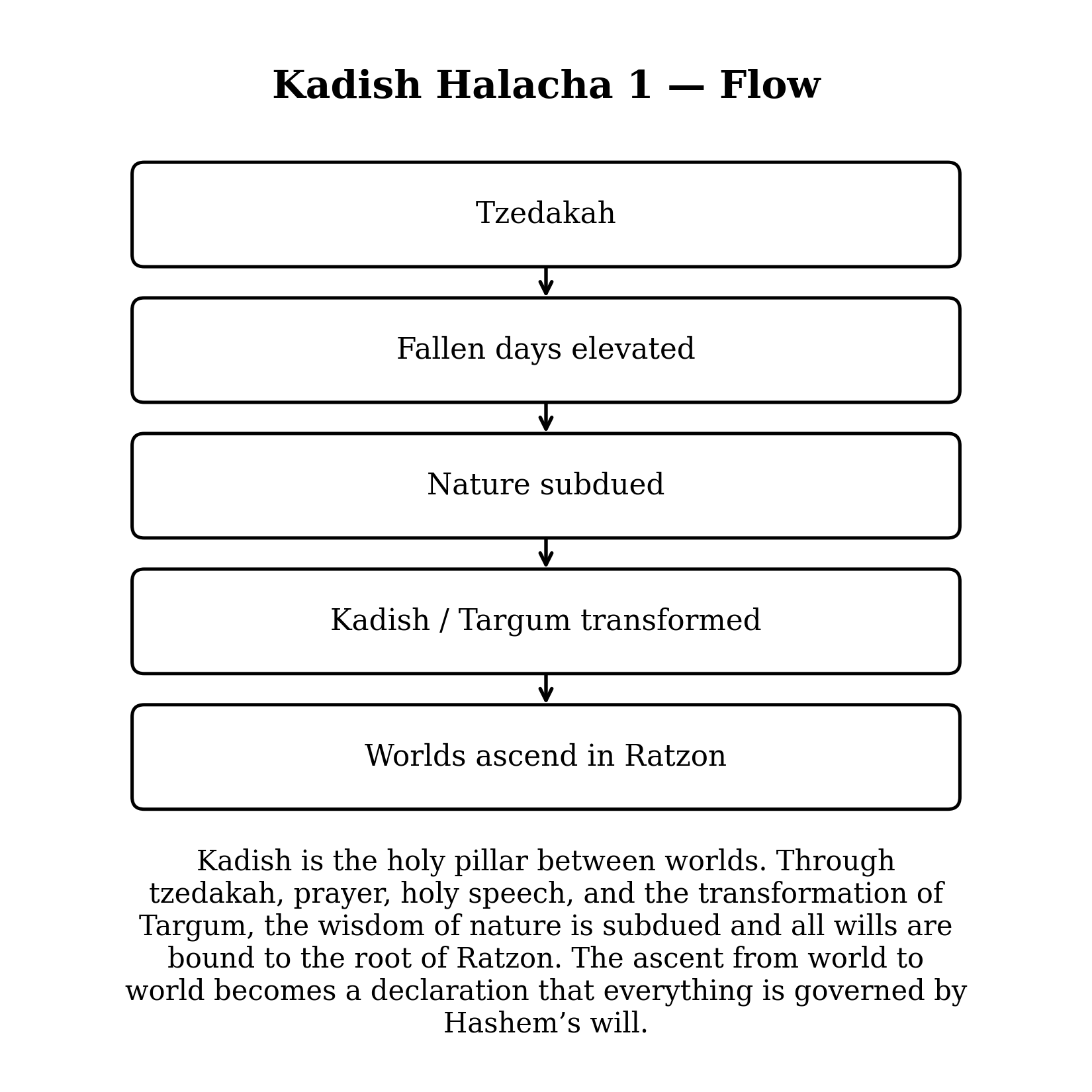
Kadish is the holy pillar between worlds. Through tzedakah, prayer, holy speech, and the transformation of Targum, the wisdom of nature is subdued and all wills are bound to the root of Ratzon. The ascent from world to world becomes a declaration that everything is governed by Hashem’s will.
Main Pillars
Tzedakah raises fallen days and subdues the metzach hanachash, the root of naturalistic wisdom.
The festivals call forth the revelation that the world is governed by Ratzon rather than necessity.
The order of prayer raises Asiyah, Yetzirah, Beriah, and Atzilus through korbanos, song, blessings, and tefillah.
Kadish stands between worlds as the transition that transforms nature into Ratzon.
Kadish is said in Targum because the mixed language itself is elevated and made to proclaim Hashem’s greatness.
Practical Takeaways
Give tzedakah before prayer as a vessel for Chesed and the revelation of Ratzon.
Hear Kadish as an ascent and transition, not merely an interruption between sections.
Use holy speech to turn the language and assumptions of nature toward emunah in Divine will.
— Translator's summary. Not part of the original text of Likutay Halachos. —
Expanded Study Aid — Kadish — Halacha 1
Key Terms and Concept Notes
Ratzon — the revelation that all is governed by Hashem’s will.
Metzach haRatzon / metzach hanachash — the contest between holy will and naturalistic wisdom.
Targum — the mixed realm that can be elevated to holiness.
Pillar between worlds — Kadish as the passage from one spiritual world to the next.
Series Continuity Note
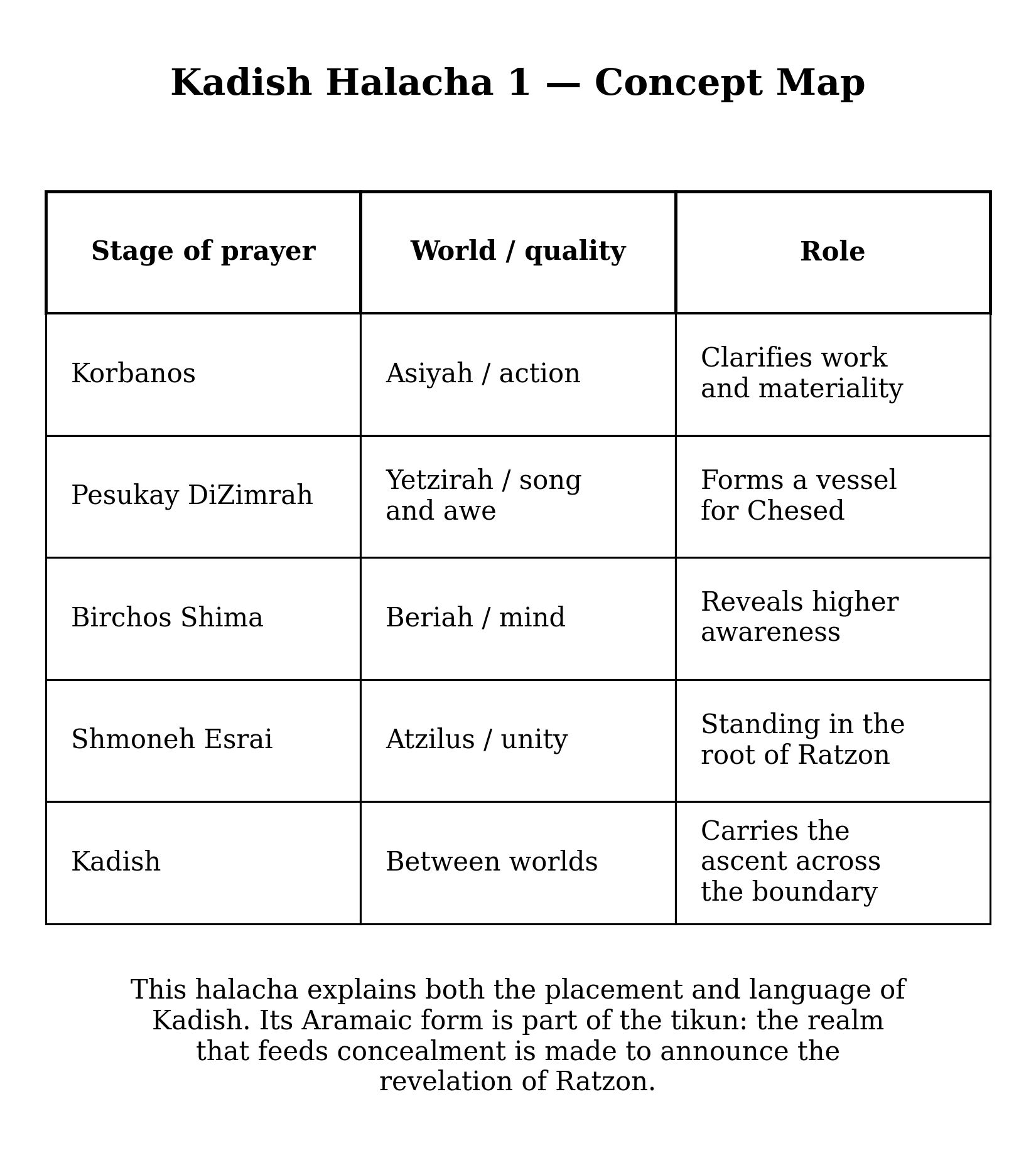
This halacha explains both the placement and language of Kadish. Its Aramaic form is part of the tikun: the realm that feeds concealment is made to announce the revelation of Ratzon.
Diagram 1 — Kadish — Halacha 1 Flow
Diagram 2 — Kadish — Halacha 1 Concept Map
— End of translator study aid and diagrams. Not part of the original text of Likutay Halachos. —
Earlier annotations and link context
Earlier Reader contexts are retained separately. Their links identify current source references; they do not assert that an earlier English selection has the same meaning in the corrected edition.
💬 Comments
…Comments are currently read-only.
Loading comments…